Meet Nature’s Most Awkward Roommates
The pearlfish is a creature that looked at the vast, dangerous ocean and decided its best bet for survival was to live inside another animal’s butt. This is not a joke. It is one of nature’s most bizarre and one-sided living arrangements, a testament to the fact that evolution has a very dark sense of humor. This particular fish that lives in a sea cucumber belongs to the family Carapidae fish, a group that has perfected the art of being an uninvited houseguest.
Let’s set the scene. On one side, we have the sea cucumber. It is a simple, gelatinous creature of the seafloor, inching its way through life with no ambitions beyond filtering sand. It is the ocean’s slow-moving, oblivious landlord, completely unaware that its rear entrance is about to become a revolving door for a very persistent tenant. The sea cucumber is a soft-bodied, squishy tube whose life is about to get uncomfortably intimate.
On the other side is our protagonist, the pearlfish. It is a slender, eel-like fish, often translucent, and utterly desperate. In a world filled with sharks, groupers, and other hungry predators, the pearlfish is small, defenseless, and looks very much like a swimming noodle. It has identified the ultimate, albeit disgusting, safe house. It sees the sea cucumber not as a fellow creature of the deep but as a fleshy, self-ventilating fortress.
This relationship between the pearlfish and sea cucumber is a masterclass in violating personal space. It is a story of a desperate search for safety that throws all notions of privacy and consent out the window. Before we get into the horrifying mechanics of how this happens, it is important to understand the two players. One is a simple, squishy blob minding its own business. The other is a freeloader about to make the most undignified entrance in the animal kingdom.
Why a Sea Cucumber’s Rear End Is Prime Real Estate
At first glance, choosing to live inside another animal’s digestive and respiratory tract seems like a terrible life choice. But from the pearlfish’s perspective, the sea cucumber’s cloaca is a five-star, all-inclusive resort in a world of constant danger. The open reef is a terrifying place for a small, skinny fish. It is a 24/7 buffet for predators, and the pearlfish is on the menu. Hiding is not just an option; it is a full-time job.
The sea cucumber offers a solution that is both ingenious and deeply unsettling. Its rear opening, or cloaca, provides several key benefits that make it prime real estate. First and foremost is physical protection. Tucked away inside a thick, leathery sea cucumber, the pearlfish is completely hidden from hungry eyes. No passing shark is going to think to check there for a snack. It is the ultimate panic room.
Second, the sea cucumber provides a stable internal environment. The ocean is subject to changing currents and temperatures, but inside the host, things are consistent. More importantly, the sea cucumber breathes through its anus. It draws in and expels water to oxygenate its respiratory trees, which are internal gill-like structures. This means the pearlfish has a constant supply of fresh, oxygenated water pumped directly to it. It does not even have to leave its new home to breathe.
This arrangement is a form of sea cucumber symbiosis, though “symbiosis” feels too polite for what is happening. Other creatures have found unique ways to stay safe, like the parrotfish that sleeps inside a bubble of its own slime, but the pearlfish takes it to a whole new level. It has found a mobile home that breathes for it and hides it from the world. While the choice is undeniably gross, the evolutionary logic is sound. When you are this vulnerable, you take shelter wherever you can find it, even if it is in the most undignified place imaginable.
The Grand Entrance: A Tail of Uninvited Entry
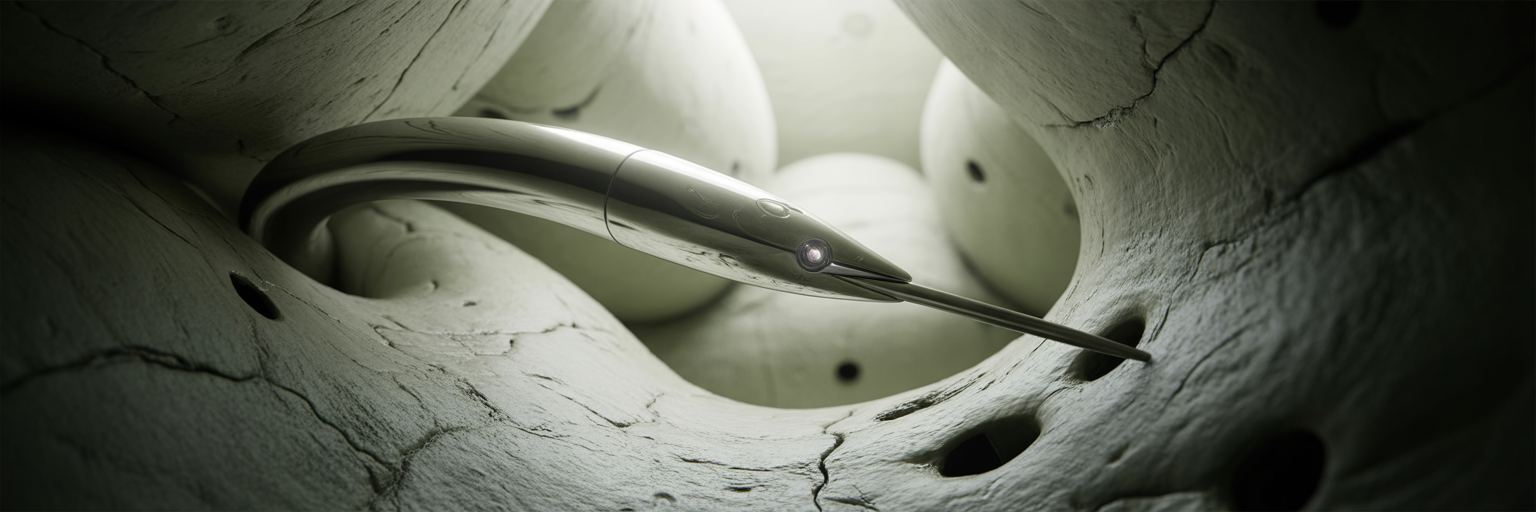
So, how does this happen? How does a fish manage to convince a sea cucumber to let it move into its insides? The short answer is, it does not ask for permission. The entire process hinges on one of the sea cucumber’s most unfortunate biological functions: anal respiration. Because the sea cucumber breathes through its rear end, it has to periodically open its cloaca to draw in and expel water. For the pearlfish, this is the open door it has been waiting for.
The pearlfish has highly developed sensory abilities that allow it to detect the chemical and physical cues of the sea cucumber’s respiratory current. It can literally smell when the sea cucumber is about to exhale. It patiently waits, hovering near the host’s posterior, until the moment is right. What follows is a carefully choreographed, deeply invasive maneuver.
The entry itself is a spectacle of persistence and questionable life choices. Here is how the grand entrance typically unfolds:
- The Stakeout: The pearlfish locates a suitable host and waits, sometimes for a long time, for the sea cucumber to begin its breathing cycle. It is the ocean’s creepiest stakeout.
- The Nudge: To speed things up, the pearlfish will often nudge or probe the area around the cloaca. This stimulation can prompt the sea cucumber to relax its sphincter muscle and open up.
- The Insertion: As the sea cucumber expels water, the pearlfish makes its move. In a flash, it wriggles inside. Most species of pearlfish have perfected a tail-first entry. This is a brilliant, if horrifying, technique. By going in backward, the fish protects its more delicate head and gills from the powerful suction and any defensive responses from the host.
- Settling In: Once inside, the fish makes its way into the respiratory tree or the main body cavity, where it can rest safely, hidden from the dangers of the outside world.
The tail-first entry is a key adaptation. It is a slick, efficient way to breach the sea cucumber’s defenses without getting its head stuck in the door. The pearlfish’s slender, eel-like body and smooth skin are also perfectly designed for this moment of infiltration. The sea cucumber, for its part, is a completely unwilling participant. It has no say in the matter. This is not a partnership; it is a home invasion, and the pearlfish is a master burglar who has found the perfect back door.
The Parasitic Pearlfish: A Roommate That Eats Your Insides
Once the pearlfish is inside, the nature of this weird animal relationship can go one of two ways. Some pearlfish are merely inconsiderate squatters, while others are the roommates from hell. It all depends on the species.
The ‘Good’ Tenant: Commensalism
Many species of pearlfish, particularly those in the genus Carapus, practice commensalism. This means they use the sea cucumber purely for shelter. They are the “good” tenants. They hide inside the host during the day, safe from predators. At night, they slip out to hunt for small crustaceans and other food on the reef. When the sun comes up, they find their host and wriggle back inside to sleep. In this scenario, the sea cucumber is essentially an unpaid doorman and a free apartment. The host is not significantly harmed, just mildly inconvenienced and thoroughly violated.
The Roommate from Hell: Parasitism
Then there are the others. The truly sinister species, like those in the genus Encheliophis, are true parasites. This is where the story turns from quirky to genuinely horrifying. These pearlfish do not leave the host to find food. Why would they, when they are already living inside a buffet? The parasitic pearlfish dines on its landlord’s internal organs. Specifically, it is known to consume the sea cucumber’s gonads and parts of its respiratory trees.
This is not just rude; it is actively harmful. As detailed in scientific studies on carapid-holothuroid relationships, this behavior can cause serious damage and even sterilize the host. The sea cucumber can often regenerate these tissues, but it comes at a great energetic cost. It is a brutal arrangement that highlights how far some creatures will go to survive. This kind of extreme parasitism is not unique in nature; there are other cases of parasites manipulating their hosts in terrifying ways, such as the parasite that drives a snail to sacrifice itself. The pearlfish, however, has made it personal by literally eating its host from the inside out.
| Behavior Type | Typical Genus | Diet | Impact on Host | Roommate Rating |
|---|---|---|---|---|
| Commensalism | Carapus | Small crustaceans (hunts outside) | Minimal to none; primarily uses host for shelter. | 4/5 Stars – A bit weird, but pays no rent and doesn’t trash the place. |
| Parasitism | Encheliophis | Host’s gonads and respiratory trees | Harmful; can cause sterilization and organ damage. | 0/5 Stars – Eats your food, eats your house, will probably eat you. |
This table summarizes the key differences in behavior and impact between the two main types of pearlfish. The rating is, of course, from the sea cucumber’s perspective.
The Sea Cucumber’s Failed Eviction Notice

At this point, you might be wondering why the sea cucumber puts up with this. Surely, it must have some way to fight back against this unwanted intruder. Sea cucumbers are not entirely defenseless. They have a truly dramatic and effective defense mechanism for most threats: the expulsion of Cuvierian tubules.
When threatened by a predator like a crab or a large fish, many sea cucumbers can eject a portion of their internal organs out of their anus. These sticky, spaghetti-like filaments, known as Cuvierian tubules, expand in the water and entangle the attacker in a gooey, immobilizing mess. In some cases, these tubules are also loaded with toxins. It is a messy, self-mutilating, but often life-saving defense. The sea cucumber can then crawl away and regenerate its lost organs later.
Here is the problem: this powerful weapon is completely useless against the pearlfish. The expulsion of Cuvierian tubules is a defense designed for external threats. It is meant to stop a predator before it can take a bite. The pearlfish, however, is a master of infiltration. By the time the sea cucumber realizes it has an intruder, the fish is already inside, past the gate where the defenses are located. Shooting out its sticky guts will not help when the enemy is already in the house.
Furthermore, the pearlfish has evolved a resistance to the sea cucumber’s other, more subtle defenses. The skin and internal organs of many sea cucumbers contain toxic compounds called saponins, which deter most predators. The pearlfish, especially the parasitic species that live inside the host full-time, have developed a physiological tolerance to these toxins. They can live comfortably in an environment that would be poisonous to other fish. This is a classic case of a specialist intruder versus a generalist defense system. The sea cucumber is prepared for a frontal assault, but it has no answer for the stealthy weirdo who has already picked the lock on the back door.
When Evolution’s Sense of Humor Gets Dark
This entire bizarre situation begs a larger question: why? Why would evolution produce a strategy that is so specific and so undignified? The answer lies in the concept of an evolutionary niche. Life will find a way to exploit any available resource, no matter how strange or disgusting that resource may be. The inside of a sea cucumber is a safe, stable, and unoccupied niche, and the pearlfish is the creature that evolved to fill it.
The pearlfish is a masterpiece of specialized evolution. It possesses a specific suite of adaptations that make it the perfect master of its craft:
- A slender, eel-like body: This allows it to fit into the tight, confined spaces of the host’s body cavity.
- A tapered, durable tail: This is essential for the tail-first entry, protecting the fish’s head and allowing for a smooth, rapid insertion.
- Advanced chemosensory skills: The ability to detect the host’s respiratory currents is crucial for timing the entry perfectly.
- Physiological resistance: The pearlfish has evolved to tolerate the low-oxygen environment and the chemical toxins inside the sea cucumber.
On the other side of this evolutionary arms race is the sea cucumber, which seems to have barely put up a fight. Why has it not evolved a specific counter-defense, like a stronger sphincter or a way to detect and expel pearlfish? The most likely reason is that the selective pressure from pearlfish is not strong enough. A sea cucumber has bigger problems to worry about, like being eaten by a sea star or a large fish. These predators pose a more immediate and frequent threat to its survival.
From an evolutionary perspective, it may not be worth investing energy in developing a specialized anti-pearlfish defense when that energy could be better spent on defenses against more lethal threats. This has created an asymmetrical arms race. One competitor, the pearlfish, is a hyper-specialized expert in breaking and entering. The other, the sea cucumber, is too busy dealing with more common dangers to worry about the weirdo trying to move into its butt.
A Crowded House: When One Tenant Isn’t Enough
Just when you think this situation could not get any more awkward, it does. One of the most absurd facts about the pearlfish and sea cucumber relationship is that pearlfish are not very good at telling whether a host is already occupied. This lack of a “no vacancy” sign leads to some truly uncomfortable and crowded living situations.
Imagine a pearlfish successfully infiltrating a sea cucumber, only to find that someone else is already living there. Researchers have documented numerous cases where a single sea cucumber was found to be hosting multiple pearlfish. Sometimes it is two, but scientists have found as many as fifteen fish crammed inside one unfortunate host. This raises a lot of questions. Does the first fish in act as a bouncer? Do they just squeeze in together and hope for the best? The evidence suggests they just pile in, turning the sea cucumber’s body cavity into a cramped, non-consensual flophouse.
The situation gets even more bizarre. Scientists have frequently discovered male-female pairs of pearlfish living together inside the same host. This means the sea cucumber’s rear end is not just a shelter; it is a makeshift, non-consensual love nest. The fish use the safety of the host’s body to mate and reproduce, ensuring that a new generation of pearlfish will be ready to continue this strange legacy. This is a level of indignity that is hard to comprehend. The sea cucumber has no control over who comes in, how many of them there are, or what they do once they are inside. This brings to mind other strange family dynamics in nature, such as species where some animals hatch inside their mother and eat their siblings before they are even born, proving that nature’s approach to family can be brutal.
Nature’s Unsettling Hospitality
The story of the pearlfish is a journey into one of the most unsettling corners of the natural world. We have seen the “how” through the unfortunate mechanics of anal respiration. We have understood the “why” in the desperate search for safety from predators. And we have learned the “what happens next,” which ranges from a harmless but weird squatter situation to a parasitic nightmare where the tenant eats the landlord’s organs.
This relationship is a perfect, if deeply uncomfortable, example of evolution’s pragmatism. Evolution is not driven by etiquette, good taste, or any sense of fair play. It is driven by what works. For the pearlfish, what works is a life of crime, breaking and entering into the most private of spaces. It is a strategy that is both brilliant in its effectiveness and horrifying in its execution.
The sea cucumber is left as the ultimate victim, a living testament to the fact that sometimes, nature’s solutions to the problem of survival are just plain gross. So the next time you see a documentary about the ocean floor and a sea cucumber comes into view, maybe give it a moment of silence. It could be having a really, really bad day with the company it is forced to keep.