Beyond Decay: Unveiling the Fungal Kingdom’s Hidden Predators
When we think of fungi, our minds often drift to the forest floor, where they silently break down fallen leaves and logs. We picture mushrooms sprouting after a cool rain or the fuzzy, unwelcome sight of mold colonizing a forgotten piece of bread. In these roles, fungi are the great recyclers of the natural world, patiently decomposing dead organic matter. They seem passive, more akin to plants in their stillness than to the active world of animals. But this picture is incomplete. Deep within the soil, a microscopic drama unfolds that challenges our every assumption about what a fungus can be.
Just beneath our feet, a hidden world teems with hunters and prey. Here, some fungi have abandoned the quiet life of a decomposer for something far more aggressive. These are not your garden-variety mushrooms. They are predators, and their existence reveals a startling truth about the fungal kingdom. A predatory fungus is defined by its active pursuit of living prey. Unlike its relatives that feed on decaying material, these species have evolved sophisticated methods to hunt, trap, and consume microscopic animals. Their primary target is one of the most abundant creatures on Earth: the nematode, or roundworm.
This behavior is so unexpected it feels like a biological plot twist. The natural world is full of such surprises, including some of nature’s unsettling creations that defy belief, which constantly force us to reconsider the boundaries we draw between different forms of life. The idea of a fungus that eats worms is one such case. It transforms our image of fungi from passive recyclers into calculated carnivores operating on a microscopic scale. This isn’t a chance encounter where a worm happens to die near a fungus. This is an active hunt, complete with weapons, lures, and a clear intent to kill.
The discovery of these hunters opens a floodgate of questions. How can a stationary organism with no brain, nerves, or muscles possibly hunt? What kind of sophisticated weaponry has it developed to capture prey that can wriggle and writhe with surprising speed? The answers reveal a level of biological engineering that is as ingenious as it is ruthless, showcasing an evolutionary path that runs parallel to the animal kingdom’s most effective predators.
The Hunter’s Arsenal: Sophisticated Mechanical Traps
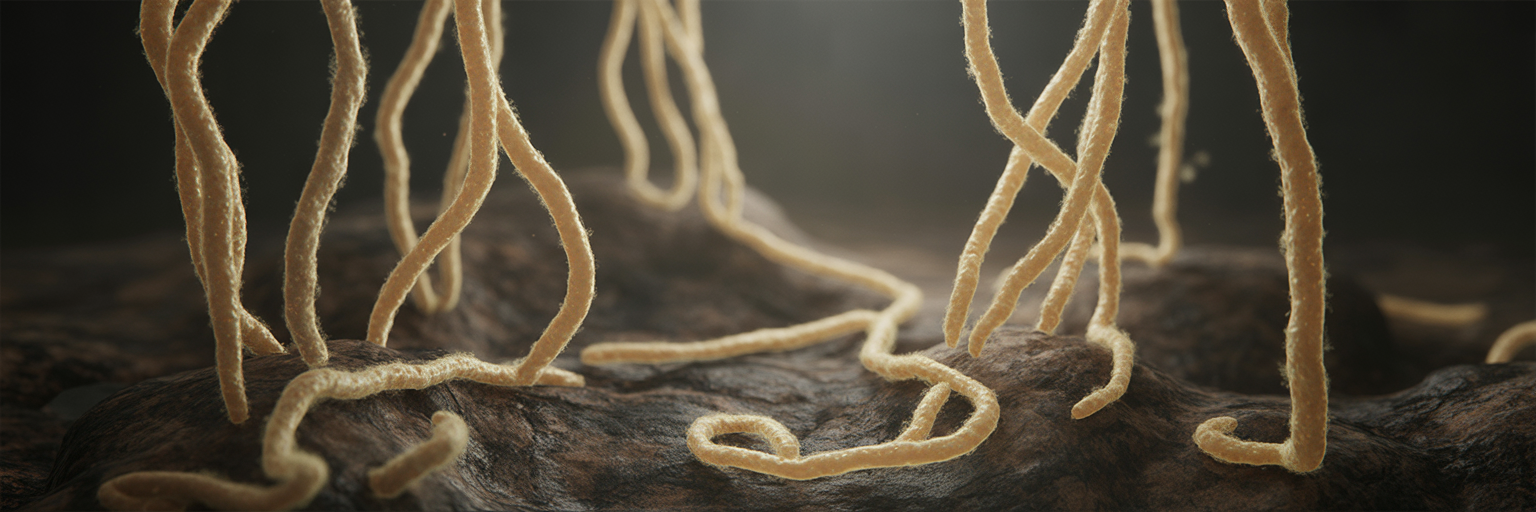
The hunting strategies of predatory fungi are not just a matter of chance. They are the result of highly specialized evolutionary adaptations, creating an arsenal of physical weapons designed for one purpose: capturing nematodes. These traps are not crude, passive structures. They are dynamic, efficient, and deadly. The fungus does not simply wait for food to arrive; it builds the tools necessary to secure it, demonstrating a level of resourcefulness that rivals animal hunters.
The Constricting Ring: A Microscopic Noose
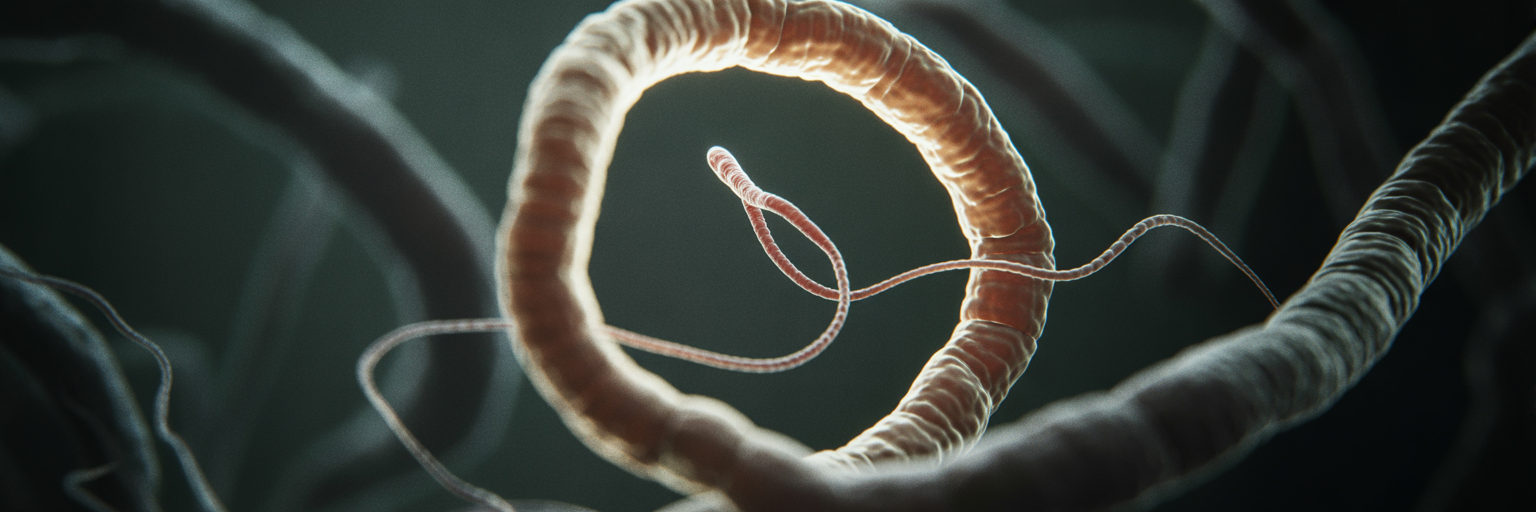
Perhaps the most dramatic of all fungal weapons is the constricting ring. This is not a simple loop but a highly engineered trap, a microscopic noose waiting to spring. The Arthrobotrys oligospora trapping mechanism is a marvel of cellular mechanics. The fungus constructs a three-celled ring from its own hyphae, the thread-like filaments that make up its body. This ring sits patiently in the soil, an open gateway. When an unsuspecting nematode wriggles through it, the trap is sprung. The inner surfaces of the three cells are incredibly sensitive to touch. Contact from the nematode triggers a near-instantaneous response. In less than a tenth of a second, the cells of the ring inflate to nearly three times their original volume, powered by a rapid influx of water. The opening slams shut, constricting around the worm with immense pressure. As research from the National Center for Biotechnology Information (NCBI) explains, these carnivorous fungi use their three-celled rings to trap nematodes with a force from which there is no escape. The worm is held fast, its struggle only tightening the grip.
Adhesive Traps: Nature’s Flypaper
While the constricting ring is a tool of active strangulation, other predatory fungi rely on a different but equally effective strategy: adhesion. They turn their own bodies into a form of microscopic flypaper, creating inescapable sticky surfaces. These adhesive traps come in several forms, each suited to different conditions and prey sizes.
- Adhesive Nets: Some fungi, like certain species of Arthrobotrys, produce a complex, three-dimensional web of hyphae. This entire network is coated in a powerful adhesive polymer. When a nematode blunders into this sticky maze, it becomes hopelessly entangled. The more it struggles, the more points of contact it makes with the adhesive, sealing its fate.
- Adhesive Knobs: Other species produce a simpler but no less deadly trap. They grow stalked, spherical cells known as adhesive knobs. Each knob is like a tiny, sticky lollipop waiting for a nematode to brush against it. Once contact is made, the adhesive is so strong that the worm cannot break free.
The Calculated Cost of Building a Weapon
What makes these hunting strategies even more remarkable is their efficiency. A fungus does not constantly maintain this arsenal of traps. Building rings and adhesive nets requires a significant investment of energy and nutrients, resources that are often scarce in the soil. So, how does it decide when to arm itself? The fungus exhibits a calculated patience. It remains in a simple, vegetative state until it detects the presence of its prey. Only when nematodes are nearby does the fungus begin to produce its traps. This “induced response” is a key survival strategy. It ensures the fungus conserves its energy, building its weapons only when a hunt is likely to be successful. It is a behavior that mirrors the energy conservation seen in animal predators, which often rest and wait until the perfect moment to strike.
| Trap Type | Mechanism of Action | Key Fungal Genera | Primary Advantage |
|---|---|---|---|
| Constricting Rings | Three-celled hyphal loops that rapidly inflate upon contact, strangling the prey. | Arthrobotrys, Drechslerella | Active and forceful capture; highly effective against larger, stronger nematodes. |
| Adhesive Nets | A three-dimensional network of hyphae coated in a strong adhesive polymer. | Arthrobotrys | Large surface area can trap multiple nematodes at once. |
| Adhesive Knobs | A single, stalked spherical cell coated in adhesive. Nematodes become stuck upon contact. | Monacrosporium, Dactylellina | Low energy cost to produce; effective for capturing smaller nematodes. |
| Non-Constricting Rings | Passive hyphal rings that physically entangle and hold nematodes by friction. | Dactylella | Very low energy investment, relies on prey getting stuck by chance. |
This table outlines the primary mechanical trapping strategies used by predatory fungi. The data is compiled from mycological studies and illustrates the diverse evolutionary solutions fungi have developed for capturing prey, each with distinct energy costs and efficiencies.
The Scent of Prey: Chemical Lures and Olfactory Deception
The mechanical traps are impressive, but the hunt often begins long before a nematode ever touches a sticky net or a constricting ring. Many predatory fungi are not just passive trappers; they are active hunters that use chemical warfare to lure their prey. This olfactory deception reveals another layer of sophistication, blurring the line between a simple organism and a calculating predator. Answering the question of how do carnivorous fungi hunt requires looking beyond physical weapons and into the invisible world of chemical signals.
Mimicking the Language of Worms
Instead of waiting for a chance encounter, the fungus broadcasts a false invitation. Fungi like Arthrobotrys oligospora release a complex cocktail of volatile organic compounds into the soil. These chemicals are not random byproducts of metabolism. They are specific molecules that mimic the scents that nematodes find irresistible. As a 2017 study in the journal eLife demonstrated, this fungus mimics the olfactory cues of both food and sex to attract its nematode prey. It produces compounds that smell like the bacteria nematodes feed on, drawing them in with the promise of a meal. Even more cunningly, it can produce chemicals that imitate nematode sex pheromones, tricking them into searching for a mate where only a predator awaits. This chemical mimicry is a powerful tool, turning the nematode’s own instincts against it. This strategy is not unique in the natural world; for instance, some plants can trigger chemical hallucinations in animals to achieve their own goals, showing how widespread chemical manipulation is.
A Fungal ‘Sense of Smell’
This chemical conversation is not a one-way street. The fungus is not just broadcasting signals; it is also listening. It possesses its own version of a “sense of smell,” allowing it to detect its prey from a distance. The fungus has specialized receptors on its surface, known as G-protein-coupled receptors (GPCRs), which are remarkably similar to the olfactory receptors found in animals. These receptors can detect the specific pheromones and other chemical signals released by the nematodes themselves. When the fungus “smells” a nearby population of worms, this detection acts as a trigger. It initiates the process of building its deadly traps, shifting from a dormant state to an active hunting mode. This two-way chemical dialogue reveals a dynamic interaction between predator and prey, a silent conversation that determines life and death in the microscopic world.
Convergent Evolution in Hunting
This use of chemical lures is a stunning example of convergent evolution, where unrelated organisms independently develop similar solutions to similar problems. The fungus, with no brain or nervous system, has arrived at the same hunting strategy as many animals. Its use of pheromone mimics is directly comparable to the bolas spider, which dangles a sticky globule of silk laced with a chemical that mimics the sex pheromone of a female moth, luring male moths directly to their doom. It is also analogous to a carnivorous pitcher plant, which uses sweet nectar to entice insects into its digestive pit. In all three cases—fungus, spider, and plant—a stationary predator uses chemical deception to bring mobile prey to it. This parallel evolution underscores that the fundamental principles of predation are universal, capable of arising in vastly different branches of the tree of life.
The Final Act: How a Fungus Consumes Its Kill
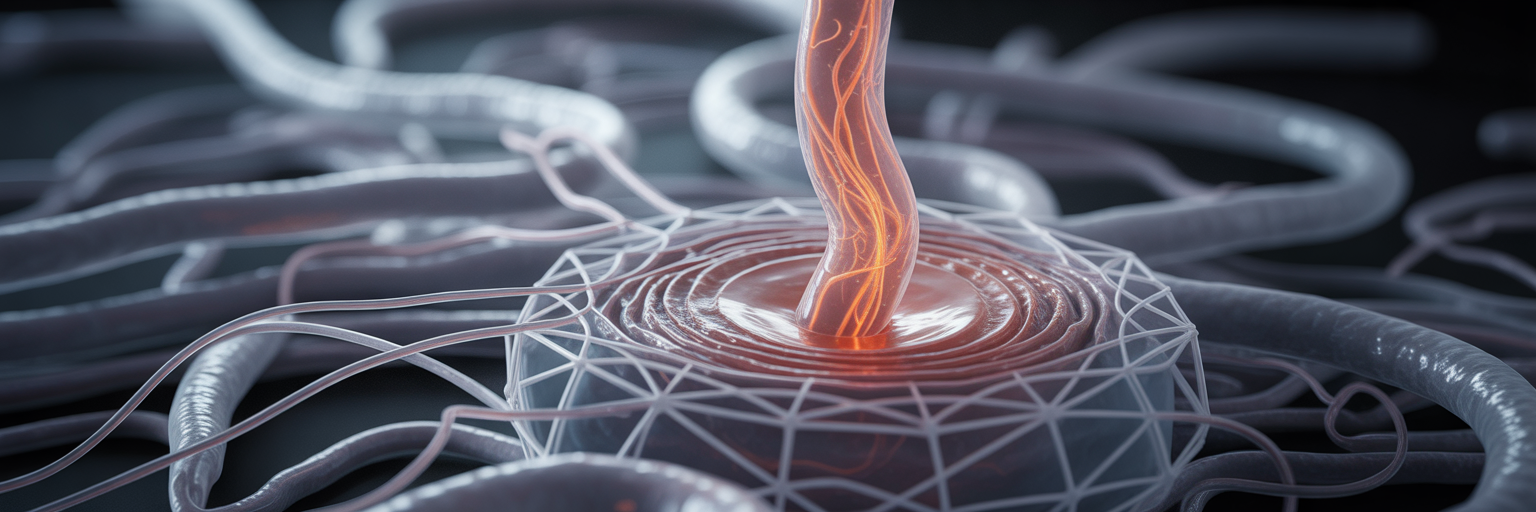
Capturing the nematode is only the first half of the battle. Once the prey is immobilized by a constricting ring or a sticky net, the fungus begins the methodical and gruesome process of consumption. This is not like an animal tearing apart its meal. Instead, it is a process of invasion and liquefaction, turning the worm’s own body into a digestive chamber. This final act is a masterclass in efficiency, ensuring that not a single drop of precious nutrients goes to waste. The process of how predatory fungi that trap nematodes consume their kill can be broken down into three distinct steps.
- Penetration: With the nematode held fast, the fungus grows a specialized, spear-like hypha known as a “penetrative peg.” This structure pushes against the worm’s tough outer layer, the cuticle. The fungus combines sheer mechanical force with a targeted release of enzymes that soften the cuticle, allowing the peg to puncture through and invade the nematode’s body. This invasive process is a stark contrast to other natural interactions, such as with organisms that can live inside other living creatures without harm, highlighting the purely predatory nature of this relationship.
- Liquefaction: Once inside, the fungus unleashes a powerful cocktail of digestive enzymes, including proteases to break down proteins and chitinases to dissolve other structural components. The fungus floods the nematode’s body cavity with these enzymes, effectively digesting the worm from the inside out. All of its internal tissues are rapidly broken down into a nutrient-rich slurry. This is a form of external digestion, but it all happens within the sealed container of the prey’s own body.
- Absorption: As the nematode’s insides are liquefied, the fungus begins to absorb the resulting soup of amino acids, lipids, and other nutrients. It grows an elaborate network of hyphae throughout the worm’s body, creating a massive surface area for absorption. This process is incredibly efficient. The fungus sucks the nematode dry, leaving behind little more than an empty, translucent husk of its former cuticle.
This entire process is driven by a powerful evolutionary need. Many soils are poor in nitrogen, a critical element for growth that fungi cannot produce on their own. Nematodes, on the other hand, are rich in nitrogen. By hunting and consuming them, the fungus gains access to a vital resource that would otherwise be unavailable. The hunt is not for sport; it is for survival.
Blurring the Boundaries Between Kingdoms
The existence of hunting fungi does more than just reveal a fascinating corner of the natural world; it fundamentally challenges how we classify life itself. For centuries, biology has relied on neat, tidy boxes to categorize organisms. Animals are mobile and eat other things. Plants are stationary and make their own food. Fungi are stationary and decompose dead things. But predatory fungi do not fit comfortably into any of these boxes. They are a living paradox, a mosaic of traits that forces us to reconsider the very definitions we thought were set in stone.
A Mosaic of Traits
Predatory fungi exhibit a combination of characteristics that cut across traditional kingdom boundaries. Like plants and other fungi, they are sessile, rooted to one spot, and have rigid cell walls. They cannot get up and chase their prey. Yet, in their mode of nutrition, they behave exactly like animals. They are heterotrophs that do not just absorb nutrients from their environment; they actively hunt, kill, and consume living prey. They have developed behaviors—trapping, luring, and efficient consumption—that we associate with the animal kingdom. This makes them a biological chimera, possessing a mix of plant-like, fungus-like, and animal-like traits. This ability to defy simple classification is seen elsewhere in nature, such as with creatures that can switch between warmblooded and coldblooded states, proving that life is far more flexible and adaptable than our textbooks often suggest.
Evolutionary Convergence in Action
The behavior of nematode trapping fungi is a textbook case of evolutionary convergence. This is the scientific principle where unrelated organisms independently evolve similar traits as they adapt to similar challenges or ecological niches. The fungus needed to acquire nitrogen in a competitive environment, the same challenge faced by countless animal predators. In response, it evolved solutions that are strikingly similar to those found in the animal kingdom. The constricting ring is a form of strangulation, just like a constrictor snake. The adhesive nets are a form of entanglement, just like a spider’s web. The chemical lures are a form of deception, just like a bolas spider mimicking moth pheromones. These are not shared traits from a common ancestor but independent inventions forged by the same evolutionary pressures. The fungus arrived at the “animal” solution of predation without being an animal at all. This demonstrates that complex behaviors are not the exclusive domain of any single kingdom. The toolkit for survival, including hunting, is more universal than we ever imagined, available to any lineage of life with the right environmental push.
The Ecological Importance of Microscopic Hunters
While the image of a hunting fungus is captivating, these organisms are far more than a biological curiosity. They are essential, if unseen, players in the health of our planet’s soils. Their predatory lifestyle gives them a crucial ecological role, one that has significant implications for agriculture and environmental balance. These microscopic hunters act as a natural check on other soil populations, and their unique abilities are now being explored for practical, real-world applications.
In any healthy soil ecosystem, there is a delicate balance between different organisms. Nematodes, while vital in their own right, can become destructive agricultural pests when their populations grow unchecked. Many species feed on the roots of crops, causing significant damage that leads to stunted growth and reduced yields. This is where predatory fungi step in. As natural regulators of nematode populations, they help maintain that crucial balance. By preying on nematodes, they prevent population explosions that could devastate crops, contributing to overall soil health and productivity without human intervention.
This natural regulatory function has caught the attention of scientists and farmers alike. The search for sustainable agricultural practices has led to growing interest in using these fungi as a form of biological pest control. The idea is to harness nature’s own solutions to manage pests instead of relying on synthetic chemical nematicides. These chemicals can be effective, but they often come with a heavy cost, harming beneficial soil organisms, polluting groundwater, and leaving residues on crops. Using biological pest control fungi offers a targeted, environmentally friendly alternative. Researchers are exploring ways to introduce these fungi into agricultural soils to protect crops like tomatoes, soybeans, and vegetables from harmful nematodes. This approach is part of a larger movement toward harnessing natural processes, similar to how scientists are studying life forms that can feed on plastic waste to address human-made problems.
Ultimately, the fungus that hunts like an animal occupies a unique and powerful position. It is both a decomposer and a predator, a recycler and a regulator. It perfectly illustrates the hidden complexity operating just beneath the surface of the world, reminding us that the ground beneath our feet is not just dirt, but a vibrant, dynamic ecosystem full of hunters, prey, and dramas we are only just beginning to understand.