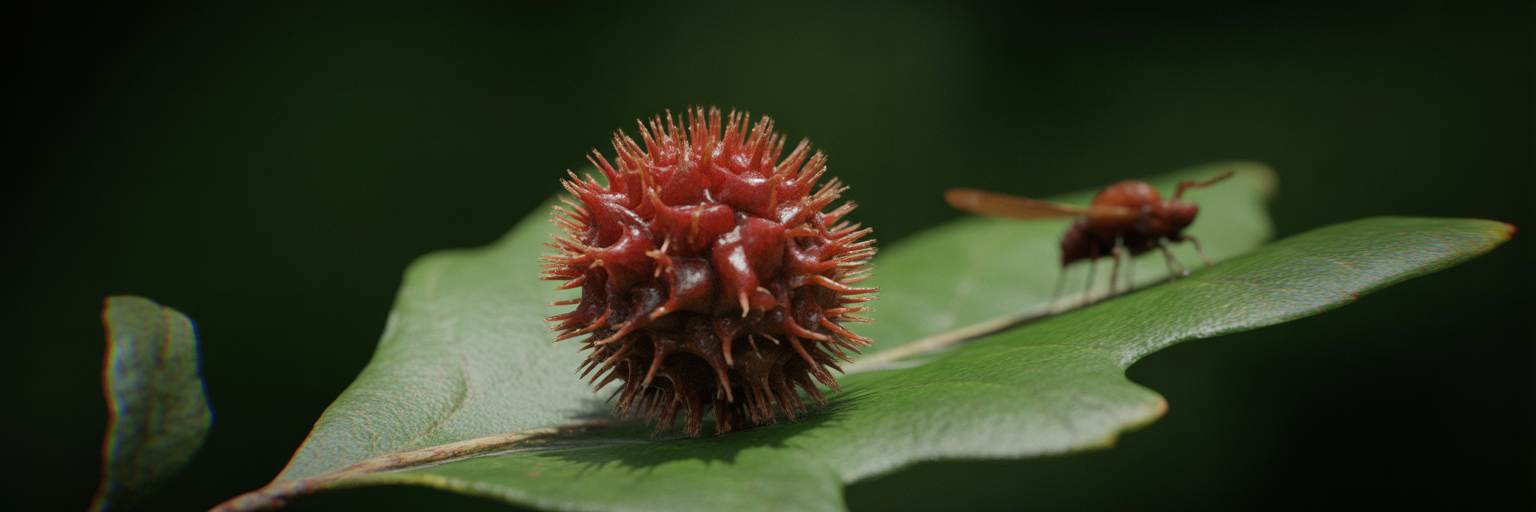
Meet Nature’s Creepiest Real Estate Developer
Somewhere in a quiet, sun-dappled park, a mighty oak tree stands as a monument to patience and strength. Its leaves, perfect five-lobed canvases of chlorophyll, rustle in the breeze. They perform their duties with quiet dignity, turning sunlight into sugar, providing shade, and generally minding their own business. But one of these leaves is about to be unwillingly rezoned for a very strange, very specific, and very sinister new development. The architect of this project is on its way, and it has a blueprint that will turn botany into a biological horror show.
The Unsuspecting Construction Site
Imagine a single, flawless oak leaf. Its veins are a perfect network of pipelines, its surface a smooth, waxy expanse. It is the picture of botanical health, a prime piece of real estate in the leafy canopy. Now, picture the developer. It’s not a bulldozer or a construction crew. It’s a gall wasp, a creature so small it could be mistaken for a speck of dust with an attitude problem. With iridescent wings and an unnervingly focused demeanor, it lands on the leaf. This isn’t a casual visit. This is a site survey.
The wasp walks along a prominent vein, its tiny legs tapping as if measuring property lines. It is scouting for the perfect lot, a place with good plumbing and structural integrity. It ignores the vastness of the 50-ton tree it’s standing on, its ambition focused entirely on this one small patch of green. To the casual observer, it’s just a bug on a leaf. But in reality, it’s a master planner about to execute the most audacious construction project in the neighborhood, one that forces the landowner to build the house, pay for the materials, and then become the food source for the tenant.
A Blueprint for Biological Burglary
Once the perfect spot is chosen, the wasp doesn’t just lay an egg. That would be far too simple. Instead, it initiates a hostile takeover. It pierces the leaf’s skin and injects its progeny along with a set of fraudulent building permits written in a language of complex proteins and hormones. This is biological burglary on a microscopic scale. The wasp is essentially submitting a work order that reads: “Cease all normal leaf operations. You will now construct a custom-designed spherical fortress around my child. Also, you will stock its pantry for the foreseeable future. Thanks.”
This is the work of the insect that makes balls on leaves, those strange, tumor-like growths that many of us have seen but few understand. The sheer audacity is what makes it so unsettling. A creature smaller than a grain of rice is about to coerce a massive, ancient organism into building a bespoke home. It’s a heist that combines genetic engineering, chemical warfare, and architectural genius. The question isn’t just what it’s building, but how in the world does this minuscule tyrant pull it off? How does it hijack the very machinery of life to create its own private kingdom? The answers are far stranger than you might imagine, revealing a world of bizarre natural phenomena that often go unnoticed. For those who appreciate nature’s weirder side, you can explore how our site covers the weird and wonderful in the animal and plant kingdoms.
The Art of Botanical Hijacking
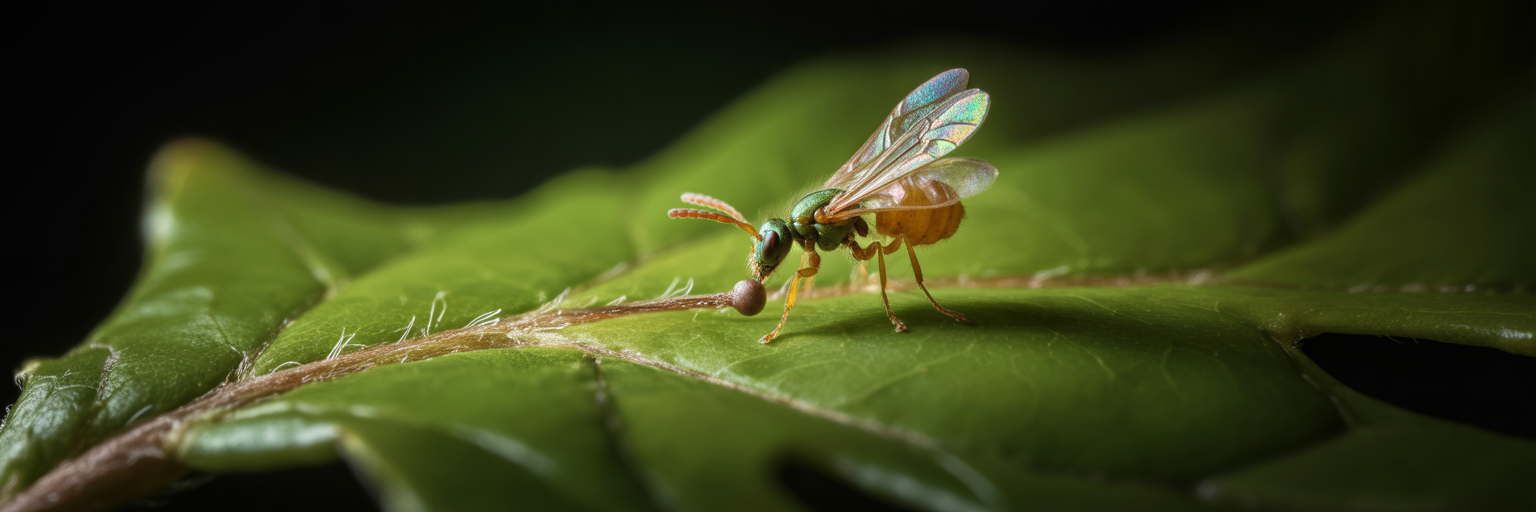
The transition from a healthy leaf to a grotesque nursery isn’t accidental. It’s a calculated act of biological manipulation, a masterclass in making another organism do your bidding. The gall wasp is not merely a parasite; it is a genetic puppeteer, and the leaf is its unwilling marionette. Understanding this process means looking past the strange sphere on the leaf and seeing the microscopic chemical warfare that brought it into existence.
The Chemical Injection
The process begins with a specialized tool. The female wasp’s ovipositor is more than just an egg-layer; it’s a microscopic hypodermic needle and a 3D-printing nozzle rolled into one. With surgical precision, she pierces the plant’s tissue and deposits her egg. But the egg doesn’t arrive alone. It’s delivered with a venomous cocktail of chemicals, a complex mixture of proteins and growth-regulating hormones that are, for all intents and purposes, a declaration of war on the plant’s normal functions. This isn’t just about leaving an egg to fend for itself. It’s about leaving it with a full set of construction tools and a brainwashed labor force.
Rewriting the Genetic Code
This is where the true genius of the operation lies. The chemicals injected by the wasp, and later secreted by the larva, act like a malicious computer virus. They infiltrate the plant’s cellular command center and start overwriting the genetic code. The leaf’s DNA has a simple set of instructions: grow flat, be green, perform photosynthesis. The wasp’s chemical code deletes that file and replaces it with a new one: “Initiate rapid, localized cell division. Differentiate these new cells into three distinct layers: a tough outer wall, a spongy middle layer, and a nutrient-rich inner layer. Also, reroute the leaf’s vascular system to supply this new structure with water and nutrients. Do it now.”
This is the essence of the plant gall formation process. It’s a direct genetic takeover. A recent study highlighted by Current Biology confirmed that specific insect genes are transferred to the plant, directing the gall’s development. This answers the question of how do gall wasps make galls with chilling clarity: they don’t just trick the plant, they reprogram it. The plant is no longer in control of its own body. The gall is, biologically speaking, part insect and part plant, a bizarre chimera created through coercion.
A Puppeteer’s Precision
It’s crucial to understand that a gall is not a plant cancer. A tumor is uncontrolled, chaotic growth. A gall, by contrast, is a marvel of biological architecture. It is a highly organized, functional structure built with a puppeteer’s precision. The wasp’s chemical signals direct the plant’s cells to form specific layers, each with a distinct purpose. There’s an outer wall for defense, a spongy matrix for structure, and a nutritive core for food. The plant’s own vascular system is hijacked and rerouted to feed this parasitic nursery, like plumbing being diverted to a squatter’s illegal extension.
The plant isn’t just growing wildly; it’s following a detailed architectural blueprint provided by its captor. The result is a structure so perfectly suited to the larva’s needs that it functions as a womb, a fortress, and a pantry all at once. The wasp has turned the plant from a victim into an unwitting, and highly skilled, collaborator in its own exploitation.
A Fortress of Flesh and Fiber
Once the botanical hijacking is complete, the resulting structure is far more than just a weird lump on a leaf. The gall is a masterpiece of multi-functional design, a survival pod engineered to perfection. It serves three critical roles, each one a testament to the wasp’s evolutionary brilliance. It is a climate-controlled nursery, an armored fortress, and a self-stocking pantry, all built from the flesh and fiber of its host.
The Climate-Controlled Nursery
Inside the gall, at its very core, the wasp larva rests in a central chamber. This chamber is its entire world, and it’s a world designed for optimal comfort and safety. The gall’s structure insulates the larva from the harsh realities of the outside world. It shields it from scorching summer sun, drying winds, and sudden drops in temperature. While other insects are exposed to the elements, the gall larva is tucked away in a living incubator, a climate-controlled environment that maintains a stable level of humidity and warmth. It is, in essence, a womb built by a third party, ensuring the delicate larva can develop without environmental stress.
The Armored Exterior
The world is a dangerous place for a soft, juicy grub. Birds, predatory insects, and other threats are everywhere. The gall provides a formidable defense system. Its thick, woody, or leathery walls create a physical barrier that is difficult for most predators to penetrate. Getting to the larva requires a significant investment of time and energy, which is often enough to deter a casual attacker. But the defenses don’t stop there. The plant, under the wasp’s direction, pumps the gall full of defensive chemicals like tannins. These compounds make the gall tissue bitter, astringent, and difficult to digest. It’s a poisoned castle wall, a chemical deterrent that tells potential invaders, “You really don’t want to eat this.” This multi-layered defense system keeps the larva safe from all but the most specialized enemies.
A Self-Stocking Pantry
Perhaps the most brilliant feature of the gall is its role as a food source. The larva doesn’t need to hunt, forage, or even move. It is surrounded by its own personal grocery store. The innermost layer of the gall is composed of specialized, nutrient-rich tissue that the plant is forced to produce and constantly replenish. This tissue is packed with proteins and lipids, a perfect baby food for a growing wasp. The larva simply eats its own house, chewing away at the nutritive layer as it grows. The plant, meanwhile, continues to pump resources into the gall, ensuring the pantry is never bare. It’s an automated, on-demand feeding system, a marvel of parasitic efficiency.
The gall’s design is a stunning example of evolutionary engineering. It’s a structure that showcases how some organisms that can live inside other living creatures without harm, at least in the short term, have developed incredibly complex survival strategies. The gall’s brilliance can be summarized by its key functions:
- Total Environmental Control: A safe, stable chamber for development, protected from weather and dehydration.
- Multi-Layered Defense: Physical and chemical protection from a wide range of predators.
- Automated Food Source: A continuous supply of nutrient-rich tissue, eliminating the need for hunting.
- Dynamic Growth: The structure expands in sync with the larva’s needs, ensuring it never runs out of space or food.
A Gallery of Grotesque Masterpieces
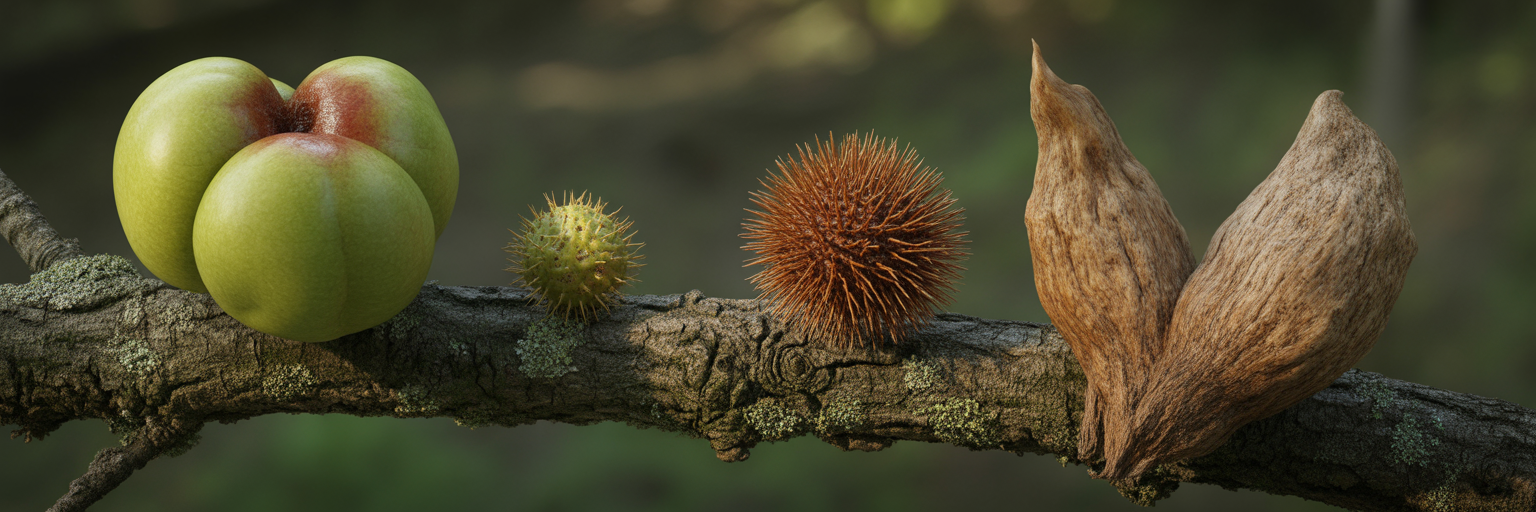
To think of a “gall” as a single type of structure is to vastly underestimate the artistic depravity of the gall wasp family. There are thousands of species, and each one is a specialist architect with its own signature style. A walk through an oak forest is like visiting an open-air museum of alien architecture, with every tree adorned with a collection of grotesque, yet fascinating, masterpieces. So, what are galls on oak leaves and branches? They are the physical signatures of these tiny, tyrannical artists.
The Architect’s Signature Styles
Each species of gall wasp carries a unique chemical blueprint, and when it injects its formula into a plant, it commands the creation of a specific structure. The variety is staggering. Some galls look like spiky sea mines, bristling with defensive horns. Others are soft, woolly pom-poms that seem almost cuddly, belying the parasitic larva hidden within. You can find galls that resemble fleshy red apples, bony horns erupting from a twig, or delicate, spined turbans clinging to the underside of a leaf. This species-specificity is so reliable that experts can identify the exact species of wasp just by looking at the gall it created. The gall is the insect’s calling card, a three-dimensional sculpture that announces its creator’s identity.
An Oak Tree’s Unwanted Ornaments
Oak trees are the preferred canvas for hundreds of different gall wasp species, making them the most heavily decorated trees in the forest. Their branches and leaves are often covered in a bizarre assortment of unwanted ornaments, each one a nursery for a different architect’s offspring. These growths are truly some of nature’s unsettling creations that defy belief, turning a familiar tree into something out of a fantasy novel. The table below showcases just a few of the common designs you might find on North American oaks.
| Common Gall Name | Appearance | Typical Location | Architect’s Note |
|---|---|---|---|
| Oak Apple Gall | Large, spherical, light green or reddish, like a small apple | On leaf tissue | A classic, spacious design with a minimalist exterior. Excellent interior climate control. |
| Horned Oak Gall | Woody, spherical, with small horns that protrude before wasps emerge | On twigs and small branches | A fortified bunker. The horns serve as pre-built escape hatches for the next generation. |
| Woolly Oak Gall | A dense, fuzzy, or wool-like mass, often containing multiple larvae | On leaf veins | A communal living complex with excellent insulation. The fuzzy exterior deters many predators. |
| Spined Turban Gall | Small, reddish, and shaped like a turban with spiny projections | On the underside of leaves | An ornate, defensive structure. The spines make it difficult for predators to get a grip. |
Note: This table showcases a few of the hundreds of gall types found on North American oak trees, each created by a different species of gall wasp. The appearance and location are key identifiers for the specific insect architect.
Each of these structures is a monument to a single tiny insect’s ability to bend a mighty tree to its will. The forest is not just a collection of trees; it’s a gallery, and the gall wasps are its most prolific, and most unsettling, resident artists.
The Plant’s Reluctant Partnership
After witnessing this incredible act of biological manipulation, one question naturally arises: what does the tree think about all this? Is it a silent victim, a helpless host, or something in between? The relationship between the gall wasp and its host plant is a complex one, defined by parasitism but stopping short of outright destruction. It’s a reluctant partnership where one party does all the work and the other reaps all the benefits.
A Parasite, Not a Predator
The most pressing question for any tree-lover is, are leaf galls harmful? For a healthy, mature tree, the answer is generally no. While the galls are parasitic, siphoning away water and nutrients that the tree would otherwise use for its own growth, they rarely cause significant damage. A heavy infestation might cause a branch to lose its leaves prematurely or reduce its vigor, but it is very unlikely to kill the entire tree. The gall wasp is a sophisticated parasite, not a clumsy predator. It has no evolutionary interest in killing its host, as that would destroy the very resource it depends on. Unlike a fungal blight or a destructive beetle infestation that causes chaotic damage, the gall’s growth is controlled and localized. The wasp doesn’t want to burn down the factory; it just wants to hijack one of the production lines for its own purposes.
The Evolutionary Arms Race
This relationship is not static. It is a dynamic, ongoing evolutionary arms race that has been playing out for millions of years. Plants are not entirely passive victims. Over time, they can evolve chemical defenses that make it harder for wasps to initiate gall formation. A tree might develop compounds in its leaves that neutralize the wasp’s manipulative chemicals or make its tissue less suitable for gall growth. In response, the wasps evolve. They develop more potent and more complex chemical cocktails to overcome the plant’s new defenses. This back-and-forth struggle drives the incredible diversity we see in both galls and their host plants. Each is constantly trying to outsmart the other in a silent, slow-motion war fought at the chemical and genetic level.
In the end, the gall remains a testament to one of nature’s most bizarre and brilliant relationships. The plant is a powerful biological factory, capable of incredible feats of growth and creation. The wasp is the ingenious saboteur who has figured out how to slip in a new set of blueprints. This interaction is a prime example of how deeply organisms can intertwine, much like how some plants that can control the growth of nearby roots manage their own environment. But in this case, the control is external, coercive, and serves the wasp’s own strange, brilliant ends.