The Ultimate Escape Act
A flash of bronze and electric blue darts across the sun-warmed stones of a suburban garden. A common five-lined skink, hunting for insects, suddenly freezes. Above, a shadow falls. A blue jay, with its sharp eyes and even sharper beak, has spotted its next meal. The chase is short and brutal. The skink scrambles for the cover of a terracotta pot, but the bird is faster, cutting off its escape. Pinned against the rough clay, the lizard’s fate seems sealed. The jay lunges, beak open, ready for the kill.
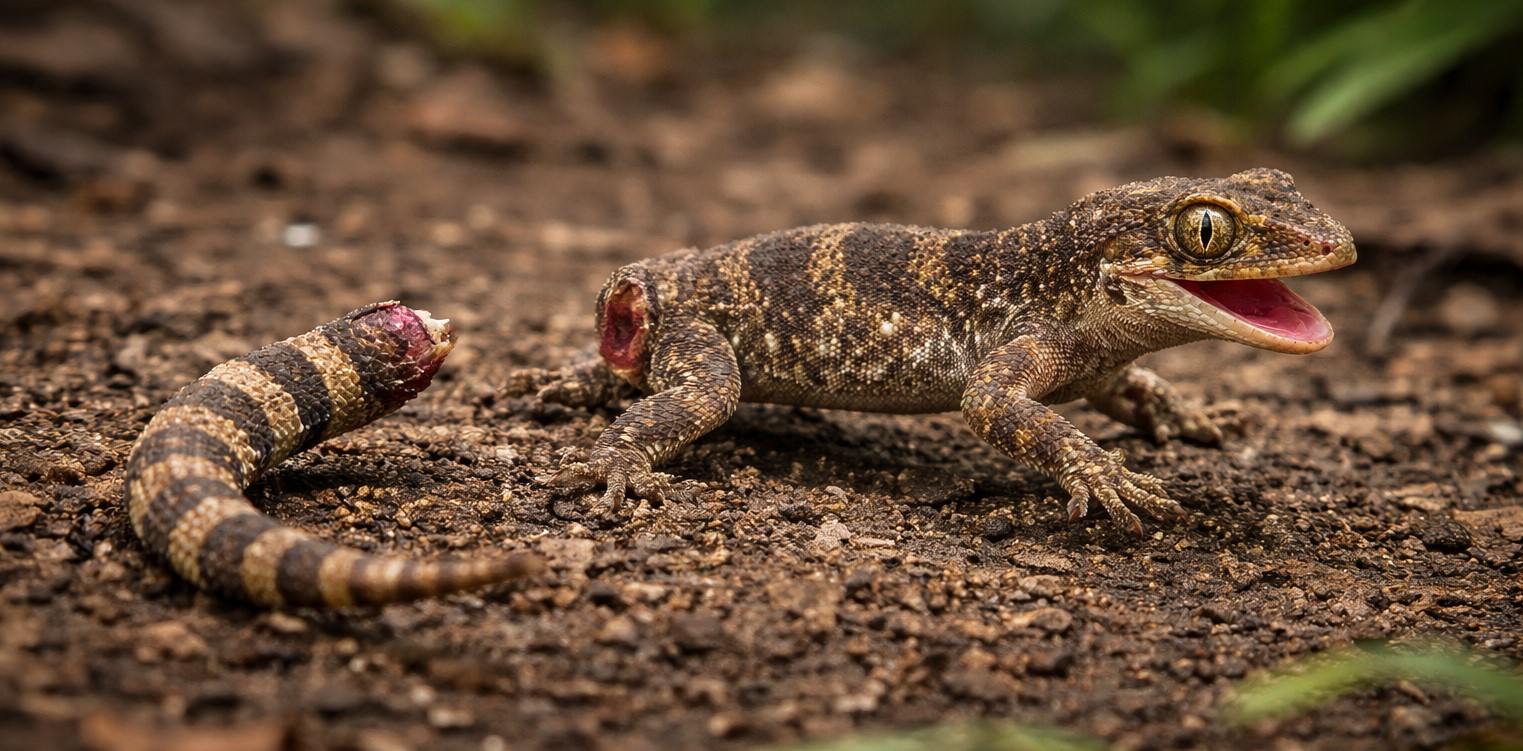
In that final, desperate moment, something extraordinary happens. The skink gives a violent shudder, and its long, brilliantly blue tail simply pops off. It falls to the ground not as a lifeless appendage, but as a writhing, thrashing decoy. The tail flips and spins with an energy all its own, its vibrant color impossible for the predator to ignore. The blue jay, its hunting instincts completely hijacked by this bizarre, twitching object, abandons the skink and pecks furiously at the disembodied tail. In that split second of confusion, the now-stubby lizard vanishes into a crack at the base of the pot, trading a piece of its body for its life.
This is not an injury. It is a calculated, biological masterstroke known as caudal autotomy. The lizard did not have its tail torn off. It chose to give it away. This incredible act raises so many questions. It makes you wonder, why do lizards drop their tails in such a dramatic fashion? How is such a clean break possible without the lizard bleeding to death? What makes that twitching tail such an effective distraction? And what is the true cost of sacrificing a major part of your body to live another day?
The Anatomy of a Clean Break
The lizard’s escape seems like magic, but it is a marvel of anatomical engineering. The secret to this clean break lies not between the tail bones, but right through the middle of them. A lizard’s tail is built with a series of special vertebrae that have built-in “fracture planes.” Think of them like perforated lines on a piece of paper, designed to tear cleanly under specific pressure. These weak points run through the center of the bone and the surrounding muscle tissue, creating a pre-determined line for the tail to snap off.
This is not a passive process. The lizard has voluntary control over the detachment. When threatened, it can contract a specific ring of muscles around one of these fracture planes. The contraction is powerful and precise, causing the vertebra to split and the tail to pop off. It is a neurologically controlled action, a deliberate decision made in a fraction of a second. This is the core of the lizard tail autotomy explained: it is a controlled self-amputation, not a traumatic injury.
But what about the blood? Severing a major body part should be a fatal wound. Here, evolution has provided another ingenious solution. The main artery running down the tail, the caudal artery, is surrounded by tiny sphincter muscles. The very moment the tail detaches, these muscles constrict with incredible force, instantly pinching the artery shut. This biological tourniquet prevents catastrophic blood loss, allowing the lizard to flee without leaving a life-threatening trail of blood. The spinal cord is also designed to separate cleanly, minimizing neurological damage and ensuring the lizard remains mobile and coordinated enough to make its escape. The entire system is a perfectly orchestrated sequence of events, refined over millions of years to turn a potential death sentence into a survivable event.
A Masterclass in Misdirection
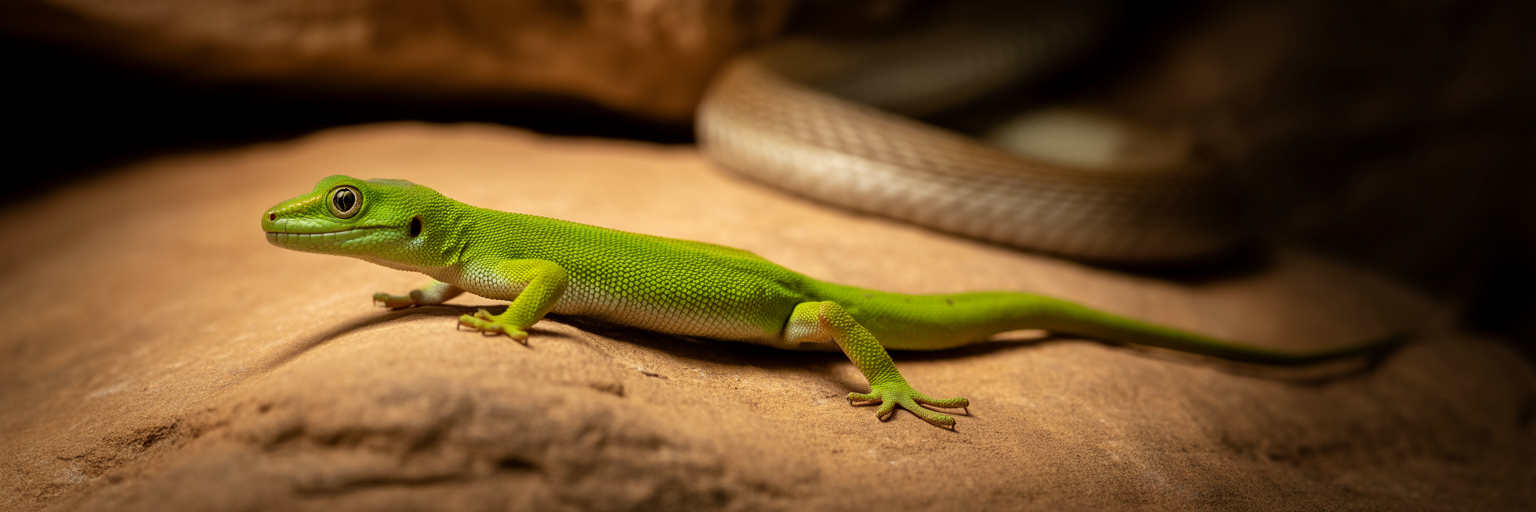
Once the tail is detached, its job is far from over. It transforms from a body part into an active, performing decoy. The tail does not just lie on the ground. It thrashes, flips, and writhes with a startlingly lifelike energy for several minutes. This is not random twitching. The movement is powered by stored anaerobic energy within the tail muscles and is controlled by independent neural pathways in the severed segment of the spinal cord. In a way, the tail has its own temporary “brain” that executes a pre-programmed dance of distraction.
This performance is a masterclass in psychological warfare. The erratic, violent movement perfectly mimics a struggling creature, triggering a predator’s innate attack response. A cat, a bird, or a snake sees the twitching tail and is compelled to subdue it. This gives the lizard the precious seconds it needs to disappear. The strategy is so effective that many juvenile lizards have evolved brightly colored tails, like the electric blue of the skink or the vibrant orange of a young gecko. These colors serve a single purpose: to make the tail a more conspicuous and irresistible target. The predator’s attention is drawn directly to the most disposable part of the lizard’s body.
The tail is, in essence, a sophisticated, sacrificial lure. It is one of the most dramatic animal survival mechanisms found in nature, where an organism uses a part of itself as bait. The predator gets a small, unsatisfying meal, while the lizard gets to live. This incredible escape tactic is just one of many astonishing survival strategies found in nature. For instance, some creatures have evolved to endure the digestive system of a predator and make it out alive, a feat detailed in the article about animals that can survive being swallowed and escape alive. The lizard’s tail trick is a powerful reminder that in the struggle for survival, the most creative solution often wins.
The Hidden Costs of Survival
Escaping a predator by dropping your tail is a victory, but it comes at a steep price. The lizard may have survived the encounter, but it now enters a period of extreme vulnerability and hardship. The trade-off is significant, and the costs can affect every aspect of the lizard’s life. While the immediate benefit is obvious, the long-term consequences are severe.
The post-autotomy period is a desperate race to recover while severely handicapped. The lizard has won the battle, but the war for survival has just become much harder. The significant impact on a lizard’s health and reproductive capacity is well-documented. As a 2021 review published in the journal Biology titled “At What Cost? Trade-Offs and Influences on Energetic Investment in Tail Regeneration in Lizards Following Autotomy” synthesizes, the energetic costs of regrowth can divert resources from other vital functions. The primary costs include:
- Massive Energy Loss: For many lizards, the tail is the primary fat storage organ. It is like a pantry they carry with them. Losing the tail means losing critical energy reserves needed to survive lean periods, endure hibernation, or fuel the demanding process of reproduction. A lizard without its tail is a lizard running on empty.
- Impaired Physical Abilities: The tail is not just for show. It is essential for balance, acting as a rudder during high-speed runs and a counterbalance while climbing. A tailless lizard is slower, clumsier, and less agile, making it an easier target for the next predator that comes along.
- Loss of Social and Reproductive Status: In many lizard species, the tail is a key part of social signaling. A long, healthy tail can signify dominance and fitness. It is often used in courtship displays to attract a mate. A lizard that has lost its tail can plummet down the social ladder, losing its ability to defend its territory or find a partner.
The Remarkable Process of Regrowth
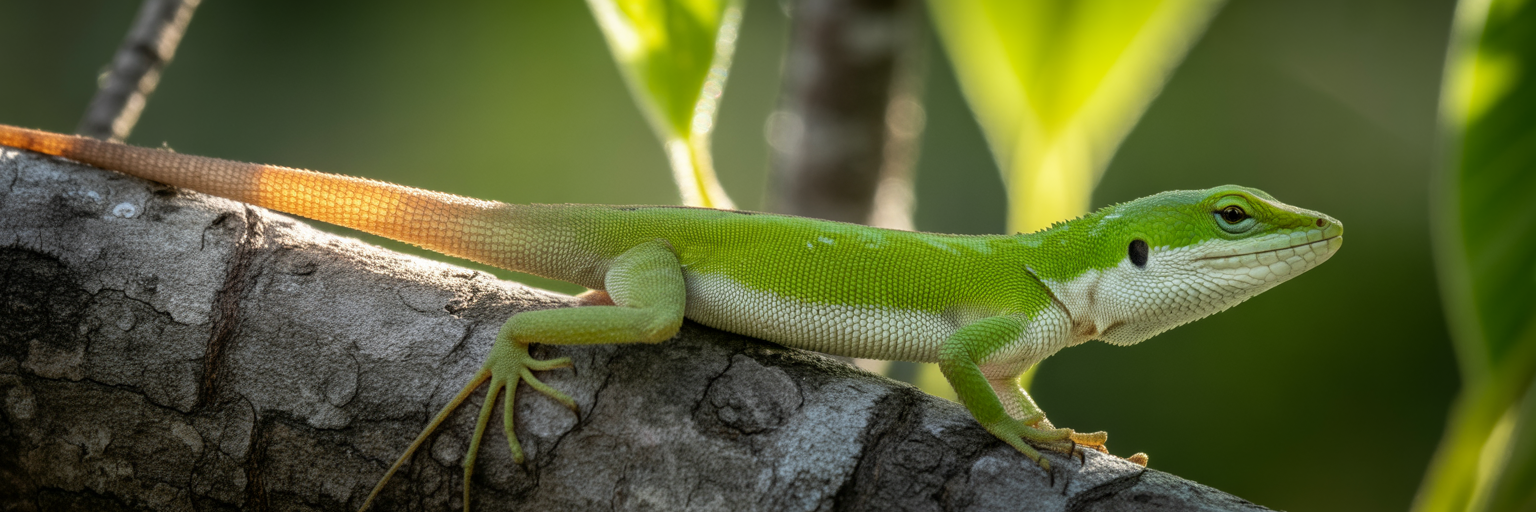
Once the lizard has escaped to safety, its body begins one of the most impressive construction projects in the animal kingdom: regenerating the lost tail. This is not simple healing. It is the complete rebuilding of a complex appendage, a process that showcases the incredible power of stem cells and developmental biology. Understanding how do lizards regrow tails reveals a step-by-step biological marvel. The lizard tail regeneration process can be broken down into a few key stages:
- Wound Healing and the Apical Cap: The first step is immediate damage control. The wound at the stump of the tail quickly seals over with a layer of skin. This is more than just a scab. A specialized structure called the apical epidermal cap forms over the wound. This cap acts as a crucial signaling center, sending out molecular instructions to orchestrate the entire regrowth process.
- Blastema Formation: Beneath the apical cap, a remarkable event occurs. A mass of undifferentiated cells, known as a blastema, begins to form. These are stem-like cells that have the potential to become any type of tissue needed for the new tail. The blastema is the biological command center and the on-site construction crew, containing all the raw materials and instructions for building a new appendage from scratch.
- Cell Proliferation and Differentiation: With the blastema in place, the construction begins. The cells multiply rapidly, creating the bulk of the new tail. Then, guided by complex genetic and chemical signals, these cells begin to differentiate. They transform into all the necessary components: new muscle tissue, skin, nerves, blood vessels, and the vital cartilaginous support structure that will form the new “backbone” of the tail.
This entire process is incredibly demanding. The lizard must divert a huge portion of its daily energy intake to fuel this rapid cell growth and differentiation. This often comes at the expense of its own body growth or immune system, leaving it more susceptible to disease. Depending on the species, the lizard’s age, and its overall health, regrowing a tail can take weeks or even months. The ability to regenerate complex body parts is a superpower in the animal kingdom. While lizards rebuild their tails, other animals have developed equally impressive regenerative abilities, such as those detailed in this piece on animals that can regrow skin stronger than before.
An Imperfect Replacement
While the ability to regrow a tail is astonishing, it is crucial to understand that the new tail is not a perfect copy. The regenerated appendage is a functionally inferior replacement, a biological patch-up job that gets the lizard back on its feet but never fully restores the original. The differences between the original and the replacement are significant and reveal the compromises inherent in this survival strategy.
The most profound difference lies in the skeleton. The original tail was built around a complex, flexible chain of individual vertebrae. The new tail is supported by a much simpler structure: a single, unsegmented tube of cartilage. You can think of it like a simple tent pole replacing a sophisticated spinal column. This has major functional consequences. The regenerated tail is stiffer and far less flexible. More importantly, it usually cannot be dropped again. The new cartilaginous rod lacks the specialized fracture planes, meaning autotomy is a one-time trick for that section of the tail.
The differences are also visible on the surface. The scales on the new tail are often a different size and shape, with a more irregular pattern and a duller color. The complex musculature of the original is replaced by a simpler, less powerful muscle structure. The table below summarizes these key differences, highlighting that regeneration is a process of functional recovery, not perfect replication. This imperfect yet functional regrowth is a testament to evolution’s practical solutions. It fits among a host of nature’s unsettling creations that defy belief, which prioritize survival over perfection.
| Feature | Original Tail | Regenerated Tail |
|---|---|---|
| Skeletal Structure | Segmented chain of vertebrae | Single, unsegmented cartilaginous tube |
| Flexibility | Highly flexible and mobile | Stiffer with limited flexibility |
| Autotomy Potential | Can be detached at multiple fracture planes | Generally cannot be autotomized again |
| Appearance | Seamless scales, often brightly colored | Irregular scales, often duller in color |
| Musculature | Complex and powerful | Simpler and less powerful muscle structure |
This table summarizes the key structural and functional differences between a lizard’s original tail and its regenerated replacement, highlighting that regeneration is a process of functional recovery, not perfect replication.
An Evolutionary Balancing Act

Caudal autotomy is a textbook example of an evolutionary trade-off. It is a high-stakes gamble where the ultimate prize, survival, is weighed against a host of significant costs: massive energy loss, reduced mobility, diminished social status, and the enormous metabolic expense of regrowth. The fact that this trait is so widespread across diverse lizard families, from geckos and skinks to anoles and iguanas, is powerful evidence of its incredible effectiveness. It is a winning strategy in the brutal calculus of natural selection.
This phenomenon is a brilliant example of convergent evolution, where different, unrelated species independently arrive at the same solution to a common problem. The universal threat of predation has driven countless lizard lineages to develop this same ability to sacrifice a part for the whole. This strategy, known broadly as autotomy, is not exclusive to lizards but is one of its most dramatic examples. As noted on Wikipedia, the voluntary shedding of a body part is a defense mechanism found in many invertebrates and some vertebrates, showcasing a powerful example of convergent evolution.
The decision to drop the tail is not always an automatic reflex. Research suggests that factors like the lizard’s age, its current energy reserves, and the perceived level of threat can all influence the “choice.” An older lizard with a tail full of fat reserves might be more reluctant to drop it than a young, expendable juvenile. In the end, this bizarre and fascinating behavior is a product of natural selection’s relentless logic. The ability to detach, distract, and escape, despite the heavy price, has proven to be a successful strategy in the game of life. The world of biology is filled with such incredible adaptations, each a story of survival against the odds. To continue exploring these wonders, you can visit the homepage of Nature Is Crazy.