An Eerie Light in the Forest Deep
Imagine you are walking alone through a forest at night. Not a manicured park, but a real, untamed wood, like the damp, moss-draped forests of the Pacific Northwest or a shadowed hollow deep in the Appalachians. The air is thick with the scent of wet earth and the sweet perfume of decay. It’s so quiet you can hear your own heartbeat between the rhythmic chirping of crickets. The snap of a twig under your boot sounds like a gunshot in the profound silence. You feel a primal sense of isolation, a quiet unease that hums just beneath your skin.
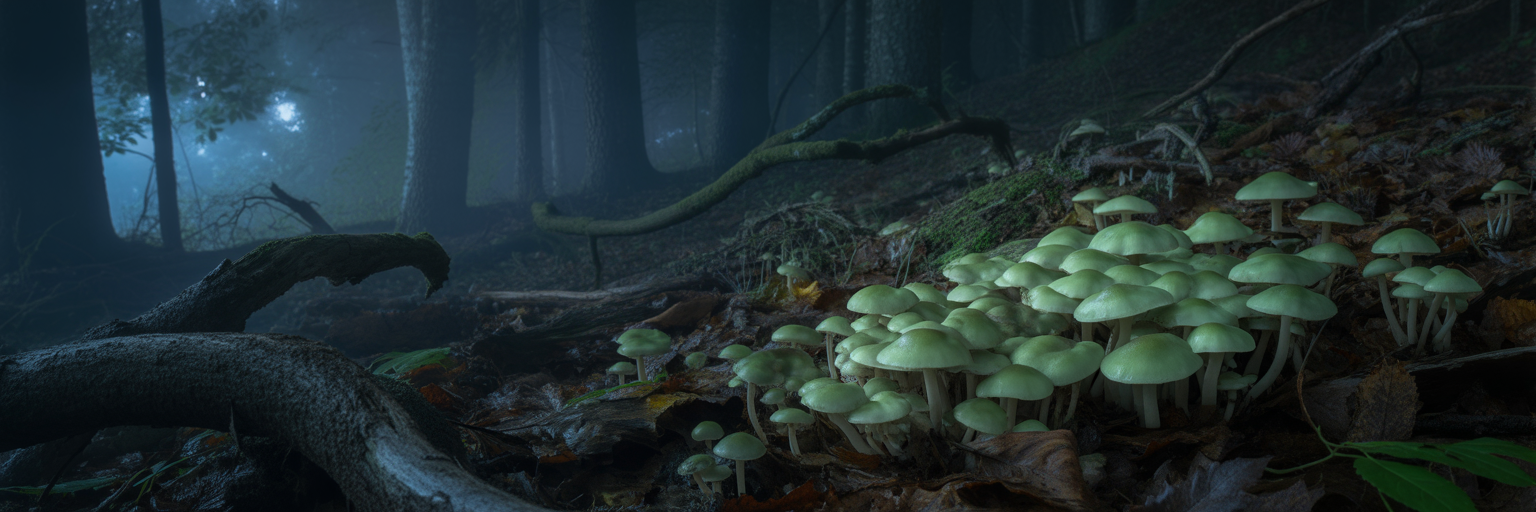
Then, you see it. A faint, greenish glow flickers in your peripheral vision. It’s not the sharp, fleeting blink of a firefly or the cold, blue light of a phone screen. This light is soft, steady, and deeply unnatural. It seems to pulse with a silent energy, clinging to the base of an old, rotting log. You stop, your breath held tight in your chest. Your mind scrambles for a rational explanation. Is it a discarded toy? Some strange phosphorescent mineral? The light seems to beckon, drawing you closer against your better judgment.
As you approach, the source reveals itself. It’s just a humble cluster of mushrooms. By day, you might have walked right past them, dismissing them as another drab feature of the forest floor. But here, in the suffocating dark, they are transformed. They are no longer simple fungi; they are spectral lanterns, emitting a ghostly, silent luminescence. This phenomenon has been known for centuries, often called foxfire. The name itself hints at its folkloric roots, a light that belongs to the cunning, otherworldly creatures of the woods.
The sight is both beautiful and unsettling. It feels like you’ve stumbled upon a secret the forest wasn’t meant to share. This initial encounter with the strange foxfire mushroom glow leaves you with a profound question that hangs in the cold night air. Nature is ruthlessly efficient. It doesn’t waste energy on pointless displays. So, why do mushrooms glow in the dark? The spectacle feels too deliberate to be an accident. Perhaps its purpose is not to create beauty, but to serve a function far more cunning, and far more sinister, than it first appears.
Whispers of the Ghost Fungus Through History
That feeling of stumbling upon a secret is an ancient one. Long before we had the tools of science, people across the globe encountered this same eerie light and struggled to explain it. The phenomenon of foxfire wasn’t discovered in a modern lab; it has been a part of human experience for millennia, documented by thinkers from Aristotle to Pliny the Elder, who marveled at this strange “cold fire” that burned on rotting wood without consuming it. Lacking a scientific framework, they did what humans do best: they attributed it to the supernatural.
In the absence of explanation, the glow was seen as the work of spirits, fairies, or ghosts. It was a light that belonged to another world, bleeding into ours in the darkest parts of the forest. But it wasn’t always just a source of superstitious fear. Some cultures found practical uses for this spectral illumination. In the dense jungles of Indonesia, certain tribes learned to carry pieces of glowing fungi or wood colonized by its mycelium, using them as natural, self-powered torches to find their way through the pitch-black undergrowth. It was a living light, a tool provided by the forest itself.
Elsewhere, the glow was used for more intimidating purposes. Micronesian tribes reportedly incorporated glowing fungi into ceremonial masks. Imagine a tribal warrior emerging from the darkness, his face an indistinct horror, lit from within by an unholy green light. The psychological impact would have been immense, transforming a man into a terrifying, ghostly apparition. These fungi are just one of many of nature’s unsettling creations that defy belief, blurring the line between the natural and the supernatural.
The phenomenon even found its way into American folklore and literature. Early settlers in the vast, dark forests of the New World told tales of these phantom lights. Mark Twain famously included it in *The Adventures of Huckleberry Finn*, where Tom and Huck use “rotten wood that shined in the dark” to light their tunnel, adding a layer of spooky, boyish adventure to their escape plan. For centuries, the glow remained a beautiful, useful, and terrifying mystery, a puzzle that humanity could observe but not solve. The journey from seeing it as magic to understanding its mechanics was a long one, waiting for science to finally catch up.
The Chemical Machinery of Cold Light
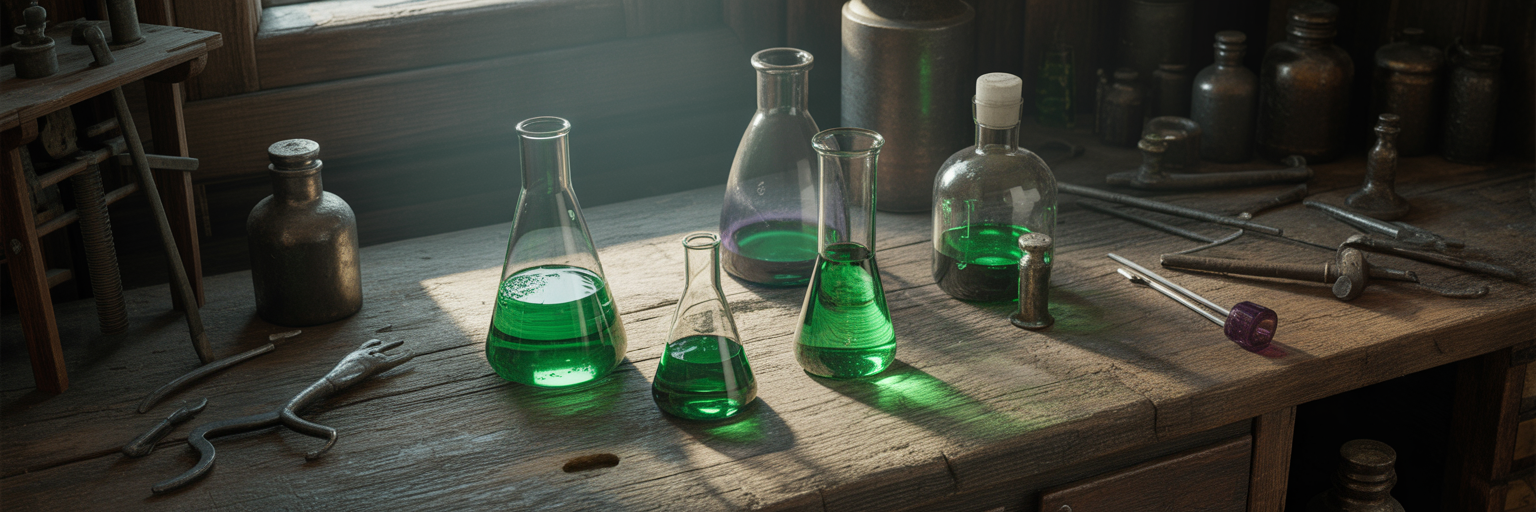
The transition from folklore to fact begins with a single concept: bioluminescence. This is the proper term for the glow, and it’s not magic, but a chemical reaction. Unlike fire, which produces intense heat, this is a “cold light,” generating almost no thermal energy. The mushroom isn’t burning; it’s running a tiny, incredibly efficient light factory within its cells. The science of glowing mushrooms is a fascinating tale of molecular machinery, and it all comes down to a specific chemical partnership.
The Luciferin-Luciferase Reaction
At the heart of nearly all bioluminescence is a duo of molecules: a luciferin and a luciferase. Think of luciferin as the fuel, the molecule that holds the potential for light. Think of luciferase as the spark, an enzyme that acts as a catalyst to unlock that potential. When these two meet in the presence of oxygen, the luciferase triggers a reaction that oxidizes the luciferin. This chemical change releases energy, but instead of releasing it as heat, it emits it as a photon—a particle of light. The result is that steady, ghostly glow.
A simple analogy is a glow stick. You have two chemicals stored in separate chambers. When you snap the stick, the barrier breaks, the chemicals mix, and light is produced. The mushroom is doing the same thing on a microscopic scale, continuously mixing its own unique chemical recipe to power its lanterns. This process is found in fireflies, deep-sea anglerfish, and glowing bacteria, but each has evolved its own distinct set of ingredients.
A Fungal-Specific Recipe for Light
While the principle is the same, the fungal recipe for light is entirely its own. For decades, scientists knew the general process but couldn’t identify the specific luciferin fungi used. The mystery was finally solved when, as a 2017 study published in Science Advances reports, researchers identified the compound as 3-hydroxyhispidin. This discovery was a major breakthrough in the field of mycology, revealing a chemical pathway that had remained hidden in plain sight.
This unique chemistry is a testament to the incredible diversity of life’s solutions. While we depend on oxygen for respiration, these fungi have co-opted it for illumination. It’s a reminder that the natural world is full of bizarre metabolic tricks, from these glowing wonders to the organisms that breathe metal instead of air. Understanding this chemical machinery provides the “how” of the glow. But it still leaves us with the most important question: “why?” The answer, it turns out, is where the story gets truly sinister.
A Lure for the Unsuspecting
After centuries of mystery, science has finally pulled back the curtain to reveal the glowing mushroom sinister reason. The light is not a happy accident or a whimsical display for our benefit. It is a calculated, manipulative advertisement designed for a very specific audience: the insects of the forest floor. In the still, dark undergrowth, wind is often an unreliable method for spreading spores. The fungus needed a better courier service, so it evolved one.
The leading theory, known as the spore dispersal hypothesis, paints the fungus as a brilliant and ruthless strategist. The glow acts as an irresistible beacon for nocturnal insects like beetles, flies, moths, and ants. A 2015 study published in Current Biology provided strong evidence for this by using fake, LED-lit acrylic mushrooms. They found that the illuminated fakes were swarmed by the exact kinds of insects best suited for spore dispersal, while the dark control mushrooms were largely ignored. The light is, without a doubt, a lure.
The process is a masterpiece of manipulation:
- The fungus emits its constant, eerie glow, but only at night, conserving energy when the light would be washed out by the sun. This timing perfectly aligns with the activity of its target audience.
- Nocturnal insects, navigating the darkness, are drawn to the strange light, perhaps mistaking it for a food source, a patch of moonlight, or simply a point of curiosity.
- As the insects land and crawl over the mushroom’s gills, they become covered in its fine, sticky spores. They are unwitting accomplices in the fungus’s reproductive scheme.
- When the insects fly or crawl away, they carry the fungal spores with them. They deposit these spores on new logs, trees, and patches of soil, effectively planting the next generation of glowing fungi across the forest.
The fungus has essentially turned these insects into a fleet of tiny, unpaid gardeners. This manipulative power is a recurring theme in nature, not unlike how some plants can control the growth of nearby roots to outcompete their neighbors. While the spore dispersal hypothesis is the most widely accepted explanation, some scientists suggest the glow might also serve as a warning, deterring nocturnal animals that might otherwise eat the fungus. It’s possible both are true. The light could be a “come hither” sign for some and a “stay away” sign for others—a truly diabolical piece of multitasking.
A Rogues’ Gallery of Glowing Fungi
Now that you know their secret, it’s time to meet some of the culprits. Bioluminescence has evolved independently in over 100 species of fungi, each with its own unique characteristics. Here are a few of the most notorious members of this glowing rogues’ gallery.
The Deceptive Jack O’Lantern
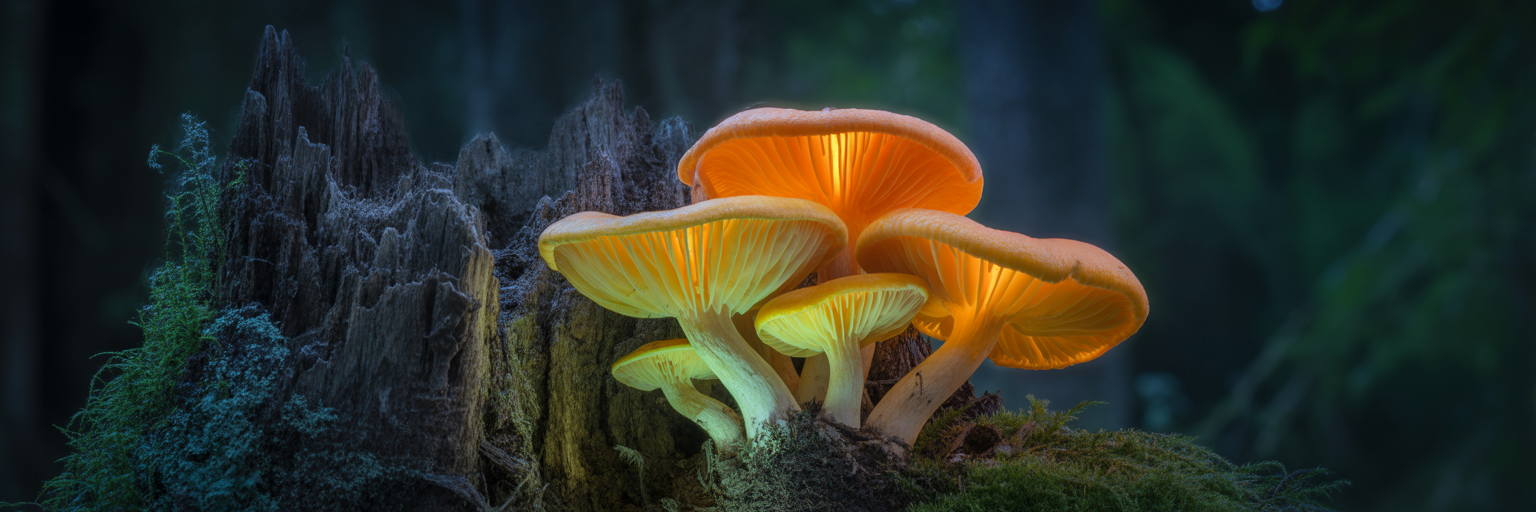
Perhaps the most infamous glowing fungus in North America is the Jack O’Lantern mushroom (Omphalotus olearius). By day, it’s a beautiful, vibrant orange mushroom that grows in large, dense clusters on decaying wood. It’s also a dangerous mimic, often confused with delicious edible chanterelles by inexperienced foragers. This mistake can lead to a miserable night of severe gastrointestinal distress. But its true sinister nature is revealed after dark, when its sharp gills begin to emit a ghostly green glow. It’s the perfect embodiment of the article’s theme: a beautiful lure that hides a toxic secret.
The Sprawling Honey Mushroom
Not all foxfire comes from the mushroom cap itself. The Honey Mushroom (Armillaria mellea) is famous for another reason: its vast underground networks. The mushroom caps themselves don’t typically glow, but their mycelium—the root-like fungal body that spreads through wood—does. This can create huge, eerie patches of glowing wood on the forest floor, making it look as if the ground itself is lit from within. Some of these mycelial networks are among the largest organisms on Earth, sprawling for miles and living for thousands of years, all glowing faintly in the dark.
The Delicate Ghost Mushroom
Found in the subtropical forests of Asia and Brazil, species like *Mycena chlorophos* are known as Ghost Mushrooms for good reason. These delicate, bell-shaped fungi produce an intensely bright but fleeting glow. Their luminescence is strongest on the first day they open and fades over the next 72 hours, a brief and spectacular light show. Their ephemeral nature only adds to their mystique, a ghostly presence that appears for a few nights before vanishing back into the darkness.
Spotting these fungi in the wild requires patience and a bit of luck. Look for them in damp, dark forests during late summer and fall, especially on decaying logs and stumps. But a word of caution is essential: never touch or, under any circumstances, consume a wild mushroom you cannot identify with 100% certainty. Many glowing species, like the Jack O’Lantern, are poisonous. It’s best to admire their sinister beauty from a safe distance, appreciating them as one of nature’s most incredible survivalists, right up there with animals that can survive being swallowed and escape alive.
| Mushroom Species | Common Name | Glowing Part | Toxicity | Typical Habitat |
|---|---|---|---|---|
| Omphalotus olearius | Jack O’Lantern | Gills | Poisonous (causes severe gastrointestinal distress) | Decaying hardwood stumps and roots, especially oak |
| Armillaria mellea | Honey Mushroom | Mycelium (the root-like network in wood) | Edible when cooked, but can be confused with toxic species | Living trees and dead wood, often in large clusters |
| Panellus stipticus | Bitter Oyster | Gills and mycelium | Inedible (extremely bitter) | Decaying logs and stumps of hardwoods like oak, birch, and maple |
| Mycena chlorophos | Ghost Mushroom | Cap and gills | Toxicity unknown/not consumed | Woody debris in subtropical forests (e.g., Japan, Brazil) |