

Meet Nature’s Creepiest Mathematician
Most of us view the plant kingdom with a certain benign neglect. Plants are the quiet, green background characters of our lives. They sit on windowsills, decorate office corners, and generally mind their own business. We water them, sometimes talk to them, and assume they are doing little more than passively soaking up sunlight. Then there is the Venus flytrap. This is not a passive houseplant. This is a predator that does math before it kills.
When you see a Venus flytrap snap shut, it’s easy to assume it’s a simple reflex, like a knee jerking when tapped. But the truth is far more unsettling. The plant isn’t just reacting. It’s making a decision. It processes data, demonstrates a form of short-term memory, and only acts when the numbers add up. It’s not waiting for food; it’s running the numbers on a potential victim. This calculated approach hints at a level of carnivorous plants intelligence that feels less like botany and more like the patient cunning of a hunter setting a trap.
The idea that a plant can count, even in a rudimentary way, should make you look at your own potted friends with a newfound suspicion. What else are they up to when we’re not looking? The Venus flytrap forces us to confront the hidden complexities of the natural world. Its mechanism is a masterpiece of evolutionary engineering, a system so efficient and logical it feels almost alien. It has a memory, albeit a short and sinister one, and it uses it to distinguish between a meal and a false alarm.
This isn’t just a quirky biological fact. It’s a glimpse into a world where the lines between plant and animal behavior blur. These creepy smart plants operate on a level of sophistication we are only just beginning to understand. They remind us that nature is full of surprises, and that intelligence can take forms we never expected. The flytrap’s calculating nature is just one of nature’s most unsettling creations that defy belief, a testament to the strange and wonderful solutions life can invent. Before we explore its sinister logic, let’s first examine the weapon itself.
Anatomy of a Botanical Bear Trap

To understand how a Venus flytrap thinks, you must first appreciate the lethal perfection of its design. The trap, known botanically as a bilobed leaf, is not a flower or a fruit. It is a weapon. The two leaf lobes are hinged together, forming a living cage that waits with unnerving patience. The interior of the lobes is often tinged with red, a color that attracts insects, and it glistens with a sweet nectar. This isn’t a friendly offering. It is bait, strategically placed to lure unsuspecting prey to the most dangerous spot on the planet for a fly.
The edges of these lobes are lined with stiff, interlocking bristles called cilia. When the trap snaps shut, these cilia mesh together like the bars of a prison, creating a cage that is easy to enter but impossible to leave. But the true genius of the trap lies in a few tiny, almost invisible filaments on the inner surface of the lobes: the Venus flytrap trigger hairs. These are not just bristles. They are the hyper-sensitive nerve endings of this botanical predator, the tripwires of a meticulously set trap. There are typically three of these hairs on each lobe, and touching them is what initiates the entire deadly sequence.
The iconic snap is a marvel of biomechanics, a beautiful and violent event that explains how Venus flytraps work on a physical level. The lobes are held open in a convex shape, like a bent spring, storing potential energy. When the trigger hairs are stimulated correctly, they send an electrical signal that causes a rapid shift in water pressure, or turgor, within the cells of the leaf’s midline. In less than a tenth of a second, the lobes flip from convex to concave, snapping shut with astonishing speed. It’s a purely mechanical action, but one initiated by a surprisingly complex decision.
Once the cilia have interlocked and the prey is secured, the trap slowly seals itself, becoming a hermetic chamber. At this point, the trap transforms from a cage into a stomach. The plant secretes digestive enzymes that break down the soft tissues of the insect, allowing the leaf to absorb essential nutrients. The entire structure is a perfectly engineered, organic killing machine, from the deceptive bait to the final, gruesome act of digestion. It’s a botanical bear trap, and it never misfires.
The Sinister Sequence of a Kill
The true horror of the Venus flytrap isn’t in its snap, but in the cold, calculated logic that precedes it. The plant follows a strict, multi-step protocol before committing to a kill, a process that proves these are plants that can count. This isn’t guesswork; it’s a precise sequence designed to maximize efficiency and conserve energy.
The First Touch: A Test of Patience
Imagine a curious fly, drawn by the sweet nectar, landing on one of the lobes. As it crawls, it brushes against one of the trigger hairs. And what happens? Absolutely nothing. The trap remains wide open. This is not a failure. This is the first step in its algorithm. A single touch could be anything: a raindrop, a piece of falling debris, a gust of wind. The plant registers the stimulus, an electrical charge is generated, but it waits. It is a test of patience, a way to filter out false alarms and avoid wasting energy on a non-meal. The clock has started.
The Second Touch: The Trap is Sprung
The plant now enters a state of heightened alert. It has a short-term memory that lasts for about 20 seconds. If a second touch occurs on any of the trigger hairs within this window, the plant makes its move. The combined electrical signals cross a threshold, and the trap snaps shut with incredible speed. The fly is now imprisoned within the barred cage of the cilia. If the second touch comes after the 20-second window has expired, the plant “forgets” the first touch, and the count resets. It treats the new stimulus as a first touch all over again, demonstrating its ruthless efficiency.
The Final Count: Confirming the Kill
Here is where the counting becomes even more sophisticated. The trap has snapped, but it is not yet hermetically sealed. The plant needs one final confirmation that it has caught something worthwhile. The struggling insect, frantically trying to escape, will inevitably bump against the trigger hairs again and again. These subsequent touches, the third, fourth, and fifth, send more electrical signals. This sustained stimulation is the ultimate proof of a live, nutritious meal. As a recent study in the Wiley Online Library highlights, the number of these action potentials directly informs the plant’s next decision. Only after receiving this final confirmation does the trap seal completely, the digestive glands activate, and the process of consumption begins. It’s a final, ruthless verification before committing to the costly act of digestion.
This multi-stage process is a masterclass in biological cost-benefit analysis, as illustrated below.
| Stimulus (Touch Count) | Plant’s Internal State | External Action | Purpose |
|---|---|---|---|
| Touch 1 | Electrical potential generated; memory timer starts (approx. 20s) | None. The trap remains open. | Filter out false alarms (wind, rain, debris). |
| Touch 2 (within 20s) | Electrical threshold reached. | Trap snaps shut in <0.1 seconds. | Capture potential prey quickly. |
| Touch 2 (after 20s) | Memory reset. Treated as a new ‘Touch 1’. | None. The trap remains open. | Conserve energy by ignoring isolated stimuli. |
| Touches 3, 4, 5+ (by struggling prey) | Second, higher electrical threshold reached. | Trap seals hermetically; digestive enzymes are secreted. | Confirm a live, nutritious meal and commit to digestion. |
Inside the Mind of a Counting Plant
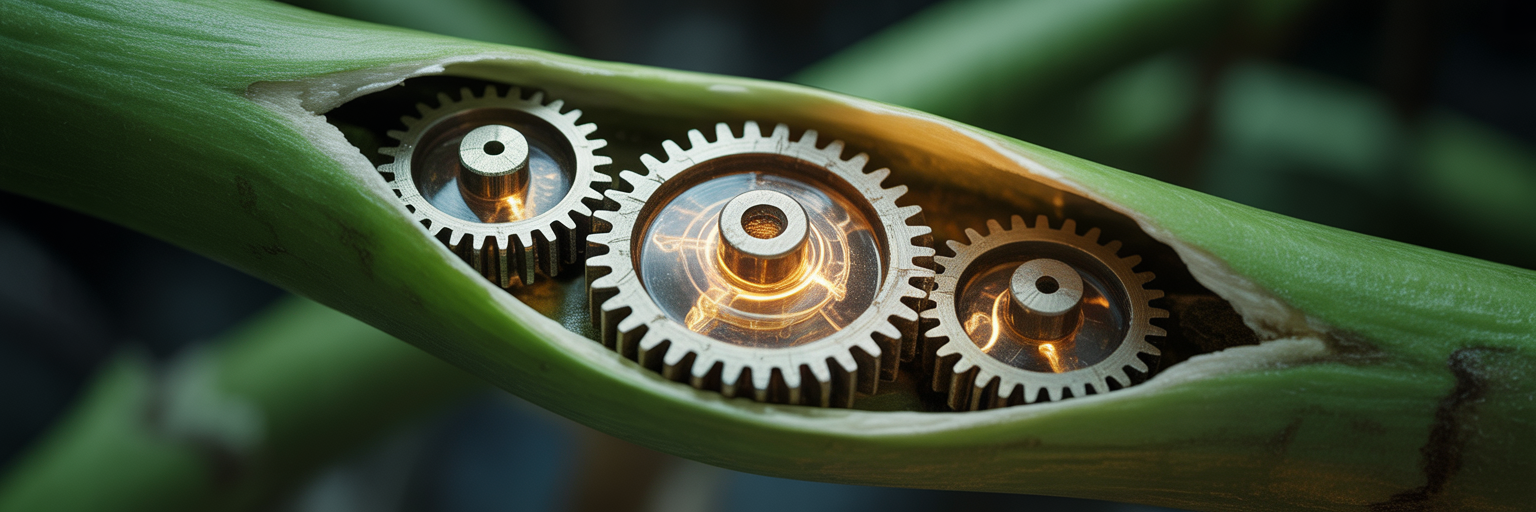
Calling this process “counting” feels both accurate and misleading. The plant isn’t performing arithmetic in its head. Instead, it’s engaged in a sophisticated biochemical process that achieves the same result. Understanding this mechanism reveals some of the most fascinating Venus flytrap facts and blurs the line between simple biology and what we perceive as intelligence.
What ‘Counting’ Really Means
The “counting” is, in reality, the accumulation of electrical signals. Each time a trigger hair is bent, it generates a tiny electrical charge called an action potential. This is the same type of signal that runs through the nerve cells of animals. The plant essentially stores this charge for a short period. One touch creates a small, sub-threshold charge. A second touch adds to it, pushing the total charge over the threshold required to trigger the trap’s snap. The subsequent touches from a struggling insect continue to add to the charge, pushing it over a second, higher threshold that initiates digestion. So, the plant isn’t counting “one, two, three,” but rather measuring whether the electrical stimulus is “low, medium, or high.”
Calcium: The Plant’s Electrical Messenger
The key to this entire system is calcium. When a trigger hair is touched, it opens ion channels in the cells, causing a wave of calcium ions to flood into the cell’s cytoplasm. This wave of calcium is the “memory” of the touch. The first touch creates a certain concentration of calcium. If a second touch occurs before this calcium has been pumped back out of the cytoplasm, the concentration spikes, reaching the critical level needed to trigger the change in turgor pressure that snaps the trap. As noted by science blogs like Cell Mentor, this calcium-based counting is a subject of serious scientific study, revealing a system of remarkable precision.
A Nervous System Without Nerves?
This is perhaps the most unsettling part. The Venus flytrap has no brain, no ganglia, and no nerves. Yet, it has a signaling network that mimics a primitive animal nervous system. It can receive sensory input, process it, “remember” it for a short time, and make a complex, multi-stage decision based on that information. This ability is a powerful example of how nature develops solutions to complex problems, demonstrating that there are plants that can detect touch without any nervous system in ways that are both elegant and effective. This principle of guided, efficient decision-making isn’t unique to biology. In the digital world, for instance, the Shopify Experts at The Hope Factory design user experiences that guide customers through a purchase journey, using signals and triggers to create a seamless, high-conversion pathway. Both systems, one biological and one digital, rely on processing signals to achieve a specific, optimized outcome.
The Ruthless Logic of a Plant Predator
Why would a humble plant develop such a complex and macabre hunting strategy? The answer isn’t greed or malice. It’s ruthless, cold, and calculated logic driven by one thing: energy conservation. The entire counting mechanism is a highly evolved cost-benefit analysis tool, ensuring the plant never wastes precious resources on a bad investment.
Snapping its trap shut is energetically expensive. A single leaf can only perform this action a handful of times before it withers and dies. Producing the cocktail of digestive enzymes is even more costly. If a plant were to snap at every raindrop and attempt to digest every piece of falling debris, it would quickly starve itself to death. The counting system is its insurance policy against such wastefulness.
To understand this necessity, you have to look at the Venus flytrap’s native habitat. It grows in the nutrient-poor, acidic soil of subtropical wetlands in North and South Carolina. The ground it lives in is severely lacking in essential nutrients like nitrogen and phosphorus, which are vital for building proteins and DNA. The plant evolved carnivory not for calories from sugar, which it gets from photosynthesis like any other green plant, but for these critical mineral supplements. It eats insects for the same reason we take vitamins. It’s a matter of survival.
The counting mechanism is the precision tool that makes this survival strategy viable. It allows the plant to dominate its ecological niche with brutal efficiency. The evolutionary advantages are clear:
- It filters out false alarms: The first touch acts as a screening process, ignoring stimuli that are not indicative of a meal.
- It confirms a viable target: The second touch ensures the object is mobile and the right size to trigger multiple hairs.
- It verifies the investment: The final count confirms the prey is alive and struggling, making it worthy of the immense energy required for digestion.
This adaptation for a harsh environment is a recurring theme in the natural world. Just as the Venus flytrap developed a way to hunt for nutrients, there are organisms that breathe metal instead of air, finding ways to thrive in conditions that would be lethal to most other life forms. For these creepy smart plants, every action is a business decision, and the counting mechanism ensures they always turn a profit.
So, Should We Be Worried?

Let’s recap. We have a plant that can sense touch with exquisite sensitivity. It has a short-term memory. It can count. It makes calculated, multi-stage decisions based on a cost-benefit analysis to determine whether to capture, kill, and consume another living being. This collection of abilities dramatically blurs the line we like to draw between passive flora and active fauna. It forces us to ask some uncomfortable questions.
If a plant can develop a system that functions like a primitive nervous system, what other hidden intelligences have we overlooked in the world around us? The Venus flytrap is not an anomaly but a profound example of convergent evolution, where different life forms arrive at similar solutions to life’s challenges. Its abilities are not so different from those of some animals that can navigate without a brain, using decentralized networks to process information and interact with their environment. It’s a humbling reminder that a centralized brain is not the only path to complex behavior.
So, should you be worried about the ficus in your living room or the rose bushes in your garden? Probably not. The Venus flytrap is a highly specialized predator, a threat only to flies, spiders, and the occasional small frog foolish enough to trigger its trap. For now.
But the next time you see one, remember what’s happening inside that small green machine. It’s aware, it’s waiting, and it’s processing data. They’re small, they’re quiet, and they’re very, very patient. And they’re always counting.