The Silent Scream in Your Garden
Picture your backyard on a quiet summer afternoon. The sun is warm, a gentle breeze rustles the leaves of your tomato plants, and the freshly cut grass smells clean and green. It’s a picture of absolute peace. But this tranquility is a complete illusion. You are standing in the middle of a battlefield, oblivious to the constant, silent warfare raging at your feet. That pleasant smell of cut grass? That’s the airborne equivalent of a massacre, the chemical death cry of millions of blades of grass.
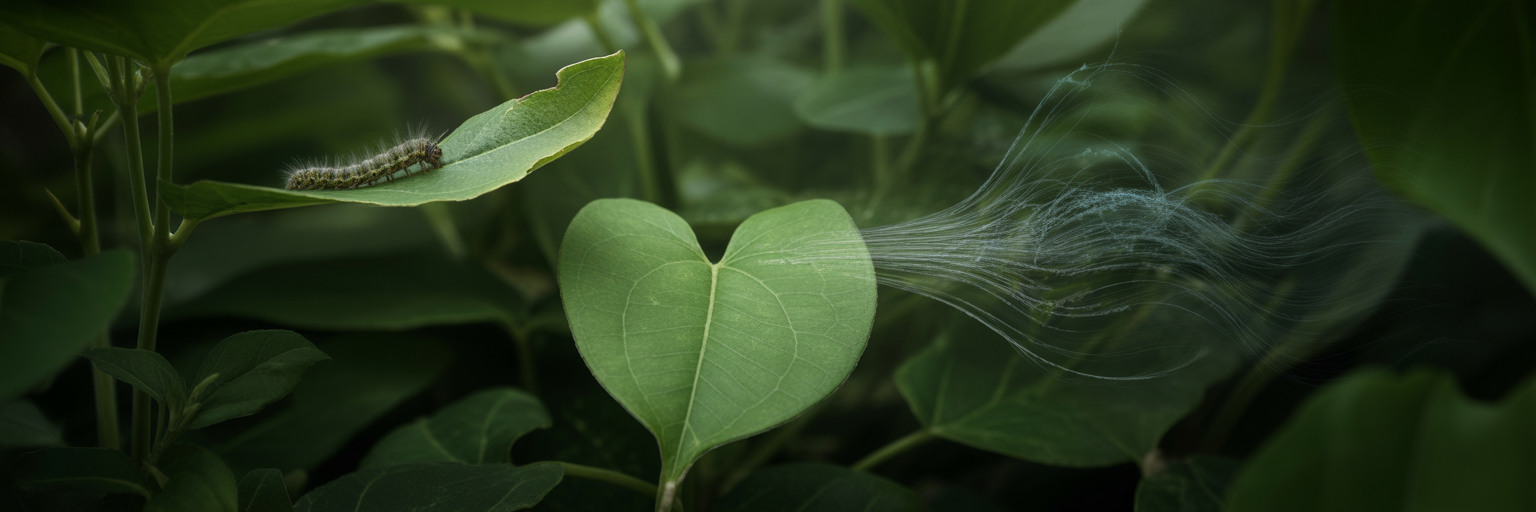
When a plump green caterpillar settles on a tomato leaf and takes its first bite, it’s not just garden variety pest control. It’s a violent assault. The plant doesn’t just sit there and take it. The moment its cells are torn, it releases a silent, invisible alarm. This isn’t a passive event. It’s a targeted broadcast, a chemical scream for help that travels on the breeze, warning every other plant in the vicinity that an attack is underway. Your other tomato plants, the basil you planted nearby, even the zucchini patch a few feet away, all receive the message. They know what’s happening.
We tend to see plants as little more than living decorations, passive organisms that exist to be either beautiful or edible. But what if that’s just what they want us to think? What if the gentle rustle of leaves is actually a network of whispers, a botanical intelligence agency passing secrets about threats and weaknesses? What does your prize winning rose bush know about the aphids currently feasting on the beanstalks? More than you might be comfortable with. They are constantly monitoring their environment, eavesdropping on their neighbors, and preparing for the worst. This silent communication network is just one of nature’s unsettling creations that defy belief, operating just beyond our limited senses.
This hidden world of plant communication has been functioning for millennia, a complex web of warnings, threats, and alliances playing out in every garden, forest, and field on the planet. We are only now beginning to tune into its frequency, and what we’re learning is deeply unsettling. The next time you’re weeding your garden, remember that you are not just an observer. You are a giant, blundering creature in a world that is far more aware, and far more communicative, than you ever imagined. Your plants are watching. And they are talking about you.
Decoding the Airborne Chemical Alarms

The eerie awareness of your garden isn’t magic. It’s chemistry. The entire system relies on a sophisticated language of scent, a constant stream of airborne messages that dictate the flow of information. To understand how do plants communicate, you have to learn their language, which is written not in letters, but in molecules. This is where the science gets specific, and frankly, a little creepy.
The Language of Scent: Volatile Organic Compounds
The alphabet of this silent language is made up of Volatile Organic Compounds, or VOCs. Think of these not as a generic “plant smell” but as highly specific scent signals. When a plant is under attack, it doesn’t just release a random odor. It releases a carefully crafted chemical message. A puff of one type of VOC might be a chemical flare that means “fungus detected,” while a different blend acts as a smoke signal for “caterpillar attack in progress.” As a report from Scientific American highlights, plants are constantly detecting the chemical “perfume” of their neighbors to eavesdrop on their condition. They are, in essence, smelling each other’s fear.
How a Plant ‘Shouts’ in a Chemical Language
So how does a plant “shout” this message? The process begins with physical damage. When an insect chews a leaf or a pathogen breaks through a cell wall, the plant’s cells rupture. This rupture triggers a rapid chemical reaction, synthesizing and releasing a specific cocktail of volatile organic compounds plants use to signal distress. The sophistication of this system is astounding. The chemical signature released for a Japanese beetle is different from the one for drought. The plant isn’t just screaming into the void. It’s broadcasting a detailed intelligence report about the specific nature of the threat it’s facing.
Listening with Leaves: How the Warning is Received
The warning is sent, but how is it received? The neighboring plants “listen” with their leaves. Their surfaces are covered in tiny pores and specialized receptors that are tuned to detect these airborne plant chemical signals. When the right VOC molecule drifts by and binds to a receptor, it’s like a key fitting into a lock. This connection triggers an internal cascade of signals within the receiving plant, essentially telling it, “The message is for you. It’s time to prepare for an attack.” Of course, the system isn’t perfect. Wind can carry a message too far, or not far enough. High plant density can create a confusing cacophony of signals. It’s a network of faint whispers and loud shouts, a constant stream of information that determines life and death in the garden bed.
| Distress Signal (VOC Family) | Triggering Event | The ‘Message’ Being Sent | Common Plant Emitter |
|---|---|---|---|
| Green Leaf Volatiles (GLVs) | Mechanical damage (e.g., chewing, cutting) | ‘I am being physically wounded right now!’ | Tomato, Corn, Grass |
| Jasmonates (e.g., Methyl Jasmonate) | Herbivore insect attack | ‘Prepare for chewing insects! Produce toxins.’ | Sagebrush, Tobacco |
| Terpenoids | Fungal or bacterial infection | ‘Pathogen alert! Bolster immune defenses.’ | Pine Trees, Citrus Plants |
| Salicylates (e.g., Methyl Salicylate) | Viral infection or aphid attack | ‘Systemic infection detected. Activate defenses.’ | Willow, Bean Plants |
The Preemptive Defenses of a Warned Plant
Receiving an airborne warning is one thing. Acting on it is another. A plant that has eavesdropped on its neighbor’s distress call is not a passive victim waiting for its turn. It is an active strategist, immediately initiating a series of sophisticated plant defense mechanisms based on that second hand intelligence. It doesn’t wait to be wounded. It prepares for war before the first shot is even fired. This preemptive action reveals a level of calculation that moves plants from the category of simple organisms to something far more aware and unsettling.
The warned plant’s response is a multi-pronged strategy designed to make itself as inhospitable as possible to the approaching enemy. Here are the primary defenses it deploys:
- Brewing a Poison Pill: Upon receiving the chemical alarm, the plant immediately ramps up production of toxic or bitter tasting compounds. It begins to brew a cocktail of chemicals like alkaloids, phenols, and tannins within its leaves. This is the plant deliberately making itself unpalatable, preparing a nasty, and often lethal, surprise for the insect that thought it was getting an easy meal. This form of chemical warfare is not unique, as there are even plants that can trigger chemical hallucinations in animals to deter them. The plant is essentially turning its own body into a poison pill.
- Armoring the Gates: The defense isn’t just chemical. It’s also physical. A warned plant can begin to reinforce its own structure. It can thicken the cell walls of its leaves, making them physically tougher and harder for chewing insects to penetrate. It can also produce more waxy cuticle on the leaf surface, creating a slippery, difficult to grip barrier. This is the botanical equivalent of boarding up the windows and reinforcing the doors before a storm hits. It’s a physical hardening against a known threat.
- Calling in Air Support: This is perhaps the most sophisticated and chilling defense of all. After receiving a warning about a specific type of herbivore, some plants release a completely different set of VOCs. This new chemical signal is not a warning. It’s a beacon. It is specifically designed to attract the predators of the attacking insect. For example, a plant might summon parasitic wasps. These wasps are drawn to the signal, where they find the caterpillars attacking the neighboring plant and lay their eggs inside them. The plant, acting on a warning from its neighbor, has just called in an airstrike. It turns its defense into a coordinated, multi species counter attack.
The key to all of this is that it is preemptive. The plant is acting on intelligence, not injury. It has heard the news from down the street and is preparing its household for the coming invasion. This level of strategic foresight is what makes the world of plant communication so profoundly strange. They are not just reacting. They are anticipating.
A Universal Language of Fear

The communication network in your garden is even more complex than one plant warning its immediate neighbor. The system operates on an open channel, where a distress signal from one species can be understood by a completely different one. A sagebrush being eaten by insects can send out a warning that a nearby wild tobacco plant can intercept and act upon. This inter species communication hints at a deeper, more integrated community than we ever suspected. The idea of plants influencing each other across species lines is a fascinating one, mirrored in other botanical interactions, such as how there are plants that can control the growth of nearby roots to manage resources.
What’s even more remarkable is what happens when multiple plants in an area come under attack. According to a report in Phys.org, studies from institutions like Cornell University have shown that as various plants are subjected to stress, their VOC emissions actually become more similar. They begin to converge on a shared “language of danger.” This is the most powerful insight into how do plants communicate on a community level. It’s like hearing a scream in a foreign city. You don’t need to speak the local language to understand the universal meaning of fear. The specific nuances of the message might be lost, but the core meaning, “danger is here,” is unmistakable.
This suggests that when faced with a common threat, the plant world can act like a single, interconnected superorganism. The individual species begin to speak the same language of panic, creating a community wide alert system that benefits everyone. A beetle attacking a bean plant might trigger a chemical shout that is understood by the nearby corn, squash, and even the weeds growing between them. The entire ecosystem becomes more resilient because the misfortune of one individual serves as a lesson for all.
This shared language has a profound evolutionary advantage. It creates a collective defense network where an attack on one is an attack on all. It adds a layer of creepy, hive mind like complexity to the silent drama unfolding in the plant world. They are not just individuals competing for sunlight and water. They are members of a community, sharing intelligence and working together to survive in a world filled with threats. They are all listening to each other’s screams.
Beyond Smell: The Unsettling Sounds of Stress
Just when you thought the secret life of plants couldn’t get any stranger, scientists discovered another layer of communication, one that is even more unsettling than airborne chemical whispers. It turns out that plants under severe stress don’t just send out scent signals. They also make sounds. As reported in National Geographic, recent studies have confirmed that stressed plants emit distinct airborne sounds, opening up a previously unknown channel of communication.
When a plant is severely dehydrated or when its stem is cut, it emits high frequency, ultrasonic “pops” or “clicks.” These sounds are far outside the range of human hearing, but they are detectable by specialized microphones and, more importantly, by other organisms in their environment. This isn’t a passive noise. The sounds are specific. A thirsty tomato plant makes a different pattern of clicks than one that is being cut. It is, for all intents and purposes, the sound of a plant screaming in thirst or crying out as it’s being wounded.
This discovery forces us to ask a profoundly weird question: can plants hear? While they don’t have ears in the way we do, they are incredibly sensitive to vibrations. It’s entirely possible that these ultrasonic pops are detected by neighboring plants as vibrations traveling through the air or soil. This auditory sense adds to the growing list of surprising plant abilities, similar to the revelation about plants that can detect touch without any nervous system, fundamentally changing how we view their sensory world.
This auditory channel is likely different from the chemical one. While VOCs are a slower, wider broadcast, a way of saying, “Danger is in the area, prepare yourselves,” these sounds might be an immediate, short range alarm. It’s the difference between a regional weather alert and a fire alarm going off in the room next door. The sound of a stem snapping could be an instantaneous signal to the plants right beside it that a large herbivore, like a deer, is actively feeding in their immediate vicinity.
The implications are deeply unsettling. The idea that a plant can literally *hear* its neighbor’s final moments challenges our most basic definitions of senses and consciousness. It means that every garden, forest, and field is filled with a constant stream of ultrasonic clicks and pops, a symphony of stress and survival that we are completely deaf to. It leaves you wondering what other conversations are happening all around you, just outside your limited range of perception.
Harnessing the Secret Language of Plants

Understanding this hidden world of plant communication is more than just a creepy scientific curiosity. It has the potential to completely change how we approach agriculture and manage our ecosystems. By learning to speak and listen to this botanical language, we can work with plants in ways we never thought possible. The eerie discovery of how plants sense danger is now paving the way for a future of smarter, more sustainable farming.
The practical applications of this knowledge are already being explored, and they sound like something straight out of science fiction. Here are a few of the most promising avenues:
- Sentinel Plants: Imagine planting a few highly sensitive “canary” plants within a massive crop field. These plants would be genetically predisposed to be excellent communicators. At the very first sign of a specific pest or disease, they would broadcast a powerful, targeted warning. This airborne alarm would trigger the plant defense mechanisms of the entire crop, allowing the field to protect itself naturally and dramatically reducing the need for chemical pesticides.
- Digital Eavesdropping: Scientists are developing advanced sensors, essentially “electronic noses,” that can detect and interpret specific plant chemical signals in real time. In the near future, a farmer might get a smartphone alert that reads, “Your cornfield is whispering about a fungal outbreak in row 7.” This would allow for incredibly precise, early intervention, treating a small problem before it can spread and devastate an entire harvest.
- Natural Crop Enhancement: Instead of relying solely on genetic modification, this knowledge can be used to breed crops that are naturally better “speakers” and “listeners.” By selecting for plants that are more sensitive to warnings and more effective at broadcasting their own, we can create more resilient agricultural systems that use their own internal communication networks to manage threats.
As we continue to decode this complex language, we move further away from the old view of plants as passive objects. We are beginning to see them as they truly are: active, calculating communicators in a vast, hidden network. The journey from seeing a simple garden to understanding a complex battlefield of whispers and warnings is a profound one. As we explore these incredible botanical abilities, it’s clear there’s a whole world of surprising biology out there. For those fascinated by nature’s hidden marvels, the broader collection of stories at Nature is Crazy offers a gateway to more wonders. After all this, one thing is certain. Your backyard will never look, or feel, the same again.