
Picture the final scene of a low-budget horror movie. The villain, after a long and tedious chase, finally succumbs to a minor flesh wound. He twitches unconvincingly, lets out a groan that sounds suspiciously like a yawn, and collapses with all the grace of a sack of potatoes. The performance is so bad you almost root for him to get back up. In the animal kingdom, however, a bad performance isn’t met with poor reviews. It’s met with being eaten. This is where our star performer enters the stage, a master thespian whose entire career hinges on perfecting one grim, horrifying role: its own death.
This isn’t just a simple trick. It’s a full-body commitment to the art of the abyss, a biological performance known as thanatosis. Think of it as a grotesque form of method acting for survival. While some animals might freeze or flee, this creature chooses to embrace the macabre. It understands that to truly sell a death scene, you need more than just stillness. You need production value. You need special effects that would make a seasoned horror director blush. The commitment is so absolute, so disturbingly thorough, that it forces us to ask a fundamental question. What kind of creature commits so fully to its role that it will cover itself in filth and bleed from its own mouth just to sell the performance?
Thanatosis: The Method Acting of the Animal World
The term itself, thanatosis, sounds like something whispered in a Greek tragedy. It comes from ‘Thanatos,’ the personification of death, and for good reason. This isn’t a conscious decision, like an actor remembering their lines. It’s a deep, involuntary physiological state, a complete surrender to the illusion of being a corpse. It’s the ultimate bluff, where the animal bets its life on its ability to be utterly, convincingly dead.
More Than Just Playing Possum
Many people confuse thanatosis with simply freezing in place, but the two are worlds apart. Freezing is an act of stealth, an attempt to go unnoticed. Thanatosis is an act of theater, designed to be seen, smelled, and ultimately, rejected. The difference is stark:
- Freezing: This is like a stagehand hiding in the wings. The animal is tense, coiled, and ready to bolt the second the coast is clear. Its senses are on high alert, and its goal is to avoid detection altogether.
- Thanatosis: This is a full-blown performance of death, designed to repel. The animal goes completely limp, its muscles slack and unresponsive. It’s not hiding; it’s presenting itself as spoiled goods, a meal not worth the risk.
This distinction is critical. A frozen animal is still prey. An animal in the throes of thanatosis is trying to become something else entirely: garbage.
The Biology of the Ultimate Bluff
So, what is thanatosis in animals? It’s a physiological shutdown so profound it borders on the unbelievable. The animal’s heart rate and breathing plummet to nearly undetectable levels. This isn’t just holding its breath; it’s a biological commitment to the role, a system-wide cascade that mimics the process of dying. The body becomes flaccid, the mouth often hangs open, and the animal is completely unresponsive to touch.
Of course, this strategy is a high-stakes gamble. What if the predator is a scavenger that actually prefers a dead meal? What if the shutdown is so complete that the animal can’t recover? It’s a desperate, last-resort tactic that makes the performance all the more compelling. The risks are immense, which is why evolution has equipped these performers with incredible control. Some animals have even developed ways to completely shut down pain signals at will, making such extreme survival tactics possible. This isn’t just playing dead; it’s a biological masterpiece of deception, a terrifyingly convincing lie told at the cellular level.
The Gory Theatrics of the Dice Snake
While many creatures dabble in the dramatic arts of death-feigning, one performer stands out for its sheer, stomach-churning commitment. Meet the dice snake (Natrix tessellata), an artist whose medium is blood, filth, and the primal power of disgust.
The Unassuming Star with a Dark Secret
At first glance, the dice snake is almost mundane. It’s a nonvenomous, semi-aquatic snake found across Europe and Asia, spending its days hunting small fish. It’s the kind of creature you might overlook, which makes its hidden talent for grotesque theater all the more shocking. This unassuming appearance is the perfect cover for a performer with a very dark secret. When threatened, this snake doesn’t just play dead. It produces a horror show.
A Three-Act Tragedy of Blood and Filth
The performance of a cornered dice snake is a masterclass in multi-sensory horror, unfolding in three distinct acts. When a predator, like a large bird, grabs it, the show begins. Act One is the initial limpness of thanatosis, the classic surrender. But this is just the opening number. In Act Two, the snake escalates dramatically. It smears itself with feces and a foul-smelling musk released from its cloacal glands. The stench is overwhelming, a potent cocktail of decay designed to scream, “I am rotten, and I will make you sick.”
Then comes the grand finale. For Act Three, the dice snake fakes death with a flourish of auto-hemorrhaging. It forces blood from the capillaries in its mouth, letting it pool and dribble out, creating a disturbingly realistic illusion of a fatal internal injury. The combination of immobility, the stench of excrement, and the sight of fresh blood is a trifecta of repulsion. It’s a performance so visceral, so utterly disgusting, that most predators simply give up and leave.
Efficiency in Horror
This isn’t just for show; it’s a masterclass in efficient horror. Recent research has revealed a fascinating logic behind the gore. As reported by Smithsonian Magazine, these “gory, poop-filled theatrics” are highly effective. A study found that the more dramatic the display, the less time the snake had to spend “dead.” Snakes that went all-in with blood and feces were released by predators faster than those that relied on immobility alone. The horror is a calculated tool for a quicker escape. This snake has learned that in the theater of survival, a truly shocking performance gets you off the stage faster.
| Theatrical Element | Biological Mechanism | Purpose & Effect on Predator |
|---|---|---|
| Immobility (Thanatosis) | Involuntary physiological shutdown; slowed heart rate and respiration. | Removes movement cues, confusing predators wired to hunt live prey. |
| Foul Odor (Musk & Feces) | Voluntary release of cloacal gland secretions and waste. | Mimics the smell of putrefaction, signaling the ‘corpse’ is spoiled and potentially toxic. |
| Auto-hemorrhaging (Mouth Blood) | Forcing small blood vessels in the mouth to rupture. | Creates a visual cue of fatal injury, serving as the shocking finale that repulses the predator. |
| Gaped Mouth & Limp Tongue | Muscle relaxation around the jaw and neck. | Classic visual signifier of death, reinforcing the overall illusion of lifelessness. |
America’s Drama Queen: The Eastern Hognose
If the dice snake is the master of grotesque body horror, then the Eastern Hognose is America’s answer: a pure, unadulterated drama queen. This snake’s performance is less about gore and more about over-the-top, almost comical theatricality. It’s the kind of actor that chews the scenery, even when the scenery is just a patch of dirt.
The Bluff Before the Bow
The hognose snake’s performance is a multi-act play that begins not with death, but with a spectacular and entirely harmless bluff. When first confronted, it puts on an impressive threat display. It flattens its neck to mimic a cobra’s hood, hisses loudly enough to be heard from several feet away, and makes a series of closed-mouth strikes. It’s all bark and no bite, a dramatic opening act designed to intimidate. But when the audience doesn’t buy the tough-guy routine, the hognose switches gears to its true calling: tragedy.
The main event of the eastern hognose snake playing dead is a spectacle of dramatic suffering. It begins to writhe and convulse as if in agony, twisting its body in tortured shapes. Then, with a final, shuddering gasp, it dramatically flips onto its back. Its mouth falls open, its tongue lolls out to the side, and it lies perfectly still. It’s a performance so exaggerated, so full of pathos, that it feels less like a real death and more like a scene from a silent film.
A Stubborn Commitment to the Role
What truly sets the hognose apart is its stubborn, almost farcical commitment to the role. This is where the performance transcends survival and enters the realm of absurdity. If a curious human (or a confused predator) flips the “dead” hognose back onto its belly, the snake will often, without missing a beat, immediately roll back over onto its back. It refuses to break character. It seems to be screaming, “No! I am dead! And dead snakes lie on their backs with their tongues out!”
This bizarre insistence on maintaining the proper death posture reveals how deeply ingrained this behavior is. The hognose’s performance follows a clear sequence:
- The Intimidation: Hissing, hooding, and mock striking.
- The Agony: Wild, theatrical convulsions and writhing.
- The Collapse: A dramatic flip onto its back.
- The Stillness: Mouth agape, tongue out, completely limp.
- The Correction: Stubbornly rolling back over if disturbed.
This desperate act is a powerful reminder of the extreme lengths to which animals will go for survival, a drive so strong it can lead to some truly bizarre solutions, much like other animals that can survive being swallowed and escape alive.
The Global Cast of Death Impersonators
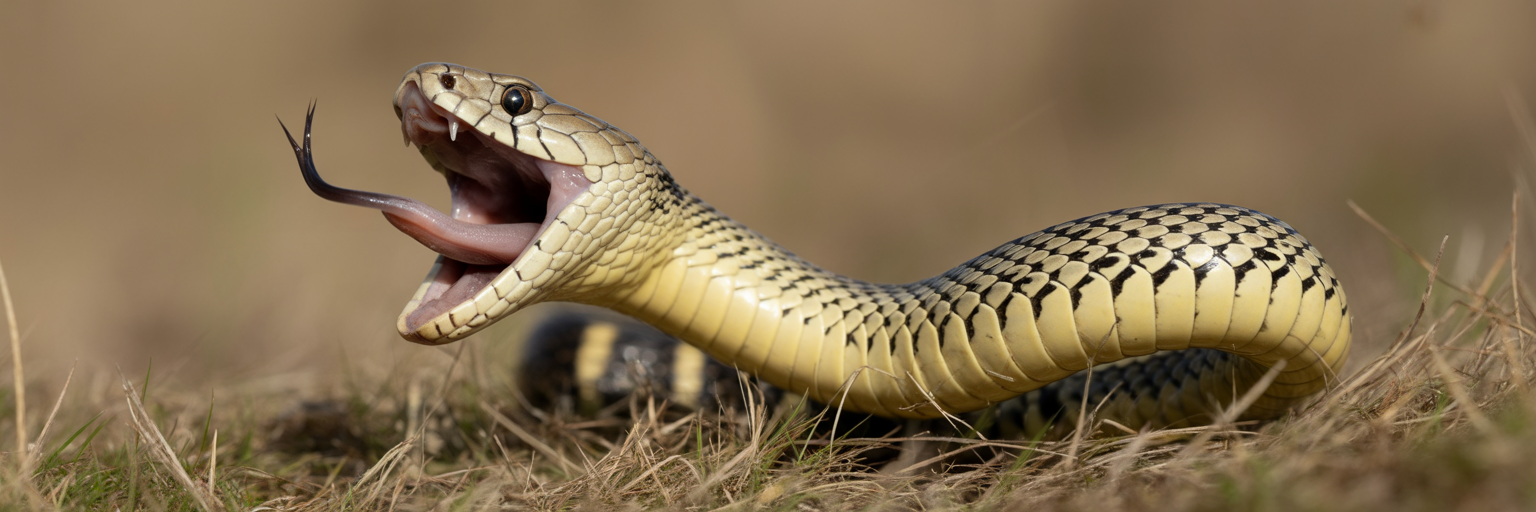
While the dice snake and the hognose may be the headliners, they are far from the only actors in this global theater of the macabre. Thanatosis is a surprisingly widespread evolutionary strategy, a successful script that has been adapted by a diverse cast of performers across the animal kingdom. These are the supporting players, the character actors who prove that faking your own demise is a timeless survival tactic.
Among snakes that fake death, the European grass snake is a notable member of the troupe. It employs a classic, less gory version of the performance, often releasing a foul musk and going limp without the bloody finale of its dice snake cousin. But the cast extends far beyond the world of serpents. The Virginia opossum is so famous for its act that “playing possum” has become a household term. When threatened, it enters a near-comatose state, drooling and emitting a foul odor, its body stiff and unresponsive for hours.
The strategy is also found in less expected places. Certain species of insects, like the antlion larva, will go limp when disturbed. Some fish, such as the Central American cichlid, will sink to the bottom and lie on their side, mimicking a dead fish to lure unsuspecting prey. This shows that thanatosis is a versatile tool, adapted for both defense and, in some cases, offense. The intensity of the performance can even vary within the same species. A snake might “read the room” and deliver a more dramatic performance for a persistent predator, suggesting a level of adaptive finesse. Why this trait is so highly developed in some species and completely absent in others remains a fascinating question, likely tied to an evolutionary trade-off tailored to specific predators and environments. It’s a perfect example of the kind of bizarre adaptations found among nature’s unsettling creations that defy belief.
Fooling the Audience: Why Predators Fall for the Act
The performances are dramatic, disgusting, and deeply committed. But the most important question remains: why do animals play dead, and why do predators, who are professional hunters, actually fall for it? The answer lies in a clever manipulation of the predator’s own psychology and biology. The act works because it short-circuits the very instincts that make a predator effective.
Breaking the Predator’s Script
Many predators are neurologically hardwired to respond to movement. A fleeing rabbit or a struggling mouse triggers a powerful, instinctual chase-and-kill response. A completely still object, however, breaks this script. When prey that was just fighting for its life suddenly goes limp, it creates a moment of cognitive dissonance. The predator, which was in “hunt mode,” is now holding something that no longer acts like prey. This confusion can cause it to loosen its grip or drop the animal to reassess the situation, providing a critical window for escape. The sudden lack of struggle is an unexpected plot twist that the predator’s brain isn’t prepared for.
The Power of the ‘Yuck Factor’
This is where the gory special effects come into play. The stench of feces and musk, combined with the sight of blood, powerfully mimics putrefaction. For a predator, eating a rotting carcass is a huge risk. A decaying body can be teeming with harmful bacteria and toxins that could cause sickness or even death. The snake’s performance is a convincing lie that says, “I am spoiled, and eating me will make you sick.” This taps into a deep, primal instinct of disgust and self-preservation in the predator.
The element of surprise is also key. A predator holding a live, struggling meal that suddenly goes limp and starts to stink might drop it out of sheer shock and revulsion. As National Geographic points out, this tactic is especially effective against predators that are programmed to hunt live prey. It’s a specialized skill tailored to a specific audience. The performance isn’t meant to fool everyone; it’s meant to fool the one creature that matters most in that moment.
A Standing Ovation for Survival
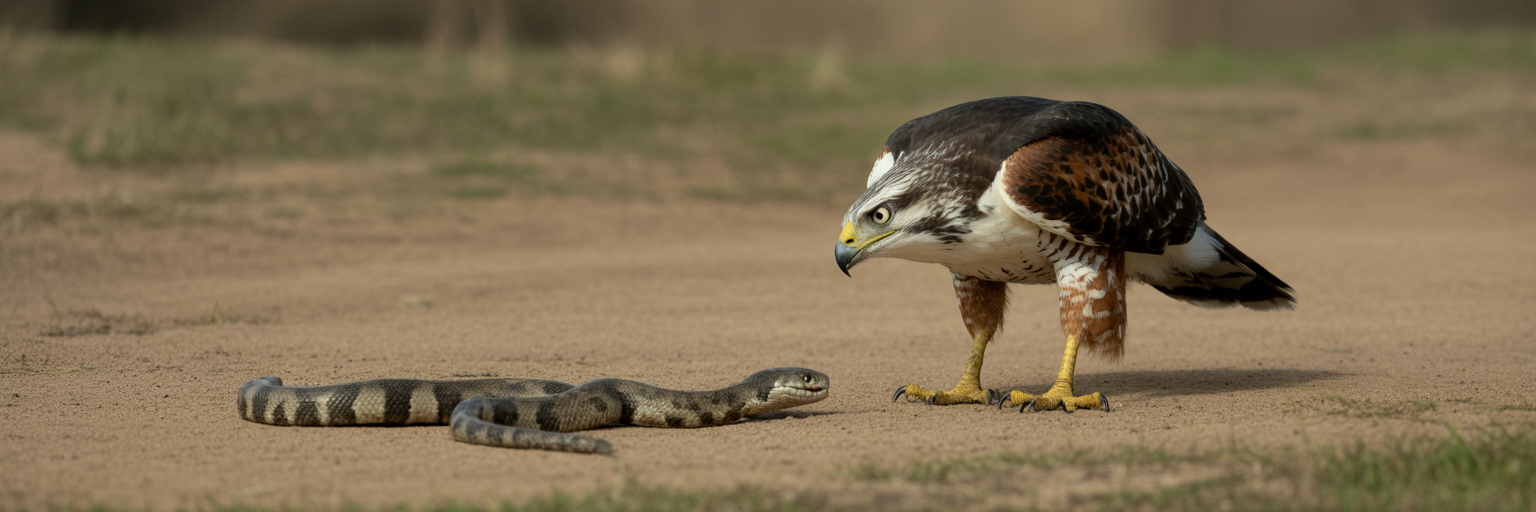
In the end, we must give credit where it is due. Let’s have a standing ovation for the horrifying commitment of the dice snake and the stubborn theatricality of the Eastern Hognose. They are the undisputed champions of death-feigning, artists who have perfected a performance that is equal parts brilliant and bizarre. Their act is a testament to evolution’s dark sense of humor, a strategy that turns an animal’s most vulnerable moment into a weapon of deception and disgust.
The next time you see a snake that plays dead, take a moment to appreciate the sheer audacity of the performance. It’s a survival strategy born from desperation and honed over millions of years into a masterpiece of biological theater. It’s a powerful reminder that the most convincing actor in the world might not be on a screen or a stage. It might be lying at your feet in the wild, covered in its own filth and blood, just waiting for you to turn your back before making a swift, silent escape. This is the kind of mind-bending survival story that makes you realize just how wild our planet is, a theme we explore constantly at Nature is Crazy.