

The Silent War in Your Backyard
The Mystery of the Barren Soil
Many gardeners know the feeling. You have a magnificent, mature tree in your yard, a source of shade and beauty. Yet, directly beneath its sprawling canopy lies a patch of stubborn, barren ground. You’ve tried everything. Grass seed refuses to sprout. Cheerful flowers wilt within weeks. Even a small vegetable patch, placed to catch the dappled sunlight, fails to thrive. It’s a frustrating puzzle. The soil looks fine, it gets water, but nothing seems to survive in this specific zone. It’s as if the tree itself is guarding its territory, creating a dead zone where nothing else is welcome.
This isn’t a coincidence or a sign of poor gardening skills. We’ve all seen it, that perfect circle of bare earth under an old tree that defies all attempts at cultivation. You might blame the shade or the tree’s thirsty roots, and while those factors play a part, they often don’t tell the whole story. The real culprit is a hidden and far more sophisticated strategy, a form of silent, chemical warfare being waged right in your backyard. The tree isn’t just outcompeting its neighbors; it’s actively poisoning the ground to ensure its dominance.
Introducing Allelopathy: Nature’s Chemical Warfare
The scientific term for this phenomenon is allelopathy. It describes a plant’s ability to produce and release biochemicals, known as allelochemicals, that influence the germination, growth, survival, and reproduction of other organisms. Think of it as the tree building a chemical moat around itself. These compounds aren’t just passive byproducts; they are potent weapons designed to suppress competitors. So, what is allelopathy in plants? It is a biological strategy where one plant harms another through the release of these specific chemicals.
These allelochemicals can be deployed in various ways. Some are leached from leaves by rain, dripping down to the soil below. Others are released from decaying bark, fruit, or flowers. Many are exuded directly from the plant’s root system, saturating the surrounding earth. This chemical shield effectively creates an environment hostile to other species, giving the allelopathic plant a significant advantage in the silent, slow-motion battle for resources that defines the life of a plant.
More Than Just Competition
It’s important to distinguish allelopathy from simple competition. All plants compete for the same basic necessities: sunlight, water, and soil nutrients. A large tree will naturally cast a wide shadow and have an extensive root system that draws moisture and minerals from a large area. This is a passive, physical form of competition. A plant wins because it is bigger, faster, or more efficient at gathering resources.
Allelopathy is something else entirely. It is an active, offensive strategy. An allelopathic plant doesn’t just take its share of resources; it actively works to prevent others from accessing them at all. It manipulates the soil chemistry to create conditions that are toxic to its rivals. This is the difference between simply being tall enough to get more sun and actively releasing a substance that stunts the growth of everything around you. This hidden force is constantly shaping our gardens, forests, and fields, determining which plants thrive and which ones mysteriously fail.
Black Walnut: The Notorious Chemical Warrior

Meet Juglans Nigra: A Tree of Contradictions
When discussing allelopathy in North America, one tree stands out as the prime example: the Black Walnut (Juglans nigra). This majestic native tree is prized for its beautiful, dark, fine-grained wood, which is highly sought after for furniture and veneers. Its nuts are a delicious, if hard-won, food source for both humans and wildlife. With its towering height and broad, shady canopy, it can be a stunning centerpiece in any large landscape. Yet, for all its virtues, the Black Walnut harbors a dark secret. It is perhaps the most infamous chemical warrior in the suburban landscape, a tree that actively wages war on its neighbors.
This contradiction is what makes the Black Walnut so fascinating and frustrating. Gardeners who inherit one of these trees often learn of its aggressive nature the hard way, after watching their favorite plants sicken and die for no apparent reason. The tree’s impressive stature is directly linked to its ability to eliminate competition, a trait that makes it a survivor in the wild but a tyrant in the garden.
Juglone: The Potent Natural Herbicide
The weapon of choice for the Black Walnut is a powerful allelochemical called juglone. This compound is present in almost all parts of the tree, including the roots, leaves, stems, and fruit husks. While the living roots are the primary source, juglone spreads through the environment in several ways. Rainwater dripping through the canopy washes it from the leaves onto the soil. Decomposing leaves and husks release it as they break down. Even the tree’s roots exude it directly into the earth, creating a wide zone of juglone toxicity in soil.
The effect of this black walnut tree poison on susceptible plants is devastating. Juglone works by inhibiting certain enzymes that are essential for metabolic activity, effectively disrupting a plant’s ability to perform cellular respiration. In simple terms, it suffocates sensitive plants at a cellular level, preventing them from converting energy and leading to wilting, yellowing, and eventual death. The effect is so potent that even small amounts can be lethal to highly sensitive species, explaining why the ground beneath a walnut can be so stubbornly barren.
Plants That Suffer and Plants That Survive
Understanding juglone is the key to successfully gardening near a Black Walnut. The first step is knowing which plants are sensitive and which are tolerant. As a Penn State Extension article explains, “Landscapes with black walnut trees can be challenging because the tree produces a substance called juglone which is toxic to many plants.” Here are some common examples:
- Highly Sensitive to Juglone: Many popular garden plants will not survive near a Black Walnut. These include tomatoes, potatoes, peppers, eggplants, asparagus, cabbage, peonies, azaleas, rhododendrons, and many types of apple and pine trees.
- Tolerant of Juglone: Fortunately, many other plants are unaffected. These include oaks, maples, hickories, bee balm, hostas, daylilies, phlox, most grasses, onions, carrots, and beans. These plants have evolved mechanisms to either ignore or break down juglone.
The highest concentration of juglone is typically found within the tree’s drip line, the area directly beneath the outer edge of its branches. However, the toxic effects can extend much further, as the root system can spread 50 feet or more from the trunk in mature trees. This makes careful plant selection the most critical factor for a successful garden in the shadow of this chemical warrior.
The Ecological Purpose of Plant Chemical Defenses
A Strategy for Dominance
From a gardener’s perspective, allelopathy can seem like a malicious act. But from an evolutionary standpoint, it is a brilliant and highly effective survival strategy. In the natural world, life is a constant struggle for limited resources. By producing chemicals that suppress nearby plants that inhibit growth, an allelopathic species secures a greater share of sunlight, water, and essential nutrients for itself. This isn’t about spite; it’s about ensuring its own health and vigor in a competitive environment.
By creating a zone of reduced competition, the plant can grow larger, stronger, and more resilient. It faces less pressure from other plants trying to steal its water or block its light. This chemical dominance allows it to establish itself firmly in an ecosystem, often becoming the dominant species in a given area. It’s a powerful tool for carving out a niche and guaranteeing access to the resources needed to thrive.
Securing a Legacy for Offspring
The benefits of allelopathy extend beyond the individual plant’s lifespan. They are also crucial for securing a legacy for the next generation. By creating a competition-free zone around its base, the parent tree gives its own seeds a much better chance of survival. Seedlings are incredibly vulnerable; they need a clear patch of ground with adequate light and nutrients to germinate and establish roots. An allelopathic parent provides this ideal nursery by eliminating the competition before its seeds even hit the ground.
This strategy directly contributes to the continuation of the plant’s genetic line. Over time, this can shape the structure of an entire forest. Dominant allelopathic species like Black Walnuts or Eucalyptus can act as ecological gatekeepers, determining which other species are allowed to grow in their vicinity. This complex interaction, where a plant actively engineers its environment, is one of many surprising adaptations in the natural world. In a similar vein, some organisms have evolved to live inside other creatures without causing harm, showcasing another form of intricate biological strategy.
The Energetic Cost of Chemical Weapons
While powerful, this chemical strategy is not without its costs. Producing complex biochemicals like juglone or eucalyptol is an energy-intensive process. The plant must divert significant resources, which could otherwise be used for growth or reproduction, into manufacturing its chemical arsenal. This represents a biological trade-off. The plant is betting that the energy spent on chemical warfare will pay off in the long run by securing more resources than it would have otherwise.
This energetic cost is why not all plants are allelopathic. For some species, in some environments, it is a more efficient strategy to simply grow faster or taller than their competitors. But for others, the investment in chemical weapons provides a decisive advantage that ensures their long-term survival and dominance. It’s a high-stakes game of resource allocation, and for allelopathic plants, the chemical option has proven to be a winning bet.
Beyond the Walnut: A Gallery of Allelopathic Plants

While the Black Walnut may be the most famous example, it is far from the only plant to employ chemical warfare. This strategy is surprisingly common across the botanical world, found in trees, shrubs, grasses, and even common garden flowers. These allelopathic plants examples show the diverse ways nature has developed this competitive edge.
Eucalyptus: The Fire-Promoting Pharmacist
Native to Australia, Eucalyptus trees are masters of allelopathy. Their leaves are packed with volatile oils, like eucalyptol, which create the tree’s characteristic scent. These oils drip onto the ground and inhibit the germination and growth of understory plants. Furthermore, the leaf litter is not only toxic but also highly flammable. This promotes fires that clear out competitors, which the fire-adapted Eucalyptus can easily survive.
Pines: An Acidic Blanket of Needles
Anyone who has walked through a dense pine forest has seen allelopathy in action. The forest floor is often a thick, springy carpet of fallen needles with very little else growing. This is a dual-pronged attack. The needles physically block sunlight from reaching the soil, but they also leach phenolic compounds and other chemicals as they decompose. These compounds, combined with the acidity created by the needles, make the soil inhospitable for many other plants.
Tree of Heaven: An Invasive Powerhouse
The Tree of Heaven (Ailanthus altissima) is a notoriously invasive species in the United States, and its success is largely due to its potent allelopathy. It produces a chemical called ailanthone in its roots, which it releases into the soil. This compound is a powerful herbicide that strongly inhibits the growth of many native trees and shrubs, allowing the Tree of Heaven to quickly form dense, single-species stands that choke out local flora.
From the Farm to the Garden: Sorghum and Sunflowers
Allelopathy isn’t just for trees. In agriculture, crops like sorghum are known to release a chemical called sorgoleone from their roots, which effectively suppresses common weeds. Even the cheerful sunflower has a dark side. Its decaying stalks, leaves, and roots release chemicals that can inhibit the growth of crops planted in the same spot the following season. The ability of these species to manipulate their surroundings is a fascinating example of how plants can control the growth of nearby roots, a topic that reveals the hidden complexity of the botanical world.
| Plant | Primary Allelochemical(s) | Method of Release | Primary Effect |
|---|---|---|---|
| Black Walnut (Juglans nigra) | Juglone | Roots, leaves, fruit husks | Inhibits cellular respiration in sensitive plants |
| Eucalyptus (Eucalyptus spp.) | Eucalyptol, phenolic acids | Volatile oils from leaves, leaf litter | Prevents seed germination and seedling growth |
| Pine Trees (Pinus spp.) | Phenolic compounds, terpenes | Leaching from fallen needles | Creates acidic soil, inhibits germination |
| Tree of Heaven (Ailanthus altissima) | Ailanthone | Released from roots | Strongly inhibits growth of many native and crop species |
| Sorghum (Sorghum bicolor) | Sorgoleone | Root exudates | Suppresses common agricultural weeds |
| Sunflowers (Helianthus annuus) | Terpenes, phenolic acids | Decaying stalks, leaves, roots | Inhibits growth of plants in the following season |
Allelopathy and Invasive Species: The Unfair Advantage
The ‘Novel Weapons’ Hypothesis
Allelopathy takes on a particularly destructive role when it comes to invasive species. The “novel weapons hypothesis” helps explain why some non-native plants are so devastatingly successful. This idea suggests that when a plant is introduced to a new continent, it brings its chemical arsenal with it. The native plants in this new environment have no evolutionary history with these specific chemicals and therefore have no natural defense against them. What might have been a balanced interaction in the plant’s home ecosystem becomes an overwhelming and unfair advantage in its new one.
This is like a soldier showing up to a medieval battle with a modern machine gun. The local flora are simply not equipped to handle the “novel weapon” being deployed against them. The success of invasive species using allelopathy is a well-documented phenomenon. As noted in a report by the Florida Cooperative Extension Service, some invasive plants can “release chemicals into the environment which are toxic to surrounding native plants,” giving them a significant competitive edge.
Case Study: Garlic Mustard’s Fungal Warfare
A perfect example of the novel weapons hypothesis in action is Garlic Mustard (Alliaria petiolata), an invasive herb from Europe that is wreaking havoc in North American forests. Its primary weapon is not aimed directly at other plants but at the soil itself. Garlic Mustard releases chemicals that are toxic to the native mycorrhizal fungi living in the soil.
These fungi are not pests; they are essential partners for many native trees, such as oaks, maples, and hickories. They form a symbiotic relationship with the tree roots, helping them absorb water and critical nutrients like phosphorus. By killing off these beneficial fungi, Garlic Mustard indirectly starves the native trees and understory plants. This clears the way for Garlic Mustard to spread rapidly, forming dense carpets where nothing else can grow.
Ecological Cascade: From Soil to Wildlife
The impact of an allelopathic invader like Garlic Mustard doesn’t stop at the plants it kills. Its disruption triggers a negative ecological cascade. When native understory plants are eliminated, the entire forest ecosystem suffers. The insects that relied on those specific plants for food and reproduction disappear. The birds and small mammals that fed on those insects or the plants’ seeds and berries lose their food source.
The loss of plant diversity leads to a loss of animal diversity. The dense, single-species stands created by invaders like Garlic Mustard or Japanese Knotweed create “biological deserts” that support very little wildlife. This demonstrates how a single plant’s chemical strategy can have far-reaching consequences, altering soil health, plant communities, and the entire food web of a region.
Gardening in the Shadow of an Allelopathic Tree
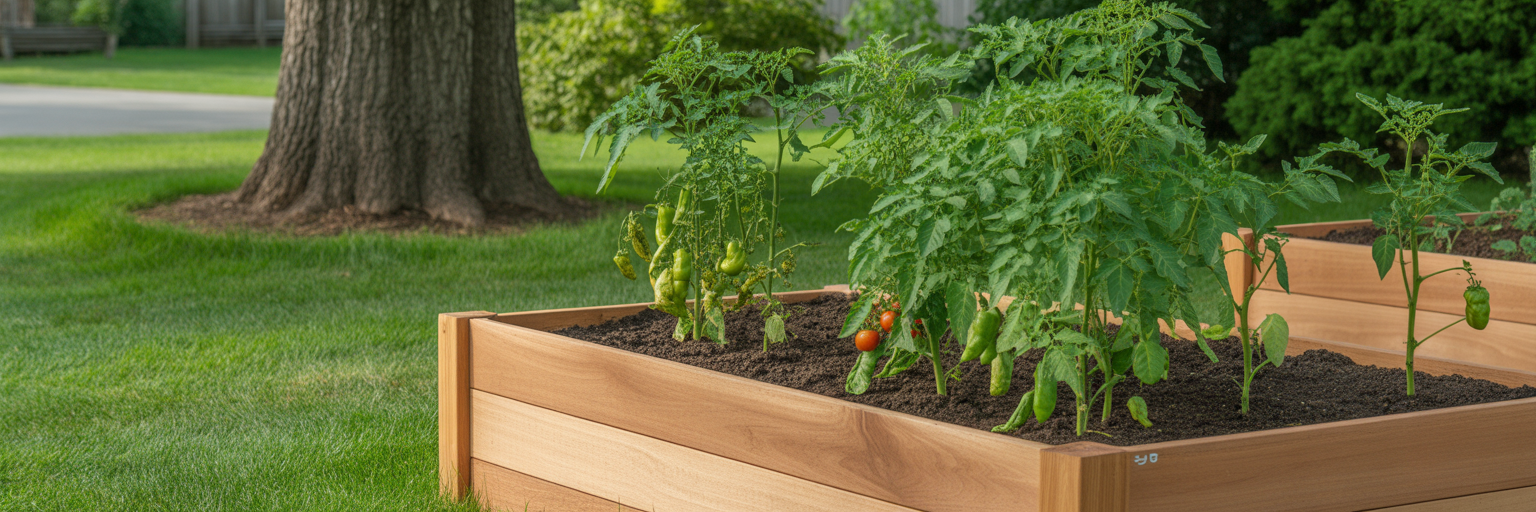
Discovering you have an allelopathic tree like a Black Walnut doesn’t mean you have to give up on gardening. It simply means you need to work smarter, not harder. By understanding the science, you can implement clear, practical strategies to create a beautiful and thriving garden, even in a challenging environment. Here are the most effective approaches for gardening under walnut trees and other chemical warriors.
- Build Raised Garden Beds
This is the single most effective solution. By building a raised bed at least 12-18 inches high, you create a physical barrier between your garden and the toxic soil. Fill the bed with fresh topsoil and compost from an outside source. This completely isolates the roots of your sensitive plants from the allelochemicals, allowing you to grow anything from tomatoes to peonies without issue. Just be sure to line the bottom with landscape fabric if you are concerned about roots growing upwards. - Choose Tolerant Plants
The easiest path is to work with the tree, not against it. Embrace the plants that are naturally resistant to the tree’s chemicals. Refer back to lists of tolerant species and consult your local university extension office, which often provides plant lists tailored to your specific region. Planting species like hostas, daylilies, bee balm, or certain ferns can create a lush, beautiful garden that coexists peacefully with the tree. - Practice Diligent Cleanup
Remember that allelochemicals are present in the leaves, twigs, and fruit. Make a habit of meticulously raking and removing all debris that falls from the tree. This is especially critical with Black Walnuts, as the decomposing husks are a major source of juglone. Do not use this debris as mulch in other parts of your garden. It’s best to compost it in a separate, dedicated pile for at least a year or dispose of it entirely. - Utilize Container Gardening
For your absolute favorite but sensitive plants, container gardening is a perfect compromise. Large pots, barrels, or decorative planters allow you to grow roses, peppers, or other vulnerable species right next to the tree without their roots ever touching the contaminated soil. This strategy offers flexibility and ensures you don’t have to sacrifice the plants you love. - Improve Soil Health (With Caution)
This is a long-term, partial strategy, not a quick fix. Consistently amending the soil with large amounts of high-quality compost and organic matter can help. A healthy, active community of soil microbes can gradually break down some allelochemicals over time. However, this will not completely neutralize the effects of a mature allelopathic tree, so it should be used in combination with other strategies, not as a standalone solution.
The natural world is full of such incredible and sometimes bizarre survival mechanisms. To explore more of these wonders, from animals that can regrow skin stronger than before to other strange botanical feats, you can find more stories on our main page. By understanding the hidden forces at play in your own yard, you can turn a gardening challenge into a rewarding success.