Australia’s Premier Vocal Impersonator
Since the invention of the phonograph, humans have been obsessed with capturing and replaying the sounds of our world. But deep in the forests of southeastern Australia, one bird has been doing this organically for millennia. Meet the superb lyrebird (Menura novaehollandiae), a ground-dwelling artist whose vocal talents are almost unbelievable. At first glance, the male is most notable for his spectacular, lyre-shaped tail feathers, which can measure up to two feet long. Yet, his true masterpiece is his voice.
The lyrebird is an acoustic sponge, absorbing the sounds of its environment and replaying them with stunning accuracy. This isn’t just a party trick. The superb lyrebird mimicry is a fundamental part of its survival and reproductive strategy. While its own song is complex and beautiful, it is the bird’s ability to weave in the sounds of its surroundings that sets it apart. The sheer range of its repertoire is what leaves scientists and onlookers in awe.
Just consider some of the sounds it can replicate:
- Industrial noises like chainsaws and power drills.
- Mechanical sounds such as camera shutters and car alarms.
- Other species’ calls, from kookaburras to entire flocks of smaller birds.
This remarkable ability raises immediate questions. How can a bird produce such a diverse and complex array of sounds? And more importantly, why does it bother imitating a chainsaw in the first place? The answers reveal a creature of surprising biological and strategic depth.
The Anatomy of an Acoustic Genius

The secret to the lyrebird’s vocal prowess lies in its syrinx, the avian equivalent of our larynx. While most songbirds have a relatively simple vocal organ, the lyrebird’s is exceptionally complex. It possesses three pairs of syringeal muscles instead of the single pair found in many other birds. This sophisticated anatomy gives it an unparalleled level of control over its vocalizations.
This muscular structure allows the lyrebird to produce an incredibly wide range of frequencies, from low rumbles to high-pitched shrieks. Even more impressively, it enables the bird to sing two different melodies simultaneously, creating rich, layered soundscapes all on its own. It can produce its own song with one side of its syrinx while mimicking another bird with the other. This makes it a unique bird that mimics sounds with a dexterity that few others can match.
When compared to other well-known mimics, the lyrebird’s abilities stand out, particularly because its mimicry is a core part of its wild behavior, not just a response to human interaction.
| Attribute | Superb Lyrebird | Parrot | Mockingbird |
|---|---|---|---|
| Vocal Organ | Highly complex syrinx with 3 muscle pairs | Complex syrinx and thick tongue | Standard songbird syrinx |
| Primary Context | Wild behavior (mating, defense) | Often in captivity; social bonding | Wild behavior (territory, mating) |
| Sound Repertoire | Environmental, mechanical, and animal sounds | Primarily human speech and household sounds | Mainly other bird songs and insect noises |
| Vocal Dexterity | Can produce multiple sounds simultaneously | Single sound at a time | Sings sequential phrases |
This anatomical advantage gives the lyrebird an unmatched toolkit for acoustic replication, but the purpose behind this talent is where its behavior becomes truly fascinating.
A High-Stakes Performance for Courtship
With such a sophisticated vocal instrument, the question becomes: what is it all for? For the male lyrebird, the primary answer is courtship. His elaborate performance is one of the most complex displays in the animal kingdom, designed to win over discerning females.
The Courtship Display
The performance begins with preparation. The male constructs a small mound of soil on the forest floor, which serves as his stage. From this platform, he begins the lyrebird mating dance. He fans his magnificent tail feathers forward over his head, creating a shimmering veil through which he peers. Then, the concert starts. He unleashes a torrent of sound, blending his own native song with a curated playlist of his best imitations. A single performance might include the call of a kookaburra, the screech of a cockatoo, and the mechanical whir of a camera shutter, all seamlessly woven together. The more diverse and accurate the repertoire, the more impressive he appears to a potential mate.
The ‘Acoustic Illusion’ Strategy
Beyond just showing off, the male’s mimicry involves a layer of clever deception. Scientists have observed males mimicking the sound of a “mobbing flock,” which is the chaotic mix of alarm calls made by multiple small bird species when a predator is near. According to a report in Mongabay, researchers suspect this is a manipulative tactic. By creating an acoustic illusion of danger, the male may startle a female and make her hesitate to flee the courtship arena. This brief moment of confusion could provide him with a crucial window of opportunity to mate. This behavior reframes the mimicry from a simple display of skill to a sophisticated, and slightly devious, evolutionary tool.
The Overlooked Role of Female Vocals
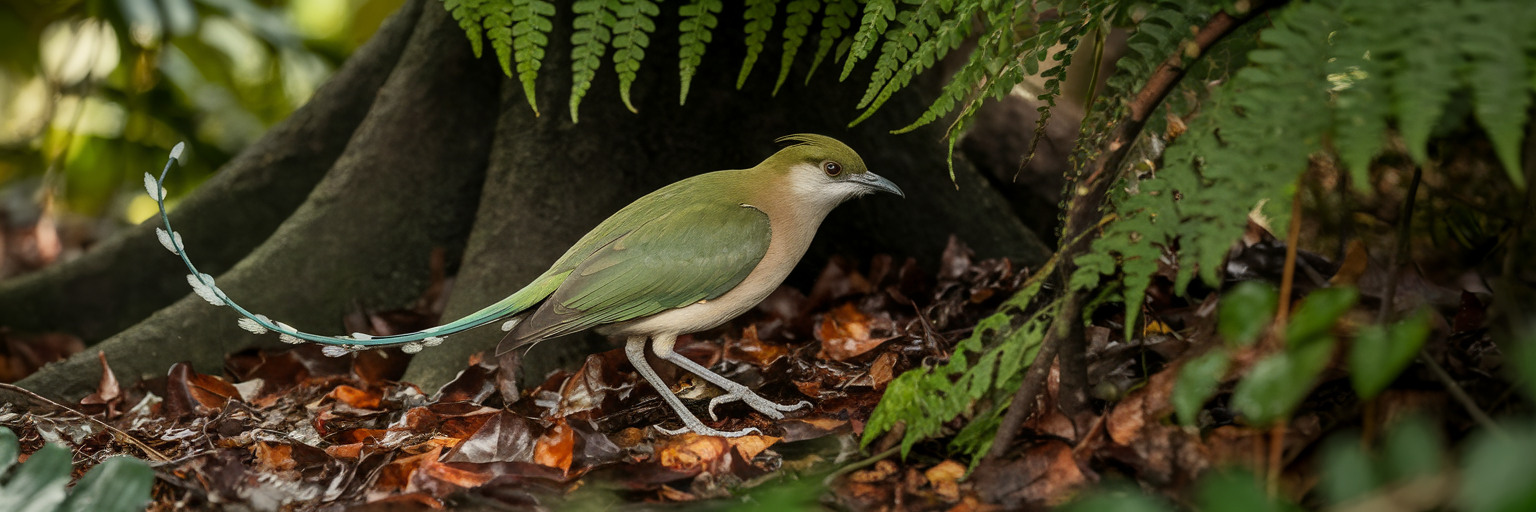
The focus on the male’s dramatic courtship often overshadows a key fact: female lyrebirds are also highly skilled vocalists. Have you ever considered that the female might have her own reasons for mimicry? While the male performs for romance, the female sings for survival. Her vocalizations are less about variety and more about function, serving critical roles in her daily life.
Females use their complex vocal abilities for entirely different, and arguably more practical, purposes. Their mimicry is a tool for self-preservation and resource management.
- Territorial Defense: A female will defend her territory by mimicking the calls of aggressive birds or even predators. This can intimidate other lyrebirds and rival species, helping her secure vital resources for herself and her offspring.
- Nest Protection: When a predator like a goanna or snake approaches her nest, the female can unleash a sudden, loud burst of mimicked sound, such as a dog’s bark or another startling noise. This can confuse or frighten the predator, giving her chicks a chance to survive.
- Foraging Communication: While foraging in the leaf litter, females use a range of calls, including their own distinct “whistle songs,” to communicate with other lyrebirds or perhaps to startle insects into revealing themselves.
Some evidence suggests that females may even learn specific sounds from other females in their area, creating a distinct “vocal culture.”
Protecting the Lyrebird and Its Soundscape
While the superb lyrebird is not currently listed as endangered, its future is far from secure. The true threat lies in the vulnerability of its habitat: the temperate and subtropical rainforests of southeastern Australia. These ecosystems face increasing pressure from urban development and the growing frequency and intensity of bushfires linked to climate change.
Protecting these iconic Australian songbirds is about more than just saving a species. It is about preserving a unique natural phenomenon. The lyrebird’s vocal talent is entirely dependent on its environment. As its habitat shrinks and other species disappear, the lyrebird’s “acoustic library” is also threatened. A forest that falls silent loses its ability to teach. The ongoing lyrebird conservation efforts, which include habitat restoration and strategic fire management, are therefore critical.
The lyrebird reminds us that a species is defined not just by its DNA, but by its behaviors and its relationship with the world around it. Preserving these intricate connections is one of the most important tasks we face. For more articles that connect you with the fascinating intricacies of our planet, visit Nature Is Crazy.