
The Reef’s Most Calculating Tyrant
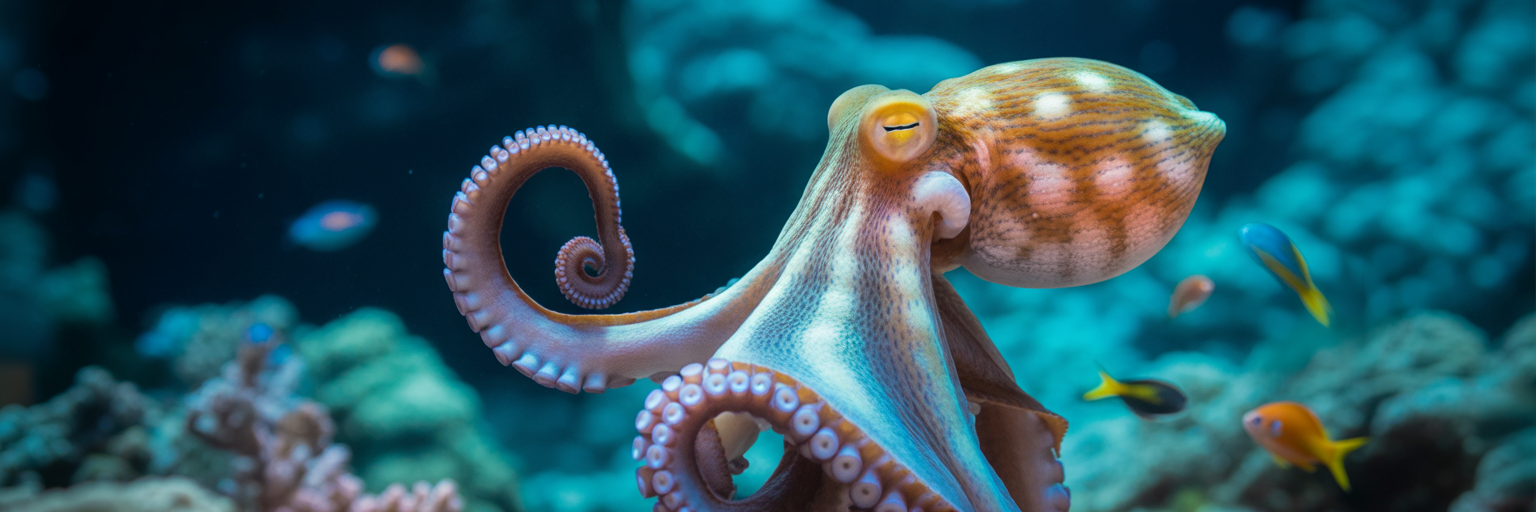
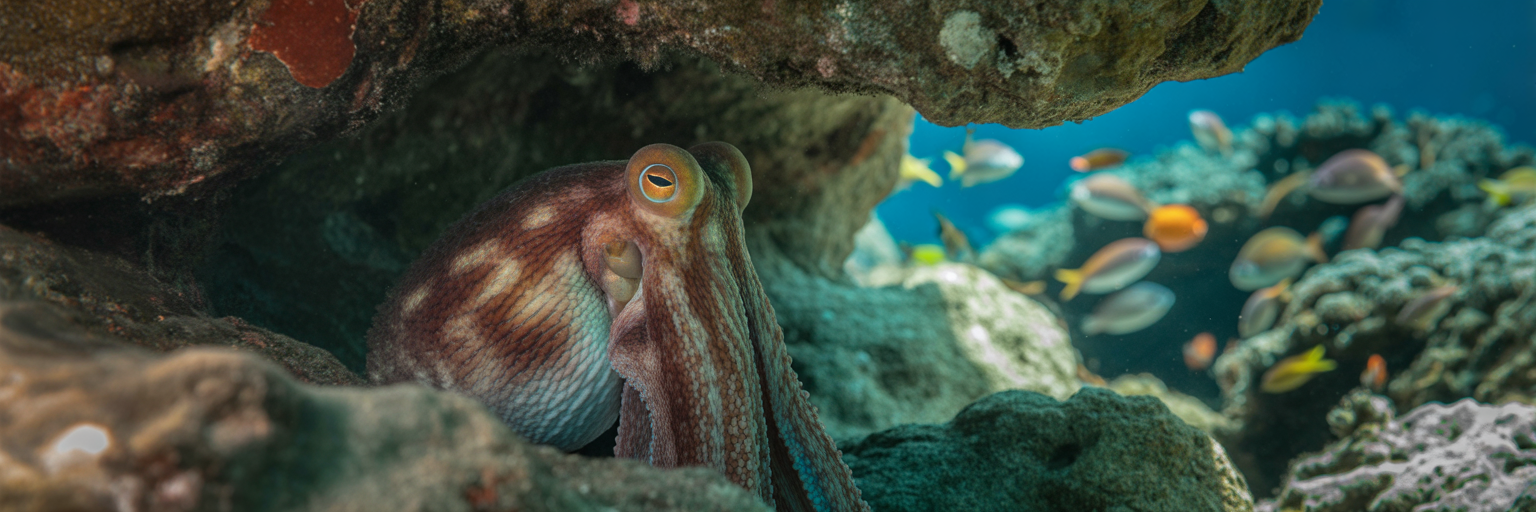
Picture a coral reef in the Red Sea. Sunlight filters through the warm, turquoise water, illuminating a vibrant city of coral, where schools of jewel-toned fish drift like living confetti. It’s a scene of serene, almost hypnotic beauty. Then, out of a crevice, an octopus emerges, its skin flickering with shifting colors. It glides over the reef, a silent hunter, until suddenly, one of its arms shoots out in a swift, explosive motion, delivering a solid punch to a nearby fish. The serene scene shatters. This is the world of the octopus punching fish, a behavior as bizarre as it is fascinating.
The protagonist of this underwater drama is the day octopus, Octopus cyanea. Forget the gentle, mysterious creature of documentaries. Instead, imagine a hyper-intelligent, easily irritated project manager who has had enough of its team’s incompetence. This octopus is not just hunting; it is orchestrating a complex, multi-species operation, and it has absolutely no patience for slackers. The punch is not a random act of aggression but a calculated tool of social management, a disciplinary measure for an unruly employee.
For years, scientists viewed octopuses as solitary hermits, interacting only to mate or fight. They were the brilliant but isolated geniuses of the ocean. This discovery of collaborative hunting, punctuated by physical reprimands, completely upends that old view. It reveals an animal that is not just intelligent but socially manipulative, capable of forming and managing temporary alliances to achieve a goal. The central question is not just whether an octopus can punch a fish, but why it feels the need to. What rules are being broken in this underwater workplace that warrant such a direct and physical response? This behavior forces us to see the reef not just as a food chain, but as a stage for complex social politics, led by its most cunning and calculating tyrant.
An Unlikely Underwater Alliance
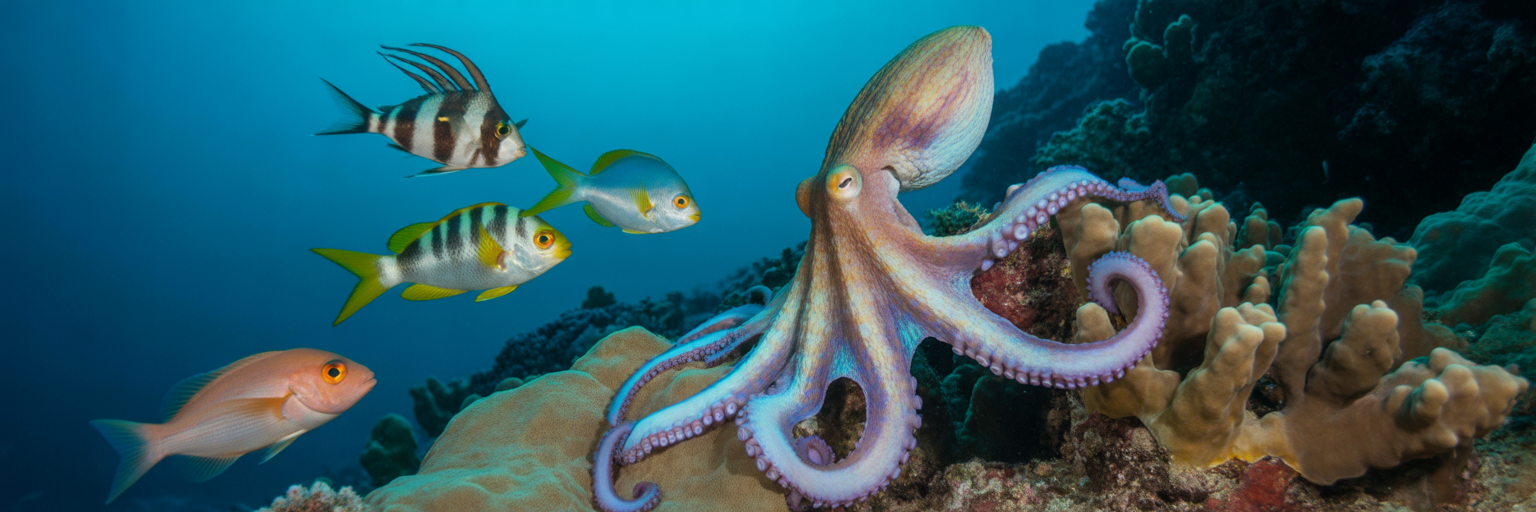
Before we can understand the punch, we must first understand the partnership. The octopus does not hunt alone. It is the leader of a motley crew of fish, a temporary alliance formed for mutual benefit. This is not a friendship; it is a high-stakes business transaction where every member has a role to play. The practice of an octopus hunting with fish is a masterclass in delegation and resource management, turning the reef into a collaborative, albeit tense, workplace.
The Octopus as Project Manager
The octopus serves as the operation’s director and chief strategist. Its unique physiology gives it an enormous advantage. With its soft, boneless body, it can squeeze into tiny coral crevices and flush out prey that fish cannot reach. It acts as the “beater” in a hunt, driving small fish and crustaceans out from their hiding spots and into the open water. The octopus has the overview of the entire hunt, directing the flow of action and identifying where its partners need to be. It is the only member of the team that can physically manipulate the environment to its advantage, making it the natural, undisputed leader.
Assembling the Hunting Team
The octopus’s team is a carefully selected group of specialists. The goatfish are the “ground crew.” Using the sensitive, whisker-like barbels on their chins, they probe the sand and rubble, detecting hidden prey. They are the scouts, exploring the nooks and crannies the octopus might miss. Meanwhile, fish like groupers and coral trout act as “perimeter security.” They are larger and faster, patrolling the edges of the hunting area. Their job is to block escape routes and snatch any prey that bolts from the coral. Each species brings a unique skill to the table, creating a hunting unit that is far more effective than any single animal could be on its own.
A Partnership of Convenience
This alliance is built on pure, transactional logic. The fish partners get access to meals they could never secure alone. When the octopus flushes a shrimp from a crevice, the nearest fish gets an easy meal. In return, the octopus conserves precious energy. Instead of chasing every last morsel, it outsources the scouting and containment to its partners, increasing the overall success rate of the hunt. However, this partnership is fragile. There is no loyalty, only opportunity. This is precisely why conflict arises. When a partner gets lazy, tries to steal a meal, or fails to perform its duty, the project manager has to step in. This kind of complex interspecies manipulation, where one animal leverages another for its own gain, is not unique. A similar dynamic can be seen in the bizarre relationship of the caterpillar that tricks ant colonies into raising it, showcasing another form of biological puppetry.
The Rules of a Cephalopod-Led Hunt
Every effective manager knows that a team needs clear rules, and the day octopus is no exception. While these rules are not written down, they are enforced with an unmistakable clarity. The entire hunting operation hinges on a set of unwritten workplace policies, and violating them has immediate, physical consequences. The central theme is simple: everyone must pull their weight. The octopus, as the project lead, has a complete overview of the hunt and an extremely low tolerance for inefficiency or insubordination.
The primary rule is active participation. Each member of the hunting party is expected to be alert, in position, and ready to act. Behaviors that the octopus deems annoying or lazy are swiftly punished. This includes a fish lagging behind the group, ignoring a potential meal that swims right past it, or simply drifting aimlessly while others are actively searching. The octopus is investing energy in flushing out prey, and it expects its partners to be ready to capitalize on the opportunities it creates. A partner that is out of position is not just useless; it is a liability, potentially allowing prey to escape.
Perhaps the most egregious violation is attempting to steal a meal directly from the octopus. This is the equivalent of an employee snatching a signed contract off the boss’s desk. The octopus often does the hardest work, cornering and capturing the prey. A fish that swoops in at the last second to steal the prize is seen as a freeloader. The blacktip grouper is a frequent offender, often hovering nearby and contributing little, waiting for the octopus to make a kill before trying to snatch it. This behavior almost always provokes a swift, targeted punch. It is a clear message: do your job, or face the consequences. This underwater workplace has no room for freeloaders, and the manager is not afraid to use force to maintain order.
| Hunting Partner | Expected Contribution (Job Role) | Behavior Warranting a Punch (Fireable Offense) |
|---|---|---|
| Day Octopus | Project Lead & Flushing Specialist | N/A (The Boss) |
| Goatfish | Ground-Level Scout (Probes sand and crevices) | Failing to probe, lagging behind the group |
| Grouper | Perimeter Control & Blocker | Letting prey escape, not holding position |
| Blacktip Grouper | Opportunistic Blocker / Potential Freeloader | Hovering without contributing, attempting to steal the kill |
| Other Reef Fish | General Support & Distraction | Getting in the way, causing chaos without purpose |
The Science of an Octopus Punching Fish
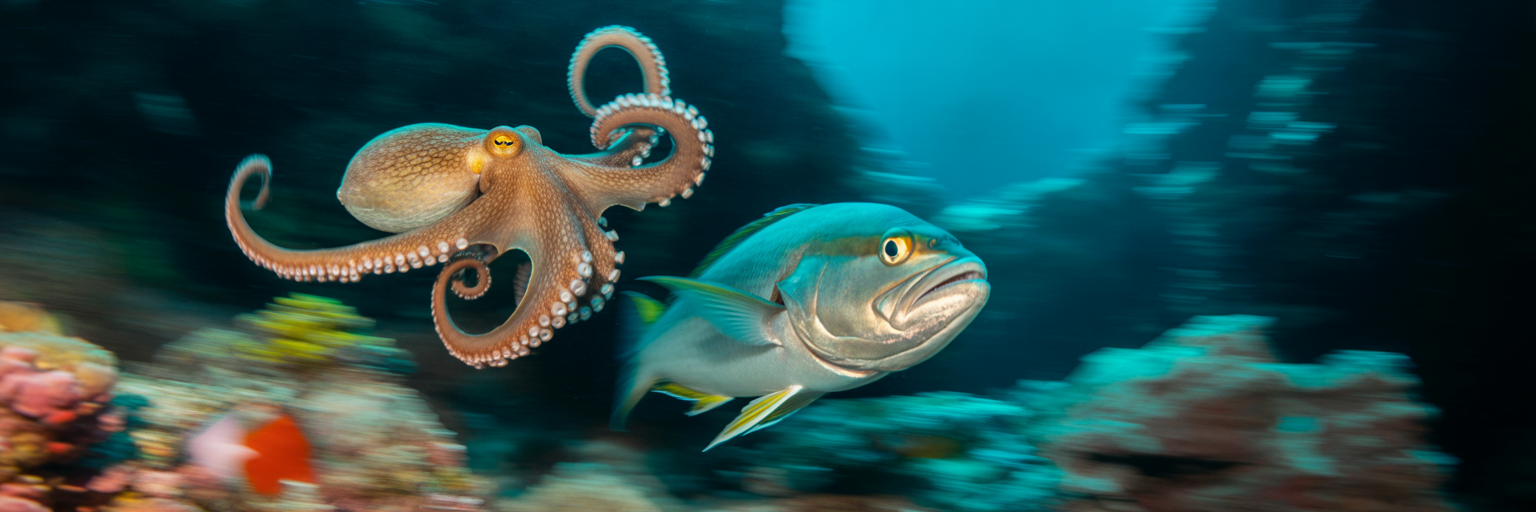
The idea of an octopus punching a fish sounds like something from a cartoon, but it is a real, scientifically documented behavior. It is not a random flailing of tentacles but a deliberate, targeted action used to manage its unruly hunting partners. This behavior provides a fascinating window into the octopus’s cognitive abilities and its methods of social control. Researchers have broken down the mechanics and context of the punch, revealing a surprisingly sophisticated form of communication.
Anatomy of a Punch
The punch itself is described by scientists as a “swift, explosive motion” of one of the octopus’s arms. It is a directed jab, not a clumsy swipe. The octopus gathers energy and then rapidly extends its arm, striking the fish with the tip. This is a precise motor action, requiring a high degree of control and coordination. The octopus can target a specific fish in a chaotic group and deliver the blow without harming itself or other nearby animals. The speed and force of the punch are calibrated; it is strong enough to startle the fish and send a clear message, but generally not powerful enough to cause serious injury. It is, in essence, a tool of enforcement, not outright assault.
Observations from the Field
This entire phenomenon was formally documented in a 2020 study published in the journal Ecology, where researchers detailed multiple instances of octopuses using this “directed, explosive arm motion” to manage their hunting partners. The observations, made with the day octopus Red Sea populations, revealed that the act of an octopus punching fish serves as a form of social policing. The punches were not random but occurred in specific, predictable contexts. Researchers identified several key triggers:
- Displacing a Partner: The octopus would punch a fish to move it out of the way or herd it into a more strategically advantageous position to block escaping prey.
- Preventing Theft: A punch was often delivered to a fish that was attempting to steal food that the octopus had just captured.
- Enforcing Participation: Fish that were lagging behind or not actively participating in the hunt were sometimes punched, seemingly as a way to get them back on task.
- No Apparent Reason: In some cases, the octopus punched a fish for no immediate, observable reason. This has led to speculation that the punch can also be used to assert dominance or may even be an act of displaced aggression, or spite.
The immediate result of a punch is almost always the same: the targeted fish darts away or quickly corrects its behavior. This proves that the punch is an effective, if aggressive, communication tool. It is a clear, unambiguous signal that the fish has violated the rules of the hunt.
Decoding the Motives of a Grumpy Genius
Observing the punch is one thing; understanding the motive behind it is another. The question of why do octopuses punch fish opens a door into the complex and alien mind of a cephalopod. Is it a calculated act of punishment, a strategic command, or simply a moment of petty frustration? Scientists have proposed several competing hypotheses, each painting a different picture of the octopus’s intentions. The truth likely involves a combination of these motives, depending on the specific context of the interaction.
Here are the leading theories explaining this remarkable behavior:
- Punishment and Negative Reinforcement: This is the most straightforward explanation. The punch is a direct consequence for breaking the rules of the hunt. By delivering a swift, unpleasant jab, the octopus is teaching its partner a lesson. The fish learns to associate lazy behavior or theft with a negative outcome. Over time, this conditioning creates a more disciplined and effective hunting team. The octopus is investing a small amount of energy in a punch now to ensure better cooperation and higher returns in the future.
- Strategic Redirection: In this view, the punch is less about punishment and more about physical command. It is not an act of anger but a tool for herding. An octopus might punch a grouper not because it’s angry, but to physically push it into a better position to block an escape route. In this context, the punch is a form of non-verbal communication, a quick and efficient way to direct a partner in a fast-moving, chaotic environment. It’s the equivalent of a quarterback physically adjusting a teammate’s position on the line.
- Displaced Aggression (Spite): This is the most intriguing and anthropomorphic theory. Researchers noted that some punches seemed to offer no immediate strategic benefit to the octopus. In these instances, the octopus had already lost the meal to a thieving fish, yet it still swam over and delivered a punch. This suggests the act might be driven by something akin to frustration or spite. The octopus, having lost out, may be acting out of sheer annoyance, even though the punch costs it energy and yields no immediate reward. It is a petty, “how dare you” moment that reveals a surprisingly familiar emotional response.
This question of motivation, where an animal’s action seems counterintuitive, is a fascinating area of biology. For instance, understanding what drives a snail to sacrifice itself for a parasite offers a parallel look into the complex and often brutal logic of the natural world. Ultimately, the octopus is making a cost-benefit calculation. The small energy cost of a punch is weighed against the long-term benefit of maintaining a disciplined, efficient, and respectful team of hunting partners.
A Window into Advanced Animal Cognition
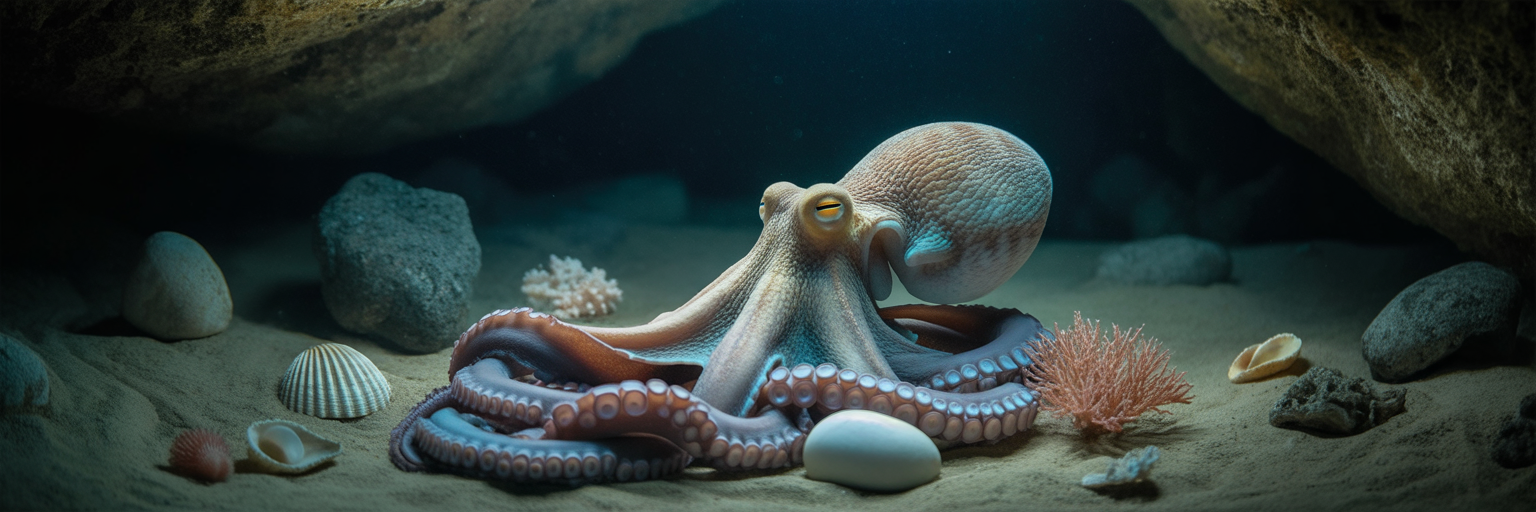
The octopus punch is more than just one of the ocean’s many weird animal behaviors; it is a profound indicator of advanced cognitive abilities. This seemingly simple act of aggression reveals a level of thinking that scientists once believed was exclusive to vertebrates like primates and dolphins. It challenges our assumptions about intelligence and forces us to recognize the complex inner lives of invertebrates. The punch is not just a reflex; it is a solution to a social problem, and that makes it remarkable.
One of the key octopus intelligence facts demonstrated by this behavior is cognitive flexibility. The octopus identifies a specific problem, such as a lazy partner or a thief, and deploys a targeted, physical solution. This is not a rigid, instinctual response. The octopus assesses the situation and chooses an appropriate action. This ability to adapt its behavior to solve a novel social challenge is a hallmark of higher intelligence. It also implies a degree of future planning. The octopus is not just reacting to the present moment; it is investing energy in a punch to ensure better cooperation on future hunts. It is playing the long game.
Furthermore, this behavior hints at a rudimentary “theory of mind,” the ability to understand the intentions of another being. When an octopus punches a grouper that is getting too close to its prey, it seems to be anticipating the grouper’s intent to steal. It is not just reacting to the theft; it is acting preemptively to prevent it. This suggests the octopus may have a basic understanding that the fish is a separate agent with its own goals, and it acts to manipulate that agent’s behavior. This is a far cry from simple instinct. As National Geographic reports, this behavior forces us to reconsider the social and cognitive abilities of invertebrates, suggesting a level of planning and social manipulation previously thought to be the domain of mammals and birds. The punch is a physical manifestation of a complex thought process, a glimpse into a mind that is both alien and startlingly sophisticated.
Beyond the Myth of the Solitary Cephalopod
For decades, the prevailing image of the octopus was that of a solitary recluse. It was seen as a brilliant but antisocial creature, a lone genius hiding in its den, interacting with others only when absolutely necessary for mating or territorial defense. The discovery of collaborative hunting parties, complete with their own set of rules and physical enforcement, effectively dismantles this outdated myth. The octopus is not a loner; it is a shrewd and manipulative social operator.
The hunting alliances are the most dramatic piece of evidence against the solitary stereotype, but they are not the only one. Scientists are increasingly recognizing other forms of social behavior in octopuses. They engage in complex mating rituals that involve signaling and posturing. They have been observed in territorial disputes that are more than just simple brawls, involving intricate displays of dominance and submission. The octopus is an active participant in the bustling social world of the reef, not a passive observer hiding in the shadows.
This new understanding reframes the reef itself. It is not just a food web governed by instinct, but a complex social arena filled with alliances, betrayals, and power plays. In this arena, the octopus is a key player, using other species as tools to achieve its goals. It forms temporary partnerships, enforces rules, and punishes those who fail to comply. The reef itself is a landscape of surprising alliances and conflicts, much like how a coral can fight back like a living army, proving that even seemingly passive organisms engage in complex strategies for survival. The image of the solitary cephalopod is obsolete. The modern scientific view is of an animal that employs sophisticated, and often ruthless, social strategies to thrive in a competitive world.
The Ocean’s Smartest, Pettiest Inhabitant
So, what have we learned from the octopus that punches fish? We have learned that a behavior straight out of a slapstick cartoon is, in fact, a real and scientifically documented phenomenon. The punch is not random violence but a calculated tool for social management, used to enforce rules, direct partners, and punish freeloaders in a high-stakes collaborative hunt. It is a stunning display of an intelligence so advanced that it borders on Machiavellian.
This discovery blurs the lines we once drew between “simple” and “complex” minds in the animal kingdom. It reveals an invertebrate capable of future planning, social manipulation, and perhaps even a form of spite. The octopus is not just solving physical puzzles in a lab; it is navigating the complex, fluid dynamics of an underwater workplace, and it is not afraid to be the tough boss when necessary.
The next time you imagine the serene beauty of a coral reef, remember the drama unfolding just beneath the surface. Remember the eight-armed puppet master, its skin flickering with irritation as it watches a lazy grouper drift out of position. Remember the swift, explosive punch that follows. The ocean is not always peaceful. Every day, it is the stage for a workplace drama as tense and relatable as any on land, managed by the smartest, and quite possibly the pettiest, inhabitant of the reef.