An Intro to Wild Parasites That Take Over Animal Bodies
We have all had a friend who overstayed their welcome on the couch. They eat your snacks, use your Wi-Fi, and leave a suspicious dent in the cushions. But in nature, some guests do not just eat your food, they rewire your brain and take you for a joyride. Welcome to the world of mind controlling parasites, where the host is no longer the one in charge. These freeloaders are not content with a free meal, they want the whole car, keys included.
Imagine a terrible new driver has hotwired your body. They cannot see where they are going, they have no respect for the rules of the road, and their only goal is to crash you into the mouth of a predator. That is essentially what these parasites do. The host is not a literal zombie from a horror movie, shuffling around and groaning for brains. Instead, its free will has been completely and utterly hijacked. It still looks like a snail, or an ant, or a cricket, but its brain is now taking orders from a tiny, squirming overlord.
So why all this elaborate puppetry? It is all part of a strategy scientists call the “extended phenotype.” Think of it this way: the parasite is just redecorating its new home, the host, to suit its needs. Unfortunately for the host, those needs usually involve getting eaten by something bigger. The parasite needs to get into its next host to complete its life cycle, and the current host is just a disposable taxi. It is not personal, it is just a ridiculously creepy and effective survival strategy.
Consider this your official invitation to a tour of nature’s most bizarre horror stories. Forget fiction, the truth is far weirder, more calculating, and all scientifically documented. Buckle up, it is going to be a bumpy ride.
Disco Snails and the Parasite That’s a Bad Influence
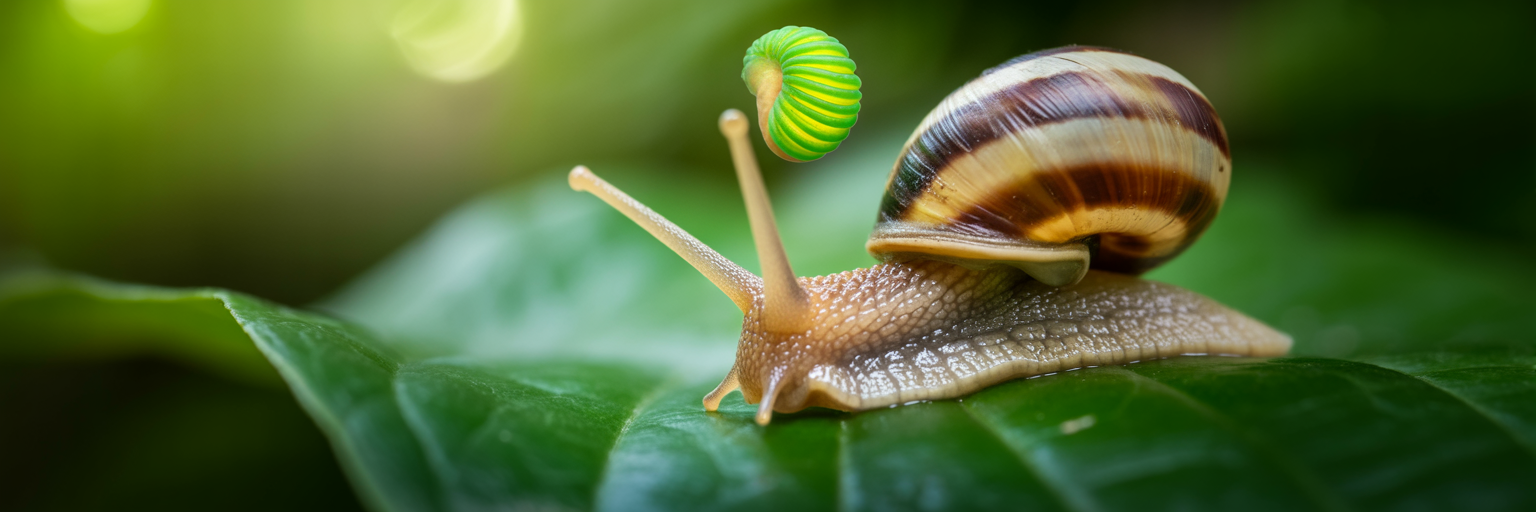
Meet the parasitic flatworm Leucochloridium paradoxum, nature’s worst party guest. This freeloader is the ultimate bad influence, turning a perfectly respectable snail into a pulsating disco ball of doom. The whole sordid affair begins when an innocent snail is minding its own business, munching on some greenery, and accidentally ingests bird droppings. Little does it know, it has just invited a tenant from hell to move in.
Once inside, the parasite larvae do not just hang out in the gut. They migrate to the snail’s eyestalks, which is where the real nightmare begins. The parasite grows into long, pulsating sacs that fill the tentacles, transforming them into what looks like a pair of writhing, brightly coloured caterpillars. They throb with green, yellow, and red bands, pulsing in a hypnotic rhythm. The snail never asked for this glow-up, and its new look is screaming for attention, literally. The eyestalks become so swollen that the snail can no longer retract them. It is stuck in permanent party mode.
But this makeover has a sinister purpose. The parasite takes control of the snail’s brain and forces it out of the shadows and into the open, often onto a brightly lit leaf. A passing bird, seeing the throbbing, caterpillar-like eyestalks, thinks it has spotted a juicy snack. It swoops down, pecks off the eyestalk, and swallows the parasite-filled sac. The parasite has now successfully reached its final host, the bird, where it can reproduce and start the cycle all over again.
And the snail? Well, the Leucochloridium snail gets eaten, or at best, is left partially blind and ready to grow another parasite in its remaining eyestalk. It was nothing more than a tricked-out taxi, driven by a maniacal worm to its own demise. Talk about a bad trip.
Why Did the Ant Climb the Grass? To Get Eaten
If you thought the snail had it bad, allow us to present a two-for-one special on ant misery. Ants, it turns out, are the unfortunate targets of some of nature’s most famous puppeteers. These are classic zombie animal parasites, each with its own unique brand of mind control.
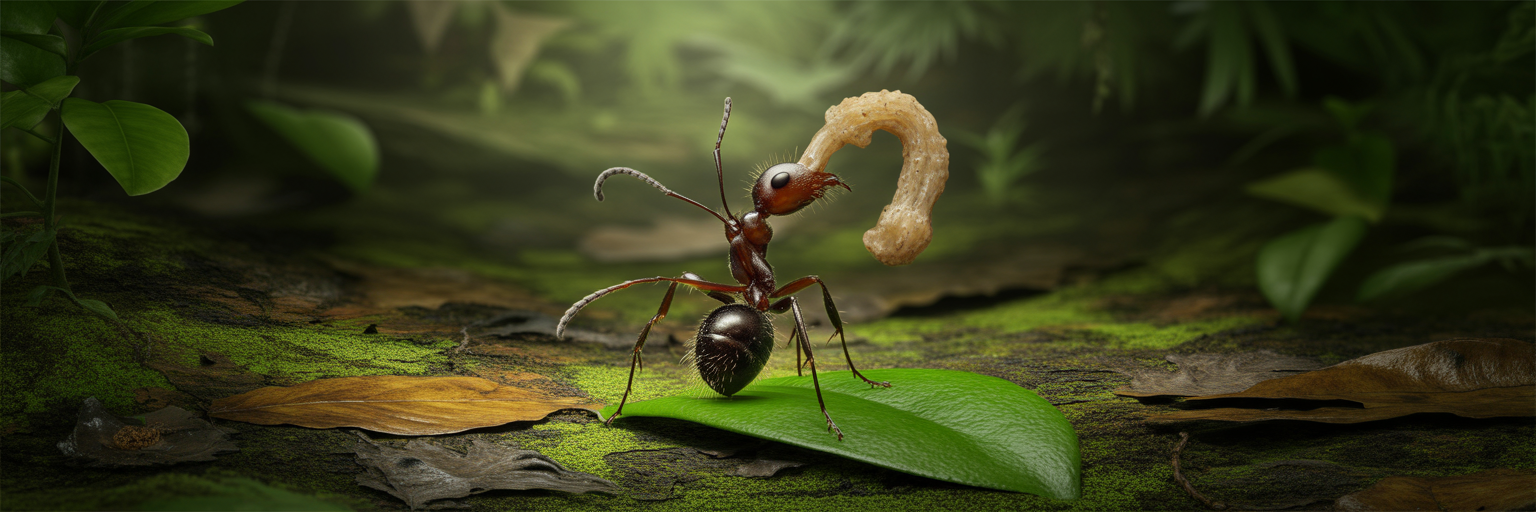
First up is the celebrity of the parasite world, the Ophiocordyceps fungus. This is the quintessential “zombie-ant” maker. It all starts when a single fungal spore lands on an unsuspecting ant. The spore drills into the ant’s body and begins to grow, spreading a network of fungal cells that replaces the ant’s tissues. Once it reaches the brain, it releases chemicals that hijack the ant’s behaviour. The infected ant is driven to abandon its colony, climb a plant to a specific height with just the right temperature and humidity, and bite down onto a leaf in a final “death grip.”
With the ant locked in place, the fungus is free to complete its gruesome mission. It consumes the rest of the ant’s insides and then erupts from the back of its head with a long stalk. This stalk releases a fresh batch of spores, raining them down on the unsuspecting ants below. It is a body-horror masterpiece, as beautiful as it is terrifying.
But wait, there is more. Meet the lancet liver fluke, Dicrocoelium dendriticum, a parasite with a more subtle but equally sinister approach. An ant eats slime from a snail that has eaten the fluke’s eggs. Most of the fluke larvae hang out in the ant’s abdomen, but one or two make a special trip to the brain. These brain-flukes force the ant to climb to the top of a blade of grass every evening and clamp down with its mandibles, waiting to be eaten by a grazing cow or sheep. If the ant survives the night, it climbs back down in the morning and goes about its day, only to repeat the bizarre ritual when dusk falls. It is a psychological thriller starring a very patient villain.
| Feature | Ophiocordyceps (The Fungus) | Dicrocoelium (The Liver Fluke) |
|---|---|---|
| Primary Goal | Spore dispersal from a high vantage point | Get eaten by a grazing mammal (cow, sheep) |
| Host Behavior | Climbs plant, bites leaf in a ‘death grip’ | Climbs to the top of grass blades at night |
| Is the Behavior Reversible? | No, it’s a one-way trip to death | Yes, the ant can climb down if not eaten by morning |
| The Grand Finale | Fungus erupts from the ant’s head | Ant is eaten, fluke moves to its final host |
| Level of Creepy | Body-horror movie monster | Psychological thriller with a patient villain |
Taking a Dive for Your Landlord The Hairworm Story
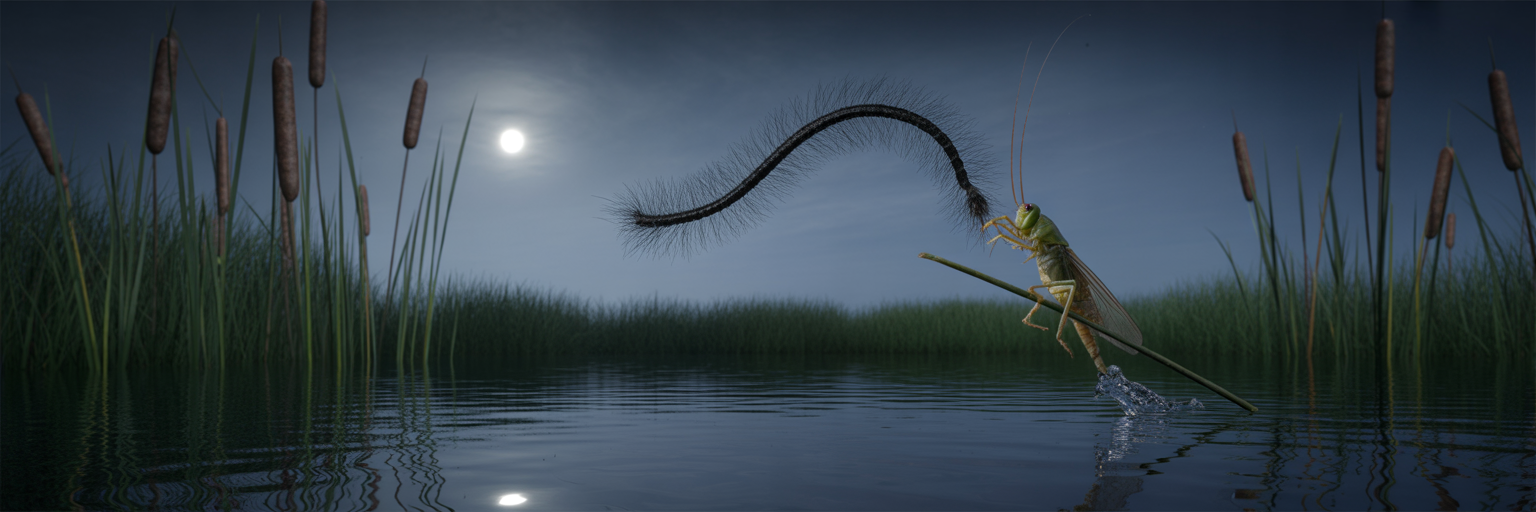
Picture a single strand of spaghetti with a diabolical plan. Now imagine that spaghetti is alive and living inside a cricket. That is the horsehair worm, or Nematomorpha, a parasite that proves some landlords will do anything to get you to move. This worm has a serious problem: it is an aquatic organism that spends its youth growing up inside a land-loving insect, like a cricket or grasshopper.
The infection starts when a cricket unknowingly eats a hairworm larva. Inside, the worm begins to grow. And grow. And grow. It can reach a length several times that of its host, coiling itself up to fit inside the cricket’s body cavity. Imagine finding out your torso is 90% occupied by one giant, wriggling noodle. It is the kind of body horror that would make a sci-fi director blush. The parasite absorbs nutrients directly from the cricket, essentially eating it from the inside out.
Once the hairworm is mature and ready to breed, it needs to get to water. This is where the mind control kicks in. The worm manipulates the cricket’s brain, creating an irresistible, inexplicable urge to find a body of water. A cricket, which would normally avoid water like the plague, now actively seeks it out. It will march, hop, and scramble towards the nearest pond, pool, or puddle and, against every instinct it has, take a final, desperate leap.
The moment the cricket hits the water, the real show begins. The mature hairworm makes its cinematic escape, emerging from the cricket’s body in a dramatic, alien-like fashion. Freed from its terrestrial prison, the worm swims off to find a mate, leaving its former host to drown. The cricket was just a disposable vehicle, a walking incubator sacrificed for the parasite’s aquatic ambitions.
Your Cat’s Secret Weapon Toxoplasma Gondii
Think these horror stories are just for the deep wilderness? Think again. Let us bring this uncomfortably close to home and talk about your cat’s secret little helper, Toxoplasma gondii. This single-celled parasite is a master manipulator, and its favourite playground is the brain of a rodent.
The classic story goes like this: a rat or mouse becomes infected with Toxoplasma. Normally, a rodent has a healthy, life-preserving fear of cats. The smell of cat urine alone is enough to send it scurrying for cover. But an infected rodent is a different story. The parasite rewires its brain, silencing the fear circuits. Even worse, some studies suggest it does not just remove the fear, it replaces it with a fatal attraction. The smell of a cat suddenly becomes appealing, drawing the rodent out of hiding and directly towards its predator.
This is not just a random act of bravery, it is a calculated hit. A review in Frontiers in Ecology and Evolution describes this as a classic example of parasitic manipulation, where the parasite pushes its host towards a predator to complete its life cycle. The cat eats the rodent, the parasite infects the cat, and the cycle continues. It is a brilliant, psychopathic strategy.
Here is where it gets weird for us. A huge portion of the human population is also infected with Toxoplasma, usually from handling cat litter or eating undercooked meat. For decades, scientists have debated the Toxoplasma gondii effects on human behaviour. Are there subtle manipulations at play? Is the parasite the real reason some people are so obsessed with cats and cat videos? The jury is still out, but it is a fun thought to entertain.
So, is your cat secretly using a brain parasite to plot against you? Probably not. But it is a good reminder that the world of parasites is closer than we think. Probably.
The Freeloader’s Guide to Brain Hacking
So, how parasites control hosts is the million-dollar question. Are they tiny neurosurgeons with microscopic scalpels? Evil hypnotists with a flair for the dramatic? The truth is, scientists are still cracking the code, which somehow makes it even creepier. What we do know is that these parasites are expert chemists, capable of brewing a cocktail of compounds that short-circuits the host’s brain.
Think of the parasite as a rogue bartender in the host’s brain. It starts mixing a cocktail of neurotransmitters like dopamine and serotonin, turning up the “bravery” dial while turning down the “common sense” one. By tweaking the host’s brain chemistry, the parasite can suppress fear, increase activity, or create bizarre compulsions, all to serve its own agenda. It is not smashing the control panel, it is delicately rewiring it.
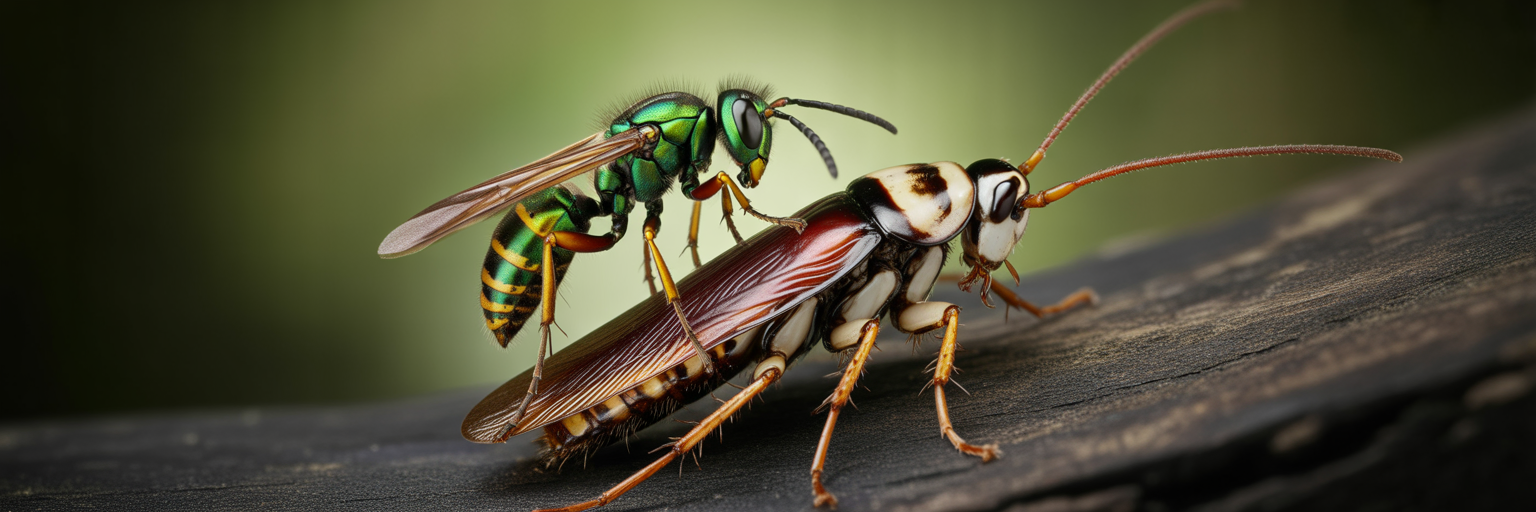
For a masterclass in precision, look no further than the jewel wasp and its unfortunate victim, the cockroach. The wasp’s attack is a two-step surgical strike:
- Sting One: A quick jab to the cockroach’s torso temporarily paralyzes its front legs. This is just to stop it from getting away while the wasp prepares for the main event.
- Sting Two: A second, incredibly precise sting delivered directly into the cockroach’s brain. The wasp targets specific ganglia that control the escape reflex, effectively turning off the roach’s will to run.
- The Zombie Walk: The cockroach is now a docile, obedient puppet. It is not paralyzed, just utterly devoid of motivation. The wasp then grabs the roach by its antenna and leads it back to its burrow, where it will become a living, fresh meal for the wasp’s larva.
While we understand the jewel wasp’s methods, the exact mechanisms for many other parasites, like the Ophiocordyceps fungus, remain a mystery. As EL PAÍS English reports, studying these zombifying organisms in a lab is notoriously difficult. This means nature’s best-kept secrets on mind control remain safe for now, which is probably for the best.
Nature’s Tiny, Terrifying Puppeteers
So there you have it, a highlight reel from nature’s weirdest horror show. We have seen disco snails forced into the spotlight, ants marching to their doom, crickets taking a suicidal plunge, and rats falling in love with their worst enemy. This rogues’ gallery of parasites proves that the natural world is full of hidden dramas that are more bizarre than anything we could invent.
It is easy to label these creatures as “evil,” but that is missing the point. This is not random chaos or malicious intent. It is evolution at its most brutally efficient. These parasites have developed highly specialized, incredibly effective survival strategies. They are not villains, they are just terrifyingly good at their jobs, which happen to involve brain-hacking, body-snatching, and turning other animals into disposable vehicles.
The next time you are out in nature, take a closer look. The world is filled with these tiny, terrifying puppeteers, pulling the strings in a complex web of life and death. Their stories remind us that there is always another layer of complexity, another mind-bending strategy, waiting to be discovered.
So, if you see an ant walking in a strangely straight line up a blade of grass, maybe give it some space. It might be on a very important, and very final, business trip.