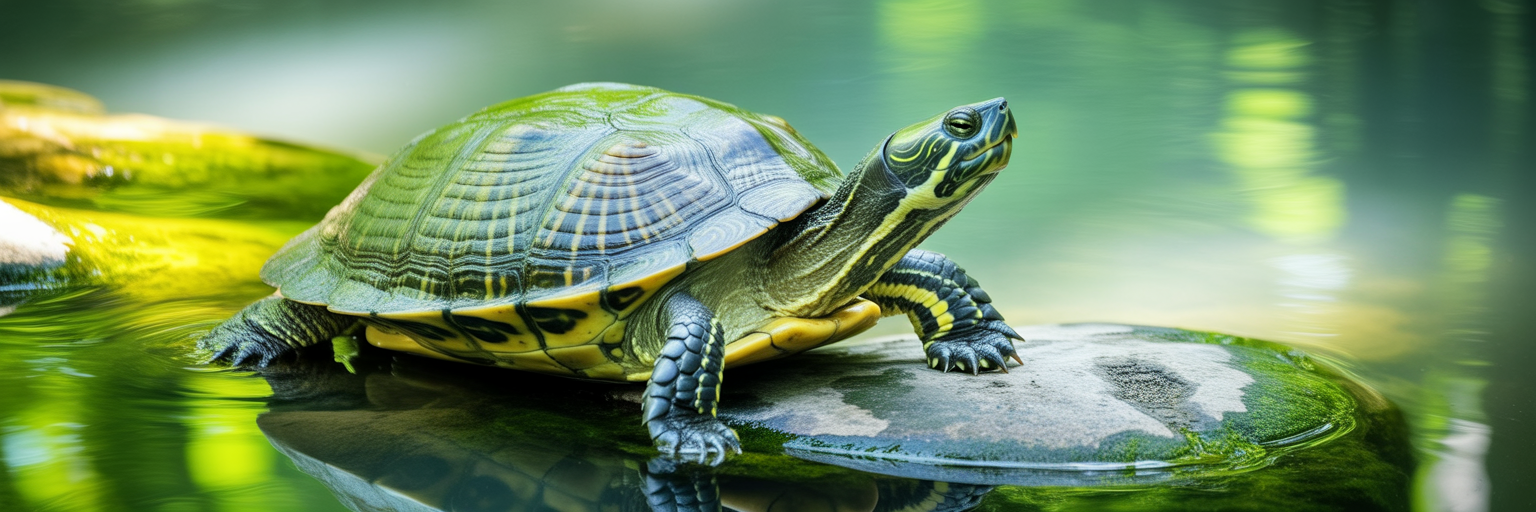
The headline sounds like a playground joke, but it points to one of nature’s most fascinating survival strategies. While the image it conjures is humorous, the science behind it is entirely real. Certain freshwater turtles have an incredible ability to absorb oxygen from water using their rear end. This is not a myth, but a remarkable biological process that allows these reptiles to remain submerged for astonishingly long periods. The story of the turtle that breathes through its butt is not about inhaling air, but about a specialized form of underwater gas exchange called cloacal respiration. It’s a testament to how evolution finds ingenious solutions to life’s toughest challenges.
This adaptation is a critical tool for survival, particularly during harsh winters when surfacing for air is impossible. It allows a select group of turtles to essentially shut down their primary respiratory system and rely on this bizarre backup. Understanding this process reveals a hidden world of biological machinery, where an animal’s anatomy is repurposed in unexpected ways. We will explore the anatomy, mechanics, and survival advantages of this unique ability, separating the funny-sounding premise from the serious science.
The Real Science of the Turtle That Breathes Through Its Butt
The idea of a turtle that breathes through its butt immediately captures the imagination. It sounds like something from a cartoon, yet this phenomenon is a well-documented biological reality for certain aquatic species. The scientific term for this process is cloacal respiration, and it is a masterful adaptation for life underwater. To be clear, these turtles are not inhaling air through their posterior. Instead, they are absorbing dissolved oxygen directly from the water, much like a fish uses its gills. This process allows them to supplement the oxygen they get from their lungs, extending their time beneath the surface.
This ability is not just a neat party trick. It is a life-saving mechanism that enables some turtles to survive in conditions that would be lethal to others. Imagine a turtle in a northern river during winter, trapped beneath a thick sheet of ice. Surfacing for a breath is not an option for months. Cloacal respiration becomes its lifeline, providing just enough oxygen to sustain a slowed-down, dormant state until the spring thaw. This article will explain exactly how this works, which turtles have mastered this skill, and why this strange-sounding ability is a perfect example of evolutionary ingenuity. It is a journey into the weird and wonderful world of animal adaptations, starting with one of the most peculiar of them all.
Understanding the Cloaca: The Body’s All-in-One Utility Port
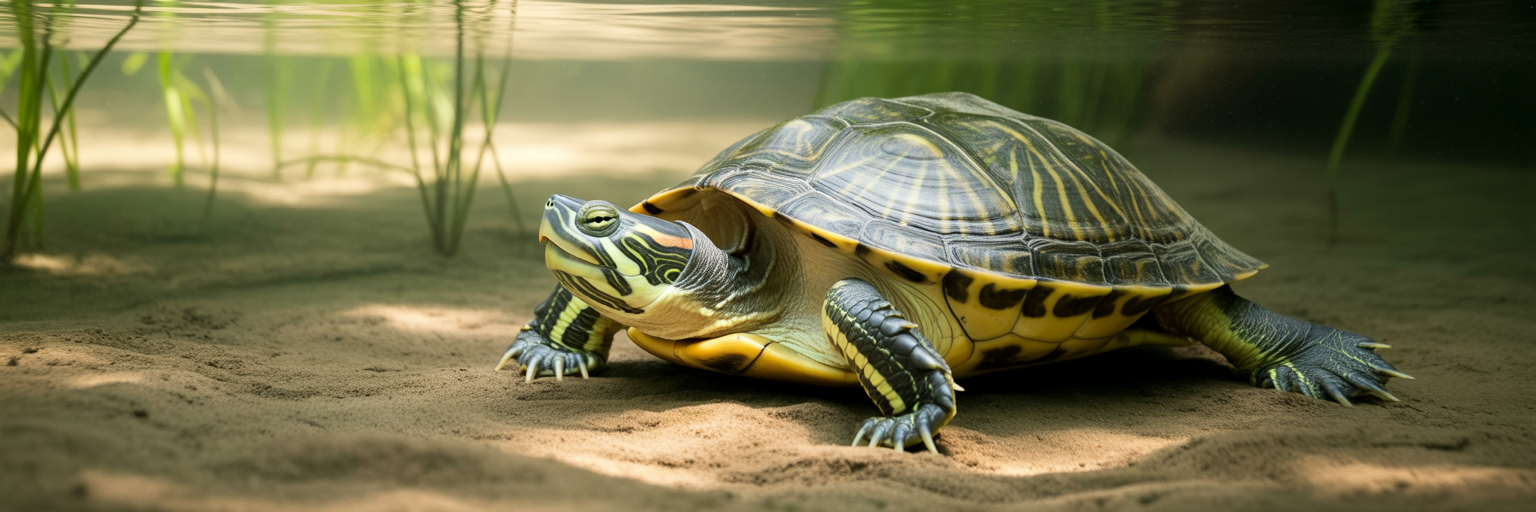
To understand how a turtle can breathe through its rear, we first need to get acquainted with a piece of anatomy called the cloaca. The term comes from the Latin word for “sewer,” which is a surprisingly fitting description of its multi-functional nature. Found in reptiles, birds, amphibians, and some fish, the cloaca is a single posterior chamber that serves multiple purposes. Unlike mammals, which have separate openings for different bodily functions, these animals have one unified exit port. This anatomical structure is a model of efficiency, handling several critical life processes.
So, what is a turtle cloaca used for? Its responsibilities can be broken down into three main categories:
- Excretion: The cloaca is the exit point for both solid waste from the digestive tract and liquid waste (uric acid) from the kidneys. Everything leaves through this one opening.
- Reproduction: The cloaca houses the reproductive organs. During mating, it is where sperm is transferred, and for females, it is the passage through which eggs are laid.
- Respiration: In a select group of freshwater turtles, the cloaca has been adapted for a third, extraordinary function: breathing.
This is why calling the cloaca a turtle’s “butt” is both relatable and incomplete. While it does handle the functions of an anus, it does so much more. The key to its respiratory function lies in specialized structures within the cloaca called cloacal bursae. These are a pair of thin-walled, sac-like pouches that are lined with an incredibly dense network of blood vessels. Their structure is no accident. The thin walls and rich blood supply create a perfect surface for gas exchange, allowing oxygen to pass from the water into the turtle’s bloodstream and carbon dioxide to move out. This all-in-one utility port is a prime example of how evolution can modify an existing structure for a completely new and life-saving purpose.
How Cloacal Respiration Actually Works
The mechanics of cloacal respiration are a beautiful example of passive diffusion and active assistance working in concert. The process hinges on a simple principle of chemistry: gases move from an area of high concentration to an area of low concentration. When a turtle is underwater, the water flowing through its cloaca is rich in dissolved oxygen, while the blood circulating in the cloacal bursae is low in oxygen and high in carbon dioxide. This difference, known as a concentration gradient, drives the entire exchange.
Here is how it unfolds. Dissolved oxygen from the water diffuses across the extremely thin, permeable membranes of the bursae and enters the turtle’s capillaries. Once in the bloodstream, it is transported throughout the body to fuel the turtle’s cells. Simultaneously, carbon dioxide, a waste product of metabolism, moves from the blood into the water to be flushed out. This is the same fundamental process that occurs in our own lungs with the air we breathe, just adapted for an aquatic environment. This is how do turtles breathe underwater without surfacing.
However, this process is not entirely passive. If the water inside the cloaca were to sit still, the oxygen would quickly be depleted, and the exchange would stop. To prevent this, turtles actively pump water in and out of their cloaca. They use a set of specialized muscles to draw water into the bursae, hold it there for a moment to allow for gas exchange, and then expel it. This rhythmic pumping ensures a constant flow of fresh, oxygen-rich water over the respiratory surfaces. In function, it is remarkably similar to how a fish passes water over its gills. While the anatomical structures are completely different, the goal is the same: to maximize contact with oxygenated water. This is not the only strange breathing adaptation in nature; to illustrate the diversity of these methods, some researchers have found that certain fish can even breathe through their gut when water oxygen levels are low.
A Critical Adaptation for Surviving Winter
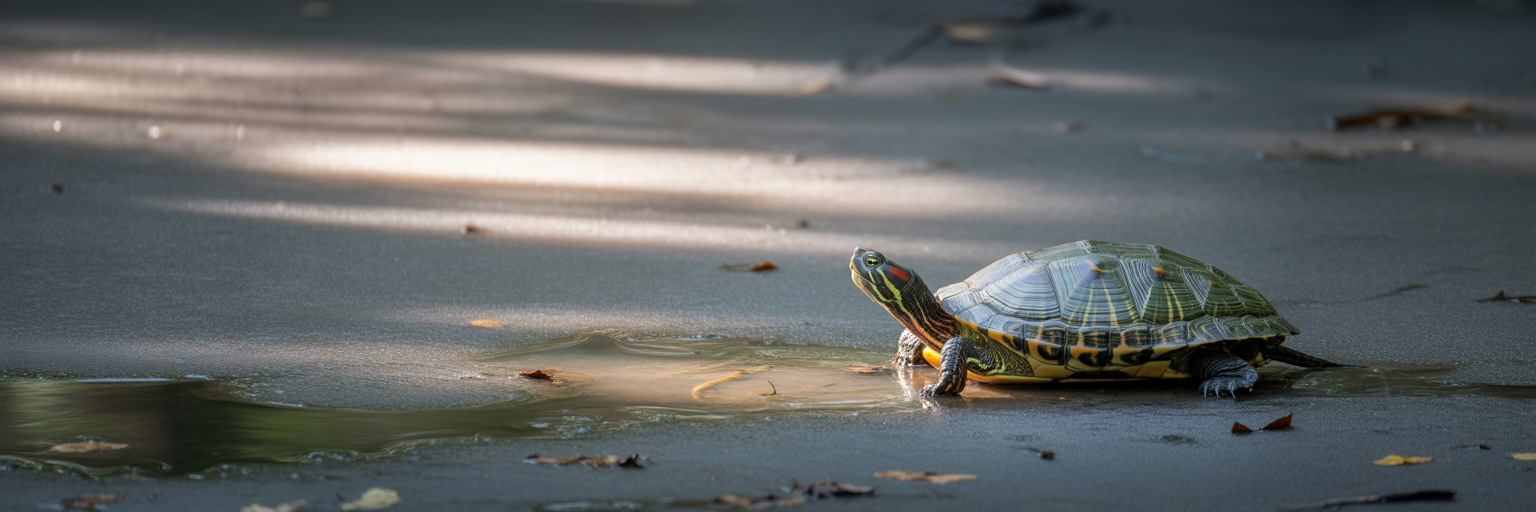
The true value of cloacal respiration becomes most apparent during the cold winter months. Many freshwater turtles that live in temperate climates face a serious challenge: their ponds and rivers freeze over, cutting them off from the surface and the air. To survive this, they enter a state of dormancy called brumation. Similar to hibernation in mammals, brumation involves a dramatic slowdown of all bodily processes. The turtle’s heart rate drops, its digestion stops, and its overall metabolism plummets.
This metabolic slowdown is the key to winter survival. A less active body requires far less oxygen. This is where cloacal respiration transitions from a helpful supplement to a primary lifeline. The turtle winter dormancy period can last for months, and during this time, the animal may not take a single breath with its lungs. Instead, it relies entirely on the small amount of oxygen it can absorb through its cloaca from the cold water. Fortunately, cold water has two properties that make this possible. First, colder water holds significantly more dissolved oxygen than warm water. Second, the turtle’s own oxygen demand is so low in its dormant state that the inefficient, low-yield process of cloacal respiration is sufficient to keep it alive.
Without this ability, turtles in northern climates would have to find frost-free burrows on land to spend the winter, a strategy used by some species. But for those that remain in the water, cloacal respiration is the elegant evolutionary solution that allows them to wait out the winter at the bottom of a frozen pond, patiently waiting for the ice to melt and the world to warm up again.
Meet the Champions of Cloacal Respiration
While several turtle species can perform cloacal respiration, a few have taken this ability to an extreme. The undisputed champion is the Mary River turtle (Elusor macrurus) from Queensland, Australia. This species is so proficient at underwater breathing that it can obtain up to 100% of its oxygen needs from the water via its cloaca. This remarkable Mary River turtle breathing ability allows it to stay submerged for days at a time. As a detailed profile from ifeg.info highlights, this turtle is also famous for its unique appearance, often sporting a “mohawk” of algae growing on its head and shell, earning it the nickname “punk rock turtle.”
Another Australian native, the Fitzroy River turtle (Rheodytes leukops), is also a highly efficient cloacal breather, with exceptionally large cloacal bursae that allow it to absorb a significant portion of its oxygen from the water. In North America, species like the Eastern painted turtle (Chrysemys picta) and the common snapping turtle (Chelydra serpentina) use this method primarily to survive long winters under the ice. Their reliance is less extreme than their Australian counterparts but no less critical for their survival.
It is crucial to understand that this is not a universal turtle trait. Sea turtles, for instance, cannot breathe this way at all. Their anatomy is built for life in the open ocean, and they must surface regularly to breathe air. Likewise, land-dwelling tortoises have no such ability. This adaptation is specific to certain freshwater species, driven by the selective pressures of their environments, such as life in fast-flowing, oxygen-rich rivers or habitats with long, freezing winters. Understanding the science of aquatic adaptations helps contextualize how different species evolve unique solutions for survival. This evolutionary creativity is seen across the animal kingdom, with other animals developing equally strange survival tactics, like the archerfish that shoots bugs out of the air with water.
Lungs vs. Cloaca: A Tale of Two Respiratory Systems
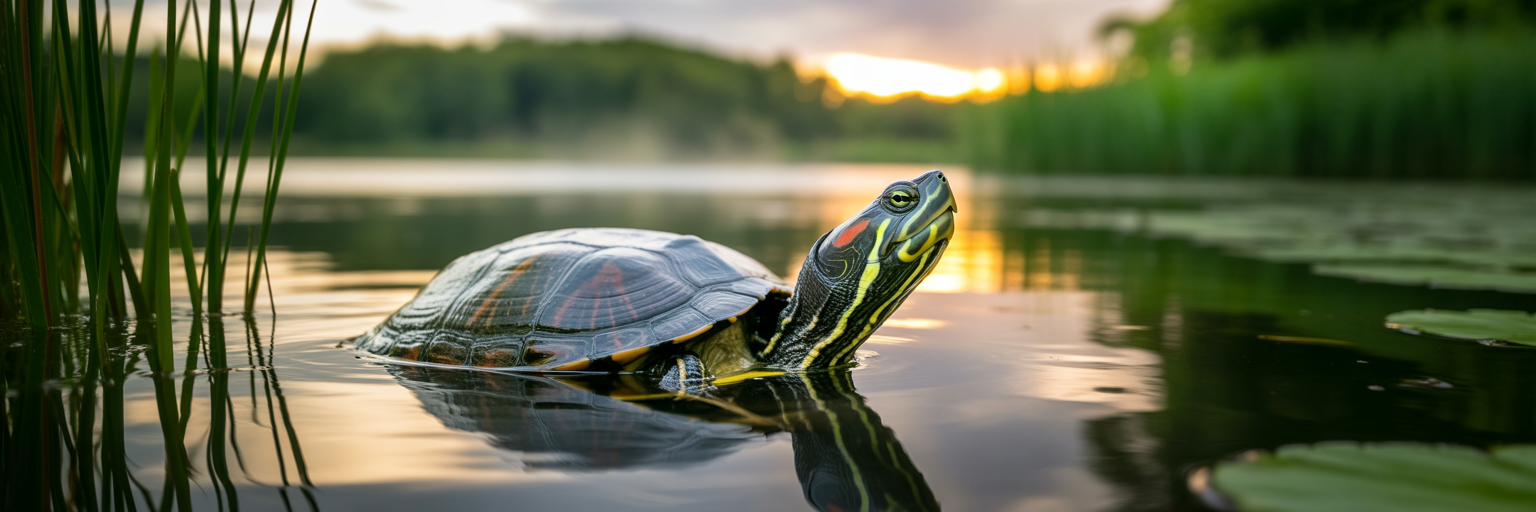
To avoid any confusion, it is essential to draw a clear distinction between a turtle’s two respiratory systems. For every turtle, without exception, lungs are the primary engine of respiration. Breathing air with lungs is an active, high-efficiency process that provides the large amounts of oxygen needed to power an active lifestyle. Swimming, foraging, basking, and mating are all fueled by pulmonary respiration.
In contrast, cloacal respiration is a supplementary system. It is a passive, low-yield method best suited for periods of rest or extreme inactivity when the body’s oxygen demands are at their absolute minimum. Think of it like a backup generator for a building. The main power grid (the lungs) runs everything day-to-day. The backup generator (the cloaca) is not powerful enough to run the whole building, but it can keep the emergency lights on during a power outage. For a turtle, that “power outage” is a long winter trapped under ice or an extended period hiding from a predator at the bottom of a river.
This supplementary system has significant limitations. It only works effectively in cold, clean, and highly oxygenated water. In warm or polluted water with low dissolved oxygen levels, cloacal respiration is virtually useless. It can never provide enough oxygen to support high-energy activities. A turtle cannot chase down prey or fight a current using only the oxygen from its cloaca. The two systems are designed for entirely different purposes, working together to give these turtles a survival edge in their specific environments.
| Feature | Pulmonary Respiration (Lungs) | Cloacal Respiration |
|---|---|---|
| Oxygen Source | Atmospheric Air | Dissolved Oxygen in Water |
| Efficiency | High (supports active lifestyle) | Low (supports only low metabolism) |
| Mechanism | Active (muscular contraction to inhale/exhale) | Passive Diffusion (facilitated by pumping water) |
| Primary Use Case | All activities: swimming, foraging, basking | Resting, hiding, and winter dormancy (brumation) |
| Universality | Universal to all turtles | Specific to certain freshwater species |
The Evolutionary Advantage of a Multi-Purpose Posterior
From an evolutionary standpoint, the development of cloacal respiration is a masterful example of opportunism. It did not require the evolution of a brand-new organ. Instead, natural selection repurposed an existing structure, the cloaca, to perform a novel and life-saving function. The selective pressures that would favor such a trait are clear when you consider the lifestyle of these freshwater turtles.
The advantages are numerous. First and foremost is predator avoidance. Every trip to the surface for air is a moment of vulnerability. A turtle poking its head out of the water is an easy target for predators like eagles, raccoons, or herons. By extending the time it can spend underwater, a turtle significantly reduces its exposure to these threats. This is especially true for young, small turtles that are more vulnerable. Another key advantage is enhanced foraging. Many of these turtles feed on slow-moving prey like snails, insects, and vegetation on the riverbed. The ability to remain submerged for longer periods allows for more uninterrupted time to search for food.
In certain habitats, like fast-flowing rivers, there is also an energy conservation benefit. Fighting a strong current to reach the surface requires a significant expenditure of energy. By staying put on the river bottom and absorbing oxygen from the water, the turtle conserves precious energy. This concept of repurposing body parts for survival is a common theme in evolution, leading to some truly strange outcomes. It is a similar kind of evolutionary creativity that helps us understand why parasites need multiple hosts to complete their life cycles, adapting their form to exploit different environments.
Conservation Concerns for These Unique Turtles
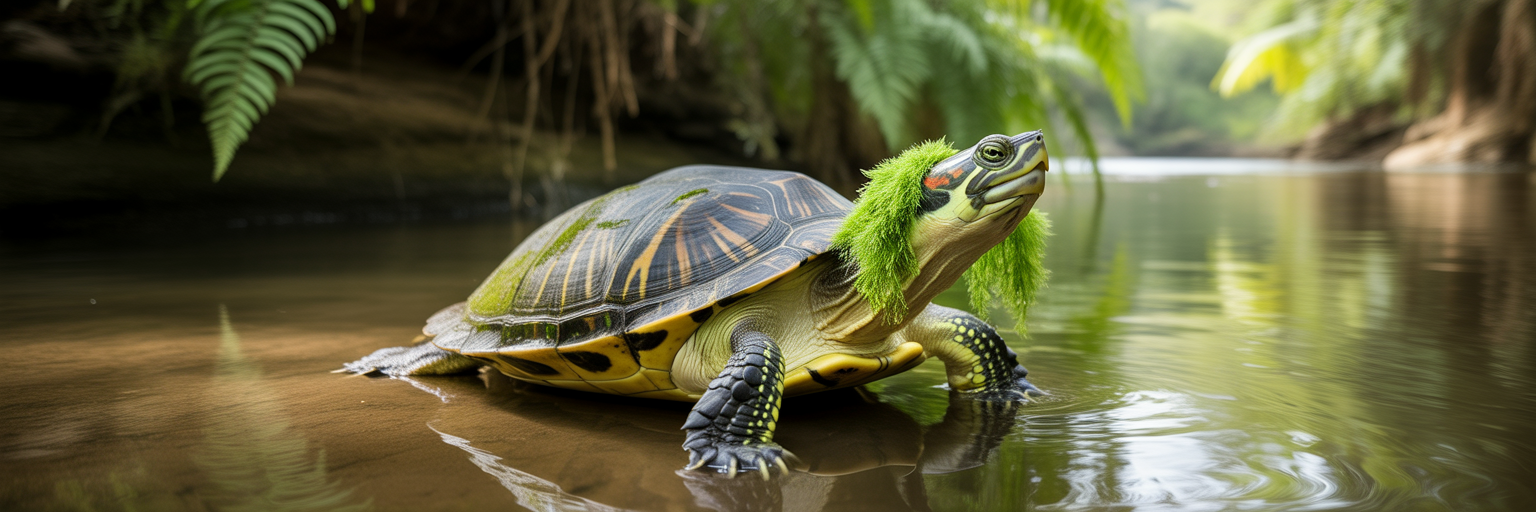
The story of the “butt-breathing” turtle is not just a biological curiosity; it is also a cautionary tale. The very adaptation that makes these turtles so unique also makes them incredibly vulnerable to environmental changes. The Mary River turtle, the most proficient cloacal breather, is now one of the most endangered turtles in the world. Its population has been decimated by a combination of threats that strike at the heart of its survival strategy.
Historically, its eggs were over-harvested for the pet trade. More recently, its habitat has been severely degraded. The construction of dams and weirs on the Mary River has altered water flow and created deep, slow-moving pools where sediment builds up. This murky, stagnant water is low in dissolved oxygen, rendering the turtle’s primary adaptation useless. Furthermore, agricultural runoff and pollution further decrease water quality, while rising global temperatures warm the water, causing it to hold even less oxygen. A Mary River turtle in warm, polluted, low-oxygen water is a turtle that cannot breathe underwater.
This predicament highlights a critical point: the health of these unique animals is directly tied to the health of their freshwater ecosystems. Protecting a single species is not enough. We must protect the entire habitat, ensuring clean, cool, and well-oxygenated water. The turtle that breathes through its butt should be seen as more than just a fun fact. It is a symbol of the intricate, fragile, and wonderful adaptations that exist in the natural world, and a stark reminder of what we stand to lose if we fail to protect our planet’s rivers and streams.
Frequently Asked Questions About Turtle Breathing
To clarify some of the most common points of confusion, here are answers to frequently asked questions about this unique respiratory process.
- Do all turtles breathe through their butts?
No, absolutely not. This ability, known as cloacal respiration in turtles, is limited to a small number of freshwater species. Sea turtles and land-dwelling tortoises cannot do this at all. It is a specialized adaptation, not a universal turtle trait. - How long can a turtle stay underwater using this method?
This varies greatly by species and environmental conditions. A species like the Eastern painted turtle might use it to survive for several months under ice during winter dormancy. An expert like the Mary River turtle can stay submerged for several days even while active, as it can meet a high percentage of its oxygen needs this way. - Is this the turtle’s main way of breathing?
No. For all turtles, lungs are the primary respiratory organs. Cloacal respiration is a supplementary or secondary system used for specific situations, such as resting, hiding, or surviving winter dormancy when lung breathing is not possible. - Can turtles drown?
Yes, all turtles can drown. If they are forcibly held underwater and unable to surface for air, they will eventually suffocate. Even species capable of cloacal respiration cannot survive indefinitely without air, as this method is not efficient enough to support a fully active metabolism. - Is the water they pump in and out clean?
The water they pump is simply the water from their environment, whether it’s a river, pond, or lake. The cloaca is not a filtration system. This is why water quality is so critical; if the water is polluted or low in oxygen, this breathing method becomes ineffective and can even be harmful.