
The Architects of the Canopy: An Introduction to Weaver Ants
The title is striking, suggesting a brutal form of natural engineering. While “living glue gun” is a vivid analogy, the reality is a far more sophisticated and cooperative biological process. The protagonists of this story are the weaver ants of the genus Oecophylla, master architects of the forest canopy. Found across the tropical forests of Africa, Asia, and Australia, these reddish-brown or greenish ants are known for their highly social and fiercely territorial nature. They are not just builders; they are a dominant force in their ecosystem.
These Oecophylla ants play a crucial ecological role. Their predatory habits make them valuable allies in agriculture, where they are often encouraged to colonize fruit orchards to control insect pests. A single colony can consume a vast number of herbivorous insects, protecting crops without the need for chemical pesticides. This symbiotic relationship with humans has existed for centuries, but the most fascinating aspect of weaver ants lies in their unique construction methods. They create elaborate, durable nests by binding living leaves together. The central mystery is how they accomplish this feat, especially when the adult ants lack the one material essential for the job: silk. This sets the stage for a remarkable evolutionary solution, one that hinges entirely on the colony’s youngest members.
A Blueprint for a Living Fortress
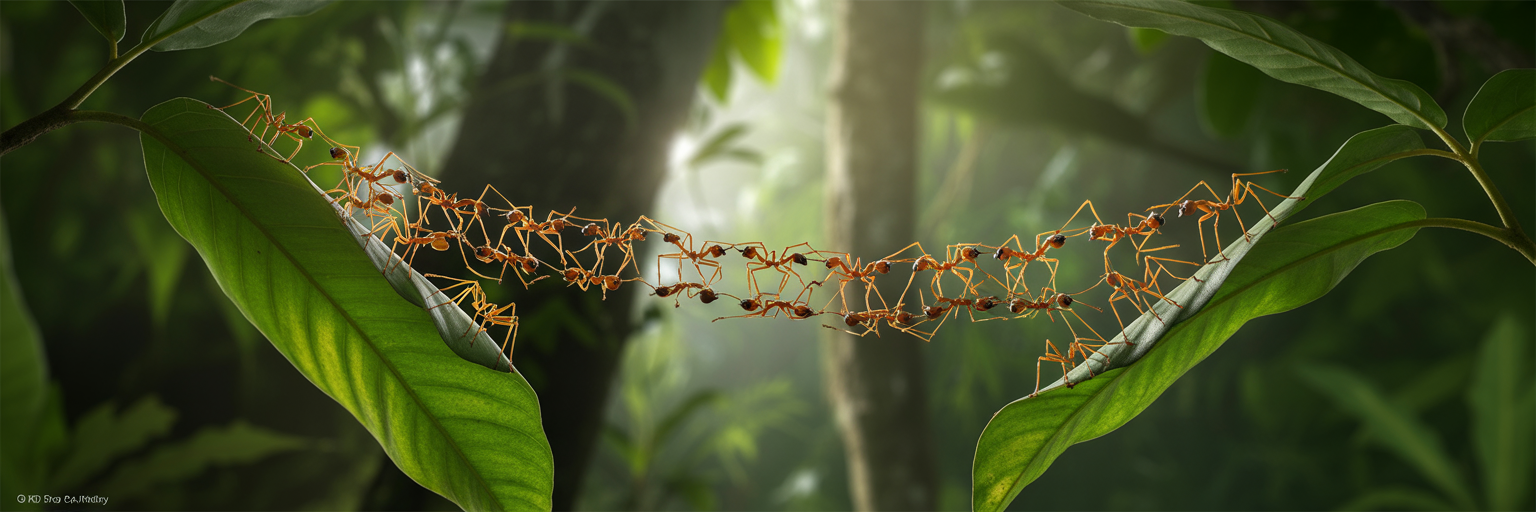
The construction of a weaver ant nest begins not with weaving, but with brute force and extraordinary teamwork. It starts when scout ants identify a suitable cluster of large, flexible leaves in the canopy. A single ant will grip the edge of a leaf with its powerful mandibles and begin to pull. This action releases chemical signals, or pheromones, that summon reinforcements. Soon, dozens of workers join the effort, each one grabbing a piece of the leaf edge and pulling in unison.
When the gap between leaves is too wide for a single ant to bridge, they deploy their most famous strategy: the living chain. One ant will grab the waist, or petiole, of another, which in turn grabs another, forming a chain of interlocked bodies. This chain can stretch across a significant distance, anchor to one leaf, and pull a distant leaf into position. It is a stunning display of collective strength and problem-solving. Once the leaves are pulled close enough, a new phase begins. Teams of workers must hold the leaves in place, maintaining constant tension for what can be hours. This division of labor is critical, as it frees up other specialized workers to begin the delicate process of binding the structure together.
The Living Tool: Redirecting Larval Silk
The core of the weaver ant’s strategy lies in a fundamental biological constraint: adult weaver ants cannot produce silk. This ability is present only during their larval stage, creating an evolutionary puzzle. How can a colony build with a material its adult workers do not possess? The answer is found in the colony’s nursery. The mature weaver ant larvae are the solution. These grubs possess unusually large silk glands compared to the larvae of many other ant species. In most ant species, this ant silk serves a single, self-serving purpose: to spin a protective cocoon in which the larva can safely pupate and transform into an adult.
Weaver ants, however, have repurposed this individual trait for a collective, architectural goal. This is a classic example of evolutionary exaptation, where a feature that evolved for one purpose is co-opted for another. The silk production of weaver ant larvae has been redirected from individual protection to colony construction. The larva gives up its ability to spin a personal cocoon, and in exchange, its silk becomes the mortar that holds the entire colony’s fortress together. This intricate system of specialized roles is what makes their complex ant nest building possible.
| Individual | Primary Ability | Role in Construction | Key Contribution |
|---|---|---|---|
| Adult Worker (Puller/Holder) | Strong mandibles, cooperative behavior | Pulls leaves together, forms living chains, holds leaves in place | Provides the physical force and structural framework |
| Adult Worker (Weaver) | Precise manipulation, tactile communication | Carries larva, stimulates silk production, applies silk to seams | Acts as the skilled operator of the ‘living tool’ |
| Mature Larva | Large silk glands | Produces silk thread upon stimulation | Provides the essential binding material (the ‘glue’) |
The Weaving Process in Micro-Detail
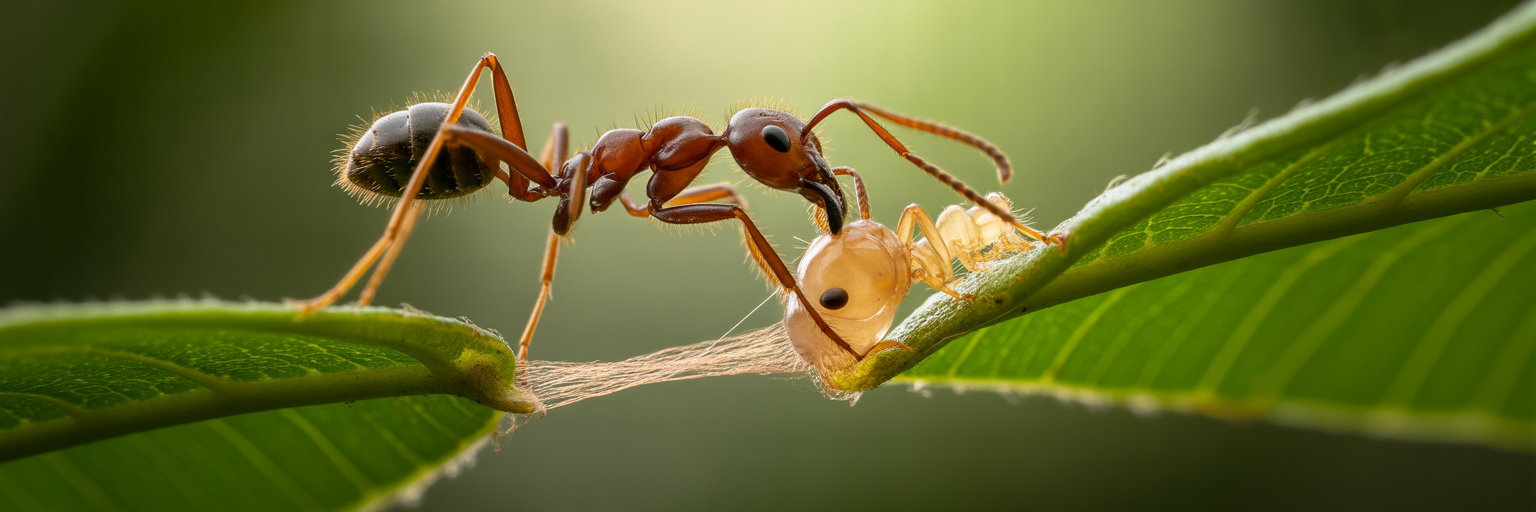
With the leaves held firmly in place by teams of workers, the “weavers” get to work. The process of how do weaver ants build nests is a delicate and precise operation, almost like a production line. Here is the sequence of events:
- A worker ant enters a nursery chamber within an existing nest and gently picks up a mature larva with its mandibles. The larva instinctively curls into a C-shape, making it easy to transport.
- The worker carries the larva to the construction site, where other ants are straining to hold the leaf edges together.
- The worker uses its antennae to gently tap the larva’s head. This tactile signal is the specific cue that stimulates the larva to extrude a single, sticky thread of silk from glands near its mouth.
- The worker then moves its own head back and forth, dabbing the larva’s mouth against the leaf edges. It moves from one edge to the other, effectively “stitching” them together with the larval silk. This is not a continuous stream but a series of precise dabs that create a dense, paper-like mat of silk.
The silk itself is a protein-based fiber that hardens upon contact with the air, forming an incredibly strong and durable bond. Along a single seam, multiple workers with their own larvae will work in tandem, rapidly reinforcing the connection. The result is a seamless, woven fabric that turns a loose collection of leaves into a secure, enclosed space.
From Threads to Fortress: The Completed Nest
The final product of the ants’ collective labor is a marvel of natural architecture. The completed nest is a spherical or oblong structure made from living leaves, rendering it perfectly camouflaged within the tree’s foliage. The silk-stitched seams are waterproof, protecting the colony from tropical downpours, while the living leaves provide excellent insulation against the sun’s heat. The interior of the nest is not just a hollow ball; it is a complex network of chambers and tunnels. These chambers serve as the heart of the colony, a protected barracks and nursery.
Inside, dedicated workers tend to the queen and her eggs, while others care for the brood of larvae and pupae. The nest is the colony’s sanctuary, shielding its most vulnerable members from predators like birds and spiders, as well as from harsh weather. The lifecycle of a nest is tied to the leaves from which it is made. As the leaves eventually die or the colony outgrows its home, the ants will abandon the old structure and continuously engage in new ant nest building projects, expanding and maintaining their arboreal territory.
The Unsung Heroes: What Happens to the Larvae?
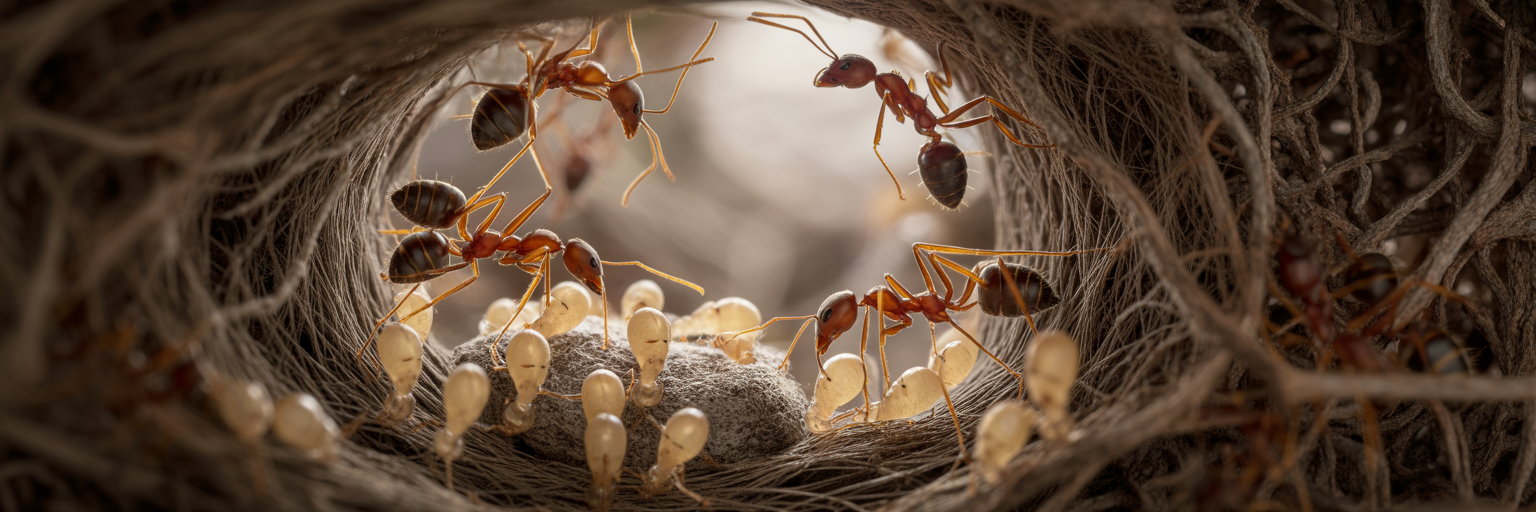
The “living glue gun” analogy, while catchy, might imply that the larvae are sacrificed in the construction process. The reality is far more cooperative and less grim. The larvae are not harmed, squeezed, or used up. The workers’ handling is remarkably gentle, and the antennal tapping is a precise signal, not a forceful act. The entire system is built on a biological trade-off. The larva expends its valuable silk supply for the good of the colony, which means it can no longer spin its own protective cocoon for pupation.
After its silk has been used, the larva is not discarded. It is carefully returned to a nursery chamber within the nest. There, it pupates “naked,” without the silken shroud that its ancestors would have used. This is only possible because of the incredibly safe and controlled environment that the nest itself provides. Protected from predators and the elements by the very structure it helped to build, the naked pupa is perfectly safe. It successfully completes its metamorphosis and emerges as a healthy adult worker, ready to contribute to the colony in new ways. This system is a prime example of eusociality, where an individual’s typical life cycle is altered for the collective good, ultimately ensuring the survival and success of the superorganism.
The Masterminds of Mass Construction
Managing a multi-stage construction project with thousands of individuals is a complex challenge, yet weaver ants do it without a central leader or a physical blueprint. Their coordination is a product of simple rules and sophisticated communication. Recruitment to a building site is managed through chemical signals, or pheromones, while the weaving process is directed by tactile cues like antennal tapping. Recent scientific discoveries have revealed even more depth to their teamwork. As reported by Phys.org, researchers have observed that ants use “living zippers” and their collective “weights” to systematically close leaf gaps, reducing confusion and increasing efficiency.
Furthermore, a study highlighted in Smithsonian Magazine discovered that this teamwork makes them “superefficient.” Some ants adopt a “force ratchet” posture, acting as anchors that allow the pulling team to rest and regroup without losing ground. This posture enables the team to generate exceptional pulling power, far greater than the sum of their individual strengths. This kind of strategic execution is a marvel of natural project management. The intricate planning and teamwork involved demonstrate a level of coordination that requires expert preparation and strategies to achieve a common goal.
A Sprawling Metropolis of Leaves
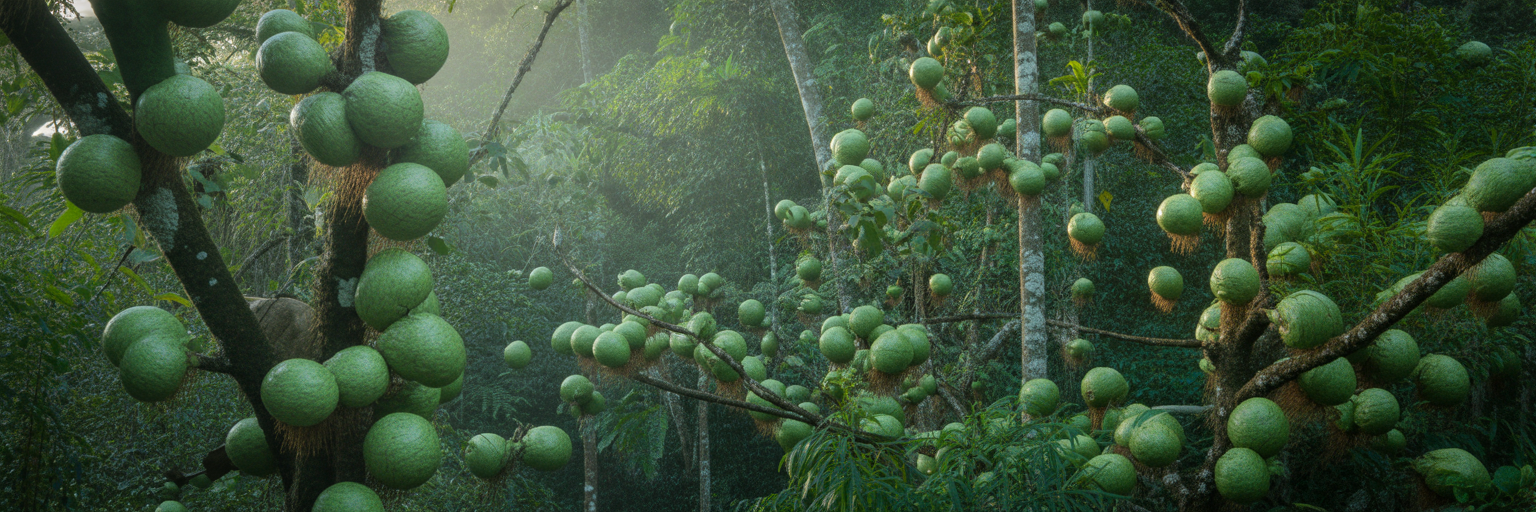
A single weaver ant nest is impressive, but it is only one small part of a much larger entity. A mature weaver ant colony is a true superorganism, comprising not one, but a massive, interconnected network of nests. This sprawling empire can consist of hundreds of individual nests spanning several adjacent trees, allowing the colony to dominate a significant portion of the forest canopy. The total population can be staggering, often exceeding half a million worker ants, all of whom are the offspring of a single queen residing safely within one of the primary nests.
This leafy metropolis is managed with remarkable efficiency. Workers create and maintain pheromone trails along branches, creating invisible highways that connect the different parts of their territory. To cross gaps between trees, they will even form living bridges with their own bodies, allowing for the rapid movement of foragers and soldiers. This network enables them to patrol their territory, forage for food, and mount a swift, coordinated defense against rival ant colonies or other threats. The entire network functions as a single, massive entity, a testament to the power of cooperation.
Frequently Asked Questions About Weaver Ants
- What do weaver ants eat?
Weaver ants are primarily predators, hunting other insects and small invertebrates to feed their larvae. Adults also consume a sugary liquid called “honeydew,” which they get from aphids and other sap-sucking insects that they sometimes protect and “farm.”
- Do weaver ants bite or sting?
They do not have a functional sting. However, they can deliver a very painful bite with their powerful mandibles. To make the bite more painful, they will often spray formic acid from the tip of their abdomen into the wound.
- Where in the world are weaver ants found?
They are widespread in the tropics. Different species of Oecophylla are found in tropical Africa, India, Southeast Asia, and northern Australia.
- Are weaver ants a pest?
They have a dual relationship with humans. In agriculture, particularly in mango and citrus orchards, they are considered highly beneficial for biological pest control. However, their aggressive nature and painful bites can make them a nuisance to farm workers during harvesting.
- How long does a weaver ant nest last?
The nests are temporary structures. They typically last for several months until the leaves that form the nest die and turn brown. At that point, the colony will abandon the old nest and build new ones using fresh leaves nearby.