
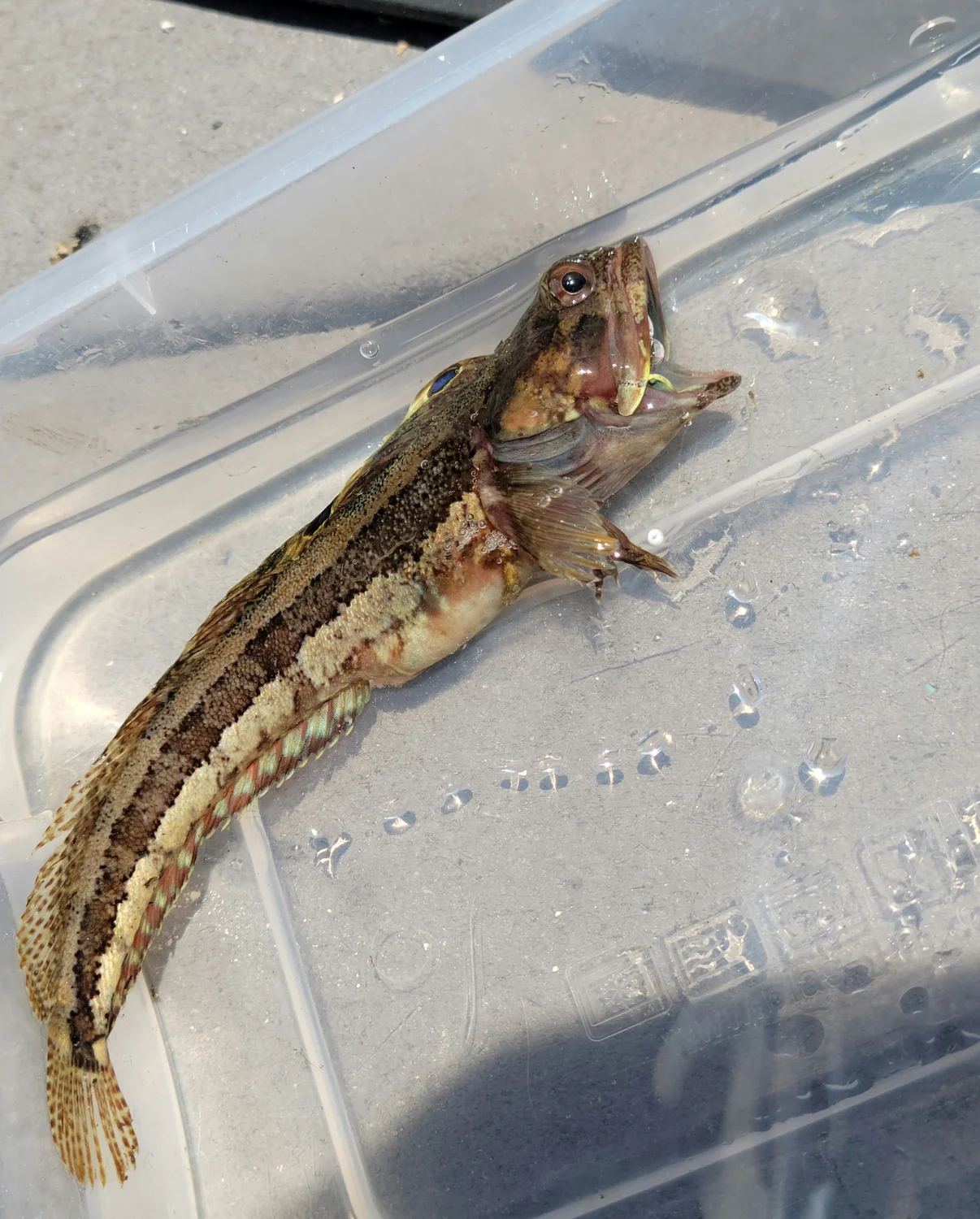
A sarcastic fringehead can transform a modest-looking fish face into a broad, colorful banner. The mouth opens, its sides flare outward, and the animal confronts another fish with an astonishing amount of exposed mouth lining. Unlike the slingjaw wrasse's forward-projecting feeding jaws, this most extravagant movement is primarily a message to a rival.
The species, Neoclinus blanchardi, lives around shelters on the seafloor of the eastern Pacific. A refuge can be a crevice or an empty shell. Possessing one provides more than somewhere to hide: it can also matter for reproduction. An argument over a suitable shelter therefore has real consequences, and fringeheads advertise their presence with a display that makes their heads look dramatically wider.
The mouth contains a folding display
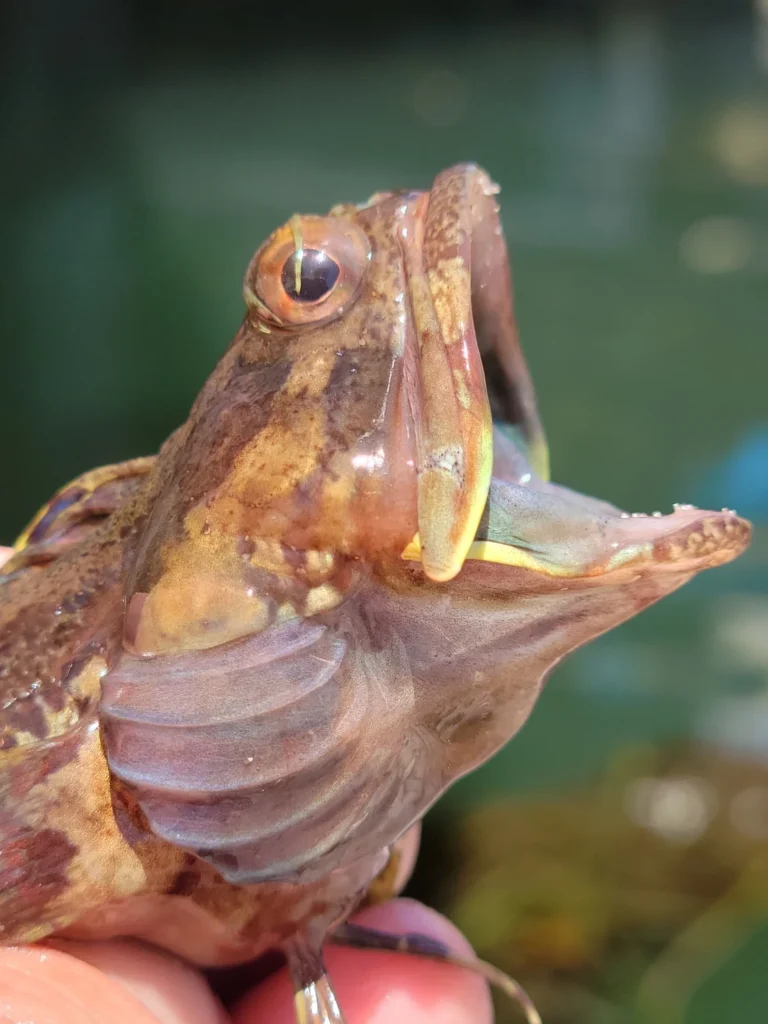
A normal closed-mouth view hides much of the arrangement. When the fish gapes, elongated upper-jaw structures move laterally and spread a membrane across the opening. The result is not simply the ordinary act of opening a jaw a little farther. It is a specialized unfolding movement that changes the apparent size and shape of the front of the fish.
The anatomical study of fringehead jaw development identified a long, partly uncalcified extension of the maxilla and a modified connection that permits sideways movement. The membrane inside the mouth is also enlarged. Together, these components provide both a support and a surface for the display, rather like a flexible frame opening a conspicuous fabric panel.
Color adds to the effect, but it should not be treated as a separate magical weapon. A bright border and a visible membrane can make an existing movement more noticeable. Observing a striking color does not establish exactly how a rival perceives it, and detecting fluorescence under a particular light source does not mean the fish glows by producing its own light.
Why a shell is worth defending
For a shelter-dwelling fish, the useful spaces are unevenly distributed. An empty snail shell is already a ready-made refuge; another fish occupying it is not easily ignored. There is a difference between living on a seafloor with abundant empty water and having access to a protected cavity of a suitable size. Competition can concentrate around the latter.
Fringeheads also use shelters in their reproductive lives. Field and aquarium observations describe courtship around the refuge and males attending eggs there. It is therefore reasonable to consider shelter defense when explaining a conspicuous threat display. That explanation concerns the observed use of a resource, rather than suggesting that the animal consciously assesses property values or performs for an audience.
Other animals advertise in equally specialized ways. Male hooded seals inflate unusual nasal structures, while a fringehead opens a colorful surface already associated with its jaws. Both cases are reminders that a structure can have a signaling role beyond the first function a human observer assumes from its location.
What happens when rivals meet
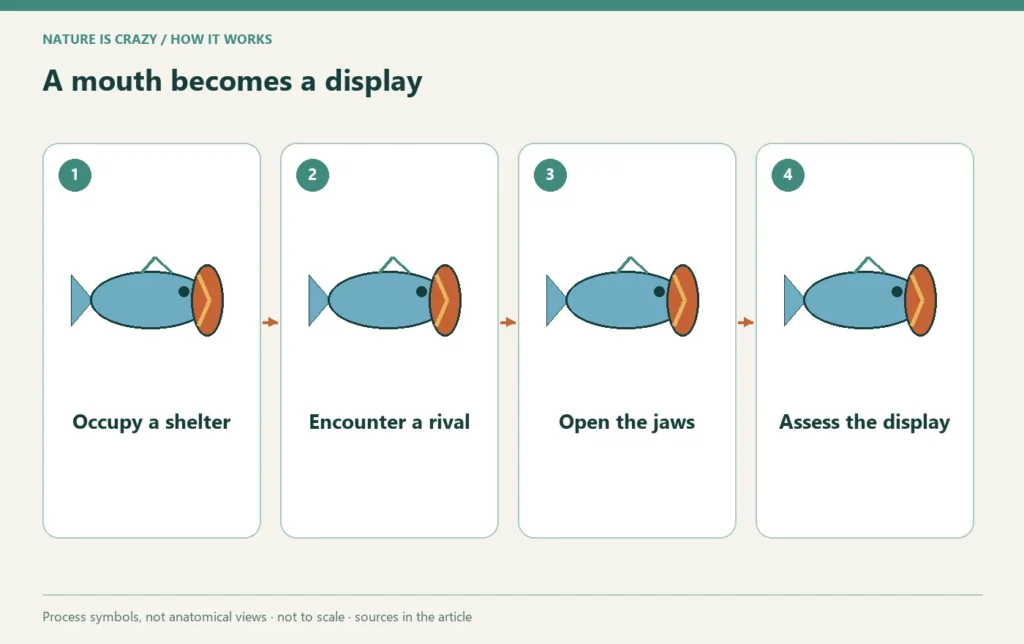
A behavioral investigation of the exaggerated display combined observations in the sea with staged interactions. It distinguished the gaping used between fringeheads from responses to other animals and from courtship. In the encounters described, a rival could retreat or return the display. When disputes escalated, the fish sometimes pressed their open mouths together.
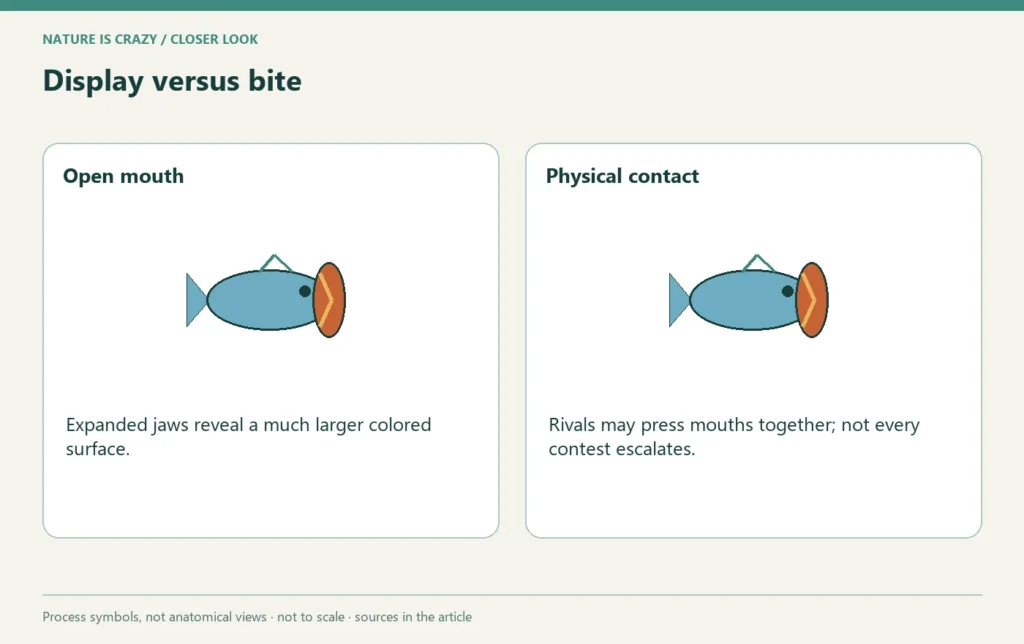
That sequence helps explain why a large mouth can matter without treating every gape as a bite. A visible display may allow an opponent to respond before a more costly physical encounter. However, the display does not guarantee peace: the observed contests could progress to pushing and biting. The mouth is a signal carried by an animal that can also fight.
The researchers reported that larger individuals were more successful in the observed bouts. Body size, jaw dimensions, and competitive outcome therefore need to be considered together. It would go beyond the evidence to say the colored membrane alone determines the winner. The spectacular visible feature is part of a larger physical and behavioral system.
A threat display is not the same as courtship
It is tempting to label any elaborate animal display an attempt to attract a mate. The fringehead observations point to a more specific interpretation. The full gape occurred in aggressive interactions between members of the species, whereas observed courtship included head movements without the same extreme opening. This distinction is one of the most useful findings behind the viral-looking footage.
Sexual selection can still be relevant when the immediate audience is another male. Competition over resources associated with reproduction can favor traits that help a male obtain or retain those resources. That is different from demonstrating that females directly prefer the largest displayed mouth. The study did not settle every possible role of female choice.
How growth helped produce an extreme face
Researchers comparing fringehead species examined how jaw shape changes as the animals grow. The developmental results indicate that altered growth patterns helped produce the particularly long jaws of sarcastic fringeheads. Evolution can generate a striking adult structure by changing the rate or duration of growth in an existing component, without inventing an entirely new kind of jaw from nothing.
Broader comparisons of sexual differences in tube blennies show that related fishes vary substantially. It is not safe to assume that all their males and females differ in the same way, or that every exaggerated head feature evolved for an identical purpose. The fringehead is a particular case within a diverse family.
The remarkable part is that the face has become an expandable argument. A fish tucked into a shell can suddenly display a much wider, brighter opening than its resting appearance suggests. Compare that with bolas spiders using chemical deception to capture moths: nature produces extraordinary signals for very different audiences. The fringehead's audience is close enough to push back, and its enormous mouth communicates most clearly to another fringehead defending the same kind of home.
Featured image credit: Sarcastic fringehead specimen with its broad mouth visible. Image: Alex Heyman; Wikimedia Commons source; CC0. Resized and converted to WebP.
Featured image credit: Sarcastic fringehead specimen with its broad mouth visible. Image: Alex Heyman; Wikimedia Commons source; CC0. Resized and converted to WebP.