
Nature is filled with biological puzzles, but few are as peculiar as the signature excretion of the bare-nosed wombat. This stocky Australian marsupial is the only animal on Earth known to consistently produce cube-shaped poop. This strange fact has led to widespread speculation, with the most common theory suggesting a rather uncomfortable anatomical feature. However, the truth is far more complex and fascinating. A single wombat can produce between 80 and 100 of these six-sided droppings each day, a testament to a highly specialized biological process.
The first thing to understand is that wombats do not have square anuses. Anatomical studies confirm their sphincter is round, just like in other mammals. The shaping process is entirely internal, a feat of soft-tissue engineering that has long baffled scientists. This raises two central questions that have driven years of research. How is it possible for a soft, flexible intestine to manufacture a geometric shape with flat sides and sharp corners? And what possible evolutionary advantage could this bizarre trait offer a creature navigating the Australian bush?
An Introduction to Wombat Cube-Shaped Poop
The journey to understanding this phenomenon begins with some basic bare-nosed wombat facts. These solitary, nocturnal herbivores are powerful diggers, creating extensive burrow systems. Their unique droppings are not a random occurrence but a regular, uniform product of their biology. The mystery of their formation has captivated biologists and physicists alike, prompting a deep investigation into the wombat’s internal workings. The common myth of a square exit point is easily dismissed by simple anatomy, forcing researchers to look deeper inside the animal for answers.
The consistency of the output, with dozens of cubes produced nightly, indicates a reliable and controlled mechanism. It is not an accident but a feature. This realization shifts the question from “if” it happens to “how” it happens. The challenge lies in explaining how soft, living tissue can act as a precise manufacturing tool. The process defies conventional biological expectations, where waste products are typically rounded or amorphous. Unraveling this secret requires a journey deep into the wombat’s digestive tract, where a combination of diet, anatomy, and physics work together in a remarkable display of natural engineering.
The Foundation of the Cube: A Unique Digestive Process
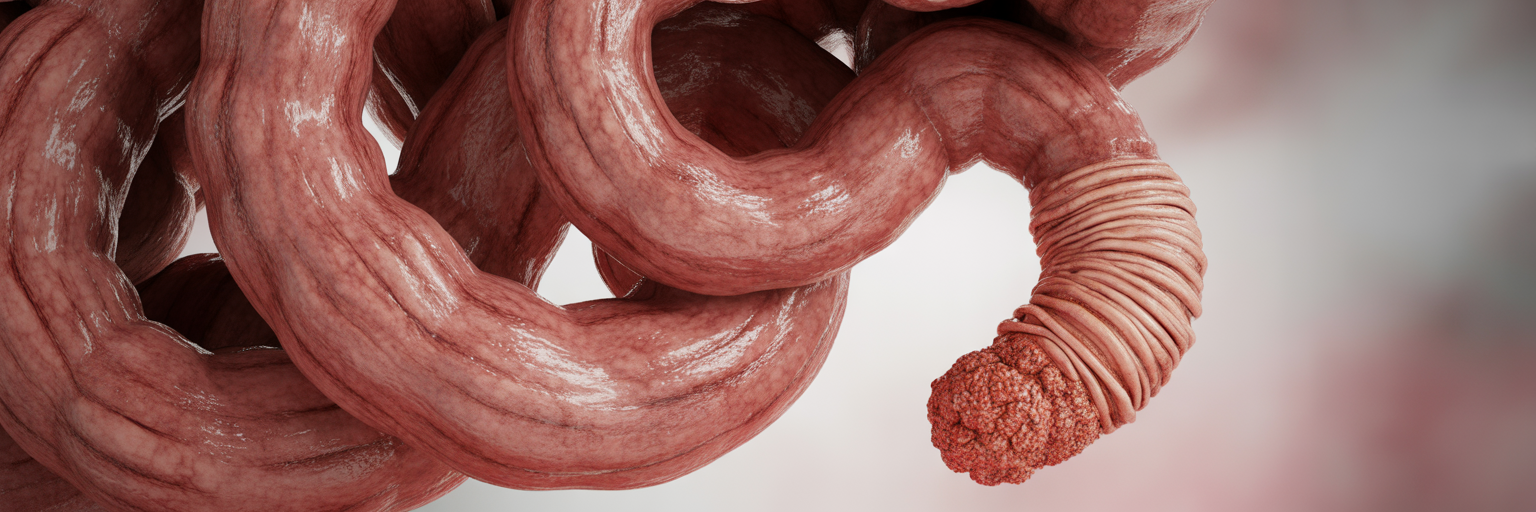
The secret to the wombat’s cubic scat begins with its diet and an exceptionally specialized digestive system. Wombats subsist on tough, fibrous vegetation like grasses, sedges, and roots. This food is low in nutrients and difficult to break down, which forces the wombat to extract every possible calorie and drop of water. To achieve this, the wombat digestive system is extraordinarily long and slow. The entire digestive tract can measure up to 30 feet, and it can take as long as 18 days for food to complete its journey from mouth to exit.
This extended transit time is crucial for two reasons. First, it allows ample opportunity for gut bacteria to ferment the tough plant fibers. Second, and most importantly for cube formation, it gives the colon an incredible amount of time to reabsorb water. The wombat’s large intestine is hyper-efficient at this task, wringing moisture from the digesting food until the fecal matter becomes significantly drier and more compact than in most other mammals. The final product has a moisture content of around 60%, whereas human feces is typically closer to 75%.
This extreme dryness is the essential precondition for sculpting. The firm, low-moisture material becomes a pliable yet dense medium, almost like a thick clay. Softer, wetter feces would be unable to hold a defined shape with flat sides and distinct corners. It would simply deform back into a rounded mass under the pressures of the intestine. Therefore, the wombat’s ability to survive in arid environments by conserving water is directly linked to its ability to produce its signature cubes. This remarkable adaptation for survival is a powerful example of how evolution can produce highly specialized traits, much like the animal that survives by shrinking its own organs to conserve energy.
The Sculpting Mechanism Inside the Intestine
With the perfect material established, the next question is how is wombat poop made into a cube. The answer lies not in a mold, but in a dynamic sculpting process within the final section of the intestine. Groundbreaking research, notably from a collaboration of biologists and physicists at the Georgia Institute of Technology and the University of Tasmania, uncovered the mechanical secret. They discovered that the wombat’s distal colon has non-uniform elasticity. Its walls are not consistently flexible like in other mammals.
Instead, the intestinal wall is composed of two stiff, rigid bands of tissue running parallel to two more flexible, elastic bands. As the intestine performs its regular rhythmic contractions, known as peristalsis, to move the drying fecal matter along, these different regions behave differently. The two stiff sections apply greater pressure, compressing and flattening the sides of the fecal mass. Simultaneously, the more flexible sections stretch and bulge outwards, allowing the corners to form in these areas of lower pressure. This process is not instantaneous. It is a gradual sculpting that occurs over thousands of contractions in the last 8% of the intestine, slowly shaping the material into its final cubic form.
A helpful analogy is to imagine shaping a piece of soft clay in your hands. By applying uneven pressure, you can flatten sides and create edges. This is fundamentally different from pushing the clay through a square-shaped hole. The wombat’s gut uses this principle of differential pressure to achieve its geometric result. The health and hydration of the wombat can also influence the final shape. If the animal is better hydrated, the feces will be softer, and the resulting cubes may have more rounded corners. This observation reinforces the critical link between the material’s dryness and the precision of the final form. This discovery, detailed in research such as the paper from Hu et al. at Georgia Tech, highlights the power of interdisciplinary science. Sometimes the most complex biological puzzles are solved when experts from different fields connect, and a breakthrough can begin with something as simple as reaching out through a contact page to start a conversation.
| Intestinal Region | Physical Property | Function in Cube Formation |
|---|---|---|
| Stiff/Rigid Bands (2) | Thicker muscle, less elastic | Apply high pressure during contractions, flattening the sides of the fecal matter. |
| Flexible/Elastic Bands (2) | Thinner muscle, more stretchy | Stretch to accommodate material, allowing corners to form in these low-pressure zones. |
| Overall Contractions (Peristalsis) | Slow and rhythmic | Provides the repeated force needed to gradually sculpt the drying material over time. |
How Researchers Confirmed the Cube-Making Process
Solving the mystery of the wombat’s cube-shaped poop required a clever, multi-pronged scientific approach that combined anatomy, physics, and computational modeling. Researchers couldn’t just watch the process happen inside a living wombat, so they devised a series of experiments to test their hypotheses.
First, they performed direct anatomical studies. Using intestinal tracts sourced ethically from wombats that had died in road accidents in Tasmania, scientists dissected the final sections of the colon. This hands-on examination allowed them to see and feel the variations in the tissue, confirming the presence of the thicker, stiffer bands running along the intestinal wall.
Next came the inflation experiments. To quantify the differences in elasticity, researchers inserted a long, thin balloon into the dissected intestine and slowly inflated it. By measuring how the tissue stretched in response to the pressure, they gathered direct physical evidence. The results showed that some parts of the intestinal wall were up to four times stiffer than the adjacent, more flexible regions. This confirmed that the tissue properties were indeed non-uniform.
With physical evidence in hand, the team turned to computational modeling. They created mathematical models to simulate the forces of peristalsis acting on a soft, pliable material moving through a tube with varying stiffness. These simulations successfully reproduced the formation of a cube with flat sides and sharp corners, providing strong theoretical validation for their physical theory. The models showed how the rhythmic squeezing and relaxing against the stiff and soft sections would inevitably sculpt the material into a cube over time.
Finally, the researchers used physical analogs to demonstrate the principle in a non-biological context. They pushed soft gel-like materials through flexible tubes that had been reinforced to have varied elasticity. Just as the models predicted, these experiments also produced cubic shapes, proving that the mechanical principle was sound. This rigorous, step-by-step process is a perfect example of how science uncovers nature’s secrets, similar to how researchers have broken down the Venus flytrap mechanism explained through careful observation and experimentation.
The Evolutionary Advantage of Not Rolling
Now that the mechanics are understood, the question becomes why do wombats have square poop? The most widely accepted explanation revolves around communication. Wombats are largely solitary and territorial animals with poor eyesight. As a result, they rely heavily on their sense of smell to communicate with one another, sending messages about their presence, territory, and reproductive status. This form of communication is known as animal scent marking, and feces is a primary tool.
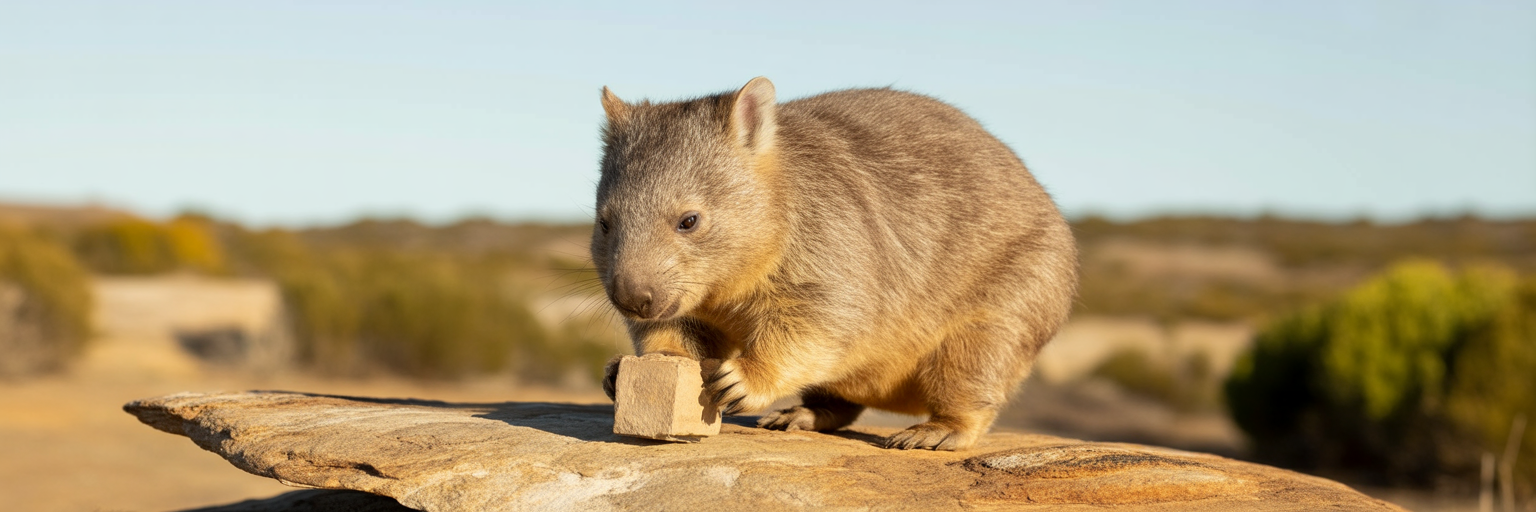
Wombats are meticulous about where they leave their droppings. They deliberately deposit their scat in prominent, elevated locations such as on top of rocks, logs, and even inside mushrooms. Placing their markers high up maximizes the dispersal of their scent on air currents and makes the visual signal more obvious to other wombats that may be passing by. This is where the shape becomes a distinct advantage.
The leading hypothesis is that the cube’s flat sides make it far less likely to roll off these high, often precarious surfaces. A typical round pellet dropped on a sloped rock would simply roll away, landing in a less effective location on the ground. A cube, however, will stay put. This ensures that the wombat’s territorial marker remains exactly where it was intended, broadcasting its message for as long as possible. The stability of the cube is its evolutionary advantage.
It is important to frame this as a strong and logical hypothesis rather than a definitively proven fact. While the mechanics of cube formation are now well understood, the precise evolutionary pressures that selected for this trait are still a subject of scientific discussion. However, the non-rolling theory provides a compelling and practical reason for such a strange adaptation. It connects the unique shape directly to a critical survival behavior, much like how other animals have developed incredible sensory abilities for communication, such as the animal that can smell rain days before it falls.
From Wombat Guts to Advanced Manufacturing
The discovery of how wombats create cubes has captured the imagination of more than just biologists. It has also attracted significant interest from physicists and mechanical engineers, who see the wombat’s method as a novel solution to a common manufacturing challenge. In human industry, creating non-round shapes from soft materials is typically difficult. It usually requires rigid molds, extrusion dies, or complex cutting processes.
The wombat, however, achieves this feat using only a soft, flexible tube. This biological process represents a completely new way of thinking about shaping pliable substances. It has opened the door to potential real-world applications inspired by nature. For example, engineers are exploring how these principles could lead to new manufacturing techniques for creating complex shapes with soft polymers, gels, or even food products without the need for expensive and rigid molds. This could be particularly useful in fields like soft robotics, where creating components with varied textures and shapes is essential.
The insights could also have applications in clinical pathology. Understanding how tissue properties affect the transport and formation of matter within the gut could help scientists better diagnose and treat certain digestive conditions in humans. The principles of differential stiffness and pressure could offer new ways to model and understand blockages or other issues within the digestive tract. This is a powerful reminder that studying a seemingly odd natural phenomenon can lead to innovation in completely unrelated fields. Nature is full of elegant engineering solutions, and the wombat’s gut is just one example, much like the predator that hunts using invisible pressure waves, which has inspired new sensor technologies.
Frequently Asked Questions About Wombat Poop
Do wombats really have square buttholes?
No, this is the most persistent myth about wombats, but it is entirely false. Wombats have a round anus, just like other mammals. The cube shape is fully formed in the final section of the intestine, long before excretion. The sphincter simply opens to let the pre-formed cube pass through. The idea of a square orifice is anatomically incorrect and physically unnecessary for producing the shape.
Are all wombat poops perfect cubes?
While they are remarkably uniform, their shape can vary. The perfection of the cube depends heavily on the wombat’s diet and hydration levels. When a wombat is well-hydrated or eating lusher vegetation, its feces will be softer. This can result in cubes with more rounded corners or a less defined shape. Conversely, in very dry conditions, the cubes are often sharper and more distinct. The health of the wombat also plays a role, as digestive issues can affect the consistency of the fecal matter and, consequently, its final form.
Why is their poop so dry?
The dryness is a direct result of the wombat’s adaptation to an arid environment. Their diet of tough, fibrous plants is low in water content, so they must conserve every drop. To do this, they have an exceptionally long and efficient colon that is specialized for water reabsorption. As digested food passes through this final section of the gut, water is extracted so effectively that the remaining fecal matter becomes very dry and compact. This process is essential for their survival and also creates the firm material necessary for sculpting into cubes.
Do other animals make weirdly shaped poop?
While many animals have distinctively shaped droppings, none are known to produce a geometric shape with flat sides and sharp corners like the wombat. For example, rabbits produce small, round pellets, and deer produce ovoid pellets. Some caterpillars produce frass (insect feces) with ridges, and certain marine worms leave spiral-shaped castings. However, the wombat’s cube is unique in the animal kingdom. This distinction is what makes it such a fascinating subject for scientific study, as it represents a one-of-a-kind biological manufacturing process.
How did scientists study this without harming wombats?
Researchers approached this study with a strong ethical commitment. The intestinal specimens used for the crucial dissection and inflation experiments were sourced from wombats that had already died, primarily from road accidents. In Australia, where wombats are common, roadkill is an unfortunate reality. Scientists work with wildlife rescue organizations and authorities to make use of these specimens for research that would otherwise be impossible. This practice allows for invaluable biological insights without harming any living animals.