Now You See Me, Now You’re Dinner: The Unseen World of Deadly Animals
Remember playing hide and seek as a kid? I was terrible at it. My go to spot was behind a floor lamp, convinced that if I could not see my friends, they could not see me. It was a flawless strategy, except for the inconvenient fact that my entire body was visible on either side of the lamp post. In the human world, being a bad hider just gets you tagged as “it.” In the animal kingdom, it gets you eaten. Some of the most effective and deadly animals have turned this childhood game into a high stakes art form, mastering techniques that make my lamp trick look even more pathetic.
This is not some cheap magic show. This is evolution’s brilliant, and frankly terrifying, answer to the question of how animals become invisible. Forget pulling a rabbit out of a hat. Nature’s greatest party trick is making the predator itself disappear, right before it introduces its teeth to your face. These creatures have developed two main strategies that are as opposite as they are ingenious. They either go full ghost and become completely transparent, or they embrace their inner ninja and become so black they are basically a walking shadow.
These are not simple costume changes. Becoming invisible is hard work. It requires some of the most bizarre and extreme biological hacks you can imagine, often with serious evolutionary downsides. It is a constant trade off between being a stealthy killer and, well, not falling apart. So, if you have ever wondered how a creature can just vanish into thin air or water, you are in the right place. We are about to pull back the curtain on nature’s sneakiest survival club, where the first rule is you do not see the members of the survival club.
Going Full Ghost: Transparency in the Water
If you are an animal looking to become invisible, your best bet is to live underwater. Trying to be transparent on land is like trying to hide a bowling ball in a fruit basket. It just does not work. But in water, it is a whole different ball game. It is more like trying to hide a glass of water in a swimming pool. Suddenly, it is a lot easier. This all comes down to a bit of physics that we will call the “blending in” rule. Light bends when it moves from one substance to another, like from air to water. This bending is what makes things visible. But in the ocean, an animal’s body is mostly water, just like its surroundings. The light barely has to bend at all, which means less shine, less reflection, and a whole lot more “Wait, where did that shrimp go?”
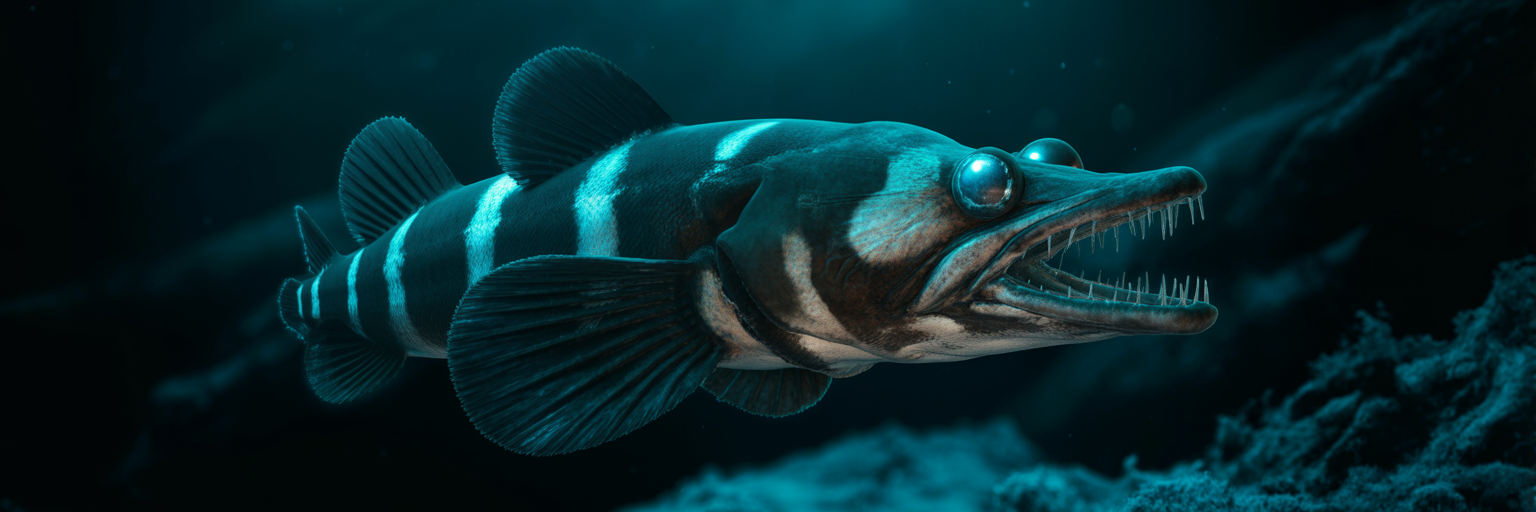
The undisputed rock star of this see through world is the deep sea dragonfish. This thing looks like a monster drawn by a hyperactive child with a love for nightmares. But its most horrifying feature is one you cannot even see: its teeth. They are completely transparent. Scientists discovered these teeth are made of tiny nanocrystals that are too small and disorganized to scatter light. The result is a set of invisible daggers floating in the dark. It is like nature looked at a terrifying monster fish and thought, “You know what this needs? Stealth weapons.”
But the dragonfish is not the only one showing off. Other transparent animals, like the humble cleaner shrimp, have taken it a step further. They can actively control their transparency by shuffling pigments around in their body. It is like having an invisibility switch that you can flick on whenever a predator swims by. It is nature just being extra at this point. Of course, being a water ghost is not all fun and games. It comes with some serious drawbacks.
- You are basically a weakling. Transparent muscle tissue is not as strong or efficient as the opaque stuff. These animals have sacrificed brawn for stealth. It is the evolutionary equivalent of always skipping leg day.
- Breathing is a chore. Gills and other respiratory organs are packed with blood and proteins that are hard to make invisible. Many transparent animals have less efficient oxygen systems, meaning they cannot exactly run a marathon.
- You have no secrets. When you are see through, everyone can see what you had for lunch. It is a small price to pay for not becoming lunch yourself, but it is still a bit awkward.
Land’s Hard-Mode Invisibility Cloaks
If becoming transparent in water is playing on easy mode, doing it on land is like playing on expert difficulty with one hand tied behind your back. The problem, once again, is light. The difference in how light bends between an animal’s body tissue and the air around it is huge. Trying to be transparent on land is like trying to sneak around while wearing a suit made of disco balls. You are going to catch the light from every angle and sparkle like a party decoration. It is a terrible strategy for not being seen. Yet, a few brave weirdos have actually pulled it off.
Meet the Glasswing butterfly. This delicate creature decided that colorful wings were for basic insects and opted for complete transparency instead. Its wings are covered in what scientists call “nanopillars,” which are basically microscopic bumps arranged in a random pattern. These structures act like a high tech anti glare screen, stopping light from reflecting off the wing’s surface. It is the same technology we use on our phone screens, except nature invented it millions of years ago, probably just to show off.
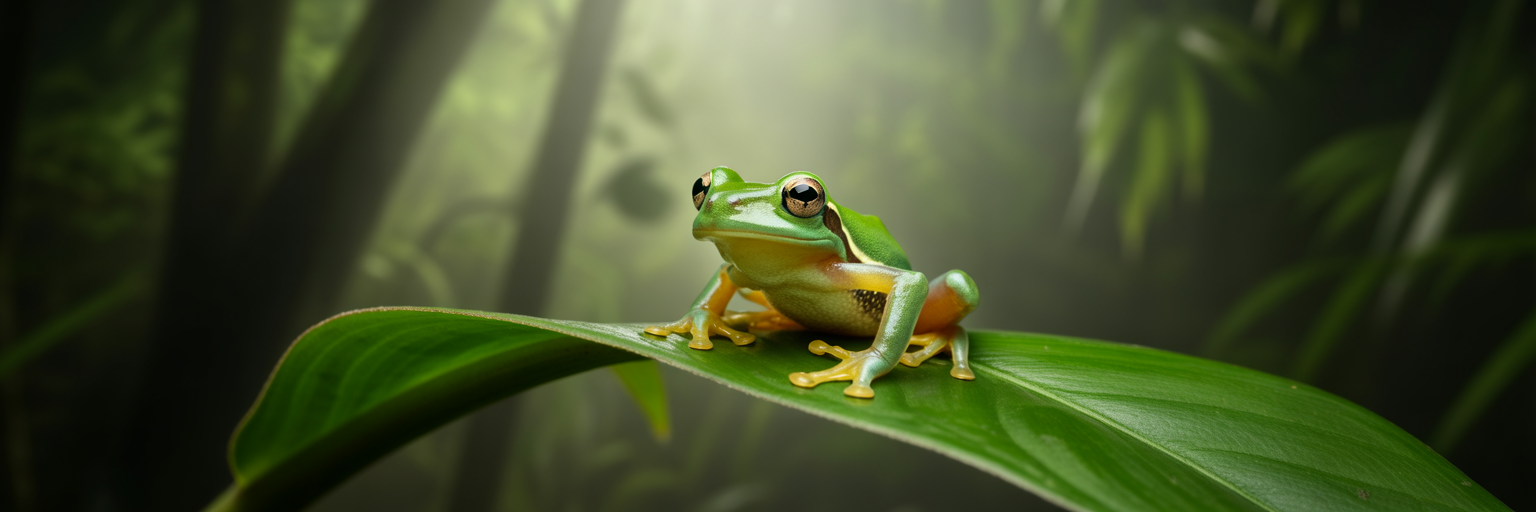
But the true champion of land invisibility is the glass frog. This little guy looks like a living gummy frog, and its trick is nothing short of incredible. During the day, it is a standard issue green frog. But when it goes to sleep, it performs a biological miracle. It gathers up to 90% of its red blood cells and shoves them into a special, mirror coated liver. By hiding its very visible blood, the rest of its body becomes almost completely transparent. This is the secret behind the famous glass frog camouflage. It is the most extreme commitment to winning a game of hide and seek ever recorded. This is not just a cool trick. It is a massive biological undertaking that costs the frog a huge amount of energy. These animals are often incredibly delicate, having sacrificed strength, durability, and sometimes even their love lives for the ultimate camouflage.
Dressing in a Black Hole: Ultrablack Camouflage
On the complete opposite end of the invisibility spectrum, we have evolution’s goth phase. If you cannot become a ghost, why not become a literal hole in reality? This is the logic behind ultrablack coloration, a strategy for ambushing prey that is far more effective than writing bad poetry in a dark room. Being “ultrablack” is not just about being a dark color. It is a physical structure designed to trap light and never let it go. Imagine a dense forest of microscopic cones or hairs covering an animal’s skin. When light hits it, it bounces around inside this forest, getting absorbed with every bounce until almost none of it escapes. It is less like a coat of paint and more like a velvet carpet that light checks into but never checks out of.
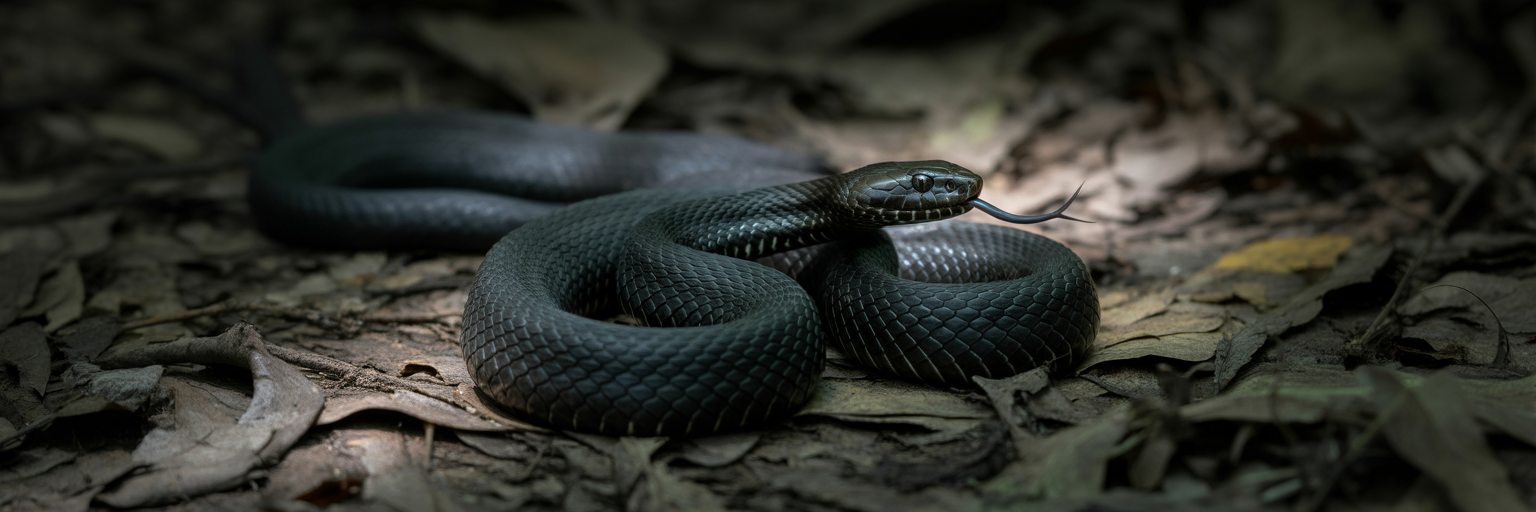
Some of the most impressive ultrablack animals are certain species of vipers. As highlighted in reporting by National Geographic, their scales are covered in a dense network of microscopic vertical structures that trap more than 99.9% of light. This completely eliminates any highlights or shadows that would normally give away their three dimensional shape. To a prey animal, the viper does not look like a snake. It looks like a flat, snake shaped void against the dark forest floor. This is one of the most mind bending animal camouflage techniques out there.
Other creatures, like the velvet ant, use a similar light trapping architecture to disappear. The goal is always the same: to confuse the brain of a predator or prey. Our brains are wired to see shapes based on light and shadow. By becoming a featureless black spot, these animals effectively delete themselves from their victim’s perception. It is a brilliant and deeply unsettling trick. You have to respect nature’s chaotic genius here. To solve the problem of being seen, it came up with two completely opposite solutions: be so clear that light passes right through you, or be so dark that light can never escape. It is the kind of outside the box thinking that keeps the world interesting and, for some unlucky critters, very short.
The High Price of Being a Ghost
At this point, you might be asking a very reasonable question: “If being invisible is so great, why isn’t every animal doing it?” The answer, my friend, is that nothing in nature is free. Every amazing superpower comes with a hefty price tag, and invisibility might just have the highest cost of all. These incredible adaptations are a masterclass in evolutionary compromise.
Let’s look at the bill for our transparent friends. It is a long one.
- Fragility is a feature. The Glasswing butterfly’s beautiful clear wings are incredibly fragile. They do not repel water well, and a strong gust of wind can be a major problem. It basically chose stealth over having a decent raincoat.
- Your love life suffers. Those same clear wings cannot be used for colorful mating displays, which are a huge part of how butterflies attract partners. This butterfly literally sacrificed its dating life to be sneaky.
- It is exhausting. For the glass frog, hiding and then re-circulating nearly all of its blood every single day is a massive metabolic strain. It is like running a marathon just to take a nap. This is not a simple on and off switch. it is a full body, high energy workout.
And what about our ultrablack buddies? Their strategy is not a free ride either. Being a walking black hole is great in the dark, but step into the sunlight, and you become a very obvious, very hot black spot. Absorbing over 99% of light also means absorbing over 99% of its heat. These animals are constantly at risk of overheating. Sunbathing is definitely off the table. Each strategy is a high stakes gamble, a perfect solution for a very specific problem that creates a dozen new ones.
| Camouflage Strategy | Primary Advantage | Key Disadvantage | Example Animal |
|---|---|---|---|
| Aquatic Transparency | Near-total invisibility in water | Weaker muscles, less efficient oxygen delivery | Cleaner Shrimp |
| Land Transparency | Excellent camouflage in complex, leafy environments | Fragile structures, high metabolic cost, loss of other functions (e.g., mating colors) | Glass Frog |
| Ultrablack Coloration | Eliminates 3D shape and shadows in low light | Risk of overheating, highly conspicuous in bright light | Ultrablack Viper |
| Standard Camouflage (e.g., patterns) | Effective in specific environments (e.g., grass, snow) | Becomes useless when the background changes | Snowshoe Hare |
This table summarizes the evolutionary compromises animals make for their camouflage. Each strategy is highly specialized and comes with significant functional costs, explaining why no single method is universally adopted.
So, Are We All Doomed?
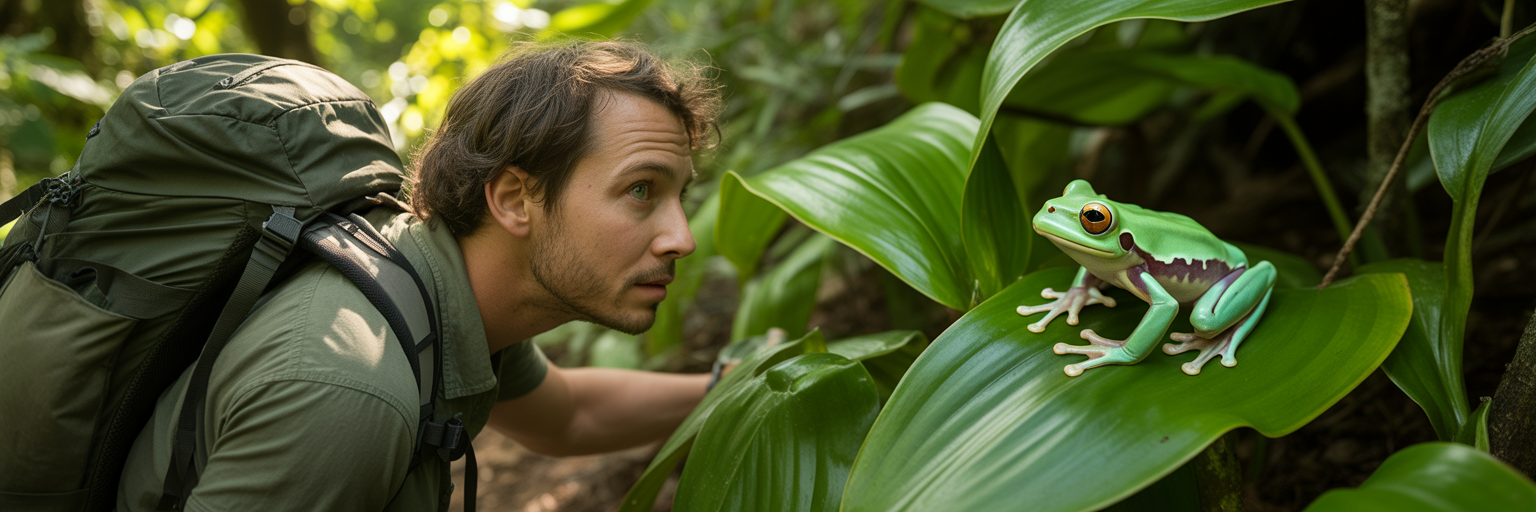
After hearing about invisible fish and snake shaped black holes, you might be feeling a little paranoid. That is perfectly normal. But before you decide to never leave your house again, let me offer a little reassurance. These incredible animal camouflage techniques are not foolproof. They all share one universal weakness, a kryptonite that foils even the most perfect invisibility cloak: movement.
A predator’s brain, and ours, is hardwired to detect motion above all else. An ultrablack viper can look like a shadow, but the second it slithers, the illusion is shattered. A glass frog can be perfectly transparent, but the moment it hops, it becomes a visible blur. The magic only works as long as the magician stays perfectly still.
So, you probably do not need to worry about invisible assassins hiding in your living room. But it is a good reminder that the natural world is filled with more secrets than we can possibly imagine. Next time you are on a hike in the woods or swimming in the ocean, just remember that you are definitely being watched by things you cannot see. Have fun!