Nature’s Most Patient Predator
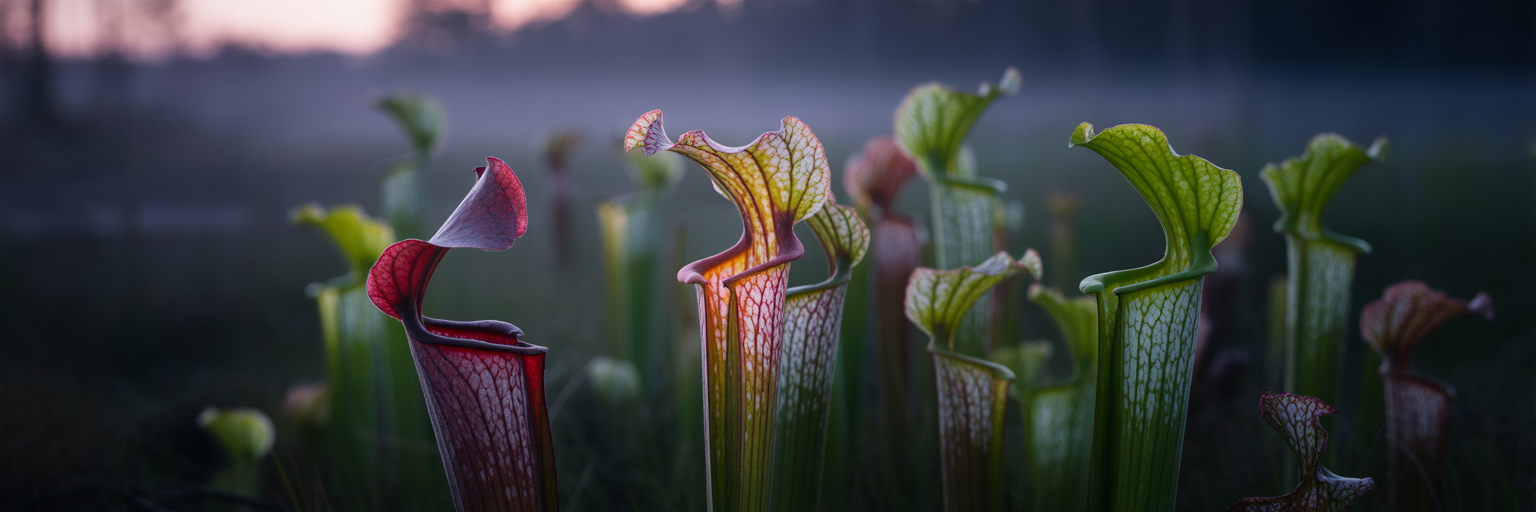
In the humid, buzzing bogs of the American Southeast, life is a chaotic symphony. Dragonflies dart through thick air, frogs croak from unseen puddles, and the drone of a million insects forms a constant, living soundtrack. Yet, amid this frantic scramble for survival, something waits with a stillness that is deeply unsettling. It is the carnivorous pitcher plant, a silent hunter rooted in the soggy earth from the Carolinas down to the Gulf Coast.
At first glance, it is a thing of profound beauty. Its elegant, vase-like leaves rise from the muck, painted in hypnotic swirls of crimson, gold, and green. They look like alien flowers, a splash of impossible color in the muted tones of the swamp. But this beauty is a lie. It is a carefully constructed facade, a masterpiece of botanical horror designed for a single, gruesome purpose. This is not a plant in the way we typically understand them. It is a predator.
Most of us see the world in simple terms: plants are eaten, and animals do the eating. The pitcher plant scoffs at this arrangement. It represents a startling evolutionary rebellion, a quiet coup where the food chain has been inverted. It does not run, it does not chase, and it does not possess teeth or claws. It simply waits, exuding an aura of serene menace. Its patience is absolute, measured not in hours or days, but in the lifespan of the unlucky creatures drawn to its fatal embrace. When you look at its graceful form, you are not seeing a passive piece of flora. You are seeing a trap, perfected over millennia. How can something so beautiful be so terrifyingly efficient at killing?
The Alluring Invitation to Doom
The pitcher plant’s hunt begins not with a pounce, but with a whisper of temptation. It is a master of deception, employing a sophisticated strategy to lure victims to their doom. This is not a random accident. It is a calculated con, a series of false promises that lead directly to oblivion. The entire process of how pitcher plants trap prey starts with an irresistible invitation.
A Feast for the Eyes and a Scent of Betrayal
The first layer of deception is purely visual. The plant’s vibrant colors and intricate patterns are not for our benefit. They are designed to mimic the appearance of safe, nectar-rich flowers. A passing fly, hardwired to seek out bright, promising blossoms, sees the pitcher’s rim and thinks it has found a jackpot. At the same time, the plant emits a potent, sweet-smelling perfume from glands around the peristome, or the rim of the pitcher. This olfactory bait is a siren song for crawling insects like ants, promising a rich and easily accessible meal.
The Narcotic’s Kiss
This is where the con turns truly sinister. The sweet nectar offered by the plant is more than just a sugary treat. It is often laced with intoxicating compounds. As an insect begins to drink, these narcotic agents start to work, dulling its senses and impairing its judgment. The world becomes a pleasant, syrupy blur. The insect, feeling confident and slightly dizzy, becomes careless. It loses its natural caution, venturing further onto the treacherous rim, convinced it has found the greatest feast of its life. This chemical warfare elevates the plant from a simple trap to a cunning manipulator, drugging its victims before the final act.
Following the Sweet Path to Oblivion
Some species take the deception even further. They create a “nectar trail,” a literal path of sweet droplets leading up the outside of the pitcher. An ant or a spider, following this guided tour, is led step by step directly to the trap’s edge. There is no chance of getting lost or wandering off course. The plant has engineered the journey from start to finish, ensuring its guest of honor arrives precisely where it needs to be. The entire setup is a masterclass in manipulation.
- Visual Mimicry: Bright colors and patterns that imitate safe, rewarding flowers.
- Olfactory Bait: Potent, sweet-smelling nectar that promises a rich food source.
- Chemical Warfare: Narcotic agents in the nectar that impair the victim’s judgment.
- Guided Pathways: Nectar trails that eliminate any chance of wandering astray from the trap’s edge.
The Point of No Return
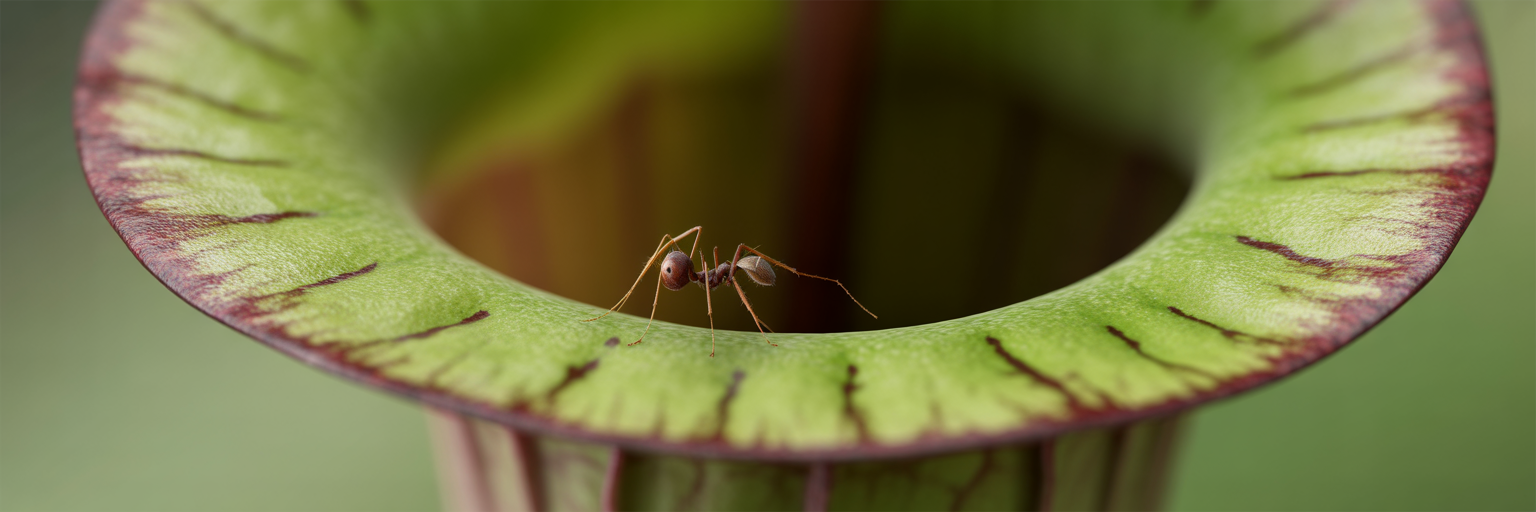
Drunk on nectar and lured by a trail of false promises, the insect takes one final, fateful step. It places a foot on the peristome, the exquisitely beautiful and lethally functional rim of the pitcher. In that single, irreversible moment, the con ends and the physics of the fall begins. The surface feels like a patch of black ice on a hot summer day. There is no grip, no friction, no hope.
This is the heart of the pitcher plant’s genius, a marvel of biological engineering. The peristome is covered in microscopic, interlocking ridges coated in a special wax. In the humid air of the swamp, this surface attracts and holds a microscopic film of water, creating a nearly frictionless layer through a phenomenon called aquaplaning. It is one of the most effective slippery plant traps in the natural world. The physics behind this phenomenon is so effective that, as detailed in a science blog from the University of Oxford, it has inspired new types of synthetic slippery surfaces. The plant’s trap relies on a stable, microscopic layer of water that creates an aquaplaning effect for an insect’s feet.
The moment the insect’s foot touches this surface, it is like a car hydroplaning on a wet road. All control is lost. The victim scrambles frantically, its tiny claws and footpads finding nothing to hold onto. Every surface is a betrayal. The elegant curve of the rim, which looked so inviting just moments before, now serves as a perfect, freshly waxed water slide leading directly into the abyss. The insect’s desperate struggle only hastens its descent. It tumbles, slips, and slides, a tiny, six-legged pinball of panic, before plunging into the darkness below. There is no recovery. There is no climbing back out. This is the point of no return.
Descent into the Slippery Labyrinth
The fall is over, but the horror has just begun. Surviving the initial plunge only means the victim has entered the next stage of the trap: the inescapable prison. The interior of the pitcher is not a simple tube. It is a multi-zoned labyrinth, a masterpiece of architectural deception designed to exhaust, demoralize, and ultimately doom any creature that enters. This architectural deception is a common theme in nature; for instance, some animals have evolved equally clever ways to mislead their enemies, like the bird that builds fake doors to confuse predators.
The upper zone, just below the rim, is coated with a fine, flaky wax. As the dazed insect attempts to climb back toward the light, this wax detaches and clogs its claws and footpads. Its natural climbing tools, which have served it for its entire life, are rendered useless. Imagine trying to climb a rope covered in grease and loose sand. Every attempt to gain purchase only makes the situation worse.
If the victim somehow manages to push past the waxy zone, it encounters the next line of defense: a formidable band of stiff, downward-pointing hairs. These trichomes act like the one-way security spikes in a parking garage. They allow for easy passage down but make any upward movement impossible. The sharp hairs dig into the insect’s body, forcing it back down with every struggle. The labyrinth metaphor becomes terrifyingly real as the prey panics, trying one wall after another, only to be thwarted by waxy flakes and sharp barbs at every turn. The light from the entrance above fades, and the victim, exhausted and defeated, slides inexorably deeper into the plant’s waiting stomach.
The Digestive Cauldron
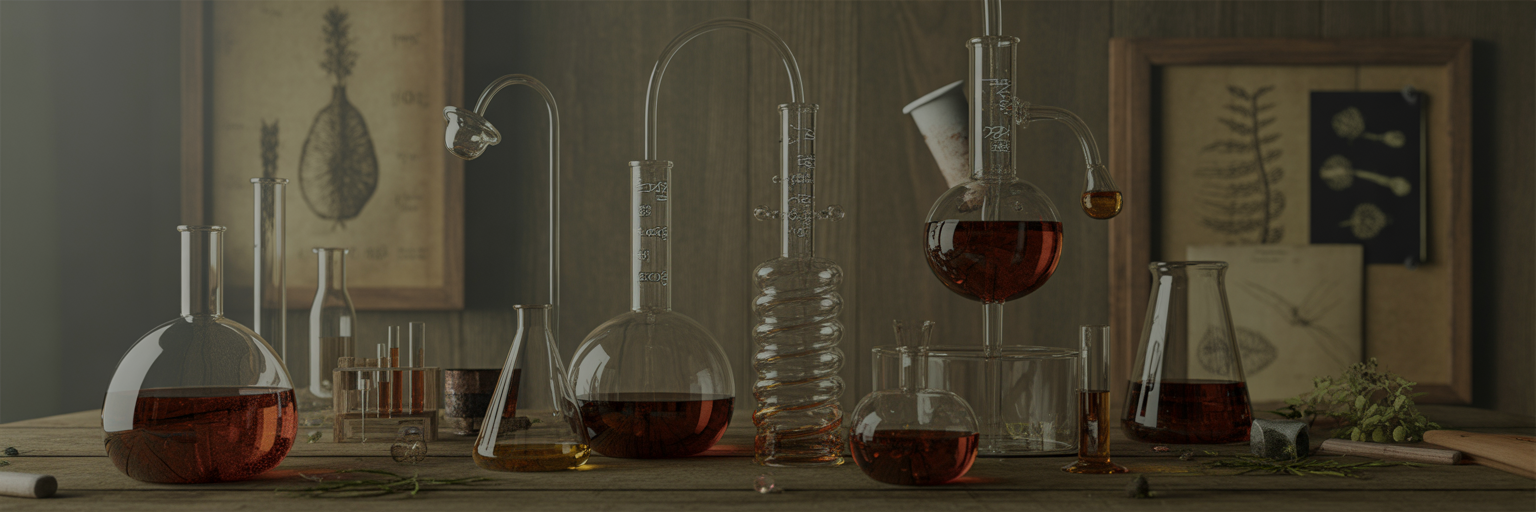
At the bottom of the pitcher lies the final destination: a pool of liquid. This is no life-saving puddle of rainwater. It is a digestive cauldron, a primordial soup engineered for decomposition. The struggling insect, now thoroughly exhausted, falls into this fluid and the end begins in earnest. This is where the plant finally reaps the rewards of its patience.
The liquid is a complex and potent pitcher plant digestive fluid, a cocktail of powerful enzymes. It is, in essence, an external stomach. According to National Geographic, this digestive fluid allows the plant to thrive by essentially creating an external stomach, a strategy that has proven incredibly successful in nutrient-starved environments. The fluid contains proteases to break down proteins, chitinases to dissolve the tough exoskeletons of insects, and other enzymes that methodically dismantle the victim molecule by molecule.
But the plant does not work alone. The fluid is a living ecosystem, teeming with symbiotic bacteria and other microorganisms that collaborate with the plant’s enzymes to accelerate the breakdown. This process of breaking down prey is a fascinating example of adaptation, much like the animal that survives venom by breaking it down mid-attack, showcasing nature’s chemical ingenuity. The prey is slowly and methodically dissolved, its body reduced to a nutrient-rich broth of nitrogen and phosphorus, which the plant absorbs directly through the pitcher walls. All that remains is a grim boneyard at the bottom, a collection of indigestible wings and legs, a silent record of past meals.
| Component | Type | Primary Function in Digestion |
|---|---|---|
| Proteases | Enzyme | Breaks down proteins into absorbable amino acids. |
| Chitinases | Enzyme | Dissolves the tough chitin in insect exoskeletons. |
| Phosphatases | Enzyme | Releases phosphate from organic molecules for nutrient uptake. |
| Ribonucleases | Enzyme | Breaks down RNA from the prey’s cells. |
| Symbiotic Bacteria | Microorganism | Assists in decomposition and releases nutrients the plant can absorb. |
Note: The exact composition and concentration of the pitcher plant digestive fluid can vary between species and is influenced by the type of prey captured and environmental conditions.
A Masterpiece Born from Hunger
Why would a plant develop such a gruesome and elaborate method for survival? The answer lies not in malice, but in necessity. The story of the pitcher plant is a story of adaptation, a brilliant solution to an ancient environmental problem.
Solving a Soil-Based Crisis
These incredible plants that eat animals typically grow in nutrient-poor habitats like acidic bogs and waterlogged swamps. The soil is so deficient in essential nutrients like nitrogen and phosphorus that most other plants cannot survive. Instead of withering away, the pitcher plant evolved a radical solution. It turned to the animal kingdom for sustenance. Carnivory is an elegant way to supplement its diet, allowing it to thrive where others perish, while still getting energy from the sun through photosynthesis.
Convergent Evolution’s Deadly Design
What is truly remarkable is that this deadly design has evolved multiple times independently across the globe. The pitcher plants of North America (Sarracenia) are genetically distinct from their counterparts in Asia (Nepenthes), yet both arrived at the same pitfall trap solution. This is a classic example of convergent evolution, where unrelated species develop similar traits to solve similar problems. While their primary diet is insects, some larger tropical species have occasionally been known to trap small vertebrates like frogs, lizards, and even rodents, a grim testament to the trap’s effectiveness.
Patience Over Pounce
The pitcher plant’s strategy is one of passive engineering. It invests its energy in building a perfect, inescapable trap and then simply waits for prey to come to it. This passive strategy stands in stark contrast to other carnivorous flora, such as the Venus flytrap, which acts more like a spring-loaded bear trap. In fact, some research shows there is a plant that can count before it eats, waiting for multiple touches before snapping shut to conserve energy. The pitcher plant, however, relies on physics, chemistry, and deception, proving that in the world of carnivorous plants, there is more than one way to secure a meal.
Lessons from a Lethal Leaf
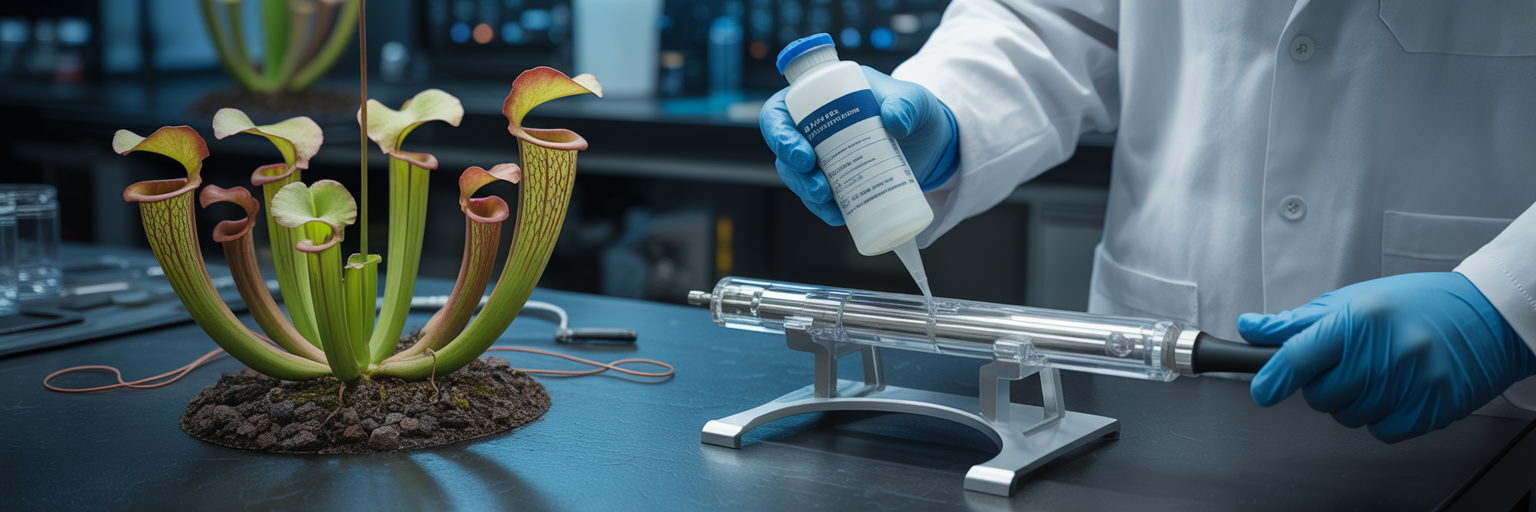
For all its botanical horror, the pitcher plant’s deadly design holds secrets that are profoundly useful to humanity. Scientists, looking past the gruesome function, have become fascinated by the elegant physics of the trap. This shift in perspective, from natural horror to human innovation, is a field known as biomimicry, and the pitcher plant is one of its superstars.
The extreme slipperiness of the peristome has directly inspired a new class of materials known as “Slippery Liquid-Infused Porous Surfaces” or SLIPS. These materials mimic the plant’s water-trapping rim, creating surfaces that are incredibly repellent to almost any substance, from water and oil to bacteria and ice. The irony is powerful: one of nature’s most effective killers is inspiring technologies that can save lives and improve efficiency.
The real-world applications of this technology are already making an impact:
- Medical Devices: Coating catheters, surgical tools, and blood transfusion equipment with SLIPS technology can prevent the formation of dangerous blood clots and bacterial biofilms, reducing the risk of infection.
- Self-Cleaning Surfaces: Imagine windows, solar panels, and camera sensors that repel water, dirt, and ice. This improves efficiency, reduces costly maintenance, and ensures clearer images and maximum energy production.
- Anti-Graffiti and Anti-Fouling: SLIPS-inspired paints and coatings are being developed for public infrastructure and ship hulls. Graffiti simply will not stick, and marine organisms like barnacles cannot attach, saving fuel and cleaning costs.
- Efficient Fluid Transport: Lining industrial pipes with these ultra-slippery surfaces reduces friction, improving the flow of viscous liquids like crude oil and even ketchup, making processes more energy-efficient.
A Beautiful, Terrifying Marvel
The journey of the pitcher plant’s victim is a four-act tragedy. It begins with a beautiful, deceptive lure. It progresses to a frictionless, irreversible slip. It descends into an inescapable maze of wax and hairs. And it ends in a bubbling cauldron of digestive fluid. It is a process of stunning efficiency and gruesome detail.
The carnivorous pitcher plant is a paradox. It is a thing of breathtaking beauty and a highly effective predator. It reminds us that in nature, survival demands ingenious, and sometimes terrifying, solutions. It is a testament to the power of evolution to solve problems in the most unexpected ways. The pitcher plant is a testament to evolution’s beautiful and brutal creativity, a story that is just one of many you can find when you explore the hidden corners of the natural world, because nature is crazy.
So the next time you find yourself in a quiet, misty swamp and spot a strange, beautiful flower rising from the muck, take a moment to admire it. But perhaps do so from a safe distance. You are not just looking at a plant. You are in the presence of a patient, silent hunter, a masterpiece born from hunger.