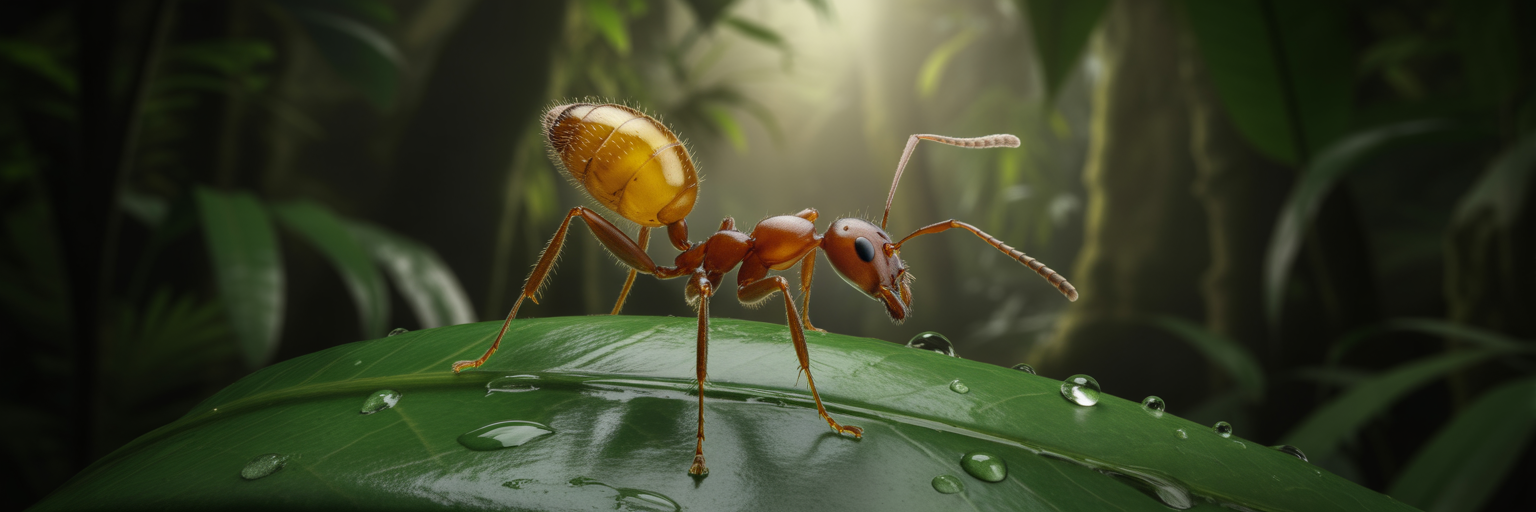
Your Worst Nightmare of a Coworker
The exploding ant is the office hero you never asked for and desperately hope to never meet. Imagine this: spies from a rival company have infiltrated your office, trying to steal the secret formula for the breakroom coffee. Most people would discreetly call security. Your coworker, however, takes a different approach. They march right up to the intruder, grab onto their leg, and violently rupture their own body, showering the corporate spy in a sticky, toxic goo. The problem is solved, but now there’s a mess on the carpet and a profound sense of horror lingering in the air.
This scenario, while absurd in an office, is a reality for certain ant species in the hyper-competitive rainforests of Southeast Asia. This act of suicidal self-sacrifice has a scientific name: autothysis. It is a highly evolved, last-ditch defensive strategy. When a colony is threatened by a predator too large to fight conventionally, designated worker ants turn themselves into living grenades. This is not an accident or a desperate, flailing attack. It is a precise, biological function designed for one purpose: to protect the colony at all costs.
This extreme form of suicidal ant defense raises some fascinating and unsettling questions. How does an insect’s body even do that? Why would evolution produce a creature whose ultimate purpose is to self-destruct? And what does this behavior tell us about the absolute limits of social cooperation in the animal kingdom? The answers reveal a world of biological engineering that is as brilliant as it is brutal.
Meet the Exploding Ant Your Office Never Wanted
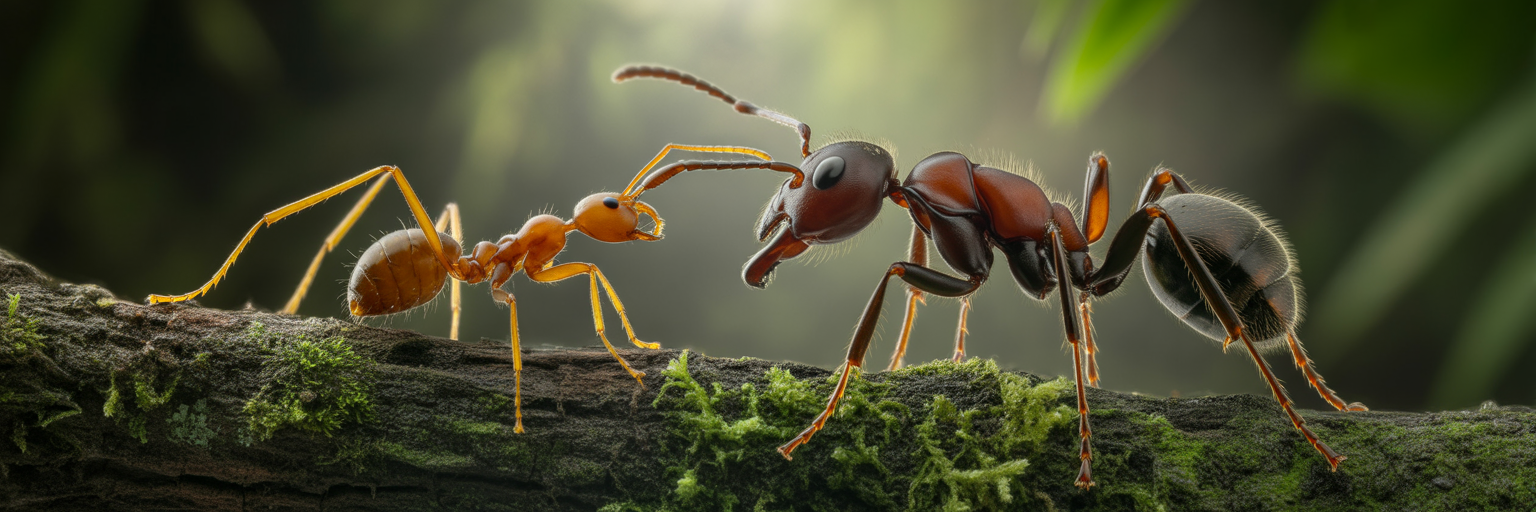
The star of this gruesome show is a species officially named Colobopsis explodens, a fitting title for an insect that literally explodes. Found in the rainforests of Borneo, these ants are not physically imposing. The ones who perform this dramatic act are the “minor workers,” small, unassuming ants you would likely overlook. Their unremarkable appearance hides a truly bizarre and specialized anatomy, making them one of nature’s most surprising weapons.
The Unassuming Assassin: Colobopsis explodens
At a glance, a minor worker of C. explodens looks like any other small, brownish-yellow ant. They spend their days foraging for food, maintaining the nest, and caring for the young. They are the everyday laborers of the colony. Yet, beneath their simple exterior lies a pair of massively enlarged mandibular glands. These glands are not for digestion; they are sacs filled with a toxic chemical cocktail, running nearly the entire length of the ant’s body. They are, in essence, walking chemical bombs waiting for a trigger.
A Caste System of Living Doors and Walking Bombs
An ant colony survival strategy depends on a strict division of labor, and Colobopsis colonies are a prime example. The colony is divided into distinct castes with highly specialized roles. While the minor workers are the designated exploders, the “major workers” have an equally strange job. They are living doors. These major workers have large, plug-shaped heads that are perfectly sized to block the entrances to their nest, a defensive strategy known as phragmosis. They are passive barricades, while the minor workers are the active, suicidal defenders. When discussing the intricate social dynamics and specialized roles within the colony, it’s fascinating to see how other insects manipulate these systems. For instance, some species have evolved to exploit this very structure, like the caterpillar that tricks ant colonies into raising it as one of their own.
The Pragmatism of Sending in the Seniors
The colony’s strategy is even more calculated than it first appears. It is primarily the older, more expendable minor workers that perform autothysis. Younger ants, with more life ahead of them to contribute to the colony through foraging and nest care, are less likely to explode. The older ants, whose foraging abilities may be declining, are sent to the front lines. This is a cold, pragmatic system. The colony sacrifices individuals with the lowest remaining value to protect the collective. This act is reserved for dire situations, such as an attack from a larger predatory insect that cannot be fought off by conventional means.
| Feature | Major Workers (‘Door-Heads’) | Minor Workers (‘Exploders’) |
|---|---|---|
| Primary Role | Passive defense; blocking nest entrances | Foraging, nest maintenance, active defense |
| Key Physical Trait | Enlarged, plug-shaped head | Hypertrophied mandibular glands |
| Defensive Strategy | Physical barricade (phragmosis) | Suicidal rupture (autothysis) |
| Value to Colony | Specialized, long-term structural defense | Expendable, numerous, frontline defense |
This table illustrates the specialized division of labor within the colony, where different body types are optimized for either passive or active, suicidal defense.
The Biological Blueprint for Self-Destruction
The process of autothysis in insects is not a simple, messy death. It is a highly controlled, biological mechanism. The ant’s body is specifically engineered to rupture in a way that maximizes the defensive impact. Think of it less like a random failure and more like a carefully designed demolition. The immense internal force the ant generates is a powerful example of how biology can harness unseen energy. This process is one of many natural physiological responses that work on a microscopic or internal level to produce a dramatic external result, a concept explored in discussions about how physiological responses can feel invisible yet produce significant effects.
The entire sequence is a rapid and violent chain of events:
- The Grip: First, the ant latches onto its target, usually the leg or antenna of a larger predator, with a firm bite. This ensures the ant cannot be simply shaken off and that the subsequent explosion happens at point-blank range.
- The Contraction: The ant then violently contracts its abdominal muscles. This action squeezes the oversized mandibular glands, building up immense internal pressure throughout its body. The process is similar to squeezing a water balloon with all your might until it has nowhere else to go but out.
- The Rupture: This intense pressure forces the ant’s body wall, or exoskeleton, to tear open. The rupture typically occurs along the joints between body segments, which are natural weak points. As documented by researchers and reported in National Geographic, the ant’s body is specifically adapted for this violent rupture, ensuring the toxic payload is delivered effectively.
The result is a gruesome spectacle. The ant’s body bursts, spewing a bright yellow, sticky substance all over the enemy. This is not just a side effect of dying; it is the entire point of the ant’s final act. The delivery system is the ant itself, a single-use weapon that is sacrificed to deploy its chemical payload.
A Glandular Grenade of Toxic Goo

The bright yellow substance released by the exploding ant is far more than just insect guts. It is a sophisticated biochemical weapon, a glandular grenade designed to incapacitate and kill. Its properties make it a particularly nasty surprise for any predator unlucky enough to trigger it, and it stands as one of the most fascinating weird insect facts in the natural world. Scientific analysis of this secretion has revealed a complex chemical arsenal. A study published in the Journal of Chemical Ecology breaks down the composition, identifying unique compounds that contribute to both its toxicity and stickiness, confirming its design as a sophisticated defensive agent.
The goo has several key characteristics:
- Incredibly Sticky: The secretion is a powerful bio-adhesive. It gums up the limbs, antennae, and mouthparts of an attacker, effectively immobilizing it. A spider or rival ant covered in this substance would struggle to move, clean itself, or continue its attack.
- Corrosive and Toxic: Beyond its stickiness, the goo is chemically hostile. It contains a cocktail of compounds, including polyacetate-derived aromatics and hydrocarbons, that are irritating and toxic to other insects.
- A Pungent Warning Sign: The substance has a distinct, strong smell, which has been described by researchers as “curry-like.” This pungent odor likely serves as an alarm pheromone, signaling to other nestmates that the colony is under attack and prompting them to either flee or join the defense.
Interestingly, the goo may have a dual purpose. Research suggests that the chemicals also possess antimicrobial and antifungal properties. In the humid, pathogen-rich environment of the rainforest, this is a significant advantage. The secretion’s antimicrobial properties highlight a critical aspect of insect survival. In environments teeming with microscopic threats, many species have developed unique defenses, a constant battle akin to how tiny insects survive fungal artillery fire from predatory fungi. So, the ant’s final, violent act may also serve to disinfect the area around the breach, protecting the colony from infection long after the battle is over.
The Logic Behind Suicidal Altruism
From a human perspective, a creature evolving to self-destruct seems utterly bizarre. But in the world of eusocial insects like ants, the logic is brutally simple. The colony operates as a “superorganism,” where the survival and reproduction of the collective, embodied by the queen, is the only thing that matters. Individual workers are disposable cells in this larger body, and their actions are governed by a powerful evolutionary principle: kin selection.
Worker ants in a colony are all sisters, sharing a high degree of genetic material. By sacrificing itself, a single exploding ant can save the queen and thousands of its sisters, all of whom carry copies of its genes. From a purely genetic standpoint, it is a mathematical victory. The loss of one ant is a small price to pay for the survival of the thousands of relatives who will continue to pass on those shared genes. This level of self-sacrifice for the good of the family is a powerful evolutionary driver. It stands in stark contrast to other survival strategies in nature, where the competition can be just as fierce within a family, such as in species where some animals hatch inside their mother and eat their siblings to ensure their own survival.
This is not an emotional choice or an act of bravery as we would understand it. It is a biological imperative, a pre-programmed behavior driven by the cold calculus of evolution. The intense ecological pressures of the rainforest, where a single predatory beetle or spider could wipe out an entire nest, favored the evolution of this extreme suicidal ant defense. It is a horrifyingly efficient system where individuals are nothing more than disposable parts in the service of the whole, ensuring ant colony survival against overwhelming odds.
Beyond the Blast Zone: Life in the Colony
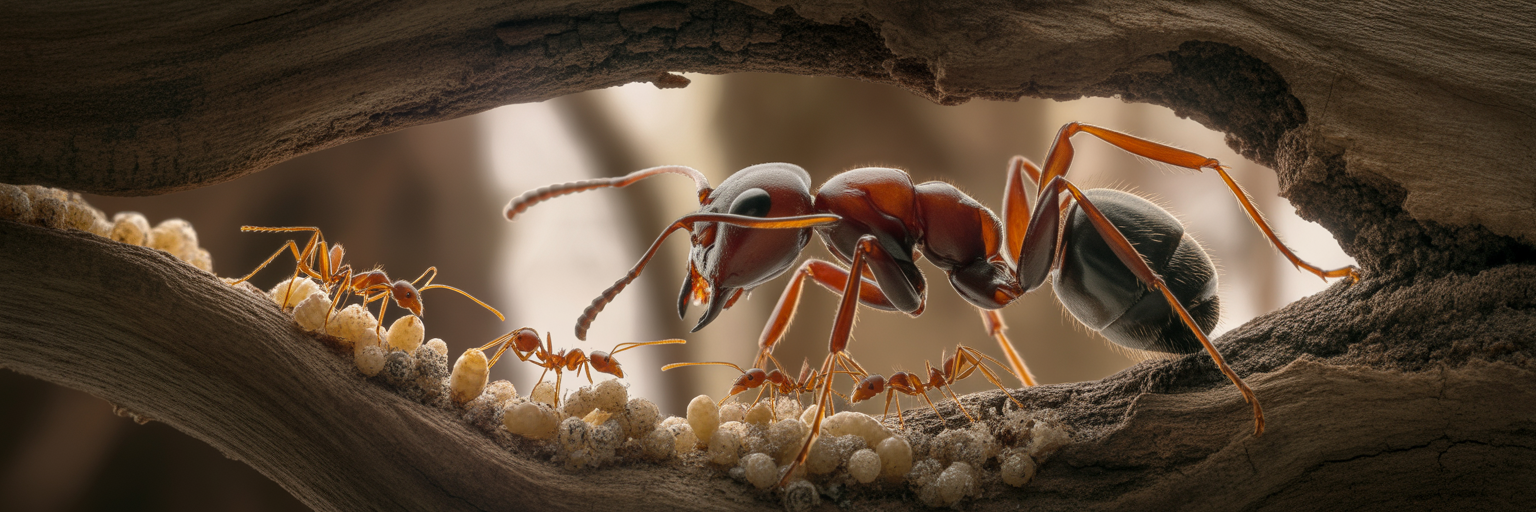
The legacy of the exploding ant is a testament to the incredible and often unsettling creativity of evolution. The colony functions through a perfect harmony of specialized roles: the passive “door-head” majors provide a living shield, while the active “exploder” minors serve as a suicidal demolition crew. This teamwork showcases a level of cooperation that is both elegant and terrifying. The ant’s explosive defense is a masterclass in specialized biological engineering. Nature is full of such incredible mechanisms, from insects that survive fungal attacks to the archerfish that shoots bugs out of the air with water, each a unique solution to the challenges of survival.
This extreme behavior, while alien to us, is perfectly logical within its ecological context. It also offers intriguing possibilities for human innovation. Studying the powerful bio-adhesive in the ant’s goo could inspire new surgical glues or industrial adhesives. Understanding the mechanics of the rupture could even inform the design of micro-scale delivery systems in technology or medicine. The ant’s final act, while gruesome, is a marvel of biological engineering.
Ultimately, Colobopsis explodens embodies the concept of ultimate sacrifice. It is a creature built for a single, dramatic purpose, a walking bomb whose existence is defined by its willingness to be erased for the good of its family. It serves as a powerful reminder that in nature, survival is not always about the individual. Sometimes, it is about the one who is willing to go out with a bang.
So next time your boss asks you to give 110%, just be glad you don’t work with Colobopsis explodens. Their 110% is a little more literal.