Nature’s Most Disgusting Survival Strategy
The bird poop caterpillar is a master of deception, and its chosen disguise is one of nature’s most brilliant and repulsive tricks. Imagine a hungry chickadee, meticulously scanning the tops of leaves for a juicy, green snack. It hops from branch to branch, its sharp eyes missing nothing, until it pauses. Right there, in plain sight, is a glistening, lumpy, white-and-brown splotch. The bird recoils instinctively and moves on, completely unaware that it just spared the life of its intended meal. What it dismissed as a disgusting dropping was actually our protagonist in its perfect costume.
This strategy is not camouflage. Camouflage is about blending into the background, like a green insect on a green leaf, hoping to be overlooked. This is something far more clever. It’s a form of mimicry called masquerade, where an animal imitates a specific object that is of no interest to its predators. In this case, the object is feces. This is a work of pure genius, a kind of fecal fraud that exploits a predator’s most basic instincts. It’s one of the most effective animal mimicry strategies because it taps into a universal truth: nobody wants to eat poop.
The core reason this works is simple. Predators are wired to avoid waste. First, a bird dropping offers zero nutritional value, so investigating it is a complete waste of precious energy. Second, and more importantly, feces are breeding grounds for bacteria and parasites. An animal that develops a taste for droppings is an animal that will likely get sick and die. This deep, instinctual aversion to contamination is the very thing the caterpillar uses to its advantage. By looking like the most unappetizing thing on the menu, it ensures it’s never even considered for the main course.
The Art of Crafting a Fecal Facade
Achieving this level of disgusting perfection is a true art form. The caterpillar’s disguise is not just a vague resemblance; it’s a meticulous, multi-layered impersonation that holds up under the scrutinizing gaze of highly visual predators like birds. Every detail, from the color palette to the posture, is carefully crafted to sell the illusion of a fresh, unappealing bird dropping.
The Perfect Palette of Putrescence
The coloration is the first and most obvious element of the disguise. The caterpillar’s body is a chaotic mosaic of mottled brown, black, and stark white. This isn’t random. The splotchy white patches perfectly mimic uric acid, the chalky, solid component of bird waste. The darker browns and blacks replicate the solid fecal matter, creating a convincing two-tone effect that is instantly recognizable to any creature that has ever been near a bird. The patterns are irregular and asymmetrical, just like a real dropping that has splattered onto a leaf.
A Glossy Finish for Maximum Gross-Out
Color alone is not enough. To truly sell the look, the texture must be right. Many species of bird poop mimics have a waxy, slightly wet-looking cuticle. This gives their bodies a glossy sheen that makes the “dropping” appear fresh, moist, and therefore even more repulsive. A dry, matte dropping might be old and harmless, but a glistening one suggests it’s recent and best avoided. This subtle detail adds a layer of visceral disgust that sends predators looking elsewhere for a meal.
The All-Important Poop Pose: A Caterpillar That Looks Like Bird Poop
Perhaps the most critical element is the posture. A poop-colored caterpillar that sits straight like a twig is just a weirdly colored caterpillar. To complete the masquerade, the caterpillar that looks like bird poop must adopt a lumpy, contorted pose. It often curls its body into a “C” shape or bunches itself up, creating an amorphous blob that breaks up the classic caterpillar outline. This behavioral adaptation is essential. As reported by National Geographic, a study using different shapes of pastry dough confirmed this. Birds were far more likely to attack straight, caterpillar-shaped models, even if they were poop-colored. The models curled into a convincing dropping-like shape were largely ignored. The pose is the final touch that turns a simple disguise into an impenetrable defense.
- Irregular Coloration: Splotches of white and brown mimic the different components of bird waste.
- Glossy Texture: A wet-looking sheen suggests freshness and enhances the repulsive effect.
- Amorphous Shape: A curled or bunched-up posture eliminates the recognizable caterpillar silhouette.
- Strategic Placement: Resting in plain sight on the top of a leaf, exactly where a real dropping would land.
Getting Inside a Predator’s Head
To truly appreciate the genius of this disguise, we have to stop thinking like a human and start thinking like a hungry bird. Birds are highly visual hunters with excellent color vision. They often rely on what biologists call a “search image” to find food. They are scanning for a specific shape, color, and movement that screams “juicy, edible grub.” The bird poop caterpillar simply does not match this mental template. When a bird sees it, its brain doesn’t register “food.” It registers “inedible object, ignore.”
The avoidance is driven by two powerful, hardwired instincts. The first is efficiency. A bird has a limited energy budget, and it can’t afford to waste time pecking at things that offer no nutritional reward. A bird dropping is a nutritional dead end. The second, more powerful instinct is disgust and self-preservation. Feces are notorious vectors for disease and parasites. An animal that ingests waste from another species is taking a massive health risk. This is one of the most fundamental evolutionary defense mechanisms, not for the caterpillar, but for the predator. The caterpillar has brilliantly turned the predator’s own survival instinct against it.
This psychological warfare allows the caterpillar to behave in ways that would be suicidal for other prey. Instead of hiding under leaves or staying perfectly still to avoid detection, it can rest boldly on the top of a leaf in broad daylight. This is, after all, exactly where a real bird dropping would be. Its confidence is its greatest asset. While other creatures invest energy in fleeing, fighting, or hiding, the bird poop mimic simply sits there, protected by a shield of pure repulsion. While the caterpillar’s strategy is based on visual repulsion, other animals have evolved equally sophisticated ways to outsmart their hunters. Some have developed such keen senses that they can react to the slightest environmental cues, like the animal that can detect a predator just from its shadow.
The Ugly Duckling Story of a Bird Poop Caterpillar
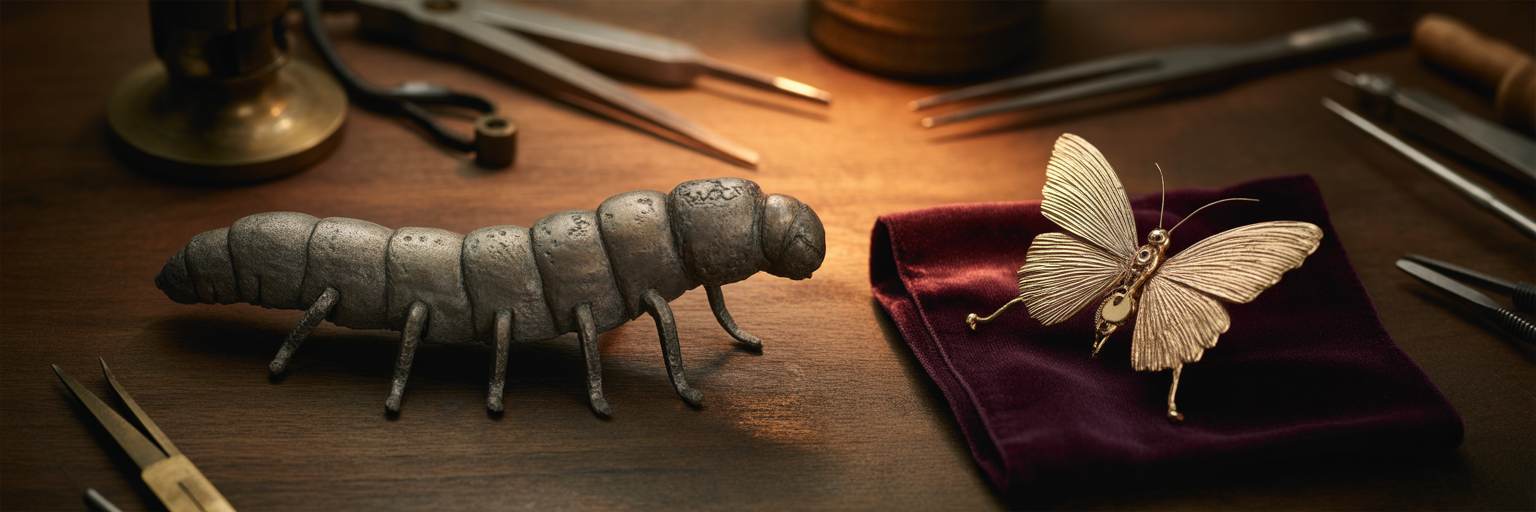
The life of a bird poop caterpillar is the ultimate “glow-up” story. Take, for example, the Giant Swallowtail, a common species in North America. Its journey from a repulsive blob to a magnificent butterfly is a masterclass in adaptive survival. In its early life stages, or instars, the tiny caterpillar is incredibly vulnerable. Its small size makes it a perfect snack for birds, spiders, and predatory insects. During this time, its bird poop disguise is not just helpful; it is absolutely essential for survival. It spends its days as a lumpy, glistening splotch on a citrus leaf, confidently repulsive and completely safe.
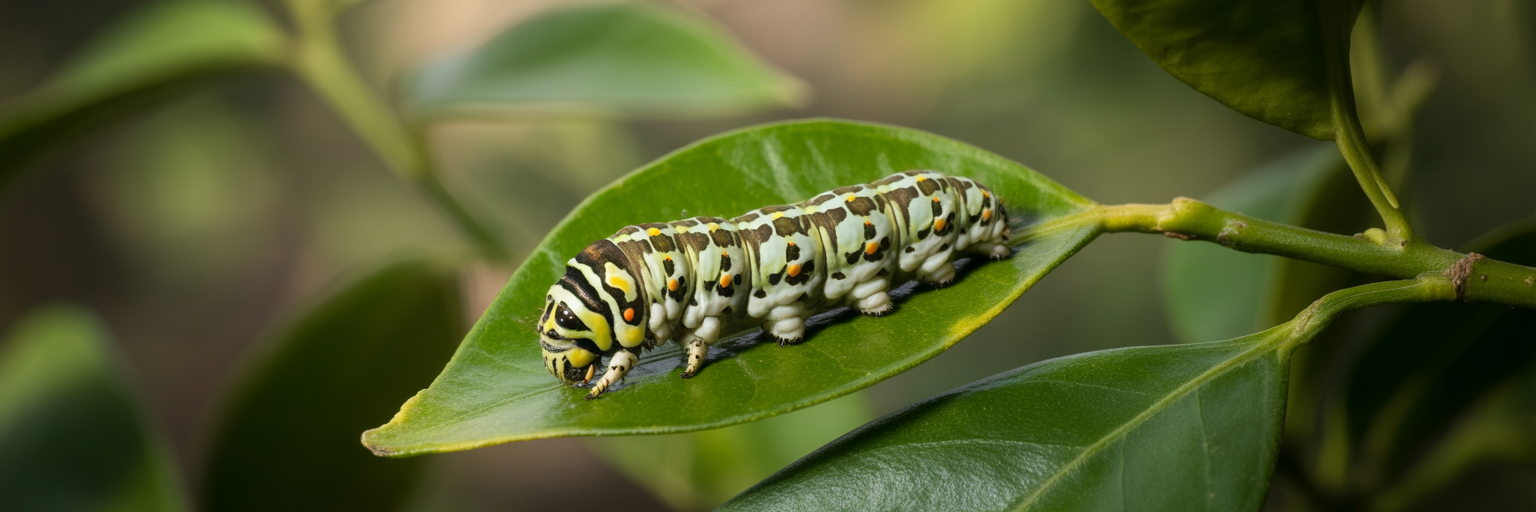
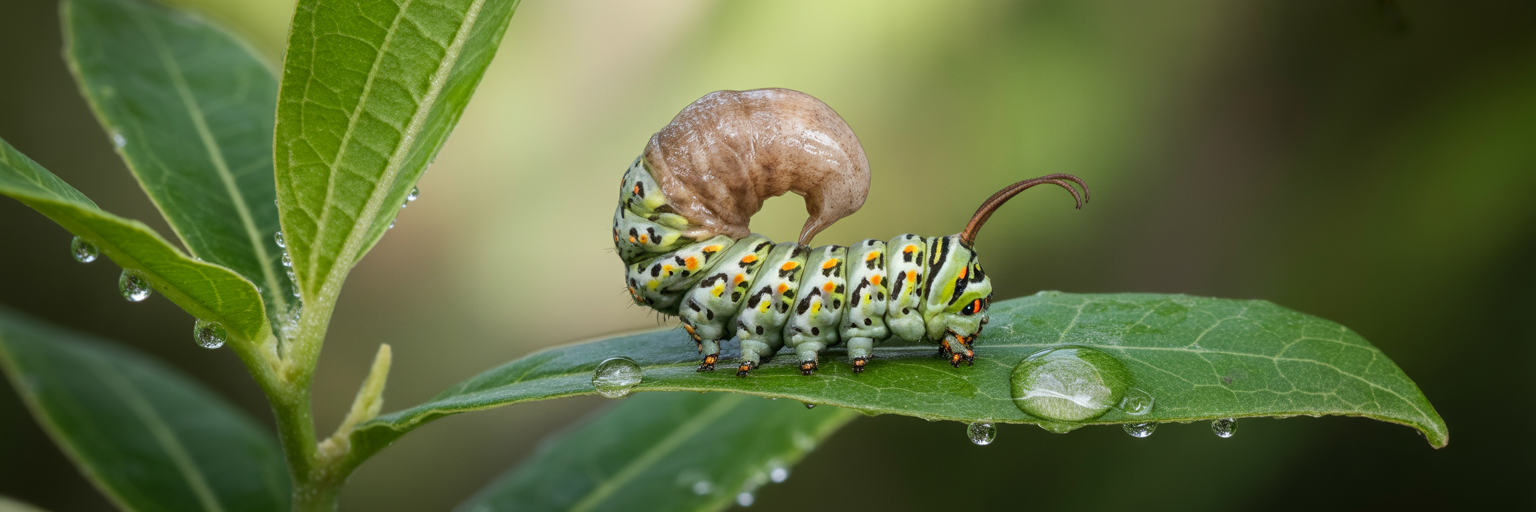
But as it grows, a problem arises. A one-inch “bird dropping” is believable. A three-inch one is not. In its final instar, the caterpillar becomes too large for the poop mimicry to be convincing. So, it sheds its disgusting costume for a completely new one. It transforms into a smooth, green creature with two enormous, intimidating eyespots on its back. It no longer looks like poop; it now mimics a small green snake, another creature that birds are keen to avoid. This switch shows the incredible adaptability of its survival toolkit.
After it has eaten its fill, the caterpillar enters the chrysalis stage. Here, it abandons masquerade altogether and opts for traditional camouflage. The chrysalis looks like a dead leaf or a twig, blending seamlessly into the background. This is a classic example of how insects that use camouflage rely on their surroundings to disappear. Finally, after weeks of transformation, the story reaches its stunning conclusion. The creature that began its life as a convincing piece of excrement emerges as a large, elegant Giant Swallowtail butterfly, with beautiful yellow and black wings. This incredible transformation from a poop mimic to a snake mimic and finally to a beautiful butterfly is a testament to the complex life cycles in the insect world. This strategy of deception is not unique; for example, some larvae have evolved to manipulate entire societies for their own survival, like the caterpillar that tricks ant colonies into raising it.
The Fecal Facade Is a Popular Look
The bird poop caterpillar may be the most famous member, but it is certainly not the only one in the “bird poop mimicry club.” This disgusting disguise is so effective that it has evolved independently in completely unrelated groups of animals, a phenomenon known as convergent evolution. It’s one of the most surprisingly common weird animal survival tactics. As Smithsonian Magazine highlights, looking like poop is a surprisingly popular and effective survival tactic across the animal kingdom, adopted by spiders, insects, and even amphibians.
One of the most impressive members is the Bird-dropping spider. This Australian arachnid has a lumpy, white-and-brown body and often sits on a messy patch of white silk, creating a near-perfect illusion of a splat of bird waste. But its deception is twofold. While its appearance repels its own predators, it also releases a chemical scent that mimics the pheromones of a female moth. Male moths, thinking they are approaching a potential mate, fly directly into the spider’s clutches. It’s a brilliant strategy of using defense as a lure. The Bird-dropping spider’s use of chemical lures is a fascinating example of multi-layered deception, combining visual mimicry with sensory traps. Nature is full of predators that use unconventional methods, including some that hunt using invisible pressure waves.
The club includes many other members, from adult moths like the Beautiful Wood-Nymph, which folds its spotted wings to look like a dropping while it rests, to the juveniles of certain horned frogs, whose splotchy patterns help them avoid predation when they are small and vulnerable. The strategy is a testament to the power of a good idea in evolution. If looking repulsive keeps you alive, then being disgusting is a beautiful thing.
| Mimic | Key Features of Disguise | Primary Goal | Bonus Deception |
|---|---|---|---|
| Swallowtail Caterpillar | Mottled brown/white color, glossy sheen, curled posture. | Defense (avoiding being eaten by birds). | Switches to snake mimicry in later life stages. |
| Bird-Dropping Spider | Lumpy, white-and-black body; sits on a messy, white web mass. | Defense and Hunting (ambush prey). | Releases chemical pheromones to lure moths. |
| Beautiful Wood-Nymph Moth | Adult moth with white wings and dark, irregular spots. | Defense (rests on leaves during the day). | Wings are folded to create a 3D, blob-like shape. |
| Ornate Horned Frog | Juveniles have splotchy brown and white patterns. | Defense (avoiding predation when small and vulnerable). | Relies on camouflage and burrowing as it grows larger. |
Why Being Repulsive Is an Evolutionary Masterstroke
When we look at the bird poop caterpillar, our human sensibilities might see something gross or bizarre. But from an evolutionary perspective, what we are witnessing is a masterstroke of efficiency. This defense requires no venom to produce, no shell to build, and no energy to be spent on fleeing. It is a low-cost, high-reward strategy that works by hacking the fundamental psychology of its predators. In the great “evolutionary arms race” between predator and prey, this is a top-tier move. It doesn’t try to outrun, outfight, or outwit the predator; it simply convinces the predator that it isn’t worth eating in the first place.
The success of this strategy teaches us a profound lesson about the natural world. Survival is not always about being the fastest, the strongest, or the most beautiful. It is about finding a niche and exploiting it perfectly. The bird poop caterpillar found a niche that no one else wanted: the “disgusting and inedible” niche. By committing to this role so completely, it has achieved a level of safety that many other creatures can only dream of. It has turned repulsion into a shield.
So the next time you see a suspicious-looking splotch on a leaf, take a closer look. You might be looking at a testament to the fact that in the brutal game of survival, looking good is optional, but looking inedible is a winning strategy. The bird poop caterpillar is the ultimate proof that to stay alive, sometimes the best thing you can do is look so bad that you are taken off the menu entirely. This incredible strategy demonstrates that survival in the natural world is about efficiency, not aesthetics. Animals have developed countless mind-boggling adaptations to endure harsh conditions, including the animal that survives by shrinking its own organs to conserve energy.