Meet the Deep Sea’s Tiny Metal Tank
Thousands of feet below the surface of the Indian Ocean, where sunlight has never reached and the pressure is immense enough to crush a submarine, a tiny gothic nightmare crawls across the seafloor. This is the scaly-foot snail, a creature that seems forged in a fantasy blacksmith’s workshop. It is the only known animal on Earth to incorporate iron sulfide, essentially metal, into its skeleton. While your garden snail builds its fragile home from calcium carbonate, this deep-sea oddity constructs a suit of armor.
Its scientific name, Chrysomallon squamiferum, translates to “golden-haired scale-bearer.” The name is a beautiful, almost poetic misnomer. There is nothing soft or golden about this snail. Its foot is covered in dark, metallic scales, and its shell is a formidable structure of iron. It looks less like a snail and more like a miniature, armored beast slowly patrolling the perimeter of an undersea volcano. This creature’s existence raises immediate questions. How does it build a metallic shell in the first place? Why would it choose to live in one of the most hostile environments imaginable? And what can this tiny metal tank teach us about survival?
A Home Forged in Undersea Volcanoes
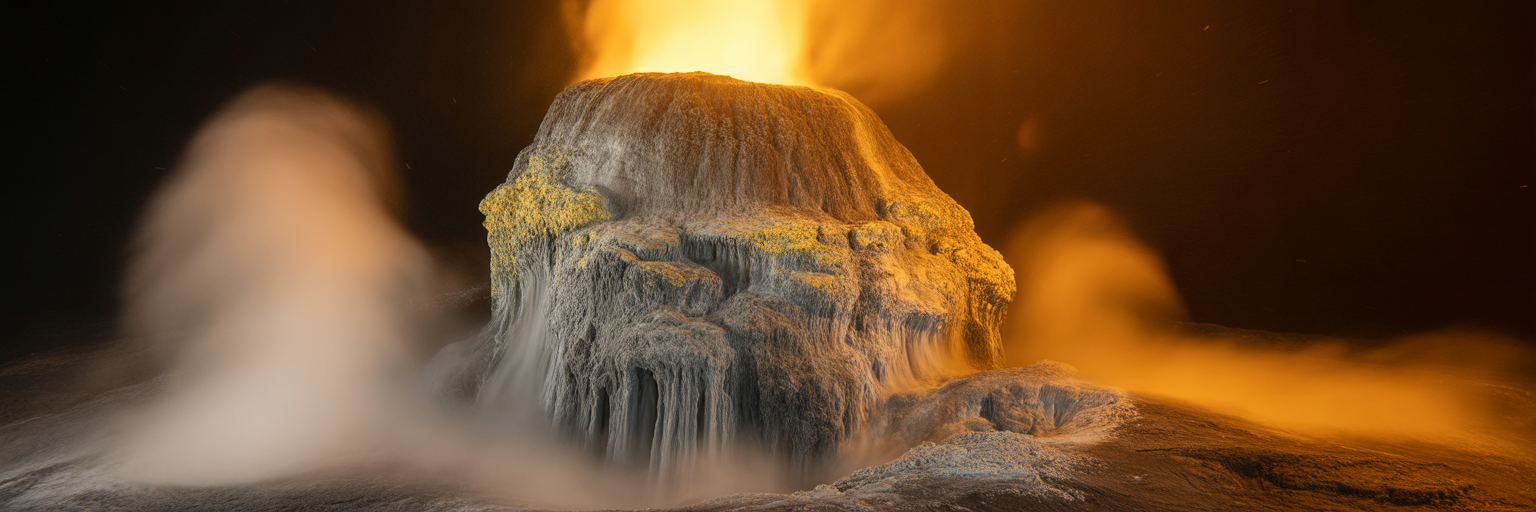
To understand the snail, you must first understand its home: a hydrothermal vent field. These are not peaceful ocean floor landscapes. They are violent, dynamic zones where geology and chemistry collide. Towering chimney-like structures called “black smokers” gush superheated, mineral-rich water from deep within the Earth’s crust. This is the world the scaly-foot snail calls home, an environment defined by extremes that would annihilate most other forms of life.
Life here must contend with a brutal set of conditions:
- Crushing Hydrostatic Pressure: At depths of over 8,000 feet, the pressure exceeds 3,600 pounds per square inch. That is more than 250 times the pressure we experience at the surface, a force comparable to having the weight of dozens of jumbo jets stacked on top of you.
- Violent Temperature Gradients: The ambient deep-sea water is just above freezing. Yet, the fluid erupting from the vents can exceed 700°F (370°C). The snail lives in the zone where these temperatures mix, a place of constant and severe thermal shock.
- A Toxic Chemical Brew: The vent fluid is an acidic cocktail of dissolved minerals, most notably hydrogen sulfide. This compound, responsible for the smell of rotten eggs, is lethal to most organisms because it shuts down the process of cellular respiration.
Without sunlight, photosynthesis is impossible. Instead, this entire ecosystem is powered by chemosynthesis. Specialized bacteria form the base of the food web by metabolizing the toxic chemicals spewing from the vents. These bacteria support a whole community of bizarre hydrothermal vent creatures, each with its own strange adaptations for survival. The strategies needed to thrive here are unlike anything seen elsewhere on the planet. Some extreme environment animals have developed incredible abilities, and you can learn more about one that survives by shrinking its own organs to conserve energy. Our armored protagonist, however, found a different path to survival.
The Biological Alchemy of an Iron-Plated Shell
The secret to the snail’s existence lies in a remarkable partnership. It doesn’t eat in the conventional sense. Instead, it houses a massive colony of chemosynthetic bacteria in an enlarged esophageal gland. The snail’s gills absorb the toxic hydrogen sulfide from the vent water and deliver it directly to these internal partners. The bacteria then metabolize this poison, converting it into energy that nourishes the snail. It has effectively turned a deadly chemical into its primary food source.
This clever solution creates a new, critical problem. The bacteria’s metabolic process produces elemental sulfur as a waste product, which is highly toxic to the snail’s own tissues. It was facing death from its own internal biochemistry. The snail’s evolutionary answer to this puzzle is a stroke of biological genius: biomineralization. Its body actively captures this toxic sulfur and combines it with iron particles it extracts from the vent fluid. This reaction creates pyrite (“fool’s gold”) and greigite, two stable and inert iron sulfide minerals.
This detoxification process is the direct source of its armor. The iron sulfide shell and scales are not just a shield; they are a sophisticated waste disposal system. The snail is literally building its fortress out of its own neutralized poison. This kind of symbiotic trickery is a fascinating theme in nature. For a different but equally strange example of partnership, you can explore the story of the caterpillar that tricks ant colonies into raising it.
Deconstructing the Armor of the Scaly-Foot Snail

The snail’s armor is so effective that it has captured the attention of materials scientists and military researchers. It is not a simple, solid structure but a sophisticated, three-layered composite material that provides exceptional protection. Each layer serves a distinct purpose, working in concert to defeat attacks.
- Outer Layer (Iron Sulfide Granules): This layer is composed of the iron sulfide minerals. It is hard and brittle, designed to crack and shatter upon impact. This action effectively blunts the force of an attack, such as a crab’s crushing claw, and absorbs the initial shock.
- Middle Layer (Organic Periostracum): Beneath the metal is a thick, spongy organic layer. This cushion acts as a shock absorber, dissipating the energy from a blow that makes it past the outer layer. Crucially, it also prevents cracks from spreading through to the final layer.
- Inner Layer (Calcified Aragonite): The innermost layer is made of aragonite, a form of calcium carbonate similar to what other snails use. This provides the shell’s underlying structural strength and rigidity, ensuring its integrity.
The snail’s foot, the only soft part of its body exposed outside the shell, is also armored. It is covered in hundreds of overlapping iron sulfide scales, called sclerites, which protect it from harm as it moves. As a study published in Nature Communications highlights, this natural design of a hard exterior over a soft interior is a highly effective model for human technology. Researchers are studying it to develop next-generation body armor, blast-resistant vehicle hulls, and even safer sports helmets.
A Defensive Fortress or a Chemical Dump?
A central debate among scientists is the primary evolutionary driver behind the snail’s armor. Was it developed specifically for defense, or is it merely an accidental byproduct of detoxification? Both arguments have merit.
The Detoxification Byproduct Hypothesis
This view suggests the main evolutionary pressure was the need to get rid of toxic sulfur. Binding it with iron from the environment and depositing it on the outside of the body was the most efficient way to render it harmless. In this scenario, the armor’s incredible protective qualities are a secondary benefit, an evolutionary bonus known as an exaptation.
The Defensive Adaptation Hypothesis
The counter-argument points to the dangerous neighborhood. Hydrothermal vents are home to predators like crabs with powerful claws and venom-injecting cone snails. The deep sea armored snail developed a defense perfectly suited to resist both crushing and piercing attacks. This suggests that intense predation pressure was a powerful force that directly shaped the armor’s evolution.
A Synthesis: Evolution’s Two-for-One Deal
The most likely answer is that both are correct. The need for detoxification provided the raw materials and the biological pathway to create iron sulfide. From there, natural selection, driven by the constant threat of predators, refined the structure into the sophisticated, multi-layered defense we see today. It is an elegant two-for-one deal, where a single solution solves two critical problems. The predator-prey dynamic is a powerful engine of evolution, leading to incredible adaptations, such as the abilities of the predator that hunts using invisible pressure waves.
An Iron-Clad Marvel on the Brink of Disappearance
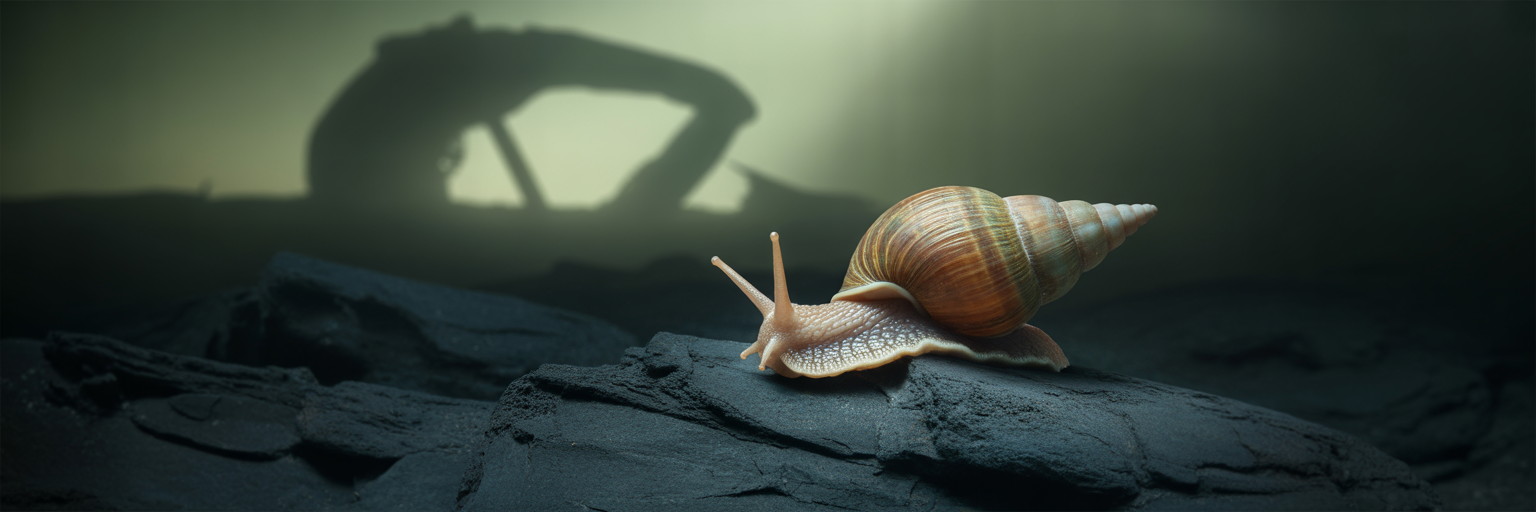
For all its formidable armor, the scaly-foot snail is incredibly vulnerable. It is only known to exist in three specific hydrothermal vent fields in the Indian Ocean: Kairei, Solitaire, and Longqi. The total known habitat for this species is an area smaller than a typical university campus. This extreme specialization makes it susceptible to any disturbance in its environment.
The primary threat looming over its existence is deep-sea mining. These vent sites are rich in valuable minerals like copper, gold, and zinc. As land-based resources dwindle, these deep-sea deposits are becoming attractive targets for exploitation. The impact of mining would be catastrophic. Heavy machinery would physically destroy the vent chimneys, and the resulting sediment plumes would smother the surrounding habitats, disrupting the delicate chemical balance that the entire ecosystem depends on.
In 2019, as reported by outlets like Scientific American, the scaly-foot snail became one of the first species to be officially listed as Endangered on the IUCN Red List due to the future threat of deep-sea mining. This creature is a one-of-a-kind evolutionary masterpiece, a testament to life’s ability to thrive in the most unlikely of places. The bizarre ways life adapts, from this snail’s metal armor to the strange reproductive methods of other creatures, are irreplaceable treasures of biodiversity. For instance, the story of the Suriname toad that gives birth through holes in its back is another testament to nature’s strange and wonderful solutions. To lose the scaly-foot snail would be to erase a unique chapter in the book of life before we have even had a chance to fully read it.