Nature’s Most Unsettling Nursery
Imagine a living surface, pitted with dozens of small, sealed craters. From within one of them, something pushes. The thin membrane stretches, becoming translucent enough to reveal a tiny, wriggling limb. Then another. A small head presses against the seal, its eyes already open and aware. With a final, silent push, it breaks through the skin, a fully formed creature emerging not from a womb or an egg, but from a hole in its own mother’s back. It kicks its legs, swims away, and leaves behind an empty, fleshy socket.
This is not a scene from a science fiction film. This is the documented, routine, and biologically necessary birth process of the Suriname toad (Pipa pipa). Found in the slow-moving waters of South America, this amphibian has an approach to reproduction that is so alien it feels like a violation of natural law. Yet, it is a perfectly refined survival strategy, a testament to evolution’s willingness to produce solutions that are as bizarre as they are effective. This is a premier example of a weird animal birth, one that challenges our fundamental understanding of parental care.
The sight of dozens of toadlets erupting from their mother’s skin is profoundly unsettling. It triggers a deep, instinctual discomfort. But behind the body horror lies a story of incredible biological engineering. How do the eggs get into her back in the first place? What happens inside those fleshy pockets? And why would any creature evolve a method of birth that turns a parent into a living, breathing incubator? The answers are even stranger than the process itself.
An Introduction to the Alien Next Door
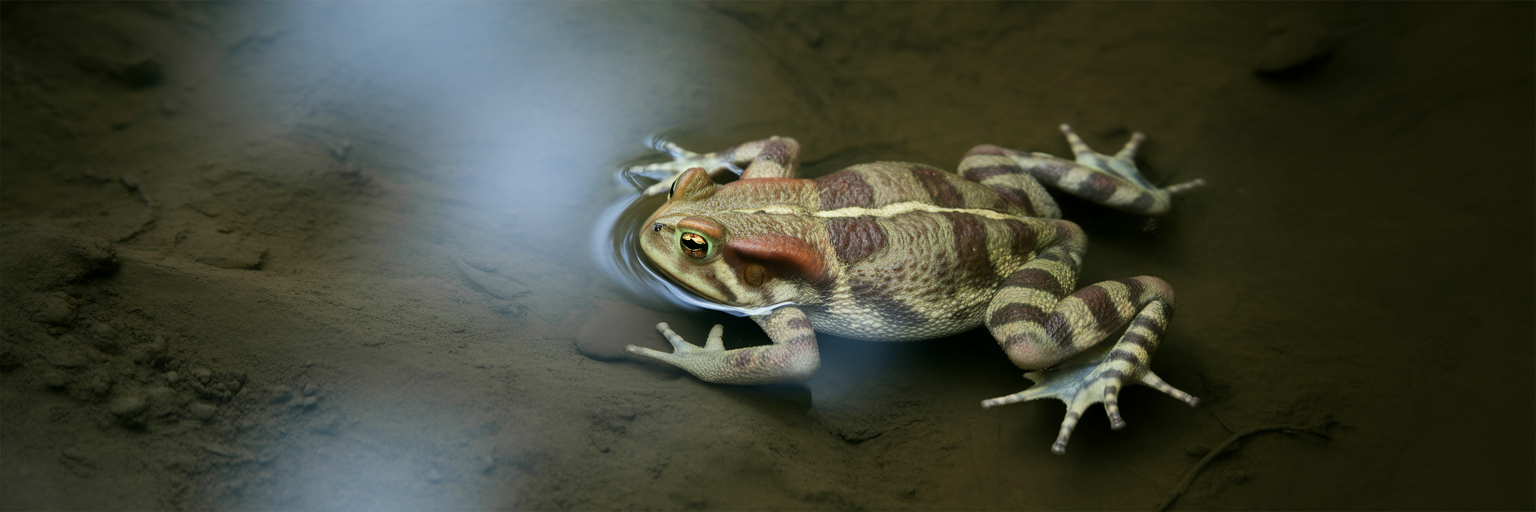
Even without its nightmarish reproductive habits, the Suriname toad is a biological oddity. It looks less like an amphibian and more like a piece of flattened, forgotten debris from the bottom of a murky stream. This strange appearance is not an accident; every part of its body is designed for a life of stealth and ambush in the dark waters of the Amazon Basin.
A Body Built for Stealth
The most striking feature of the Suriname toad is its body shape. It is almost completely flat, like it was run over by a truck, and its mottled brown and gray skin makes it nearly indistinguishable from a dead leaf lying on the riverbed. It has a triangular head and tiny, black eyes that seem to disappear into its skin. The toad has no tongue and no teeth. Instead, it has star-shaped sensory appendages on the tips of its front toes, which it uses to detect vibrations and locate prey in the dark.
Life in the Murky Depths
This creature is fully aquatic, spending its entire life submerged in slow-moving rivers and swamps. Its flattened body allows it to remain motionless on the bottom, waiting for unsuspecting prey to swim by. This leaf-like appearance is a masterclass in natural camouflage, a strategy seen across the animal kingdom where visual trickery, like the use of fake eyes to scare predators, is a matter of life and death. Its existence is one of quiet, patient waiting.
The Ambush Predator’s Technique
When a small fish or invertebrate gets too close, the Suriname toad springs into action. It opens its massive mouth, creating a vacuum that sucks in both the prey and the surrounding water. Since it has no tongue, it uses its unwebbed front feet to stuff the food into its mouth. It is a strange, clumsy-looking motion that is nonetheless lethally effective. This entire profile paints a picture of an animal perfectly, and bizarrely, adapted to its environment long before its reproductive cycle even begins.
A Bizarre Underwater Mating Ballet
The process that leads to a back full of babies begins with a strange and prolonged courtship. When a male Suriname toad finds a receptive female, he clasps onto her back in a position known as amplexus. This is not a brief encounter; the pair can remain locked together for hours or even days, waiting for the female to signal she is ready to lay her eggs. What follows is a synchronized, anti-gravity performance that ensures the next generation gets a very unusual start in life.
The couple begins a series of slow, looping somersaults in the water. As they drift upside down, suspended in the murky depths, the female releases a small clutch of three to ten eggs. Because of their inverted position, the eggs do not float away. Instead, they land directly on her back, gently held in place by the male’s belly. As the pair completes the loop and returns to an upright position, the male fertilizes the eggs and uses his body to gently press them into the female’s now-softening skin. This is the core of Pipa pipa reproduction.
They repeat this underwater ballet for hours, performing up to 15 or 20 loops until the female has laid as many as 100 eggs. Each somersault is a precise, calculated movement. This looping dance, as documented by researchers for sources like National Geographic, is not random; it uses gravity and gentle pressure to ensure the eggs are secured on the only surface where they can survive. This ritual is the crucial first step in transforming the female’s back into a living nursery.
How a Back Becomes a Living Incubator
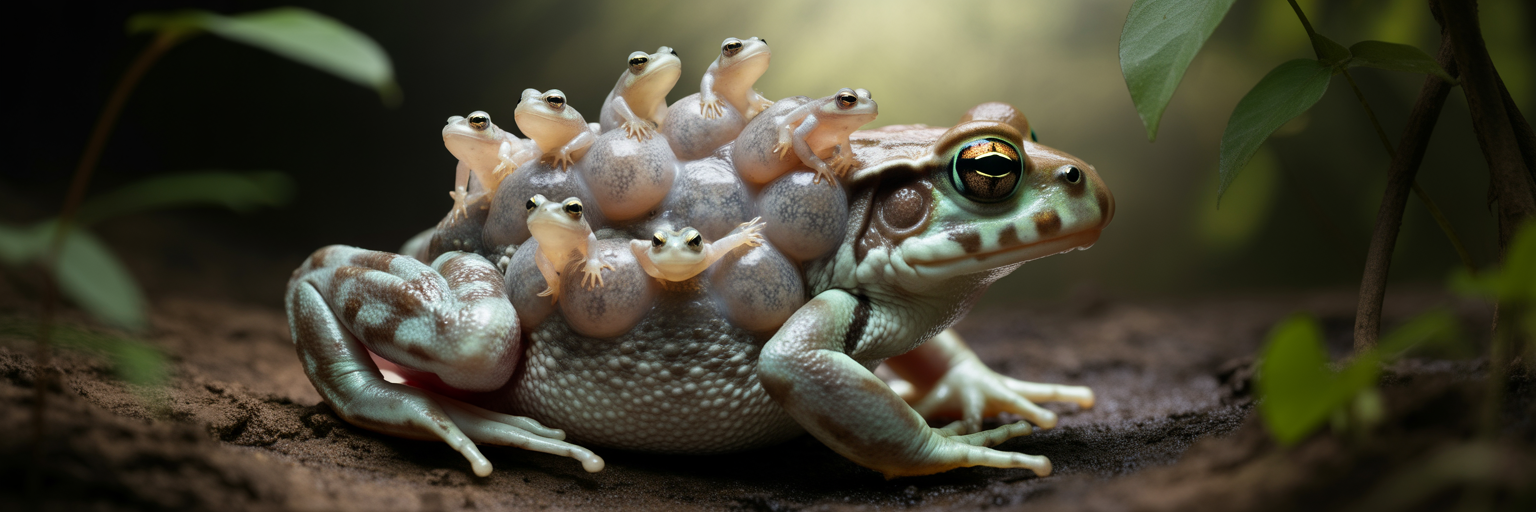
Once the eggs are fertilized and pressed into the female’s back, her body begins a startling transformation. The skin around each individual egg starts to swell, thicken, and grow, gradually enveloping each one until they are completely submerged within her dorsal tissue. This process turns her back from a smooth, leaf-like surface into a landscape of fleshy, sealed pockets.
The Skin’s Spongy Transformation
The female’s skin becomes thick and highly vascularized, creating a spongy matrix that will serve as a life-support system for the developing embryos. Over several days, the skin grows up and around each of the Suriname toad eggs in back, forming individual chambers. This transformation turns the toad’s back into a complex biological machine, a reminder that in nature, body parts can evolve for surprising functions, much like the creature that can hear with its knees.
A Honeycomb of Flesh
As the skin seals over the eggs, the female’s back takes on its famous and deeply unsettling appearance: a perfect, organic honeycomb. Each pocket, or alveolus, contains a single embryo, and a hardened, keratinous cap forms over the top, sealing it from the outside world. These are not just passive holding cells. The tissue is rich with blood vessels that function like a placenta, facilitating the exchange of oxygen and waste products between the mother and her developing young.
The Science Behind the Shivers
For many people, the image of the trypophobia toad, with its back riddled with holes, provokes a powerful, instinctual revulsion. Trypophobia, an aversion to patterns of holes or bumps, is thought by some evolutionary psychologists to be a leftover survival instinct. Our ancestors may have developed this reaction to avoid things associated with disease and parasites, like botflies or infected skin. The Suriname toad’s back is a perfect, living example of such a pattern, turning a biological marvel into a source of primal discomfort.
The Unforgettable Emergence
Inside their fleshy pockets, the embryos develop for three to four months. In a crucial evolutionary leap, they completely bypass the free-swimming tadpole stage. There is no wriggling in the water, vulnerable to predators. Instead, they undergo their entire metamorphosis from egg to fully formed toadlet while safely embedded in their mother’s back. As the time for birth approaches, the signs become visible and the suspense builds.
The caps on the skin pockets grow thin and almost translucent. If you look closely, you can see movement inside: a tiny foot twitching, a head turning. The mother’s back is no longer a static, honeycomb-like structure but a squirming, living surface. Then, the unforgettable emergence begins. One by one, the fully formed toadlets start to push their way out. This is the moment that defines the toad that gives birth through back.
Each newborn uses its head and limbs to break the seal of its pocket, wriggling and struggling until it pops free into the water. They are not helpless larvae; they are perfect, miniature replicas of their parents, about two centimeters long and fully independent from the moment they are born. They swim away immediately to begin their own lives as solitary ambush predators. This entire incubation, lasting three to four months according to the San Diego Zoo, culminates in this bizarre exodus, which can take place over several hours or even days as each toadlet emerges on its own schedule.
The Evolutionary Logic Behind the Horror
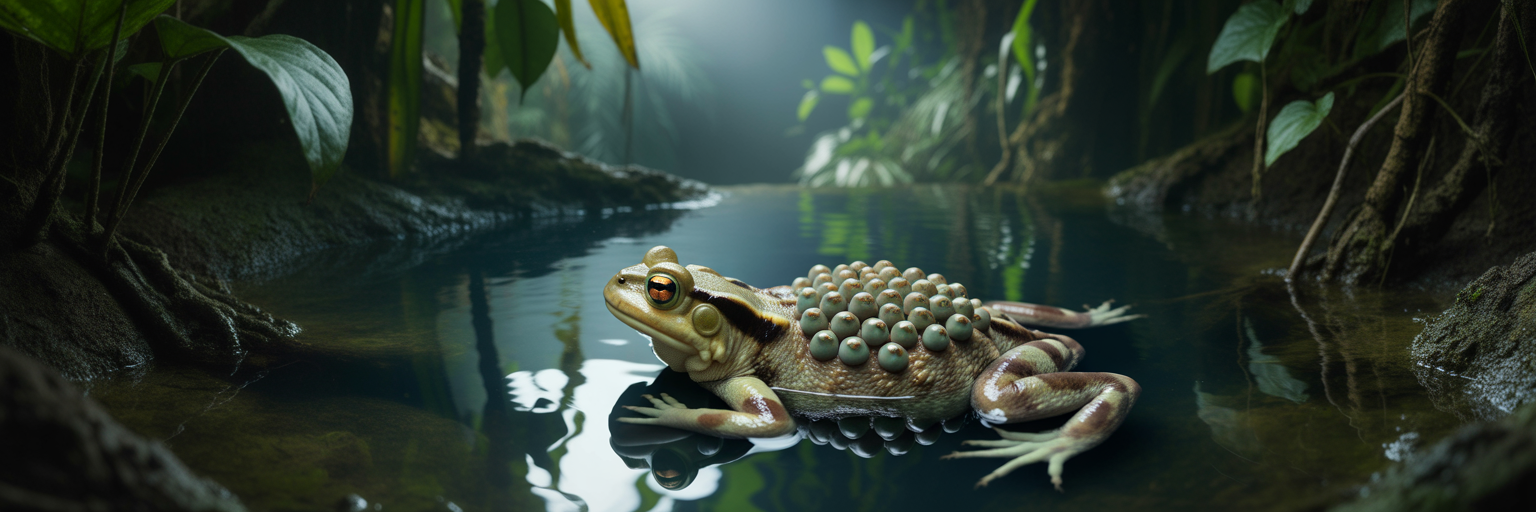
This reproductive strategy, while unsettling to us, is a brilliant solution to the dangers faced by most amphibians. For a typical frog or toad, life begins as a gelatinous egg, followed by a highly vulnerable tadpole stage. The Suriname toad’s method systematically eliminates these risks. The evolutionary advantages are clear and profound.
- Predator Avoidance: By carrying the eggs and developing young on her back, the mother provides the ultimate protection. Aquatic predators that would normally feast on eggs and tadpoles cannot get to them.
- Environmental Shielding: The skin pockets shield the embryos from fungal infections, which are common in aquatic eggs, and protect them from sudden changes in water quality or temperature.
- Bypassing Vulnerability: The tadpole stage is often the most heavily predated phase of an amphibian’s life. By skipping it entirely, the Suriname toad gives its offspring a massive survival advantage. They emerge ready to fend for themselves.
This strategy of internal development to bypass a vulnerable stage is one of nature’s more extreme solutions, a theme also seen in species where some animals hatch inside their mother and eat their siblings. It is a high-investment, low-volume approach that prioritizes the survival of a few over the mass production of many.
| Life Stage | Typical Amphibian (e.g., Common Frog) | Suriname Toad Solution |
|---|---|---|
| Eggs | Laid externally in water; high risk of predation, fungal infection, and environmental damage. | Embedded in mother’s back; fully protected from predators and environmental threats. |
| Larvae (Tadpole) | Free-swimming and highly vulnerable; a primary food source for many aquatic animals. | Stage is completely bypassed; development occurs within the protected skin pocket. |
| Juvenile | Metamorphoses into a small, vulnerable froglet that must adapt to terrestrial or semi-aquatic life. | Emerges as a fully formed, independent toadlet, perfectly adapted for its aquatic environment from birth. |
| Overall Survival Rate | Extremely low; relies on producing thousands of eggs to ensure a few survive. | Significantly higher per offspring; relies on high investment in a smaller number of young. |
This table illustrates the key survival advantages gained by the Suriname toad’s reproductive method, which prioritizes protection and development over sheer numbers.
Life After a Skin-Deep Birth
Once the last toadlet has wriggled free, the female is left with a back riddled with empty, gaping holes. She looks scarred and exhausted, a living testament to one of nature’s most physically demanding forms of parental care. But her recovery is just as remarkable as the birth itself. Within a few days, she will molt, shedding the entire pitted layer of skin in one piece. Underneath, a fresh, smooth layer is already formed, leaving her ready to begin the cycle all over again in the future.
For the newborns, life begins immediately. There is no parental guidance or protection. They swim away from their mother and find a spot on the riverbed to begin their solitary lives. As tiny, independent predators, they must immediately start hunting for even smaller invertebrates, all while avoiding being eaten themselves. Their survival depends entirely on the advanced state of their development at birth.
This form of parental care is a stark contrast to what we see in mammals. It is intensely physical and all-encompassing during the incubation period, with the mother’s body serving as a womb, nursery, and shield. But the moment the young emerge, that connection is severed completely. This is not neglect; it is a highly efficient biological strategy. The Suriname toad invests all its energy into getting its offspring through their most vulnerable stage, ensuring the continuation of one of the most bizarre and fascinating lineages on the planet.