A Stubborn Refusal to Accept Mortality
We humans are fragile creatures. A paper cut can send us into a spiral of panic, reaching for bandages and antiseptic like we’ve just survived a shark attack. We spend our lives trying to keep our bodies in one piece, because for us, disassembly is a one-way trip. But what if it wasn’t? What if, for some organisms, being sliced into bits wasn’t the end, but a form of self-promotion?
Imagine a creature that looks at decapitation and sees a growth opportunity. It’s a concept so alien it feels like it belongs in a sci-fi horror film, yet it’s happening right now in ponds, oceans, and soil all over the world. These organisms didn’t get the memo about mortality. For them, the rules of life and death that govern the rest of us are more like friendly suggestions. Is this a superpower, a glitch in the evolutionary code, or just a very strange way to start a family?
This isn’t just about healing. It’s about a complete biological defiance. These are the creatures that can regenerate not just a lost limb, but an entire new body from a fragment. They treat catastrophic injury as a chance to multiply. This bizarre talent hinges on two biological principles: regeneration, the act of regrowing lost parts, and asexual reproduction, the ability to create offspring without a partner. When combined, they create a life strategy that is both deeply unsettling and fascinating.
These organisms challenge our fundamental understanding of what it means to be an individual. If you cut one in half and get two, which one is the original? Did the first one die? Or did it just expand its personal brand? This biological loophole allows them to achieve a kind of practical immortality, sidestepping the finality of death by simply rebuilding. They are nature’s ultimate survivors, turning what should be a fatal flaw into their greatest strength. The science behind this ability is even stranger than the concept itself, revealing a microscopic world of cellular architects and genetic blueprints that can build a body from scratch.
Meet the Immortality Cheaters Club
The ability to treat dismemberment as a reproductive strategy isn’t limited to a single oddball species. It’s a whole club of organisms that have decided mortality is for quitters. While they may not hold regular meetings, their shared philosophy of self-duplication makes them part of an exclusive group of nature’s strangest survivors. Let’s meet some of the key members.
The Planarian Flatworm: The Unassuming Poster Child
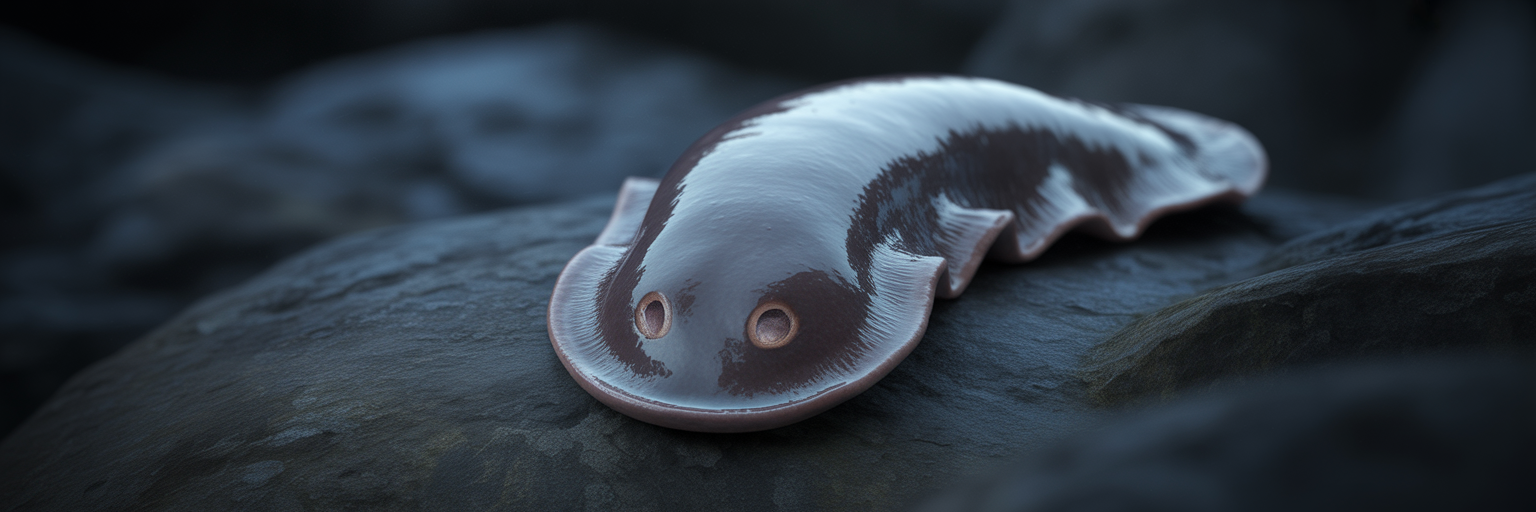
If you were to design a creature with god-like powers, you probably wouldn’t make it look like a slimy, cross-eyed ribbon. Yet the planarian flatworm is the undisputed champion of regeneration. This simple-looking invertebrate, often found in freshwater ponds, possesses an almost limitless capacity for regrowth. Its body is packed with special stem cells called neoblasts, which are essentially biological blank slates ready to become any body part needed. Thanks to this, the planarian worm regeneration process is absurdly effective. You can cut a planarian into dozens of pieces, and under the right conditions, each tiny fragment will patiently regrow a complete head and tail, resulting in a small army of identical clones. It doesn’t just survive being cut; it thrives on it.
The Starfish: The Patient Body-Snatcher
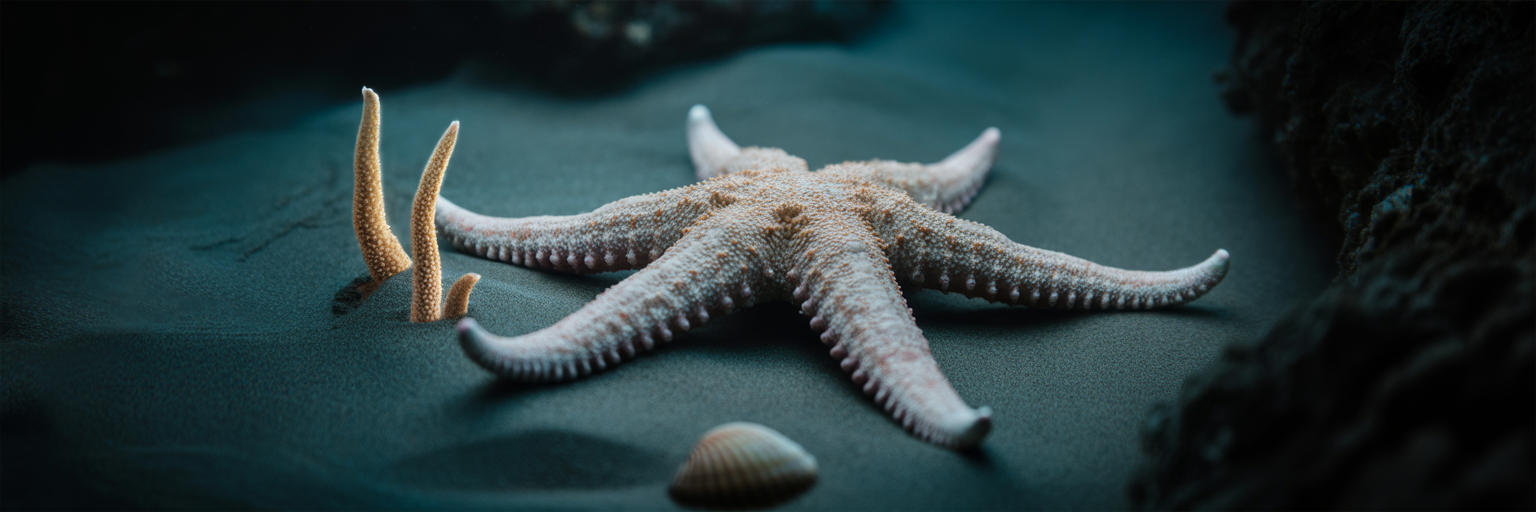
Often seen as passive decorations on a beach, starfish (or sea stars) are far more resilient than they appear. While many know they can regrow a lost arm, the truly creepy part of starfish regeneration facts is that, for some species, a single severed arm can regrow an entirely new body. The only catch is that the arm must contain a piece of the central disc, the main hub of the starfish’s body. This isn’t a quick process. It’s a slow, deliberate act of self-replication, where a lone limb patiently rebuilds itself into a complete, five-armed individual over months. It’s less like healing and more like a patient, slow-motion heist of its own identity. This patient and almost alien method of regrowth is a reminder that nature has found many bizarre survival mechanisms, much like the one detailed in our piece on the animal that survives by shrinking its own organs.
Annelid Worms: The Real Clone Army
Here we need to clear up a common myth. While many people think any earthworm can be cut in half to create two new worms, that’s not quite true for most species. However, some of their aquatic cousins, like the blackworm, are masters of a process called fragmentation. These worms will intentionally break their bodies into multiple segments, and each segment regenerates into a complete, independent worm. It’s a proactive reproductive strategy, allowing them to rapidly create a literal army of clones when conditions are favorable. They don’t wait for an accident; they initiate their own disassembly.
Honorable Mentions in Bizarre Survival
The club has other members who deserve a nod for their sheer weirdness.
- Sponges: The ultimate minimalist survivors. You can force a sponge through a fine mesh sieve, breaking it down into individual cells, and those cells will crawl back together to reform a new sponge.
- Sea Anemones: These flower-like predators can intentionally split themselves down the middle in a process called fission, creating two identical copies. It’s a controlled, deliberate act of self-cloning.
The Biological Blueprint for Self-Duplication
So, how do these creatures pull off a trick that seems to violate the basic rules of biology? The answer lies in a unique combination of reproductive strategy and cellular machinery. It’s not magic; it’s a highly specialized biological process that trades genetic diversity for incredible resilience and rapid multiplication. To understand it, we need to look at the blueprint for this bizarre lifestyle.
Asexual Reproduction: The DIY Approach to Family
Most complex animals, including humans, rely on sexual reproduction. This involves two parents combining their genetic material to create a unique offspring. Think of it as a collaborative project. Asexual reproduction, on the other hand, is like making a photocopy. It only requires one parent, and the offspring is a genetically identical clone. This is the foundation of how these creatures multiply from injury. The process of asexual reproduction fragmentation is a specific and highly effective form of this, where the “parent” organism literally breaks into pieces to create its “offspring.”
Fragmentation: Intentional Disassembly for Duplication
Fragmentation is not just about surviving an accident; for many of these organisms, it’s a deliberate reproductive method. As highlighted by resources like Wikipedia’s overview of fragmentation in reproduction, this is a common strategy for organisms like sponges, sea stars, and certain annelid worms. They intentionally break apart, knowing that each piece has the potential to become a new individual. It’s a proactive strategy for rapid population growth when resources are plentiful and there’s no time to waste looking for a mate.
Regeneration: The Rebuilding Phase
Regeneration is the second, equally crucial part of the equation. This isn’t just about healing a wound. It’s the complex process of regrowing entire organ systems, limbs, and even a head. While humans can regenerate skin and liver tissue, we can’t regrow a finger, let alone a whole new body from one. These creatures, however, have retained the powerful cellular tools needed for this incredible feat of biological construction.
How Fragmentation and Regeneration Work Together
It’s essential to see fragmentation and regeneration as two sides of the same coin. Fragmentation is the split; regeneration is the regrowth that makes the split a successful reproductive event. One is the act of disassembly, and the other is the process of rebuilding. Without regeneration, fragmentation would just be self-destruction. Together, they form a powerful system for creating clones. The table below breaks down the core differences between this strategy and the one we’re more familiar with.
| Factor | Asexual Reproduction (Cloning) | Sexual Reproduction (Mixing) |
|---|---|---|
| Number of Parents | One | Two (usually) |
| Genetic Makeup | Offspring are genetically identical (clones) | Offspring are a unique genetic combination of parents |
| Speed | Very fast, allows for rapid population growth | Slower, requires finding and courting a mate |
| Energy Cost | Low energy investment per offspring | High energy investment (finding mates, gestation, etc.) |
| Adaptability | Low; entire population is vulnerable to the same threats | High; genetic diversity increases chances of survival in changing environments |
This table highlights the fundamental trade-offs between the two major reproductive strategies in nature. Asexual reproduction prioritizes speed and efficiency, while sexual reproduction prioritizes genetic diversity and long-term adaptability.
The Cellular Architects Rebuilding the Body
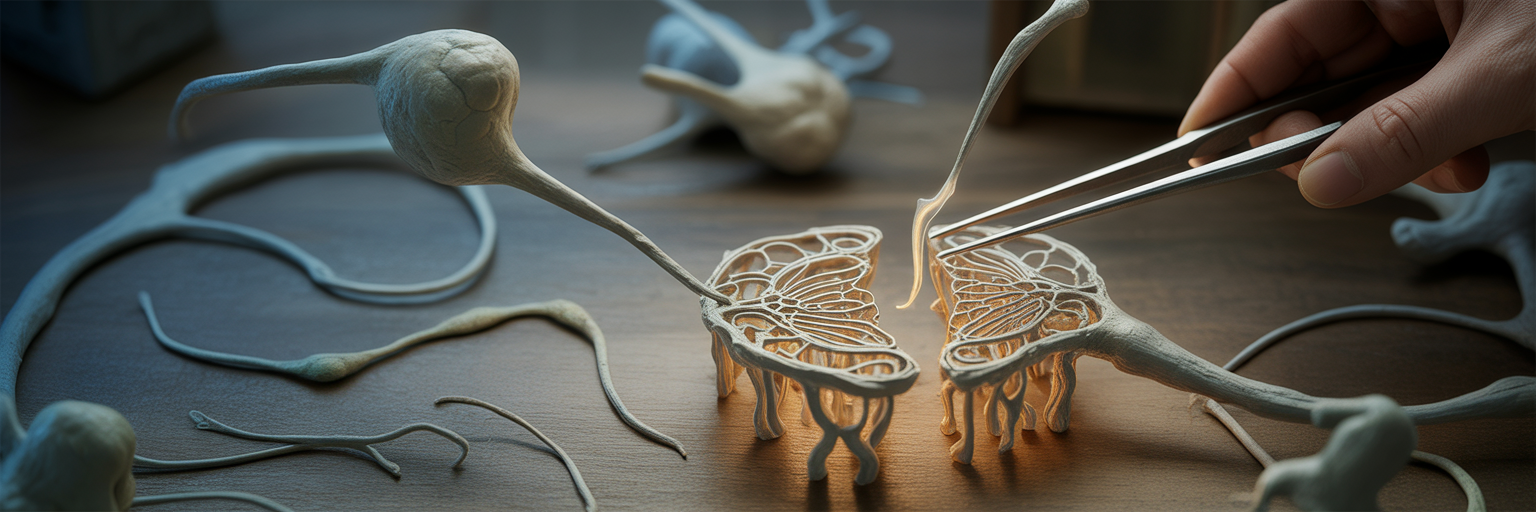
The ability to regrow an entire body from a fragment isn’t just a neat trick; it’s a marvel of cellular engineering. Deep within these organisms, a microscopic construction crew is on permanent standby, ready to rebuild the entire structure from the ground up. This process reveals a level of biological organization that is both elegant and deeply strange.
The Master Builders: Pluripotent Stem Cells
The heroes of this story are pluripotent stem cells. In planarian flatworms, these are known as neoblasts. Think of them as an always-on-call crew of all-purpose construction workers. Unlike most cells in an adult animal, which are specialized for one job (like being a skin cell or a nerve cell), these stem cells are blank slates. They can divide and transform into any cell type the body needs, from brain to skin to gut. An adult human has very few of these powerful cells, but a planarian’s body is loaded with them, making up as much as 20-30% of all its cells. This is the raw material for their incredible regenerative powers.
The Genetic Blueprint: Reading the Instructions
Having a pile of construction materials is useless without a blueprint. That blueprint is the organism’s DNA. When a planarian is cut, the remaining fragment needs to know what to rebuild. How does a piece from the middle know to grow a head at one end and a tail at the other? This is determined by a concept called polarity, managed by a complex system of chemical signals. These signals act like project managers, telling the stem cell “workers” where to go and what to become. They establish a “head” end and a “tail” end, ensuring the new body parts grow in the right place and orientation.
The Rebuilding Process: A Step-by-Step Guide
The actual rebuilding process is a carefully orchestrated sequence, almost like a biological 3D printer bringing a design to life. For a planarian, it generally follows these steps:
- Wound Sealing: The cut surface quickly closes up to prevent infection and fluid loss.
- Stem Cell Migration: The neoblasts (our construction workers) swarm to the injury site, forming a regenerative blastema, which is a mass of undifferentiated cells.
- Cell Division and Differentiation: Guided by the chemical signals (the project managers), the neoblasts begin to divide rapidly. They then differentiate, turning into the specific brain, eye, skin, and muscle cells needed to form the missing part.
- Sculpting the New Part: Over days or weeks, the new head or tail is slowly sculpted, complete with a new brain and eyespots, until a complete, albeit smaller, worm is formed.
The Lingering Mysteries of Regeneration
While we understand the basic framework, scientists are still unraveling the precise details of this process. The exact chemical signals that control polarity and differentiation are incredibly complex. As research highlighted by sources like Science 2.0 on the regenerative powers of Planaria shows, we are constantly discovering new layers to how these creatures regrow entire heads. As we explore the strange and wonderful ways bodies are built, it’s worth remembering that nature has found many bizarre solutions, such as the one seen in the creature that can hear with its knees.
Myths, Misconceptions, and Movie Monsters
The incredible abilities of these regenerative creatures have naturally given rise to myths and misconceptions. From playground legends to horror movie tropes, our imagination often runs wild with the idea of self-cloning animals. It’s time to separate the scientific reality from the fiction and understand the true limits of this bizarre superpower.
Debunking the ‘Cut Any Worm in Half’ Myth
This is perhaps the most famous biological myth of all. The question “can a worm grow back if you cut it in half?” has a more complicated answer than a simple yes. For the common earthworm you find in your garden, it’s mostly false. If an earthworm is cut in half, only the front half (the one with the head and vital organs) has a chance of surviving and regrowing a new tail. The tail end, lacking a brain and other critical parts, will simply wither and die. As detailed in articles from sources like Sciencing explaining why a worm regrows after being cut, true fragmentation is a specialized skill limited to specific species, not a universal worm trait.
The ‘Instant Duplication’ Horror Trope
In movies, when a hero slices a monster in half, it often results in two identical monsters instantly springing to life, ready to attack. This makes for great cinema but terrible biology. Regeneration is an extremely slow and energy-intensive process. It takes days, weeks, or even months for a fragment to regrow into a complete organism. The creature needs time to mobilize its stem cells, differentiate them, and physically build new tissues. There is no “instant” duplication in the real world; it’s a patient, biological construction project.
The Hidden Limits of Regeneration
Even for masters like the planarian, regeneration isn’t a guaranteed success. Several conditions must be met:
- Fragment Size: The piece must be large enough to contain a sufficient number of stem cells and the energy reserves to fuel the rebuilding process. A microscopic sliver won’t work.
- Environmental Conditions: The organism needs a suitable environment with the right temperature, water quality, and lack of predators to successfully regenerate.
- The ‘Goldilocks’ Zone: Some research suggests that for certain species, there’s a sweet spot. A fragment that’s too small will fail, but one that’s too large might not trigger the full regenerative response correctly.
This separation of myth from reality is common in the natural world, where illusion often plays a key role in survival, much like the deceptive strategies discussed in our article on how fake eyes scare predators.
The Conditional Nature of ‘Immortality’
The term “biologically immortal” is often thrown around, but it’s misleading. These animals that clone themselves are not invincible. They are still vulnerable to disease, predation, starvation, and environmental changes like pollution or drying out. Their “immortality” is highly conditional: it only applies to their ability to bypass death from physical injury or old age by regenerating. A planarian might be able to survive being chopped up, but it can still be eaten by a fish.
Why Bother With This Bizarre Lifestyle?
After exploring this creepy and fascinating world of self-duplication, one question remains: why? Why evolve a life strategy that seems to come straight from a horror movie? The answer lies in a classic evolutionary trade-off between speed and safety.
This bizarre lifestyle offers a few key advantages:
- Rapid Population Growth: In a stable environment with plenty of food, fragmentation allows for explosive population growth without the time and energy cost of finding a mate.
- No Partner Needed: Asexual reproduction is efficient. A single, well-adapted individual can colonize an entire area all by itself.
However, this strategy comes with one massive risk: a lack of genetic diversity. Because all the offspring are identical clones, the entire population is vulnerable to the same threats. A single new disease or a sudden environmental shift could wipe them all out. This is why sexual reproduction, with its genetic shuffling, remains the dominant strategy for most complex life on Earth. It’s a long-term investment in adaptability.
But the study of these creatures is more than just a biological curiosity. By understanding how a planarian rebuilds its brain or a starfish regrows a body, scientists are gaining profound insights into the field of regenerative medicine. The dream is to one day apply these principles to human health, potentially finding ways to heal severe spinal cord injuries, treat degenerative diseases like Parkinson’s, or even regrow damaged heart tissue. What seems like a strange quirk of nature could hold the key to the future of medicine.
This bizarre strategy is just one of countless clever solutions nature has devised, rivaling even the cunning tactics of the bird that builds fake doors to confuse predators. It’s a powerful reminder that life finds a way, often in the strangest and most unexpected forms imaginable.