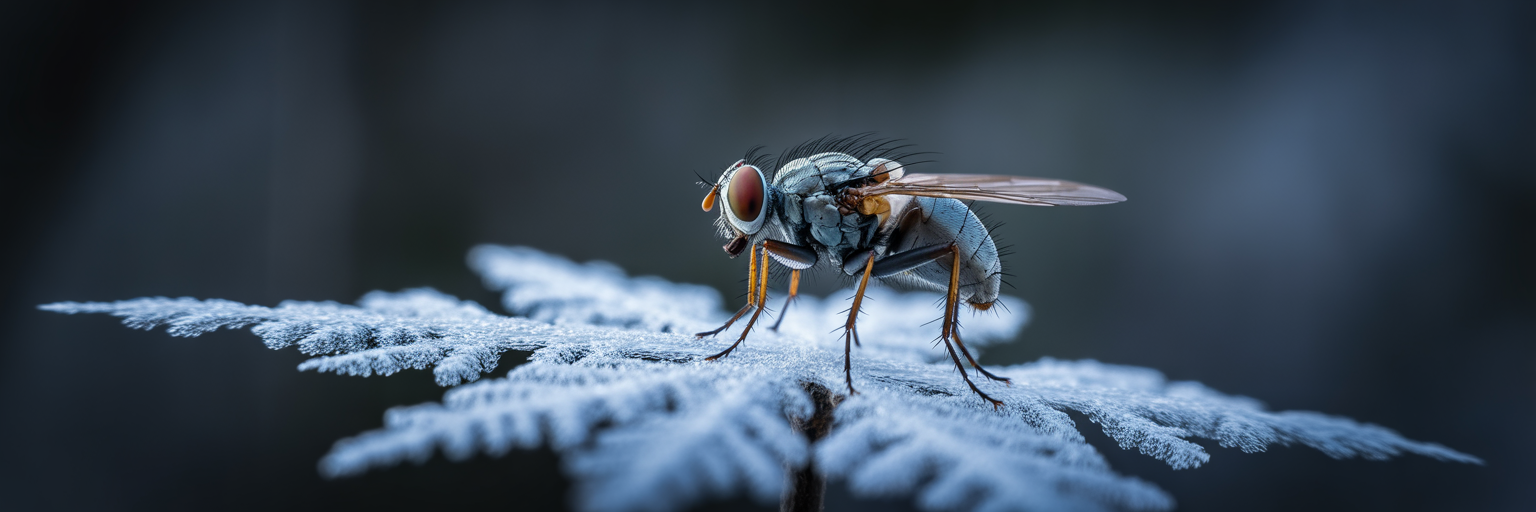
Meet Nature’s Creepiest Winter Warrior
Picture a silent, frozen forest. The air is so cold it hurts to breathe, and the snow blankets everything in a sterile white hush. Nothing moves. Nothing could possibly move. Then, you see it. A spindly, spider-like creature with six legs, no wings, and an unnerving amount of confidence, taking a casual stroll across the snow.
This is the snow fly, or Chionea. And its very existence is an insult to winter. What kind of creature looks at a blizzard and thinks, ‘Perfect weather for a stroll’? Is it brave, or just deeply unwell? This insect breaks the most fundamental rule of its kind: when it gets cold, you either leave, hide, or die. The snow fly does none of these. It stays, it walks, and it thrives in conditions that should shatter it into a million frozen pieces.
The Absurdity of a Fly in a Blizzard
This isn’t your average housefly that blundered outside at the wrong time. The snow fly is a specialist, a member of the crane fly family that gave up its wings for a life on the frozen ground. It looks more like a harvestman spider than a fly, moving with a slow, deliberate gait over terrain that would kill most other insects on contact. Its presence feels wrong, like a glitch in the seasonal code. It’s one of those weird animal adaptations that makes you question the sanity of evolution itself.
Seeing one is an unsettling experience. It forces you to confront a creature that operates on a completely different set of biological rules. It doesn’t just tolerate the cold; it seems to have made a dark pact with it.
A Secret Written in Antifreeze and Self-Mutilation
So how does it pull off this impossible feat? The secret isn’t just resilience; it’s a form of ghoulish, high-stakes body modification. This insect survives by engaging in a level of self-destruction that borders on body horror. It has a willingness to discard parts of itself to save the whole and has mastered a form of biological alchemy, brewing its own internal antifreeze.
The snow fly’s survival is a story of chemistry and carnage, a testament to how far life will go to find a foothold in the most hostile places on Earth. It has solved the problem of freezing with a solution so grotesque and brilliant that it’s hard not to feel a sense of morbid admiration.
Why Winter Wants to Kill Every Bug
To understand the snow fly’s bizarre strategy, you first need to appreciate the sheer violence that winter inflicts on a cellular level. For an insect, which is mostly a tiny bag of water, freezing temperatures are not just uncomfortable. They are a death sentence delivered in two brutally efficient ways.
The Cellular Dagger of Ice
When water freezes, it expands and forms crystals. Inside a living cell, these ice crystals are not gentle snowflakes. They are microscopic, razor-sharp daggers. As they grow, they pierce, shred, and utterly destroy the delicate membranes and organelles that keep the cell alive. It’s death by a thousand internal cuts. An insect caught in a freeze without a defense plan is essentially turned into a slushie of shredded cellular machinery. There is no coming back from that.
Osmotic Shock: The Slow Collapse from Within
Even if an insect can prevent ice from forming inside its cells, the danger isn’t over. As water freezes in the spaces *outside* the cells, the remaining unfrozen fluid becomes increasingly concentrated with salts and other solutes. This creates a hyper-saline slush that is desperately thirsty for water. Through osmosis, it begins to violently suck the moisture out of the surrounding cells. The cells dehydrate and collapse like deflated balloons, their internal structures crushed and warped beyond repair. It’s a slower, more insidious death than being stabbed by ice, but just as final.
The ‘Normal’ Ways to Die (or Not)
Faced with this two-pronged attack, most insects have figured out how insects survive winter using one of three sensible strategies. They migrate to warmer climates, they find a sheltered spot to hibernate, or they simply die off, leaving their eggs to hatch in the spring. These are passive, logical responses to an overwhelming threat. Other creatures have evolved equally extreme but different strategies; for instance, some animals have evolved to survive by shrinking their own organs. The snow fly, however, rejects all of these options. It chooses to stay active, facing the cold head-on with a strategy that is anything but passive.
The Snow Fly’s Ghoulish Survival Guide
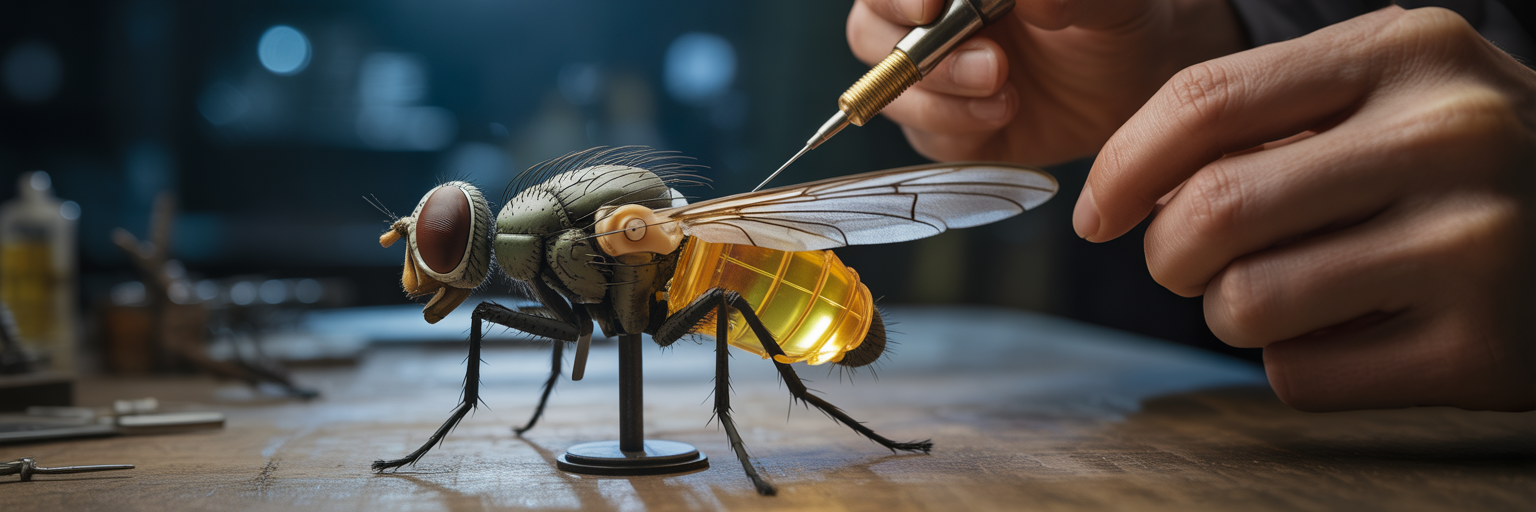
The snow fly doesn’t just endure winter; it wages a calculated, two-part war against it. Its survival manual reads like something co-written by a mad chemist and a sci-fi horror director. It’s a plan based on internal alchemy and, when that fails, strategic self-sacrifice.
Step 1: Brew Your Own Internal Antifreeze
The first and most crucial step is to stop ice from forming in the first place. To do this, the snow fly becomes a tiny, walking chemical factory. As temperatures drop, it begins to fundamentally alter its own body fluids, replacing a significant amount of its internal water with a cocktail of compounds called cryoprotectants. It floods its system with sugar alcohols like glycerol, effectively turning its blood, or hemolymph, into a viscous, freeze-resistant goo.
This isn’t just a minor adjustment. The insect is actively brewing a potent insect antifreeze inside its own body. This syrupy fluid has a much lower freezing point than water, allowing the snow fly to remain liquid and functional at temperatures that would turn other insects into solid blocks of ice. It’s a brilliant chemical defense that allows it to stay active while everything else is frozen solid.
Step 2: When in Doubt, Cut It Off
But what happens if the antifreeze isn’t enough? What if a sudden, deep cold snap starts to overwhelm the chemical defenses in an exposed limb? This is where the snow fly’s strategy shifts from brilliant to brutal. If ice begins to crystallize in one of its legs, the fly has a horrifyingly practical solution: it cuts the leg off.
This isn’t speculation. As a 2023 study published in a prominent physiology journal confirmed, snow flies actively self-amputate their limbs upon detecting ice formation, a behavior that prevents the ice front from reaching their vital organs. It’s the biological equivalent of a character in a zombie movie amputating their own arm to stop the infection from spreading. This act of self-amputation in animals is a pre-programmed, last-ditch firewall. This combination of chemical warfare and preventative self-mutilation is the key to its snow fly survival.
Inside the Antifreeze Factory of a Fly
The snow fly’s ability to brew its own antifreeze is a masterclass in biochemistry. It’s not just one chemical, but a sophisticated toolkit of molecules working together to defy the physics of freezing. Understanding how these cryoprotectants in insects work reveals a strategy that is as elegant as it is strange. The way these chemicals work is a form of natural engineering, not unlike how other creatures manipulate their environment, such as the insect that can turn a leaf into a nursery, fortress, and food supply.
The Molecular Obstruction Course
At its core, the strategy is simple: get in the way. Water molecules want to arrange themselves into a neat, crystalline lattice to form ice. Cryoprotectants like glycerol and sorbitol are bulky molecules that physically obstruct this process. Think of it like trying to build a perfect brick wall while someone keeps throwing bouncy balls into your mortar. The cryoprotectant molecules disrupt the hydrogen bonds between water molecules, making it much harder for them to lock into place. This effectively lowers the freezing point of the fly’s internal fluids.
Supercooling: Defying the Physics of Freezing
This molecular obstruction allows the snow fly to achieve a state known as supercooling. This means its body fluids can remain liquid at temperatures far below the normal freezing point of water, 32°F (0°C). The fly is essentially cheating physics, carrying a tiny pocket of unfrozen liquid around in a frozen world. This is the secret to its continued activity. It’s not warm; it’s just not solid.
Cellular Bubble Wrap
But the cryoprotectants do more than just prevent freezing. Sugars like trehalose play another vital role. As the fly inevitably loses some water to the dry winter air, trehalose forms a glassy, honey-like matrix inside the cells. This vitrified sugar acts like molecular bubble wrap, encasing and protecting delicate proteins and membranes. It prevents them from denaturing or collapsing from dehydration, ensuring that even if the fly gets dangerously cold and dry, its cellular machinery remains intact and ready to function.
| Cryoprotectant | Chemical Type | Primary Function | Analogy |
|---|---|---|---|
| Glycerol | Sugar Alcohol | Lowers the freezing point of water; increases fluid viscosity. | Adding antifreeze to a car’s radiator. |
| Trehalose | Disaccharide (Sugar) | Forms a glassy state at low temperatures, encasing and protecting cell structures. | Coating a fragile object in a layer of protective, hard candy. |
| Sorbitol | Sugar Alcohol | Similar to glycerol, helps manage water balance and prevent ice formation. | A molecular sponge that controls water movement. |
| Proline | Amino Acid | Stabilizes proteins and membranes, preventing them from deforming under cold stress. | Tiny internal scaffolding that reinforces cellular structures. |
The Brutal Logic of Self-Amputation
While the chemical antifreeze is the snow fly’s first line of defense, its willingness to perform self-surgery is what makes it a true winter survivalist. This act of autotomy, or self-amputation, is not a sign of panic. It is a cold, calculated, and brutally logical emergency protocol, one of the most extreme examples of self-amputation in animals.
The Ultimate Emergency Protocol
Imagine an ice crystal beginning to form in the tip of the fly’s leg. This crystallization is a chain reaction; once started, it will spread like a fire up the limb and into the fly’s vital organs, killing it instantly. The fly has mere moments to act. It uses specialized sensory neurons to detect the specific, high-frequency vibrations of an ice crystal forming. Once the alarm is triggered, the fly’s response is immediate and irreversible. It has a built-in firewall, and it’s about to activate it.
A Pre-Programmed Sacrifice
This isn’t a messy, desperate struggle. The snow fly has predetermined weak points in its leg joints, like the perforated lines on a sheet of paper. Upon detecting ice, it constricts a specific muscle at this joint, and with a clean snap, the compromised limb is severed. The ice crystal, and the chain reaction it started, is discarded along with the leg. The fly has sacrificed a part to save the whole. This act of strategic self-sacrifice is one of nature’s most unsettling defense mechanisms, a form of biological misdirection not unlike the way some animals use fake eyes to scare predators, sacrificing a potential target area to protect the whole.
Life on Five Legs
The most unsettling part of this entire process is what happens next: nothing. The fly, now with five legs, simply continues its slow, deliberate walk across the snow. It might lose another leg later. It doesn’t matter. As long as its core body remains unfrozen, it will keep moving, searching for food or a mate. This grim persistence paints a picture of a creature that views its own body as a collection of disposable tools, all secondary to the primary mission of survival.
A Winter’s Tale of a Legless Fly
After learning about the antifreeze blood and strategic amputations, one question remains: why? Why go through all this trouble? The answer lies in the profound emptiness of a winter landscape. The snow fly’s grotesque adaptations aren’t just for defense; they are an aggressive strategy to conquer a niche that almost no one else can occupy.
The Emptiest Niche
In the dead of winter, the world is quiet. For an insect, this quiet means a world without predators. The birds have flown south, the spiders are dormant, and the predatory beetles are buried deep underground. By being active on the surface of the snow, the snow fly enters a world where it is at the top of the food chain by default. It has the entire landscape to itself. There is no competition for the scarce resources it finds, like decaying organic matter exposed by the wind.
A World Without Predators
This predator-free environment is the ultimate reward for its high-risk strategy. The fly can walk in the open, search for mates, and live its entire adult life with a level of safety that would be unimaginable in the crowded, dangerous world of summer. The snow fly survival strategy is a gamble that pays off handsomely, trading the threat of being frozen for the guarantee of not being eaten.
The Purpose Behind the Pain
So when you picture that five-legged fly continuing its journey across the snow, don’t just see it as a victim of the cold. See it as a conqueror. It has paid a heavy price, but in return, it has claimed a kingdom of its own. Its relentless, almost psychopathic persistence is not a flaw; it’s the very thing that allows it to thrive. It has turned the most hostile season on Earth into its own private paradise.
Nature’s Club of Frozen Survivors
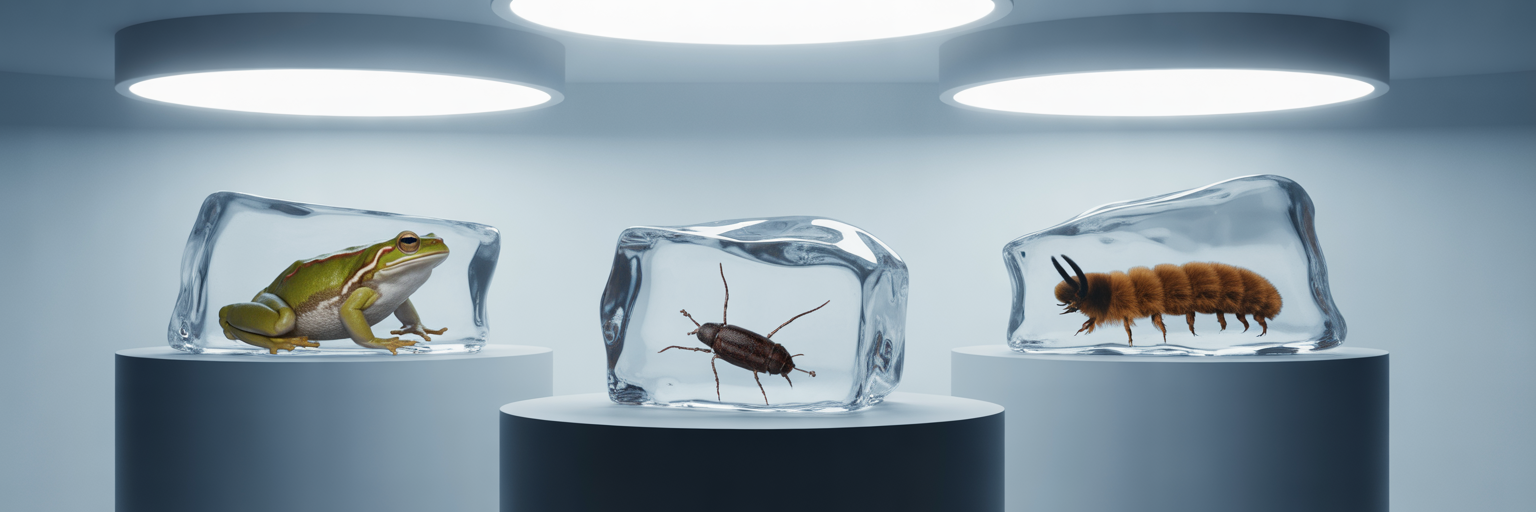
The snow fly may seem like a complete anomaly, but it’s part of an exclusive club of organisms that have mastered the art of surviving a deep freeze. However, when you compare their strategies, the snow fly’s approach stands out as uniquely combative and extreme.
Other cold-weather champions have found their own ways to cope. As National Geographic explains, some animals like the wood frog have mastered the art of turning into living ice cubes, freezing solid and then thawing out in the spring. This strategy relies on protecting cells while the rest of the body freezes. The snow fly, however, refuses to stop moving.
Let’s compare the top contenders:
- Wood Frog: Freeze-tolerant. Allows up to 70% of its body to turn to solid ice, using glucose as a cryoprotectant to protect vital organs. It essentially becomes a living ice block and waits for spring to thaw.
- Woolly Bear Caterpillar: Freeze-avoidant. Produces glycerol to supercool its body fluids, remaining liquid at sub-zero temperatures while hibernating in a curled-up position.
- Snow Fly (Chionea spp.): Freeze-intolerant & combative. Uses cryoprotectants to stay active at sub-zero temperatures but employs strategic self-amputation as a last-ditch ‘firewall’ if any part of its body begins to freeze, sacrificing limbs to save the core.
While the wood frog waits and the woolly bear hides, the snow fly fights. It doesn’t just endure winter; it actively wages war against it, treating its own body as both the weapon and the acceptable collateral damage. It stands as a testament to nature’s brutal creativity, a creature that survives not by yielding to winter, but by cutting off the parts of itself that do.