
The Common Yet Curious Final Position of Insects
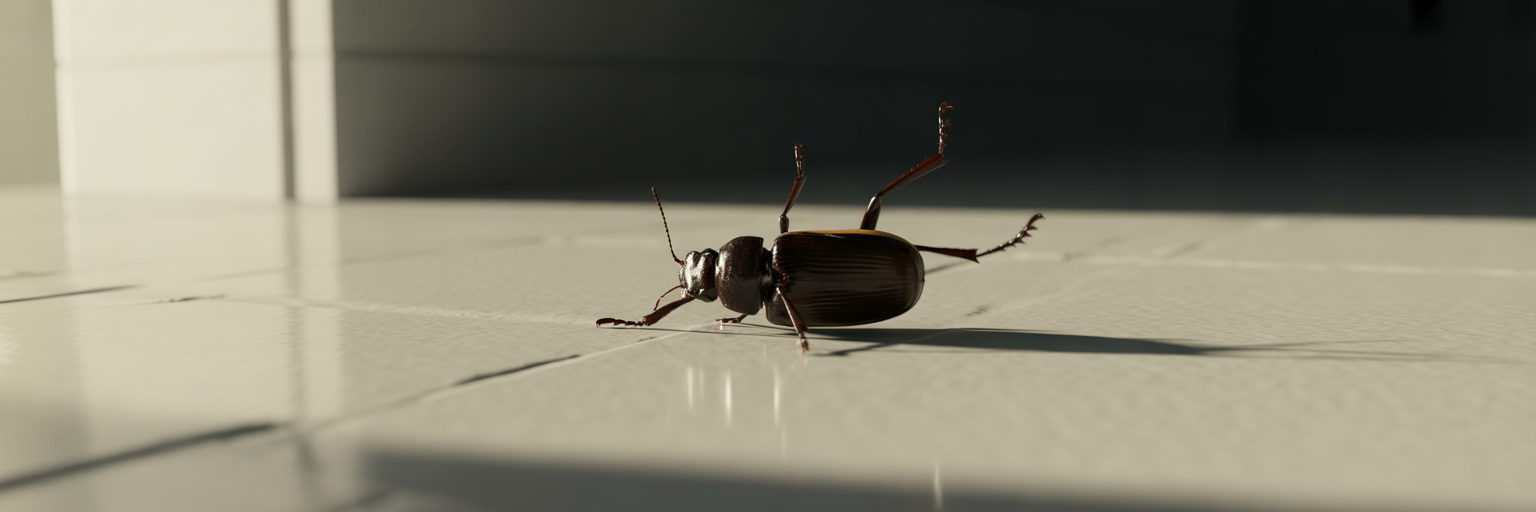
Almost everyone has seen it. A beetle motionless on the sidewalk or a cockroach lying still on the kitchen floor, legs curled toward the sky. It’s a quiet, common sight that often sparks a simple question: why do bugs flip over when they die? This final, vulnerable position is not a coincidence or a strange ritual. It is the predictable result of an insect’s unique biology, the simple laws of physics, and the environment it happens to be in at its final moments.
The answer isn’t a single, straightforward point. Instead, it involves a chain reaction of events. As an insect perishes, it loses control over its muscles, causing its legs to contract. This change, combined with a surprisingly high center of gravity, makes its body unstable. Add in the slick, unforgiving surfaces of our modern homes, and that final tumble onto its back becomes almost inevitable. Understanding this process reveals a fascinating intersection of anatomy and environment, turning a common household mystery into a clear scientific explanation.
An Insect’s Body During Its Final Moments
Before a bug topples over, a series of internal shutdowns are already underway. The flip is just the last visible sign of a body that has lost its ability to function. It all begins with the complex network that controls its every move.
The Nervous System Shuts Down
The root cause of an insect’s final posture is insect nervous system failure. An insect’s brain and nerve cords constantly send coordinated electrical signals to its muscles, allowing it to walk, fly, and stay balanced. When an insect begins to die from old age, dehydration, or poison, this communication system breaks down. The signals become erratic or stop completely, leaving the muscles without direction. This loss of coordination is the first step in the chain reaction that leads to the bug flipping over.
Why an Insect’s Legs Curl Inward
With the nervous system failing, the insect’s legs begin to behave in a predictable way. Insect limbs operate with two opposing muscle groups: flexors, which pull the leg inward, and extensors, which push it outward. In most insects, the flexor muscles are naturally stronger than the extensors. While alive, the nervous system maintains a balance between these muscles. But when the nerve signals cease, the weaker extensor muscles relax first. The stronger flexors then take over, pulling the legs inward and upward into a curled, almost fetal position. Dehydration during the dying process can also reduce the hydraulic pressure that helps keep the legs extended, contributing further to this contraction. The complex biology of insects is fascinating, and some have developed incredible sensory abilities, such as the unique creature that can hear with its knees, which you can learn more about at Nature is Crazy.
The Physics of an Unstable Body
Once an insect’s internal systems fail and its legs curl, physics takes over. The biological changes create a physical instability that the bug can no longer correct, especially in the environments where we most often find them.
A High Center of Gravity
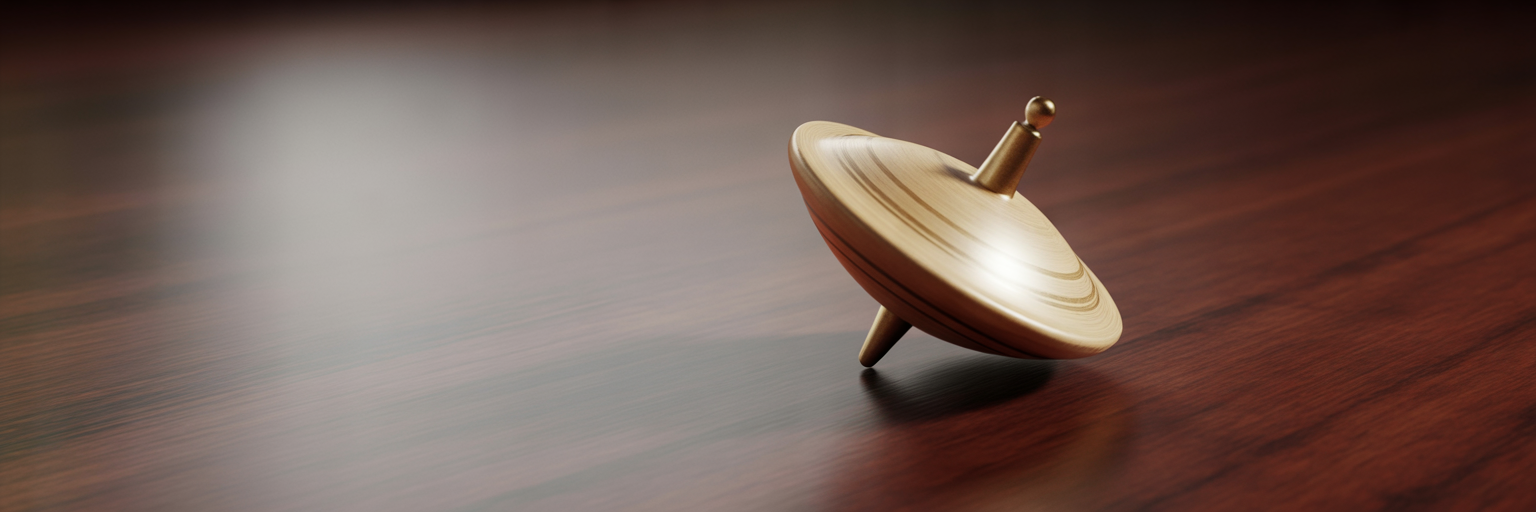
Many common insects, especially beetles and cockroaches, have a top-heavy design. Their rounded, armored backs place their center of gravity high up in their abdomen. While they are alive and healthy, they constantly make tiny, unconscious adjustments with their legs to maintain balance over their wide stance. Think of it like a tripod holding up a camera. But when the legs curl inward upon death, that wide, stable base of support shrinks dramatically. The insect becomes like a spinning top that has lost its momentum. With a high center of gravity and a narrow new base, the slightest tremor or muscle twitch is enough to make it topple over.
The Problem with Smooth Surfaces
This instability is made worse by the surfaces inside our homes. Tile, linoleum, and polished hardwood floors are incredibly smooth from an insect’s perspective. For a weakened, dying bug with curled legs, these surfaces offer no friction or texture to grip. There is nothing for it to push against to try and right itself. Outdoors, the situation is different. An insect dying on grass, soil, or tree bark might get its legs snagged on a piece of debris or a plant stem, propping it up and preventing a full flip. Indoors, however, there is often nothing to stop the tumble.
Why Do Roaches Flip Over When They Die?
Cockroaches are perhaps the most famous example of this phenomenon, and there is a specific reason they are so often found upside down. While their anatomy plays a part, the real culprit is usually the insecticide used to eliminate them. So, why do roaches die on their backs? It starts with their top-heavy build, featuring a broad, rounded back and a flat underside that makes them naturally prone to tipping.
However, the primary factor is the effect of common household pesticides. Most roach sprays and baits contain neurotoxins. These chemicals are designed to attack the insect’s nervous system, causing it to fire uncontrollably. This neurological chaos leads to violent muscle spasms, tremors, and a complete loss of coordination. It is often these convulsions that physically throw the roach off its feet and onto its back. Once flipped, the ongoing effects of the poison cause paralysis, making it impossible for the roach to coordinate its legs to flip back over. As noted in discussions among biologists on platforms like Stack Exchange, the neurotoxic effects of common insecticides are a primary cause of the spasms that lead to roaches flipping onto their backs. While an old or sick roach might flip over from simple muscle failure, insecticides make this outcome far more dramatic and common indoors.
The Impact of Pesticides on Insect Coordination

The effect seen in cockroaches applies to many other insects as well. The majority of pesticides available to consumers are neurotoxins specifically designed to cause insect nervous system failure. These chemicals work by disrupting the enzymes that regulate nerve impulses. Without these regulators, the insect’s nerves fire continuously, sending a constant “go” signal to the muscles without a corresponding “stop” signal.
This leads to a state of hyperexcitation, resulting in the visible signs of poisoning: twitching, full-body tremors, and a total loss of balance and fine motor control. This neurological breakdown is a major reason why do bugs flip over when they die so frequently inside our homes. An insect stumbling around in this state is highly likely to lose its footing and fall onto its back. Finding dead bugs upside down in house environments is often a direct consequence of these chemical-induced spasms. The fight for survival in the insect world is constant, and while pesticides are a modern threat, some insects have evolved incredible defenses against natural dangers, like the ones that survive fungal artillery fire, a fascinating story you can explore at Nature is Crazy.
Do Bugs Die Because They Flip Over?
This is a common misconception. It is easy to assume that getting stuck on its back is what ultimately kills the bug, but that is incorrect. Flipping over is a symptom of the dying process, not the cause of death. The sequence of events is the other way around.
The insect is already succumbing to old age, injury, dehydration, or poison. This compromised state leads to weakness, muscle spasms, and the leg-curling reflex we discussed earlier. These are the factors that cause the bug to flip. By the time it is on its back, it is already too weak or neurologically impaired to right itself. A healthy insect that accidentally flips over usually has the strength and coordination to get back on its feet, unless it is on a perfectly slick surface with nothing to grip. The bugs we find dead on their backs were trapped in that position because they were already past the point of recovery. The upside-down position is simply the final, visible stage of what happens when an insect dies. As noted in a Virginia Tech publication, this position is a result of the dying process, not its cause.
Why Some Bugs Don’t Flip Over When They Die

While finding a bug on its back is common, it is not a universal rule. Not all insects end up in this position, and several factors determine their final resting posture.
- Body Shape and Size: Insects with a lower center of gravity or a more stable body shape are less likely to topple over. For example, ants are lightweight and have a low profile, so they often die upright. Ladybugs, with their dome shape, have a very low center of gravity and are also less prone to flipping.
- Environmental Texture: The surface where an insect dies plays a huge role. An insect perishing on a textured surface like a carpet, a leaf, or in the soil may have its legs catch on the terrain. This can prop its body up or prevent a full, clean flip onto its back.
- Cause of Death: The way an insect dies matters. The slow decline from poison, disease, or old age is what typically leads to the leg-curling and toppling sequence. An insect that is killed instantly by physical trauma, like being swatted, will likely end up in whatever random position it was in at the moment of impact.
The diversity in animal defenses is vast; for instance, some animals use fake eyes to scare predators, a tactic you can read about at Nature is Crazy.
| Common Insect | Body Shape / Center of Gravity | Likelihood of Flipping | Common Location Found |
|---|---|---|---|
| Cockroach | Top-heavy, broad back | High | Kitchens, bathrooms, smooth floors |
| Beetle | Often rounded and top-heavy | High | Sidewalks, window sills, floors |
| Fly | Relatively high center of gravity | Medium | Window sills, light fixtures |
| Ant | Low center of gravity, lightweight | Low | Outdoors on soil, indoors on various surfaces |
| Ladybug | Dome-shaped, low center of gravity | Low | Gardens, window sills, often upright |
Note: This table provides general tendencies. The final position can always be influenced by the specific cause of death and the texture of the surface where the insect dies.
Common Questions About How Insects Die
Why do bugs curl their legs when they die?
An insect’s legs have muscles for pulling inward (flexors) and pushing outward (extensors). The flexor muscles are stronger. When the nervous system shuts down upon death, the muscles relax, and the stronger flexors pull the legs into a curled position.
Do insects feel pain when they die?
This is a complex question. Scientists distinguish between nociception, which is the reflex to move away from a harmful stimulus, and the emotional experience of pain. Insects certainly have nociception. However, most researchers believe they lack the brain structures necessary to “feel” pain in the same conscious, emotional way humans do. So, while they react to injury, they likely do not suffer from it emotionally.
Why do roaches die on their backs?
It is a combination of three factors: their top-heavy body shape makes them unstable, neurotoxic insecticides cause muscle spasms that flip them over, and smooth indoor floors offer no grip for them to right themselves once they are on their backs.
Can a bug get stuck upside down and die?
It is very rare for a healthy bug to die this way. A healthy insect has the strength and coordination to flip itself back over. Finding a bug that died on its back is a sign that it was already weak, poisoned, or dying from other causes.
Why do I keep finding dead bugs upside down in my house?
This is usually due to a combination of two things: the prevalence of smooth surfaces like tile and wood floors in modern homes, and the common use of pesticides indoors. The smooth floors prevent recovery, and the pesticides often cause the spasms that lead to the flip in the first place.
Do pesticides make bugs flip over?
Yes, absolutely. Most common insecticides are neurotoxins that cause uncontrolled muscle spasms, loss of coordination, and paralysis. This neurological chaos is a direct cause of insects losing their balance and flipping onto their backs.
Do all insects flip over when they die?
No. An insect’s final position depends on its body shape, size, and the surface it dies on. Insects with a low center of gravity, like ants, or those that die on textured surfaces like grass or carpet, often remain upright.
Understanding the Final Tumble
The next time you see a bug lying on its back, you will know it is not a random occurrence. The mystery of why do bugs flip over when they die is solved by a predictable chain of events. It is a simple consequence of their anatomy meeting the realities of their environment at the end of life.
The process unfolds in three clear stages. First comes physiological failure, as the nervous system shuts down and the stronger flexor muscles pull the legs into a curl. This leads to physical instability, where a top-heavy body loses its balance and topples over. Finally, environmental factors, like the smooth floors in our homes, prevent any chance of recovery. Finding a dead bug upside down in house is often just a sign of biology and physics playing out as expected. That final, still position is simply the last chapter in the life of a tiny creature.