Meet Nature’s Squishiest, Creepiest Assassin
The velvet worm is one of nature’s most unsettling contradictions. At first glance, it looks like a lost gummy worm that grew legs, a soft, squishy caterpillar-like creature with a velvety texture that practically begs to be touched. It moves on dozens of stubby, unjointed legs called lobopods, giving it a slow, flowing gait that seems almost harmless. You might even call it cute, in a weird, subterranean sort of way. But this plush-toy appearance is a masterful deception, hiding the reality of a highly efficient and ancient predator.
This creature’s deceptive look is a survival tool, not unlike the caterpillar that tricks ant colonies into raising it. But while that caterpillar uses mimicry for protection, the velvet worm’s cute exterior conceals a weapon system that belongs in a science fiction horror film. So, what is a velvet worm, really? It is not a true worm or a caterpillar. It belongs to its own exclusive phylum, Onychophora, a group of living fossils that have been squirming through the undergrowth for hundreds of millions of years.
These creatures are masters of the dark, preferring the damp, decaying leaf litter and rotting logs of tropical forests across the Southern Hemisphere. They are phantoms of the forest floor, emerging at night to hunt. Imagine this soft-bodied horror gliding silently through the darkness, its two antennae twitching as it senses for its next victim. Its slow, deliberate crawl is unnerving because you know it’s building toward something terrible. On either side of its head are two appendages that look like tiny nozzles. These are its glue cannons, and they are among the most bizarre and effective weapons in the entire animal kingdom.
The velvet worm’s body plan has remained remarkably consistent for over 300 million years, making it a squirming relic from a time before the dinosaurs. It has survived multiple mass extinctions, not by being the biggest or the fastest, but by perfecting a single, terrifying hunting technique. This enduring success makes it far more than a biological curiosity. It is a testament to an evolutionary design so effective that it has barely needed an update in an eon, setting the stage for one of the strangest predatory attacks on Earth.
The Anatomy of a Face-Mounted Glue Cannon
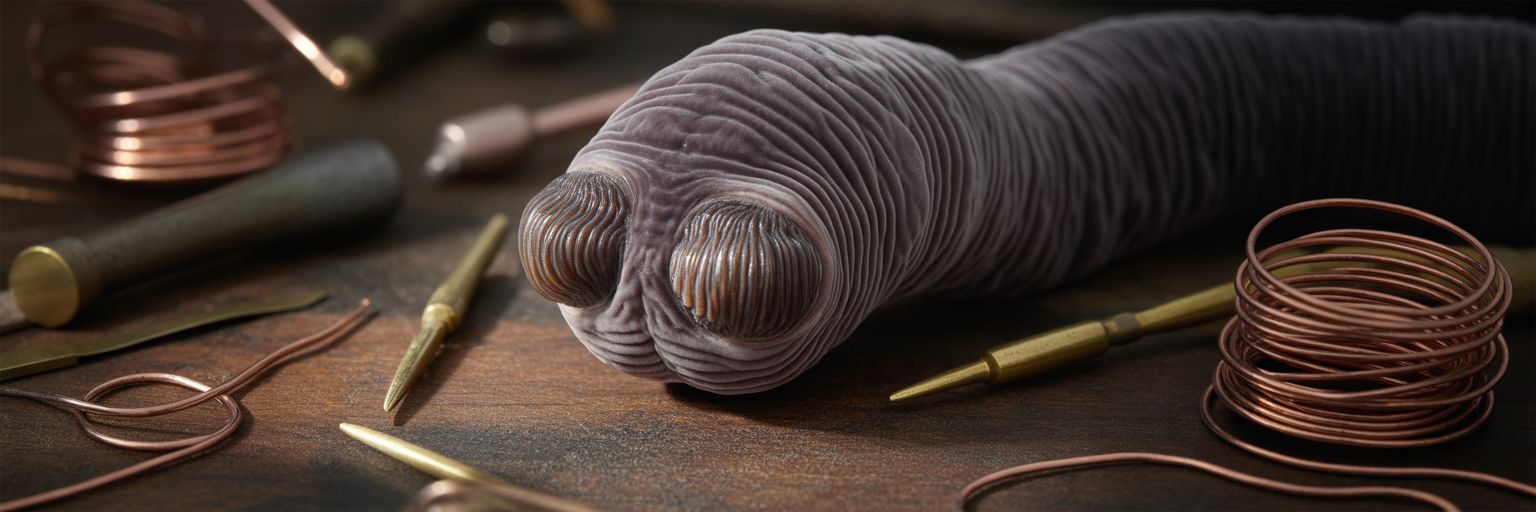
The true horror of the velvet worm lies in the sophisticated biological machinery it uses for hunting. This is not just a simple spit attack. It is a high-pressure, precision-engineered system that turns a liquid into a prison. The entire process is a masterclass in hydraulic and chemical warfare, executed by specialized anatomy that has been refined over millions of years.
The Oral Papillae: Nature’s Twin Turrets
Flanking the velvet worm’s head are two modified legs known as oral papillae. These are not part of its mouth, but are dedicated, aimable nozzles. Think of them as twin biological turrets, each capable of independent movement. They can aim, track a target, and prepare to fire in an instant. These structures are the final delivery point for the worm’s infamous slime, and their unique ability to move is critical to the effectiveness of the attack.
The Slime Reservoir: A Pressurized Chemical Cocktail
The slime itself is a complex, protein-based liquid produced in enormous glands that can extend through much of the worm’s body. These glands act as reservoirs, storing the chemical cocktail under low pressure. When the worm detects prey, a powerful set of muscles surrounding these glands contracts violently. This action generates immense hydraulic pressure, priming the system for an explosive discharge. The worm essentially turns its own body into a pressurized container, ready to unleash its sticky payload with incredible force.
The Firing Mechanism: An Oscillating Web of Doom
The actual firing is a spectacle of biological violence. The expulsion of slime can reach speeds of up to 5 meters per second, a velocity that is astonishing for a creature of its size. This speed is comparable to the rapid strikes of other specialized predators, like the star-nosed mole that eats faster than you can blink. But it is not just about speed. As the slime is ejected, the oral papillae begin to oscillate at a high frequency, whipping the streams of liquid back and forth. This rapid, chaotic motion weaves the slime into an intricate, net-like mesh in mid-air. The attack unfolds in a clear, terrifying sequence:
- The velvet worm detects a target, like a cricket or spider, with its sensitive antennae.
- Muscles around the slime glands contract, building up intense hydraulic pressure.
- The oral papillae take aim and begin to vibrate wildly, preparing to cast the net.
- The slime is shot out in an oscillating, web-like pattern, completely blanketing the unsuspecting prey in a sticky, inescapable mesh.
This entire sequence is over in milliseconds. The prey is not just hit with a blob of goo. It is instantly entangled in a custom-made net of hardening glue, constructed on the fly.
From Liquid Sneeze to Inescapable Prison
The moment the velvet worm slime leaves the oral papillae, it undergoes a dramatic transformation. What was once a watery liquid protein solution becomes a powerful adhesive gel almost instantly. The science behind this transformation is fascinating. According to a report in Scientific American, the watery liquid undergoes a phase transition triggered by the mechanical stress of being shot through the air, causing it to form sticky nano-fibers that quickly lose water and solidify. The sheer force of being ejected is what activates its adhesive properties.
Once the slime net makes contact with the prey, a second, even more sinister process begins. The slime is designed to harden upon being stretched. As the trapped insect or spider struggles, it pulls on the sticky threads. This mechanical action rapidly draws water out of the protein structure, causing the slime to cure into a strong, almost glass-like solid. The more the victim fights, the stronger and more rigid the prison becomes. It is a perfectly engineered trap that uses the prey’s own panic against it, creating a custom-fit cage of hardened glue.
The adhesive properties of this substance are extraordinary. It can glue a struggling cricket to a leaf, the ground, or even to its own body, immobilizing its legs and antennae. For a small invertebrate, being hit by this death web is a terrifying end. One moment it is walking freely, the next it is encased in a rapidly hardening material that constricts with every movement. This aggressive use of slime is unique, though other creatures use slime for different survival strategies, such as the parrotfish that sleeps inside a bubble of its own slime for protection. The velvet worm, however, has weaponized its mucus, turning it from a simple secretion into a sophisticated and deadly hunting tool.
The Gruesome Dining Etiquette of the Velvet Worm
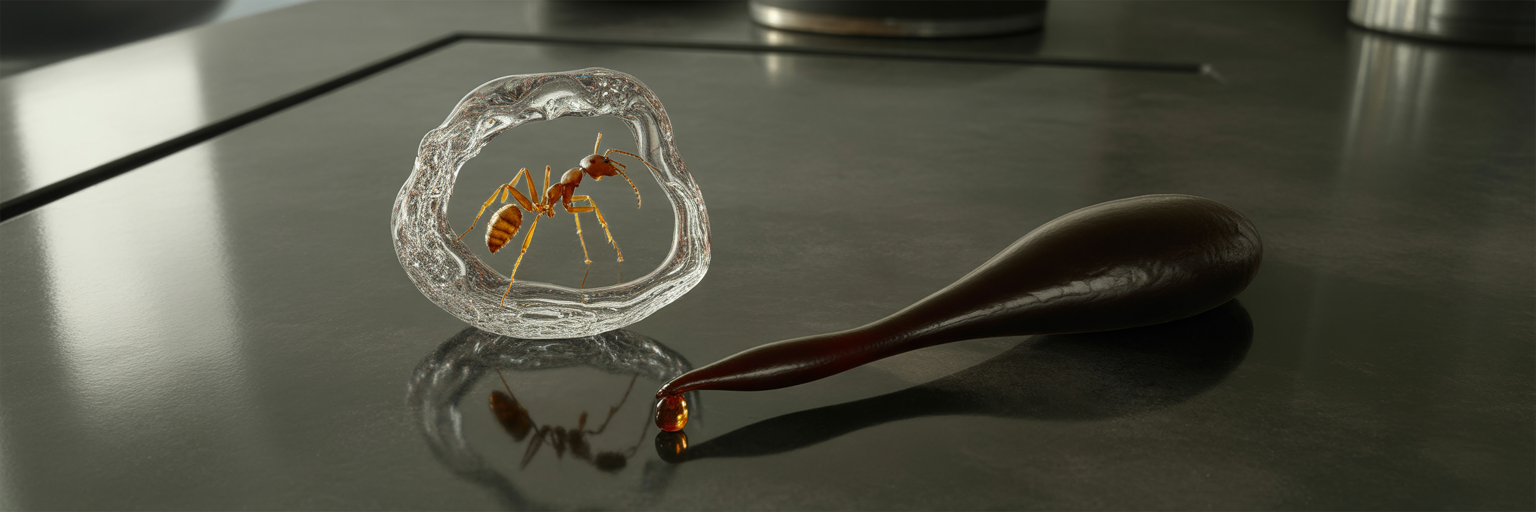
Once the prey is thoroughly immobilized by the hardened slime, the most unsettling part of the velvet worm hunting process begins. The high-speed, chaotic attack is immediately followed by an eerie calm. The velvet worm does not rush in for the kill. Instead, it ambles over to its ensnared meal with the same slow, deliberate pace it always uses. This contrast between the violent capture and the leisurely approach is what cements its reputation as a soft-bodied nightmare.
Upon reaching its victim, the velvet worm gets to work. It does not have chewing mouthparts like an insect. Instead, it uses a pair of sharp, blade-like mandibles located inside its circular mouth to pierce the prey’s exoskeleton. Once it creates an opening, it injects a potent digestive saliva. This saliva is a chemical weapon, rich in enzymes that begin to break down and liquefy the victim’s insides. The prey is essentially digested from the inside out while still trapped in its gluey prison. It is a bug smoothie in the making.
After the enzymes have had time to work, the velvet worm simply sucks up the pre-digested slurry, leaving behind a hollowed-out husk of an exoskeleton. This method of external digestion is incredibly efficient, allowing the worm to consume prey that may be much larger and tougher than itself. It does not need to crush or tear its food, only puncture it and let its chemical arsenal do the rest. The dining process is methodical and horrifying:
- Step 1: The Calm Approach. The worm slowly walks over to its trapped, struggling meal.
- Step 2: The Puncture. It uses its sharp mandibles to create a hole in the prey’s armor.
- Step 3: The Injection. A cocktail of digestive enzymes is pumped into the victim’s body.
- Step 4: The Liquefaction. The prey’s internal tissues are broken down into a nutrient-rich soup.
- Step 5: The Meal. The worm sucks out the liquefied insides, leaving an empty shell.
Interestingly, the slime serves a dual purpose. While it is a primary tool for hunting, it is also a formidable defense mechanism. A potential predator, like a bird, lizard, or large spider, that tries to attack a velvet worm might find itself with a face full of instant, hardening superglue. This makes the velvet worm a far less appealing meal, ensuring its survival in a world full of bigger, faster hunters.
A Living Fossil Crawling Through Deep Time
The velvet worm is more than just a creepy predator. It is a messenger from a forgotten world, a true living fossil. Its bizarre biology and hunting strategy are not recent evolutionary quirks but are instead ancient tools that have proven successful for an almost unimaginable length of time. To understand the velvet worm is to take a journey into deep time, long before our modern ecosystems took shape.
An Evolutionary Ghost from the Paleozoic
Fossils of velvet worm-like creatures, part of a group known as “lobopodians,” have been found in deposits dating back over 300 million years to the Paleozoic Era. This means this ancient predator worm was crawling through the undergrowth long before the first dinosaurs appeared. Its basic body plan, with a soft body, stubby legs, and predatory habits, has been so successful that it has survived multiple mass extinctions with very few major changes. While the world changed dramatically around it, the velvet worm’s simple yet effective design endured.
The Missing Link Between Worms and Arthropods
One of the most fascinating onychophora facts is the velvet worm’s unique position on the evolutionary tree of life. The phylum Onychophora is considered a sister group to the arthropods, the massive group that includes insects, spiders, and crustaceans. However, it also shares several characteristics with annelids, or segmented worms. This makes it a sort of evolutionary mosaic, providing clues about how the transition from soft-bodied worms to hard-shelled arthropods may have occurred. According to the Australian Museum, these creatures represent an ancient lineage of invertebrates, providing invaluable insights into the evolution of arthropods. The table below illustrates its strange, in-between nature.
| Feature | Annelids (e.g., Earthworm) | Velvet Worm (Onychophora) | Arthropods (e.g., Ant) |
|---|---|---|---|
| Body Segmentation | Clearly segmented body | Soft, unsegmented body (externally) | Segmented body (head, thorax, abdomen) |
| Exoskeleton | None (has a thin cuticle) | Thin, flexible cuticle made of chitin (molts) | Hard, jointed exoskeleton made of chitin |
| Legs | None (uses setae for movement) | Stubby, unjointed, hollow legs (lobopods) | Jointed, articulated legs |
| Respiration | Through the skin | Through simple pores (tracheae) all over the body | Through specialized openings (spiracles) |
| Appendages | Simple sensory organs | Antennae and slime-shooting oral papillae | Complex antennae, mandibles, and other mouthparts |
This unique combination of traits shows that the velvet worm is not just a weird worm. It is an evolutionary snapshot, a creature that retains primitive features while also showing the developments that would lead to the most successful animal group on the planet. Its bizarre slime-shooting is not a fluke but a highly refined adaptation that has allowed this soft little nightmare to crawl through eons, a testament to the genius of its simple, enduring design.
Humanity’s Quest to Copy Nature’s Super Glue
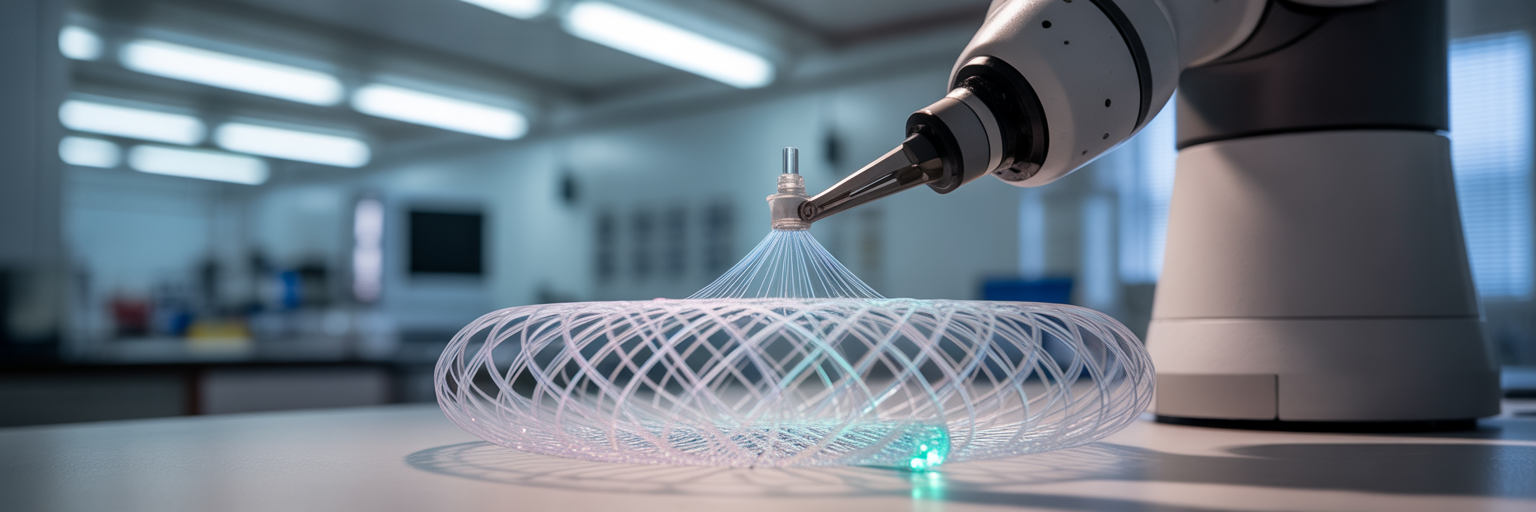
The story of the velvet worm does not end in the damp leaf litter of a tropical forest. It is now unfolding in advanced research laboratories around the world. Scientists in the field of biomimetics, which seeks to solve human problems by emulating nature’s designs, are fascinated by the extraordinary properties of velvet worm slime. This ancient substance may hold the key to creating futuristic materials that could revolutionize manufacturing, medicine, and environmental sustainability.
Researchers are particularly interested in creating recyclable bioplastics inspired by the slime’s protein structure. The slime can be assembled into incredibly strong fibers from a liquid state, but it can also be dissolved back into that same liquid using simple chemical triggers. This creates the potential for a closed-loop material, an adhesive or plastic that can be used and then broken down to its original components to be reused, all without creating harmful waste. Imagine packaging or electronic components held together by an adhesive that is as strong as superglue but can be “unglued” on command, making recycling and repair effortless.
The science behind this reversible adhesive lies in the unique molecular configuration of the slime’s proteins. Scientists are working to isolate the specific structures that allow the slime to bind so strongly yet remain reversible. This kind of nature-inspired innovation is not unique to the velvet worm. Scientists are constantly learning from the advanced biological mechanisms of other creatures, like the predator that hunts using invisible pressure waves. Each discovery reinforces the idea that nature is the world’s most experienced engineer.
It is a remarkable thought that this humble, creepy ancient predator worm, a relic from a forgotten world, might hold the solution to one of our most modern and pressing problems: plastic pollution. The soft-bodied hunter that has been shooting slime at its dinner for 300 million years has become an unlikely source of profound innovation. It is a powerful reminder that sometimes, the answers to the future can be found by looking deep into the past, even if that past is a squishy worm with a glue cannon on its face.