Meet Nature’s Tiny Horror Prop Designer
In the deepest corners of the rainforest, a tiny artist works with silk and bone, and its masterpiece is a terrifying decoy spider designed to fool its enemies. This is the world of the Cyclosa spider, a creature so small it could rest on your fingertip, yet it constructs a monstrous effigy of itself from the grim leftovers of its world. This behavior makes it one of the most fascinating spiders that build decoys, a rare and macabre survival strategy.
Found in the humid, dense forests of Peru and the Philippines, the Cyclosa is a type of orb-weaver. By itself, it is an unremarkable creature, measuring just a few millimeters long. But its creation is anything but ordinary. The spider gathers debris, dried insect carcasses, and plant matter, binding it all together with silk to sculpt a larger, more intimidating spider shape. This is not a random pile of junk. It is a deliberately crafted figure, complete with a distinct body and what appear to be long, spindly legs.
The purpose of this grotesque puppet is twofold. First, it serves as a powerful visual deterrent. A predator scouting for a meal might see the large, imposing shape and decide to look for an easier target. Second, it acts as a sacrificial body double. If a predator does attack, it will likely strike the fake, giving the real spider a precious few seconds to escape. This tiny creature is essentially a horror prop designer, building its own monster to hide behind.
Some of the most interesting Cyclosa spider facts revolve around this very behavior. The decoy is an extension of the spider itself, a tool built with an almost architectural precision. It hangs in the center of the web, drawing all the attention while its creator hides nearby, perfectly camouflaged. This raises some chilling questions. How does such a minuscule creature engineer such a convincing fake? And why go to such elaborate, morbid lengths just to survive? The answers reveal a brilliant and bizarre evolutionary tale.
The Macabre Art of Decoy Construction
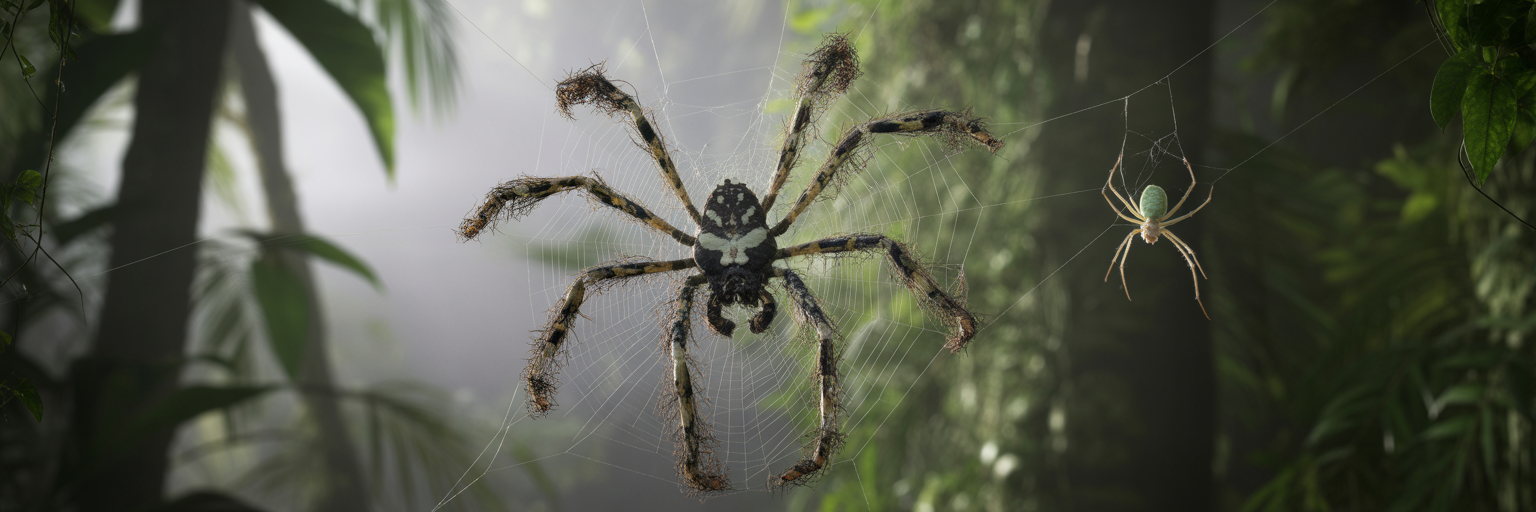
The creation of the decoy spider is a masterclass in morbid artistry and resourcefulness. It is a process that combines scavenging, architecture, and illusion, turning the spider’s web into a stage for a very creepy play. Understanding how this effigy is built reveals the sheer ingenuity behind this unique survival tactic.
A Morbid Collection of Materials
The Cyclosa spider is a meticulous collector, but its materials are not for the faint of heart. It scours its web and the surrounding area for the perfect building blocks to construct its monstrous double. The collection often includes:
- Dried Insect Carcasses: The hollowed-out bodies of past meals provide lightweight structure.
- Molted Exoskeletons: Its own shed skins are recycled into the sculpture.
- Leaf Fragments and Twigs: These add bulk and help the decoy blend with the forest debris.
- Egg Sacs: As we will see later, this is a crucial and clever addition.
- Silk: The spider uses copious amounts of silk to bind everything together into a cohesive, spider-like form.
This ghoulish assortment is carefully chosen and arranged, proving that nothing goes to waste in the spider’s world.
The Architectural Process
With its materials gathered, the spider begins the architectural phase, often working under the cover of darkness. It meticulously binds the debris with strands of silk, slowly forming a long, cylindrical shape that will become the decoy’s body. It then attaches other pieces to mimic legs, creating a surprisingly convincing silhouette. The process is deliberate and precise, showcasing an innate understanding of form and structure. Just as a craftsman might consult a practical guide to custom furniture to ensure a piece is both beautiful and functional, the spider follows an instinctual blueprint for its creation, resulting in a decoy that is perfectly suited for its deceptive purpose.
The Art of Illusion and Scale
The final touch is the art of illusion. The finished decoy is often up to ten times larger than the Cyclosa spider itself. This creates what biologists call a “supernormal stimulus,” an exaggerated version of a real object that triggers a stronger reaction. To a predator, the decoy does not just look like a spider; it looks like a huge, threatening spider. Interestingly, researchers have observed that different spiders seem to have their own “artistic” styles, with some building more elaborate and convincing decoys than others. This variation suggests a complex behavior that is still not fully understood, making it one of the most captivating spider defense mechanisms in the natural world.
Exploiting the Predator’s Mind
Building a grotesque sculpture is one thing, but making it an effective defense mechanism requires a deep, instinctual understanding of the enemy. The decoy spider’s success hinges on its ability to manipulate the psychology of its predators, turning their own instincts against them in a brilliant display of deception and misdirection.
The Psychology of Deception
The primary predators of the Cyclosa spider are visual hunters like birds, lizards, and predatory wasps such as damselflies. These animals rely heavily on sight to identify and assess potential prey. Their brains are hardwired with simple rules: bigger often means more dangerous or, at the very least, more of a fight. The decoy exploits this mental shortcut perfectly. By presenting a large, spider-shaped object, the Cyclosa taps into the predator’s hesitation. As reported by Scientific American, this visual trickery is highly effective against visually-oriented predators that often judge prey by size. The predator sees the decoy, processes it as a formidable opponent, and may decide to move on to less intimidating prey.
Misdirection: The Ultimate Sacrifice
If a predator is bold enough to attack, the decoy plays its second, even more critical role: an expendable bodyguard. When a bird or wasp strikes, it aims for the most obvious target, the large body of the decoy. The moment of impact gives the real Cyclosa, which is often camouflaged and motionless nearby, the chance to drop from the web or scurry away to safety. The decoy is sacrificed, but its creator lives to build another day. This is a classic example of misdirection, a common tactic in nature, much like how some creatures use mimicry to survive, such as the caterpillar that tricks ant colonies into raising it. These are powerful animal mimicry examples that show how evolution favors clever deception.
An Evolutionary Cost-Benefit Analysis
Building and maintaining a decoy requires a significant investment of time and energy. The spider must gather materials and spend precious silk, a metabolically expensive resource. So, is it worth it? For the Cyclosa, the answer is a resounding yes. This passive defense strategy allows the spider to conserve energy it would otherwise spend fleeing or hiding. However, the strategy has its limits. Predators that hunt by scent or vibration may not be fooled, and some clever visual predators might eventually learn to ignore the fakes. It is a constant evolutionary arms race, and the decoy is the Cyclosa‘s unique weapon.
| Defense Strategy | Primary Mechanism | Energy Cost | Effectiveness |
|---|---|---|---|
| Decoy Building (Cyclosa) | Visual deception and misdirection | High initial investment, low maintenance | Highly effective against visual predators; less so against others |
| Stabilimentum (Zigzag Patterns) | Visual warning, web stabilization, or camouflage | Moderate; requires extra silk | Debated; may deter birds but attract some insects |
| Web Camouflage | Blending the web with the background | Low; depends on web placement | Effective for general concealment but offers no active defense |
| Retreat and Rebuild | Fleeing and constructing a new web | Very high; constant energy expenditure | A last resort; inefficient and leaves spider vulnerable |
The Chilling Puppet Show
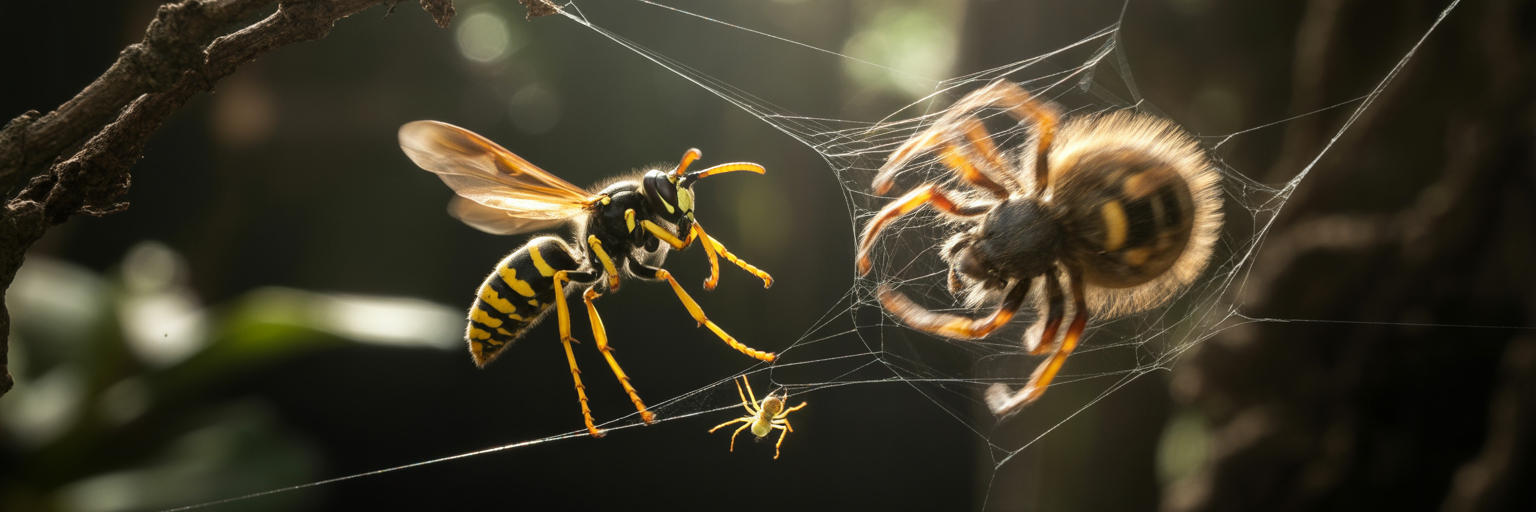
The decoy spider is not just a static sculpture; it is the star of a terrifying performance. When a threat gets too close, the Cyclosa spider does not just hide. It turns its web into a stage and brings its monstrous creation to life in a chilling puppet show. This active defense transforms the decoy from a simple scarecrow into a seemingly living, breathing monster.
When the spider detects danger, perhaps from the shadow of a bird or the vibrations of an approaching wasp, it initiates the performance. It begins to shake its web rhythmically, transferring the vibrations directly to the large, loosely constructed decoy. Because the decoy is built from lightweight materials and bound together with flexible silk, it responds dramatically to these movements. It jiggles, swings, and bounces, creating the startling illusion of a large, aggressive creature thrashing about in its web.
Imagine a predator’s perspective. One moment, it sees a large, stationary spider. The next, that spider is moving erratically, seemingly preparing to attack or defend itself. This sudden, unpredictable motion can be enough to cause hesitation, confusion, or even outright retreat. It is a high-stakes performance where a single, well-timed shake can be the difference between life and death. The decoy’s manic dance is a powerful distraction, drawing the predator’s eye and masking the true target.
While this puppet show is in full swing, the real Cyclosa spider’s safety is dramatically enhanced. As the decoy dances, the tiny creator remains perfectly still, often flattened against a web strand or the decoy itself, becoming nearly invisible. The predator’s attention is completely focused on the large, moving object, making the small, motionless spider incredibly difficult to spot. This use of vibration is a highly specialized defense, just as some animals have evolved unique offensive tactics, like the predator that hunts using invisible pressure waves to detect its prey. The Cyclosa has mastered the art of being the puppeteer, not the puppet.
Evolution of a Creepy Survivalist
The decoy-building behavior of the Cyclosa spider is not just a random quirk; it is the product of millions of years of intense evolutionary pressure. In the competitive and dangerous world of the tropical rainforest, survival demands innovation. This spider’s strategy is a prime example of how natural selection can lead to wonderfully weird and complex solutions.
The Pressure to Innovate
Tropical rainforests have some of the highest rates of predation on Earth. For a small, relatively defenseless creature like an orb-weaver spider, life is a constant struggle to avoid becoming someone else’s lunch. This intense pressure forces species to develop novel survival traits. While some spiders evolved potent venom or lightning-fast reflexes, the Cyclosa lineage took a different path. It invested in psychological warfare. This is one of the most remarkable weird animal defenses ever documented. While other spiders decorate their webs with zigzag patterns called stabilimenta, the Cyclosa’s decoy is considered a more advanced and specialized form of this behavior, taking web decoration to a whole new, deceptive level.
An Extended Phenotype in Action
The decoy is a perfect example of what biologists call an “extended phenotype.” This is the idea that an animal’s genes can influence its environment in ways that extend its biological capabilities far beyond its own body. The decoy is not part of the spider, but it functions as if it were, providing protection and camouflage. As highlighted in publications like Discover Magazine, this behavior is a remarkable case of natural selection favoring complex construction as a survival tool. Why is this behavior so prominent in the Cyclosa genus? It is likely a combination of factors: their small body size makes them vulnerable, the specific predators they face are primarily visual, and the rainforest provides ample materials for construction. This level of evolutionary specialization is seen across the animal kingdom in many forms, some as strange as the Suriname toad that gives birth through holes in its back.
A Nursery Hidden Inside a Monster
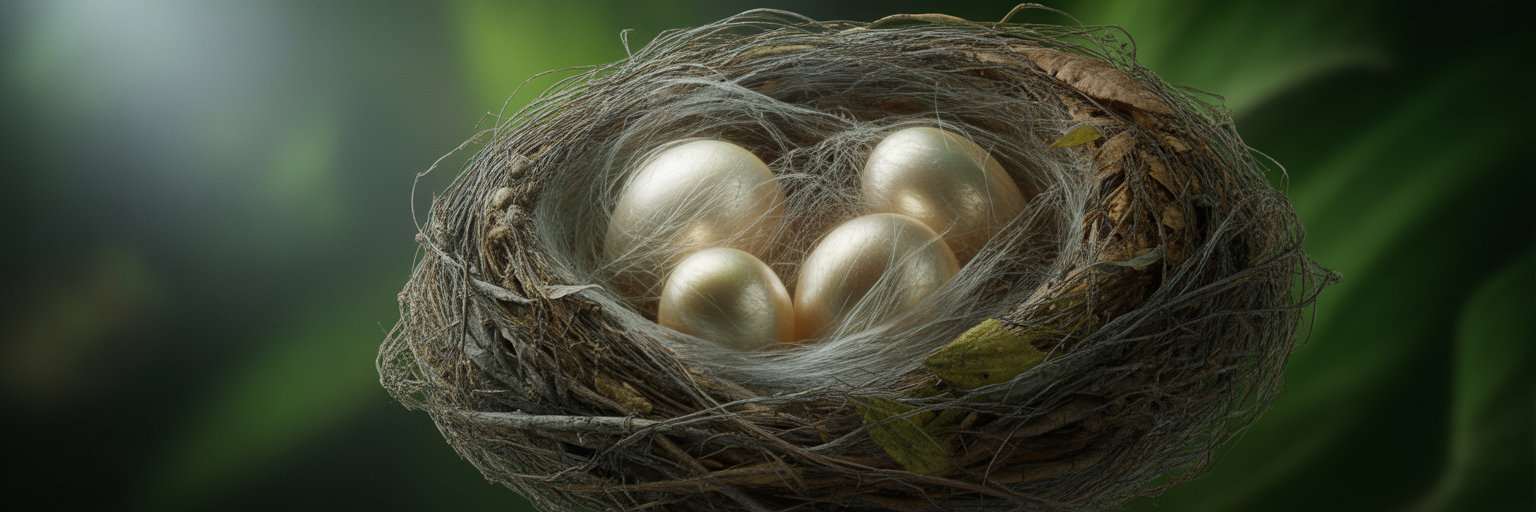
Just when you think the decoy spider could not get any more bizarre or brilliant, it reveals one final, crucial secret. The grotesque effigy is not just a bodyguard or a puppet; it is also a fortified nursery. This final twist elevates the decoy from a clever defense mechanism to an act of profound, if morbid, parental care.
Female Cyclosa spiders incorporate their precious egg sacs directly into the body of the decoy. They are carefully woven into the structure, surrounded by dried insect parts, leaves, and silk. This strategy offers immense benefits for the next generation. The eggs are perfectly camouflaged, hidden in plain sight within a structure that predators are already conditioned to avoid or attack with caution. Any predator looking for a nutritious meal of spider eggs is unlikely to find them inside the unappetizing “monster.”
Even if a predator does attack, it will likely strike the expendable decoy, leaving the well-protected eggs unharmed. The mother spider builds not just a fortress for herself but also a heavily armored cradle for her offspring. This strategy is as morbidly fascinating as other extreme parental behaviors in nature, such as why some animals hatch inside their mother and eat their siblings. It is a testament to the incredible lengths that evolution will go to ensure the survival of a species.
The decoy spider is a multifaceted masterpiece of deception. It is a testament to the wonderfully weird and endlessly creative solutions that nature produces. In the end, this single, macabre structure serves multiple, critical roles:
- A Scarecrow: Its large size deters visual predators.
- A Sacrificial Body Double: It takes the hit, allowing the real spider to escape.
- A Fortified Cradle: It hides and protects the next generation.
– A Dancing Puppet: Its movement confuses and startles attackers.
The Cyclosa spider may be tiny, but its ingenuity is monstrous.