

The Quiet Genius of Patient Predators
The animal kingdom loves its sprinters. We celebrate the cheetahs and falcons, the explosive athletes whose hunts are a blur of muscle and speed. Their success is dramatic, a spectacle of raw power. But their failures are just as frequent and far more costly. For every successful takedown, there are dozens of exhausting, calorie-burning misses. It’s a high-stakes game of chase.
But a quieter, more calculating form of predation exists in the shadows. This strategy trades brute force for architectural cunning. These are the animal kingdom’s meticulous, almost unnerving, serial planners. They possess a disturbing level of foresight, preferring to let their environment do the dirty work. They don’t just hunt; they architect their victim’s demise, turning the landscape into an accomplice.
This approach is known as passive hunting, but don’t mistake it for laziness. It is, in fact, a display of chilling efficiency. These creatures invest a significant amount of energy upfront to create a lethal machine that works for them around the clock. This strategy minimizes personal risk and conserves precious calories, a vital currency in the wild. While the chaser is panting after a failed pursuit, the planner is resting, confident its trap is on duty.
This raises a fundamental question: why evolve to be a patient plotter when you could be a powerful pursuer? Why spend days constructing an elaborate snare when you could simply run down your next meal? The answer lies in a cold, hard calculation of risk, reward, and energy. The trap-building animals have done the math and concluded that it’s better to outsmart than to outrun.
Their methods are as varied as they are ingenious. They have developed different “blueprints” for murder, each tailored to their environment and their prey. From intricate webs and collapsing pits to deceptive funnels and sticky snares, these structures are monuments to a different kind of predatory genius. They are a testament to the idea that sometimes, the deadliest weapon isn’t speed, but patience.
Architects of Silk and Doom
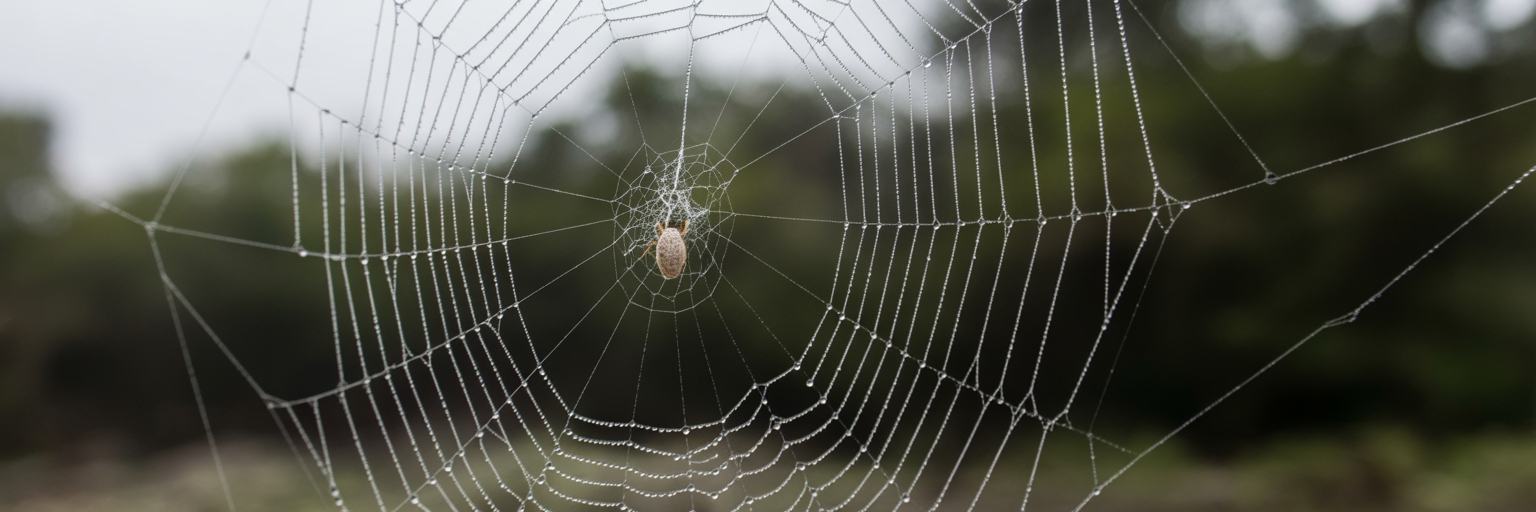
When you think of natural traps, your mind likely goes straight to the spider. These eight-legged engineers are the undisputed masters of silk, turning a simple protein into a sophisticated killing machine. Their creations are not just sticky nets; they are masterpieces of structural design and sensory technology.
The Engineering of an Orb Web
An orb-weaver’s web is a marvel of functional architecture. It’s built with two distinct types of silk. The strong, non-sticky radial threads act as the scaffolding, providing the structural integrity to withstand wind and impact. Then, the spider lays down the spiral threads, which are stretchy, elastic, and coated in a glue-like substance. This is the capture line. The combination creates a trap that is both resilient and deadly, capable of absorbing the kinetic energy of a flying insect without breaking.
A Security System for Death
Once the trap is set, the spider doesn’t just sit back and hope for the best. It engages in active monitoring. Hiding in a retreat at the edge of the web or sitting motionless in the center, the spider keeps a leg on a “signal line.” This is where the creepy planner persona truly shines. The web is a security system, and the spider is the expert watching the monitors. The moment an insect blunders into the silk, its struggles send vibrations rippling through the threads. The spider web hunting mechanism allows the predator to instantly determine the prey’s location, size, and even its level of distress. It’s a remote sensing system that guides the spider to its meal with unnerving precision.
The process is a chillingly methodical sequence:
- Meticulous Construction: The spider invests hours building a geometrically perfect trap, optimizing it for its environment and target prey.
- Patient Vibration Monitoring: It waits, using the web as an extension of its own nervous system to detect the faintest disturbance.
- Swift and Precise Immobilization: Once the alarm is triggered, the spider rushes out, paralyzes the victim with a venomous bite, and wraps it in more silk for later consumption.
Beyond the Classic Orb: A Portfolio of Silken Traps
Not all spiders are orb-weavers. The funnel-web spider creates a silken tunnel that leads to a hidden chamber. It waits inside its deadly corridor for an unsuspecting insect to wander across the entrance, at which point it ambushes its prey with terrifying speed. Others, like cobweb spiders, spin what appears to be a chaotic, three-dimensional mess of threads. But this tangle is a highly effective trap for crawling insects, with sticky “gum-footed” lines that hoist victims into the air. According to a study published by SpringerLink, the biomechanics of these webs are complex feats that enable prey capture without any need for a chase. This kind of creepy but effective natural design is not unique; other creatures use similar principles of deception, a topic we explored in our article on how fake eyes scare predators.
Engineers of Earth and Gravity
Traps are not limited to the airy world of silk. Some of nature’s most patient planners operate underground, turning the very earth into a weapon. Chief among these subterranean monsters is the antlion larva, a creature whose entire existence revolves around a single, perfectly engineered pit.
The Subterranean Monster
The antlion larva itself is the stuff of insect nightmares. It has a plump, bristly body designed for burrowing backward and a disproportionately large head armed with a pair of formidable, sickle-shaped jaws. It has one purpose in its larval stage: to dig a conical pit in loose sand and wait. This isn’t just a hole; it’s a meticulously calibrated death trap, designed to exploit the laws of physics.
The Physics of a Perfect Pit
The genius of the antlion’s trap lies in its shape. The larva constructs its cone at the precise “angle of repose,” which is the steepest possible angle that loose sand can maintain without collapsing. The pit is a structure held in a constant state of near-failure. When an unsuspecting ant or other small insect wanders over the edge, its own weight is enough to trigger a tiny landslide. The shifting sand pulls the victim down the slope, directly toward the waiting jaws of the antlion buried at the apex.
An Active Role in a Passive Trap
This is where the antlion reveals its truly sinister nature. It doesn’t just wait for gravity to do all the work. If the prey struggles and tries to scramble back up the sandy slope, the antlion, hidden at the bottom, becomes an active participant in the execution. It begins to violently flick grains of sand at the victim. This bombardment further destabilizes the pit, creating more landslides and ensuring the exhausted prey has no chance of escape. This detail is crucial to understanding how do antlions catch prey; the trap is not just a passive hole but a managed weapon system. Research from the Journal of Experimental Biology demonstrates that both the trap’s conical shape and the larva’s sand-throwing behavior are finely tuned adaptations for maximum capture efficiency. The pit is a highly evolved structure designed to turn gravity and the prey’s own frantic movements against it.
Masters of Stickiness and Deceptive Funnels
The world of trap-builders extends far beyond spiders and antlions. Across the animal kingdom, evolution has produced a stunning variety of passive hunting strategies, many of which rely on deception, stickiness, and cleverly constructed funnels. These predators prove that with enough ingenuity, almost any material can be turned into a lethal snare.
The Beautiful, Deadly Lights
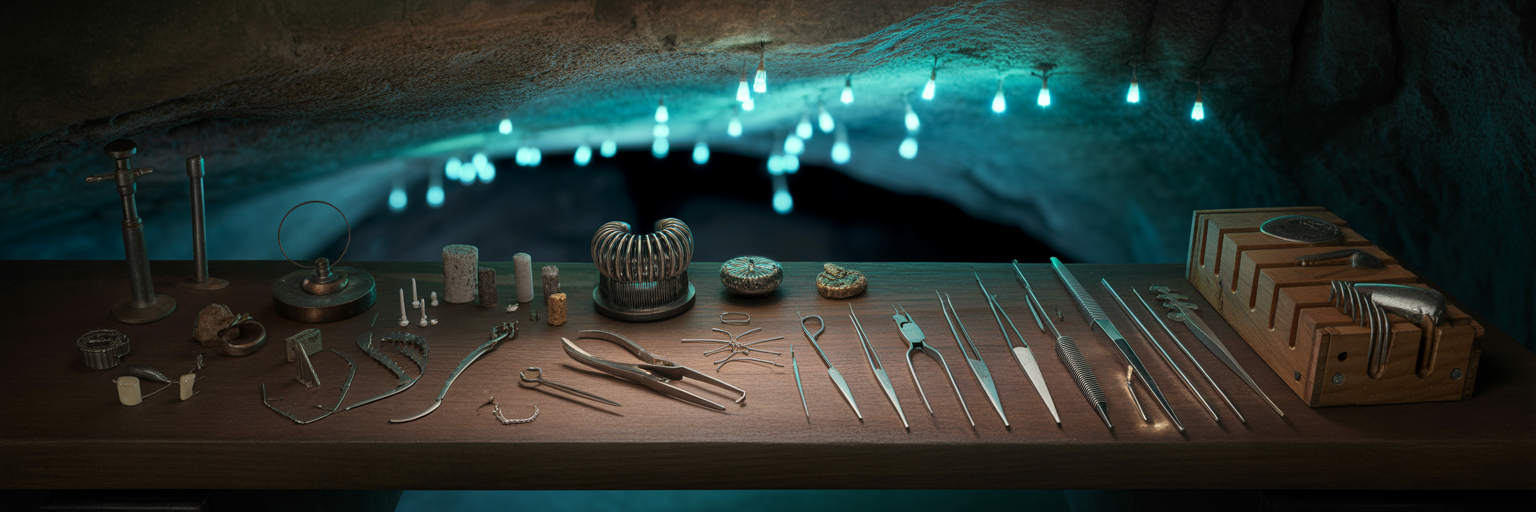
In the dark caves of New Zealand, a breathtakingly beautiful spectacle unfolds. The ceilings glitter with thousands of tiny blue-green lights, creating an ethereal, star-like canopy. But this celestial beauty masks a grim reality. The lights are produced by the larvae of the New Zealand glowworm. Each point of light is a lure, attracting flying insects that navigate by moonlight. Below each light hangs a series of dangling, sticky mucus threads. Drawn to the beautiful glow, the insects fly straight into the deadly, glistening snares, where they are trapped and consumed.
Funnels Beyond the Web
The funnel isn’t just a tool for spiders. This simple but effective design has evolved independently in other species, demonstrating its deadly efficiency. Certain species of fish, for example, are known to build funnel-shaped nests or modify burrows in the sediment. These structures channel unsuspecting smaller fish and crustaceans into a confined space where escape is nearly impossible. The predator simply waits at the narrow end of the funnel for its meal to be delivered. This is a clear example of convergent evolution, where different animals that build traps arrive at the same lethal solution to a common problem.
The Art of the Lure
Many of the most sophisticated trap-builders don’t just rely on the physical structure of their trap; they employ bait. The lure adds another layer of deception to their predatory strategy, turning a prey’s own instincts against it. The bioluminescence of the glowworm is a visual lure. Other predators use chemical scents to attract their victims. Some even use a physical object, like the alligator snapping turtle, which wiggles its worm-like tongue to attract curious fish directly into its powerful jaws. This art of the lure showcases the psychological dimension of trap-building. The glowworm’s method is a particularly fascinating case, a predator that effectively hypnotizes prey with light, a strategy that highlights the incredible diversity of nature’s hunting tactics.
The Cold, Hard Logic of Lethal Laziness
So, what is the cold, hard rationale behind the evolution of animal traps? Why would nature favor a strategy that seems, on the surface, so passive? The answer lies in a brutal cost-benefit analysis involving energy, risk, and environmental opportunity. This isn’t about laziness; it’s about ruthless, calculated efficiency.
The Energy Budget
Hunting is an expensive business. An active pursuer, like a wolf or a falcon, expends a massive amount of energy during every chase, whether it succeeds or fails. This is a continuous, high-risk energy drain. A trap-builder, on the other hand, operates on a different economic model. It makes a large, upfront energy investment to construct its trap. But once built, that trap works tirelessly with minimal further effort. The spider only needs to make minor repairs, and the antlion only needs to flick sand. This makes trapping an incredibly efficient long-term strategy for managing the all-important energy budget.
The Risk-Reward Calculation
Chasing prey is dangerous. A predator can suffer injury from a fall, from exhaustion, or from the prey fighting back. In some cases, the hunter can even become the hunted. The trap-builder avoids almost all of this risk. By waiting in a fortified, camouflaged position, it remains safe while its trap does the dangerous work. It is the ultimate survivalist’s move, minimizing exposure while maximizing the chances of a meal. The reward is the same—food—but the risk is drastically lower.
Environmental Triggers
Passive hunting strategies thrive under specific environmental conditions. This approach is particularly effective in habitats where prey is abundant but unpredictable. You don’t need to know where the next meal is coming from if your trap covers a wide area. It’s also favored in environments where movement is difficult, such as in dense forests, shifting sands, or fast-flowing water. In these settings, a stationary trap is far more effective than a difficult and energy-intensive chase. This level of strategic building, where an animal creates a structure to solve a problem, is seen elsewhere in nature, such as with the remarkable bird that builds fake doors to confuse predators.
| Factor | Active Pursuit (Chasing) | Passive Hunting (Trapping) |
|---|---|---|
| Energy Expenditure | High and continuous during hunt | High upfront investment, low maintenance |
| Risk of Injury | High (confrontations, falls, exhaustion) | Very low (predator remains hidden) |
| Success Rate per Attempt | Often low; many chases fail | High once prey enters the trap |
| Prey Predictability | Best for predictable prey patterns | Ideal for unpredictable or scarce prey |
| Required Physical Traits | Speed, stamina, strength | Engineering skill, patience, sensory acuity |
The Trap That Thinks and Adapts
It’s easy to assume that trap-building is a fixed, mindless behavior, an instinctual program that runs on autopilot. But that assumption underestimates the sophistication of these patient planners. Many trap-builders are, in fact, adaptive craftsmen who actively modify their designs based on real-time feedback. They are not just building; they are troubleshooting.
A true planner doesn’t just follow the blueprint; they adjust it when it’s not working. This behavioral flexibility elevates these animals from simple builders to sophisticated predators who actively manage their lethal assets. Their ability to adapt reveals a level of intelligence that is both impressive and slightly unsettling.
- Spiders: An orb-weaver doesn’t just spin the same web every time. Some will adjust the tension and stickiness of their silk based on wind conditions or the type of prey they are commonly catching. If a large section is damaged, they often perform targeted repairs rather than wasting the energy to rebuild the entire structure from scratch.
- Antlions: The antlion larva demonstrates a clear capacity for problem-solving. If its pit fails to catch any prey after a certain period, it will abandon the location. It then laboriously moves to a new spot, often testing the soil consistency, to build a better, more effective trap. This is a direct response to failure.
- Other Trap-Builders: This adaptability is seen across the board. Some web-spinning spiders incorporate debris like leaves and twigs into their webs. This isn’t sloppy work; it’s intentional camouflage, an adjustment based on the local environment and the risk of being spotted by their own predators.
This capacity to learn and adapt makes these creatures even more formidable. Their traps are not static objects but dynamic systems that are constantly being refined for maximum lethality.
The Unsettling Art of Waiting
From the intricate silk webs and collapsing sand pits to the deceptive funnels and sticky snares, the world of trap-building animals is a showcase of deadly ingenuity. These varied methods are all expressions of the same chillingly effective philosophy: why chase when you can conspire? This strategy is not born from laziness but from a different, more calculated form of intelligence, one that values planning over pursuit.
Revisiting the theme of the serial planner, these creatures have mastered the unsettling art of patience. They have learned to turn time, physics, and their environment into their most effective weapons. They embody the profound evolutionary truth that you don’t have to be the fastest or the strongest to be the most successful predator. Sometimes, you just have to be the smartest and most patient planner.
So, the next time you walk through the woods and see a spider web glistening with dew, or notice a strange conical depression in the sand, take a moment. Appreciate it not just as a part of nature, but as a carefully laid trap. Recognize it as the handiwork of a patient predator that is, in all likelihood, watching and waiting. The sheer ingenuity of life is on full display in these lethal designs, a fascinating intersection of biology, physics, and behavioral strategy. For those intrigued by nature’s darker survival tactics, the story of why some animals hatch inside their mother and eat their siblings offers another chilling glimpse into the brutal efficiency of evolution.