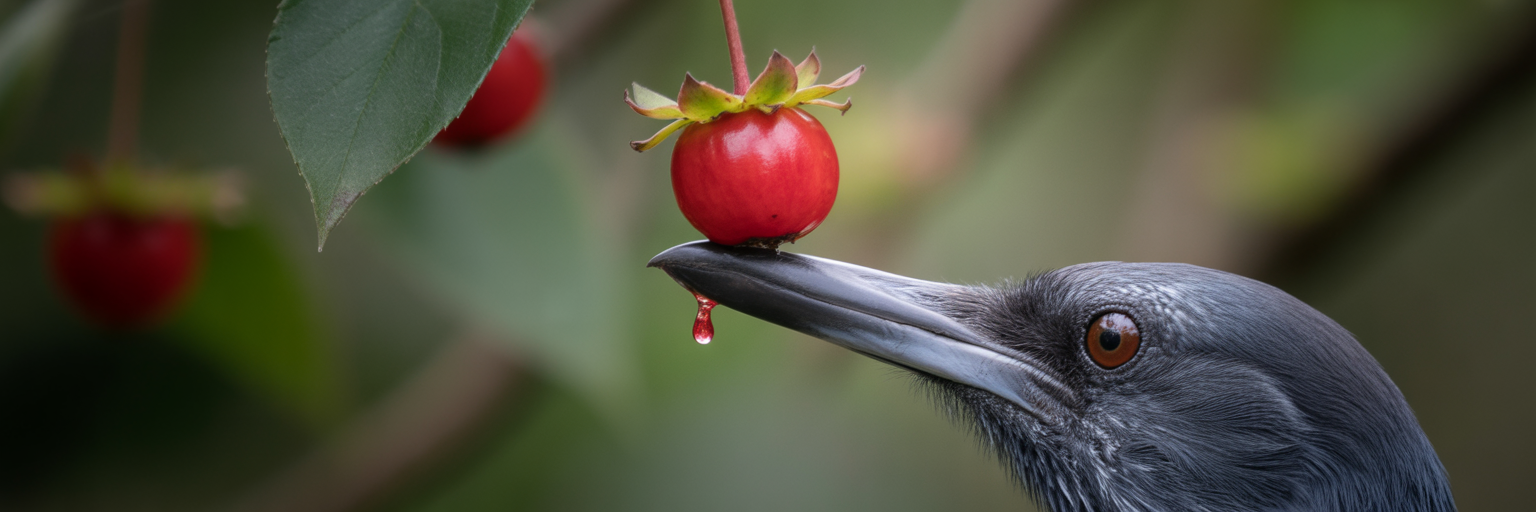
A Deliciously Devious Bargain
We tend to think of plants as the stoic, silent victims of the food chain. They stand there, photosynthesizing peacefully, waiting for some herbivore to come along and mindlessly chew them to bits. It’s a tragic, one-sided affair. But what if that’s exactly what the plant wants? What if, behind that leafy green exterior, lies the cold, calculating mind of a strategist that sees being eaten not as an end, but as a means to an end? This is the story of a delicious, devious bargain where the main course is playing a long game that the diner can’t even comprehend.
The Ultimate Betrayal of Stillness
The fundamental tragedy of being a plant is that you are stuck. You can’t run from danger, you can’t migrate to better soil, and you certainly can’t swipe right to find a mate across town. Your offspring are destined to fall at your feet, competing for the same patch of sunlight and water in a desperate, lifelong struggle. Unless, of course, you can trick someone else into doing the moving for you. The act of offering up a juicy, irresistible fruit is the ultimate betrayal of stillness. It’s a plant looking at its own limitations and deciding to weaponize its appeal. It’s a calculated act of apparent self-destruction that hides a profoundly cunning purpose: to turn its consumer into an unwitting, mobile nursery.
Guerrilla Warfare in the Garden
Imagine a gingerbread man, but instead of running away from the fox, he sprints gleefully toward its open maw. He’s not just a cookie. He’s a vessel. His buttons are made of an indigestible, diamond-hard material, and inside his sugary chest cavity, he carries a precious cargo. He knows that the fox’s digestive tract is not a tomb, but a transportation system. This is precisely the guerrilla warfare tactic employed by many plants eaten by animals. They package their seeds, their genetic legacy, inside a tempting, disposable body. The fruit is just the vehicle, a sweet, fleshy Trojan horse designed to be consumed. The plant isn’t being eaten; it’s buying a ticket for its children on an express train through a warm, mobile incubator.
The Evolutionary Gun to the Head
This bizarre strategy wasn’t born from a whimsical desire for adventure. It was forged under the immense pressure of an evolutionary gun to the head. For a plant, the space directly beneath its own branches is a death zone known as the “shadow of the parent.” Any seedling that sprouts there is doomed to a life of struggle, starved of light, water, and nutrients by the very parent that created it. To survive as a species, dispersal is not a choice, it is an absolute necessity. This do-or-die imperative is what forces plants into such strange and risky bargains. They must get their seeds away, far away, by any means necessary. If that means sacrificing a part of themselves to a passing beast, so be it. The alternative is to slowly choke out their own lineage in a crowded, competitive family plot.
The Guts and Glory of a Digestive Journey

So, the plant has made its pact with the devil, or in this case, a hungry bear. The fruit has been eaten, and the seed is now embarking on a journey that makes a roller coaster look like a leisurely stroll. This is the mechanical reality of the plant’s gamble, a perilous trip through an animal’s internal plumbing that is both horrifying and brilliant. It’s a process of guts and glory, where survival depends on withstanding a gauntlet of biological machinery.
Welcome to the Intestinal Theme Park
For those wondering, the scientific term for this process is endozoochory explained simply, it means “seed dispersal from within an animal.” But that’s a bit dry. It’s more accurate to think of it as a seed purchasing a VIP ticket to an exclusive, and rather disgusting, theme park. The first ride is “The Grinder.” As the fruit is consumed, the seed must withstand the crushing, grinding force of molars and the chemical assault of saliva. Many seeds are built for this, with tough, slippery coats that allow them to slide past the dental machinery without being cracked open. They are designed to be swallowed, not chewed.
The Acid Bath That Gives Life
After surviving the mouth, the seed plunges into the next attraction: the stomach’s “Acid Bath.” This is where the true genius of the plan reveals itself. The hydrochloric acid that dissolves flesh and bone is, for these seeds, a key. This process, called scarification, chemically erodes the seed’s tough outer coat, the testa. This tough layer is great for protection, but it’s also waterproof and sometimes too thick for the embryo to break through on its own. The acid bath weakens this protective layer just enough, creating microscopic fissures that will allow water to penetrate and trigger germination once the journey is over. The very thing that should kill the seed is what gives it the potential for new life. This is a level of strategic thinking that feels almost personal, a bizarre feature of nature not unlike how some creatures survive by shrinking their own organs, as we’ve explored in our other articles.
The Grand Finale: A Five-Star Delivery
The final leg of the journey is a long, dark trip through the intestinal tract. Here, the seed is jostled and carried along, sometimes for miles, until it reaches the exit. And what an exit it is. The seed is deposited in a location far from its parent, but it’s not just dropped on barren ground. It arrives in a perfect, five-star delivery package: a warm, moist, nutrient-dense pile of dung. This isn’t a gross afterthought; it’s the culmination of the entire strategy. The feces act as a personal fertilizer packet, giving the seedling a massive competitive advantage and a head start in its new home. The entire harrowing journey can be broken down into four critical stages:
- The Entrance: Surviving the mechanical destruction of teeth and the initial chemical breakdown in saliva.
- The Acid Soak: Undergoing chemical scarification in the stomach, which weakens the seed coat and prepares it for germination.
- The Long Tunnel: Safely passing through the intestines, achieving distance from the parent plant.
- The Perfect Landing: Being deposited in a nutrient-rich pile of fertilizer, ready to sprout in a new, uncontested location.
Crafting an Irresistible Invitation
A plant can’t just hope a passing animal will randomly take a bite. Hope is not a strategy. The success of this entire self-sacrificial scheme hinges on a sophisticated and highly targeted marketing campaign. The plant must craft an invitation so irresistible that the right kind of animal—a reliable courier, not a seed-crushing predator—can’t possibly refuse it. This involves a masterful manipulation of color, scent, and nutrition, all timed to perfection.
Visual Billboards: Come and Get It
In a dense forest, everything is green. To stand out, a plant needs to advertise. Many fruits do this by turning vibrant shades of red, purple, or black as they ripen. These colors are no accident. They act as visual billboards, starkly contrasting with the green foliage to catch the eye of animals with color vision. Birds, in particular, are drawn to these signals. As a study in the journal Biology Letters highlights, the evolution of fruit color is strongly linked to the visual systems of the animals that disperse their seeds. This is targeted advertising at its most primal, a clear example of the coevolution of plants and animals.
Olfactory Sirens: A Scent to Die For
For animals that are active at night or have a poor sense of sight, visual cues are useless. So, plants appeal to another powerful sense: smell. By releasing a cocktail of volatile organic compounds, plants create alluring aromas that can travel long distances on the breeze. These olfactory sirens call out to nocturnal mammals like bats and civets, or ground-dwellers like wild pigs, guiding them directly to the meal. The scent is a promise of a sugary, energy-rich reward, a fragrant invitation that’s hard for a hungry animal to ignore.
The Perfectly Tailored Meal Plan
Not all couriers are created equal, and plants have evolved to offer perfectly tailored meal plans to attract the best candidates for their specific seed dispersal strategies. It’s not a one-size-fits-all buffet. Fruits intended for birds, which need quick bursts of energy for flight, are often small and packed with simple sugars. In contrast, fruits targeting long-distance migratory animals or large mammals are frequently richer in fats and lipids, providing the dense, slow-burning calories needed for endurance. The plant is essentially paying for a service, and the currency is customized nutrition.
The Genius of Perfect Timing
Perhaps the most brilliant part of this marketing plan is the timing. A fruit does not become sweet, soft, and brightly colored until the seed inside is fully mature and viable. This is a critical control mechanism. An unripe fruit is typically sour, hard, and camouflaged green. This repels animals, preventing them from eating the fruit before the seed is ready for its digestive journey. Only when the genetic cargo is prepared for deployment does the plant flip the switch, sweetening the deal and changing the color. This ensures that the plant doesn’t waste its immense reproductive effort on a seed that isn’t ready to survive the trip.
When the Devious Plan Goes Wrong

As brilliant as this strategy is, it’s a high-stakes gamble. The plant is placing its entire genetic future in the gut of another creature, and there is so much that can go wrong. The line between a successful delivery and a fatal miscalculation is terrifyingly thin. For every seed that lands in a perfect pile of fertilizer, countless others meet a grim end. This is not a foolproof system; it’s a game of probability where the house doesn’t always win.
Seed Predators vs. Seed Dispersers
The most significant risk is attracting the wrong kind of customer. An animal can be one of two things: a seed disperser (a courier) or a seed predator (an assassin). A disperser swallows the seed whole and deposits it elsewhere. A predator, however, has the biological equipment to destroy it. Animals with powerful molars, like many rodents, or birds with muscular gizzards, like finches, don’t just eat the fruit; they crack, crush, and digest the seed itself, turning the plant’s reproductive vessel into a simple meal. The plant has just served its baby to its executioner. This high-stakes game of deception is a common theme in nature, much like how some animals use fake eyes to scare off predators, a creepy illusion we’ve detailed before.
The Danger of Being Too Delicious
There is also a danger in being too successful. If a plant’s fruit is overwhelmingly attractive, it can lead to its own downfall. An area might become inundated with herbivores that not only eat the fruit but also destroy the leaves, stems, and flowers, killing the plant before it can even complete its reproductive cycle. Alternatively, a single animal might be so enamored with the fruit that it lingers for days, eating everything in sight and then depositing all the seeds in one big pile directly beneath the parent plant. This completely defeats the purpose of dispersal, creating the very same overcrowding the strategy was designed to avoid.
The Journey to Nowhere
Even if the plant attracts the perfect courier and the seed survives the digestive tract, the journey can still end in failure. The animal is not a conscious delivery service; it’s just an animal. It might drop the seed in an ocean, on a sun-baked rock, in the middle of a paved parking lot, or in a desert with no water. The strategy is riddled with inefficiency and pure, dumb luck. These risks drive a constant evolutionary arms race. Some plants have responded by lacing their fruit pulp with mild toxins or unpleasant flavors that deter seed predators or encourage dispersers to eat only a small amount before moving on, increasing the odds of a successful, long-distance delivery.
| Role | Animal Example | Action on Seed | Outcome for Plant |
|---|---|---|---|
| Seed Disperser (The Courier) | Thrush, Fruit Bat, Bear | Swallows seed whole; seed passes through digestive tract intact. | Successful dispersal to a new, often fertilized, location. Legacy secured. |
| Seed Predator (The Assassin) | Finch, Squirrel, Beetle | Cracks, crushes, or chews the seed, destroying the embryo. | Reproductive effort wasted. Seed is killed and digested for nutrients. |
| Pulp Predator (The Messy Eater) | Monkey, some insects | Eats the fleshy fruit but discards the seed nearby. | Partial success. Seed survives but dispersal distance is minimal, often failing to escape the parent’s shadow. |
| Accidental Disperser (The Clumsy Courier) | Ant, Rodent (that forgets its cache) | Carries seed away to store or eat, but loses it or forgets it. | Unreliable but sometimes effective dispersal. A bonus outcome. |
Profiles of Self-Sacrificing Flora
The world is full of these self-sacrificing geniuses, each with its own unique and devious twist on the strategy of being eaten. These weird plant facts show just how creative evolution can be when survival is on the line. Here are a few of the most notable masters of manipulation.
- The Spicy Bouncer (Chili Peppers): Chili peppers are a masterclass in customer filtering. Their “heat” comes from capsaicin, a chemical that targets a specific pain receptor (TRPV1) in mammals. When a mammal eats a chili, it feels a burning sensation and learns to avoid it. Crucially, birds lack this receptor entirely. They can eat the hottest peppers without feeling a thing. The plant has brilliantly evolved a chemical weapon that repels mammals, which would crush its seeds with their molars, while actively inviting birds, which swallow the seeds whole and fly them far and wide. It’s like a nightclub with a bouncer who only lets in the VIPs.
- The Desert Oasis (Saguaro Cactus): In the brutal heat of the Sonoran Desert, the saguaro cactus plays the role of a life-saving oasis. According to the U.S. National Park Service, its bright red, juicy fruit ripens during the driest part of the year, becoming an irresistible source of both food and water. This attracts a massive range of animals, from white-winged doves and Gila woodpeckers to bats, coyotes, and javelinas. By offering a vital resource when it’s most scarce, the saguaro ensures its seeds are spread far and wide across an arid landscape where every chance at germination counts.
- The Parasitic Kiss (Mistletoe): Mistletoe takes the creepy factor to a whole new level. Its white berries are eaten by birds like cedar waxwings, but its seeds are coated in a uniquely sticky substance called viscin. This goo is so effective that when the bird either excretes the seed or wipes it off its beak onto a branch, the seed is literally glued in place. The viscin hardens like cement, and the seed germinates, drilling its specialized root, the haustorium, directly into the host tree’s vascular system. It’s a story of addiction, adhesion, and parasitic invasion, all initiated by a seemingly innocent berry. This strange dependency is a recurring theme in nature, reminiscent of how some insects turn a single leaf into a complete life-support system.
- The Pungent Prize (Durian): The infamous durian fruit of Southeast Asia is known for an odor so powerful it’s been described as a mix of gym socks, rotten onions, and turpentine. But this smell is not a flaw; it’s a feature. The complex, pungent aroma is a long-range attractant designed specifically for large mammals with a keen sense of smell, like orangutans, tigers, and even elephants. These are some of the only animals strong enough to tear open the fruit’s spiky husk and large enough to swallow its massive seeds, carrying them deep into the forest. The smell is a broadcast signal for heavy-duty couriers only.
The Unseen Architects of Ecosystems

It’s easy to get caught up in the creepy, self-serving genius of an individual plant’s strategy. But when you zoom out, you realize this devious bargain is not just about one plant’s survival. It’s a fundamental process that shapes and sustains entire ecosystems. This seemingly selfish act of manipulation is, in fact, a cornerstone of ecological health, resilience, and biodiversity.
The Ripple Effect of a Single Berry
The relationship between fruit-producing plants and fruit-eating animals is a foundational pillar of life in many habitats. Countless animal species, from tiny insects to massive bears, depend on these fruits for their survival, especially during harsh seasons when other food sources are scarce. The plant’s “sacrifice” is the engine that feeds the forest. The energy captured from the sun and converted into a sugary berry ripples through the food web, sustaining the very creatures the plant relies on for its own propagation. It’s a beautiful, self-perpetuating loop of codependence.
Forest Builders and First Responders
These plants and their animal partners are the unsung architects of the natural world. They are the forest builders and first responders. When a fire, landslide, or logging operation clears a patch of land, it is often the seed-dispersing birds and mammals that begin the process of regeneration. They fly or wander in from surrounding areas, depositing the seeds of pioneer species that are the first step in rebuilding a complex ecosystem. The animals are, in effect, gardeners carrying the genetic blueprints for the future forest in their bellies. This active role in shaping the environment is a surprising trait, much like the discovery that some plants can sense when their neighbors are under attack and react accordingly.
The Genetic Lifeline
Perhaps most importantly, this process provides a vital genetic lifeline. By moving seeds far away from the parent plant, animals prevent inbreeding and promote gene flow between distant plant populations. Imagine two isolated groves of trees on opposite sides of a mountain. Without a courier to carry seeds between them, they would become genetically isolated. But a bird or a bear can easily traverse that distance, introducing new genetic material and strengthening the entire population. This genetic diversity is what gives a species the resilience to adapt to long-term threats like climate change, new diseases, and shifting environmental conditions. The coevolution of plants and animals is a delicate, millennia-long dance where each partner continuously shapes the other, ensuring the health not just of themselves, but of the entire ecosystem.
A Final Toast to Self-Destructive Genius
So, the next time you see a bird pluck a berry from a branch, don’t see it as a simple meal. See it for what it is: the climax of a brilliant, high-stakes con. You are witnessing a plant that has achieved mobility and immortality by embracing its own consumption. It is one of nature’s most audacious and successful strategies, a testament to the power of turning a weakness into a weapon. While other plants cast their seeds to the wind or water with passive hope, these flora take a wild, all-or-nothing gamble.
They place their entire legacy into a vessel of flesh and fruit, trusting the chaotic journey through a digestive system to secure their future. It’s a strategy that is equal parts horrifying and magnificent. That single berry is not just food. It is a cleverly designed transport pod, a biological Trojan horse, and a sacrificial pawn in an evolutionary chess game that spans millennia. It is an act of calculated self-destruction that, against all odds, represents the ultimate triumph of life.