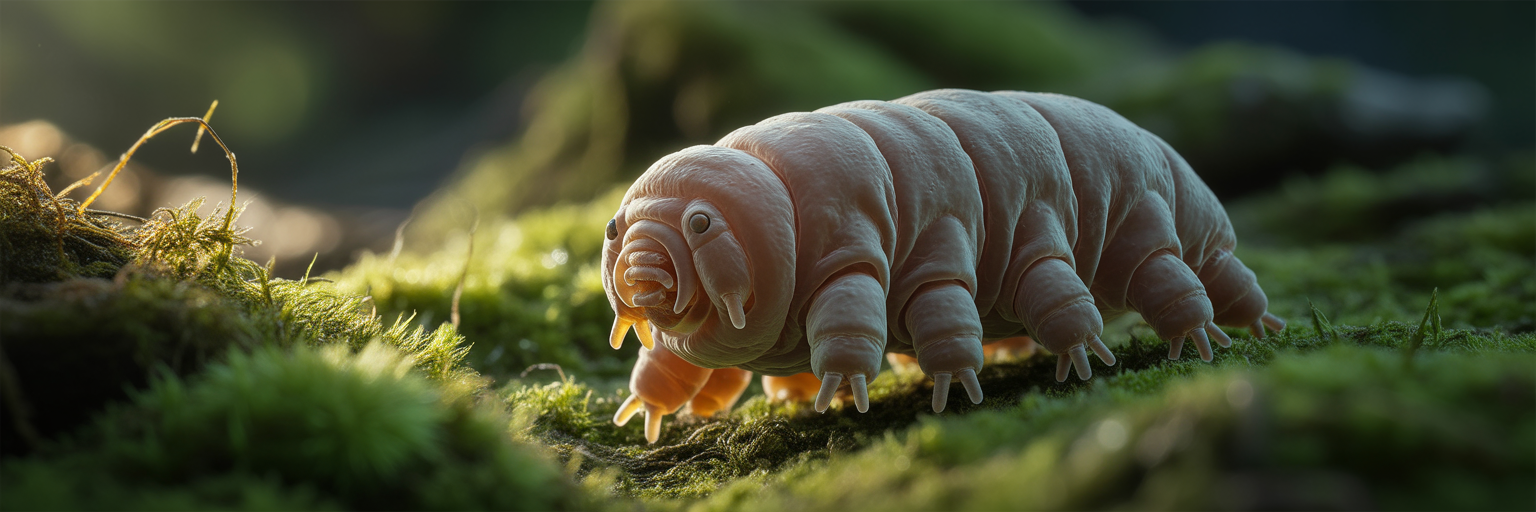
The tardigrade, or water bear, has become a celebrity of the microscopic world. Popular science hails it as a virtually indestructible super-animal, capable of surviving the vacuum of space, boiling water, and crushing pressures. This reputation, however, is a significant oversimplification of a complex biological reality. The question of what kills a tardigrade reveals that their legendary toughness is conditional, not absolute. Their survival hinges almost entirely on a single, profound distinction: the difference between their active, hydrated state and their dehydrated, dormant “tun” state.
When active, a tardigrade is surprisingly delicate. It swims, eats, and reproduces in a film of water on moss or lichen, vulnerable to many of the same dangers as other microscopic creatures. Its near-invincibility is a borrowed power, accessible only through a process called cryptobiosis. By entering this state of suspended animation, the tardigrade replaces the water in its cells with protective sugars and proteins, becoming a resilient, glass-like particle. Understanding this tardigrade cryptobiosis weakness, the need for time and specific cues to enter this state, is the key to understanding their true limits.
This article moves beyond the sensational claims to investigate the documented scientific thresholds that cause these animals injury and death. We will examine the precise conditions that defeat them, considering crucial factors like the species being tested, the animal’s life stage, the duration of exposure, and whether survivors can still reproduce. The story of tardigrade survival limits is not one of invincibility, but of a remarkable, yet finite, biological strategy.
Thermal Stress: The Boundaries of Heat and Cold
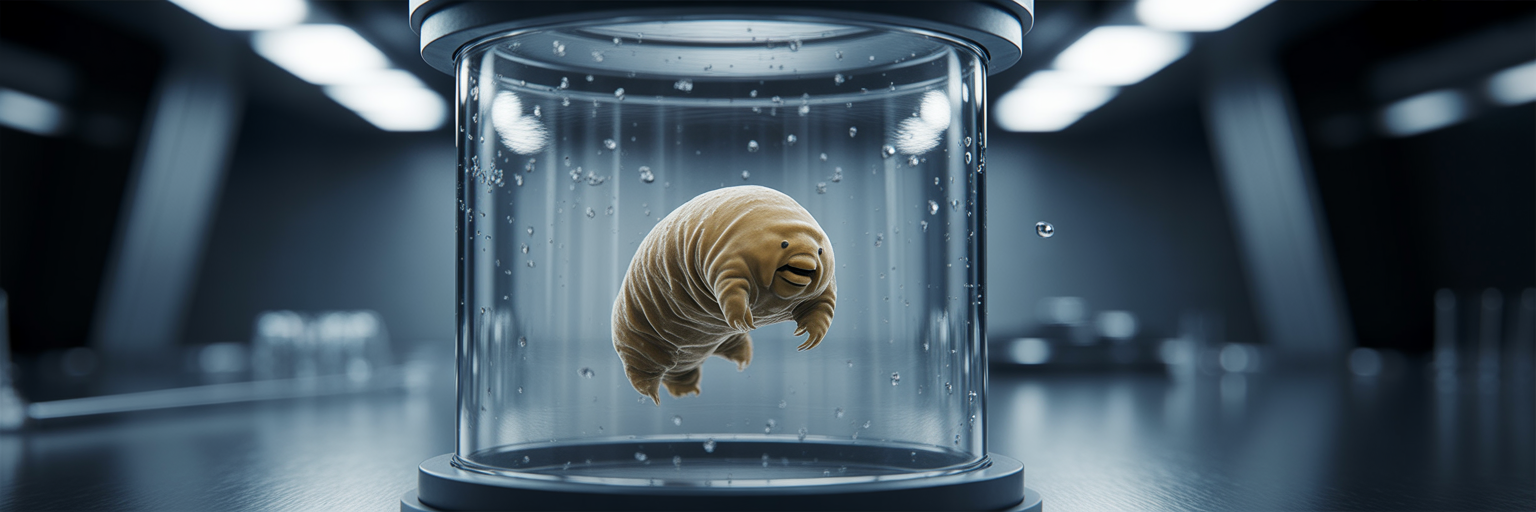
The myth that tardigrades can survive boiling water dissolves quickly under scientific scrutiny. Their ability to withstand extreme temperatures is entirely dependent on their metabolic state and the duration of exposure. For an active, hydrated tardigrade, the tardigrade heat tolerance is shockingly low. Research shows that many species begin to die when exposed to temperatures between 36°C and 39°C (97°F to 102°F) for just 24 to 48 hours. These are conditions that a human might find merely uncomfortable, yet they are lethal to a water bear going about its daily life.
The narrative changes dramatically when the tardigrade is in its protective tun state. Dehydration grants them a profound resistance to heat, but it is not unlimited. A 2020 study published in Scientific Reports provided precise data for the species Ramazzottius varieornatus. Researchers found that for tuns, the median lethal temperature (the point at which 50% of the population dies) after a one-hour exposure was 82.7°C (180.9°F). While impressive, this is well below the boiling point of water. More importantly, duration was a critical factor. When the exposure was extended to 24 hours, the median lethal temperature dropped to just 63.1°C (145.6°F). This demonstrates that even for a dormant tun, prolonged heat causes irreversible damage as essential proteins and molecules begin to break down.
Their tolerance for cold follows a similar pattern. While tuns have famously survived brief dips in liquid nitrogen (-196°C) and even liquid helium (-272°C), these experiments often involve very short exposure times. The speed of freezing and thawing is also critical. If an active tardigrade is frozen too quickly, sharp ice crystals can form within its cells, physically shredding them from the inside. Tuns are protected from this because they have already expelled most of their water. However, even for tuns, long-term survival in a frozen state is not guaranteed. Studies have shown that survival rates decline significantly after months or years at deep-freeze temperatures, as slow molecular damage accumulates. Furthermore, survivors of both extreme heat and cold often pay a biological price, exhibiting reduced fertility or a shortened lifespan, proving that survival does not always mean a return to normal function.
| Condition | Response of Active (Hydrated) Tardigrade | Response of Tun (Dehydrated) Tardigrade |
|---|---|---|
| Moderate Heat (37°C / 98.6°F) | High mortality for many species after 24-48 hours. | No significant effect; remains in stasis. |
| High Heat (82.7°C / 180.9°F) | Instant death. | ~50% mortality after 1 hour of exposure. |
| Prolonged High Heat (63.1°C / 145.6°F) | Instant death. | ~50% mortality after 24 hours of exposure. |
| Rapid Freezing (-196°C / -321°F) | Low survival due to ice crystal formation. | High survival for short-term exposure (minutes to hours). |
| Prolonged Deep Freeze (-80°C / -112°F) | Lethal. | Survival rates decline significantly after several months/years. |
| Note: Data is synthesized from multiple studies, primarily on species like Ramazzottius varieornatus and Hypsibius dujardini. Survival rates can vary significantly between species and experimental conditions. | ||
Radiation Damage: Beyond the Hype
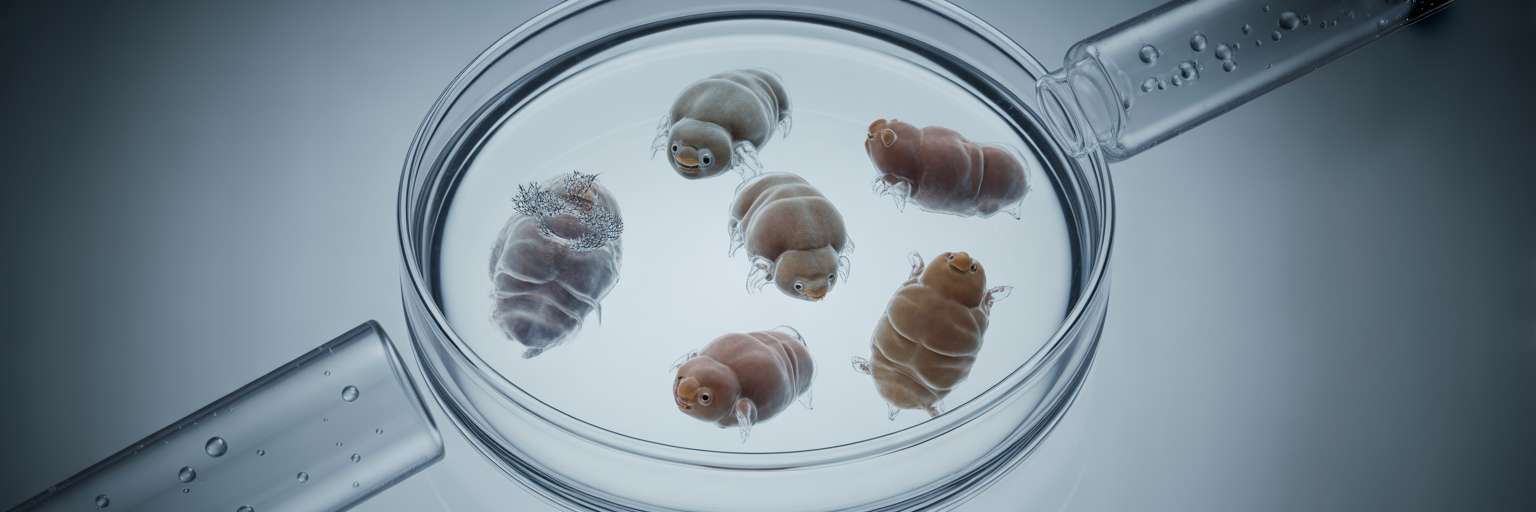
Claims of tardigrades’ immunity to radiation are some of the most exaggerated. While their resistance is extraordinary compared to most other animals, it has clear and definite boundaries. The tardigrade radiation limit is not infinite. For ionizing radiation like gamma rays, the lethal dose required to kill 50% of a population (LD50) ranges from 1.5 to 10 kilograys (kGy), depending on the species and whether the animal is hydrated or in its tun state. For context, a dose of just 0.01 kGy is fatal to humans. While their tolerance is immense, doses above this range are absolutely lethal, causing catastrophic damage to their DNA and other cellular machinery.
A more subtle but equally fatal threat is the effect of radiation on reproduction. Tardigrade eggs are far more vulnerable than adults. Doses of radiation well below the adult LD50 can completely sterilize a population by destroying their eggs and embryos. This means that even if a group of adult tardigrades could survive in a high-radiation environment, they would be unable to produce a next generation, leading to an inevitable population collapse. Long-term survival is impossible without successful reproduction.
The most definitive evidence of their radiation limits comes from spaceflight experiments. During the 2007 FOTON-M3 mission, tardigrades were exposed to the harsh environment of low Earth orbit. While some tuns survived exposure to the vacuum of space when shielded from the sun, the results were starkly different for another group. The tardigrades exposed to the full spectrum of solar ultraviolet (UV) radiation died. A study in PLOS One analyzed DNA repair in tardigrades after UVC exposure, highlighting that while they have repair mechanisms, the damage from intense UV is overwhelming. This single finding decisively debunks any notion that tardigrades could survive unprotected on the surface of the Moon or Mars. The unfiltered UV radiation would kill them.
Their resistance is not magic. It comes from a toolkit of highly effective, yet limited, biological adaptations. Some species possess a unique protein called Dsup (“damage suppressor”) that physically shields DNA from harm. This, combined with highly efficient DNA repair systems, allows them to fix damage that would be fatal to other organisms. These abilities are often byproducts of adaptations for surviving extreme dehydration, which also puts immense stress on DNA. Evolution finds diverse solutions to environmental challenges, and the tardigrade’s toolkit is a prime example, much like the archerfish that shoots bugs out of the air with water, which developed a highly specialized method for hunting.
Physical Extremes: Vacuum, Pressure, and Desiccation
Beyond temperature and radiation, tardigrades face a host of physical forces, each with a specific breaking point. Their famed survival in a vacuum is a prime example. While dormant tuns can endure short-term exposure, the primary dangers are not the vacuum itself but the accompanying factors: rapid dehydration and, as noted, lethal UV radiation. An active, hydrated tardigrade would be killed instantly, its bodily fluids boiling away in the low pressure. For tuns, the vacuum simply accelerates the desiccation process they are already built to withstand. Long-term survival, however, is not feasible.
Their resistance to high pressure is similarly remarkable but finite. Experiments have shown that tardigrades in the tun state can survive pressures of 600 megapascals (MPa), nearly six times the pressure found in the deepest part of the ocean, the Mariana Trench. This has led to speculation that they could survive deep-sea environments or even asteroid impacts. However, there is an absolute physical limit. At pressures around 7.5 gigapascals (GPa), the force is so immense that it physically crushes the animal’s molecular structure, killing it instantly regardless of its metabolic state. No biological adaptation can overcome being flattened at a molecular level.
Even their signature ability, desiccation (anhydrobiosis), has a time limit. The tun state is not a perfect stasis but rather a state of extremely slow decay. Over time, irreversible molecular damage from processes like oxidation accumulates. While some specimens have been revived after 30 years in a frozen state, studies on desiccation at room temperature show a more rapid decline. For some species, survival rates drop sharply after just 240 days. The protective molecules break down, and the cellular machinery becomes too damaged to restart. This highlights a key tardigrade cryptobiosis weakness: the process is a temporary pause, not an indefinite preservation. Their survival is entirely dependent on having the time and environmental cues to slowly and properly enter the tun state. A sudden change from a wet to a dry environment can be fatal. This ability to “pause” life is a specialized defense, much like the parrotfish that sleeps inside a bubble of its own slime, creating a temporary, protective barrier against the dangers of the night.
Biological and Chemical Threats
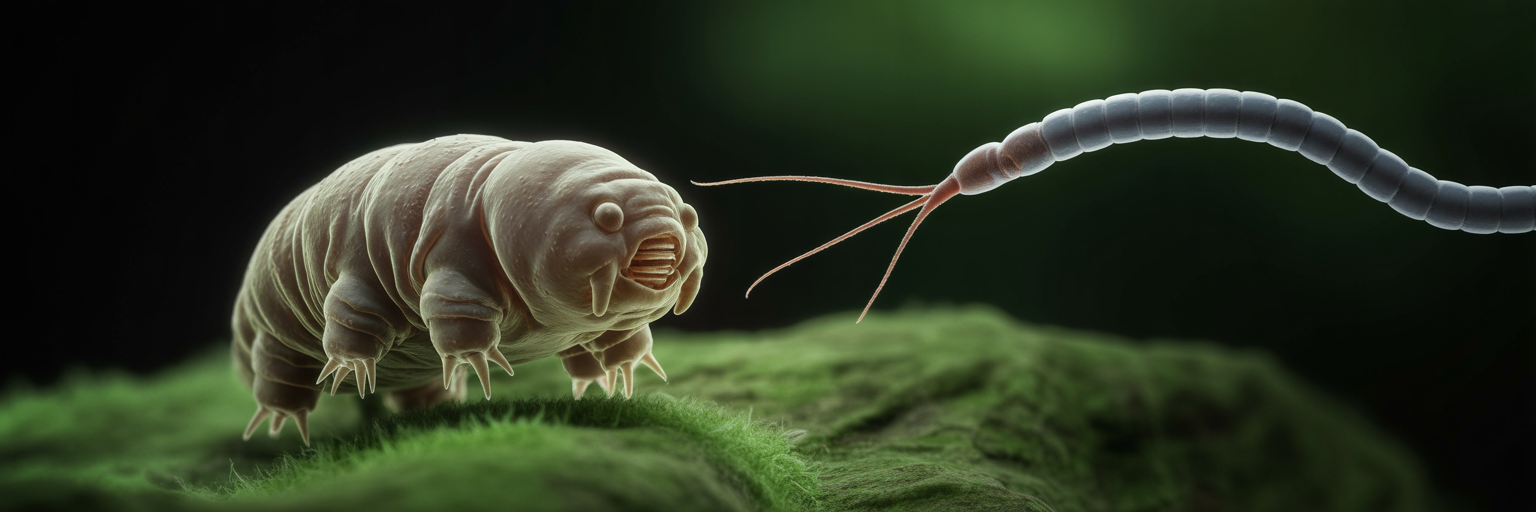
For all the focus on cosmic rays and crushing pressures, the most common threats to a tardigrade are far more mundane. In their natural habitat of moss and soil, they are part of a complex food web, and they are very much on the menu. Their small size makes them prey for a variety of microscopic and macroscopic organisms.
- Predators: Nematodes (roundworms), amoebas, mites, spiders, and even other, larger species of tardigrades regularly hunt and consume them. Being eaten is a simple but effective way for a tardigrade’s life to end.
- Parasites and Pathogens: Tardigrades are also vulnerable to biological warfare. Fungal parasites from genera like Acaulopage and Verticillium are particularly gruesome threats. These fungi infect a tardigrade, often through ingestion or by attaching to its cuticle. The fungus then grows inside the animal, consuming it from within until all that remains is a husk filled with fungal spores. This process is always fatal.
- Starvation: While a tardigrade in the tun state can persist for years without food, an active tardigrade cannot. It must constantly forage for food, such as bacteria, algae, and plant cells. If its environment dries up or food becomes scarce, an active tardigrade will starve just like any other animal.
- Osmotic Stress: As their “water bear” name implies, they are aquatic animals that require a specific balance of water and salt. A sudden change in the salinity of their environment can trigger fatal osmotic shock. If placed in water that is too fresh, an active tardigrade’s cells can absorb too much water and rupture. Conversely, if placed in water that is too salty, its cells will lose water and dehydrate, killing it.
- Chemical Exposure: Despite their resilience, tardigrades are not immune to chemical pollutants. Studies have shown that they are vulnerable to common pesticides and heavy metals, particularly when in their active state.
These ecological dangers provide a crucial perspective on the question of how tough are tardigrades. Their resistance to physical extremes is a laboratory curiosity compared to the daily, real-world threats of being eaten or infected. The parasitic relationship with fungi is a fascinating part of nature’s complexity, similar to the story of the caterpillar that tricks ant colonies into raising it, showing how intricate and sometimes brutal these micro-ecosystems can be.
The Verdict on Earth’s Toughest Animal
After examining the evidence, a clear picture emerges. The tardigrade is not an invincible beast but a master of conditional survival. Its toughness is a specific, targeted adaptation, not a universal shield. To deliver a final verdict, we must separate the fragile active animal from its resilient dormant form.
What easily kills an active tardigrade?
- Moderate Heat: Prolonged exposure to temperatures above 36°C (97°F) is lethal for many species.
- Physical Injury: Being crushed, punctured, or eaten by predators like nematodes and amoebas is a common fate.
- Parasites: Fungal infections that consume the tardigrade from the inside are always fatal.
- Sudden Environmental Changes: Rapid freezing or sudden changes in water salinity (osmotic shock) can kill an active tardigrade before it has time to enter cryptobiosis.
What can kill a tardigrade in the tun state?
- Prolonged High Heat: While they can survive brief spikes, hours or days of heat well below boiling point will kill them.
- Extreme Radiation: High doses of ionizing radiation will destroy them, and lower doses will sterilize their eggs, ending the population.
- Full-Spectrum Solar UV: Unfiltered ultraviolet radiation, like that in open space, is quickly fatal.
- Immense Physical Pressure: Pressures around 7.5 GPa will physically crush them beyond recovery.
- Time: The tun state is not eternal. Over years, molecular damage accumulates, eventually making reanimation impossible.
The most common exaggerated claims are therefore demonstrably false. They cannot survive unprotected in space. They are not immune to heat or radiation. And they cannot live forever without water. So, do they deserve the title of “Earth’s toughest animal”? The answer is nuanced. They are not extremophiles, which are organisms that thrive in extreme conditions. Instead, they are extremotolerant, meaning they are masters of enduring, not enjoying, these environments. Their true genius lies not in inherent invincibility but in their remarkable, yet limited, strategy of “pressing pause” through cryptobiosis. This is their specialized survival mechanism, as unique as that of the animal that survives by shrinking its own organs to conserve energy. They are not the toughest, but perhaps the most patient.
Frequently Asked Questions About Tardigrade Mortality
What is the easiest way to kill a tardigrade?
The easiest way is to target it in its active, hydrated state. Simply heating it to around 40°C (104°F) for a day or two is lethal for many species. Physically crushing it or introducing it to natural predators like nematodes or parasitic fungi are also very effective and common ways they die in their natural environment.
Can a tardigrade really survive in outer space?
No, not unprotected. While dormant tardigrades (tuns) can survive the vacuum and some cosmic radiation for a short time, experiments have shown that exposure to full-spectrum solar UV radiation is fatal. Any tardigrade on the surface of the Moon or Mars would be killed by the unfiltered sunlight.
Is the ‘tun’ state truly indestructible?
Not at all. The tun state has clear limits. Prolonged exposure to high heat (e.g., 63°C for 24 hours) can be lethal. Extreme physical pressure will crush it, and very high doses of radiation will destroy its molecular structures. Furthermore, the tun state is not timeless; irreversible damage accumulates over years, eventually making revival impossible.
Are all tardigrades equally tough?
No. There are over 1,300 known species of tardigrades, and their abilities vary significantly. Some species are much better at forming a tun and surviving desiccation than others. The extreme radiation and temperature tolerance reported in famous studies often comes from only a few highly resilient species, like Ramazzottius varieornatus. The findings from one species cannot be generalized to all tardigrades.