
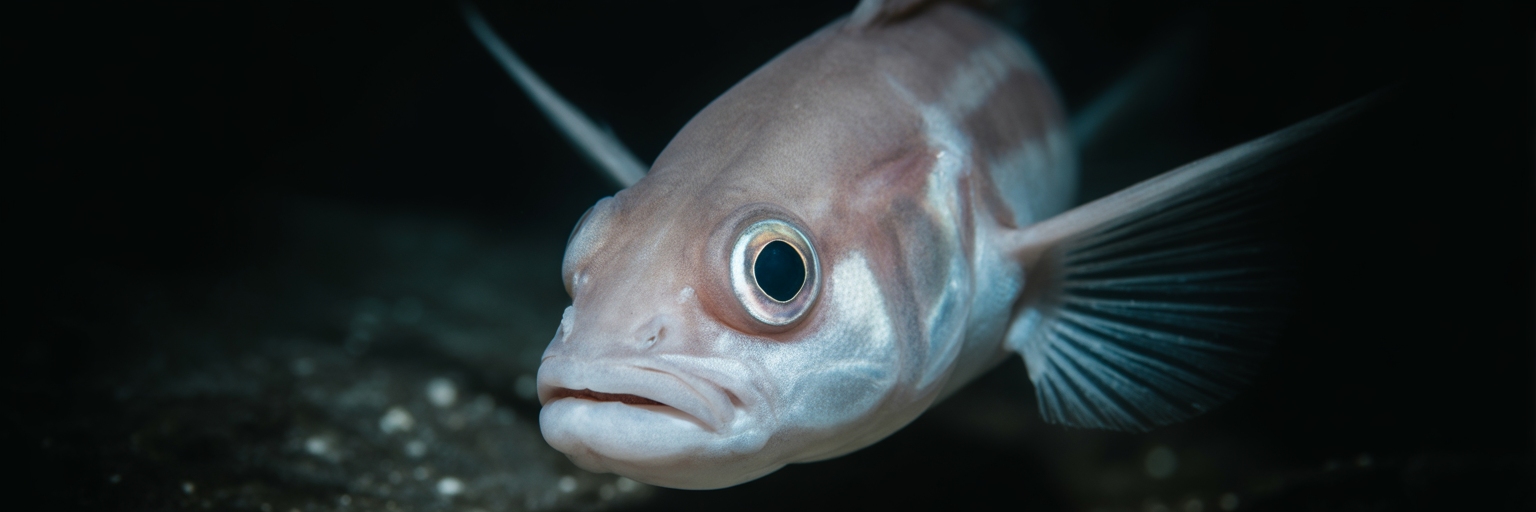
The Unsettling Perfection of Sensory Hacking
Imagine having the ability to consciously turn off one of your senses. Not just closing your eyes, but truly shutting down the entire biological system of sight to make your hearing razor sharp. It sounds like something from a sci-fi horror film, a disturbing biological enhancement. Yet, this is not fiction. It’s a real evolutionary strategy, a cold and calculated decision made by nature to build hyper-efficient survival machines.
This principle is known as the sensory tradeoff in animals. Think of an animal’s brain as a computer with a limited power supply. Every sense—sight, hearing, touch, smell—draws energy. To run them all at maximum capacity all the time would be an enormous drain. So, evolution, acting like a ruthless accountant, makes a choice. It dampens or completely discards a sense that isn’t providing a good return on investment, freeing up brainpower and metabolic energy to supercharge a more critical one.
There is a hidden cost to perception. Building and maintaining sensory organs, like eyes, and the complex neural networks that interpret their signals is incredibly expensive. An eye is not just a lens; it’s a web of photoreceptors, nerves, and a significant portion of the brain dedicated solely to processing visual data. In an environment where a particular sense is useless, it becomes a liability, a constant energy leak. While some animals invest in elaborate visual tricks, developing what looks like nature’s creepiest illusion to scare predators, others arrive at a more chillingly efficient conclusion: it’s better to get rid of the eyes altogether.
This isn’t about disability or loss. It’s about strategic reallocation. It’s a biological audit where underperforming assets are liquidated to fund the departments that guarantee survival. This article explores the unsettling world of animals that have mastered this biological accounting. They have embraced what we might see as a deficiency and turned it into a formidable advantage, becoming perfectly engineered specialists for their unique corners of the world.
Mastering the Dark with an All-Body Sonar
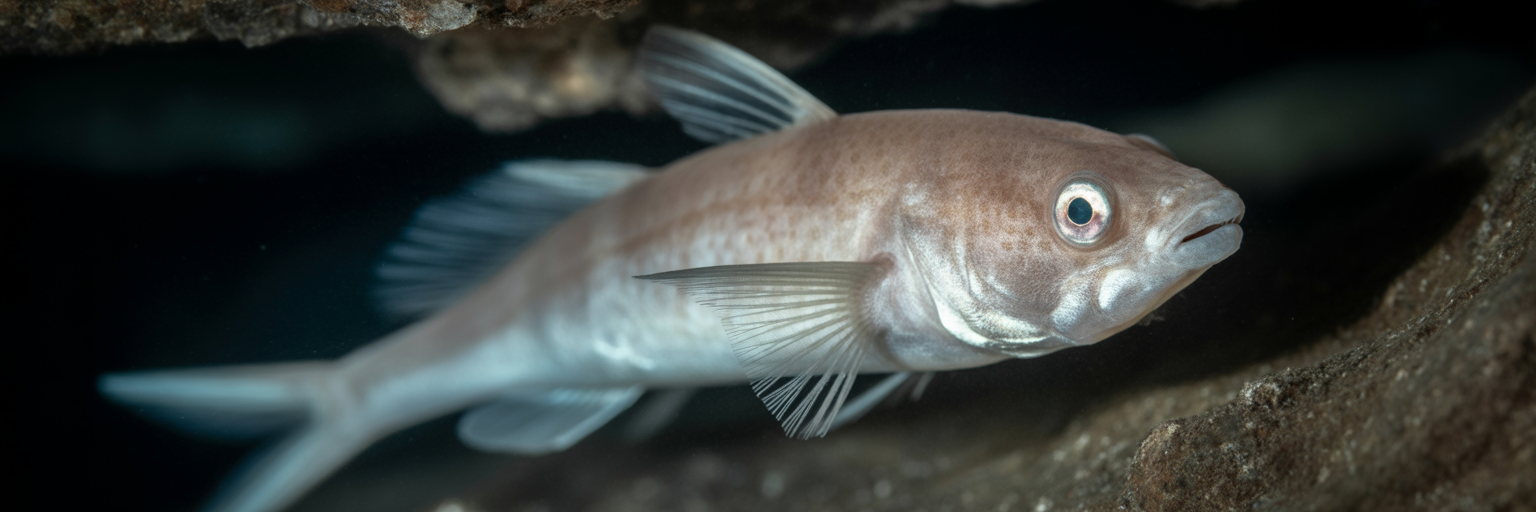
Deep beneath the limestone of northeastern Mexico, there exists a world without light. Not dim, not twilight, but an absolute, eternal blackness where the very concept of a shadow is meaningless. In these subterranean caves, flooded with still, cold water, lives a creature that embodies the most extreme form of sensory sacrifice: the Mexican cavefish, Astyanax mexicanus.
An Environment Where Eyes Are a Weakness
In the crushing dark of a cave, eyes are worse than useless. They are a metabolic burden. In a world where food is scarce and every calorie counts, maintaining complex, non-functional organs is a recipe for extinction. The energy spent developing and powering eyes that can see nothing is energy that could be used to find food, avoid collisions, or reproduce. For the cavefish, sight is not just an absent sense; it is a weakness that evolution has systematically dismantled.
The Deliberate Act of Losing Sight
The story of Mexican cavefish evolution is not one of accidental loss but of successful adaptation. These fish did not simply go blind; they actively discarded their sight for a competitive edge. Over generations, the fish that invested less energy in eye development and more in other systems thrived. As a Smithsonian Magazine article explains, losing their eyes allowed these cavefish to develop other beneficial traits, like improved metabolism and a different kind of sensory awareness. Their eye sockets are now covered by skin, a visible scar of an evolutionary bargain that paid off handsomely. It was a deliberate, calculated move on a generational timescale.
The Rise of the Mechanosensory System
So, what did the cavefish get in return for its sight? It gained a supercharged sense that is almost alien to us. The energy saved from its visual system was funneled directly into enhancing its mechanosensory system, specifically the lateral line. This isn’t just a series of pores along its body; it’s a form of full-body sonar. The lateral line detects minute changes in water pressure and vibrations, allowing the fish to build a detailed, constantly updating 3D map of its surroundings. It can “feel” the shape of a rock, the subtle current from a moving insect, or the presence of another fish from a distance. It navigates its pitch-black world not with sight, but with a form of distant touch. The cavefish is a chilling testament to optimization, a creature that embraced blindness to become an unnervingly perfect master of the dark.
The Frog with Built-In Noise-Canceling Lungs
Unlike the absolute silence of a cave, a wetland at night is an acoustic battlefield. It’s a chaotic symphony of chirps, croaks, and ribbits as dozens of frog species all scream for attention at once. This creates a classic dilemma known as the “cocktail party problem.” Amid that wall of sound, how does a female frog pick out the specific call of a potential mate from her own species? The answer is a piece of biological engineering that is both ingenious and slightly bizarre.
The Cocktail Party Problem in a Swamp
For a frog, finding a mate is everything. But when your potential partner’s call is buried in the noise of countless other species, locating them is a monumental task. The auditory system is overwhelmed with irrelevant data. To solve this, some frogs have evolved a system that doesn’t just hear better, but actively ignores unwanted information. They don’t turn up the volume; they filter out the noise with surgical precision.
A Biological Noise-Canceling System
The American green tree frog has a remarkable solution: frog noise canceling lungs. As reported by The Conversation, these frogs use their own inflated lungs as a built-in noise-canceling system. When the lungs are full of air, they press against the eardrums from the inside. This internal pressure makes the eardrums less responsive to vibrations at certain frequencies, specifically the frequencies of competing frog species. It’s the biological equivalent of putting on a pair of high-tech headphones that are perfectly tuned to block out everything except the one voice you want to hear. This is a stunning example of how an organ used for one purpose, breathing, has been co-opted for a completely different sensory function.
The Precision of Sensory Filtering
This sensory tradeoff is fundamentally different from the cavefish’s. The frog isn’t going deaf; it’s sacrificing broad-spectrum sensitivity for laser-like focus. It willingly reduces its ability to hear a wide range of sounds to become exquisitely sensitive to the narrow frequency band of its own species’ mating call. This shows that evolution has more than one way to solve a sensory problem. While these frogs use their lungs, nature has produced even stranger auditory adaptations, like the creature that can hear with its knees. For the green tree frog, the result is a tool of unnerving precision. It’s like a sniper on a chaotic battlefield, tuning out the explosions and gunfire to focus on the single, distant sound that matters for the success of its mission.
The Ruthless Logic of Evolutionary Accounting
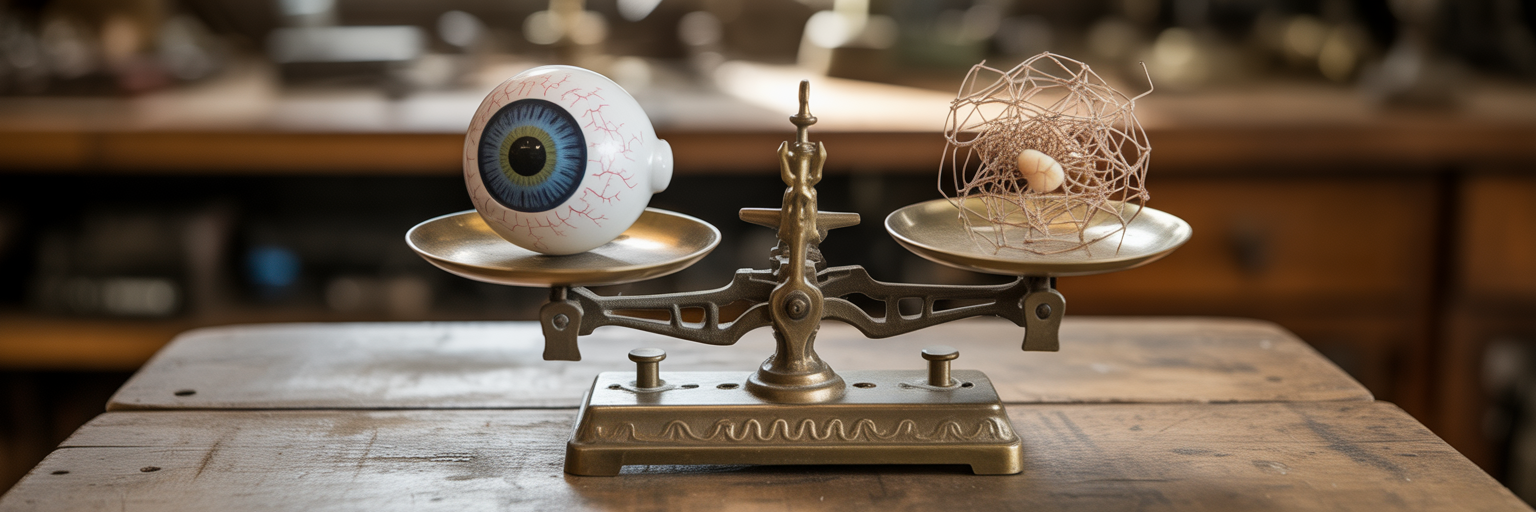
The cavefish and the frog are not just fascinating oddities; they are windows into the cold, hard mechanics of evolution. To truly understand how animals adapt senses, we have to pull back the curtain and look at the underlying principles. It’s a system governed not by sentiment, but by a ruthless logic of cost versus benefit.
Think of the brain as a central processor with a finite amount of RAM and a limited energy budget. Every sensory input—every sight, sound, and smell—is a program that consumes resources. Running all these programs at maximum capacity simultaneously is inefficient and, in many cases, impossible. The brain must prioritize. This creates a “sensory budget,” where energy is allocated to the senses that provide the most valuable information for survival in a given environment.
This leads to a strict “use it or lose it” principle. Evolution is an optimization process, not a collector of traits. Any feature that doesn’t provide a clear survival advantage, especially one that is metabolically expensive, is actively selected against over generations. It’s a liability on the evolutionary balance sheet. This principle of extreme energy conservation is a powerful driver of adaptation, pushing some animals to take drastic measures, such as becoming the animal that survives by shrinking its own organs to save calories. A useless sense is just another organ to be downsized or eliminated.
Evolution acts as a cold, calculating accountant. It reallocates metabolic energy from an underperforming “department,” like vision in a pitch-black cave, to a more profitable one, like mechanosensation. This isn’t a flaw; it’s a feature. For the cavefish, blindness is a cornerstone of its success. These animals are not broken or disabled; they are hyper-specialized, perfectly tuned to their world.
| Factor | Mexican Cavefish (Astyanax mexicanus) | Green Tree Frog (Hyla cinerea) |
|---|---|---|
| Tradeoff Type | Total Sensory Loss | Active Sensory Filtering |
| Sense Sacrificed | Vision (Eyes) | Broad-spectrum Hearing |
| Sense Enhanced | Mechanosensation (Lateral Line) | Narrow-band Frequency Hearing |
| Environmental Driver | Absolute Darkness & Low Energy | Acoustic Chaos (‘Cocktail Party’) |
| Outcome | Efficient navigation and hunting in the dark | Efficient mate-finding in a noisy environment |
| Metabolic Logic | Reallocates energy from useless eyes | Reduces cognitive load from irrelevant noise |
This table contrasts the two primary strategies of sensory tradeoff discussed. It highlights that whether an animal completely loses a sense or merely filters it, the goal is the same: optimizing its limited metabolic and neural resources for maximum survival advantage in its specific niche.
Other Masters of Sensory Manipulation
The cavefish and the frog are not isolated cases. They are simply clear examples of a widespread evolutionary strategy. The animal kingdom is filled with weird animal survival traits born from this same principle of sensory reallocation. Here are a few other masters of this unsettling art:
- The Star-Nosed Mole: This creature looks like something from a nightmare, with a bizarre, fleshy star of 22 tentacles on its face. While not completely blind, its eyes are tiny and almost useless. Instead, it dedicates a colossal portion of its brain to processing touch from its nose. Each tentacle is covered in thousands of sensory receptors called Eimer’s organs, making its nose one of the most sensitive touch organs on the planet. For this mole, reality is not seen or heard; it is felt, as it rapidly taps its star against the dark, damp earth to build a mental image of its world and find prey.
- Bats and Echolocation: We often think of echolocation as a kind of sonar, but it’s also a profound sensory tradeoff. Most bats have poor eyesight. They have sacrificed high-fidelity vision for a brain that is wired to “see” with sound. They emit high-frequency clicks and interpret the returning echoes to create a detailed, three-dimensional map of their surroundings. Their brains prioritize auditory processing to such an extreme that their world is constructed from sound waves, allowing them to hunt with lethal precision in total darkness.
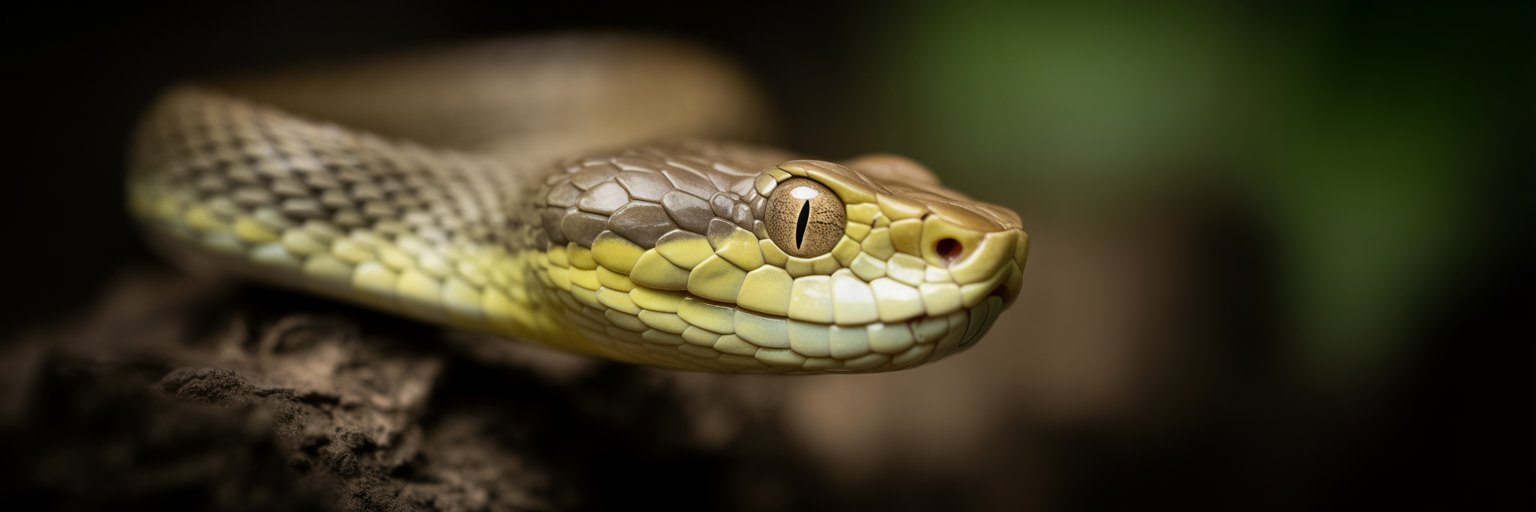
- Pit Vipers and Infrared ‘Vision’: These snakes have a terrifying secret weapon. In addition to their eyes, they possess a pair of pit organs on their faces that function as thermal cameras. These organs detect infrared radiation, allowing the viper to “see” a heat map of its environment. When hunting warm-blooded prey at night, this thermal sense can become dominant, giving the snake a ghostly image of its victim’s body heat. It’s a separate sensory channel that turns prey into glowing targets in the dark, a chilling advantage shared by other hunters like the predator that hypnotizes prey with light.
The common thread connecting these creatures is specialization. Each one has reallocated its sensory and neural resources away from a generalized perception of the world. In exchange, they have become undisputed masters of their specific niche, trading a wider view for a sharper, more efficient, and often more lethal, focus.
Survival’s Unsettling Bargain
The story of sensory tradeoffs is not about loss. It is about strategic, ruthless optimization. It is nature’s way of building hyper-specialized organisms that are perfectly, almost unnervingly, suited to their environments. The cavefish that gave up sight to feel the water’s faintest tremor and the frog that deafened itself to irrelevant noise to hear a single, vital call are prime examples of this cold logic in action.
These animals force us to confront the subjective nature of reality. The world we perceive through our eyes and ears is just one version, tailored to our needs as upright, diurnal primates. The cavefish’s reality, built from a 3D map of vibrations, is no less valid. The viper’s world, painted in gradients of heat, is just as real. This constant re-engineering of the self is a common theme in the struggle for survival, with some creatures going to extreme lengths, like the animal that turns transparent just long enough to survive.
This brings us back to the unsettling bargain at the heart of evolution. Nature is not a gentle, nurturing guide. It is a relentless engineer, and its currency is survival. These animals are the products of a pact: they sacrificed one piece of the world to become the undisputed masters of another. They didn’t just adapt to their environment; they rewired their very perception of reality to conquer it.
It leaves us with a thought-provoking question. If you had to make that same evolutionary bargain, trading one of your senses to supercharge another, which would you choose? Would you sacrifice sight for a perfect sense of hearing, or trade your sense of smell for a touch that could feel the air move? What new, unsettling reality would you create for yourself?