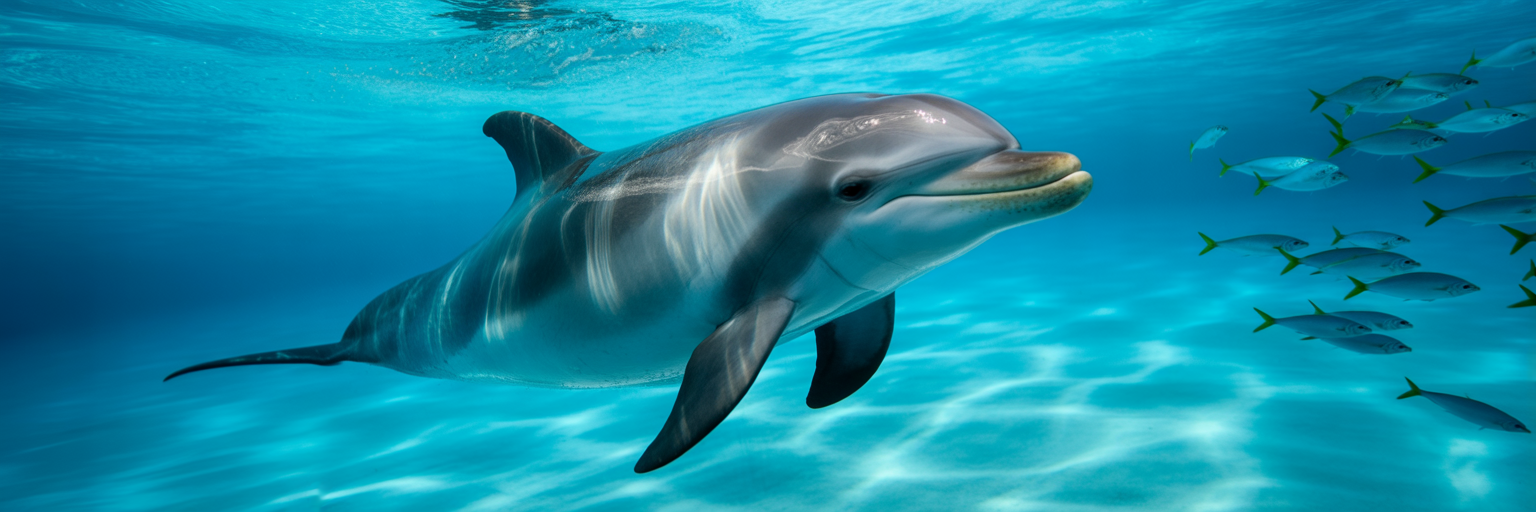
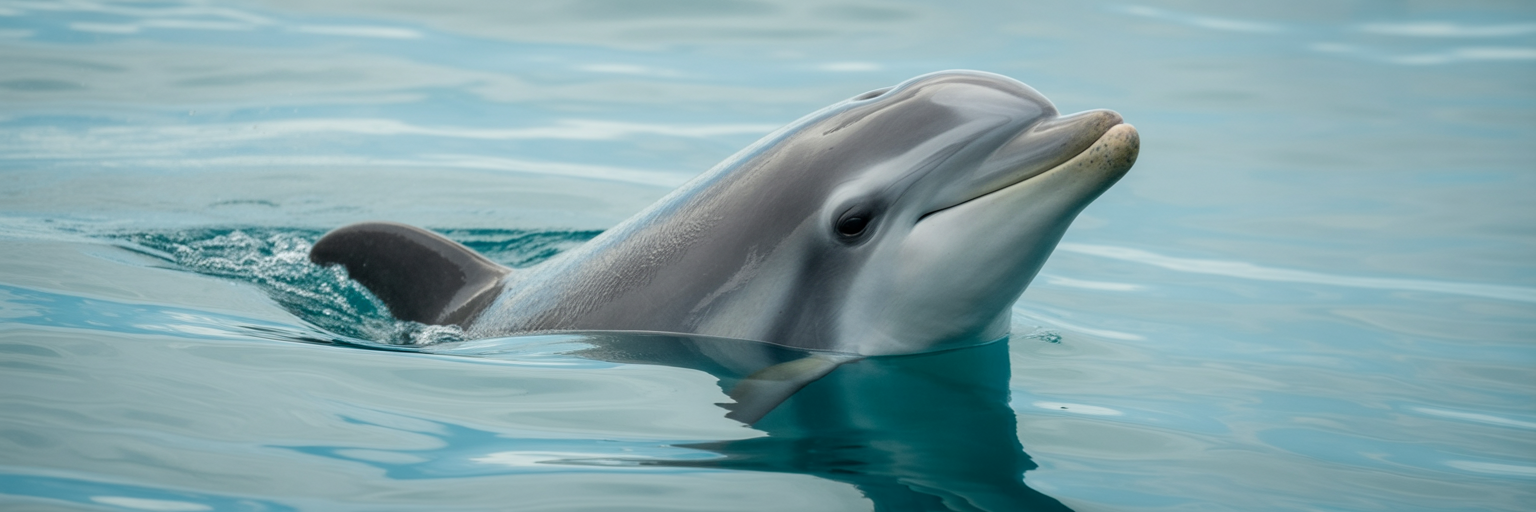
Marine mammals like dolphins are conscious breathers, meaning they must actively decide to surface for air. This biological reality created a long-standing scientific puzzle: how could they possibly enter a state of sleep without drowning? The discovery that dolphins sleep with half their brain awake provided a stunning answer, revealing one of nature’s most elegant solutions to a life-or-death problem.
Proving Dolphins Sleep With Half Their Brain Awake
The journey to understanding dolphin sleep was not a single breakthrough but a gradual piecing together of observational clues and rigorous neuroscientific proof. It began with a simple question that defied an easy answer and ended with a redefinition of what sleep could be.
The Biological Paradox of a Sleeping Swimmer
The solution to the dolphin’s breathing paradox is a phenomenon known as unihemispheric slow-wave sleep (USWS). In simple terms, this means one half, or hemisphere, of the brain enters a deep sleep state while the other remains alert enough to manage critical life functions. This neurological balancing act allows the animal to rest without ever losing consciousness completely. While one side of the brain gets its necessary recovery, the other side keeps the body swimming, the blowhole pointing toward the surface, and an eye open for predators.
From Observation to a Scientific Quest
Long before scientists could record brainwaves, marine biologists noticed peculiar behaviors in dolphins. They observed them swimming slowly and deliberately in circles for long periods, often with one eye consistently closed. This behavior was perplexing. Was the animal sick, resting, or simply playing? These observations were tantalizing hints, but they were not proof. They sparked a hypothesis that dolphins had developed a unique method of resting that didn’t fit the typical mammalian model of lying still and unconscious. This suspicion drove a scientific quest to move beyond behavioral observation and find concrete, physiological evidence of what was happening inside the dolphin’s mind.
Defining Sleep Beyond Behavior
To prove this state was genuine sleep and not just a form of quiet rest, scientists needed to satisfy two fundamental criteria. First, they had to demonstrate the presence of specific brainwave patterns. The undeniable hallmark of deep, non-REM sleep is slow-wave activity, a distinct electrical rhythm that signifies a brain in a restorative state. Second, they needed to show a homeostatic need for this state. This means that sleep is a biological requirement, not an optional activity. If a dolphin were deprived of this rest, it would accumulate a “sleep debt” and need to compensate later by sleeping more deeply or for longer. Proving both the brainwave signature and the homeostatic regulation of unihemispheric slow-wave sleep was the only way to confirm that dolphins had truly mastered the art of sleeping on the move.
The Challenge of Recording a Dolphin’s Brain
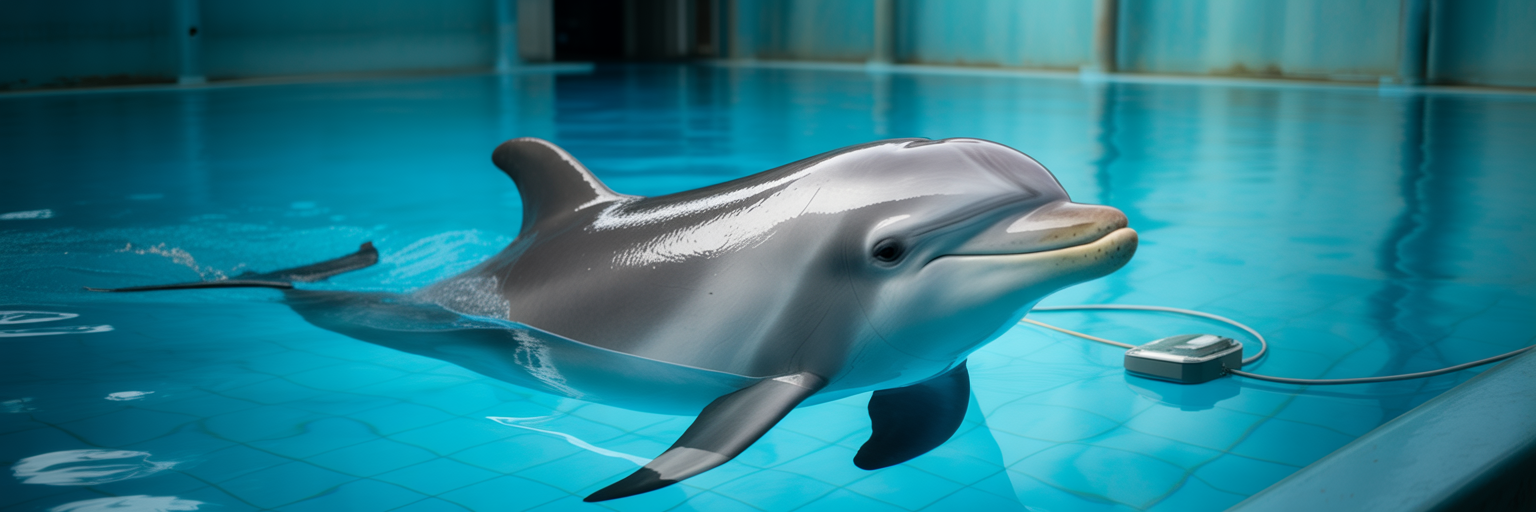
Confirming the theory of unihemispheric sleep required peering directly into the brain of a living, swimming dolphin. This presented immense technical, practical, and ethical challenges that pushed the boundaries of neuroscientific research and required remarkable ingenuity to overcome.
Beyond Human Sleep Labs
The standard methods for a human sleep study are straightforward but entirely unsuitable for a dolphin. A human patient can lie still in a bed while electrodes are attached to their scalp with paste. This setup is impossible for a powerful, multi-ton marine mammal that lives its entire life in water. A dolphin cannot be asked to remain motionless, and any equipment used would need to be completely waterproof, durable, and designed to allow the animal to swim freely. The entire concept of a sleep lab had to be re-engineered for an aquatic environment.
EEG vs. ECoG: A Tale of Two Techniques
Scientists had to choose the right tool to measure dolphin brain activity. The most common method, electroencephalography (EEG), uses non-invasive electrodes placed on the surface of the skin or scalp. However, this was problematic for dolphins. Their smooth, thick, and constantly submerged skin made it difficult to get a secure attachment, and the water itself interfered with the weak electrical signals. To get the clear, unambiguous data they needed, researchers turned to a more invasive but far more precise method: electrocorticography (ECoG). This technique involved surgically implanting small, sterile electrodes directly onto the surface of the brain’s cortex. While a significant procedure, ECoG provided a powerful and clean signal, allowing scientists to measure the activity of both brain hemispheres simultaneously without interference.
Engineering for an Aquatic Environment
The use of ECoG required clever engineering. The implanted electrodes were connected to wires that had to be both waterproof and robust. These wires were run to a specially designed, flexible harness worn by the dolphin. This harness connected to a lightweight tether system that allowed the animal to swim with considerable freedom within a large research pool. The tether carried the precious data from the dolphin’s brain to the recording instruments outside the tank. This system was a marvel of bio-instrumentation, balancing the need for high-fidelity data with the animal’s ability to move naturally.
Ethical Considerations in Cetacean Research
Such invasive research rightly carries significant ethical weight. The pivotal studies were conducted on a very small number of captive-born dolphins that were already accustomed to human interaction and could be trained to cooperate with the procedures through positive reinforcement. The surgical implantation of electrodes was performed under strict veterinary supervision with comprehensive animal welfare protocols in place to ensure the animals’ health and comfort. These studies provided invaluable knowledge that would have been impossible to obtain otherwise, but they also underscore the ethical complexities of studying the physiology of such intelligent and complex creatures.
Decoding the Asymmetrical Brainwaves
With the technical challenges solved, researchers were finally able to watch the electrical symphony of the dolphin brain in real time. What they saw on their monitors was revolutionary: clear, undeniable proof of a brain operating in two different states at once.
A Brain Divided: The Electrophysiological Evidence
The groundbreaking moment came when scientists viewed the simultaneous ECoG recordings from both hemispheres. The data streams painted a picture of profound asymmetry. The channel connected to one hemisphere displayed a pattern indicative of deep sleep, while the channel from the other hemisphere showed a pattern of wakefulness. It was as if two different minds were cohabiting the same skull. This stark visual contrast was the first piece of direct, electrophysiological evidence that dolphins did not sleep like other mammals.
The Signature of Sleep: Slow-Wave Activity
The pattern in the sleeping hemisphere was dominated by slow-wave activity (SWA). To a general reader, these brainwaves can be visualized as tall, rolling waves on an ocean, with a high amplitude (height) and a low frequency (slowness). Also known as delta waves, this rhythm is the universal signature of deep, restorative non-REM sleep across the animal kingdom. Its presence in one half of the dolphin brain was the definitive proof that this hemisphere was genuinely asleep, engaged in the critical processes of cellular repair and memory consolidation that sleep provides.
The Vigilant Hemisphere’s Electrical Footprint
In stark contrast, the other hemisphere produced a completely different electrical footprint. Its brainwaves were desynchronized, characterized by low-amplitude (short) and high-frequency (fast and choppy) patterns. This is the typical signature of quiet wakefulness or alertness. It was not the intense, focused activity of a brain solving a puzzle, but it was unequivocally not asleep. This hemisphere remained vigilant, processing sensory information from the environment and maintaining control over essential motor functions. The foundational research confirming these distinct brainwave patterns was published in several key studies. For instance, a comprehensive review in the journal Neuroscience & Biobehavioral Reviews details how unihemispheric sleep is characterized by high-amplitude slow waves in one hemisphere and a low-voltage, fast-wave pattern in the other, a finding central to understanding cetacean sleep patterns.
The Hemispheric Switch
This asymmetrical state was not static. After a period of time, typically lasting from minutes to a couple of hours, the recordings showed the hemispheres seamlessly switching roles. The sleeping hemisphere would “wake up,” its brainwaves desynchronizing, while the previously awake hemisphere would transition into slow-wave sleep. This elegant alternation ensures that both sides of the brain get the rest they need over a 24-hour period, allowing the entire brain to recover without ever fully shutting down.
| Characteristic | Sleeping Hemisphere | ‘Awake’ Hemisphere |
|---|---|---|
| Primary Brainwave Type | Slow-waves (Delta waves) | Desynchronized waves (Beta/Alpha-like) |
| Wave Amplitude | High (Tall peaks) | Low (Short peaks) |
| Wave Frequency | Low (1-4 Hz) | High (>8 Hz) |
| Physiological State | Deep, restorative non-REM sleep | Quiet wakefulness / Low-level vigilance |
| Primary Function | Cellular repair, memory consolidation | Motor control, breathing, sensory monitoring |
This table summarizes the key electrophysiological differences between the two cerebral hemispheres of a dolphin during unihemispheric slow-wave sleep. The data is based on foundational ECoG studies and illustrates the clear division of neurological states.
Connecting Brain Activity to Behavior
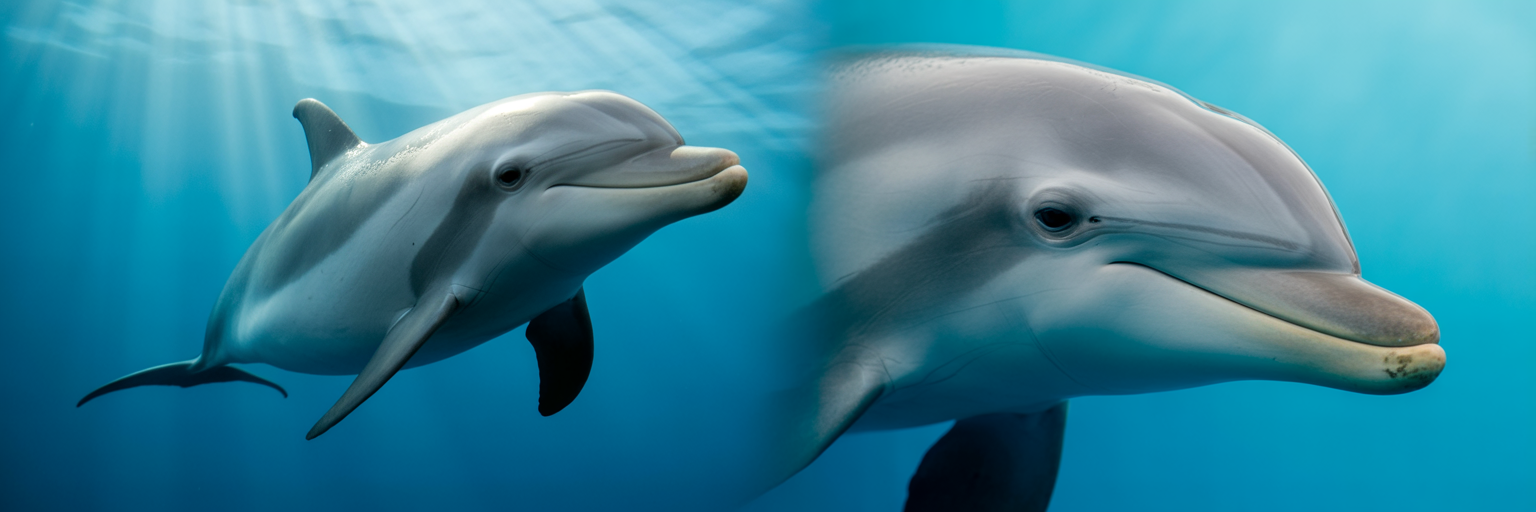
These distinct electrical patterns were a revelation, but they only told half the story. The next critical step for researchers was to connect this internal neurological state to the dolphin’s observable actions. This would bridge the gap between the brainwave data and the animal’s real-world behavior.
The Contralateral Eye: A Window to the Sleeping Brain
The most significant behavioral correlation discovered was contralateral eye closure. The term “contralateral” simply means “opposite side.” Researchers consistently observed that when the left hemisphere of the brain was in slow-wave sleep, the dolphin’s right eye would be closed. Conversely, when the right hemisphere was sleeping, the left eye would be closed. The open eye, which was neurologically connected to the awake hemisphere, remained active, scanning the environment. This provided a visible, external indicator of the brain’s internal state, allowing scientists to infer which hemisphere was resting just by looking at the animal.
A Correlation, Not an Ironclad Rule
It is important to add a layer of nuance to this observation. While the contralateral eye closure was a very strong and reliable correlation, it was not an absolute, ironclad rule. Researchers noted brief moments where the eye state and the brain state would diverge, such as the dolphin briefly closing both eyes or having both open while one hemisphere was asleep. This finding was crucial because it demonstrated why behavior alone is not definitive proof of sleep. Without the ECoG recordings, relying solely on eye closure could be misleading. The brainwave data provided the ground truth that behavioral observation could only hint at.
The Body in Motion: How the Awake Brain Takes Charge
The “awake” hemisphere does more than just keep an eye open. It is responsible for managing the complex motor functions required for survival. This is the answer to the question of how do dolphins sleep while in motion. The vigilant hemisphere directs the slow, stereotyped swimming patterns, often in large circles or ovals, that are characteristic of a resting dolphin. Most importantly, it maintains control over voluntary breathing. It ensures the dolphin continues to surface at regular intervals to take a breath, a conscious act that would be impossible during the bilateral unconsciousness of human-like sleep. This remarkable adaptation for vigilance is one of many unique survival strategies in the animal kingdom. For instance, the parrotfish has its own peculiar way of staying safe while resting, as it sleeps inside a bubble of its own slime to mask its scent from predators.
The Decisive Sleep Deprivation Test
While the asymmetrical brainwaves and corresponding behaviors were compelling, one final piece of evidence was needed to prove that unihemispheric slow-wave sleep was genuine, necessary sleep. This came from an ingenious experiment designed to test the fundamental nature of sleep itself: the need for rebound.
Sleep Pressure and the Need for Rebound
In all known animals that sleep, sleep is a biological necessity governed by homeostasis. Think of it like a battery that discharges during wakefulness and recharges during sleep. As an animal stays awake, a “sleep pressure” or “sleep debt” builds up. When it finally rests, it repays this debt with deeper or longer sleep. This compensatory mechanism is known as sleep rebound, and its presence is a definitive marker of true sleep. The question for researchers was whether this principle applied to each of a dolphin’s hemispheres independently.
An Ingenious Experiment in Asymmetry
The experimental design was clever in its simplicity. Researchers set out to deprive only one of the dolphin’s brain hemispheres of sleep. They accomplished this by presenting novel and engaging stimuli, such as new toys or unfamiliar sounds, to the dolphin’s open eye. This constant stream of new information forced the corresponding “awake” hemisphere to remain vigilant and actively process its environment, preventing it from entering its scheduled slow-wave sleep cycle. Meanwhile, the other hemisphere, with its corresponding eye closed and shielded from the stimuli, was allowed to rest as usual.
The “Smoking Gun” Result
The result of this experiment was the smoking gun that confirmed the nature of USWS. After the period of one-sided deprivation, the stimuli were removed. The hemisphere that had been kept awake showed a dramatic and immediate rebound effect. Its subsequent slow-wave sleep was significantly deeper, characterized by higher amplitude brainwaves, and lasted longer than normal. Crucially, the other hemisphere, which had been allowed to rest normally throughout the experiment, showed no such change. This was the definitive proof. It demonstrated that sleep pressure accumulates independently in each hemisphere. This confirmed that unihemispheric slow-wave sleep is a true, homeostatically regulated sleep state, not just a form of passive rest or simple brain asymmetry.
Evolutionary Drivers of a Half-Sleeping Brain
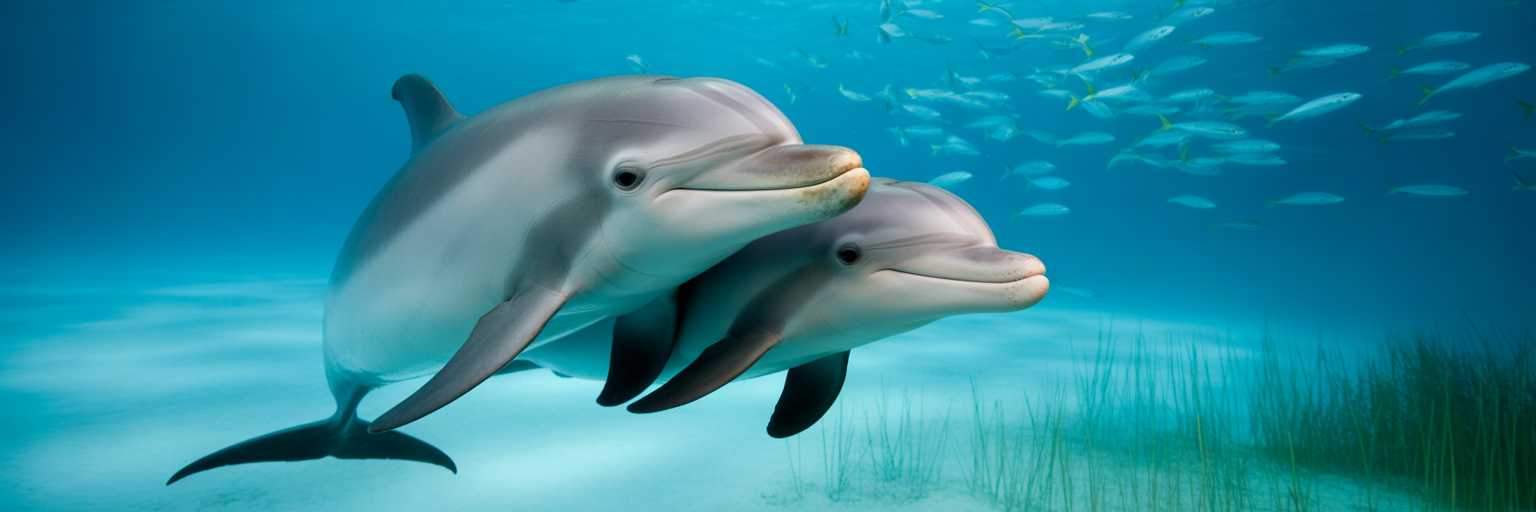
With the “how” of unihemispheric sleep firmly established through electrophysiological evidence, the scientific focus shifted to the “why.” This remarkable adaptation did not evolve by chance. It is the product of powerful evolutionary pressures tied to the unique challenges of a fully aquatic existence. Several key hypotheses explain why this half-sleeping brain is so critical for cetacean survival.
- The Necessity of Voluntary Breathing: This is the most widely accepted and critical driver. Unlike land mammals who breathe reflexively, dolphins are conscious breathers. They must make a deliberate decision to surface and exchange air. Bilateral, or whole-brain, sleep would involve a loss of consciousness, making this voluntary act impossible and leading to drowning. USWS elegantly solves this by ensuring one hemisphere is always online to manage the respiratory cycle.
- Constant Predator Detection: The ocean is a dangerous environment, with sharks being a primary threat to dolphins. By keeping one hemisphere and its corresponding eye and ear active at all times, a dolphin can maintain continuous vigilance. It can scan its surroundings for threats even while the other half of its brain is in a deep, restorative sleep. This constant awareness provides a major survival advantage, allowing for a rapid escape response if a predator approaches. This constant vigilance is a powerful survival tool, similar to how other animals have evolved unique sensory abilities to stay safe. For example, some animals can detect a predator just from its shadow, showcasing another form of hyper-awareness in nature.
- Thermoregulation in Water: Water conducts heat away from the body approximately 25 times faster than air. If a dolphin were to become completely still and inactive during sleep, as land mammals do, it would risk losing a dangerous amount of core body temperature. The slow, continuous swimming enabled by the “awake” hemisphere during USWS generates muscle heat, helping the dolphin maintain its necessary body temperature in a cool environment.
- Maintaining Social Cohesion: This is especially vital for dolphin mothers and their calves. A newborn calf must stay in close proximity to its mother for nursing, protection, and to learn by observation. USWS allows the mother to remain constantly aware of her calf’s position and well-being, even while resting. This continuous bond is critical during the calf’s most vulnerable early life stages.
The fact that USWS is a common trait found across cetaceans, including porpoises and various whale species, reinforces its fundamental importance for a life lived entirely in water. This contrasts with animals like seals, which can switch between bilateral sleep on land and unihemispheric sleep in the water, highlighting that the dolphin’s method is a specialized adaptation for never having to leave the aquatic realm.
Uncertainties and the Limits of Science
While science has masterfully demonstrated the mechanics of unihemispheric sleep, an evidence-based account must also acknowledge the boundaries of current knowledge. Several questions remain, and the popular description of a dolphin being “half awake” requires important scientific clarification.
Is ‘Half Awake’ the Right Description?
The phrase “half awake” is a catchy and broadly accurate summary, but it needs qualification. The active hemisphere is not in a state of full, conscious awareness as a human would experience it. It is more accurately described as being in a state of low-level vigilance. It is alert enough to handle basic survival tasks like directing swimming, initiating breathing, and monitoring the environment for significant changes. However, it is not engaged in the kind of complex, high-level thought that characterizes full wakefulness. This distinction is important to avoid oversimplifying the unique neurological state of the vigilant hemisphere.
The Challenge of Studying Wild Dolphins
A major limitation of the existing research is that the most definitive studies were conducted on very small numbers of captive animals using invasive ECoG methods. It is currently technologically impossible to implant electrodes and record brainwaves from wild dolphins in their natural ocean environment. This raises a valid question: how perfectly do the findings from a few animals in a research pool generalize to vast, dynamic populations in the wild? While behavioral observations of wild dolphins align with the lab findings, we must acknowledge that our deepest understanding of how dolphins sleep with half their brain awake comes from a controlled, artificial setting.
The Enduring Mystery of Dolphin Dreams
Perhaps the most fascinating uncertainty surrounds Rapid Eye Movement (REM) sleep. In humans and most land mammals, REM sleep is the stage associated with vivid dreaming and atonia, a temporary paralysis of the major muscles. To date, definitive, classic REM sleep has never been conclusively observed in dolphins. The leading theory is that this is an evolutionary trade-off. The muscle paralysis of REM sleep would be incompatible with the need to surface for air and would be lethal in water. This leaves us with profound questions. Do dolphins dream in some other way? Do they ever experience brief, fleeting moments of bilateral sleep? Science has explained the “what” and “how” of dolphin sleep, but the subjective, conscious experience of a dolphin in USWS remains a deep mystery. The absence of REM sleep is a fascinating evolutionary trade-off, just as other creatures have made strange bargains for survival. This is reminiscent of how some parasites hijack animal behavior for a joyride, completely altering their host’s instincts to complete their own life cycle.
Frequently Asked Questions About Dolphin Sleep
Do dolphins ever fully sleep with both sides of their brain?
Based on all current electrophysiological evidence, scientists have not observed dolphins entering a state of bilateral (whole-brain) slow-wave sleep like land mammals. Their rest appears to be exclusively unihemispheric, a crucial adaptation that allows them to remain conscious enough to control their breathing.
Do dolphins dream?
It is unknown if dolphins dream in the way humans do. Rapid Eye Movement (REM) sleep, the stage linked to vivid dreaming in other mammals, has not been definitively identified in dolphins. Scientists theorize this is an adaptation to avoid the muscle paralysis that accompanies REM sleep, which would be dangerous for an animal that needs to constantly swim and surface for air.
Is the ‘awake’ half of the brain fully alert?
Not in the human sense. The active hemisphere is in a state of low-level vigilance or quiet wakefulness. It is alert enough to control breathing, direct slow swimming, and monitor the environment for threats or social cues, but it is not engaged in high-level thought or complex problem-solving as we would understand it.
How can you tell if a dolphin is sleeping just by looking at it?
While a closed eye is a strong clue that the opposite side of the brain is asleep, it is not a foolproof method. The most reliable behavioral signs are a combination of slow, rhythmic swimming (often in circles) and consistent, regular breathing patterns. However, only an EEG or ECoG recording can confirm with certainty that the dolphin is in a state of unihemispheric sleep.
Do all marine mammals sleep this way?
No. While unihemispheric slow-wave sleep is the norm for cetaceans (dolphins, whales, and porpoises), other marine mammals have different strategies. For example, some seals can switch between bilateral sleep on land and unihemispheric sleep when in the water, demonstrating that USWS is a specific adaptation for a fully aquatic life.