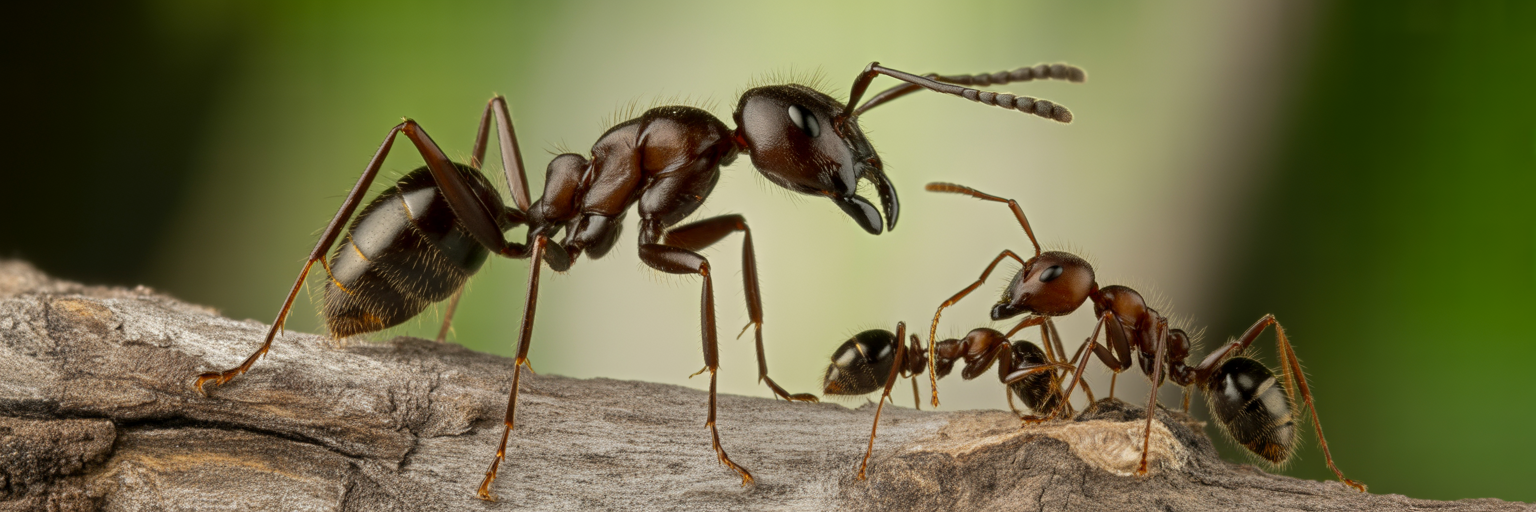
For centuries, ants have been seen as symbols of tireless, mindless labor, operating on simple instinct. Yet, recent discoveries reveal a level of social care within their colonies that rivals the complexity of battlefield medicine. Deep in the forests and suburbs of the southeastern United States lives the Florida carpenter ant, Camponotus floridanus. These ants build intricate societies within wood and soil, where thousands of individuals work in concert to feed, defend, and expand their shared home. This complex social structure is the necessary backdrop for an incredible, recently discovered behavior that forces us to reconsider the limits of insect cooperation.
Scientists have observed these ants performing a type of triage on their injured nestmates. When a fellow worker returns to the nest with a damaged leg, others don’t ignore it or cast it out. Instead, they assess the injury and, in some cases, perform a slow, deliberate amputation of the limb. This sophisticated, life-saving action stands in stark contrast to the common perception of insects as simple automatons driven by basic programming. It presents a fascinating scientific mystery that challenges long-held assumptions about animal behavior.
This discovery introduces us to the concept of ant colony healthcare. A colony functions as a “superorganism,” where the health of each individual contributes directly to the survival of the whole. Losing a worker to a preventable infection is a net loss for the entire community. The observation of these ants that amputate injured limbs raises several profound questions. How do they perform these delicate procedures with only their mouthparts? Why do they treat some injuries with amputation and others with simple cleaning? And can we truly describe this instinctual behavior as a form of surgery?
How Scientists Uncovered Ant Medical Care
The discovery of this remarkable behavior did not happen in the wild but within the controlled environment of a laboratory. Researchers at the University of Würzburg and the Institute of Science and Technology Austria (ISTA) set out to study how Florida carpenter ants respond to injury. Their methodology was precise. They would take an individual ant, create a standardized, minor injury on one of its legs under sterile conditions, and then reintroduce it to its colony to observe the social response.
From the researchers’ perspective, the initial moments were astonishing. Instead of showing aggression or indifference, nestmates quickly gathered around the injured ant. Their attention was not random. They used their antennae to repeatedly touch the wound, seemingly inspecting the damage. Then, something even more unexpected occurred. The other ants began to systematically lick and clean the injury. In certain cases, they went further, using their mandibles to grip the damaged leg and begin a slow, methodical process of chewing and pulling at the limb.
To confirm that this was a therapeutic act, the scientific team designed further experiments. They needed to rule out other possibilities. Was it a form of cannibalism? No, the ants never consumed the severed limb. Was it simply an attempt to remove a foreign or irritating object? The consistency and targeted nature of the action suggested something more. The crucial piece of evidence emerged when the researchers varied the location of the injury. They noticed that the Camponotus floridanus behavior was not uniform. Some injuries prompted amputation, while others only triggered intensive cleaning. This observation was the key that unlocked the entire system, revealing a level of sophistication no one had anticipated and setting the stage for understanding the logic behind this insect wound treatment.
A Step-by-Step Look at Ant Amputation
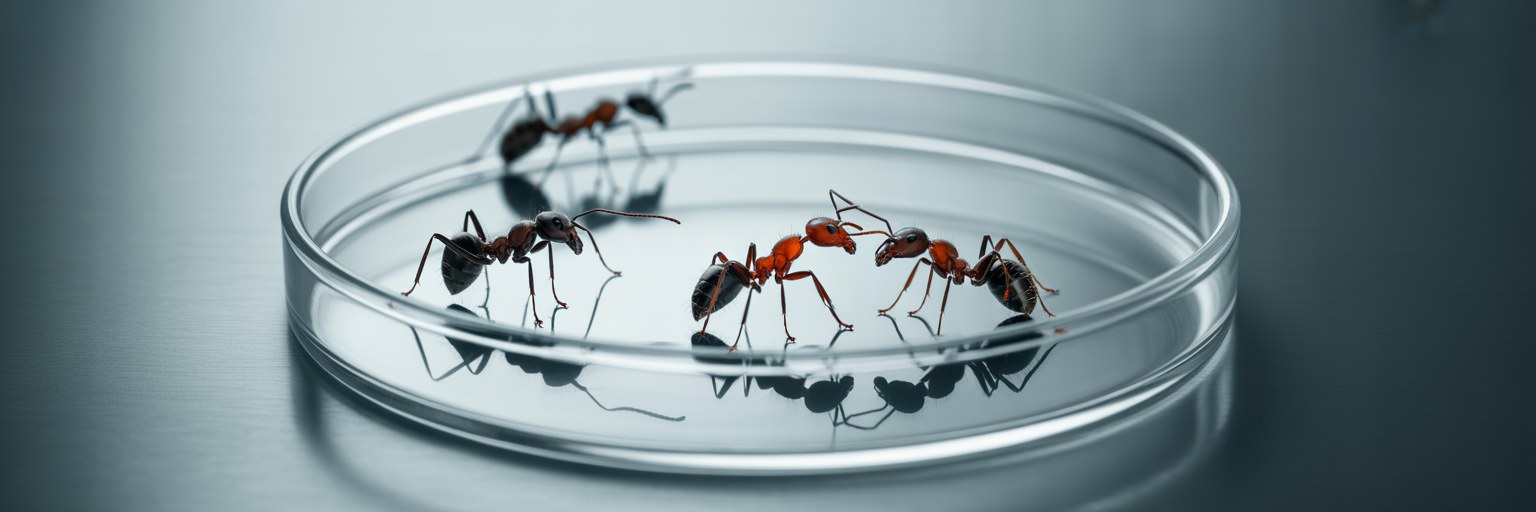
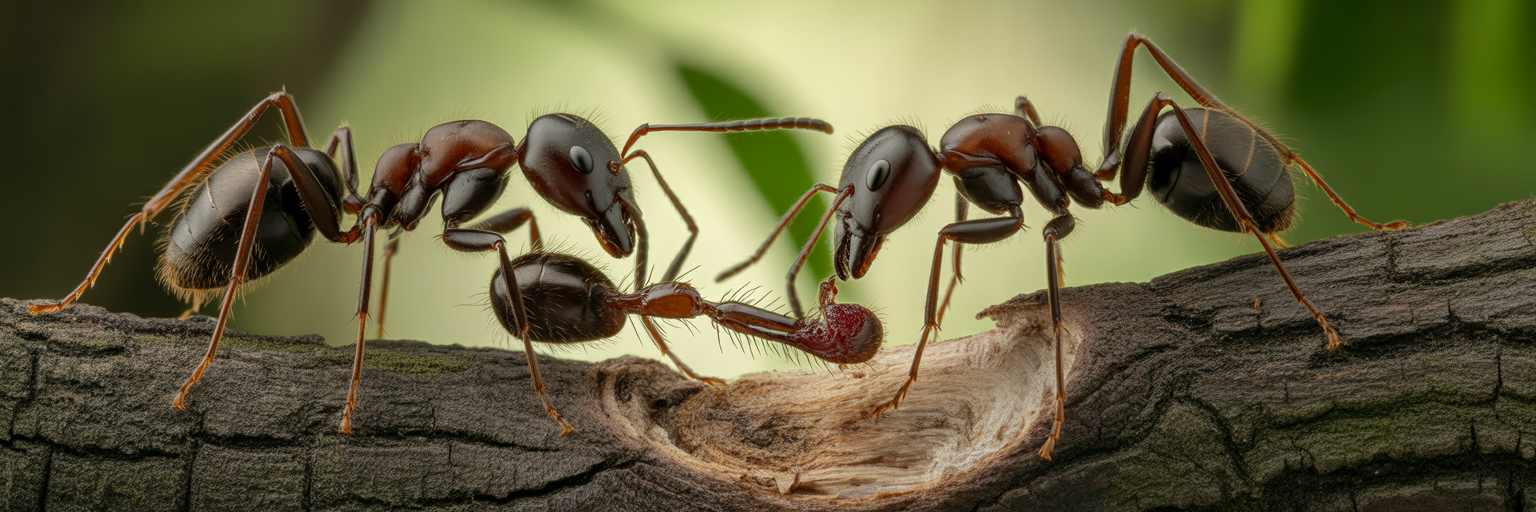
Observing an ant amputation is a lesson in patience and precision. The procedure is far from a frantic, aggressive act. It is a slow, deliberate process that unfolds over a significant period, sometimes lasting from forty minutes to several hours. The entire event begins when nestmates detect an injured peer. They surround the wounded ant, which remains remarkably still throughout the ordeal, and begin by intensively licking the area around the injury, typically on the upper part of the leg known as the femur.
After this initial cleaning phase, the attending ants transition to the amputation itself. They use their mandibles, the powerful mouthparts typically used for cutting leaves or fighting enemies, as surprisingly delicate surgical tools. They grip the injured leg not at the wound itself, but at a specific anatomical point: the trochanter, the small joint connecting the leg to the ant’s main body. With a firm hold, they begin to pull and chew, working methodically to sever the connection. This process is a testament to the strength and control these insects possess. Once the leg is removed, the other ants often carry it away from the nest, a final act of colony hygiene.
However, this ant surgery is not the only medical treatment in their repertoire. When an injury occurs on the lower part of the leg, the tibia, the response is entirely different. In these cases, the nestmates do not attempt to amputate. Instead, they engage in prolonged and intensive licking of the wound, sometimes for hours. This alternative treatment makes it clear that the ants are responding to different signals and applying a specific solution based on the nature of the injury. The question, then, is not just how they perform these actions, but why their medical strategy changes so dramatically depending on where the leg is hurt. This level of intricate, instinctual behavior is not unique in the insect world. For instance, some species have evolved equally complex strategies for survival, such as the caterpillar that tricks ant colonies into raising it as one of their own.
Why Injury Location Determines Treatment
The core of this incredible behavior lies in the ants’ ability to distinguish between two types of leg injuries and apply the correct treatment. Amputations are performed almost exclusively for injuries to the femur (the upper leg segment), while intensive cleaning is reserved for injuries to the tibia (the lower leg segment). This is not a random choice but a life-saving strategy perfectly adapted to the ant’s internal anatomy and the physics of its circulatory system.
Researchers, using micro-CT scans to visualize the ants’ internal structures, uncovered the physiological reasons behind this two-tiered medical system. The difference comes down to how hemolymph, the insect equivalent of blood, circulates.
- Femur Injury: The femur is a thick segment containing significant muscle tissue. These muscles play a role in circulating hemolymph. When the femur is injured, this circulation slows down considerably. This creates a critical window of opportunity, a “golden hour” where pathogens entering the wound are contained locally for a short time. A slow, hours-long amputation is effective here because it can remove the infected limb before the pathogens spread to the vital organs in the ant’s body.
- Tibia Injury: In contrast, the tibia is a much thinner segment that lacks these large circulatory muscles. Hemolymph flows through it much more freely and rapidly. An injury here allows pathogens to be swept into the main circulatory system almost instantly. A slow amputation would be useless because the infection would have already become systemic long before the procedure was complete. In this scenario, the only viable strategy is to reduce the initial pathogen load as much as possible, which is exactly what intensive licking and cleaning accomplishes.
This differentiated response is a stunning example of an evolved, instinctual behavior. The ants have no conscious knowledge of anatomy, infection, or fluid dynamics. Their actions are a programmed response honed by millions of years of evolution. As a 2024 study published in Current Biology detailed, the ants’ choice of treatment is directly linked to the internal anatomy of the leg and its effect on hemolymph circulation. The behavior is perfectly matched to the problem, demonstrating a level of biological sophistication that operates without any need for understanding.
Quantifying the Benefits of Ant Triage
The effectiveness of this ant colony healthcare is not just an interesting observation; it is backed by clear survival statistics. The data gathered by researchers reveals a dramatic difference in outcomes for injured ants that receive treatment compared to those that do not. This hard evidence provides the ultimate explanation for why this behavior evolved: it works exceptionally well.
For ants with femur injuries, the intervention of their nestmates is the difference between life and death. Approximately 90 to 95 percent of ants that received an amputation survived their injury. In contrast, when similarly injured ants were isolated and unable to receive help, their survival rate plummeted to less than 40 percent. The numbers tell a similar story for tibia injuries. Ants that received intensive wound licking from their peers had a survival rate of around 75 percent. Without this care, only about 15 percent of them managed to survive the resulting infection.
| Injury Location | Treatment Method | Survival Rate (With Treatment) | Survival Rate (Without Treatment) |
|---|---|---|---|
| Femur (Upper Leg) | Amputation by Nestmates | ~90-95% | <40% |
| Tibia (Lower Leg) | Intensive Wound Licking | ~75% | ~15% |
Data is based on findings from the 2024 study on Camponotus floridanus behavior, highlighting the dramatic increase in survival due to targeted medical intervention by nestmates.
From the perspective of the colony as a superorganism, these numbers are profound. Each worker represents a valuable asset responsible for foraging, defending the nest, and caring for the young. Losing a worker to a preventable injury is a significant blow to the colony’s workforce and overall resilience. This medical behavior acts as a form of collective insurance, a strategy that maximizes the number of healthy, contributing members and ensures the long-term success of the entire community. This form of colony-level cooperation to ensure survival is a powerful evolutionary strategy, echoed in other social organisms that act in unison, such as the coral that can fight back like a living army against predators.
The Science Behind This Instinctive Behavior
When faced with such a complex and effective behavior, it is natural to ask about the intelligence behind it. However, researchers are clear that the ants do not “understand” anatomy or infection in the way a human doctor does. Their actions are not the result of conscious reasoning or medical training. Instead, this is a deeply ingrained, innate behavior—a sophisticated program written by millions of years of natural selection.
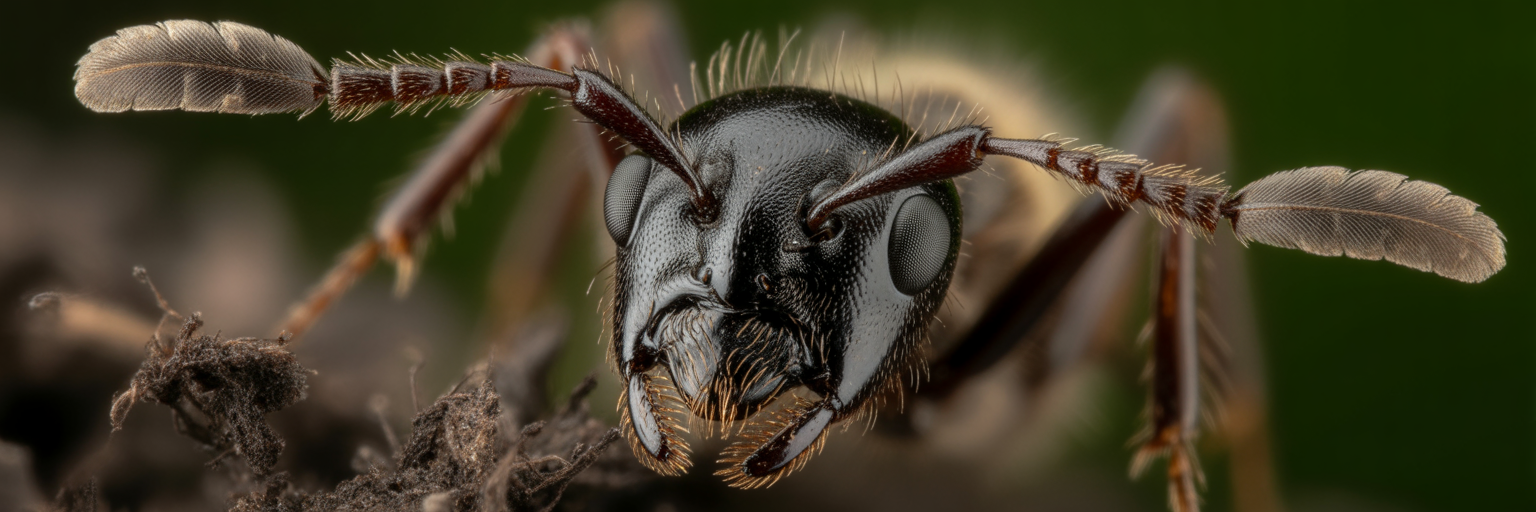
The most likely mechanism driving this response is chemistry. A wounded ant almost certainly releases specific chemical signals, or pheromones, that alert its nestmates to its distress and trigger a helping response. The key to the two-tiered treatment system may lie in the chemical profile of the wound itself. It is plausible that an injury to the muscle-rich femur releases a different cocktail of chemical compounds compared to an injury to the tibia. Healthy ants, detecting these subtle differences with their highly sensitive antennae, are instinctively prompted to perform either amputation or intensive cleaning.
This raises a debate over terminology. Is it truly “surgery” or “medicine”? While the actions function like medicine and the amputation is functionally a surgical procedure, it is more accurately described as a highly evolved, programmed behavioral response. This distinction helps avoid anthropomorphism—attributing human thoughts and feelings to animals—while still acknowledging the incredible complexity and effectiveness of the action. The discovery of these ants that amputate challenges our very definitions of animal intelligence and tool use. Here, the ants’ own mandibles become life-saving instruments, demonstrating how complex and beneficial outcomes can arise from simple, rule-based behaviors. The ability to detect subtle chemical changes is a common survival tool in the animal kingdom. It’s not unlike how another animal that can smell disease before symptoms even start uses its powerful olfactory senses to identify changes invisible to the eye.
What Ant Healthcare Teaches Us About Cooperation
The medical behaviors of Florida carpenter ants offer a profound lesson in the power of social cooperation. This intricate system of triage, wound cleaning, and amputation is a powerful example of how evolution can produce sophisticated healthcare at the colony level. It demonstrates that the drive to preserve the lives of individuals is not exclusive to vertebrates but can be a fundamental strategy for success in social insects as well.
This discovery has significant implications for the fields of entomology and animal behavior. It opens up entirely new avenues of research into how social insects manage disease, injury, and overall colony hygiene. While we now know what these ants do and why it works, many questions remain, highlighting that science is an ongoing process of inquiry. How exactly did this two-tiered treatment system evolve? Are there other, more subtle chemical signals that guide the ants’ actions? Do other closely related ant species exhibit similar, perhaps less dramatic, forms of medical care?
Ultimately, the study of this “simple” insect fundamentally shifts our perspective. It forces us to appreciate the complex and often surprising strategies that life employs to survive and thrive. The Florida carpenter ant, once seen as just another tireless worker, now stands as a testament to the hidden complexities of the natural world, reminding us that even the smallest creatures can hold the biggest secrets about cooperation, resilience, and the instinctual drive to heal.
Frequently Asked Questions About Ant Amputation
- Do other ant species perform amputations?
While many ant species have hygienic behaviors like grooming, this specific, targeted amputation based on wound location is exceptionally rare. The Matabele ants of Africa are known to rescue injured nestmates and treat their wounds, but the highly specialized triage system seen in Florida carpenter ants appears to be unique so far. - How do the ants know a nestmate is injured?
The primary mechanism is believed to be chemical. The injured ant likely releases distress pheromones, and the wound itself emits a distinct chemical signature. Healthy ants detect these signals with their antennae, which triggers the helping response and may even inform which treatment to apply. - Does the amputated ant feel pain?
This is a complex question. Insects have nervous systems that allow them to detect and react to harmful stimuli, a process called nociception. However, they lack the brain structures found in humans and other vertebrates that are associated with the emotional experience of “pain.” So, while the ant certainly detects the injury, it does not “feel” pain in the same way we do. - Can an ant survive with fewer than six legs?
Yes, ants are remarkably resilient. Losing a leg might slightly affect their speed or agility, but they can function very well within the colony with five or even four legs, continuing to contribute to foraging and other tasks. - Is this the only example of ‘medical’ care in insects?
No, there are other forms of social immunity and healthcare in the insect world. For example, honeybees use a substance called propolis, which has antimicrobial properties, to line their hives and disinfect the colony. Other ant species meticulously groom each other to remove fungal spores and prevent outbreaks of disease.