
Nature’s Microscopic Horror Director
Imagine a common housefly buzzing around your kitchen, completely oblivious to its impending doom. It lands on a windowpane where a fellow fly rests, strangely still. This is where our story begins, with a microscopic villain orchestrating a gruesome play. The Entomophthora fungus, whose name chillingly translates to “insect destroyer,” is one of nature’s most cunning horror directors. It doesn’t just kill its victims; it turns them into unwilling actors in a multi-act tragedy designed for a single purpose: creating more victims.
The entire production is a masterclass in parasitic manipulation. It starts with a hostile takeover, a single spore landing on an unsuspecting fly. This isn’t a quick and merciful end. Instead, the fungus begins a quiet, internal feast, hollowing out its host from the inside while keeping it alive. The fly becomes a walking incubator, a biological time bomb ticking toward a spectacular finale. This is the essence of the Entomophthora muscae life cycle, a process far more sinister than a simple infection.
As the internal consumption nears its end, the fungus seizes control of the fly’s mind. This is where the true horror begins. The puppet master pulls the strings, forcing its host on a forced suicide mission. The infected fly, now a “zombie,” abandons its normal behavior and is compelled to climb to a high point. There, it assumes a bizarre death pose, gluing itself to the surface and raising its wings as if in a final, macabre salute. This isn’t random; it’s a calculated move to ensure what comes next is devastatingly effective.
With the fly dead and perfectly positioned, the fungus enters its final act: posthumous weaponization. The corpse is converted into a spore cannon. Specialized structures burst from the fly’s abdomen, firing projectiles with explosive force to shower the area below with infectious particles. But the horror director isn’t finished. Even after the artillery has fired, the corpse becomes a deceptive lure, emitting a chemical perfume that tricks healthy flies into attempting to mate with it. This final, ghoulish embrace guarantees the cycle continues. The fly killing fungus has written a perfect script, and every fly is a potential star.
The Fatal Touch: How Infection Begins
The infection doesn’t start with a dramatic chase or a cunning ambush. It begins with a silent, invisible threat. The entire process is a high-stakes infiltration, where the fungus must breach the fly’s defenses before it can begin its grim work. It’s a microscopic heist that unfolds in three distinct stages.
The Unguided Missile
The journey of a single spore is one of pure chance. The fungus plays a numbers game, releasing thousands of microscopic projectiles from a deceased host. These spores are not guided; they drift on air currents or are flung into the environment, hoping to make contact. Each spore is coated in a sticky substance, so if it happens to land on a fly’s leg, wing, or body, it adheres instantly. This fatal touch marks the beginning of the end, even though the fly has no idea it has just been tagged for destruction.
Breaching the Fortress
A fly’s exoskeleton, or cuticle, is its armor. It’s a tough, protective layer made of chitin. For the Entomophthora fungus, this is the first wall to breach. It overcomes this defense with a combination of chemical warfare and brute force.
- First, the spore germinates on the fly’s surface, growing a tiny tube called a germination tube.
- This tube develops a specialized structure at its tip known as a penetration peg, which focuses all its energy on a single point.
- The fungus then releases a cocktail of enzymes, including chitinases and proteases, that chemically dissolve the fly’s armor.
- As the cuticle softens, the fungus applies immense mechanical pressure, effectively drilling its way through the weakened spot and into the fly’s body cavity.
Evading the Bodyguards
Once inside, the fungus faces its next challenge: the fly’s immune system. The host’s body is patrolled by specialized cells called hemocytes, which act as internal bodyguards, seeking and destroying invaders. But this is a foe they are unprepared for. The fungus employs clever countermeasures, such as cloaking itself with molecules that make it invisible to the immune cells or releasing compounds that actively suppress the fly’s defenses. After successfully evading the bodyguards, the fungus transforms into yeast-like bodies that multiply and circulate freely in the fly’s blood, or hemolymph. The fortress has been breached, and the takeover is now irreversible. While this fungus has a potent attack, it’s interesting to explore the other side of this evolutionary arms race and learn how tiny insects survive fungal artillery fire in other contexts.
A Patient Parasite’s Internal Feast
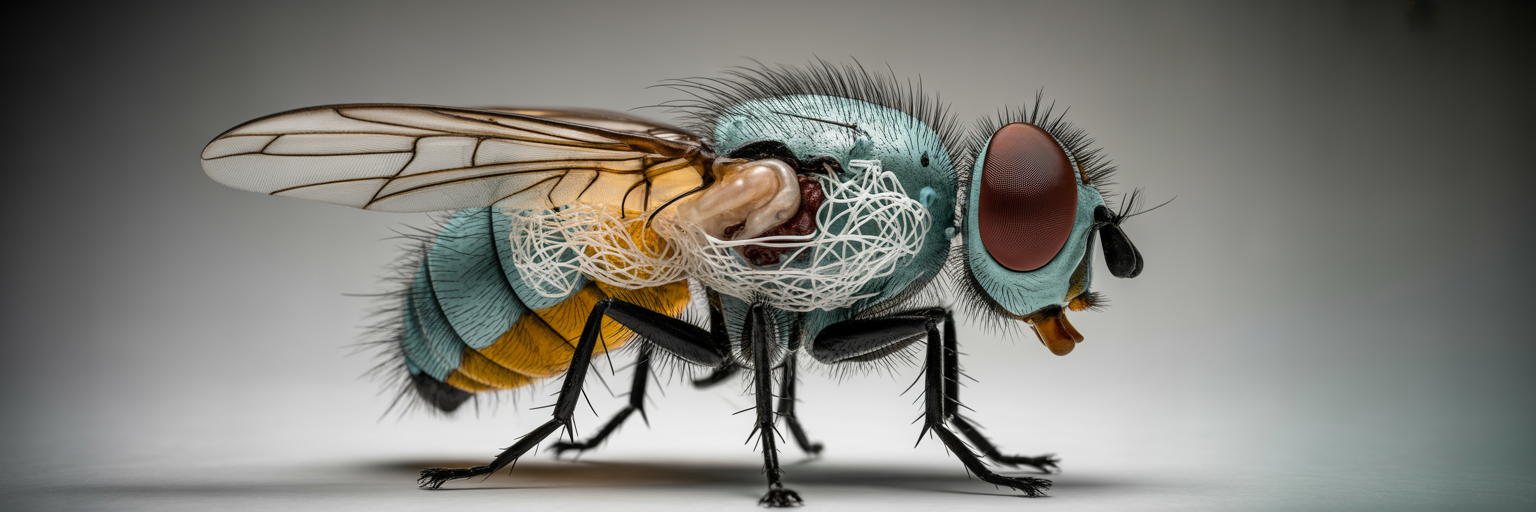
After the dramatic breach of the fly’s defenses, the fungus settles in for a long, quiet feast. This phase of the infection is a slow, creeping horror. The fly continues to move, eat, and appear relatively normal, all while being systematically consumed from within. The parasite is patient, following a strategic plan to maximize its own growth without killing its host prematurely.
The Strategic Buffet
The fungus doesn’t just eat indiscriminately. It acts like a squatter who knows how to make the supplies last, consuming the pantry before touching the plumbing. It begins by targeting the most nutrient-rich, non-essential tissues first. The fly’s fat bodies, which are its primary energy reserves, are the first to go. This strategic consumption allows the fungus to build up its own biomass while leaving the fly’s vital systems intact. It’s a chillingly efficient process where the host is hollowed out, its own substance converted into fungal matter, piece by piece.
Keeping the Puppet Alive
Why the careful approach? Because the fungus needs a mobile host. A dead fly is useless for the parasite’s ultimate goal: positioning itself for optimal spore dispersal. Therefore, the fungus deliberately avoids consuming the fly’s most critical organs. The central nervous system, the flight muscles, and the digestive tract are all left for last. This ensures the fly can continue to walk and fly, carrying its hidden killer with it. The host is kept alive as a living incubator and transport vehicle, completely unaware that its body is no longer its own. This strategy of preserving the host is a fascinating survival mechanism, mirroring other strange adaptations in nature, such as the animal that survives by shrinking its own organs to conserve energy during harsh times.
After about a week, the fungus has consumed nearly everything non-essential and reached a critical mass. The fly is now a hollow shell filled almost entirely with fungal cells. This is the trigger point. The feeding phase stops, and the fungus switches to its final, reproductive stage, preparing to seize control of the fly’s mind for one last act.
| Day | Fungal Activity | Outward Appearance of Fly |
|---|---|---|
| Day 1 | Spore penetrates cuticle; fungus establishes itself in the hemocoel. | Completely normal. |
| Days 2-4 | Fungus proliferates, consuming fat bodies and non-essential nutrients. | Mostly normal, perhaps slightly less active. |
| Days 5-6 | Fungal mass grows significantly, depleting most energy reserves. | Visibly sluggish, reduced flight activity. |
| Day 7 (Final Day) | Fungus reaches critical mass, ceases feeding, and begins producing mind-altering chemicals. | Erratic behavior begins, leading to the final climb at sunset. |
The Final Climb: Mind Control at Sunset
With the fly’s body converted into a fungal factory, the parasite initiates its most famous and unsettling maneuver: mind control. The fly is no longer an independent creature; it is a puppet, its brain and body hot-wired to serve the fungus’s reproductive needs. This is the part of the Entomophthora muscae life cycle that earns it the name zombie fly fungus.
The Zombie Trigger: An Entomophthora Fungus Special
As sunset approaches on its final day, the infected fly begins to behave erratically. It is overcome by an irresistible urge to climb. This “summiting” behavior forces the fly to move upward, whether it’s on a blade of grass, a plant stem, or a window frame. Scientists are still working to understand exactly how fungus controls insects with such precision. One leading hypothesis is that the Entomophthora fungus releases a cocktail of neuro-active chemicals that hijack the fly’s brain. Another theory suggests the fungus physically grows into the brain, manipulating neural circuits directly. Whatever the mechanism, the result is the same: the fly is driven to seek a high, exposed location against all its natural instincts. This form of parasitic manipulation is chillingly effective, and to see another example, you can read about what drives a snail to sacrifice itself for a parasite, forcing it into plain sight for predators.
The Purpose of the Pose
Once the fly reaches a suitable peak, the fungus forces it into a final, strategic death pose. This isn’t a random spasm; every part of the pose is engineered for maximum spore dispersal.
- Climbing High: An elevated position gives the spores a better launch point, allowing them to travel farther and cover a wider area.
- Gluing Down: The fungus forces the fly to extend its proboscis (its mouthpart) and secrete a sticky substance that glues it firmly to the surface. This ensures the corpse won’t be dislodged by wind or rain.
- Raising the Wings: In its final moments, the fly raises its wings up and away from its abdomen, creating a clear, unobstructed path for the spores that will soon erupt.
The timing of this death march is also brilliantly orchestrated. As an article in Science News highlights, the fungus appears to have its own internal clock, synchronizing the host’s death with sunset. This ensures the spores are released during the cooler, more humid nighttime hours, which gives them the best chance of survival before finding a new host.
The Corpse Cannon of the Entomophthora Fungus
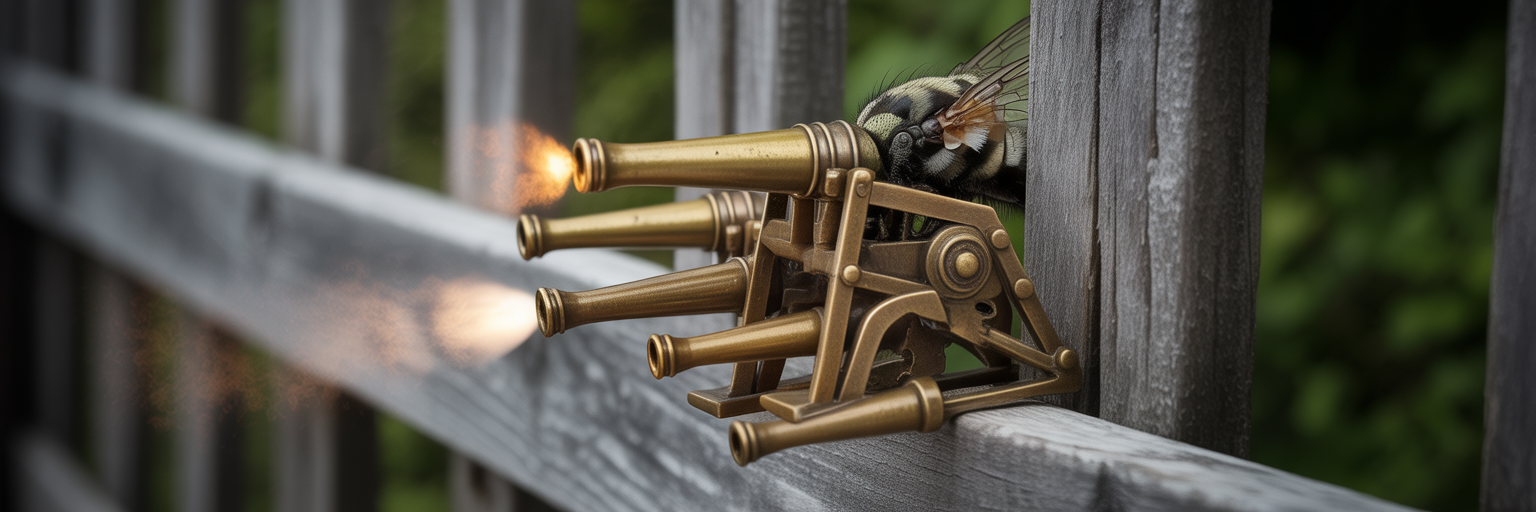
The fly is dead, glued to its perch in a macabre final pose. But for the Entomophthora fungus, the show is just getting started. The corpse is no longer a host; it has been fully converted into a piece of biological artillery. This post-mortem weaponization is what makes this parasite one of the most successful insect pathogenic fungi.
Building the Biological Artillery
In the hours after the fly’s death, a forest of fungal structures called conidiophores begins to grow, pushing through the soft membranes between the fly’s abdominal segments. The fly’s abdomen, once filled with its own organs, now bristles with what look like microscopic cannons. Each conidiophore is a marvel of biological engineering: a stalk with a single spore at its tip, sitting atop a fluid-filled sac. The fungus actively pumps water into these sacs, building up immense hydrostatic pressure. The dead fly is transformed into a warship, ready to unleash its payload.
The Explosive Discharge
When the pressure inside a conidiophore reaches its peak, the structure ruptures with incredible violence. The mechanism is like a champagne cork popping, but on a microscopic scale. Research published in the Journal of the Royal Society Interface describes this as a “soft water cannon,” capable of launching the spore at an astonishing acceleration—over 10,000 times the force of gravity. This explosive discharge ensures the spore is propelled far away from the corpse, creating a deadly “spore shower” that rains down on any unsuspecting flies below.
This is where the mind-controlled death pose pays off. The elevated position provides the range, and the raised wings ensure a clear field of fire. The fungus has turned its victim into a launch platform, using physics to guarantee its legacy continues. This use of a high-pressure projectile is a remarkable feat, but nature has other sharpshooters, like the archerfish that shoots bugs out of the air with water, showcasing different evolutionary paths to a similar goal.
A Fatal Attraction and the Fungal Legacy
Just when you think the fungus’s gruesome strategy couldn’t get any more devious, it reveals its final trick. The explosive spore cannon is a brilliant method for widespread dispersal, but the fungus has a second, more intimate method of transmission. This last act turns the fly’s corpse from a weapon into a deadly trap, ensuring even flies that escape the initial spore shower are not safe.
The Perfume of Death
After the initial barrage of spores has been fired, the fungus begins to alter the chemistry of the cadaver. It starts producing and releasing a cocktail of volatile chemicals. These compounds are not random byproducts; they are a carefully crafted perfume that mimics the sex pheromones of a healthy, receptive female fly. The dead fly, now covered in sticky fungal spores, begins to smell irresistible to healthy male flies in the area. It has become a bait, a siren calling out for a deadly embrace.
The Necrophiliac’s Embrace
The result is as grim as it is effective. Healthy male flies, lured in by the powerful chemical signal, are tricked into attempting to mate with the fungus-ridden corpse. This behavior, known as necrophilia, is the fungus’s trump card. Instead of relying on the chance contact of a drifting spore, this direct, prolonged physical contact all but guarantees infection. As the male fly tries to mate with the cadaver, it becomes covered in the sticky spores that remain on the corpse’s surface. This is nature’s ultimate femme fatale story, where attraction leads directly to death.
This bizarre luring strategy is a testament to the strange ways parasites can manipulate their targets, reminiscent of other natural oddities like the predator that hypnotizes prey with light before striking. By combining a long-range ballistic attack with a short-range chemical lure, the zombie fly fungus ensures its survival with terrifying efficiency. So the next time you see a fly sitting perfectly still on a windowpane, take a closer look. Is it merely resting, or is it a carefully placed puppet, waiting for its final curtain call?