Meet Nature’s Most Devious Con Artist
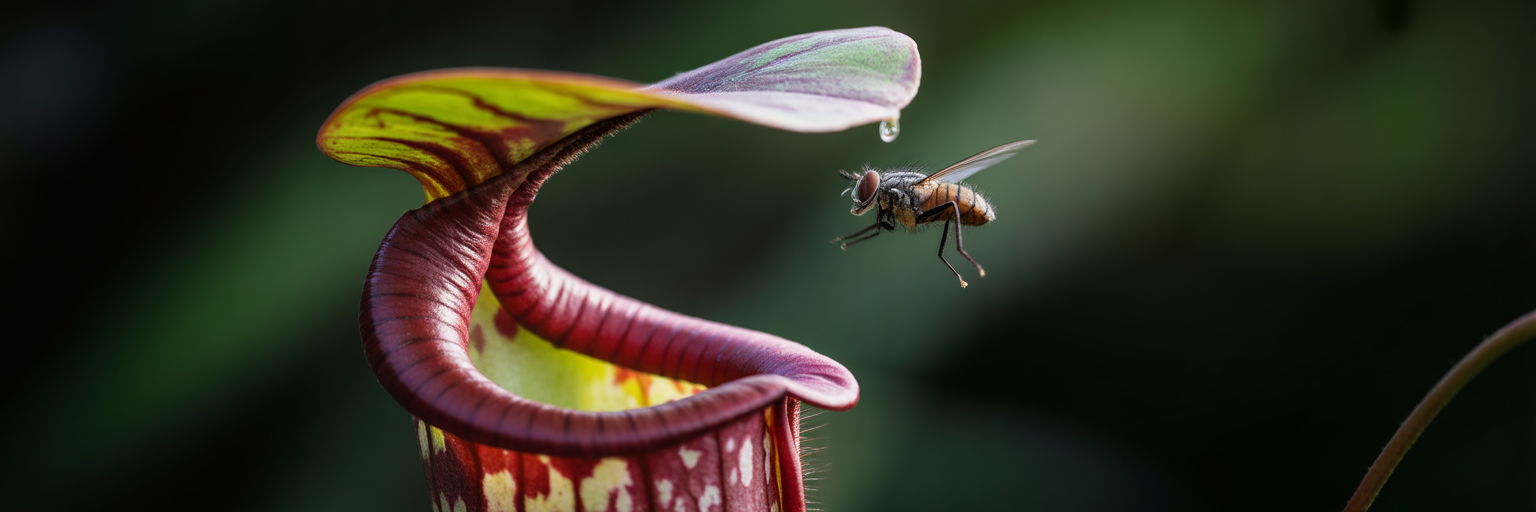
In the world of botany, some plants are content to just sit there and photosynthesize. Others, however, have developed a more ambitious business model. Meet the pitcher plant, nature’s most charming and ruthless scammer. It doesn’t chase its meals. It doesn’t even move. Instead, it runs a highly effective, and ultimately fatal, roadside attraction for the six-legged crowd. These are some of the most weird carnivorous plants you will ever encounter, operating less like a plant and more like a meticulously planned tourist trap.
Imagine you’re an ant, tired from a long day of hauling crumbs. You see it in the distance: a vibrant, beautifully colored structure that practically glows. It looks safe, inviting, and promises a sweet reward. This isn’t just a plant; it’s a billboard advertising the deal of a lifetime.
The Perfect Sales Pitch
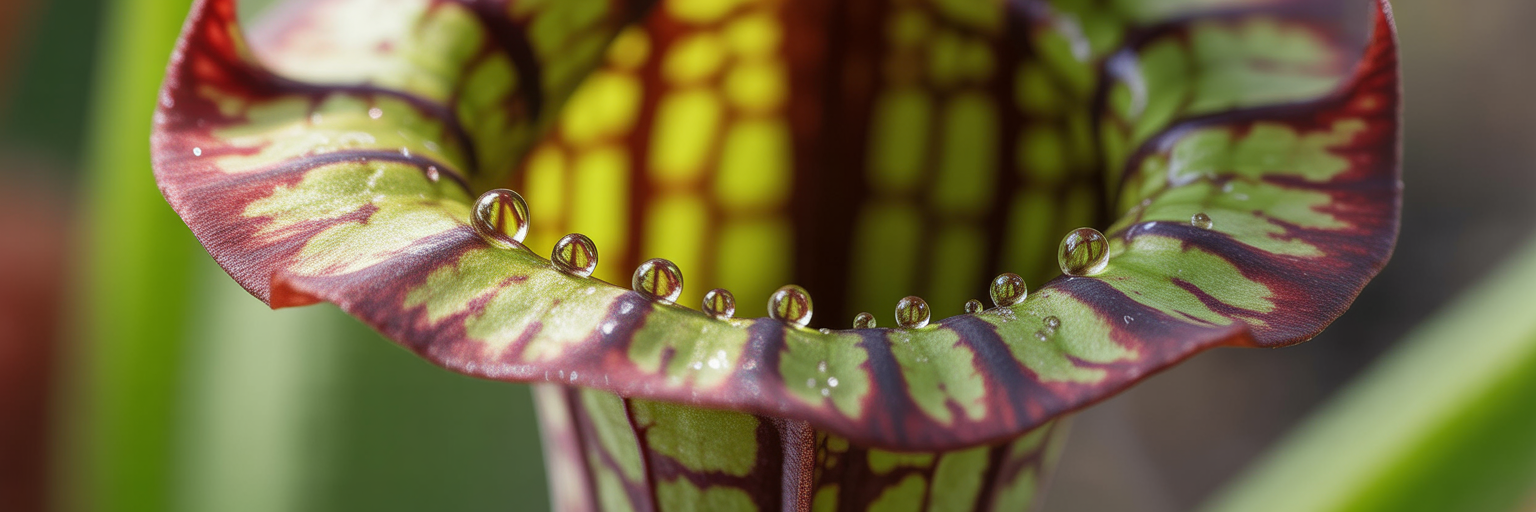
The pitcher plant’s entire appearance is a masterclass in marketing. Its vivid reds, purples, and greens are not just for show; they are a carefully crafted advertisement designed to mimic the appearance of a flower or ripe fruit. Glistening droplets of what looks like morning dew bead along its rim, promising a refreshing drink. The entire setup screams “rest stop.” It’s the botanical equivalent of a neon sign flashing “Free Buffet.”
This isn’t accidental beauty. Every line, every color pattern, seems to guide the eye—and the feet—of a curious insect upward, toward the most promising, and most perilous, part of the structure. The plant presents itself as a generous benefactor in a harsh world, offering a safe haven and a sugary meal with no strings attached. It’s the perfect bait, a setup so convincing that it has worked for millions of years.
An Offer You Can’t Refuse
From an insect’s perspective, the value proposition is irresistible. Thirsty? Here’s nectar. Hungry? More nectar. Tired? Here’s a wide, stable-looking lid to rest your wings on. The plant’s sales pitch is simple and brutally effective because it targets the most basic, primal needs of its victims. It’s an offer that seems too good to be true, and for the insects that accept, it is.
The plant doesn’t need to lie, not really. It just presents an alluring truth—the presence of food and water—while conveniently omitting the fine print. That fine print, of course, involves a one-way trip into a digestive abyss. This elaborate deception isn’t born from malice but from necessity. Evolving in nutrient-poor soils, the pitcher plant had to get creative to survive. It became a predator by becoming the most convincing con artist in the swamp, setting the stage for a botanical heist millions of years in the making.
Anatomy of a Botanical Booby Trap
To appreciate the genius of this scam, you have to look at the hardware. The pitcher plant is not just a pretty leaf; it’s a marvel of predatory engineering, a biological prison where every component serves a sinister purpose. Forget the gentle image of a flower. This is a blueprint for a deathtrap, and each part has been optimized for maximum efficiency.
The Pitcher: A One-Way Ticket
The main body of the trap is the pitcher itself, a modified leaf that has curled into a deep, hollow vessel. This isn’t just a container; it’s the holding cell. Its shape is deceptively simple, often resembling an elegant vase or horn. But its smooth, curved walls are the first sign that this is no ordinary flower. The interior is designed to be inescapable, a pit from which there is no return. The very structure is the foundation of the pitcher plant deception mechanism, funneling victims toward their doom.
The Peristome: The Slippery Welcome Mat
The rim of the pitcher, known as the peristome, is where the con gets personal. It’s the welcome mat to the house of horrors. This feature is often the most visually striking part of the plant, adorned with candy-striped patterns and glistening with nectar. To an insect, it looks like the perfect place to get a foothold and enjoy a free drink. The veins on the pitcher often act like runway lights, guiding the prey directly to this treacherous edge. This visual trickery is a common theme in nature; as detailed in an article on how some animals use fake eyes to ward off danger, appearances are rarely what they seem.
But the peristome’s beauty hides a deadly secret. Its surface is covered in microscopic ridges that, when wet with nectar or rainwater, become almost frictionless. It’s a surface engineered for slipping, turning a stable-looking ledge into a water slide straight into the pitcher’s depths.
The Lid: A Deceptive Umbrella
Above the opening sits the lid, or operculum. Many assume it’s a convenient umbrella to keep rain from flooding the pitcher, or perhaps a handy landing pad. Both assumptions are wrong. The lid is an integral part of the scam. Far from being a safe platform, its underside is often coated with even more nectar glands, tempting insects to hang upside down for a taste. It serves as a final lure, ensuring that even the most cautious visitor is positioned directly over the abyss. It doesn’t close to trap prey; it doesn’t need to. Its job is to complete the illusion of a safe, sheltered feeding spot.
| Trap Component | Apparent Function (The ‘Scam’) | True Function (The ‘Reality’) |
|---|---|---|
| The Lid | A safe, flat landing pad or a protective umbrella from rain. | A nectar-covered lure and part of the funneling system. |
| The Peristome (Rim) | A colorful, stable edge offering a free, sugary drink (nectar). | A micro-structured, ultra-slippery surface designed for losing footing. |
| Vibrant Colors & Patterns | An attractive flower or ripe fruit, signaling a food source. | Visual runway lights guiding prey directly to the treacherous rim. |
| The Pitcher Cavity | A sheltered, deep flower structure. | A pitfall prison with inescapable walls and a digestive fluid pool. |
The Psychology of an Unsuspecting Victim
To understand why this trap works so well, you have to stop thinking like a human and start thinking like a bug. An insect’s world is a relentless cycle of seeking energy, water, and safety. The pitcher plant doesn’t just build a trap; it builds a solution to all of an insect’s problems, exploiting its most fundamental instincts with terrifying precision. The victim isn’t stupid; it’s being played by a master of psychological manipulation.
Exploiting Primal Instincts
For a fly, an ant, or a bee, life is a high-stakes game of survival. Every decision is driven by an ancient, hardwired need for sugar (energy) and moisture. The pitcher plant’s vibrant colors signal a potential source of nectar, just like a flower. The glistening liquid on its rim promises to quench a desperate thirst. The structure itself suggests shelter from wind or predators. The plant is hacking the insect’s brain, sending a series of signals that all scream, “This is exactly what you’re looking for.” It’s a perfect storm of temptation, tailored to an insect’s most basic desires. This exploitation of instinct is a fascinating, if grim, part of biology, raising questions like the one explored in the mystery of why bugs flip over when they die.
The Power of Scent
The deception isn’t just visual. Many pitcher plants are also masters of olfactory warfare. They emit sweet, floral scents that travel on the breeze, acting as a fragrant beacon to foraging insects. This chemical lure is often the first point of contact, drawing victims in from afar long before they even see the trap. Some species have even evolved to produce scents that mimic the pheromones of other insects, adding another layer of trickery to their arsenal. This fragrant invitation masks the plant’s predatory nature, making it one of the most effective plants that trick insects by appealing to multiple senses at once.
A Multi-Layered Phishing Scheme
Think of the pitcher plant’s strategy as a perfectly crafted phishing email. The scent is the catchy subject line that gets you to open it. The vibrant colors and patterns are the convincing logos and layout that make it look legitimate. The promise of nectar is the too-good-to-be-true offer of a free prize. And the slippery rim is the malicious link you click just before realizing your mistake.
Each layer of deception reinforces the others, creating an overwhelmingly convincing illusion. The insect follows a logical sequence of cues—scent, sight, taste—each one leading it closer to the trap. By the time the victim is sipping nectar from the peristome, it has no reason to suspect that it’s standing on the precipice of doom. It’s not a single trick; it’s a campaign of manipulation.
The Point of No Return

There’s a moment of pure confidence for the insect. It has navigated the world, found a source of food, and is now enjoying its reward. It stands on the colorful rim of the pitcher, a triumphant forager. And then, in an instant, everything goes wrong. This is the climax of the con, the moment the trap springs. It’s a sequence of events so brutally efficient that it leaves no room for error and no chance of escape. Understanding this process is key to knowing exactly how pitcher plants trap insects.
The fall is not a clumsy accident; it’s a carefully engineered certainty. Here is the chilling, step-by-step breakdown of the point of no return:
- The Slip: The insect’s feet, which can grip almost any surface, suddenly find no purchase on the peristome. The combination of the rim’s microscopic texture and the thin film of nectar or water creates an aquaplaning effect. The victim’s footing is gone in a microsecond. It’s like stepping on black ice.
- The Slide: Once the slip occurs, gravity takes over. The inner walls of the pitcher are often coated in a layer of loose, waxy scales. As the insect scrambles for a grip, these scales flake off under its feet, acting like microscopic ball bearings. Every attempt to climb out only accelerates the slide downward.
- The Spikes: Should the insect somehow find a temporary foothold, a secondary security system kicks in. Many species have a band of stiff, downward-pointing hairs lining the inside of the pitcher. These hairs act like the spikes on a security fence, allowing movement in only one direction: down. Climbing up is impossible.
- The Pool: At the bottom of the pitcher lies the “welcoming committee”: a pool of thick, viscous liquid. This is not just water. It’s a soupy mix of digestive enzymes and wetting agents that immediately begins to break down the victim. The fluid is so dense and sticky that it makes swimming or climbing impossible, quickly suffocating the struggling insect.
This ruthless efficiency is a stunning example of natural adaptation, a reminder that survival often requires ingenious and terrifying tools. It’s a process as specialized as that of the animal that uses bubbles as tools, where evolution has produced a perfect, inescapable system.
Advanced Deception and Rain-Powered Traps
Just when you think the pitcher plant’s scam couldn’t get any more elaborate, you discover that the basic pitfall trap is just the beginning. Some species have refined their methods to a terrifying degree, developing advanced forms of deception and even outsourcing the dirty work to the weather. This isn’t just predation; it’s innovation.
Outsourcing the Dirty Work to Weather
Meet *Nepenthes gracilis*, a species that has developed a particularly passive-aggressive trapping method. Instead of relying solely on an insect slipping on its own, this plant uses rain as a weapon. Its lid is positioned perfectly above the opening, but it’s not rigid. It acts as a springboard. As reported by Scientific American, this rain-powered mechanism allows the plant to harness external energy for capture. When a raindrop strikes the lid, it vibrates violently, catapulting any insects resting on its underside directly into the pitcher below.
This is an incredibly energy-efficient strategy. The plant doesn’t have to produce as much slippery nectar or maintain complex surfaces. It simply has to wait for a passing shower to do the trapping for it. It’s the botanical equivalent of setting a tripwire and letting nature take its course.
Other Tricks of the Trade
The pitcher plant family is a hotbed of evolutionary creativity. Their ingenuity doesn’t stop with slippery rims and rain-powered lids. Here are a few other tricks up their leaves:
- False Windows: Some species, like the cobra lily, have translucent patches on the upper parts of their pitchers. Flying insects that fall inside see these “windows” and mistake them for an exit. They fly toward the light, repeatedly bumping against the wall until they become exhausted and fall into the digestive fluid below.
– Symbiotic Scams: Not all pitcher plants are purely predatory. Some have entered into bizarre partnerships. The mountain tree shrew, for example, uses a particular species of pitcher plant as a toilet. It licks nectar from the lid while defecating into the pitcher. The plant gets a reliable source of nitrogen from the shrew’s droppings, a clever trade-off that turns a predator into a partner.
These varied strategies show that the pitcher plant is not a one-trick pony. It is a family of con artists, each with its own unique and terrifyingly effective method for survival.
The Method Behind the Botanical Madness

After exploring the intricate traps, the psychological manipulation, and the sheer ruthlessness of the pitcher plant, one question remains: why? Why would a plant go to such extraordinary lengths to become a predator? The answer isn’t malice or sport. It’s a simple, brutal matter of survival.
A Killer’s Motivation
Pitcher plants typically grow in bogs, swamps, and other nutrient-poor environments. The soil they live in is often acidic and lacks essential nutrients like nitrogen and phosphorus, which most plants absorb through their roots. This is where the scam becomes a necessity. Unable to get these vital building blocks from the ground, the pitcher plant had to find an alternative source: insects. Each captured bug is a tiny, walking fertilizer packet. These are some of the most fascinating carnivorous pitcher plant facts: the entire, elaborate trap is nothing more than a highly specialized root system, moved above ground to capture nutrients from the air instead of the soil. The digestive fluid breaks down the insect’s body, releasing the nitrogen and phosphorus that the plant needs to grow. It’s not a choice; it’s a solution to a fundamental environmental problem, much like how some plants have evolved unique senses, such as the plant that can sense when its neighbor is being attacked, to navigate their surroundings.
Nature’s Terrifying Ingenuity
The pitcher plant is a perfect paradox. It is a thing of immense beauty, with elegant shapes and vibrant colors that could rival any flower. Yet, it is also a silent, ruthlessly effective predator, a testament to nature’s terrifying creativity. It reminds us that the line between beautiful and brutal is often blurry. The plant’s strategy is so optimized, so perfectly tailored to its goal, that it almost feels intelligent.
Just as the pitcher plant has perfected its strategy for luring prey, humans have developed their own complex systems for attracting attention. The principles of effective luring and conversion in nature can even offer insights into modern challenges, such as finding the right digital marketing strategies to boost website traffic. The pitcher plant stands as a quiet, beautiful, and chilling reminder that in the game of survival, the most creative player often wins.