An Introduction to Nature’s Most Extreme Escape Artist
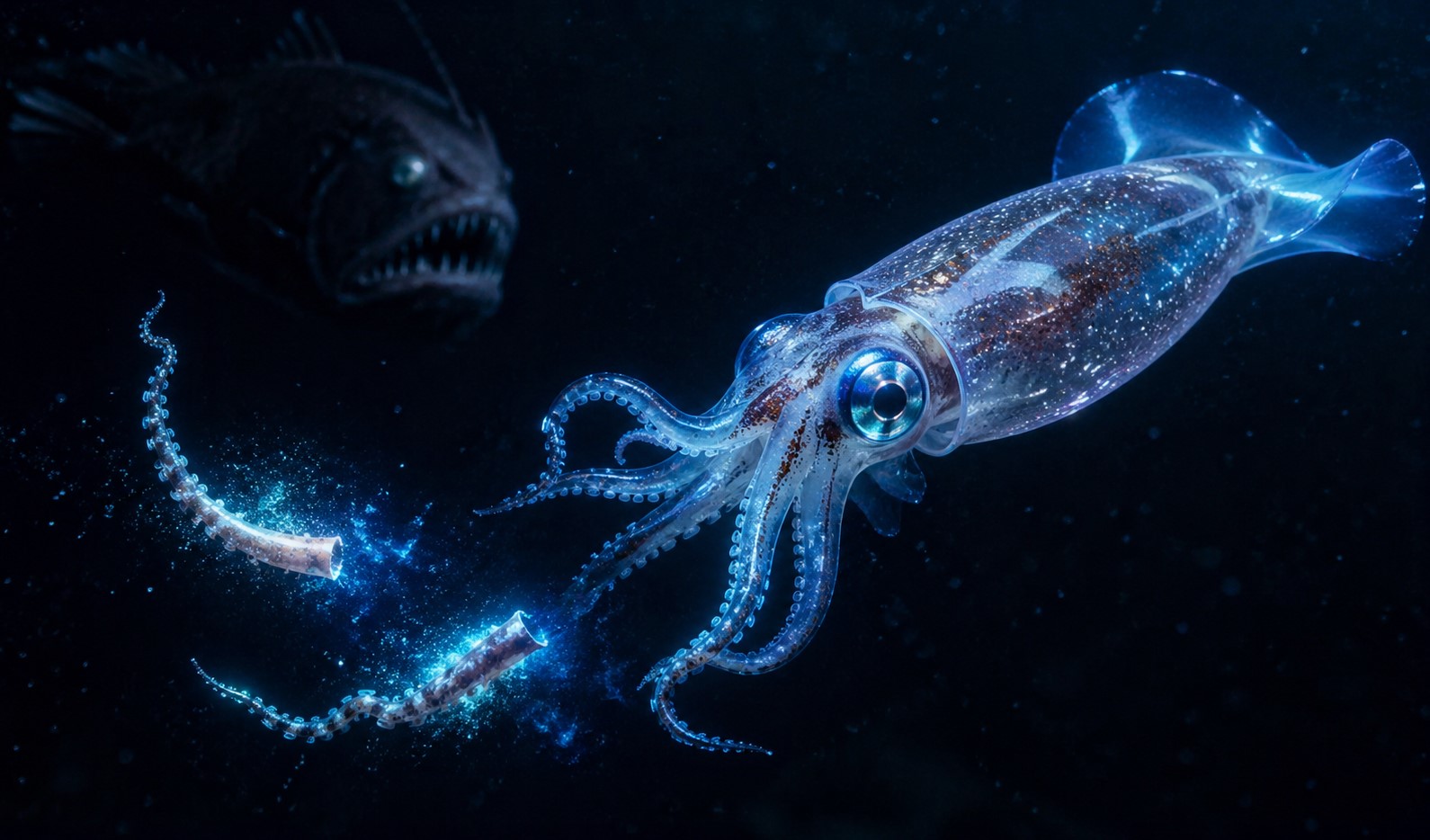
Let’s get one thing straight. When the deep-sea squid, *Octopoteuthis deletron*, gets into a fight, it doesn’t just run away. It leaves a piece of itself behind on purpose. Not as a sad, torn-off casualty of battle, but as a wriggling, glowing, zombie-like distraction. Imagine a cartoon character running so fast they leave a dust cloud in their shape. Now imagine if that dust cloud could punch back. That’s this squid.
This bizarre superpower has a scientific name: autotomy. You’ve seen a milder version in lizards that drop their tails to escape a cat. It’s a classic move. But this squid takes it to a whole new level. It doesn’t just passively let a limb break off when grabbed. It actively rips its own arm off and sometimes even attaches it to the predator before making a clean getaway. It’s less of a defensive drop and more of an offensive, self-mutilating counterattack.
This behavior immediately brings up some unsettling questions. Why would any creature evolve such a gruesome talent? What kind of horrors lurk in the deep sea that make ripping off your own arm a better option than fighting or fleeing? This isn’t just one of the many weird ocean animals; it’s an evolutionary overachiever in the self-sabotage department. It has perfected the art of saying, “You want a piece of me? Fine, have one. I’ll just grow it back later.” The story of this squid is a journey into a world where the rules of survival are written in a language of beautiful, terrifying nonsense.
Life in the Crushing Dark of the Deep Sea
To understand why a squid would resort to such an extreme tactic, you first have to appreciate the place it calls home. It’s not just dark down there; it’s a fundamentally hostile reality that makes self-amputation seem like a perfectly reasonable career move.
The Twilight Zone: A World of Pressure and Silence
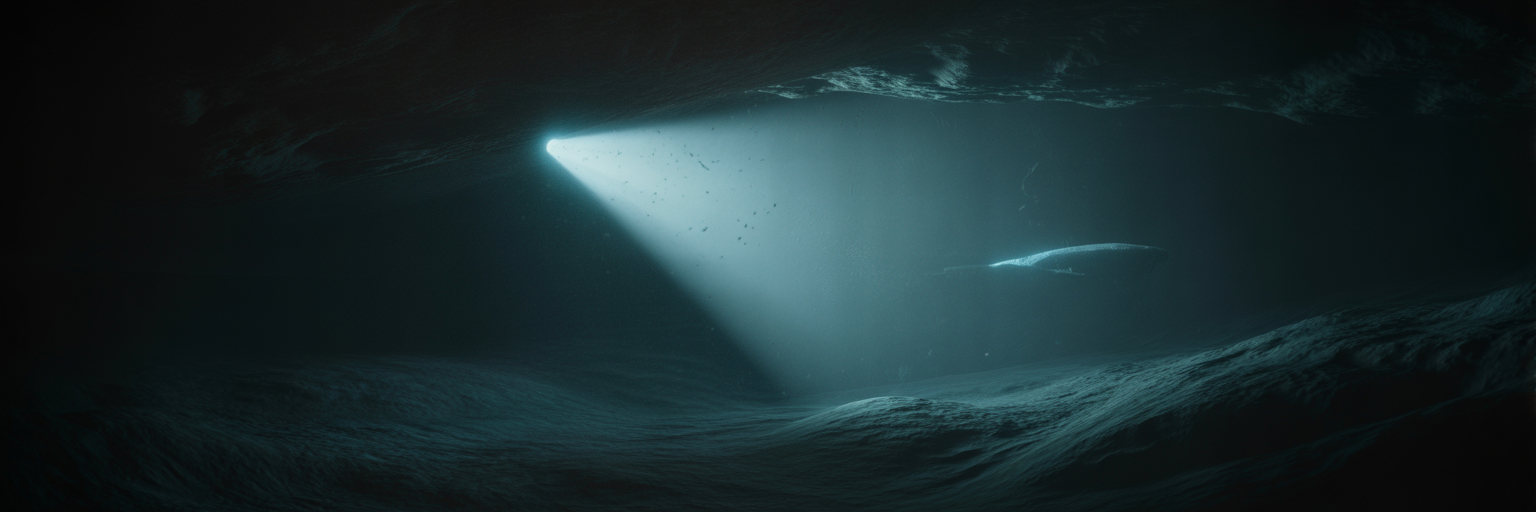
The *Octopoteuthis deletron* lives in the mesopelagic zone, better known as the twilight zone. Here, the pressure is immense, equivalent to having a grand piano balance on your thumbnail. The water is frigid and sunlight is a distant memory. The only light comes from the creatures themselves, flickering and glowing in the oppressive blackness. It’s a silent, crushing void where life operates under a completely different set of rules. Some creatures have even evolved to hypnotizes prey with light, turning the darkness into a weapon.
Nowhere to Hide, Everywhere to Be Eaten
Unlike a bustling coral reef with its endless caves and crevices, the twilight zone is mostly empty space. There are no rocks to duck behind, no seaweed to blend into. It’s a vast, three-dimensional arena where every encounter is sudden and potentially fatal. Food is incredibly scarce, which means every living thing is on the menu. You are either hunting, or you are being hunted, and there is no in-between. This constant, low-grade paranoia is the backdrop for every moment of existence.
Why a Detached Arm is the Perfect Decoy
The predators here are the stuff of nightmares: sperm whales, viperfish with needle-like teeth, and other, bigger squids. In the pitch-black, they hunt not just by sight but by touch and by detecting the faint glow of bioluminescence. A simple cloud of ink, a standard part of most squid defense mechanisms, is less effective here. It’s too fleeting. But a detached arm? That’s a different story. A disembodied limb that continues to writhe, flash, and glow is the ultimate distraction. It’s a sensory bomb that overwhelms a predator’s senses, giving the squid the precious seconds it needs to vanish.
The Biological Mechanics of Self-Amputation
The squid’s ability to detach its arm isn’t a messy, desperate act of panic. It’s a highly controlled, biologically engineered process that has been refined over millions of years. It’s less like a gruesome accident and more like a stunt car shedding a panel on cue.
Autotomy: More Than Just a Panic Button
When we think of animal autotomy examples, the gecko’s tail drop is the classic. A predator grabs the tail, and it pops off. But the *Octopoteuthis deletron* is far more proactive. It can initiate the detachment itself, often as an offensive move. Instead of waiting to be grabbed, it will sometimes latch onto a predator and then sever the arm, leaving its attacker with a very confusing, very angry appendage to deal with. This isn’t just an escape; it’s a parting gift of pure chaos.
A Clean Break: The Squid’s Built-In Perforations
So how does it achieve such a clean break? The squid’s arms have predetermined weak points, almost like the perforated edge of a tear-off coupon. These are specific locations where the muscle tissue is designed to separate under controlled contraction. When the squid decides it’s time, it doesn’t tear the arm off with brute force. Instead, it sends a signal that causes the muscles at that specific point to contract violently, creating a clean snap. There’s minimal tissue damage and blood loss, making the process incredibly efficient. As documented by National Geographic, scientists from the Monterey Bay Aquarium Research Institute have observed this firsthand, confirming it’s a deliberate and precise biological function.
The Glowing Lure: Bioluminescence as a Weapon
The real genius of this strategy lies in the arm’s tip. It’s covered in photophores, light-producing organs that the squid controls. Even after being detached from the squid’s body and its nervous system, the arm continues to twitch and flash for a significant amount of time. In the absolute darkness of the deep sea, this glowing, writhing limb becomes an irresistible target. The predator, which thought it had a full meal, is now completely preoccupied with a single, distracting, and ultimately unsatisfying piece of its intended victim.
A Moment-by-Moment Breakdown of the Great Arm Escape
To truly appreciate the brilliance of this tactic, let’s walk through a typical encounter. This is a play-by-play of how squids escape predators when they’re one of nature’s most bizarre escape artists.
- The Approach: A predator, maybe a large, big-eyed fish, silently emerges from the blackness. The squid doesn’t see it coming, but it feels the subtle shift in water pressure—a sign that something is wrong.
- The Attack: The fish lunges, its jaws aiming for the squid’s body but snagging one of its long, trailing arms instead. The trap is sprung.
- The Counter-Move: Instead of trying to pull away, which would be a futile tug-of-war, the squid does the exact opposite. It tightens the suckers on that arm, gripping the predator firmly. It ensures the arm is not just caught, but securely attached to its attacker.
- The Detachment: In a fraction of a second, the squid triggers the internal mechanism. A powerful muscle contraction at the arm’s base severs the limb cleanly. The arm is now free from the squid’s body but remains stuck to the confused predator, writhing and flashing its bioluminescent lures.
- The Escape: While the predator is completely baffled by the disembodied, counter-attacking limb, the squid engages its jet propulsion. It shoots backward into the darkness, often releasing a small puff of ink as a final, theatrical flourish. It’s a stunning use of misdirection, not unlike how other animals that use visual tricks to fool their enemies.
The High Price of Leaving a Limb Behind
This incredible survival trick doesn’t come for free. While autotomy guarantees escape from an immediate threat, it comes with significant long-term costs. It’s a brutal calculation made in a world where survival today is worth almost any price tomorrow.
The Cost of Doing Business
Every time the squid performs its great arm escape, it’s making a massive biological investment. Losing a limb is a serious handicap, even if it’s temporary. This is one of the most extreme squid defense mechanisms, and it’s reserved for moments of absolute desperation.
Life with Seven Arms
An arm is a crucial tool for a squid. It’s used for hunting, maneuvering through the water, fending off rivals, and potentially for mating. Being short-handed makes the squid less efficient at catching the already scarce food in the deep sea. It also makes it more vulnerable to other predators until the limb grows back. It’s a trade-off: immediate survival in exchange for a period of heightened risk and difficulty.
The Slow Road to Recovery
The good news is that the arm does regenerate. The bad news is that this process is incredibly slow and energy-intensive. In the resource-starved environment of the twilight zone, regrowing a complex appendage complete with muscles, nerves, and photophores is a monumental undertaking. All the energy that goes into regeneration is energy that can’t be used for growth, hunting, or reproduction.
This table breaks down the brutal evolutionary math:
| Factor | Immediate Benefit (Survival) | Long-Term Cost (Handicap) | Evolutionary Justification |
|---|---|---|---|
| Predator Encounter | Guaranteed escape from a predator’s grasp. | N/A | Survival is the primary driver of selection. |
| Energy Expenditure | Minimal energy used for the detachment itself. | Massive energy required to regenerate a complex limb. | It’s better to spend energy later than to be eaten now. |
| Hunting & Feeding | Survives to hunt another day. | Reduced efficiency in catching prey with one less arm. | A 7-armed hunter is better than a dead 8-armed one. |
| Future Defense | Avoids immediate death. | Increased vulnerability to subsequent attacks until regeneration is complete. | The strategy assumes encounters are not constant back-to-back events. |
What Makes This Squid So Uniquely Bizarre

Plenty of cephalopods are masters of escape, but the *Octopoteuthis deletron* operates on a different level. Its strategy is a highly specialized adaptation that sets it apart from its more conventional relatives.
Not Your Average Cephalopod Escape Plan
Most squids and octopuses rely on a standard toolkit for survival: jet propulsion for speed, ink clouds for misdirection, and incredible camouflage to avoid being seen in the first place. If they lose a limb in a fight, it’s a traumatic injury, not a pre-planned strategic maneuver. For them, losing an arm is a failure. For *O. deletron*, it’s a resounding success. This is one of the most important Octopoteuthis deletron facts: it has turned a weakness into its greatest strength.
The Pioneer of ‘Attack Autotomy’
What this squid practices is a specific form of self-amputation known as “attack autotomy.” This isn’t just about passively dropping a body part to get free. It’s about actively using that body part as a weaponized decoy. By clamping the arm onto the predator before detaching it, the squid transforms its limb from a liability into an asset. It’s a tactic that requires a unique combination of anatomy and behavior, making this squid a true innovator in the world of self-defense, much like another animal with a highly unusual survival method we’ve explored.
The Evolutionary Logic Behind Self-Sacrifice
So, why did this one squid go down such a strange evolutionary path? The answer lies in a combination of environmental pressure, anatomical opportunity, and the simple, brutal logic of natural selection.
The ‘Disposable Parts’ Philosophy
In a high-risk environment like the deep sea, having renewable, disposable body parts is a huge advantage. The deep sea squid arm autotomy is the ultimate expression of this philosophy. The arms are treated as expendable assets. It’s better to lose a part of the machine and live to fix it later than to have the whole machine destroyed. This approach is a testament to how evolution prioritizes survival above all else.
From Accidental Breakage to Deliberate Strategy
It’s easy to imagine how this trait might have evolved. Perhaps the ancestors of this squid simply had arms that broke off easily by accident during predator attacks. The individuals whose arms broke off more cleanly were more likely to survive and reproduce. Over millions of years, natural selection would have favored any mutation that made this process more controlled and deliberate, eventually leading to the sophisticated, on-demand system we see today. As confirmed by information from a trusted institution like the Smithsonian, this form of autotomy is a highly specialized defense mechanism.
Exploiting the Predator’s Mind
Ultimately, the genius of this strategy is that it hacks the predator’s brain. A predator is hardwired to focus on movement and light. The struggling, glowing, disembodied arm is a more powerful and confusing stimulus than the fleeing squid itself. It’s a sensory overload that triggers the predator’s most basic instincts, causing it to focus on the decoy while the real prize slips away into the darkness. It’s not just a physical escape; it’s a form of biological warfare.
Mysteries That Remain in the Deep
For all we’ve learned, the *Octopoteuthis deletron* remains shrouded in mystery. Our knowledge of this creature is incredibly recent, made possible only by advanced deep-sea submersibles that can venture into its world. Every observation reveals just how much we still don’t know about life in the abyss.
We are left with so many questions. How long does it actually take for an arm to regenerate in that cold, nutrient-poor environment? Is there a limit to how many times a squid can perform this trick in its lifetime? What other mind-bending survival tactics are still waiting to be discovered in the crushing dark?
The arm-dropping squid is more than just a creepy oddity. It’s a powerful reminder that the deep ocean is one of Earth’s last great frontiers, filled with life that operates by rules we can barely begin to comprehend. It’s a testament to the strange, brutal, and beautiful creativity of evolution, and one of the many bizarre wonders of the natural world that continue to challenge our understanding of what it means to survive.