
A Silent Hunter in the Carolina Swamps
In the soggy, nutrient-starved bogs of North and South Carolina, the soil is a thin, acidic soup. It’s a place where survival is a game of cheating the system. Here, among the pitcher plants and sundews, a silent predator has perfected its craft. This is the native home of Dionaea muscipula, the Venus flytrap, and it is nothing like the quirky novelty you might find in a plastic pot at a hardware store. This is its killing field.
The plant itself lies low, a rosette of leaves pressed against the damp earth like a crouched body. From this base, it sends up its weapons: modified leaves that function as gaping mouths, held open and waiting. The edges are lined with what look like teeth, and the inner surfaces often blush a deep, alluring red. A sheen of nectar glistens on the lobes, not as a sweet offering, but as a deceptive invitation to a waiting guillotine. This is the world of carnivorous plants in North Carolina, where the line between flora and fauna blurs into a predatory haze.
We are conditioned to see plants as passive, static lifeforms. They are the scenery, the backdrop against which the real drama of life, the hunting and fleeing, takes place. The Venus flytrap quietly refutes this. It is a stationary organism that behaves with the calculated patience of an ambush predator. It waits, it senses, it judges, and it strikes with terrifying efficiency. It is a plant that eats insects not by accident, but by design.
This bizarre behavior captivated Charles Darwin, who, after extensive experiments, described it as one of the “most wonderful plants in the world.” He was fascinated by its speed and its seemingly intelligent responses to touch. He understood that this was not just a plant. It was a hunter, born from an environment so poor that it had to evolve a way to supplement its diet with flesh. The question that puzzled Darwin still fascinates us today: how does a plant, with no muscles, nerves, or brain, learn to hunt?
Anatomy of a Botanical Bear Trap
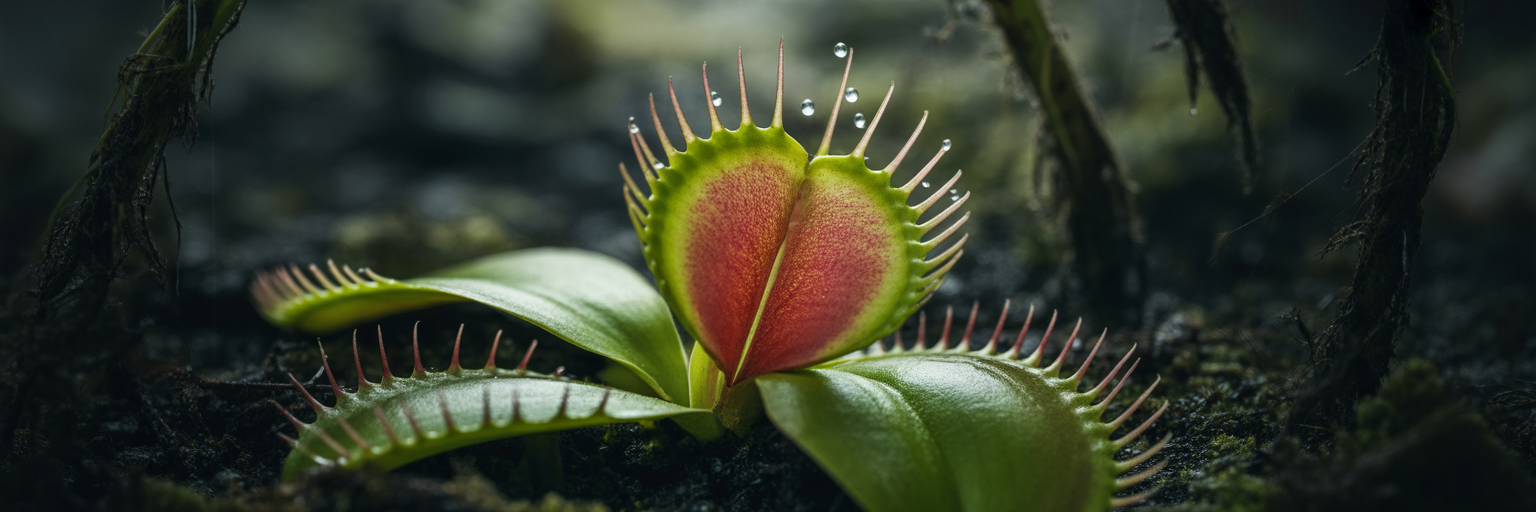
To understand the hunt, you must first understand the weapon. The Venus flytrap’s trap is a masterpiece of biological engineering, a piece of deadly machinery honed by millions of years of evolution. It’s not just a leaf; it’s a spring-loaded, baited, and triggered device that operates with chilling precision.
The Hinged Jaws and Caged Teeth
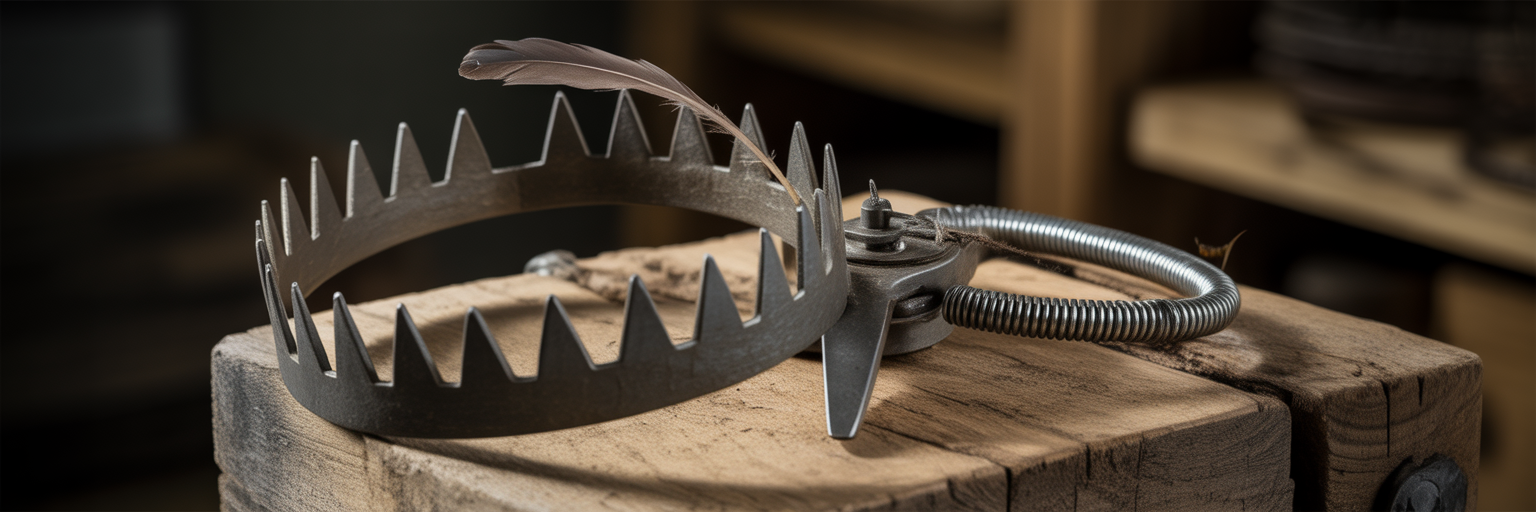
Each trap consists of two lobes connected by a thick midrib that acts as a hinge. The edges of these lobes are lined with stiff, hair-like projections called cilia. When the trap snaps shut, these cilia interlock perfectly, forming the bars of a cage. Their purpose isn’t to crush the prey, but to imprison it. This design ensures that a victim, once caught, has no chance of escape. It’s less like a mouth and more like a botanical bear trap, designed for capture and containment.
The Sweet Lure of the Trap
The inner surface of the lobes is the kill zone. It’s often pigmented a reddish color, a visual signal that attracts insects. More importantly, this surface is dotted with tiny nectar glands that secrete a sugary fluid. An unsuspecting fly or spider, drawn by the promise of a free meal, lands on the trap and begins to feed. It has no idea that it is standing on the trigger plate of its own execution. This use of deceptive coloration and bait is a common strategy in nature, a reminder that not all signals are honest, much like the way some animals use fake eyes to scare predators.
The Hair-Trigger Sensors
On the inner surface of each lobe are three, sometimes four, tiny, almost invisible trigger hairs. These are the plant’s sensors, the tripwires for the entire mechanism. They are incredibly sensitive. A slight touch to one of these hairs is all it takes to alert the plant to a potential meal. But the plant is smarter than to react to a single stimulus. It has a system to avoid false alarms, a way to distinguish the valuable, struggling legs of an insect from a worthless, falling raindrop. The trap is built on a principle of bistability, like a contact lens that has been flipped inside out. It is stable in its open state, but it is loaded with hydraulic tension, just waiting for the right signal to snap shut.
The Two-Touch Countdown to Oblivion
The true genius of the Venus flytrap isn’t just its speed, but its “brain.” The plant possesses a form of short-term memory, a system that allows it to count and make a decision before committing its energy to a kill. This entire process is governed by the Venus flytrap trigger mechanism, a system that is both simple and ruthlessly effective.
Imagine an insect landing on the inviting, nectar-coated surface. As it moves, it brushes against one of the trigger hairs. This is the first touch.
- First Touch: The plant registers the contact. An electrical signal, an action potential similar to a nerve impulse in an animal, is generated at the base of the hair. But the trap does not move. Instead, it starts a silent, internal countdown, which lasts for about 20 seconds. The plant is now on alert, waiting for confirmation.
- Second Touch: If the insect, or any other object, touches any of the trigger hairs a second time within that 20-second window, it provides the confirmation the plant needs. A second electrical signal is generated, and this time, the trap is triggered. The hunt is on.
- No Second Touch: If 20 seconds pass without a second touch, the plant “forgets” the first stimulus. The memory is wiped, and the trap resets its internal clock. This is a crucial energy-saving filter. It prevents the plant from wasting a precious snap on a raindrop, a piece of wind-blown debris, or a gust of air.
This two-touch system is a remarkable adaptation. It ensures the plant only invests its energy when there is a high probability of a nutritious meal. It’s a form of information processing, proving that plants can receive, store, and act on data from their environment. This ability to process information before acting is not unique, as we’ve seen in the plant that can count before it eats, but the Venus flytrap executes it with lethal speed.
A Snap Faster Than a Blink
Once the second touch confirms the presence of prey, the trap’s response is anything but slow. The closure happens in under 100 milliseconds. For context, a human blink takes about 300 to 400 milliseconds. The plant moves three to four times faster. It is one of the most rapid movements in the plant kingdom, making it arguably the fastest carnivorous plant on Earth.
So, how does a plant with no muscles achieve this incredible speed? The secret lies in a process sometimes called “acid growth,” but it’s better understood as a rapid hydraulic change. The electrical signals from the trigger hairs cause a near-instantaneous shift in water pressure within the leaf cells. Water is pumped from the cells on the inner surface of the lobes to the cells on the outer surface. This sudden influx of water causes the outer surface to swell and expand explosively.
The best analogy is to imagine a halved tennis ball that has been popped inward. It’s stable in that inverted position, but it holds a lot of stored elastic energy. A small push is all it takes to make it violently snap back to its original shape. The Venus flytrap’s lobes are the same. They are held open in a state of tension, convex like the outside of a bowl. The rush of water flips this curvature, causing the lobes to snap to a concave shape, like the inside of a bowl. According to a study in the journal Nature, this explosive movement is a result of the leaf rapidly changing its shape, releasing stored elastic energy to trap its prey.
This incredible speed is a direct evolutionary answer to the quick reflexes of its prey. A fly can take off in a fraction of a second. To catch it, the plant had to evolve a trap that was faster.
The Sealing of the Green Tomb
The snap is just the beginning of the horror for the trapped insect. The immediate aftermath is a two-act drama of imprisonment and execution. First, the trap enters a “caged” phase. The interlocking cilia on the edges of the lobes form a prison, but the seal is not yet airtight. This is another one of the plant’s brilliant energy-saving filters. Tiny insects, too small to provide a worthwhile meal, can often squeeze through the bars and escape. This saves the plant from wasting a full digestive cycle on a low-value snack.
The struggling of a larger, more substantial insect inside the cage is the final confirmation the plant needs. This continued stimulation of the trigger hairs signals that a worthy meal has been caught. Now, the second act begins: the slow, deliberate sealing of the tomb. Over the next several hours, the lobes press together with immense force, creating a hermetic seal. The cage has now become a stomach.
With the chamber sealed, the glands on the leaf’s inner surface, which once offered sweet nectar, now have a more sinister purpose. They begin to secrete a cocktail of digestive enzymes into the enclosed space. This corrosive fluid begins to break down the soft tissues of the trapped prey. The plant is, in essence, an external stomach, digesting its victim alive within its sealed leaves. This gruesome strategy of consuming another organism for survival is a recurring theme in nature, sometimes taking even more unsettling forms, like animals that eat their own siblings before birth.
A Slow Feast and a Final Exoskeleton

The feast is a long, slow, and methodical process. It can take anywhere from 5 to 12 days for the plant to fully digest its meal. This answers a fundamental question about how do Venus flytraps work: they are not hunting for energy. Like all green plants, they get their energy from the sun through photosynthesis. They are hunting for something far more precious in their native soil: nutrients.
The acidic bogs they call home are desperately poor in nitrogen and phosphorus, essential building blocks for proteins and DNA. The insect’s body is a rich source of these elements. The digestive enzymes dissolve the soft parts of the prey into a nutrient-rich soup, which the leaf then reabsorbs. It’s the equivalent of the plant taking a vitamin pill to supplement its poor diet.
After the digestion is complete, the trap slowly reopens. All that remains of the victim is the indigestible exoskeleton, a dry, hollowed-out husk. It sits on the surface of the leaf, a grim testament to the kill, before it is eventually washed away by rain or blown away by the wind. It’s a stark reminder of the final fate of the prey, much like the strange posture we see when bugs flip over upon death.
This entire process comes at a great metabolic cost. Each trap has a limited lifespan. It can only perform this hunt and digest cycle three to five times before it loses its ability to snap shut. After its final meal, the trap withers, turns black, and dies. Every snap is a high-stakes gamble, which is why the plant has evolved so many checks and balances to ensure it only acts when the reward is worth the cost.
| Stage | Duration | Mechanism | Purpose |
|---|---|---|---|
| Waiting | Indefinite | Open trap with nectar lure and armed trigger hairs | Attract potential prey |
| Triggering | < 20 seconds | Two touches on trigger hairs create an electrical signal | Confirm living prey and avoid false alarms |
| Snapping | < 100 milliseconds | Rapid change in cell water pressure flips the lobes | Capture fast-moving prey before it can escape |
| Sealing | Several hours | Lobes press together to form an airtight chamber | Create a sealed ‘stomach’ and prevent escape |
| Digesting | 5-12 days | Enzymes dissolve the prey’s soft tissues | Extract nitrogen and phosphorus from the prey |
| Reopening | 12-24 hours | Nutrient soup is absorbed; trap slowly opens | Discard the indigestible exoskeleton and reset for the next hunt |
The Evolutionary Logic of a Killer Plant
After witnessing this entire sequence of luring, trapping, and digesting, it’s easy to see the Venus flytrap as a freak of nature. But it’s not. It is the perfect, logical, and inevitable product of its environment. The entire complex system, from the trigger hairs to the digestive enzymes, is a direct adaptation to one single problem: the nutrient-poor soil of the Carolina wetlands.
The trap is an incredibly expensive piece of equipment in terms of energy. This is why the plant has evolved so many evolutionary trade-offs and safety measures. The two-touch trigger, the escape gap for small prey, and the limited number of snaps per trap are all part of a cost-benefit analysis written into its genetic code. The benefit of the nitrogen and phosphorus gained from a large insect must outweigh the significant energy cost of the hunt.
Here are some of the key Venus flytrap facts that highlight its remarkable adaptations:
- Selective Triggering: It uses a two-touch system to distinguish prey from inanimate objects, saving energy.
- Rapid Movement: It snaps shut in less than a tenth of a second by using a rapid hydraulic process, not muscles.
- Nutrient Extraction: It digests prey not for energy, but for essential nutrients like nitrogen and phosphorus that are absent in its native soil.
- Limited Use: Each trap is a high-cost tool that can only function a few times before it withers and dies.
Ironically, the plant that so perfectly mastered its environment is now threatened by the changes in ours. It is listed as a vulnerable species due to habitat loss from development and poaching by collectors. The silent hunter of the swamps, a testament to evolution’s bizarre and unsettling creativity, is slowly disappearing.
The Venus flytrap shatters our expectations of what a plant can be. It is not a passive organism. It is a patient, calculating predator that proves that in the struggle for survival, life will find a way, even if that way is to turn a leaf into a bear trap.