Identifying the Gentle Giant of the Wasp World
The sight of a huge wasp buzzing low over the lawn is enough to send anyone running for cover. When that same insect starts excavating a hole in your flowerbed, it’s natural to feel alarmed. But before you reach for a can of spray, it’s important to understand who this visitor is. More often than not, this intimidating insect is the cicada killer, a creature whose fearsome appearance hides a surprisingly docile nature.
Visual Identification and Distinguishing Features
The cicada killer is one of the largest wasps in North America, with females reaching up to two inches in length. Their size alone is startling. They have a reddish-brown head and thorax, a black abdomen marked with distinct, jagged yellow bands. This coloration is often the first point of confusion, as many people mistake them for hornets or other aggressive wasps. However, their markings are less uniform than the clean-edged stripes of a yellowjacket and their behavior is completely different.
Solitary Nature vs. Social Wasp Colonies
Here is the most critical distinction: cicada killers are solitary. Unlike social wasps like hornets and yellowjackets that live in large colonies with a queen and hundreds of workers, each female cicada killer works alone. She builds her own nest, hunts her own prey, and provides for her own offspring. This solitary lifestyle means she has no colony to defend. She will not swarm or attack aggressively because her primary focus is on the singular task of reproduction, not guarding a shared home. This is why you can often walk right past an active burrow without provoking the wasp inside.
Understanding Male and Female Behavior
The answer to the question, “are cicada killers dangerous?” depends on which one you encounter. The males, which are smaller, are the ones you’ll see most often. They establish territories and patrol them, aggressively buzzing and dive-bombing anything that enters their space, including people, pets, and lawnmowers. It’s all a bluff. Male cicada killers do not have a stinger and are physically incapable of harming you. They are simply putting on a show to ward off rivals and impress females.
The female, on the other hand, does have a powerful sting. However, she is famously non-aggressive and reclusive. Her stinger is a tool for hunting, not defense. She spends most of her time digging her burrow or hunting for cicadas. You would almost have to step on her with a bare foot or grab her to provoke a sting. Her instinct is to flee, not fight, because an injury would end her one and only chance to reproduce.
| Feature | Cicada Killer Wasp | European Hornet | Yellowjacket |
|---|---|---|---|
| Size | 1.5 to 2 inches long | Up to 1.4 inches long | About 0.5 inches long |
| Color & Markings | Reddish-brown head/thorax, black abdomen with jagged yellow bands | Brown and yellow abdomen with teardrop-shaped black markings | Distinct, clean-edged black and yellow bands across the body |
| Behavior | Solitary; females are non-aggressive, males are territorial but cannot sting | Social; will defend nest aggressively in a swarm | Social; highly aggressive, especially near the nest |
| Nest Location | Individual burrows in dry, sunny soil | Large paper nests in hollow trees, attics, or wall voids | Paper nests, often underground in rodent burrows or in wall voids |
The Purpose Behind the Underground Nursery
After identifying this large wasp digging in the ground, the next logical question is, why is it digging? The piles of excavated dirt by your walkway or in a bare patch of your lawn are not signs of an infestation. Instead, you are witnessing a remarkable act of single-minded maternal dedication. The burrow a female cicada killer digs is not a home for herself; it is an underground nursery built exclusively for the next generation.
A Home Built Exclusively for Offspring
Unlike honeybees or social wasps that build nests to house an entire colony, the cicada killer’s burrow serves a single, temporary purpose. The adult female does not live in it, sleep in it, or use it for shelter. She will not overwinter there. Once her work is done and the summer ends, she will die, having never met the offspring she worked so tirelessly to protect. The entire structure, from the main tunnel to the individual chambers, is designed as a safe, climate-controlled incubator for her eggs and a larder for the larvae that will hatch from them.
The Imperative of Provisioning
The central reason for this elaborate excavation is provisioning. The female must stock each chamber with food for her young. This brings us to the question of what do cicada killers eat, or more accurately, what do their larvae eat. The answer is in their name: cicadas. The female wasp hunts down cicadas, paralyzes them with her venom, and drags them back to the burrow. The cicada is not dead, but kept in a state of suspended animation, providing a fresh, living food source for the wasp larva that will hatch from an egg laid upon it. The burrow is essentially a series of pantries, each stocked for a single offspring.
A Strategy for Species Survival
This behavior is a profound strategy for survival. As a solitary insect, the female cicada killer receives no help from a colony. She alone must expend an enormous amount of energy to excavate a burrow, hunt prey much heavier than herself, and provision multiple cells. This immense investment is a testament to the drive to ensure her genetic line continues. The female wasp’s dedication to provisioning her young, even at great personal cost, is a powerful survival strategy seen across the natural world. In a different but equally fascinating example, some creatures go to extreme lengths for their offspring, like the snail that sacrifices itself for a parasite to complete its life cycle, a behavior explored in detail in this article on nature’s crazy survival strategies. For the cicada killer, the messy digging you see is not a nuisance; it is a fundamental act of parental care that ensures the continuation of her species.
Selecting the Perfect Building Site
You may look at your yard and wonder, “Why here?” It can feel personal when your neighbor’s pristine lawn is untouched, while yours has become the preferred construction site for a large wasp digging in the ground. The choice is not random or malicious. The female cicada killer is a discerning architect, and your yard simply checked all the boxes on her list of ideal building conditions.
Ideal Soil Conditions for Excavation
The most important factor is the soil itself. A female cicada killer needs soil that is easy to dig. She is looking for well-drained, sandy, or loose loamy soil. She will actively avoid heavy clay, which is difficult to work, or soil that is compacted and wet. This is why you often find their nests in areas with less-than-perfect turf. A sparse lawn with bare patches is an open invitation, as a dense, thick root system from healthy grass acts as a significant barrier to excavation. The very spots in your yard that you might be frustrated with are the ones she sees as prime real estate.
The Importance of Sun and Warmth
Cicada killers are cold-blooded insects that rely on external heat for energy. Consequently, they have a strong preference for areas that receive direct sunlight, especially in the morning. A south or southeast-facing slope is ideal, as it warms up quickly and stays warm throughout the day. This warmth is crucial for two reasons. First, it gives the female the energy she needs for the exhausting tasks of digging and hunting. Second, the sun-baked soil helps incubate the brood cells, keeping the developing larvae at an optimal temperature. A shady, damp area of your yard is of no interest to her.
Common Nesting Locations in Residential Areas
Knowing their preferences, you can almost predict where they will appear. Look for them in:
- Bare patches in the lawn where grass has thinned out.
- The loose, tilled soil of flower beds and vegetable gardens.
- Along the edges of sidewalks, driveways, and patios where soil is often sandy and dry.
- The infields of baseball diamonds or in sand traps on golf courses.
- Underneath bird feeders where fallen seeds have inhibited grass growth.
Why Some Yards Are More Attractive Than Others
Putting it all together, the reason your yard was chosen is a combination of these factors. You likely have an area with the perfect mix of loose, dry soil and abundant sunshine. This preference for specific locations isn’t random; it’s a calculated choice based on environmental factors. According to research highlighted by North Carolina State University’s extension program, cicada killers actively seek out well-drained, sandy soil in full sun, which explains their frequent appearance in the driest, most exposed parts of a lawn or garden. Your neighbor’s lush, thick, and perhaps well-irrigated lawn may simply be too much work for a wasp looking for the path of least resistance.
The Intricate Architecture of a Wasp’s Nursery

Once a female cicada killer has selected the perfect site, she begins an impressive feat of engineering. The small pile of dirt at the entrance only hints at the complex structure that lies beneath. The cicada killer wasp nest is not just a simple hole in the ground; it is a carefully designed multi-room nursery, built to protect and sustain her offspring through their most vulnerable stages of life.
The Main Tunnel and Entrance
The construction begins with the entrance, a hole roughly the diameter of a quarter, often with a distinctive pile of excavated soil next to it. From this entrance, the female digs a main tunnel that typically slopes down at a 45-degree angle for about six to twelve inches before leveling out. This main corridor can extend anywhere from one to over three feet horizontally beneath the surface. The depth and length depend heavily on the soil type; looser, sandier soil allows for a much more extensive burrow than harder, more compacted earth.
Secondary Tunnels and Brood Chambers
The main tunnel is just the beginning. Branching off from this central corridor, the female excavates several shorter, secondary tunnels. At the end of each of these secondary tunnels, she carves out an oval-shaped chamber, known as a brood cell. Each cell is slightly larger than a cicada and will serve as an individual nursery for a single larva. A single, completed burrow can contain anywhere from five to more than fifteen of these individual brood cells, each representing a potential offspring.
The U-Shaped Mound as a Telltale Sign
The most visible and identifiable feature of an active nest is the mound of excavated soil at the entrance. As the female digs, she uses her legs to push the loosened dirt out of the tunnel. This creates a characteristic U-shaped or fan-shaped pile of soil around one side of the entrance hole. This mound is a clear indicator that you are looking at a cicada killer nest and not the burrow of another ground-nesting insect or rodent. The presence of this freshly disturbed earth is the best way to confirm that a nest is currently active.
Sealing Each Cell for Protection
The final architectural touch is perhaps the most important. After the female has provisioned a brood cell with a paralyzed cicada and laid an egg on it, she does not simply move on to the next one. She carefully backfills the secondary tunnel leading to that cell, sealing it off from the main corridor. This act of sealing each chamber protects the developing larva from predators, parasites, and even its own siblings in adjacent cells. Each offspring is given its own private, protected, and fully stocked room to grow. The cicada killer’s skill as an excavator is remarkable, but it’s just one example of how animals engineer their environments. For another look at a master tunneler, consider the star-nosed mole, an animal that builds complex burrows and possesses an incredible sensory system for hunting, as detailed in this look at nature’s expert diggers.
A Master Excavator at Work
Understanding the architecture of the nest is one thing; appreciating the sheer labor involved is another. The construction of a cicada killer’s burrow is a Herculean task undertaken by a single, determined insect. Watching a female at work reveals a process of incredible strength, efficiency, and persistence. She is a master excavator, equipped with the right tools and an unyielding drive to complete her project.
The Mechanics of Digging
The digging process is a coordinated, multi-step operation. The female begins by using her powerful mandibles, or jaws, to loosen the soil and break apart small pebbles or roots. As the soil is loosened, she uses her spiny forelegs to rake the dirt from the front of the tunnel back underneath her body. Then, in a powerful and characteristic motion, she uses her hind legs to kick the accumulated soil out of the tunnel entrance, sending it flying several inches behind her. This cycle of biting, raking, and kicking is repeated thousands of times, moving a surprising volume of earth one tiny load at a time.
Quantifying the Herculean Effort
To put her effort into perspective, consider the scale of the task. A single female cicada killer weighs less than a gram. Over the course of building a single burrow, she can excavate over 100 cubic inches of soil, which can weigh more than a pound. This means she moves a total mass that is hundreds, if not thousands, of times her own body weight. It is the human equivalent of a 150-pound person digging a 30-foot-long trench using only their hands and feet, moving tens of thousands of pounds of dirt in the process. It is a monumental undertaking fueled by instinct.
The Duration of the Building Process
Building a complete burrow is not a quick job. The entire process, from starting the entrance hole to provisioning the final cell, can take several days. The exact duration is heavily influenced by external factors. In soft, sandy soil on a warm, sunny day, she can make rapid progress. However, if the soil is hard and compacted, or if the weather turns cool and rainy, the process can be significantly delayed. She may work for several hours during the warmest part of the day, then rest, resuming her work the following day. This multi-day project demonstrates a level of persistence that is truly remarkable.
Sound and Activity During Construction
If you are near an active nest, you can observe this process firsthand. You will see the female periodically backing out of the hole to kick dirt away. You might also hear the low, industrious buzzing sound she makes while working inside the tunnel. This sound is not a sign of aggression; it is simply the vibration of her flight muscles, which she uses to help dislodge soil particles. These sights and sounds are the sensory evidence of a master excavator at work, transforming a patch of your lawn into a legacy for the next generation.
The Hunt and Provisioning Process
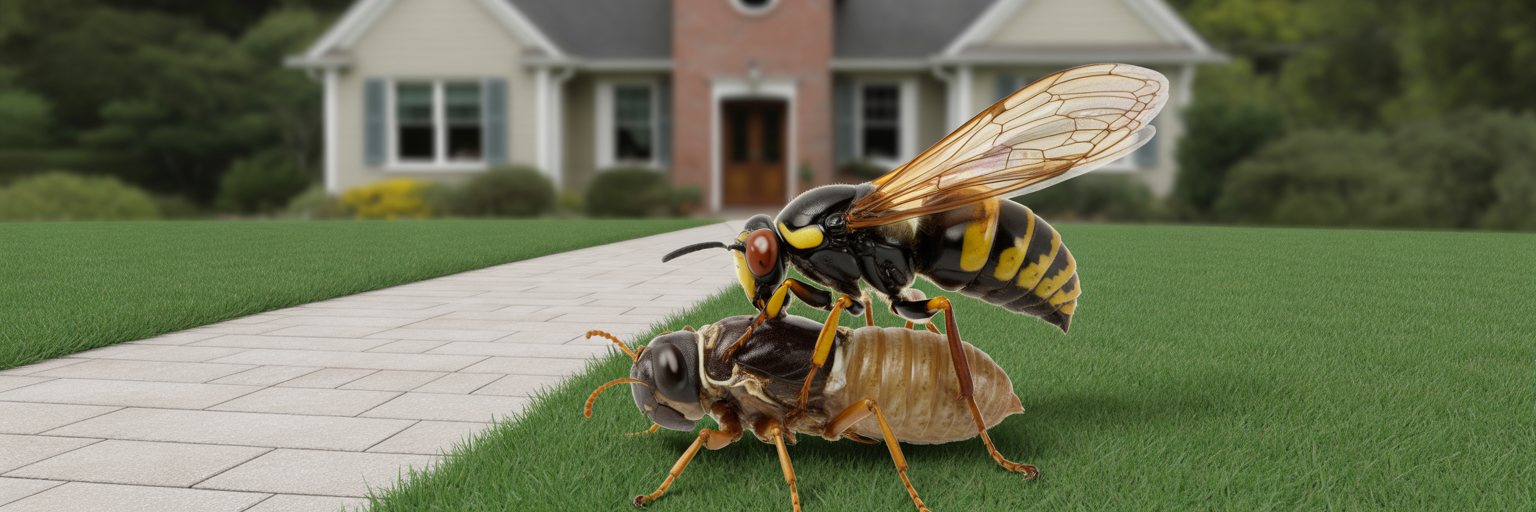
Once the underground nursery is partially or fully constructed, the female cicada killer shifts her focus to the second, and perhaps more dramatic, phase of her mission: the hunt. The entire purpose of the burrow is to house the provisions for her young, and that means she must now become a formidable predator. This process is a specialized and calculated sequence of locating, capturing, and transporting her chosen prey.
Locating and Ambushing the Prey
The female wasp is a patient hunter. She will often perch on a tree trunk or branch, remaining perfectly still as she scans her surroundings. She is not just looking for cicadas; she is listening for them. The loud, buzzing song of a male cicada is a beacon that leads her directly to her target. Once a cicada is located, she launches a swift and precise aerial ambush. She will often intercept the cicada mid-flight or pounce on it as it rests on a tree, engaging it in a brief, tumbling struggle that usually ends on the ground.
The Paralyzing Sting
During this struggle, the female wasp maneuvers her body to find a soft spot on the cicada’s underside, typically where the legs join the body. She then delivers a precise sting from her stinger. The venom is not designed to kill the cicada. Instead, it is a potent neurotoxin that induces complete paralysis. The cicada’s heart continues to beat, and its metabolic processes continue, but it is unable to move. This state of suspended animation is crucial, as it ensures that the cicada remains a fresh, living food source for the wasp larva that will eventually feed on it.
The Arduous Journey Back to the Nest
Capturing the prey is only half the battle. A cicada can be two or three times heavier than the wasp herself. Transporting this heavy, immobile prey back to the burrow is an immense physical challenge. If she captured the cicada on the ground, she will drag it, often walking backward, across the lawn to her nest. If she captured it in a tree, she will attempt to climb higher with her burden to launch into a short, clumsy, descending glide toward her burrow. It is a slow, laborious process, and you may witness her taking several rest breaks along the way.
Stocking the Larder
Upon reaching the nest, she drags the paralyzed cicada down into a pre-dug brood cell. There, she lays a single, tiny egg on the cicada’s body. Then, she exits the cell and seals it off. Interestingly, the female wasp appears to be able to control the sex of her offspring. She will typically provision a cell with only one cicada for a male offspring, but will stock two or even three cicadas for a female offspring, as the females are larger and require more food to develop. The cicada killer’s aerial ambush is a specialized hunting technique. Nature is filled with predators that have developed unique methods to catch their prey, such as the archerfish, which has mastered the art of shooting insects out of the air with a precise jet of water. You can learn about this incredible marksman in this story of nature’s sharpshooters.
Life Inside the Underground Cell
Once the female wasp seals the brood cell, her parental duties for that offspring are complete. She will never see it again. But inside that dark, subterranean chamber, a new life cycle is just beginning. The journey from a tiny egg to a full-grown adult cicada killer is a slow, methodical process of transformation, perfectly synchronized with the changing seasons.
From Egg to Larva
Within two to three days of being laid, the egg hatches. A small, white, legless grub, the wasp larva, emerges. Its first action is to burrow a small hole into the body of the paralyzed cicada. It is now ready to begin its one and only task for the next several weeks: to eat and grow.
A Grisly but Effective Feast
The larva’s feeding process is instinctual and brutally efficient. It begins by consuming the cicada’s fatty tissues and body fluids first, carefully avoiding the vital organs. This macabre strategy keeps the cicada alive for as long as possible, ensuring the food source remains fresh and does not decompose. Over the course of a week or two, the larva will methodically consume the entire cicada, leaving behind only the empty exoskeleton. During this time, the larva grows dramatically, molting its skin several times as it increases in size.
Spinning the Cocoon for Winter
Having consumed its entire provision, the now plump and fully-grown larva has one final task to complete before the onset of winter. It spins a thick, tough, silken cocoon around itself. This cocoon, often reinforced with particles of soil, is a protective case that will shield it from the cold, from moisture, and from any potential predators that might manage to break into the cell. It is inside this protective shell that it will spend the next nine to ten months.
Overwintering and Emergence
Throughout the fall and winter, the larva remains dormant within its cocoon in a state of hibernation known as diapause. As the soil warms in the late spring and early summer of the following year, the larva undergoes its final transformation. It pupates, the incredible process where its grub-like body is reorganized into the form of an adult wasp. Finally, in mid-summer, roughly a year after the egg was first laid, the new adult cicada killer chews its way out of the cocoon, digs its way up through the soil to the surface, and emerges into the sunlight. The males typically emerge first, ready to establish territories and await the emergence of the new females, thus restarting the cycle all over again. The larva’s dependence on a host for survival is a common theme in the insect world. Some species have evolved even more complex relationships, like the caterpillar that chemically tricks an entire ant colony into raising it as their own, a fascinating story of deception and survival you can explore in this tale of insect imposters.
Living Alongside These Solitary Diggers
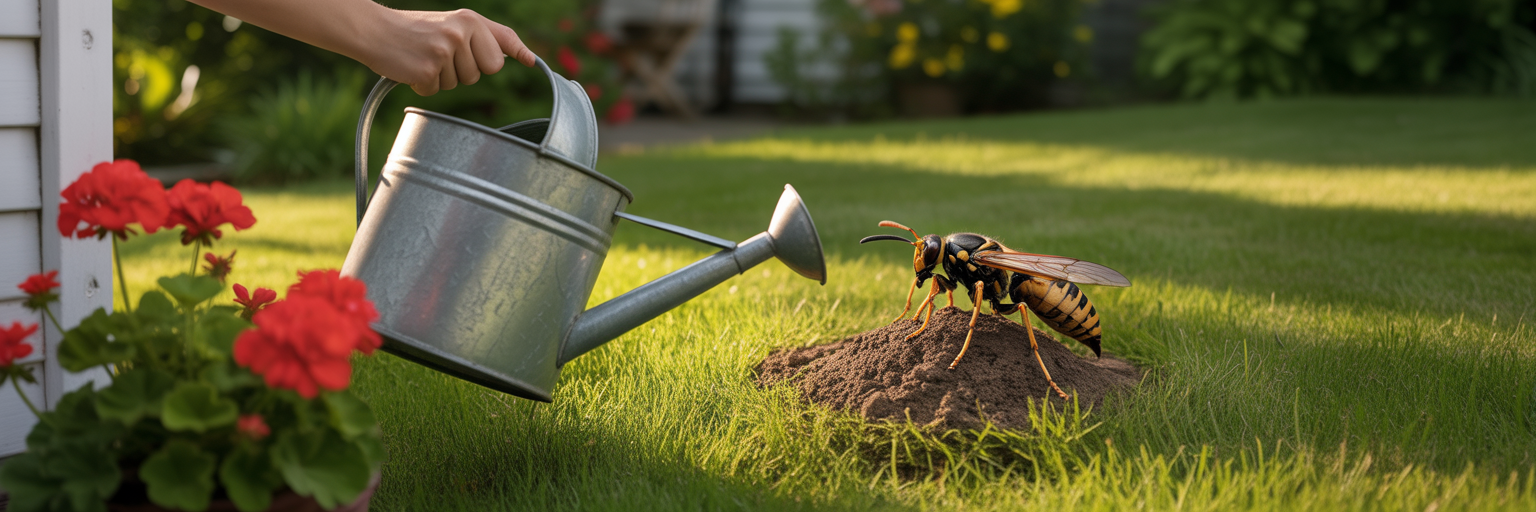
Now that you understand the what, why, and how of the cicada killer’s life, the question becomes what to do about the one digging in your yard. The answer, in most cases, is surprisingly simple: learn to live alongside it. Addressing the situation does not require panic or chemicals, but rather a calm assessment and an appreciation for the role these insects play in your local ecosystem.
Confirming the Nest and Assessing the Situation
First, confirm what you are dealing with. Look for the key signs: a large, solitary wasp, a burrow entrance about the size of a quarter, and the characteristic U-shaped mound of excavated soil. Observe the behavior. Is it a single female industriously digging and hauling, or a territorial male harmlessly buzzing about? Once you confirm it is a cicada killer, you can rest assured that you are not dealing with an aggressive, swarming pest like a yellowjacket.
Natural Pest Control Benefits
Before you think about how to get rid of cicada killers, consider their benefits. These wasps are a natural form of pest control. Cicadas, while mostly harmless, can cause damage to young trees when the females lay their eggs in the branches. By preying on cicadas, these wasps help to keep their populations in check, contributing to the balance of your backyard ecosystem. They are a sign of a healthy environment, one that is able to support both predator and prey.
Why Eradication is Rarely Necessary
Given their non-aggressive nature, the argument for eradication is weak. The female’s adult lifespan is short, only lasting for a single summer season. The mounds of dirt on your lawn are a temporary cosmetic issue that will disappear with the first heavy rain after the nesting season is over. The risk of being stung is exceptionally low unless the wasp is physically handled or trapped. In most residential settings, the wasps pose no real threat to people or pets, making chemical intervention an unnecessary and often harmful overreaction.
Non-Lethal Deterrence Strategies
If the wasps have chosen a particularly high-traffic area, such as a sandbox or right next to a doorway, and you feel you must take action, there are effective non-lethal deterrence strategies. The most effective method is habitat modification. Cicada killers want dry, loose soil. You can make their preferred nesting spots unattractive by watering them frequently. Soaking the area with a sprinkler for a few days will make the soil heavy and muddy, encouraging the female to find an easier place to dig. For a long-term solution, work on improving your lawn’s health. Overseeding and fertilizing to create a thick, dense turf will create a root barrier that is physically difficult for the wasps to penetrate.
| Method | Description | Pros | Cons |
|---|---|---|---|
| Observation & Coexistence | Allowing the wasps to complete their life cycle without intervention. | No cost or effort; supports local ecosystem; wasps are beneficial. | Temporary cosmetic mounds on the lawn; perceived (but low) sting risk. |
| Increased Watering | Soaking preferred nesting areas with a sprinkler to make the soil heavy and difficult to dig. | Non-lethal; safe for pets and children; improves lawn health. | Requires consistent effort; may not be 100% effective if soil drains quickly. |
| Lawn Improvement | Overseeding and fertilizing to create a thick, dense turf that physically obstructs digging. | Long-term solution; improves overall lawn appearance and health. | Takes time to establish; requires seasonal lawn care. |
| Chemical Control | Applying insecticide dust or sprays into the burrow entrance. | Quickly kills the individual wasp. | Unnecessary for a non-aggressive insect; risks harm to pollinators and pets; does not prevent re-nesting. |