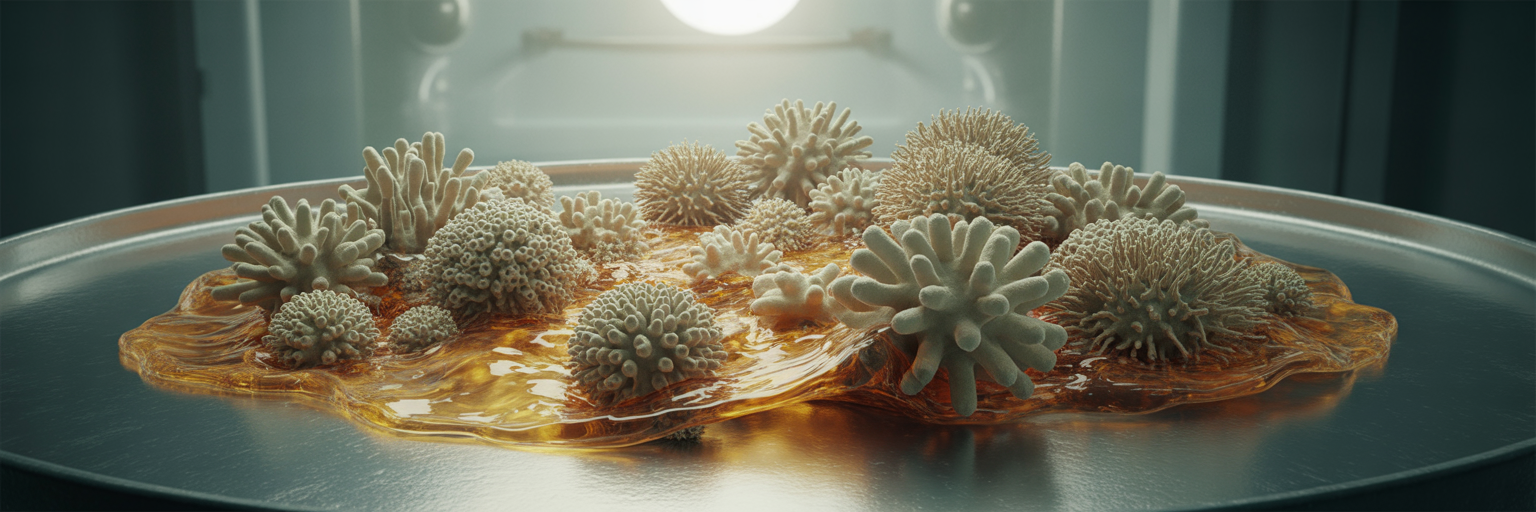
That slippery film on a river rock or the persistent plaque on your teeth is not just a random smear of grime. It is an engineered structure, a dense city built and inhabited by bacteria. These communities, known as bacterial biofilms, are the preferred lifestyle for most bacteria on Earth. Instead of floating alone, they construct elaborate, cooperative societies complete with defensive walls, internal plumbing, and a complex social structure. Understanding these microbial cities is critical, as they impact everything from human health to global industry.
Understanding Bacterial Biofilms Beyond the Slime
The vast majority of bacteria, with some estimates suggesting up to 90%, live in these organized communities rather than as free-floating individuals. So, what is a biofilm? It is a structured community of microorganisms encased in a self-produced protective matrix that adheres to a surface. This matrix, a slimy substance, is the glue that holds the bacterial city together and shields it from threats. You encounter these structures daily, often without realizing it. They are the gunk in your kitchen drain, the film inside an unwashed water bottle, the slick coating on the walls of a fish tank, and the pinkish residue that appears on shower curtains.
Life within a biofilm is fundamentally different from the life of a solitary, or planktonic, bacterium. An individual bacterium is vulnerable, exposed to environmental changes, antibiotics, and predators. Within the biofilm, however, bacteria work together. They become more resilient, communicate with one another, and even take on specialized jobs to support the community. This cooperative behavior transforms them from simple single-celled organisms into a coordinated, multicellular-like entity with capabilities far beyond those of any single member. This collective strength is why biofilms are a major focus in medicine, engineering, and environmental science.
The Blueprint for a Bacterial Metropolis
The construction of a bacterial city is not a random accident. It is a deliberate and sequential process, a series of biofilm formation stages that turn a clean surface into a thriving microbial community. This process unfolds with surprising speed and sophistication.
Initial Attachment: Finding a Foothold
The process begins when free-floating, planktonic bacteria drift by a surface. This could be a rock in a stream, a medical catheter, or the enamel of a tooth. The first contact is often weak and reversible, governed by subtle physical forces. At this stage, the bacteria are like scouts testing the terrain, able to detach and float away if the conditions are not right.
Irreversible Anchoring and Microcolony Formation
Once a bacterium finds a suitable location, it commits. It begins to produce sticky adhesive substances that anchor it permanently to the surface. This is the point of no return. Now firmly attached, the bacterium starts to multiply, forming a small cluster known as a microcolony. As the colony grows, the bacteria begin to communicate using a process called quorum sensing. They release chemical signal molecules, and when the concentration of these signals reaches a certain threshold, it tells the entire group that they have reached a “quorum,” or a sufficient population density. This triggers a coordinated change in behavior, most importantly the mass production of the protective matrix that will become the city’s walls.
Maturation and Dispersal: Founding New Colonies
As more bacteria join and the matrix thickens, the biofilm matures into a complex, three-dimensional structure. It develops internal channels and distinct layers, becoming a fully functional city. But the life cycle does not end there. A mature biofilm eventually sends out “settlers” to found new colonies. It releases individual planktonic bacteria from the surface, which are then carried by fluids to colonize new areas. This dispersal phase ensures the survival and spread of the species, allowing a single successful biofilm to seed an entire system.
The Architecture of a Biofilm
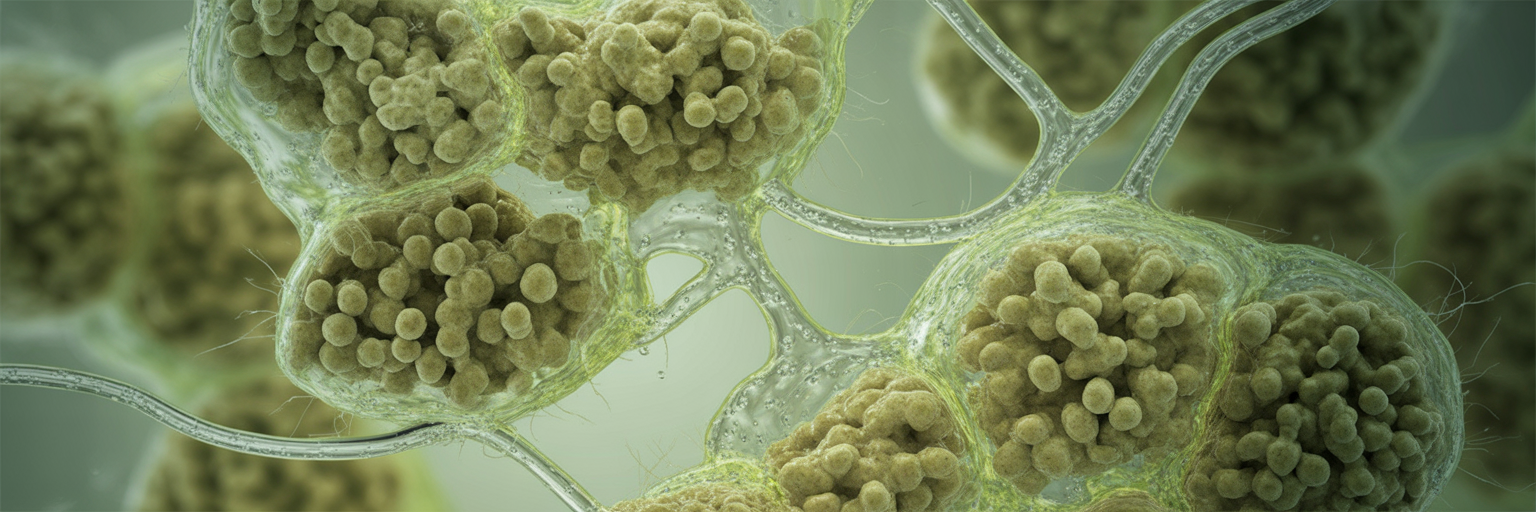
A mature biofilm is a marvel of microbial engineering. Its structure is far from a simple clump of cells; it is a complex architecture designed for protection, nutrient acquisition, and long-term survival. This infrastructure is what makes the biofilm so robust.
The Extracellular Polymeric Substance (EPS) Matrix
The most critical component of the biofilm is the extracellular polymeric substance, or EPS matrix. This is the “building material” of the microbial city. It is a complex, slimy concoction of long-chain sugars called polysaccharides, proteins, lipids, and even extracellular DNA released by dead cells. This matrix serves multiple crucial functions. It acts as a physical scaffold, giving the biofilm its shape and structure. It is a powerful adhesive, cementing the community to its surface. It also functions as a protective barrier, shielding the inhabitants from antibiotics, disinfectants, and the host’s immune system. Furthermore, the matrix acts like a sponge, trapping nutrients from the surrounding environment and retaining water to prevent the cells from drying out. The protective slime of the EPS matrix is a fascinating survival tool.
The Internal Plumbing System
Early models depicted biofilms as dense, uniform blocks of cells. However, advanced imaging techniques have revealed a much more intricate internal structure. Mature biofilms are permeated by a network of small water channels that function as a primitive circulatory system. This internal plumbing is essential for the city’s survival. These channels transport water, nutrients, and oxygen to cells located deep within the biofilm, which would otherwise be cut off from resources. At the same time, they carry waste products away, preventing the buildup of toxic substances. This system ensures that the community can grow much larger and more complex than a simple, non-porous clump of cells could. It is important to note, however, that these channels do not penetrate the densest cell clusters, which must rely on slower diffusion, creating distinct internal zones with different living conditions.
A Society of Specialists
Perhaps the most fascinating aspect of a biofilm is its social structure. The bacteria within this city are not a uniform population of identical individuals. Instead, they differentiate into distinct subpopulations with specialized roles, much like a society with a division of labor. This field of study, known as sociomicrobiology, explores these complex social behaviors.
Life on the Surface vs. Life in the Core
The environment inside a biofilm is not uniform. There are steep gradients in the availability of oxygen and nutrients. Cells on the outer surface of the biofilm are exposed to a constant flow of resources. They are metabolically active, grow quickly, and are responsible for the expansion of the colony. In contrast, cells in the deep core of the biofilm live in a very different world. Here, oxygen and nutrients are scarce. In response, these bacteria enter a slower, almost dormant metabolic state. Their growth is slow or has stopped entirely, and their primary function shifts from expansion to survival.
A Division of Labor for Survival
This differentiation is not a flaw; it is a key survival strategy. The active outer cells act as the city’s workers and soldiers, consuming resources, expanding the territory, and forming the first line of defense. The dormant inner cells, meanwhile, act as a hidden reserve. Because they are not actively growing, they are less susceptible to many types of antibiotics, which often target metabolic processes. If the biofilm is attacked and the outer layers are destroyed, these dormant cells can survive the assault. Once the threat has passed, they can reawaken and repopulate the entire community. This coordinated behavior, where different members of a community take on specialized roles for the collective good, is a powerful strategy. For example, consider the coral that can fight back like a living army, with different polyps working together to defend the colony.
Why Are Bacterial Biofilms So Hard to Kill?
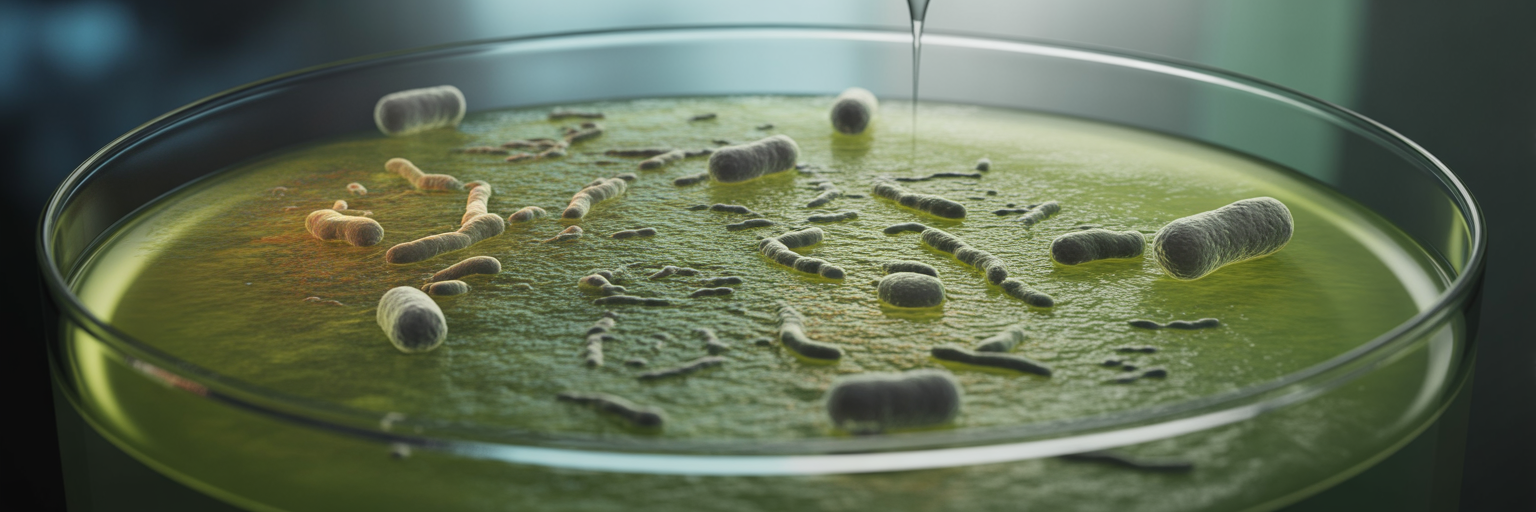
Biofilm-related infections are notoriously difficult to treat, and industrial biofilms can resist even harsh chemical cleaning. Their resilience comes from a multi-layered defense system that makes them far more robust than their free-floating counterparts.
The Protective Fortress of the EPS Matrix
The first line of defense is the EPS matrix itself. This dense, slimy barrier acts as a physical shield, preventing antimicrobial molecules from reaching the cells within. The molecules may be neutralized by enzymes embedded in the matrix or may simply be unable to diffuse through the thick slime. This physical protection alone can significantly reduce the effectiveness of antibiotics and disinfectants.
Metabolic Slowdown and Persister Cells
Biology provides a second layer of defense. As mentioned, many bacteria in the biofilm’s core are in a slow-growing or dormant state. Since many antibiotics work by disrupting active processes like cell wall synthesis or DNA replication, these inactive cells are naturally less susceptible. They simply are not performing the functions that the drugs are designed to attack. Furthermore, all bacterial populations, including those in biofilms, contain a tiny subpopulation of specialized survivor cells known as persister cells. These are not genetically resistant but are in a deep state of dormancy that allows them to survive even lethal doses of antibiotics. After the treatment is over and the antibiotic is gone, these persisters can “wake up” and regrow the entire biofilm, leading to relapsing infections.
The Truth About Antibiotic Resistance Levels
You may have heard that biofilm bacteria are “1,000 times” more resistant to antibiotics. While this figure is often cited, the reality of biofilm antibiotic resistance is more complex. The actual level of increased resistance is highly variable. As detailed in a review in Microbiology and Molecular Biology Reviews, the combination of the physical barrier, metabolic heterogeneity, and persister cells creates a formidable defense. Depending on the bacterial species, the specific antibiotic used, and the age and structure of the biofilm, the increase in resistance can range from as little as 10 times to well over 1,000 times that of planktonic bacteria. Additionally, the close proximity of cells within a biofilm facilitates the transfer of genetic material, including antibiotic resistance genes, allowing resistance to spread rapidly through the community.
| Feature | Planktonic (Free-Floating) Bacteria | Biofilm Bacteria |
|---|---|---|
| Physical Protection | Exposed and vulnerable | Protected by a dense EPS matrix |
| Metabolic State | Uniformly active and growing | Diverse states; many are dormant or slow-growing |
| Susceptibility to Antibiotics | High; easily targeted by drugs | Low; matrix blocks drugs, dormant cells are not targeted |
| Presence of Persister Cells | Very rare or absent | Present; a subpopulation ensures survival |
| Gene Transfer | Limited by distance | High; close proximity facilitates rapid sharing of resistance genes |
Biofilms on and in the Human Body
Our bodies are prime real estate for microbial colonization, and biofilms are a constant presence, for better and for worse. They play a central role in both chronic disease and everyday health.
The Unwanted Residents: Harmful Biofilms
When biofilms cause disease, they are incredibly persistent. The Centers for Disease Control and Prevention (CDC) has estimated that biofilms are involved in over 65% of all microbial infections in humans. They are a major problem on medical devices. Biofilms readily form on catheters, prosthetic joints, heart valves, and contact lenses, leading to chronic infections that are nearly impossible to clear with antibiotics alone. Often, the only solution is to surgically remove and replace the infected device. Dental plaque is the most common example of a harmful biofilm. This complex community of oral bacteria adheres to our teeth, and its metabolic activity produces acids that erode enamel, causing cavities. Other bacteria in the plaque can trigger an inflammatory response in the gums, leading to gingivitis and more severe periodontal disease.
The Welcome Tenants: Beneficial Biofilms
Not all biofilms are bad. In fact, some are essential to our health. Our intestines are lined with a protective layer of beneficial biofilms. These communities of commensal bacteria, often referred to as the gut microbiome, form a critical barrier that prevents pathogenic invaders from colonizing the gut wall. They also aid in digestion, synthesize essential vitamins like vitamin K and some B vitamins, and help train our immune system. The role of the gut microbiome is a testament to the surprising and complex functions of our internal ecosystems. Similarly, our skin is covered in harmless biofilms that are part of our natural microbiome, helping to maintain a healthy skin environment and providing a first line of defense against potential pathogens.
The Industrial and Economic Impact
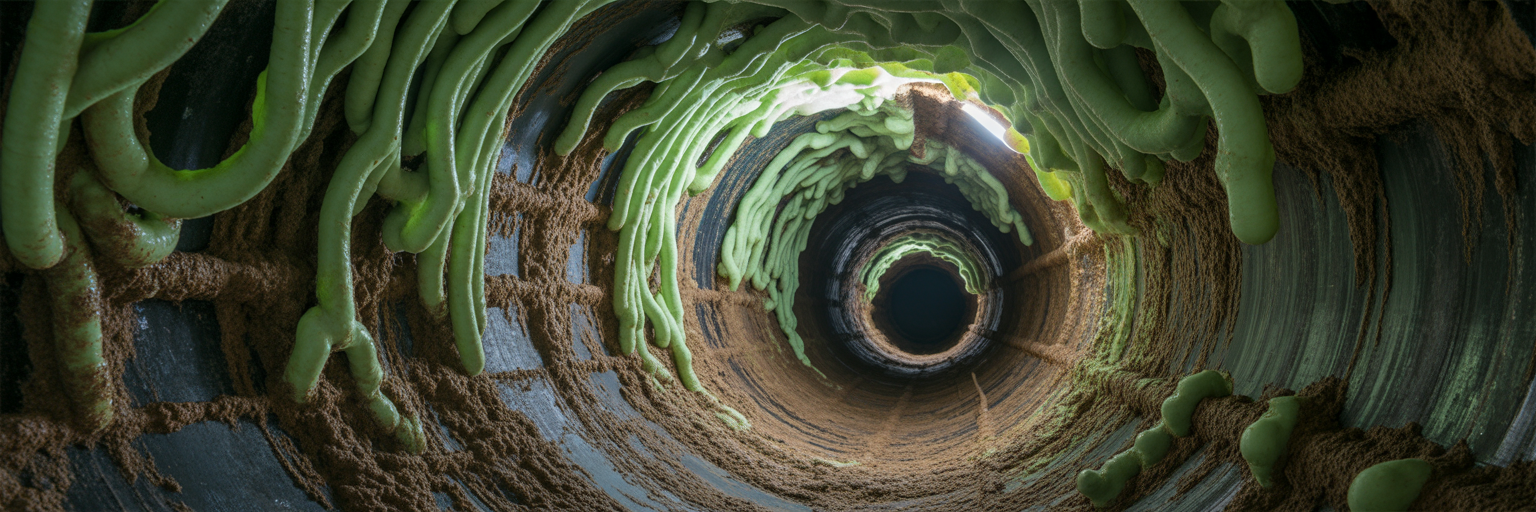
The influence of biofilms extends far beyond medicine. These microbial cities are a persistent and costly problem across a wide range of industries. As outlined by Montana State University’s Center for Biofilm Engineering, these communities can be found on virtually any surface where there is moisture.
The Problem of Biofouling and Corrosion
In industrial settings, the unwanted colonization of surfaces by biofilms is known as biofouling. It can clog pipes in water distribution systems, reducing flow and water quality. It fouls heat exchangers, acting as an insulating layer that dramatically reduces energy efficiency. On ship hulls, biofouling increases drag, forcing engines to work harder and burn significantly more fuel. Beyond simple clogging, some biofilms cause microbially influenced corrosion (MIC). The metabolic byproducts of the bacteria, such as acids and sulfur compounds, can directly corrode metal surfaces, damaging pipelines, storage tanks, and offshore oil rigs.
The High Cost of Microbial Cities
The economic damage caused by unwanted biofilms is immense. In the United States alone, the cost of treating medical device-related biofilm infections is estimated to be over $11 billion annually. In the industrial sector, the costs are even higher. Billions are lost each year in the maritime industry due to increased fuel consumption, in the energy sector from reduced efficiency and corrosion, and in water treatment from clogged pipes and contaminated systems. However, it is worth noting that industry has also harnessed the power of beneficial biofilms. Engineered biofilms are the workhorses of modern wastewater treatment plants, where they are used to efficiently break down organic pollutants and clean water before it is returned to the environment.
The Fight Against Microbial Cities
Given their incredible resilience, controlling unwanted biofilms requires more than just traditional antimicrobial agents. Researchers are now developing clever strategies that target the unique properties of the biofilm community, shifting the fight from simply killing bacteria to outsmarting their cooperative defenses.
Preventing Attachment
The most effective strategy is to prevent the city from ever being built. Researchers are developing advanced anti-adhesive coatings for surfaces like medical implants and ship hulls. These materials are designed to be so slippery or to have a specific micro-texture that bacteria simply cannot get a foothold, stopping the biofilm formation process before it can even begin.
Disrupting the Community
Another approach is to disrupt the social order of the city. This involves developing drugs that interfere with quorum sensing, the chemical communication system bacteria use to coordinate their actions. These “quorum quenching” compounds do not kill the bacteria directly but instead jam their communication channels. This prevents them from activating their group defenses, such as producing the EPS matrix, making them vulnerable to conventional antibiotics or the host’s immune system.
Destroying the Matrix
If the city is already built, one strategy is to tear down its walls. Researchers are exploring the use of enzymes that can specifically break down the key components of the EPS matrix. By dissolving this protective slime, the bacteria inside are left exposed and vulnerable. This approach can be used in combination with antibiotics, with the enzymes acting as a “door opener” that allows the drugs to reach their targets. These innovative strategies are a form of biological warfare, requiring clever tactics to overcome a well-defended target, reminiscent of the precise hunting techniques found in nature, like the archerfish that shoots bugs out of the air with water.
Frequently Asked Questions About Biofilms
What is a biofilm made of?
A biofilm consists of two main components: the bacterial cells themselves and the Extracellular Polymeric Substance (EPS) matrix they produce. This matrix is a slimy, protective glue made of a complex mix of sugars (polysaccharides), proteins, lipids, and DNA.
Why are biofilms resistant to antibiotics?
Biofilms are resistant for several reasons. The slimy EPS matrix acts as a physical barrier, blocking antibiotics. Many cells deep inside the biofilm are in a dormant state and are not affected by drugs that target active growth. Finally, biofilms contain specialized “persister cells” that can survive treatment and regrow the community later.
Is dental plaque a biofilm?
Yes, absolutely. Dental plaque is a classic example of a complex, multi-species biofilm. The bacteria in the plaque produce acids that cause tooth decay and can lead to gum disease.
Can you get rid of a biofilm at home?
Yes, for everyday biofilms. The key is mechanical action. Scrubbing a shower curtain, cleaning a drain, or brushing your teeth physically disrupts and removes the biofilm structure. Simple rinsing is often not enough; you need to break apart the matrix.
Are all biofilms harmful?
No. Many biofilms are harmless or even beneficial. The biofilms in our gut are essential for digestion and protecting us from pathogens. Engineered biofilms are also used in wastewater treatment to clean water.
How fast does a biofilm form?
The process can be very rapid. The initial attachment of bacteria to a surface can happen in minutes. Under the right conditions, a visible microcolony can form within a few hours, and a mature biofilm can develop in a matter of days.