The Uninvited Roommate Living Under Your Skin
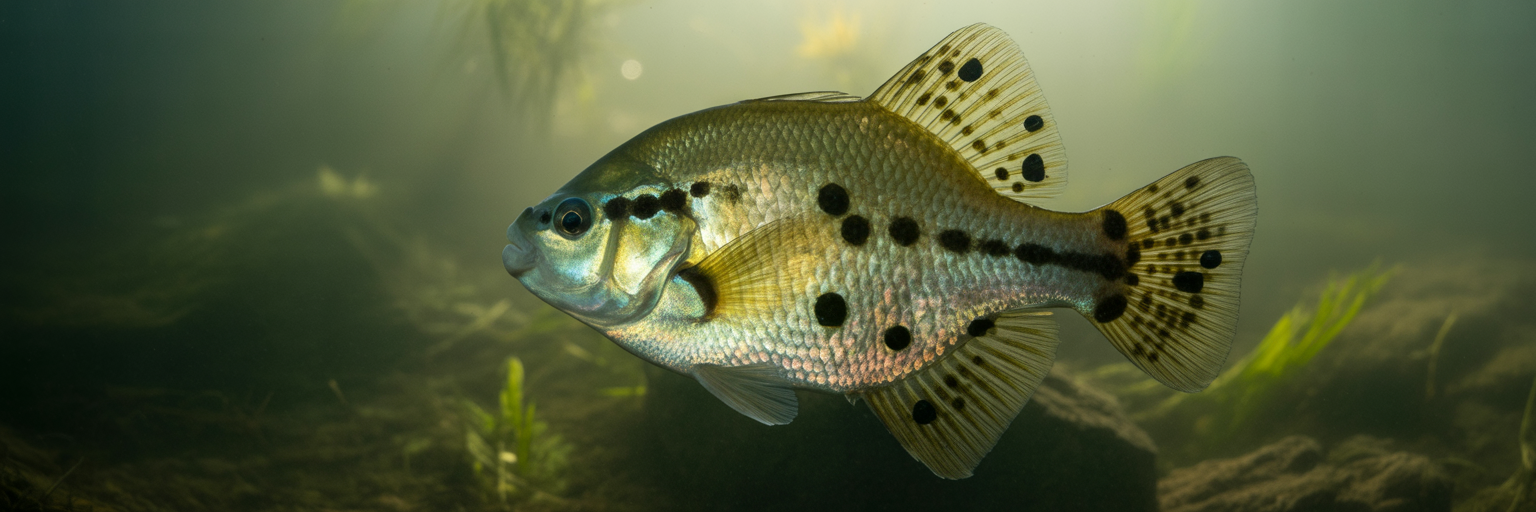
The black spot parasite is the ultimate terrible roommate. It’s an uninvited guest that doesn’t just eat your food and leave a mess; it actively vandalizes your home, which in this case, is a fish’s body. When you see a fish with black spots on its skin, you’re not looking at natural freckles or quirky pigmentation. You’re witnessing the aftermath of a biological siege, a collection of tiny, dark nodules that scream “occupied.”
Imagine a malicious artist breaking into your house and deciding your beige walls would look much better with dozens of black polka dots. That’s essentially what this parasite does. It forces the fish to repaint its own skin, turning it into a flashing billboard that advertises the parasite’s presence to the entire neighborhood. Each spot is a tiny tomb, a monument to a successful invasion, and the fish is forced to carry these unsettling marks for everyone to see.
These spots are more than just a cosmetic issue. They are the visible evidence of a creature that has burrowed into the fish’s flesh and tricked the host’s body into building it a safe house. The sheer number of them on a single fish can be shocking, transforming a sleek, camouflaged creature into something that looks diseased and conspicuous. This bizarre and complex situation begs the question: how did this horrifying redecoration project even begin? The answer involves a twisted journey through multiple animals, making the story even stranger than it first appears.
The Invasion: How the Parasite Breaks In
The initial infection is a microscopic horror show. It all starts when a tiny, free-swimming larva called a cercaria emerges from an aquatic snail with a single, desperate purpose: find a fish, and find it fast. These larvae are microscopic hunters, driven by an ancient instinct to locate their next temporary home. This is the direct answer to the question of how do fish get parasites; they are ambushed by these relentless swimmers.
The invasion itself is a feat of biochemical warfare. The cercaria first makes contact with the fish’s protective slime coat. Using specialized enzymes, it begins to dissolve this barrier, creating a small opening. Once it reaches the skin, it uses a tiny, sharp appendage called a stylet to physically burrow into the flesh. It’s less like a guest knocking on the door and more like a burglar drilling through the wall. The entire process is a frantic race against time, as the larva has a limited window to succeed before its energy reserves run out.
Once inside, the parasite doesn’t wander around. It immediately begins to build its new home, forming a cyst around itself to shield it from the fish’s immune system. This newly encysted larva, now called a metacercaria, has effectively sealed itself inside a custom-built panic room beneath the fish’s skin. The fish’s body instantly recognizes the breach, but the intruder is already barricaded. This localized trauma is just the beginning. The fish’s immune system is about to launch a full-blown, panicked response that will permanently alter its appearance.
The Body’s Alarming Repaint Job
So, what is black spot disease in fish? It’s the fish’s own body creating the very spots that signal the parasite’s presence. The black color isn’t the parasite itself but a panicked and ultimately self-defeating defense mechanism. Once the parasite is safely encysted as a metacercaria, the fish’s immune cells rush to the site of the invasion. They recognize the foreign object but are completely unable to destroy the hardened cyst protecting the larva.
Frustrated and unable to evict the intruder, the fish’s body resorts to a drastic containment strategy: it floods the area with melanin. This is the same pigment that gives skin and scales their color. The immune system aggressively deposits this dark pigment around the parasite’s cyst, building a thick, black wall of tissue to entomb it. It’s a desperate attempt to isolate the threat, but it’s also the very process that creates the conspicuous black spots visible on the outside.
This forceful redecoration is a cruel irony. The fish, in its effort to protect itself, inadvertently creates a beacon that makes it more visible. The fish’s body creates a physical barrier to protect itself, a strategy seen elsewhere in nature. For instance, some species have evolved unique defenses, like the parrotfish that sleeps inside a bubble of its own slime to ward off parasites and predators. In this case, however, the barrier is a dark, pigmented sphere that contains a dormant parasite, patiently waiting. It can remain in this state for years, a tiny, living time bomb, waiting for the next phase of its journey to begin.
The Black Spot Parasite’s Twisted Three-Host Journey

The story of the black spot parasite is not just about a fish and its unwanted tenant. It’s a complex, three-act drama known as the trematode parasite life cycle, a relay race where each participant is an unwilling host. For the parasite to complete its journey from birth to reproduction, it must successfully navigate through a bird, a snail, and a fish, in that precise order. This complex, multi-host journey is a hallmark of digenetic trematodes. As documented by government resources like Québec’s Ministry of the Environment, the cycle is dependent on a precise sequence of hosts to succeed.
Host 1: The Avian Launchpad
The cycle begins and ends in a fish-eating bird, such as a kingfisher or a heron. This is the definitive host, the only place where the parasite can reach adulthood and reproduce. Inside the bird’s digestive tract, adult worms live, mate, and produce a steady stream of eggs. These eggs are then mixed with the bird’s waste and released into the water every time the bird defecates. Each dropping is a biological payload, scattering thousands of potential parasites into the aquatic environment, ready to start the cycle anew.
Host 2: The Snail Factory
Once in the water, the eggs hatch into a microscopic, swimming larva called a miracidium. Its sole mission is to find and infect a specific species of aquatic snail. If it succeeds, it begins one of the most bizarre phases of its life. Inside the snail, the parasite transforms its host into a living factory. It reproduces asexually, cloning itself over and over again, creating thousands of identical copies. The snail’s body is hijacked, its energy diverted to mass-producing the next stage of the parasite: the cercariae. The way the parasite turns the snail into a mindless factory for its own offspring is a chilling example of host manipulation. This strategy is echoed in other parasitic relationships, such as the one that drives a snail to sacrifice itself for a parasite to ensure the cycle continues. After a period of intense multiplication, thousands of cercariae are released from the snail, ready for the next hunt.
Host 3: The Fish Waiting Room
This brings us back to the fish. The swarm of cercariae released from the snail now seeks out a suitable fish host, like a bass, perch, or sunfish. As we’ve seen, they burrow into the skin and encyst themselves, triggering the formation of the black spots. At this stage, the fish is nothing more than a waiting room. The parasite, now a metacercaria, is dormant. It cannot reproduce or develop further. It simply waits, protected within its pigmented tomb, for the fish to be eaten by the correct species of bird. Only then can it move to its final destination and complete its twisted, brilliant life cycle.
| Host | Parasite Stage | Role in Life Cycle | Transition Method |
|---|---|---|---|
| Fish-Eating Bird (e.g., Heron) | Adult Worm | Sexual Reproduction & Egg Laying | Eggs released via feces into water |
| Aquatic Snail | Miracidia -> Sporocysts -> Cercariae | Asexual Reproduction (Mass Cloning) | Cercariae larvae released from snail into water |
| Freshwater Fish (e.g., Bass, Perch) | Metacercaria (Encysted) | Dormant Waiting Period | Infected fish is eaten by a bird |
Wearing an ‘Eat Me’ Sign
For the infected fish, the consequences of this parasitic invasion are grim. The central problem is that the black spots effectively destroy its natural camouflage. A light-colored fish swimming against a sandy bottom is normally hard to spot from above. But a fish with black spots on its skin becomes a conspicuous, unmissable target. As it moves through the water, the spots create a flashing effect, catching the eye of any predatory bird flying overhead. The parasite has essentially forced the fish to wear a giant, blinking “Eat Me” sign, which is exactly what it wants.
The physical toll of a heavy infestation is also significant. A fish’s skin needs to be flexible to allow for efficient movement. When it’s covered in dozens or even hundreds of hardened cysts, its skin becomes less pliable. This can impair its ability to swim, causing it to move erratically and making it an even easier meal for a predator. The parasite doesn’t need to kill the fish directly; it just needs to make it clumsy enough to get caught.
Furthermore, the parasitic load can weaken the fish in other ways. Cysts located near the gills can interfere with breathing, while the constant immune stress drains the fish’s energy reserves. This leaves it less capable of finding food, avoiding danger, and competing with healthier fish. While the infected fish becomes a flashing beacon for danger, other animals have evolved incredible ways to avoid it. This contrasts sharply with creatures like the star-nosed mole that eats faster than you can blink, a master of its environment, not a victim of it. The cruelest part of this entire ordeal is the final irony: the fish’s own immune response, the very act of creating the black spots, is what ultimately signs its death warrant and guarantees the parasite’s success.
How a Stressed Environment Creates Weaker Hosts
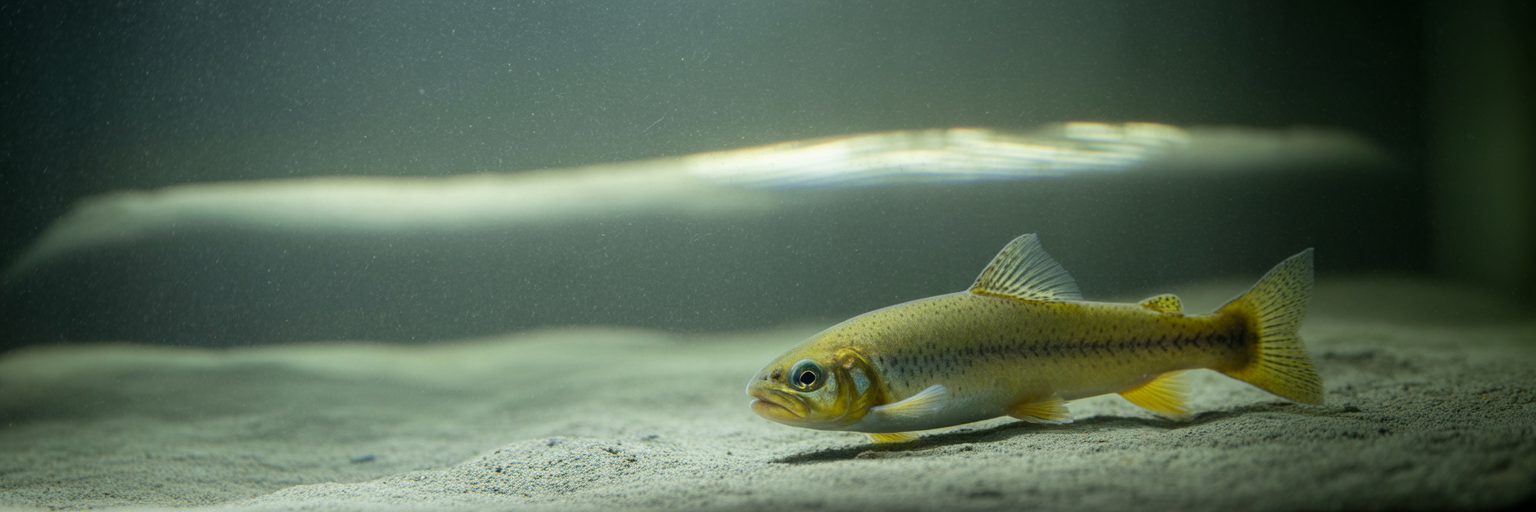
While the drama of the black spot parasite plays out on individual fish, its prevalence can tell a larger story about the health of an entire ecosystem. Healthy fish living in clean, balanced water are generally better equipped to handle a certain number of parasites. Their immune systems are strong, and they can manage a light infection without severe consequences. However, when the environment becomes stressed, the balance shifts dramatically in the parasite’s favor.
Environmental stressors like water pollution from agricultural runoff, industrial chemicals, and rising water temperatures all compromise a fish’s immune system. A stressed fish is an easy target, less able to fight off the initial invasion of cercariae. This leads to heavier infestations and more severe symptoms. The presence of widespread parasites in freshwater fish can therefore be an indicator of poor water quality.
The connection goes even deeper. Certain pollutants can harm or kill off the natural predators of snails, such as leeches and certain insects. With fewer predators around, the snail population can explode. More snails mean more parasite factories, which in turn release a higher concentration of cercariae into the water. This creates a perfect storm for fish, dramatically increasing their chances of infection. Recent research increasingly supports this connection, with a 2024 study highlighted on Phys.org exploring the environmental drivers of black spot syndrome and how ecosystem health dictates infection severity. In this light, the flashing, spot-covered fish are not just individual victims; they are symptoms of an ecosystem under duress.
Answering Your Creepy Crawly Questions
Seeing a fish covered in these unsettling black spots naturally brings up a few questions. Here are some straightforward answers to the most common concerns.
- Is it safe to eat a fish with black spots?
Yes, it is generally safe. The parasite is specific to fish, snails, and birds and cannot infect humans. Thorough cooking will destroy any living parasites. However, the appearance of the cooked flesh, which can look like it’s been sprinkled with black pepper, might be unappetizing to some. - How common is this parasite?
It is extremely common across North America. You can find it in many popular freshwater game fish, including bass, sunfish, northern pike, and perch. If you’ve spent any time fishing in lakes and rivers, you have almost certainly seen a fish with these spots. - Does the parasite kill the fish directly?
Usually, no. The parasite’s goal is not to kill the fish but to use it as a transport vehicle. However, a very heavy infestation can lead to death indirectly. This can happen through secondary bacterial or fungal infections that take hold at the entry wounds, or simply by making the fish so weak and conspicuous that it is quickly eaten by a predator. - Can we cure or get rid of it?
In a controlled environment like an aquarium, it’s possible to treat fish and eliminate the snails that carry the parasite. In the wild, however, it’s practically impossible. The life cycle involves wild birds and vast snail populations spread across entire ecosystems. Because of this, the black spot parasite is a permanent, creepy, and fascinating fixture of nature.
A Final Look at the Master Manipulator
The black spot parasite is a true master of manipulation. It hijacks the biology and behavior of three different hosts to complete its life cycle. It turns a snail into a clone factory, a fish into a flashing billboard, and a bird into a distribution service. The terrible roommate metaphor holds up to the very end: this parasite doesn’t just trash the place; it redecorates you against your will, weakens your defenses, and puts a giant “Eat Me” sign on your back to ensure it can move on to its next home.
The sight of a spot-covered fish is a stark and visible reminder of the countless hidden, brutal, and brilliantly complex dramas that are constantly playing out in the natural world. It’s a testament to the relentless drive of life, even when it takes such a strange and unsettling form, playing out just beneath the surface.