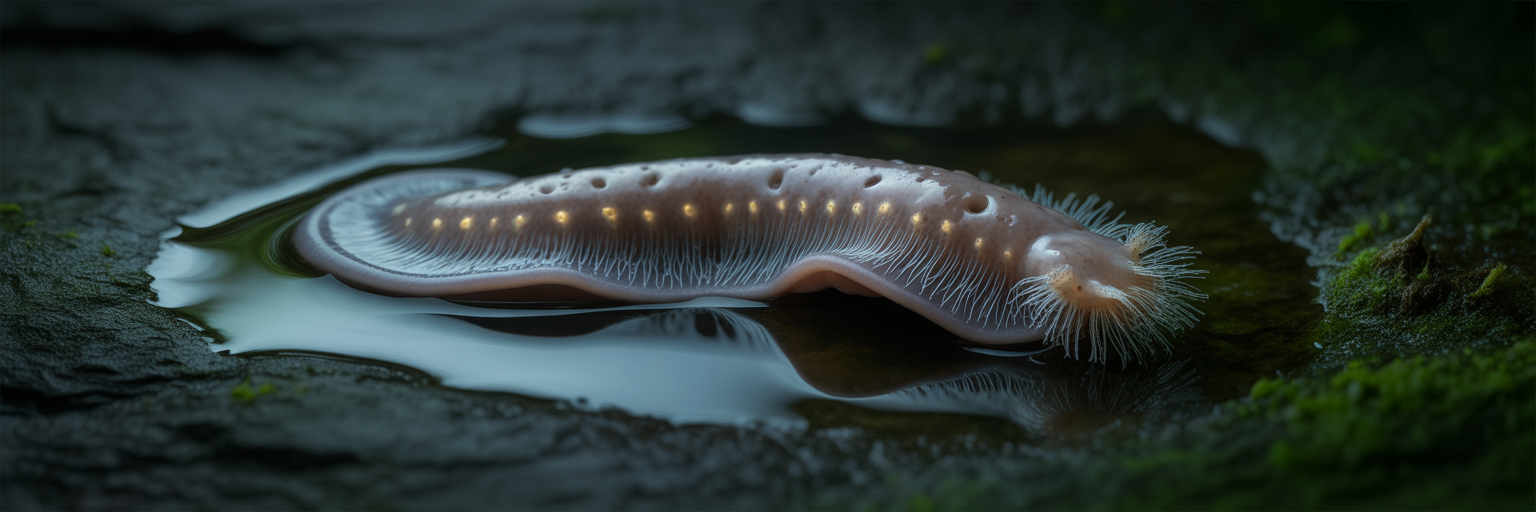
Ancient myths tell of the Hydra, a beast that grew two heads for every one that was severed. In the quiet freshwater ponds of the real world, a simple flatworm performs a feat even more astonishing, regrowing its entire body from a minuscule fragment.
The Science of Planarian Regeneration
An Introduction to the Master of Regeneration
At first glance, the planarian is unassuming. This small, flat-bodied worm, often just a few millimetres long, glides through freshwater streams and ponds across the globe. With two simple eyespots that give it a perpetually cross-eyed appearance, it avoids light and seeks out decaying organic matter. Unlike many of its flatworm relatives, it is entirely non-parasitic, posing no threat to other animals. Its humble appearance, however, conceals one of the most extraordinary biological capabilities known to science: the power of near-perfect, whole-body regeneration.
Whole-Body Regrowth: A Biological Marvel
The planarian’s claim to fame is not just its ability to survive injury, but to multiply from it. If you cut a planarian into pieces, something remarkable happens. Each fragment, no matter how small, begins a process of complete reconstruction. A piece from the tail will grow a new head, a head fragment will grow a new tail, and a middle section will grow both. Within a week or two, each piece becomes a new, perfectly proportioned worm. This worm that regrows body parts can do so from a fragment as small as 1/279th of its original size, a feat that challenges our understanding of biological construction.
Beyond Limb Regrowth: How Planarians Stand Apart
Many animals can regenerate. A salamander can regrow a lost tail, and a starfish can replace a severed arm. But these are examples of appendage regeneration, where a complete organism replaces a missing part. The planarian’s ability is fundamentally different. It performs whole-body regeneration, where a small part rebuilds an entire, complex organism from scratch. This level of biological creativity is exceptionally rare. While the planarian’s regeneration is a masterclass in rebuilding, other creatures showcase equally astonishing skills for survival, like the star-nosed mole that eats faster than you can blink. This unique talent for planarian regeneration has made the worm a subject of intense scientific study for over a century, establishing it as a classic model for understanding how life can rebuild itself. So, how does this simple creature achieve such a complex feat?
The Central Role of Neoblast Stem Cells
The Cellular Engine of Regeneration
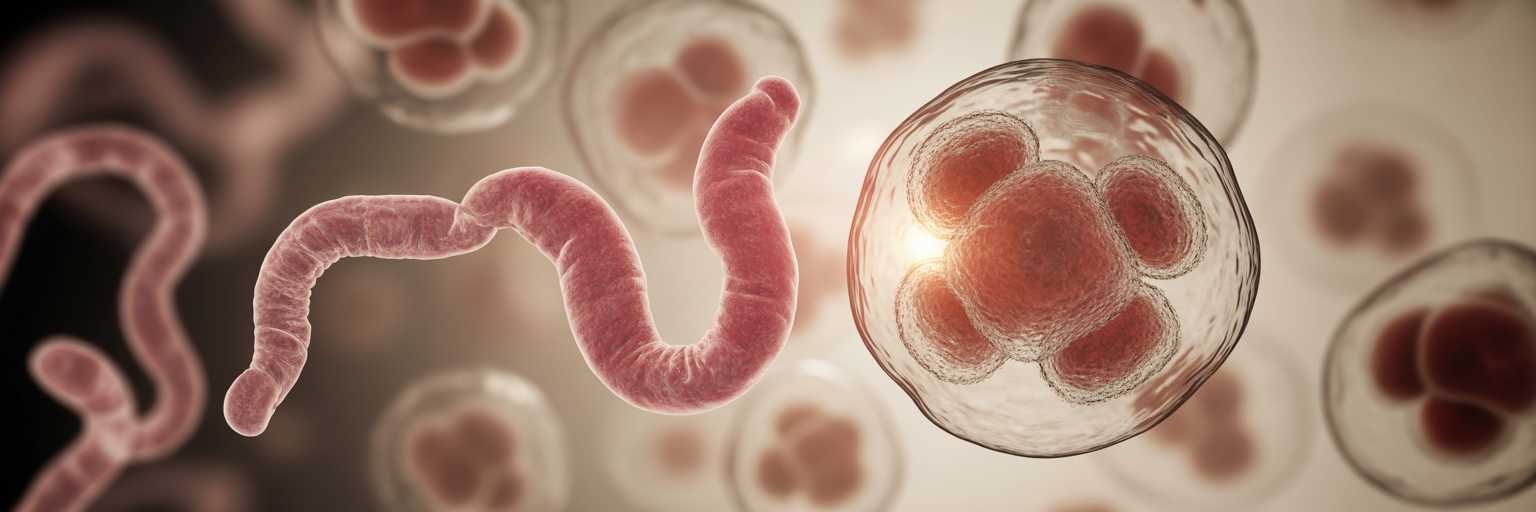
The secret to the planarian’s regenerative power lies in a special population of cells called neoblasts. These are pluripotent adult stem cells, meaning they have the remarkable ability to develop into any cell type in the worm’s body, from skin and gut cells to neurons in its simple brain. These neoblasts are not rare; they are distributed throughout the worm’s body. This dense population of stem cells, which according to research published in the journal Cells, constitutes up to 30% of the worm’s body, is always ready to respond to injury. These abundant stem cells in flatworms act as a constantly available pool of raw materials for any necessary repairs or complete reconstruction.
A Lifelong Population of Master Cells
This is where planarians diverge dramatically from humans. While we possess powerful pluripotent stem cells during embryonic development, this capability is largely lost in adulthood. Our adult stem cells are typically multipotent, meaning they are more specialized and can only form a limited range of cell types, such as blood or skin cells. Planarians, in contrast, maintain their massive population of highly versatile neoblasts throughout their entire lives. This lifelong reservoir of master cells is the fundamental reason they can regenerate so effectively, while we are left with scars.
The Step-by-Step Process of Rebuilding
When a planarian is injured, its neoblasts spring into action in a beautifully orchestrated sequence. Understanding this process helps clarify how do planarians regenerate from a cellular perspective. The rebuilding follows a clear, four-step plan:
- Activation: The wound itself sends out biochemical signals that awaken the neoblasts located near the injury site.
- Proliferation: These activated cells begin to divide rapidly, creating a large mass of new cells needed to form the missing tissues.
- Migration: The newly created neoblasts travel to the areas of the fragment where they are needed, moving toward the wound site to begin the reconstruction.
- Differentiation: Once in position, the neoblasts transform into the specific cell types required to build the missing structures. Some become neurons for a new brain, others form a new pharynx for eating, and still others create new skin to cover the wound.
This constant, active supply of neoblasts and regeneration machinery is the core ingredient that makes the planarian’s incredible ability possible. Without this cellular engine, the instructions for rebuilding would be useless.
A Cellular GPS for Rebuilding the Body
The Blueprint for a New Body
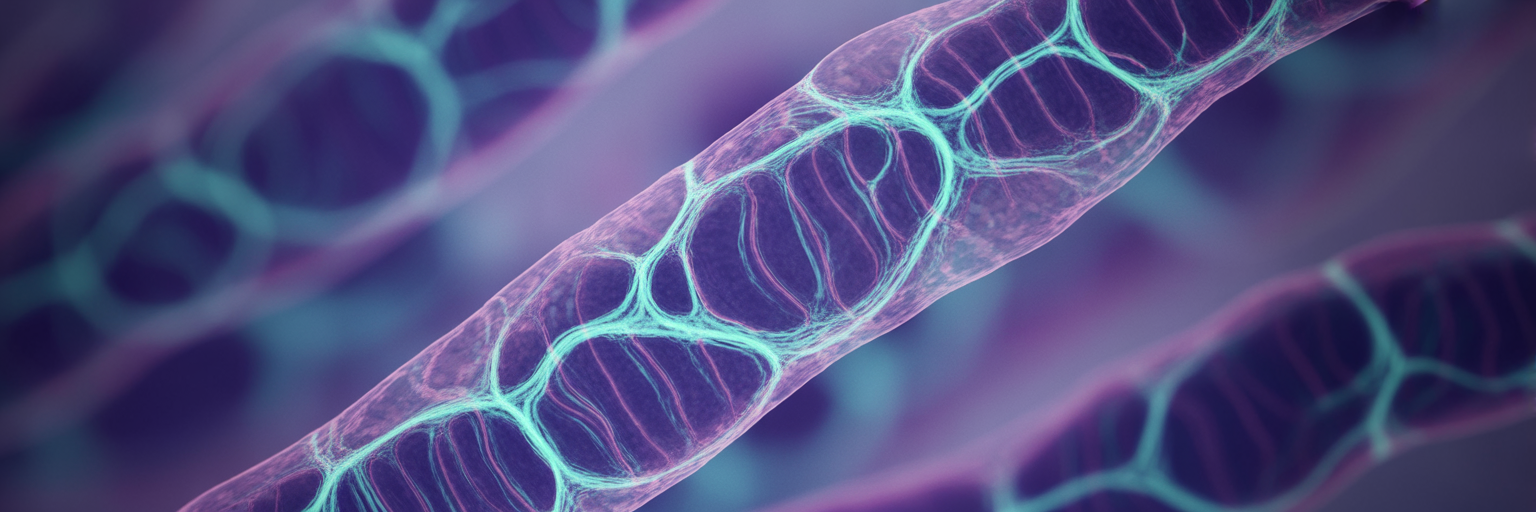
Having a supply of stem cells is one thing; telling them what to build is another entirely. A fragment of a worm needs to know which end should become the head and which should become the tail. This is where a concept called “positional information” comes into play. Think of it as a cellular GPS or a biological coordinate system that exists throughout the worm’s body. This system provides a constant blueprint, informing every cell of its precise location and, consequently, what it is supposed to be and do.
Muscle Tissue: More Than Just Movement
For a long time, scientists were puzzled about where this positional blueprint was stored. The surprising answer was found in the worm’s muscle tissue. In planarians, muscle cells do more than just enable movement. They constantly express a specific set of genes that create and maintain this body-wide coordinate system. This network of muscle fibers acts as a stable scaffold, holding the anatomical map that guides the entire organism’s structure. This level of cellular coordination is a marvel of biology, rivaling other complex strategies seen in the animal kingdom, such as the caterpillar that tricks ant colonies into raising it.
Resetting the Map After Injury
When a planarian is cut, the positional information system within the remaining fragment must reset itself. The wound triggers a cascade of signals that re-establishes the body’s polarity. A tail fragment, recognizing it lacks the “head” coordinates, initiates a genetic program to grow a new one. Similarly, a head fragment knows it is missing the “tail” end and begins to build it. This ensures that the newly regenerated worm is not a chaotic jumble of tissues but a correctly proportioned organism. As reported by The Scientist, recent studies have overturned the long-held belief that stem cells need a local niche, showing instead that they respond to signals from distant tissues to orchestrate regrowth. In essence, successful regeneration requires both the raw materials (the neoblasts) and a clear instruction manual (the positional information map) to answer the question of how do planarians regenerate.
From Worms to Human Medicine
A Simple Worm, A Powerful Model
The planarian may be a simple creature, but its biology holds profound implications for human health. It has become a powerful model for regenerative medicine research because many of the genes that control its regeneration are “conserved,” meaning humans have similar versions of them. By studying these genes in a simple, accessible system like the planarian, scientists can decipher the fundamental rules of tissue repair and rebuilding in a way that would be far too complex in mammals. The study of planarians is part of a broader scientific effort to understand nature’s solutions, much like how researchers study the animal that can smell disease before symptoms even start to develop new diagnostic tools.
Regeneration vs. Scarring
When humans suffer a severe injury, our bodies prioritize closing the wound quickly to prevent infection. This rapid response often leads to the formation of scar tissue, which is non-functional and can impair the function of organs like the heart or spinal cord. Planarians, on the other hand, bypass this scarring process entirely, opting for perfect, functional restoration. Understanding the molecular switches that allow planarians to choose regeneration over scarring is a central goal of modern medicine.
| Factor | Planarian Regeneration | Human Wound Healing |
|---|---|---|
| Stem Cell Response | Massive proliferation of pluripotent neoblasts | Limited activation of multipotent stem cells |
| Outcome | Perfect, functional tissue restoration | Often results in non-functional scar tissue |
| Cellular Plasticity | High; cells can become any type needed | Low; limited differentiation potential |
| Inflammatory Response | Minimal and controlled | Strong inflammatory response (can inhibit regeneration) |
| Genetic Control | Robust, pre-programmed regenerative pathways | Pathways prioritize closing wounds and preventing infection |
The Future of Regenerative Therapies
The ultimate goal of this research is to learn how to coax human bodies into regenerating damaged tissues. By identifying the master switches that control neoblast activity in planarians, scientists hope to one day develop therapies for a range of conditions. Potential future applications could include treatments for:
- Spinal cord injuries, by encouraging nerve cells to regrow and reconnect.
- Heart damage following a heart attack, by replacing dead cardiac muscle with new, functional tissue.
- Neurodegenerative diseases like Parkinson’s, by replacing lost neurons in the brain.
- Severe burns and organ damage, by promoting the growth of new skin and internal tissues.
While directly applying these worm-based principles to humans is still a distant prospect, the fundamental knowledge gained from studying these masters of regeneration is invaluable for guiding the future of medicine.
Why Is Extreme Regeneration So Rare?
The High Energy Cost of Immortality
If whole-body regeneration is such a powerful survival tool, why is it so uncommon in the animal kingdom? One major reason is the immense energy cost. Maintaining a large, constantly active population of pluripotent stem cells is metabolically expensive. This is energy that could otherwise be dedicated to more immediate needs like finding food, growing larger, or reproducing. For most animals, the evolutionary path favored dedicating resources to these activities rather than investing in a biological insurance policy that might never be used.
The Double-Edged Sword: Regeneration and Cancer
There is a profound and dangerous link between regeneration and cancer. The very cells that give planarians their regenerative gift, highly proliferative and pluripotent neoblasts, are inherently risky. Uncontrolled cell division is the definition of cancer. Planarians have evolved powerful and sophisticated tumor-suppressor mechanisms to keep their neoblasts in check. However, for most other complex animals, the evolutionary risk of developing tumors from such a volatile cell population was too great. The safer evolutionary strategy was to suppress or eliminate these powerful stem cells after embryonic development, effectively trading regenerative potential for a lower risk of cancer.
The Trade-Off with Complexity
As animals evolved more complex body plans, the ability to regenerate became increasingly difficult. The human immune system is a perfect example of this trade-off. Our advanced immune response is excellent at fighting off infections, but its tendency to create inflammation and scar tissue is a major barrier to true regeneration. Evolution often involves compromises. Complex animals traded away regenerative flexibility in favor of other advanced survival strategies, such as intelligence, complex social structures, and a highly specialized immune system. This evolutionary compromise is common in nature, where survival can depend on brutal efficiency, as seen in species where some animals hatch inside their mother and eat their siblings. In this context, extreme planarian regeneration is not an inherently superior trait, but rather a unique evolutionary strategy with significant costs that have made it exceptionally rare.
Frequently Asked Questions About Planarians
Can a planarian live forever?
In a sense, yes. Planarians are considered biologically immortal because they do not die of old age. Their constant cell replacement through neoblasts means they don’t experience senescence (the gradual deterioration of functional characteristics). However, they are not invincible and can still die from predation, disease, or environmental hazards like a pond drying up.
Does each regrown piece retain the original’s memories?
This is a famous and controversial topic. Some classic experiments from the 1960s suggested that when a trained worm was cut and allowed to regenerate, the new worms retained some of the original training. The theory was that memories might be stored chemically in the body, not just the brain. However, these findings have been difficult to replicate consistently, and the mechanism remains highly debated and is not fully understood by modern science.
How small can a fragment be and still regenerate?
Studies have shown a planarian can regenerate from a fragment containing as few as 10,000 cells, which can be as little as 1/279th of its original body. There is a biological minimum, however: the fragment must contain at least one functional neoblast stem cell. Without that single master cell to kickstart the process, regeneration cannot begin.
Are there other animals that can regenerate like this?
Yes, but very few. The hydra, a tiny freshwater relative of jellyfish, also possesses whole-body regeneration. However, most other well-known regenerators, like salamanders, lizards, and starfish, have more limited abilities. They can regrow complex appendages like limbs or tails, but a severed limb cannot regrow a new body. This makes the planarian’s ability truly exceptional.
What is the biggest obstacle to applying this to humans?
There are three primary obstacles. First is the immense risk of cancer that comes with activating highly proliferative, pluripotent cells in our bodies. Second is the sheer complexity of human anatomy, which is orders of magnitude more intricate than a flatworm’s. Finally, we would need to find a way to suppress our own immune system’s default response, which is to create scar tissue rather than regenerate functional tissue. Overcoming these challenges is the central quest of regenerative medicine.