
Under the beam of an electron microscope, an alien landscape unfolds. A strange, mechanical-looking craft touches down on the curved surface of a world teeming with life. It has a geometric, almost crystalline head perched atop a slender body, stabilized by a set of spindly legs. This is no lunar lander, and its target is not a distant moon. It is a bacteriophage, and it has just landed on a bacterium. In a moment, it will drill through the cell wall and inject its genetic code, hijacking the cell to build an army. This scene, repeated trillions of times every second, raises a fundamental question: what is a bacteriophage? Despite its engineered appearance, this microscopic hunter is a virus, a product of billions of years of evolution. Its name, derived from Greek, literally means “bacteria eater.” Unlike viruses that cause human diseases like the flu or the common cold, phages are specialists. They have evolved to infect and destroy only bacteria and their close relatives, archaea. This extreme specificity makes them completely harmless to human, animal, and plant cells. It is this precise targeting that makes these ancient biological machines a subject of intense modern interest, from their role in shaping our planet to their potential to solve one of medicine’s most urgent crises.
What Is a Bacteriophage and Why Does It Look Engineered?
The first glimpse of a bacteriophage is often unsettling. It doesn’t look like a biological entity so much as a piece of nanotechnology. The sharp angles of its head and the symmetrical arrangement of its tail components seem too deliberate, too functional to have arisen by chance. Yet, this intricate structure is a testament to the power of natural selection. Every part of the phage has been relentlessly optimized for a single mission: to find a specific bacterial host, breach its defenses, and replicate. This process has stripped away anything non-essential, resulting in a minimalist design of pure function.
A bacteriophage is a type of virus that exclusively preys on bacteria. It is a simple organism, composed of a packet of genetic material, either DNA or RNA, enclosed within a protective protein shell called a capsid. They are not truly alive in the way a cell is. Phages lack the machinery to metabolize or reproduce on their own. Instead, they are obligate intracellular parasites, meaning they must invade a host cell and commandeer its resources to make copies of themselves. This parasitic relationship is the driving force behind their existence.
The key distinction between a phage and a virus like influenza is its host range. A phage that targets E. coli in the gut will ignore the human cells surrounding it. Its entire infection mechanism is built around recognizing molecular signals unique to its bacterial prey. This specialization is not a flaw but its greatest strength. It allows phages to act as precision weapons, eliminating specific bacteria without causing collateral damage to other cells. This is why, despite being viruses, they are not only safe for humans but are also a natural and constant presence in our bodies and the environment. Their machine-like form is simply the most efficient solution evolution has found for the task of hunting bacteria.
The Anatomy of a Microscopic Hunter
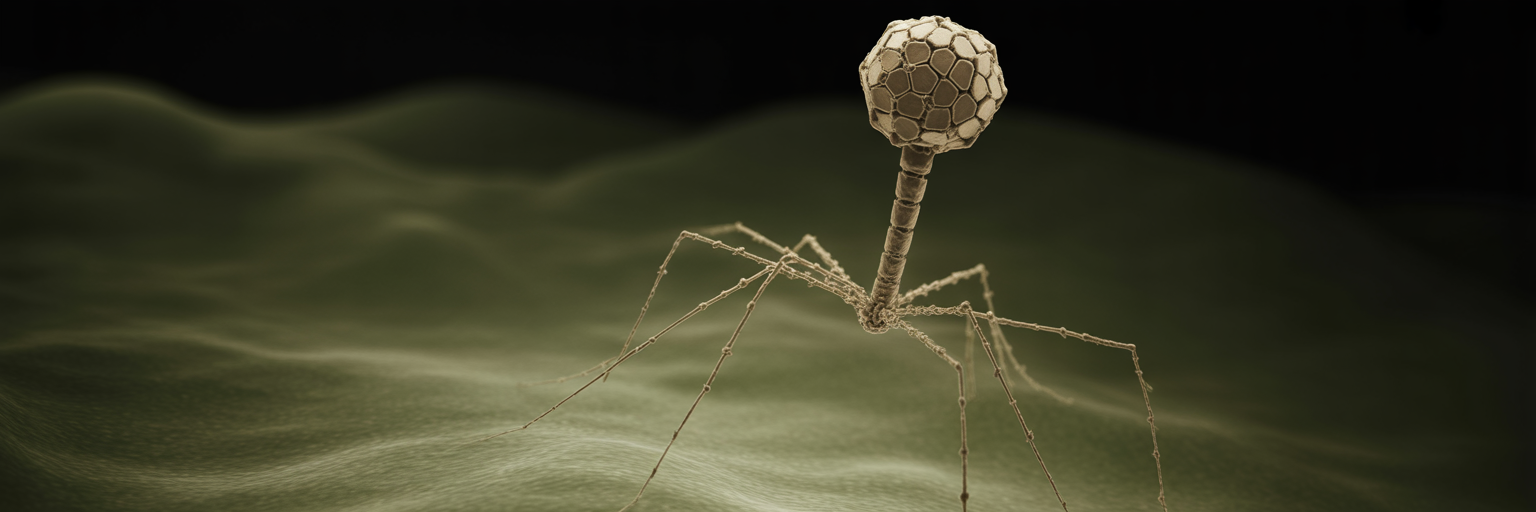
The striking bacteriophage structure is a marvel of biological engineering, with each component playing a critical role in the infection process. While phages come in many shapes and sizes, the most iconic and well-studied are the tailed phages, such as the T4 phage that infects E. coli. Its body plan can be broken down into three main functional parts: a head that protects the genetic payload, a tail that acts as an injection device, and tail fibers that serve as sensors.
The Capsid Head: A Genetic Safe
The head, or capsid, is a polyhedral container made of interlocking protein subunits. It most often forms an icosahedron, a 20-sided shape that is incredibly strong and stable for its weight. This geometric structure is the most efficient way to enclose a space with the least amount of material. Inside this protein vault, the phage’s genetic material, a long strand of DNA or RNA, is tightly coiled and protected from environmental damage. The capsid functions as a biological safe, keeping its precious cargo secure until it reaches the target bacterium.
The Tail Assembly: An Injection System
Attached to the head is the tail, a complex apparatus that functions like a sophisticated hypodermic syringe. It consists of a hollow inner tube surrounded by a contractile sheath. This sheath is made of proteins arranged in a spring-like helix. At the base of the tail is a hexagonal baseplate, which acts as the docking platform. The entire assembly is designed to puncture the tough bacterial cell wall and deliver the phage’s DNA directly into the cell’s interior.
The Tail Fibers: Molecular Sensors
Extending from the baseplate are several long, spindly tail fibers. These are not legs for walking or swimming; phages drift passively through their environment. Instead, the tail fibers are highly sensitive molecular probes. The tips of these fibers are covered in proteins that are shaped to bind to specific receptor molecules, such as proteins or sugars, on the surface of a target bacterium. This interaction is like a lock and key, ensuring the phage only attaches to the correct host species and strain. Once the fibers make a positive match, they trigger the next stage of the infection.
How a Bacteriophage Infects a Bacterium
The infection process of a bacteriophage is a rapid and highly coordinated sequence of events that unfolds with mechanical precision. It is not an act of aggression in the conventional sense, but a pre-programmed biological cascade. From the moment of contact to the injection of its genes, the phage operates like an autonomous machine executing its one and only function.
Recognition and Landing
A phage does not actively hunt. It drifts randomly until, by chance, its tail fibers collide with a bacterium. This is where its specificity becomes critical. If the bacterium is not the correct host, the proteins on the tail fibers will not bind, and the phage will simply float away. If it is the correct host, the tail fiber proteins lock onto the complementary receptor sites on the bacterial cell wall. This initial binding is tentative, but once several fibers have attached, the connection becomes secure. The fibers then bend at their “knees,” pulling the phage’s baseplate down until it is in firm contact with the cell surface, much like a lunar module settling onto the moon’s surface.
Anchoring and Drilling
With the baseplate docked, the phage prepares to breach the cell’s defenses. Small pins extending from the baseplate anchor it firmly to the bacterial wall. At the center of the baseplate, an enzyme, often a type of lysozyme, is activated. This enzyme acts as a molecular drill, digesting a small, precise hole in the tough peptidoglycan layer of the bacterial cell wall. It weakens the structure just enough to allow the tail core to pass through without causing the entire cell to rupture prematurely.
The Injection Event
Once the hole is created, the most dramatic step occurs. The contractile sheath, which has been holding a tremendous amount of potential energy, suddenly contracts. This powerful contraction drives the rigid, hollow tail core through the weakened cell wall and underlying membrane, puncturing the bacterium like a needle. The force of this contraction simultaneously pushes the phage’s tightly packed DNA out of the capsid, down through the hollow tail core, and directly into the cytoplasm of the host cell. The entire protein structure of the phage, its head and tail, remains on the outside, now an empty and inert shell. Only the genetic instructions have been delivered. This process is a fascinating example of natural precision, much like how the archerfish shoots bugs out of the air with water.
The Two Life Paths of a Phage: Lytic and Lysogenic Cycles
After a bacteriophage successfully injects its genetic material into a bacterium, it can embark on one of two primary reproductive pathways. These strategies, known as the lytic and lysogenic cycles, represent two vastly different approaches to survival and propagation. One is a swift and destructive takeover, while the other is a stealthy, long-term integration. The choice between them depends on the type of phage and the condition of the host cell.
The Lytic Cycle: Immediate Destruction
The lytic cycle is the more aggressive of the two paths. Upon entering the bacterium, the phage DNA immediately seizes control of the host’s cellular machinery. It directs the cell’s ribosomes and enzymes to stop their normal functions and start producing phage components. The bacterium is turned into a zombie factory, forced to transcribe and translate the phage’s genes to build hundreds of new capsid heads, tails, and copies of the phage DNA. Once these components are synthesized, they self-assemble into new, complete phages. In the final stage, the new phages produce an enzyme called endolysin, which attacks the bacterial cell wall from the inside. The wall breaks down, causing the cell to burst open in a process called lysis. This releases a flood of newly formed phages, which are now free to infect neighboring bacteria, starting the cycle anew.
The Lysogenic Cycle: A Stealthy Integration
In contrast, the lysogenic cycle is a far more subtle strategy. Instead of immediately destroying the host, the phage DNA integrates itself directly into the host bacterium’s chromosome. In this dormant state, the phage DNA is known as a prophage. The prophage is essentially a silent passenger, posing no immediate threat to the bacterium. It is replicated along with the bacterial chromosome every time the cell divides, so all of the host’s descendants will also carry a copy of the phage’s genes. This allows the phage to propagate without killing its host, spreading its genetic material throughout a growing bacterial population. The prophage can remain dormant for many generations, but it is not permanent. Environmental cues, such as exposure to UV light or certain chemicals that signal the host is under stress, can trigger the prophage to excise itself from the bacterial chromosome and enter the destructive lytic cycle. The complexity of these life paths is a common theme in nature, where parasites often need multiple hosts to party and complete their cycles.
Earth’s Most Abundant and Deadly Organism
The sheer number of bacteriophages on Earth is difficult to comprehend. While they are invisible to the naked eye, they are the most numerous biological entity on the planet. The most commonly cited estimate places their total population at around 10^31, or ten nonillion. This is a one followed by 31 zeros. To put that number in perspective, there are more phages on Earth than all other organisms, including bacteria, combined. If you were to line them all up end to end, they would stretch for over 100 million light-years.
It is important to understand how scientists arrive at such a staggering figure. This is not a direct count but an estimate derived from extrapolation. Researchers collect samples from various environments, such as seawater, soil, and sediments. Using techniques like epifluorescence microscopy, they can stain and count the number of virus-like particles within a known, small volume, for example, one milliliter of ocean water. By determining the average density of phages in these environments and then multiplying that by the estimated total volume of those environments on Earth, they can calculate a global estimate. While it is an approximation, it consistently points to a planetary population of phages on an astronomical scale.
This immense population makes phages the primary predator of bacteria and a dominant force in global ecosystems. In the oceans, they are responsible for immense daily turnover. Estimates suggest that phages destroy roughly 20% to 40% of the entire bacterial biomass in the ocean every single day. This constant cycle of infection and lysis, known as the “viral shunt,” has profound consequences. When phages burst bacterial cells, they release vast quantities of organic matter, including carbon, nitrogen, and phosphorus, back into the water. This dissolved material becomes food for other microorganisms, fueling the base of the marine food web and influencing global biogeochemical cycles that affect the entire planet. So, how many phages on earth are there? Enough to shape the chemistry of our world.
A Forgotten Cure’s Modern Renaissance
Long before the world knew of penicillin, scientists were already harnessing the power of bacteriophages to fight infections. The history of phage therapy began in the early 20th century, credited largely to the work of French-Canadian microbiologist Félix d’Hérelle. In 1917, he identified the virus that was killing dysentery-causing bacteria and successfully used it to treat patients. For a time, phage therapy was hailed as a promising new frontier in medicine, with companies in Europe and the United States producing phage-based treatments for various bacterial ailments.
However, the golden age of antibiotics in the 1940s quickly overshadowed this early work. Drugs like penicillin were broad-spectrum, meaning they could kill a wide variety of bacteria without needing a specific diagnosis. They were also stable, easy to mass-produce, and simple to administer. Phage therapy, which required matching a specific phage to a specific bacterial strain, seemed complicated and unreliable in comparison. As a result, it was largely abandoned and forgotten in the Western world.
Yet, research never stopped in some parts of the world. In the Soviet Union, and particularly at the George Eliava Institute in Tbilisi, Georgia, phage therapy continued to be developed and used as a standard medical practice. For decades, Georgian doctors and scientists refined the techniques for isolating, characterizing, and administering phages to treat everything from battlefield wounds to common infections. This unbroken chain of research has provided a valuable foundation for the modern resurgence of interest in phages, a comeback driven by a looming global crisis: the rise of antibiotic-resistant superbugs. In this context of renewed medical interest, it’s clear that modern medical practices are constantly seeking innovative solutions to complex health challenges. To learn more about one such forward-thinking institution, you can visit the team at https://iconmedicine.ai/about-us/.
Phage Therapy in the Age of Superbugs
As once-powerful antibiotics fail against evolving bacteria, the medical world is turning back to nature’s own bacteria killers. Phage therapy for superbugs is no longer a historical curiosity but an active area of research and a last-resort treatment for patients with otherwise untreatable infections. The approach, however, is far more personalized than conventional medicine. It is not as simple as prescribing a pill. A successful treatment requires a “phage hunt.”
The process begins by isolating the specific strain of drug-resistant bacteria causing a patient’s infection. Scientists then screen this bacterium against a “phage library,” a vast collection of different bacteriophages, to find one or more that can effectively infect and kill it. This bespoke approach was famously used in the case of Tom Patterson, a professor at UC San Diego. In 2016, he was near death from a systemic infection with a multidrug-resistant strain of Acinetobacter baumannii. After all antibiotics failed, his wife, an infectious disease scientist, spearheaded an effort to find a phage cure. Researchers from around the world sent candidate phages, and a personalized intravenous cocktail was created that successfully cleared the infection and saved his life. As a recent WIRED article highlights, scientists are working on viruses to fight superbugs, turning this once-niche field into a major focus.
Despite such dramatic successes, several obstacles prevent the widespread adoption of phage therapy. Regulatory agencies are structured to approve stable, predictable chemical drugs, not self-replicating biological entities like phages. Creating personalized treatments for each patient is also time-consuming and expensive. Furthermore, just as bacteria evolve resistance to antibiotics, they can also evolve resistance to phages. To counter this, researchers often use “phage cocktails,” or mixtures of several different phages that attack the bacterium in different ways. This multi-pronged assault makes it much harder for the bacteria to develop resistance to all of them simultaneously.
The Ancient Arms Race and the Birth of CRISPR
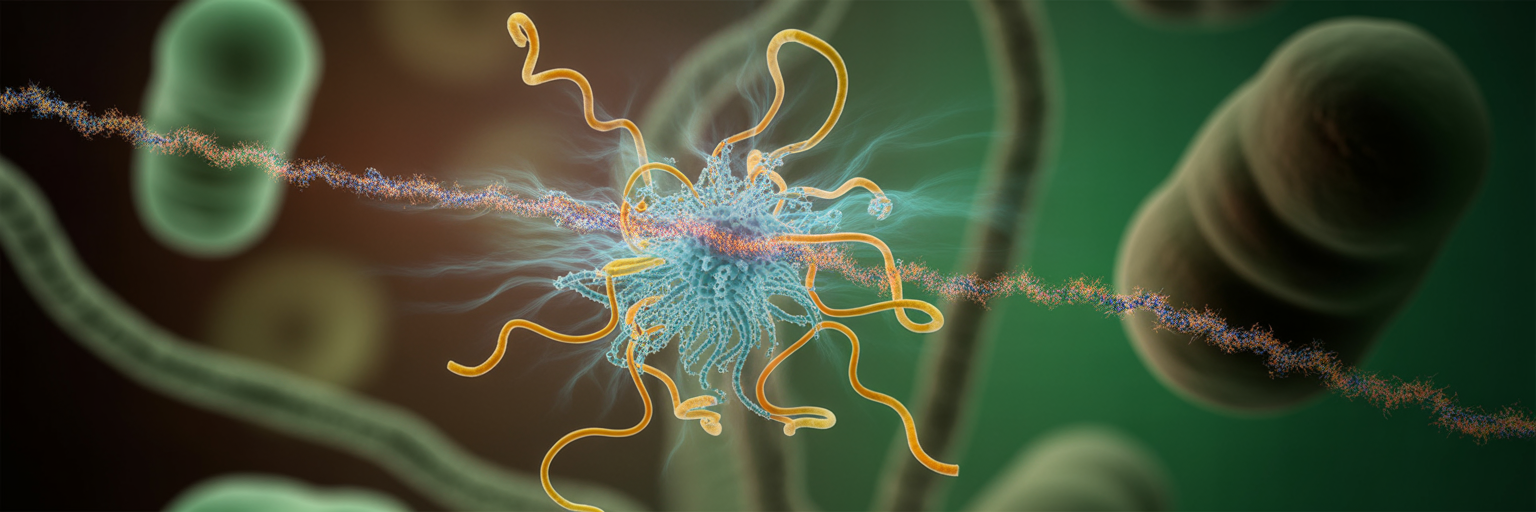
The relationship between bacteriophages and bacteria is a relentless, billion-year-old arms race. For every new strategy a phage evolves to infect its host, bacteria evolve a new defense to thwart it. This co-evolutionary battle is one of the most powerful driving forces of microbial evolution. Bacteria have developed an array of defensive tactics, such as modifying the receptor proteins on their cell surface so that phages can no longer attach, or producing restriction enzymes that act like molecular scissors to chop up any foreign DNA that manages to get inside.
One of the most sophisticated of these defenses is now one of the most famous tools in modern biology: CRISPR. Before it became a revolutionary gene-editing technology, CRISPR-Cas was a natural and adaptive immune system in bacteria and archaea. The discovery of CRISPR bacterial immunity revealed a remarkable biological memory system. When a bacterium is attacked by a phage and survives, it can capture a small fragment of the invader’s DNA. It then integrates this DNA snippet into a specific region of its own genome called a CRISPR array, which functions as a genetic library of past infections.
This library serves as the cell’s immune memory. If the same type of phage attacks again, the cell quickly transcribes the stored DNA snippet into a small RNA molecule. This guide RNA then teams up with a Cas (CRISPR-associated) protein, an enzyme that cuts DNA. The RNA guide leads the Cas protein to the invading phage DNA, and if the sequences match, the Cas protein cuts the phage DNA, neutralizing the threat before it can take over the cell. The realization that this natural system could be reprogrammed with a custom guide RNA to cut any DNA sequence at a precise location is what turned it into the groundbreaking gene-editing tool we know today. This evolutionary battle is a microscopic version of the constant struggle for survival seen everywhere, even in how tiny insects survive fungal artillery fire.
Why Bacteriophages Are Safe for Humans
The idea of using a virus to treat an infection can sound alarming. We are taught to think of viruses as pathogens to be avoided. However, bacteriophages are entirely safe for humans, animals, and plants. Their safety is not a matter of luck but a fundamental consequence of their biology and the billions of years they have spent co-evolving with their bacterial hosts.
The reason for this safety lies in their extreme specificity, which is governed by the “lock-and-key” mechanism of their tail fibers. As discussed, a phage can only initiate an infection if its tail fibers can bind to specific receptor molecules on a cell’s surface. Human cells are completely different from bacterial cells. They lack the surface proteins, sugars, and cell wall structures that phages have evolved to recognize. A phage that targets E. coli is physically incapable of attaching to a human lung cell, skin cell, or blood cell. To a phage, our cells are invisible; it simply drifts past them as if they were not there.
This surgical precision stands in stark contrast to broad-spectrum antibiotics. While effective, antibiotics often act like a carpet bomb, wiping out the targeted pathogen along with countless beneficial bacteria that make up our gut microbiome. This collateral damage can lead to secondary infections and other health issues. Phage therapy, on the other hand, can be so targeted that it eliminates a single harmful strain of bacteria while leaving the surrounding healthy microbiome completely undisturbed. This incredible specificity is precisely what makes bacteriophages so attractive to modern medicine. They represent a form of “smart” weaponry that attacks only the enemy, leaving innocent bystanders unharmed.
Frequently Asked Questions About Bacteriophages
Are bacteriophages dangerous to humans?
No. Bacteriophages are highly specialized to infect only bacteria. Their infection mechanism relies on recognizing specific receptors on bacterial cell surfaces that are completely absent on human cells. This makes them harmless to people, animals, and plants.
How many bacteriophages are there on Earth?
The current scientific estimate is around 10^31 (a 1 followed by 31 zeros), making them the most abundant biological entity on the planet. This number is an extrapolation based on sampling from environments like oceans and soil, not a direct count.
Can phages replace antibiotics?
It is unlikely that phages will completely replace antibiotics. Instead, they are seen as a powerful complementary tool. They are most promising for treating multidrug-resistant infections where antibiotics have failed and may be used in combination with antibiotics to increase effectiveness.
Are there phages inside my body right now?
Yes. Your body, particularly your gut, skin, and mouth, is home to trillions of bacteria that form your microbiome. Wherever bacteria thrive, their natural predators, bacteriophages, are also present. They are a normal and integral part of your internal ecosystem.
How big is a bacteriophage?
Bacteriophages are incredibly small and are measured in nanometers (billionths of a meter). A typical tailed phage, like the T4 phage, might be around 200 nanometers long. They are far too small to be seen with a standard light microscope and require an electron microscope to be visualized.
Why do phages look so mechanical?
Their machine-like appearance is a result of billions of years of evolution favoring maximum efficiency. Every component, from the geometric head to the syringe-like tail, has been optimized for the sole purpose of finding a bacterium, injecting genetic material, and replicating. This relentless process of natural selection has produced a design that appears perfectly engineered for its task.