
Imagine being a single bacterium buried deep in the oxygen-free mud of the seafloor. You are surrounded by an abundance of food in the form of sulfide compounds, yet you cannot eat. To complete the metabolic process, you need oxygen, which sits just a few centimeters above you at the sediment surface. For a microscopic organism, this distance is an impassable gulf, equivalent to a human attempting to cross a continent on foot. For eons, this fundamental survival challenge seemed insurmountable. Then, an astonishing solution emerged. A group of microbes evolved to become living, multicellular electrical wires. These organisms, now known as cable bacteria, solved the problem by building a biological power line. They form filaments of thousands of cells that collectively transport electrons from the deep, food-rich zone to the oxygenated surface, allowing the buried cells to “breathe” oxygen they will never physically encounter. How can a living thing be a wire? What does this discovery mean for our understanding of life and technology? Nature is full of surprising solutions to life’s challenges, with some animals even surviving by shrinking their own organs, but these living wires represent a truly unique form of biological ingenuity.
Unearthing an Electrical Secret in Aarhus Bay
The story of these remarkable microbes begins not with a biologist, but with geochemists studying mud. Researchers at Aarhus University in Denmark were analyzing sediment cores from Aarhus Bay when they encountered a phenomenon that defied explanation. They were observing the chemical fingerprints of life, but the pieces did not fit together in any known way.
A Puzzling Current in the Mud
The team noticed a strong, unexplained electrical current flowing through the mud cores. More perplexing was the chemistry. Deep in the anoxic sediment, where there was no oxygen, sulfide was being consumed at a rapid rate. Simultaneously, at the surface of the sediment, oxygen was disappearing. These two processes, separated by centimeters of dense mud, were perfectly synchronized. When one sped up, so did the other. It was as if an invisible connection linked the two zones. This observation hinted at a biological process, but no known microbe could operate across such a vast distance. As reported by sources like National Geographic, the discovery of bacteria uniting to form living electric cables was a major breakthrough. When the scientists looked at the mud under a microscope, they found the culprit: mysterious, long, thin filaments spanning the exact zones of chemical activity.
The Definitive ‘Wire-Cutting’ Experiment
To prove that these filaments were responsible for the current, the researchers designed an elegant experiment. They took an intact sediment core buzzing with its mysterious electrical activity. Then, with surgical precision, they slid a thin wire through the top few millimeters of the mud, physically severing any vertical structures connecting the deep layers to the surface. The result was immediate and dramatic. The moment the filaments were cut, the electrical current vanished. The linked chemical reactions, both the sulfide consumption below and the oxygen consumption above, stopped cold. It was the definitive proof. The filaments were not just present; they were the essential link. This landmark Aarhus Bay bacteria discovery confirmed that these were the living electrical wires responsible for conducting electrons across the sediment, revealing a form of multicellular cooperation never seen before in the microbial world.
How Do Cable Bacteria Conduct Electricity?

The ability of cable bacteria to conduct electricity over centimeters is a feat of biological engineering. It relies on a unique multicellular structure and a specialized internal network that functions unlike anything else in the known biological world. They are not simply a chain of cells; they are a single, integrated electrical system.
A Multicellular Organism with a Shared Purpose
A single cable bacterium is not a single cell. It is a filament composed of thousands of individual cells stacked end-to-end, all enclosed within a common outer sheath. This structure allows it to function as one coordinated organism that can grow to be several centimeters long. By sharing a continuous outer membrane, the cells create a protected internal environment, insulating their electrical components from the surrounding sediment and preventing the current from leaking out.
The Internal Nanowire Network
The electrical current does not flow through the cytoplasm of the cells themselves. Instead, it travels through a bundle of parallel protein “nanowires” that run the entire length of the filament. These conductive structures are located in the periplasmic space, which is the gap between each cell’s inner and outer membranes. This design is crucial. The wires form a continuous, uninterrupted pathway from one end of the filament to the other, while the outer sheath acts as an insulator. Recent studies published in journals like Nature Communications have established that this highly conductive fiber network is what enables the centimeter-scale electron transport. While early estimates of conductivity were high, more precise measurements using techniques like conductive atomic force microscopy have refined the numbers. The conductive core can reach a conductivity of up to 79 S/cm, a value exceptionally high for any known biological material and rivaling some synthetic conductive polymers.
A Clear Division of Labor
Within this multicellular wire, the cells have specialized roles. The cells buried deep in the anoxic mud perform oxidation. They strip electrons from sulfide compounds, their food source, and release these electrons into the internal nanowire network. These electrons then travel up the filament. At the top, the cells near the oxygenated surface perform reduction. They pull the electrons from the wires and transfer them to oxygen molecules, completing the metabolic circuit. This division of labor allows the organism to bridge the gap between its food and its energy source. This long-range, internal system makes cable bacteria fundamentally different from other electroactive bacteria.
| Feature | Cable Bacteria | Other Electroactive Bacteria (e.g., Geobacter) |
|---|---|---|
| Transport Distance | Centimeters (long-range) | Micrometers (short-range) |
| Transport Mechanism | Internal, insulated protein nanowires in periplasm | External, uninsulated protein pili (‘nanowires’) |
| Cellular Structure | Multicellular filament with division of labor | Individual cells or small aggregates |
| Key Function | Connects spatially separated redox zones | Transfers electrons to nearby minerals or cells |
| Conductivity Pathway | Insulated, continuous internal core | External appendages making direct contact |
Rewiring the Chemistry of the Seafloor
The collective action of trillions of cable bacteria has a profound effect on their environment. By conducting electrons and linking distant chemical reactions, they function as powerful ecosystem engineers, dramatically altering the sediment biogeochemistry on a massive scale. Their metabolic activity purifies the sediment, drives elemental cycles, and can even influence greenhouse gas emissions.
Detoxifying the Sediment
One of their most important roles is the consumption of hydrogen sulfide. This compound, which has the characteristic smell of rotten eggs, is produced by other microbes in anoxic sediments and is highly toxic to most forms of aerobic life. Cable bacteria effectively remove this poison from the deep layers, preventing it from diffusing upwards and harming organisms like clams, worms, and other bottom-dwellers that live on or in the seafloor. In this way, they create a healthier and more hospitable environment for the entire benthic community.
Driving the Iron and Sulfur Cycles
The electron transport performed by cable bacteria also dissolves iron sulfides in the sediment. This process frees up iron, which then moves towards the surface. When the dissolved iron meets the oxygen-rich zone, it reacts to form a distinct layer of iron oxides, often visible as a rusty orange band in the mud. This newly formed iron oxide layer is very effective at trapping phosphate, a key nutrient. By locking phosphate into the sediment, cable bacteria can limit its availability in the overlying water, which helps control the growth of algal blooms that can otherwise deplete oxygen and harm aquatic ecosystems.
A Methane ‘Firewall’
A more recently discovered role for cable bacteria involves methane, a potent greenhouse gas. The metabolic process of cable bacteria creates a highly acidic zone within the sediment. Researchers have found that this acidic layer can act as a chemical barrier, or “firewall,” that helps prevent methane generated in deeper sediments from escaping into the water column and eventually the atmosphere. This profound impact on their surroundings is a powerful example of ecosystem engineering, not unlike the way the Venus flytrap mechanism explained elsewhere shows a plant actively shaping its immediate world to survive.
A Global Network Beneath Our Feet
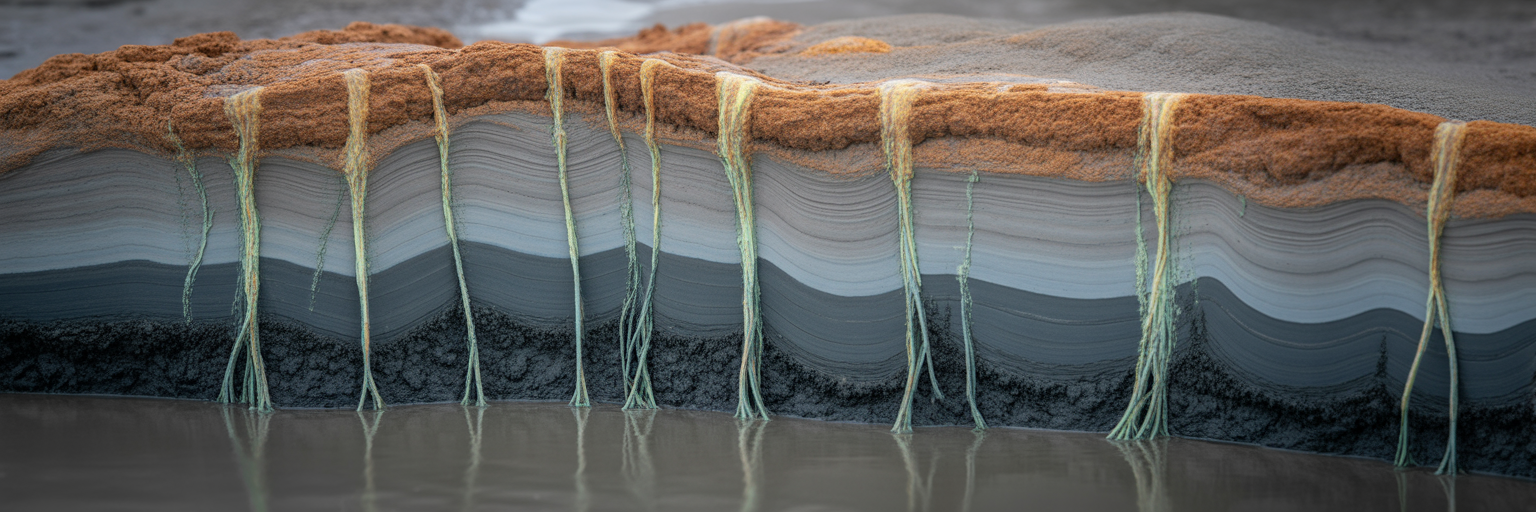
After the initial Aarhus Bay bacteria discovery, scientists began to wonder just how widespread these living electrical wires were. They started looking for them in other locations and were astonished to find them almost everywhere they looked. What was once thought to be a bizarre anomaly of a single Danish bay turned out to be a fundamental and globally distributed part of Earth’s microbial ecosystems.
Cable bacteria are found in any environment that provides their basic needs: waterlogged sediment rich in organic matter and an oxygenated layer on top. Their common habitats include:
- Marine Sediments: They thrive in the coastal mudflats, salt marshes, estuaries, and harbor bottoms that line continents around the world.
- Freshwater Systems: Different species have adapted to lower salinity, and they are now commonly found in the beds of lakes and rivers.
- Unexpected Places: Their reach extends even into man-made environments. Researchers have found dense populations of cable bacteria in the gravel of home aquariums, demonstrating their remarkable adaptability.
To grasp the incredible scale of these organisms, a comparison is helpful. A single bacterial cell in a filament is about one micrometer wide. A typical filament is about two centimeters long. If that single cell were the size of an adult human, the filament would stretch for over 12 miles (about 20 kilometers). This analogy powerfully illustrates the enormous length these living electrical wires achieve relative to their component parts. This incredible scale is another of nature’s wonders, much like the star-nosed mole that eats faster than you can blink, which operates on a timescale almost too fast for humans to perceive. The discovery of their ubiquity has shifted the perception of cable bacteria from a niche scientific curiosity to a hidden electrical grid under our feet, fundamental to the planet’s chemical cycles.
From Mud to Microchips: The Future of Bioelectronics
The existence of such a sophisticated biological conductor has captured the imagination of scientists in the emerging field of bioelectronics. Researchers are now exploring ways to harness the unique properties of cable bacteria and their conductive structures, opening new possibilities for technology that merges the living world with the electronic.
Biodegradable Electronics
One of the most promising bioelectronics applications involves using the protein-based conductive fibers from cable bacteria. These natural nanowires could potentially be harvested or synthesized to create environmentally friendly electronic components. Unlike traditional electronics made from metals and plastics, these biological wires would be fully biodegradable, decomposing naturally at the end of their lifespan. This could offer a sustainable solution to the growing global problem of electronic waste.
Living Circuits and Sensors
More speculative but exciting research envisions using networks of living cable bacteria themselves as components in circuits or sensors. Because their electrical activity is directly linked to the surrounding chemistry, they could be used for real-time environmental monitoring. Imagine deploying a mat of cable bacteria to detect pollutants in soil or water, with their electrical output signaling the presence of specific toxins. This concept of living sensors echoes abilities already found in nature, such as the animal that can smell disease before symptoms even start, and could lead to self-repairing, self-powered monitoring systems.
The Culturing Challenge
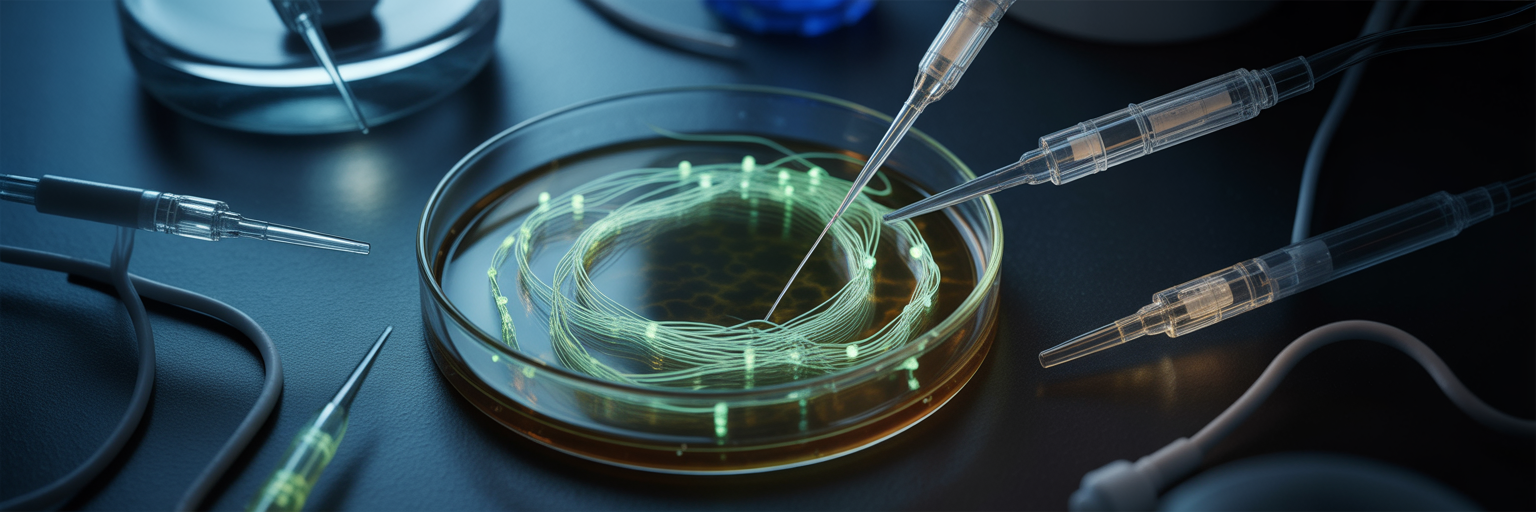
Despite the immense potential, a major obstacle stands in the way. Cable bacteria are notoriously difficult to grow in a pure laboratory culture. They have evolved to thrive within a complex microbial community in sediment, and isolating them from their neighbors often proves fatal. This culturing challenge currently limits the ability of researchers to study them in detail and to scale up any potential technology. Overcoming this hurdle is the key to moving from fascinating discovery to practical application. Nevertheless, nature has provided a remarkable blueprint, pushing the boundaries of what we consider possible in materials science and electronics.
Frequently Asked Questions about Living Wires
What are cable bacteria?
Cable bacteria are unique multicellular filaments made of thousands of individual bacterial cells. They function as a single, living electrical wire, conducting electrons over centimeter-scale distances in sediment. This allows them to perform a type of respiration where the part of the organism “eating” food is physically separated from the part “breathing” oxygen.
How long can a cable bacteria filament grow?
A common length for a cable bacteria filament is 2 to 3 centimeters (about an inch), but some have been observed reaching up to 5 centimeters or even longer. For a microbe, this is a colossal length, equivalent to thousands of individual cells stacked end-to-end.
Do cable bacteria actually produce electricity?
This is a common misconception. Cable bacteria do not generate a net electrical power like a battery or a power plant. Instead, they conduct a current of electrons as an integral part of their metabolism. They act like a copper wire, which allows electricity to flow through it but does not create the electricity itself.
Where do cable bacteria live?
They are widespread and found in waterlogged sediments across the globe. They are common in the muddy or sandy bottoms of oceans, estuaries, salt marshes, lakes, and rivers. Surprisingly, they have also been found in the gravel of home aquariums.
Are cable bacteria harmful?
No, cable bacteria are not pathogenic or harmful to humans or other animals. On the contrary, they are considered beneficial to their ecosystems because they remove toxic hydrogen sulfide from the sediment, making it a healthier environment for other organisms.
Could cable bacteria be used in technology?
Researchers are actively exploring this possibility. The potential bioelectronics applications include using their conductive protein structures to create biodegradable electronics and environmental sensors. However, this is still an early-stage field of research, and significant challenges, such as cultivating them in labs, must be overcome.