
Discovering the Deep-Sea Osedax Worm
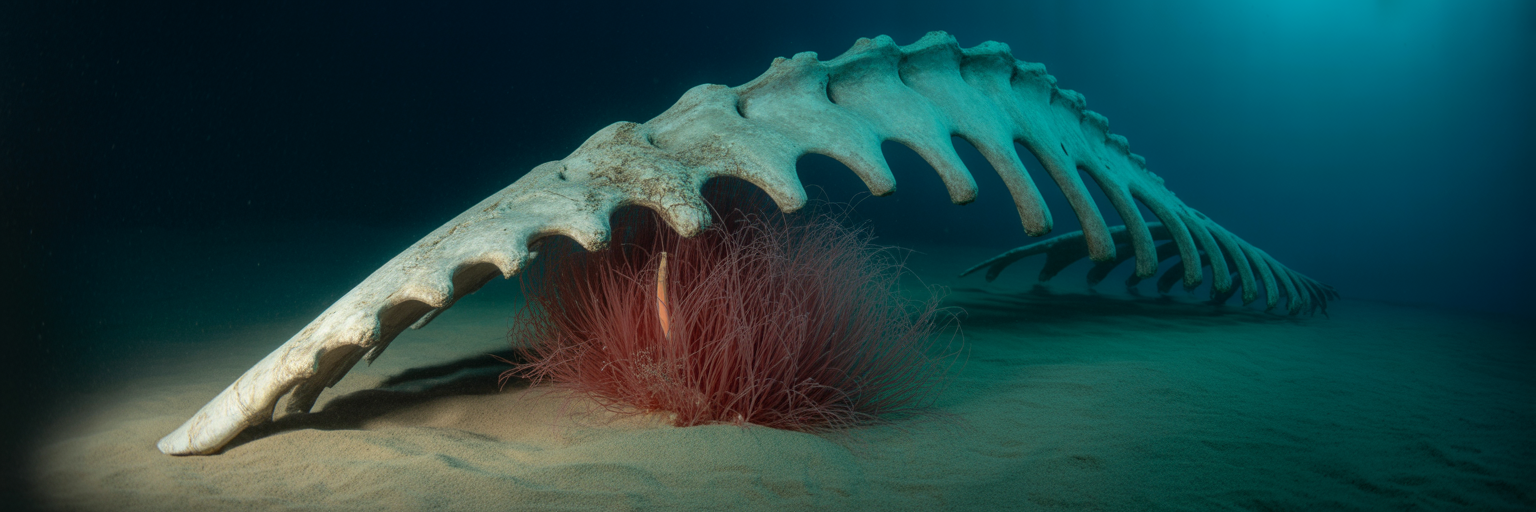
When a whale dies and its massive body drifts down into the crushing darkness of the deep sea, it does not simply disappear. Instead, it becomes a sudden oasis of life on the barren seafloor. This event, known as a deep sea whale fall, initiates a decades-long succession of scavengers. After sharks, hagfish, and crabs have stripped away the flesh, a far stranger specialist arrives. This creature consumes the very skeleton, a bizarre organism called the Osedax worm.
Commonly known as the “zombie worm” or “bone-eating worm,” its scientific name, Osedax, is a direct Latin translation meaning “bone devourer.” These worms were completely unknown to science until 2002, when researchers from the Monterey Bay Aquarium Research Institute (MBARI) were exploring the deep ocean with a remotely operated vehicle. On the decaying carcass of a gray whale nearly 3,000 meters below the surface, they observed strange, reddish plumes covering the bones. This initial discovery sparked immense scientific curiosity about what these organisms were and how they survived.
The environment they inhabit, a whale fall, is a unique deep-sea ecosystem. A single whale carcass can deliver more organic material to the abyssal plain than thousands of years of “marine snow,” the slow drift of organic detritus from above. This concentrated burst of nutrients supports a complex community of specialized organisms for years, sometimes even for a century. The Osedax worm is a crucial player in the final stage of this process, responsible for recycling the nutrients locked within the skeleton itself.
While first discovered on whale bones, subsequent research has revealed their remarkable adaptability. Osedax have been found colonizing the skeletons of other large marine vertebrates, including fish and sea turtles. They thrive across a wide range of ocean depths, from shallow coastal waters to the abyssal zone. This adaptability highlights their role as essential decomposers in marine environments worldwide, patiently waiting for the next large meal to fall from above.
Anatomy of a Creature with No Mouth
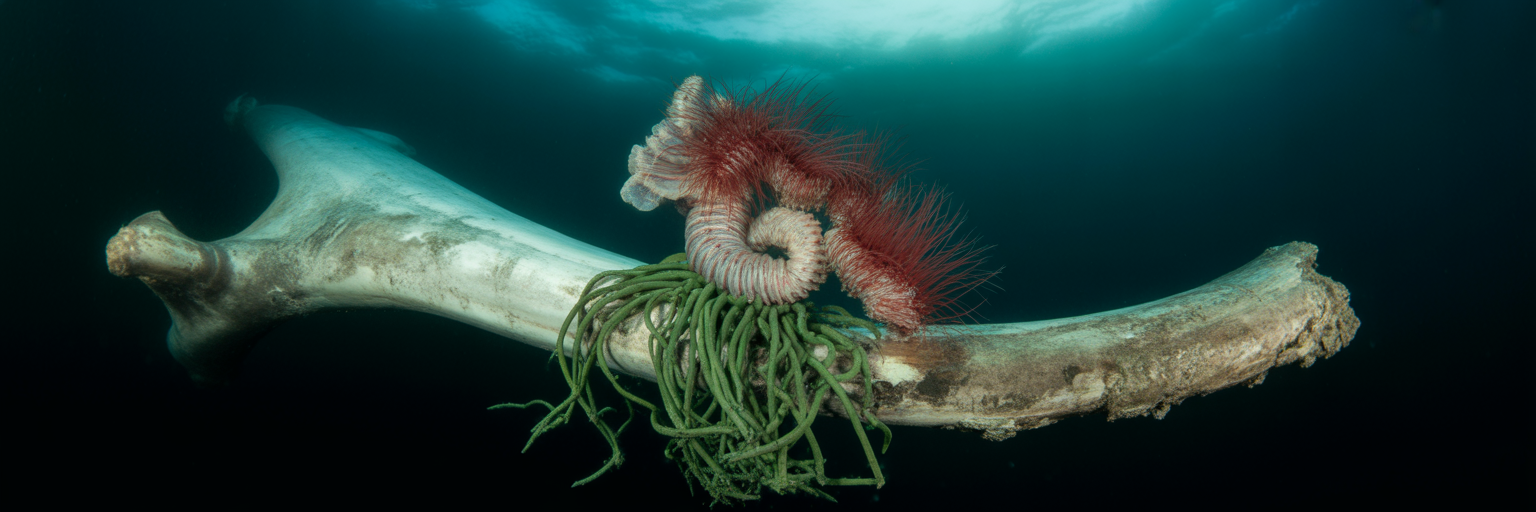
The physical form of the female Osedax is a masterclass in biological specialization, challenging our fundamental understanding of animal anatomy. To look at one is to see a creature seemingly designed by committee, with parts that appear borrowed from plants and other organisms, yet function together with remarkable efficiency.
The Breathing Plumes
The most visible part of the Osedax worm is the crown of colorful, feathery structures that extend from the bone into the water column. These are not decorative appendages but the worm’s gills. Resembling delicate flowers, these plumes are packed with blood vessels and have a large surface area, making them highly efficient at absorbing the scarce dissolved oxygen from the cold, deep-sea water. The vibrant red or pink color comes from hemoglobin, the same oxygen-carrying protein found in human blood.
A Body Without a Digestive Tract
Perhaps the most perplexing feature of the Osedax is what it lacks. This animal has no mouth, no stomach, and no gut. It has no way to ingest or process food in a conventional manner. This anatomical puzzle immediately presented a question to its discoverers: how does an animal eat bone without a mouth to chew or a stomach to digest? This absence of a digestive system is a primary reason people ask, what are zombie worms? Their entire survival strategy bypasses the normal rules of feeding, relying instead on a hidden, internal system.
The Bone-Devouring Root System
The secret to its survival lies below the surface. The worm’s trunk, which contains its reproductive organs, transitions into a specialized greenish network of tissue that grows directly into the bone matrix. This is not a true root system like a plant’s, but a modified part of the worm’s body that serves to anchor it and absorb nutrients. This structure is the primary interface with its food source. Within these roots, the worm houses its ovisac for egg production and, most importantly, the symbiotic bacteria that perform the actual digestion, a topic that reveals even more about its strange biology. The worm’s unique body plan is a testament to how some animals adapt in extreme ways, a phenomenon seen across the natural world.
The Chemical Process of Dissolving Bone
The Osedax worm’s ability to consume bone is not a feat of mechanical grinding but one of sophisticated biochemistry. It employs a two-step chemical process to mine the nutrients locked within the hard skeletal matrix. This process is carried out by the root-like structures embedded deep within the bone.
Step 1: Demineralization Through Acid Secretion
The first challenge is to break down the inorganic part of the bone, which is primarily composed of a hard mineral called calcium phosphate. To do this, the Osedax worm essentially becomes a living acid factory. The cells at the tips of its roots actively secrete a powerful acid directly onto the bone surface. This acidic environment dissolves the mineral matrix, much like vinegar dissolves the shell of an egg, breaking it down and releasing the organic components trapped within.
The Biochemical Machinery of Acid Production
This acid production is not random; it is a highly controlled process driven by specialized enzymes. Research has shown that the worm uses enzymes like carbonic anhydrase and a proton pump known as V-type H+-ATPase. Working together, these enzymes function to move hydrogen ions (protons) out of the root cells and into the tiny space between the worm and the bone. This concentration of protons creates a highly acidic microenvironment that efficiently demineralizes the bone. This biochemical machinery is the engine of the entire bone-eating process, a genetic toolkit that has been refined over millions of years.
Step 2: Exposing the Organic Nutrients
Once the mineral shield is dissolved, the real prize is exposed: the bone’s organic components, primarily tough collagen fibers and energy-rich lipids (fats). These are the actual food source for the worm. However, the worm itself cannot directly use them in this form. Instead, it expresses its own set of enzymes, such as matrix metalloproteinases, which are specifically designed to break down the complex collagen fibers into smaller, more manageable molecules. This step essentially prepares the meal for the next stage of digestion, which is handled by an entirely different organism living inside the worm.
A Crucial Partnership for Nutrition
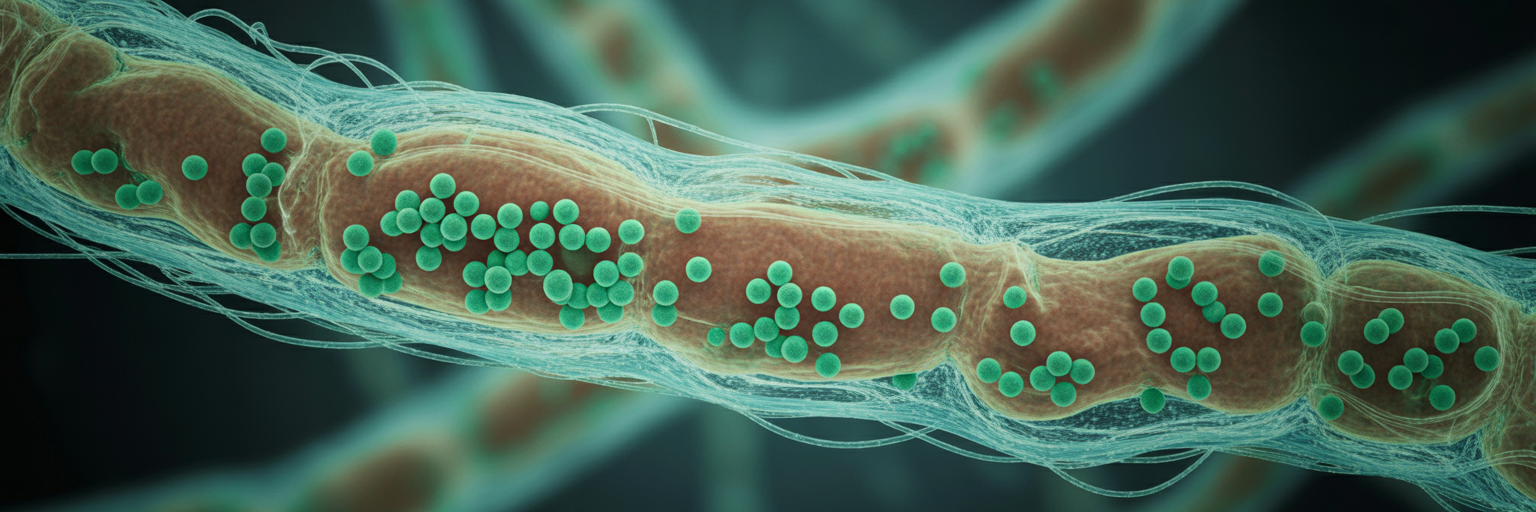
The Osedax worm’s most remarkable secret is that it does not eat alone. Its ability to thrive on a diet of bone is entirely dependent on a deep-seated partnership with bacteria living inside its body. This strategy, known as endosymbiosis, is the key to its symbiotic bacteria nutrition and allows it to flourish in an environment where few other creatures can survive.
The worm itself cannot digest the collagen and lipids it exposes from the bone. It performs the “mining” by dissolving the minerals and breaking down the tough fibers, but it relies on internal partners for the “refining.” These partners are specific types of bacteria from the order Oceanospirillales, which are housed within specialized cells called bacteriocytes located in the worm’s root tissues. This arrangement creates a safe, protected internal environment where the bacteria can work.
The division of labor between the worm and its bacteria is a clear example of teamwork:
- The Worm’s Role (The Miner): It anchors to the bone, secretes acid to dissolve the mineral matrix, and uses its own enzymes to break down the large collagen fibers into smaller pieces.
- The Bacteria’s Role (The Refiner): They absorb and metabolize the exposed lipids and proteins, converting these complex organic molecules into simple, usable nutrients that the worm can absorb.
Scientists are still exploring exactly how the worm receives these nutrients from its bacterial partners. One hypothesis suggests the worm “harvests” and digests the bacteria themselves, treating them like an internal farm. Another theory proposes that the bacteria release the processed nutrients, which the worm then absorbs through specialized transporter proteins in its cells. It is possible that both mechanisms are at play. This intricate relationship is a powerful example of how symbiotic and parasitic relationships can drive bizarre behaviors in nature, leading to evolutionary innovations that would otherwise be impossible.
| Task | Role of the Osedax Worm | Role of the Symbiotic Bacteria |
|---|---|---|
| Anchoring & Penetration | Grows specialized ‘root’ tissue directly into the bone matrix. | Housed safely within the worm’s root cells (bacteriocytes). |
| Bone Demineralization | Secretes acid via specialized enzymes to dissolve the inorganic calcium phosphate. | Not involved in this step. |
| Organic Matter Exposure | Uses its own enzymes (e.g., metalloproteinases) to break down tough collagen fibers. | Not involved in this step. |
| Nutrient Metabolism | Cannot digest lipids or proteins on its own. | Metabolizes the fats and proteins released from the bone into usable energy and nutrients. |
| Nutrient Transfer | Absorbs nutrients from the bacteria, either by digesting them or via specialized transporters. | Provides the processed nutrients essential for the worm’s survival and growth. |
The Bizarre Reproductive Life of Osedax
The reproductive strategy of the Osedax worm is as strange as its feeding habits. It is a system defined by extreme sexual dimorphism, where males and females of the same species are so different they appear to be entirely separate organisms. The visible, flower-like creatures on the bone are all females, which can grow several centimeters long. The males, in contrast, are microscopic and paedomorphic, meaning they retain their juvenile, larval form throughout their lives.
These dwarf males live as a “harem” inside the gelatinous tube that surrounds the female’s trunk, just above the bone surface. A single female can host hundreds of these microscopic males, whose sole purpose in life is to produce sperm. They do not eat or grow; they are essentially swimming sperm sacs, dedicating all their energy to fertilization. This unusual arrangement is a key feature that makes these bone eating worms so fascinating to biologists.
The reproductive process is methodical and efficient. The female produces eggs within her ovisac, located deep inside the bone-boring roots. These eggs travel up her trunk and into the tube where the males reside. There, they are fertilized before being released into the ocean currents. The fertilized eggs develop into free-swimming larvae that drift through the deep sea, searching for a new place to settle.
This strategy provides a significant evolutionary advantage for a species that relies on finding rare and scattered food sources like a deep sea whale fall. By producing vast numbers of larvae (high fecundity) and dispersing them widely (broadcast spawning), the species maximizes its chances that at least a few will land on a suitable skeleton. The dwarf male strategy is an incredibly energy-efficient solution. The female invests her resources in growing large and producing eggs, while the males are cheap to produce and guarantee fertilization for the stationary female. This reproductive method is one of many strange birth processes in the animal kingdom, each tailored to a unique environmental challenge.
An Ancient Lineage of Ecosystem Engineers
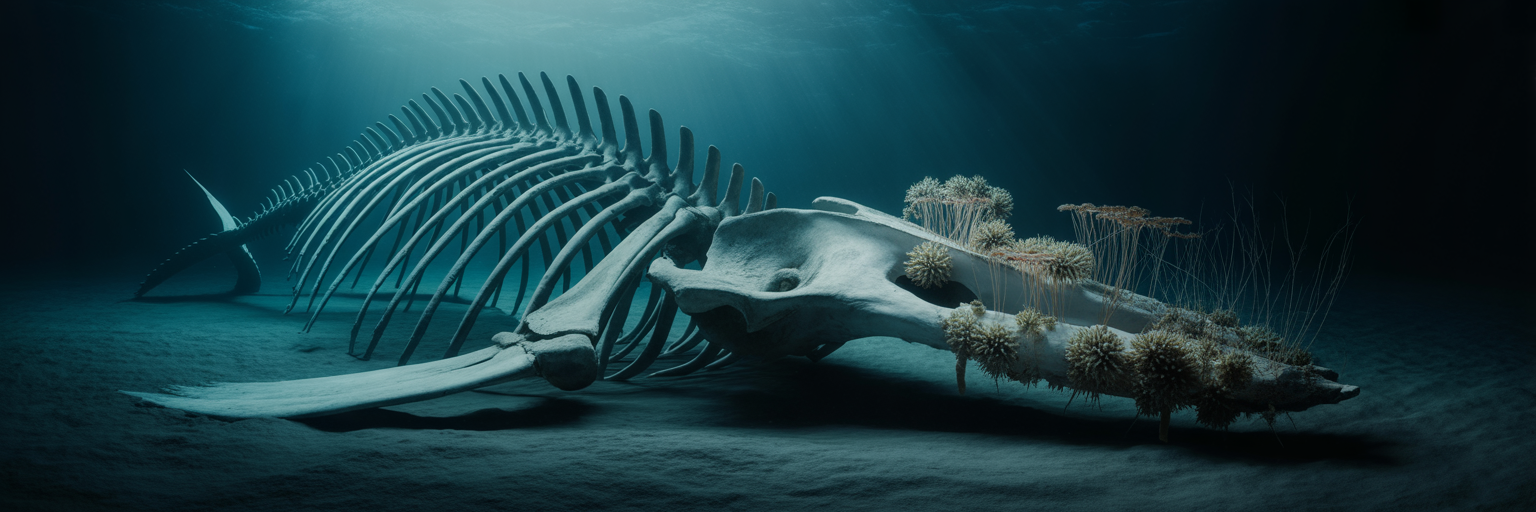
The discovery of Osedax in 2002 opened a window not just into a strange new creature, but into the deep history of our planet’s oceans. Genetic evidence and fossilized traces on ancient bones suggest that this bone-eating lifestyle is not a recent innovation. In fact, this lineage dates back at least 93 million years to the Cretaceous period. Researchers have found the characteristic boreholes of Osedax on the fossilized bones of plesiosaurs and other large marine reptiles, indicating that these worms were thriving long before modern whales existed.
Their long history is a story of remarkable resilience and adaptation. They survived the major extinction event that wiped out the dinosaurs and their marine reptile contemporaries. As the dominant megafauna in the oceans changed, Osedax adapted, shifting their diet from reptile bones to the skeletons of the newly evolving marine mammals. This ability to persist across geological eras highlights their specialized yet flexible survival strategy.
Beyond their own survival, Osedax worms play a critical role as “ecosystem engineers.” Their boring activity dramatically increases the surface area of bones, creating complex microhabitats that can be colonized by other, smaller organisms like bacteria, snails, and crustaceans. They are not just consumers but facilitators, creating new niches for life on the barren seafloor.
Their overall impact on the whale fall ecosystem is profound. By breaking down skeletons, they accelerate the recycling of key nutrients like phosphorus and calcium that are locked within the bones. This process makes these essential elements available to the wider deep-sea food web, contributing to the long-term health and productivity of this unique environment. As National Geographic reports, their connection to prehistoric marine reptiles solidifies their status as ancient recyclers of the sea.
Frequently Asked Questions About Bone-Eating Worms
- What would happen if an Osedax worm tried to eat a human bone?
While theoretically possible if a human body were to reach the deep sea intact, Osedax are highly adapted for the large, lipid-rich bones of marine mammals like whales. Human bones are much smaller and contain significantly less fat, making them a poor and less attractive food source. The worms would likely not be able to establish a thriving colony. - Why are the male Osedax so small?
This is an evolutionary strategy for energy efficiency. The female, being stationary, invests her energy into growing large to maximize egg production and house the symbiotic bacteria. The males, in contrast, only need to be large enough to produce sperm. By remaining microscopic, they require very few resources, allowing a single female to support a large “harem” that guarantees her eggs are fertilized. - How do Osedax larvae find new bones on the vast seafloor?
The exact mechanism is still being studied, but it is likely a combination of two factors. First, females produce an enormous number of free-swimming larvae that are carried by deep-ocean currents, playing a numbers game to increase the odds of one landing on a suitable skeleton. Second, it is believed the larvae possess a chemical sensing ability that allows them to detect molecules released by decaying bone, guiding them toward a potential new home. - How long can a colony of Osedax live on a single whale skeleton?
The longevity of an Osedax colony is tied to the longevity of the whale fall itself. A large whale skeleton can provide nutrients for many decades. As long as there are accessible lipids and collagen remaining in the bones, the colony can continue to thrive, grow, and reproduce, slowly consuming the skeleton over a very long period. - Are Osedax worms related to any worms on land?
Osedax are classified as polychaetes, or bristle worms, which are a large and diverse class of annelid worms found almost exclusively in marine environments. They are not closely related to terrestrial worms like earthworms. Their closest relatives include other marine worms, some of which live in extreme environments like hydrothermal vents, but the specialized bone-eating lifestyle is unique to the Osedax genus. The diversity within this phylum is vast, including worms with unique regenerative abilities that showcase nature’s creativity.