Meet the Vampire Squid A Gentle Deep-Sea Dweller
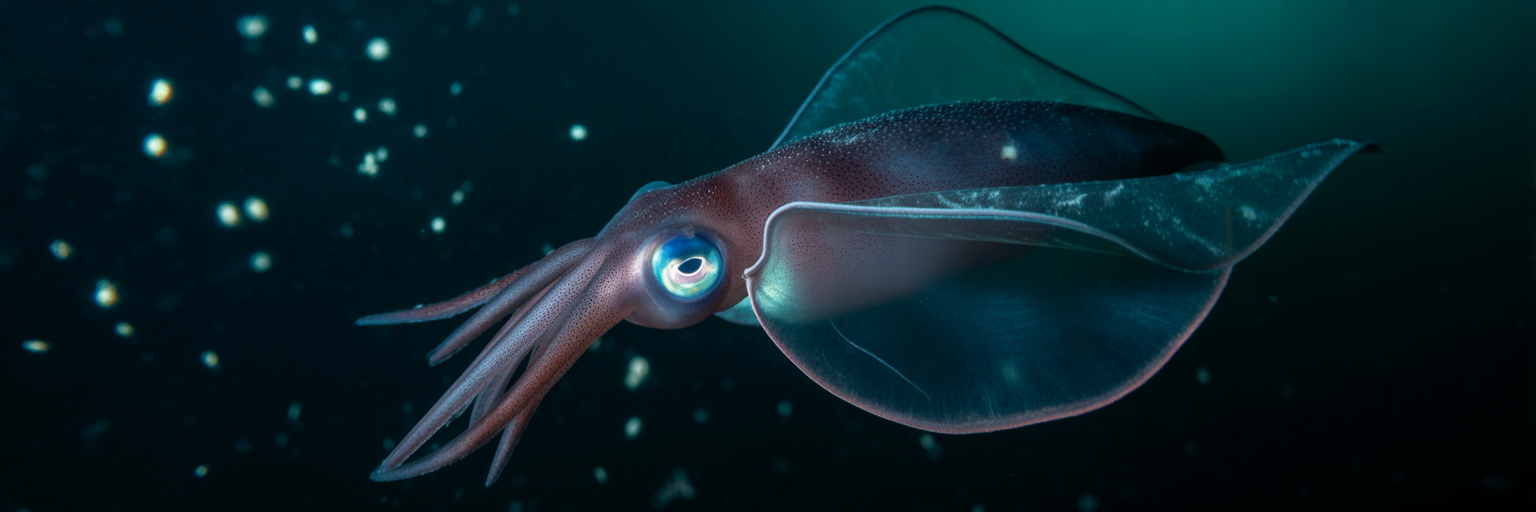
The name Vampyroteuthis infernalis translates to “vampire squid from hell,” a title that conjures images of a fearsome predator lurking in the abyss. This dramatic name, however, is a complete misnomer, born from its striking appearance rather than its behavior. Its velvety, jet-black skin and the cloak-like webbing connecting its arms give it a gothic look, but this deep sea cephalopod is far from a monster. It does not hunt live prey or suck blood. Instead, it is a passive detritivore, a creature that subsists on the ocean’s leftovers.
Its diet consists almost entirely of “marine snow,” a constant shower of organic debris that drifts down from the sunlit waters above. This includes dead plankton, fecal matter, and discarded mucus from other animals. This unique feeding strategy sets it apart from all other known cephalopods. Exploring Vampyroteuthis infernalis facts reveals its singular place in the animal kingdom. It is the sole surviving member of its own scientific order, Vampyromorphida, making it a living fossil that is neither a true squid nor an octopus. It represents an ancient lineage that has persisted for millions of years in one of Earth’s most challenging environments.
This creature’s existence is a testament to adaptation. It has developed a suite of specialized tools for a life of extreme energy conservation, from its unique feeding filaments to its surprising defense mechanisms. Understanding this animal requires looking past its intimidating name and appreciating the gentle, resourceful survivor that thrives where few others can.
Life in the Oxygen Minimum Zone
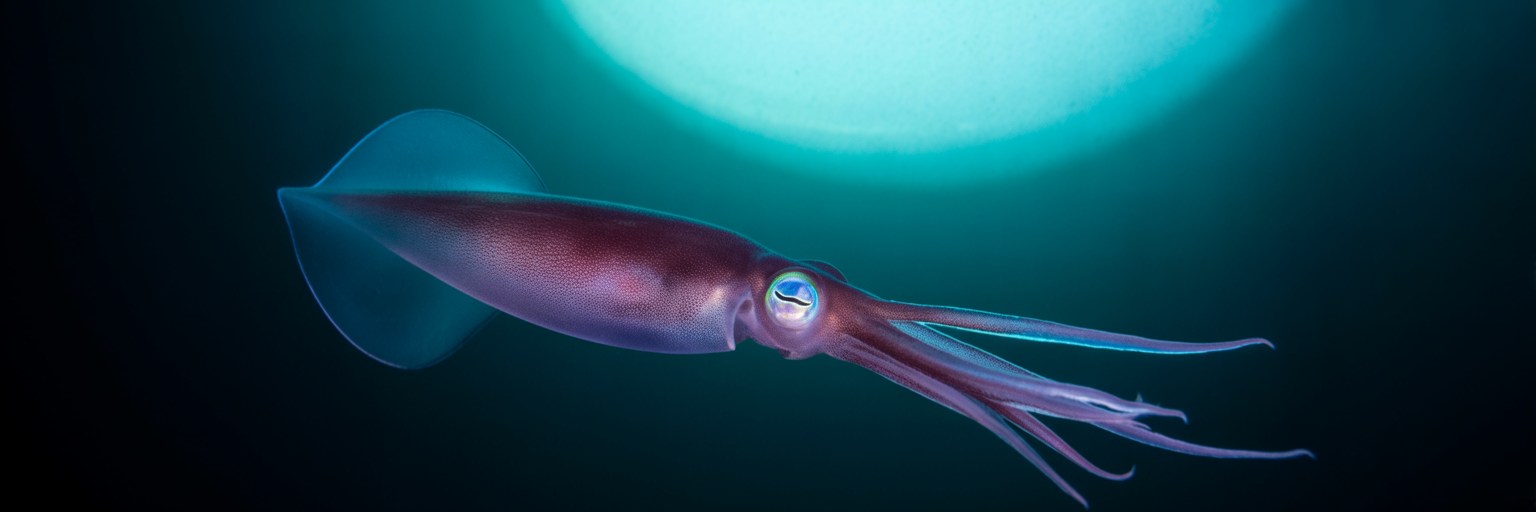
The vampire squid makes its home in an environment that is hostile to most forms of complex life. It inhabits the deep ocean, far from the familiar coastal waters, in a habitat defined by darkness, pressure, and a profound lack of oxygen.
A Habitat of Perpetual Twilight
This creature resides in the mesopelagic, or “twilight,” zone, typically at depths between 600 and 900 meters. Here, sunlight barely penetrates, creating a world of perpetual dusk. The pressure is immense, and the temperature hovers just above freezing. It is a stable but unforgiving environment where food is scarce and finding a meal requires specialized strategies.
Thriving with Almost No Oxygen
The most defining feature of the vampire squid’s home is its location within the Oxygen Minimum Zone (OMZ). As the marine snow it feeds on sinks and decomposes, bacteria consume vast amounts of dissolved oxygen. This process creates vast stretches of water where oxygen levels can fall to as low as 3% of surface concentrations. Such conditions are lethal for most active predators like fish and other squids, which require more oxygen to fuel their high-energy lifestyles. For the vampire squid, this anoxic water serves as a safe haven, a refuge where it can avoid being hunted.
Physiological Keys to Survival
Surviving in this zone requires extraordinary adaptations. Among oxygen minimum zone animals, the vampire squid is a master of efficiency. It has the lowest metabolic rate of any deep-sea cephalopod, burning energy at an exceptionally slow pace. Its blood contains a highly efficient, copper-based protein called hemocyanin, which is exceptionally good at binding to and transporting the few available oxygen molecules. Furthermore, its body is a marvel of energy conservation. Composed of gelatinous tissue, it is neutrally buoyant, allowing it to float effortlessly without expending energy on swimming. Nature has many examples of creatures with extreme survival tactics, such as the animal that survives by shrinking its own organs, and the vampire squid’s low-energy existence is a prime example of this principle in action.
Dining on Marine Snow
The vampire squid’s most remarkable adaptation is its diet. Unlike its predatory relatives, it has evolved to be the ocean’s patient garbage collector, a strategy that is perfectly suited to its low-energy home. The key to this lifestyle is its ability to harvest a food source that is invisible to most but ubiquitous in the deep sea.
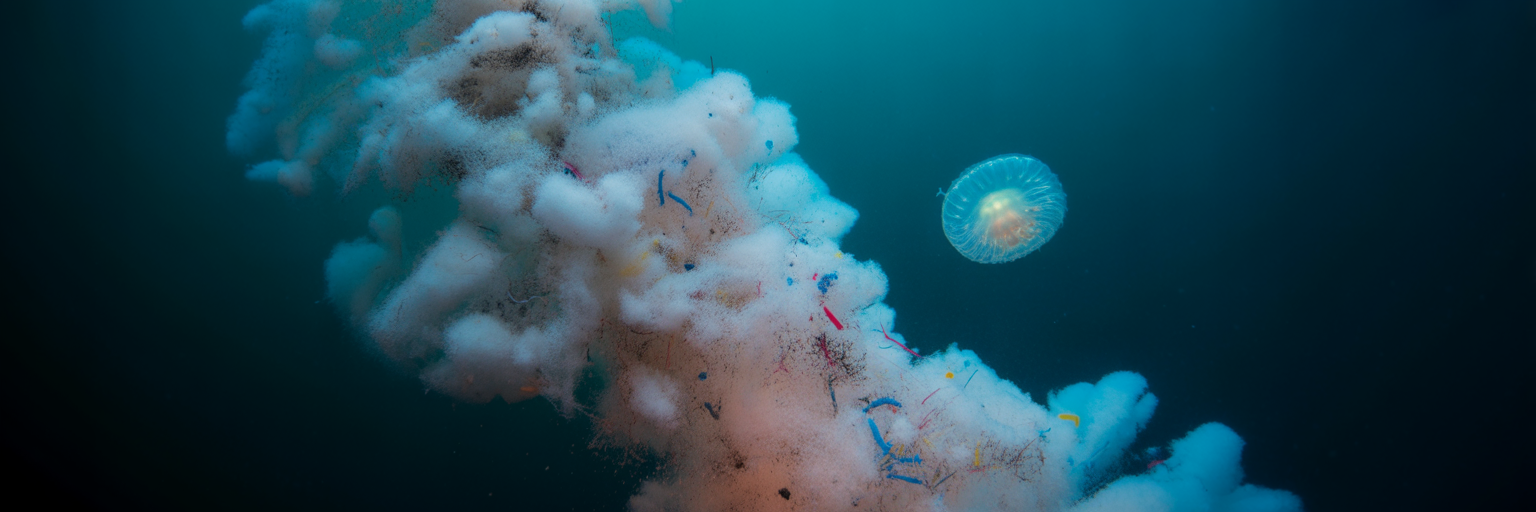
So, what is marine snow? It is the continuous, gentle rain of organic detritus from the productive upper layers of the ocean. This “snow” is a rich mixture of dead and decaying plankton, single-celled algae, fecal pellets from small crustaceans, and shed mucus from larger animals. As these particles sink, they clump together, forming a reliable food source for any creature equipped to collect them. The vampire squid is the only known cephalopod that has specialized entirely in this diet.
Instead of tentacles for grasping prey, it possesses two long, retractable feeding filaments. These are not arms but unique, thread-like appendages that can stretch to eight times the squid’s body length. Each filament is covered in fine, sticky hairs designed to passively snare particles of marine snow. The feeding process is a model of efficiency. The squid extends one of its filaments into the water column, much like a fishing line, and simply waits. Once the filament is coated with a sufficient amount of debris, it is retracted. The squid then uses its arms to scrape the collected material off the filament, using its suckers to secrete mucus that binds the particles into a neat food ball. This ball is then transferred to its beak for consumption. A study published in the Proceedings of the Royal Society B was pivotal in confirming this behavior, revealing that the vampire squid is a dedicated detritivore. This strategy allows it to gather nutrition without the metabolic cost of chasing prey, a critical advantage in an environment where every calorie counts.
Anatomy of a Living Fossil
The vampire squid’s body is a collection of strange and wonderful features, each one honed by millions of years of evolution in the deep ocean. Its anatomy reflects its status as a living fossil, sharing traits with both octopuses and squids but belonging to neither group.
The Cape and the Colossal Eyes
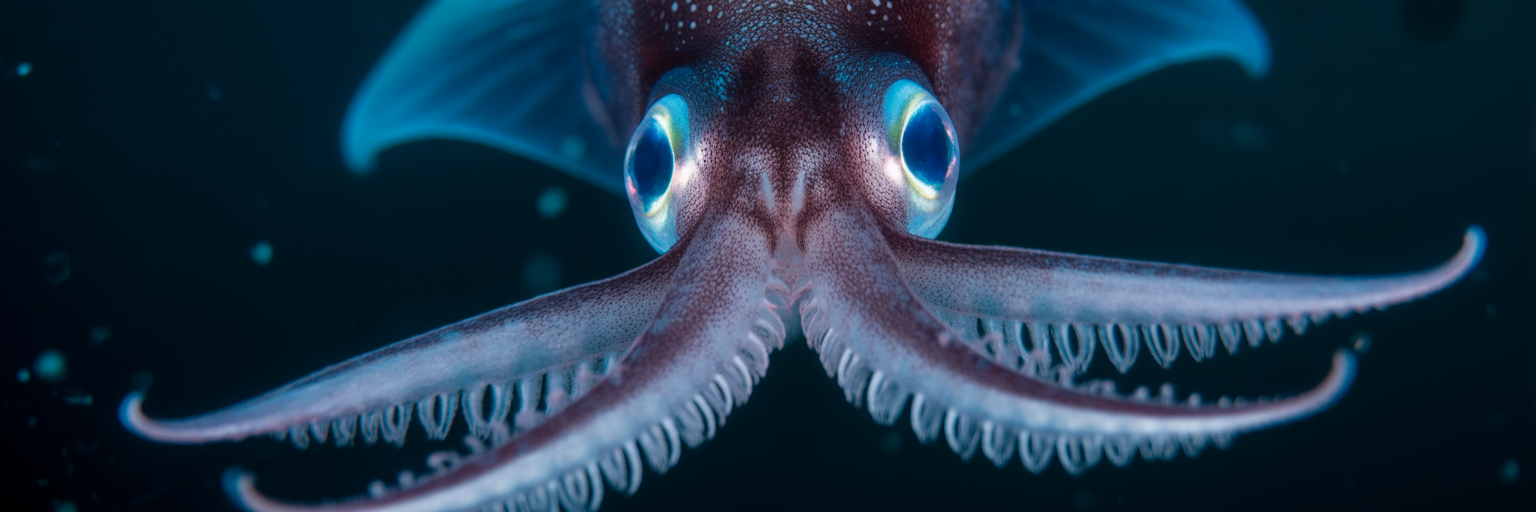
Growing to a modest length of about 30 centimeters, the vampire squid has a fragile, gelatinous body with a velvety texture that can appear black or deep reddish-brown depending on the light. Its most prominent feature is its eyes. Proportionally, it has the largest eyes of any animal on Earth. These massive, blue orbs are exquisitely sensitive, designed to capture the faintest glimmers of light in the twilight zone, including the bioluminescent flashes of other deep-sea organisms. They are not for seeing images with clarity but for detecting movement and light in near-total darkness.
Arms, Cirri, and Bioluminescence
Its eight arms are connected by a web of skin, forming the signature “cape” that inspired its name. Unlike the sucker-covered arms of other cephalopods, the vampire squid’s arms are lined with rows of soft, fleshy spines called cirri. These are not for grasping but act as sensory organs, helping the animal detect objects and currents in the dark. The animal kingdom is full of creatures with highly specialized sensory tools, like the star-nosed mole that eats faster than you can blink by using its unique nose, and the vampire squid’s cirri serve a similar purpose in its own environment. This deep sea cephalopod is also a master of light. Its entire body is covered in light-producing organs called photophores, which it can turn on and off at will. This bioluminescence is used for sophisticated camouflage, communication, and defense, allowing it to control its visibility in the dark depths.
Defensive Strategies Without Ink
In the perpetual darkness of the mesopelagic zone, the ink-squirting defense used by most squids and octopuses would be useless. A cloud of black ink is invisible where there is no light to block. The vampire squid has therefore developed a different set of defensive maneuvers that rely on illusion and misdirection, all while conserving precious energy.
Instead of fleeing, its primary responses are visual tricks designed to startle and confuse a potential predator.
- The ‘Pineapple Posture’: When threatened, the squid pulls its webbed arms up and over its body, turning itself inside out. This maneuver conceals its vulnerable head and mantle while exposing the intimidating-looking, but harmless, fleshy spines on the underside of its arms. It transforms from a soft-bodied creature into a spiky ball, a posture that may deter an attacker from biting.
- Bioluminescent Mucus Cloud: Rather than ink, the vampire squid can eject a sticky cloud of glowing particles from its arm tips. This luminous mucus can hang in the water for several minutes, creating a dazzling and confusing spectacle. The predator is left to attack a cloud of light while the squid itself extinguishes its own photophores and vanishes into the darkness.
- Decoy Arm Tips: The tips of its arms are equipped with complex photophores that it can flash on and off. It can use these lights to draw a predator’s attention away from its main body. In extreme cases, it can even detach a glowing arm tip, which will continue to writhe and flash, serving as a perfect decoy.
Each of these strategies is metabolically cheap. They do not require the energy of producing ink or engaging in a high-speed chase, making them ideal for an animal that must operate on a strict energy budget.
A Slow and Steady Reproductive Cycle
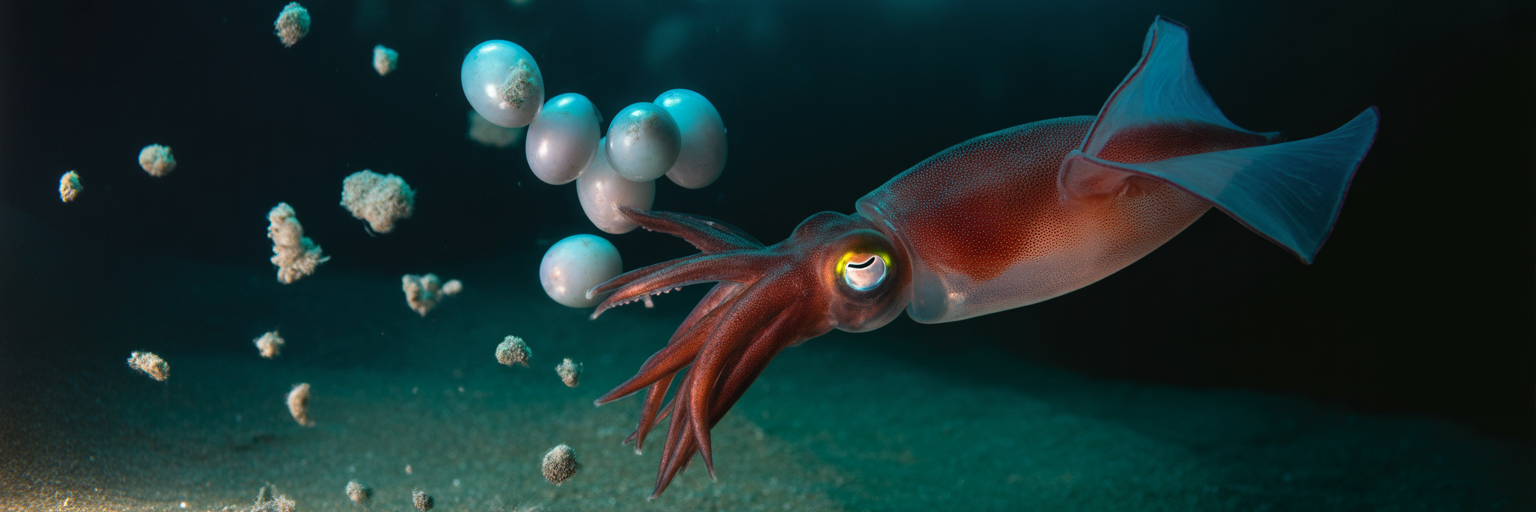
The vampire squid’s reproductive strategy is as unique as its diet and defenses. Most squids and octopuses live fast and die young, following a semelparous reproductive model where they reproduce once in a massive, all-consuming event before dying. The vampire squid, however, has adopted a “low and slow” approach known as iteroparity.
This means it undergoes multiple reproductive cycles throughout its long life. A female will spawn a small batch of eggs and then enter a resting phase, during which she continues to feed and regain energy before starting the process over again. This strategy is a direct adaptation to its energy-limited environment, where investing all resources into a single reproductive event would be too risky. The natural world features many strange methods of bringing young into the world, such as the Suriname toad that gives birth through holes in its back, and the vampire squid’s patient cycle is another example of life finding a way in extreme conditions.
It produces a small number of very large eggs, each packed with enough yolk to sustain the developing embryo for a long time. This allows the hatchlings to emerge as well-developed, miniature versions of the adults, likely skipping a vulnerable free-swimming larval stage. The differences between its reproductive approach and that of more common cephalopods are stark.
| Feature | Vampire Squid (Iteroparous) | Common Octopus (Semelparous) |
|---|---|---|
| Reproductive Events | Multiple cycles throughout life | Single, terminal event |
| Energy Strategy | Alternates between spawning and feeding to recover | All energy is invested in one massive brood |
| Egg Characteristics | Small number of very large, yolk-rich eggs | Thousands of small eggs |
| Post-Reproduction | Continues to live, feed, and reproduce again | Female dies shortly after eggs hatch |
| Lifespan Focus | Long-term survival and multiple spawning opportunities | Maximizing the success of a single generation |
An Ancient Survivor Facing New Dangers
As a living fossil that has survived for millions of years, the vampire squid is a testament to resilience. However, this ancient survivor is now facing modern threats that are infiltrating its deep-sea refuge. Its specialized lifestyle, once its greatest strength, may now be its greatest vulnerability.
The Deep-Sea Recycler
By consuming marine snow, the vampire squid plays a quiet but vital role in the ocean’s carbon cycle. It intercepts organic material that would otherwise sink to the seafloor, processing it and incorporating it into the mid-water food web. It is a key component in the biological carbon pump, the process that transports carbon from the surface to the deep ocean.
A Diet of Microplastics
The same mechanism that delivers its food now delivers poison. Marine snow acts as a conveyor belt for microplastics, aggregating tiny plastic fragments from the surface and carrying them down into the abyss. As a detritivore that consumes these aggregated particles, the vampire squid is highly susceptible to ingesting plastic waste. Research from institutions like the Monterey Bay Aquarium Research Institute (MBARI) has highlighted how animals with this feeding strategy are particularly vulnerable. The long-term health effects of this plastic diet are unknown but deeply concerning. Nature presents many unusual survival challenges, like how tiny insects survive fungal artillery fire, but this human-made threat is one the vampire squid did not evolve to handle.
A Changing Climate
Climate change also poses a significant threat. Warming ocean temperatures and shifting currents could alter the size, depth, and location of the Oxygen Minimum Zones that the vampire squid depends on for safety. Any change to its specialized habitat could have cascading effects on its ability to feed, reproduce, and avoid predators. While it is not currently listed as endangered, the health of vampire squid populations serves as a crucial indicator for the stability of deep-sea ecosystems, warning us of changes happening far beneath the waves.
Frequently Asked Questions About the Vampire Squid
- Is the vampire squid dangerous to humans?
No, it is completely harmless to humans. It lives at depths that humans cannot access without a submersible, and its gentle, passive nature poses no threat. - Why is it called a ‘vampire squid’?
The name comes entirely from its appearance. Its dark, reddish-black color and the web of skin between its arms give it the look of a vampire’s cape. Its name has nothing to do with its diet or behavior. - How big do vampire squids get?
They are relatively small creatures. An adult vampire squid typically reaches a total length of about 30 centimeters (1 foot), including its arms. - Does the vampire squid really eat garbage?
Yes, in a way. The vampire squid feeds on what scientists call “marine snow,” which is a continuous shower of falling organic debris from the ocean’s surface. This includes dead plankton, fecal pellets, and other biological waste, making it the ocean’s deep-sea garbage collector. - Is the vampire squid a true squid or an octopus?
It is neither. The vampire squid is a phylogenetic relic, meaning it is the last surviving member of its own unique scientific order, Vampyromorphida. It shares characteristics with both squids and octopuses but is distinct from both.
Related discovery: Giant Larvaceans Build Disposable Mucus Houses