The Wild Reasons Why Animals Kill Their Own Kind
We have all been there. A family argument over the last biscuit gets a little heated, someone says something they regret, and suddenly you are giving each other the silent treatment for a week. Now, imagine that instead of sulking, your brother just ate you. Welcome to the animal kingdom, where this kind of drama is just another Tuesday. The fact that animals kill their own kind is a daily reality, and scientists have a fancy term for it: intraspecific aggression. That sounds serious, but you can just think of it as nature’s version of a reality TV show that got way, way too real.
From our cosy, human perspective, this all seems monstrous. We are taught to share, play nice, and definitely not murder our siblings for a better spot on the branch. But for animals, this is not about good versus evil. It is about evolutionary strategy. Think of each animal as a ruthless CEO of its own genetic company. The only goal is to maximise profits, which in this case means passing on your genes. Every action, no matter how brutal, is a calculated business decision to ensure their genetic stock goes public for generations to come.
This behaviour is not random chaos. It is a set of cold, hard strategies that have worked for millions of years. To give you a little taste of the juicy spoilers ahead, we are going to explore:
- Terrible roommates who take ‘survival of the fittest’ way too literally.
- Dating drama that makes your worst breakup look like a fairy tale.
- Parents who believe ‘I brought you into this world, and I can take you out’ is a solid childcare strategy.
So buckle up. It is about to get weird, a little gruesome, and surprisingly logical.
It’s a Dog-Eat-Dog World (Literally)
Imagine you and your friend are staring at the last slice of pizza. You both want it. There is only one. What do you do? Maybe you split it, or you play rock paper scissors. In the animal kingdom, the answer is often much simpler: you eat your friend. Then you eat the pizza. Problem solved. This is the most straightforward reason for intraspecific killing: good old fashioned competition for resources.
From an animal’s perspective, another member of its own species is not a friend or a neighbour. It is a direct competitor for everything that matters: food, water, territory, and a safe place to sleep. When resources are scarce, that other guy who looks just like you is the biggest threat to your survival. This leads to the ultimate survival hack: cannibalism. It is a brilliant two for one deal. You eliminate a competitor and you get a high protein snack. It is horrifyingly efficient.
And before you think this is just some weird bug thing, you should know that animal cannibalism facts show this is a surprisingly popular strategy. This is not some rare, freakish event. A landmark paper in The Annual Review of Ecology and Systematics documented this behaviour in over 1,300 species, showing it is a core part of nature’s playbook. This brings us to the question of why do animals fight to the death over a meal or a patch of dirt. The answer is a grim cost benefit analysis. If the alternative is starving to death, the risk of getting injured in a fight suddenly seems like a pretty good gamble. The potential reward, survival, is worth the risk of becoming someone else’s dinner. So next time your sibling steals your fries, just remember it could be so much worse.
The Worst Roommates Ever: Sibling Rivalry
If you have ever fought with a sibling over the TV remote or who gets the front seat, you have experienced a tiny, harmless version of what happens in nature. Except in the wild, the stakes are not about watching your favourite show. They are about life and death. Welcome to the world of siblicide, where having a brother or sister is the most dangerous thing that can happen to you.
Obligate Siblicide: The First-Born Always Wins
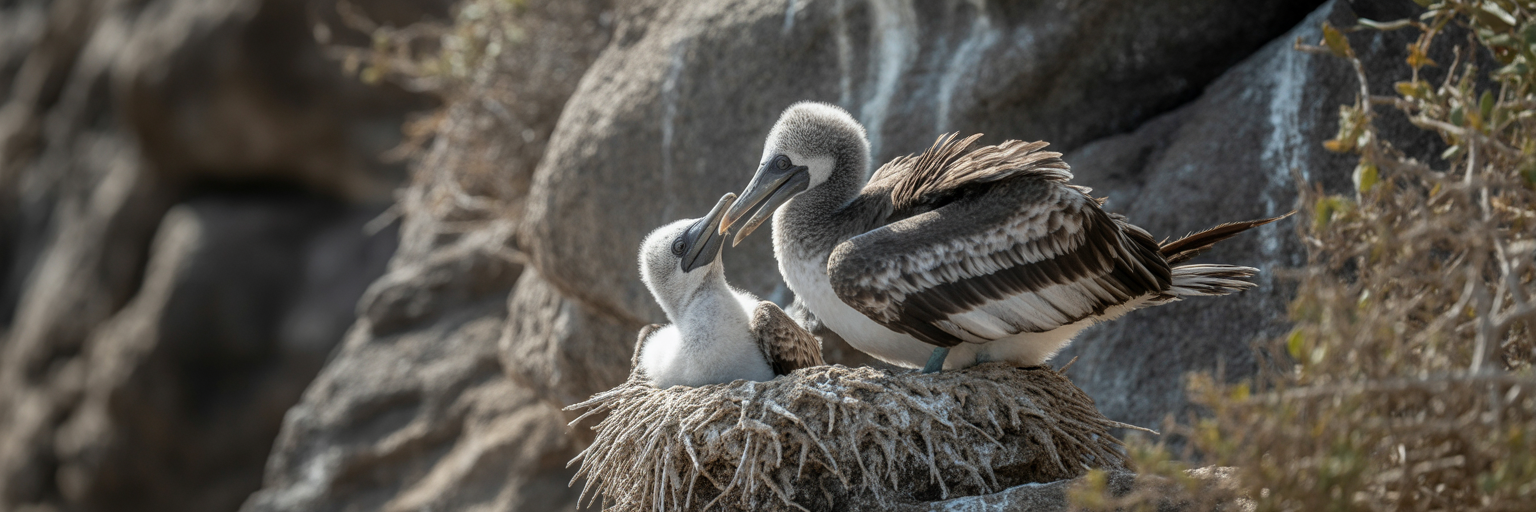
This is the most brutal form of sibling rivalry because it is not optional. It is programmed. In some species, the first born chick has one job: kill its younger sibling. The most famous example of siblicide in birds comes from the Nazca booby. The mother lays two eggs, days apart. The first chick to hatch grows bigger and stronger. When the second chick hatches, the older one methodically pecks it, pushes it out of the nest, and leaves it to die. The parents just stand by and watch, like they are observing a particularly boring documentary. It is nature’s most extreme ‘first born gets everything’ policy, ensuring that at least one super strong offspring survives.
Facultative Siblicide: The ‘It Depends’ Murder
This version is a little less predetermined but no less grim. Facultative siblicide is conditional. It is the ‘in case of emergency, break glass and kill your sibling’ plan. In species like spotted hyenas or great egrets, siblings might get along just fine when food is plentiful. They will snuggle up, share meals, and generally be good roommates. But the moment a famine hits and the parents stop bringing back enough food, the gloves come off. The stronger siblings will turn on the weaker ones, killing and sometimes eating them to reduce competition. It is a pragmatic, if horrifying, way to adjust the family size to match the available resources. It ensures that at least some of them will make it, even if it means one less mouth to feed in the most permanent way possible.
| Factor | Obligate Siblicide (‘Always Happens’) | Facultative Siblicide (‘Might Happen’) |
|---|---|---|
| Trigger | It’s just what they do. The first-born is programmed to kill. | Triggered by environmental stress, like a food shortage. |
| Parental Involvement | Parents are passive bystanders, letting it happen. | Parents may not be able to prevent it due to resource scarcity. |
| Example Species | Nazca Boobies, Black Eagles | Spotted Hyenas, Great Egrets, Sand Tiger Sharks |
| Evolutionary ‘Reason’ | Guarantees at least one super-strong offspring survives. | Adjusts brood size to match available resources, ensuring some survive. |
Bad Romance: Killing for Mating Rights
You think your dating life is dramatic? Try being an animal. In the wild, the drive to reproduce is so intense that it turns romance into a full contact sport. We are talking about drama so extreme it makes your worst breakup look like a romantic comedy. Here, rivals are not just inconvenient. They are obstacles to be permanently removed in the quest to pass on your genes.
The Ultimate Status Competition
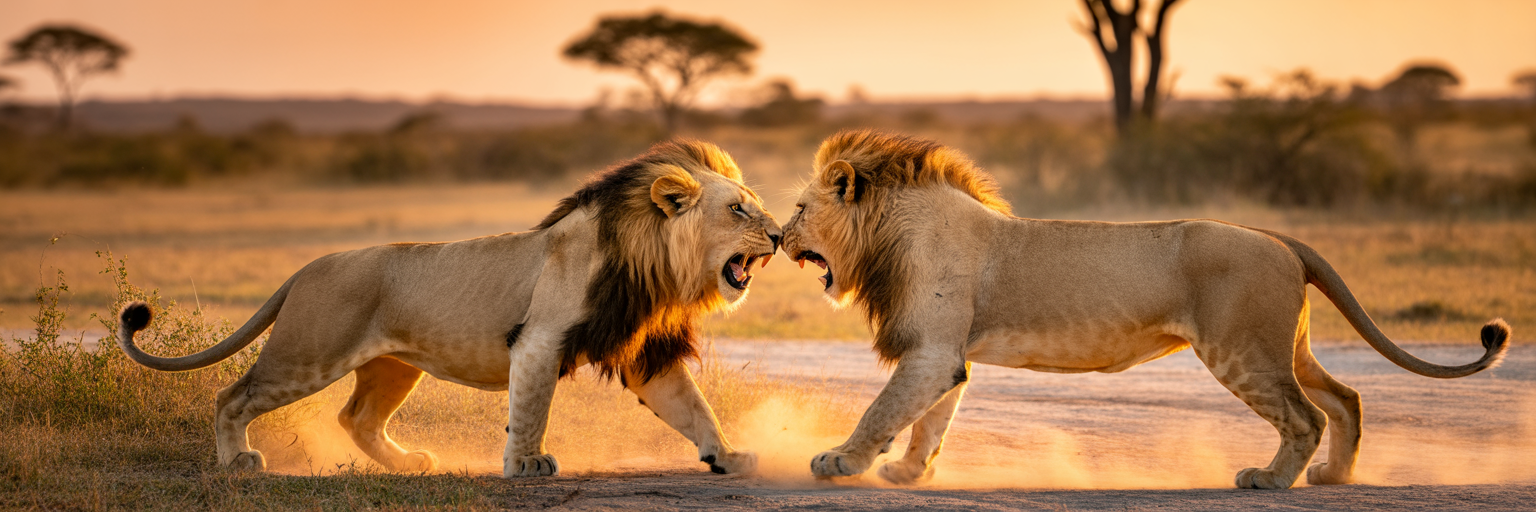
For many males, life is one long, high stakes competition for the right to mate. The winners get to pass on their genes, and the losers get, well, nothing. Or worse, they get dead. Think of male elephant seals battling on a beach. These giants slam their massive bodies into each other, biting and bellowing until one submits or is too injured to continue. The winner claims control of a whole harem of females. It is not about anger or hatred. It is a cold, calculated contest where the prize is genetic immortality. Lions do it, deer do it, even some insects do it. It is the ultimate status competition, and the entry fee can be your life.
Wiping the Slate Clean: The Logic of Infanticide
If fighting your rivals to the death sounds brutal, wait until you hear about the next strategy. This is where we get into the grim logic of infanticide in animals. When a new male lion takes over a pride, he often has a bloody first order of business: kill all the existing cubs. It sounds monstrous, but from an evolutionary standpoint, it is a genius move. The cubs are not his, so they represent the genetic legacy of his defeated rival. By killing them, he accomplishes two things. First, he wipes the genetic slate clean. Second, and more importantly, killing the cubs brings the females back into estrus almost immediately. This means he does not have to wait around for them to finish raising the last guy’s kids. He can start siring his own offspring right away. It is a hostile takeover of the family line, ensuring his genes, and only his genes, get passed on.
When Parents Are the Monsters Under the Bed
Alright, you thought siblings were bad? You thought romantic rivals were intense? Hold my beer, because we are about to talk about parents. Yes, the very creatures that are supposed to protect and nurture their young sometimes turn around and eat them. It is the kind of plot twist that would get a horror movie writer fired for being too unbelievable. But in nature, it is a surprisingly common survival strategy.
The Grim Energy Drink
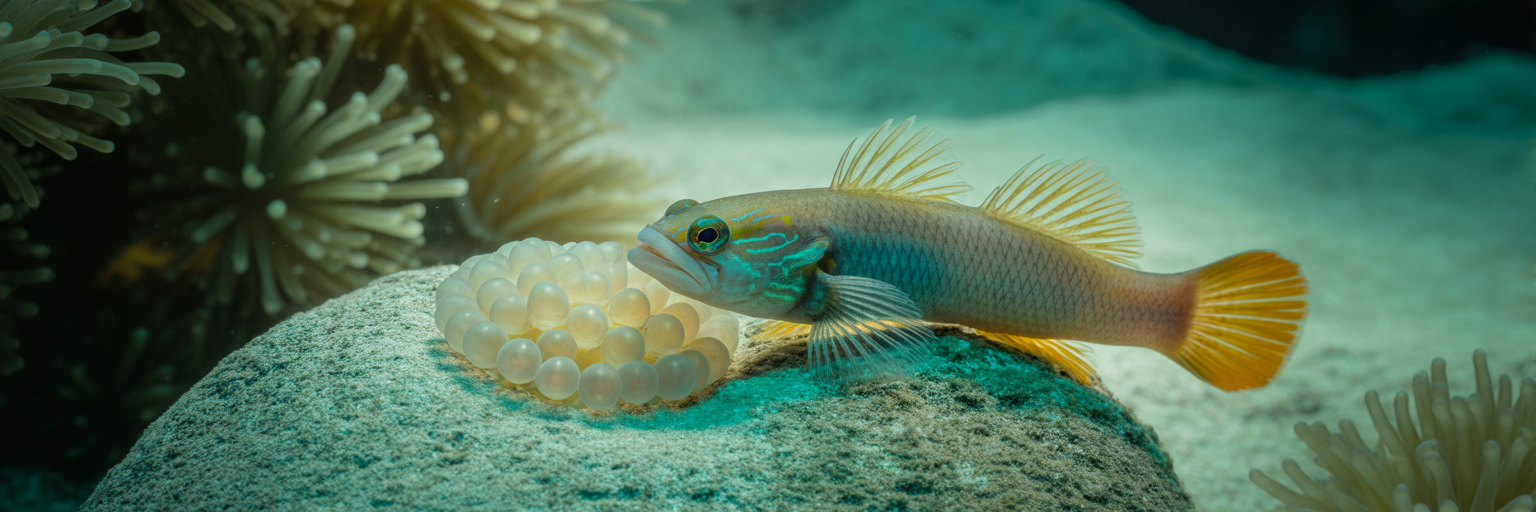
Imagine you have just given birth to hundreds, or even thousands, of babies. You are exhausted. You are depleted. You are also very, very hungry. What do you do? For some species of fish, amphibians, and insects, the answer is right in front of them. They eat some of their own offspring. It sounds like the worst parenting move ever, but it is actually a grimly practical one. Those tiny babies are little packets of protein. By consuming a few, the parent gets a much needed energy boost, a sort of gruesome protein shake. This gives them the strength to survive and, ironically, to better care for the remaining offspring. It is a sacrifice of the few for the survival of the many, and for the parent who needs to live to fight another day.
Nature’s Quality Control
Sometimes, parental cannibalism is less about energy and more about resource management. Think of it as nature’s most brutal form of quality control. A parent might produce a large litter, but quickly realise they do not have enough food or energy to care for all of them. In these cases, they may cull the weakest, smallest, or sickest offspring. The infamous example is a stressed hamster mother, who might eat some of her pups if she feels threatened or her nest is disturbed. By reducing the size of her litter, she can focus her limited resources on the strongest babies, increasing their chances of reaching adulthood. It is a horrifying calculation, but it ensures that her investment is not spread too thin. So next time you get grounded, just be grateful your parents did not decide to ‘optimise their resource allocation’.
Population Control, Animal Style
Have you ever noticed the difference in tension between a quiet, spacious library and a packed concert where everyone is bumping into each other? That feeling of rising stress and irritation in a crowd has a parallel in the animal kingdom, only the consequences are a lot more permanent. As an animal population grows more crowded, resources shrink, and stress levels go through the roof. This is a recipe for lethal conflict.
This phenomenon, known as density dependent aggression, is a key driver of intraspecific predation. It is not a conscious plan by the animals to ‘thin the herd’. Instead, it is an emergent property of overcrowding. More individuals mean more competition for every scrap of food and every patch of territory. Fights become more frequent and more vicious. Cannibalism rates can spike. It is nature’s brutal but effective form of self regulation. This process prevents a species from eating itself out of house and home and causing a total population crash. It is like city planning, but with more biting and fewer zoning permits.
This is not just some obscure scientific finding. It is a well documented survival strategy. As reporting from outlets like NPR often highlights, for many species these lethal family dynamics are a fundamental part of their life cycle. This ensures the group’s long term survival by making sure only the strongest survive when resources are tight. It is a grim feedback loop: more animals lead to more killing, which leads to fewer animals, which then allows the environment to recover.
So, Is Nature Just a Big Jerk?
After all this talk of cannibalism, siblicide, and infanticide, it is easy to think that nature is just plain mean. But the truth is, the behaviour of animals kill their own kind is not about good versus evil. It is about cold, hard evolutionary logic. These gruesome strategies, however unsettling they are to us, are what have allowed these species to survive and thrive for millennia. Nature’s rulebook may be written in blood, but it is all in the name of survival. And hey, at least it makes for some killer stories.