An Introduction to the Diabolical Ironclad Beetle
The failure of a single joint can compromise an entire structure, a challenge engineers constantly face. Nature, however, has perfected joinery over millions of years, with few examples as compelling as a small, flightless beetle from North America. This creature, the diabolical ironclad beetle, offers profound lessons in durability. Known scientifically as Phloeodes diabolicus, it inhabits the arid woodlands along the western coast of the continent, often found wedged under the bark of oak trees or tucked into tight rock crevices. This environment subjects it to immense and frequent compressive forces.
What makes this insect remarkable is its almost unbelievable toughness. It can withstand forces up to 39,000 times its own body weight. To put that into perspective, it has been observed surviving being run over by a car on a pliable surface like dirt. This incredible resilience does not come from simple hardness, like a diamond, but from a sophisticated and layered structural design that manages force in a unique way. A key element of its biology is that it is a flightless insect. Over evolutionary time, it traded the ability to fly for the development of an exceptionally protective shell.
This article explores the specific anatomical features that grant the beetle its strength, from its fused outer wings to the intricate internal structures that hold them together. We will examine the evolutionary pressures that shaped these adaptations and the exciting applications this biomimicry offers for modern engineering, potentially leading to safer and more resilient materials and structures.
The Anatomy of a Crush-Resistant Exoskeleton
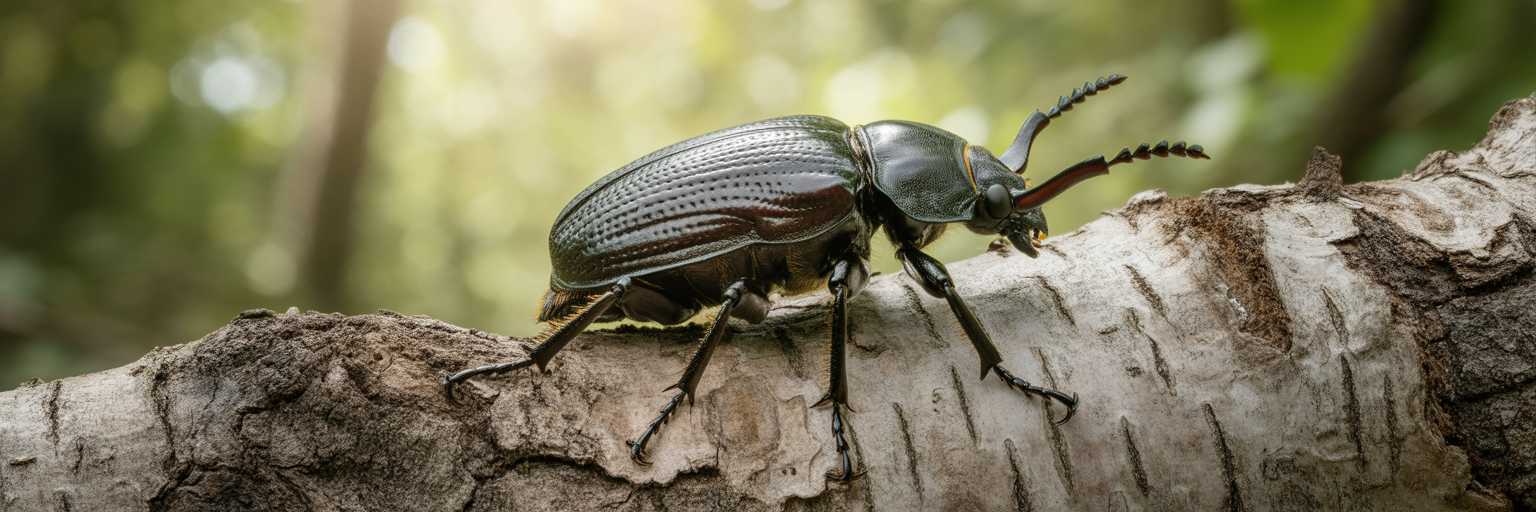
The beetle’s exceptional strength is not a single feature but a system of integrated anatomical designs. To understand its resilience, we must look at the specific components that form its protective shell. The focus here is on the ‘what’ of its structure, a marvel of natural engineering that creates a crush resistant exoskeleton unlike almost any other in the insect world.
The Fused Elytra Shield
In most beetles, the hardened forewings, known as elytra, serve as protective covers for the delicate hind wings used for flight. They open and close to allow for takeoff and landing. The diabolical ironclad beetle, being flightless, has no need for this function. Instead, its elytra are permanently fused together along the midline of its back. This fusion creates a single, solid, and rigid shield that covers its entire abdomen, providing a continuous and robust barrier against external threats. This solid structure is the first line of defense, distributing initial impacts across a wide surface area.
A Protein-Rich Composition
The material composition of the exoskeleton itself contributes significantly to its toughness. Like all insects, its shell is made from a composite of chitin fibers embedded in a protein matrix. However, scientific analysis reveals that the ironclad beetle’s exoskeleton contains approximately 10% more protein by weight compared to its flying relatives. This higher protein content does not just make the material harder; it enhances its toughness and ductility. Ductility is the ability of a material to deform under stress without fracturing. This property allows the shell to bend and flex slightly under extreme pressure, absorbing energy rather than shattering.
The Layered Architectural Design
Beneath the surface, the exoskeleton is not a uniform material but a complex, layered architecture. It consists of multiple laminae, or layers, of chitin fibers and protein. These layers are arranged in a helicoidal, or spiraling, pattern similar to the structure of plywood. This arrangement is exceptionally effective at preventing cracks from propagating. When a fracture starts in one layer, its path is disrupted when it meets the next layer with fibers oriented in a different direction. This design distributes stress throughout the structure and prevents a small point of damage from leading to catastrophic failure. This layered design is held together by two critical features: a complex medial suture where the elytra meet and interlocking lateral ridges that connect the top shield to the beetle’s underside.
The Secret of the Interlocking Jigsaw Suture
The centerpiece of the beetle’s structural integrity is the seam running down its back where the two elytra are fused. This is not a simple weld but a highly complex connection known as the medial suture. Its design is the primary reason the beetle can withstand such immense crushing forces. The structure functions as a sophisticated jigsaw suture mechanism, transferring stress away from the vulnerable midline.
Visually, the suture resembles the interlocking pieces of a jigsaw puzzle. Instead of a straight line, which would create a natural weak point prone to splitting under pressure, the connection is formed by a series of intricate, multi-lobed blades that fit perfectly into one another. This complex geometry dramatically increases the surface area of the connection, creating a much stronger bond than a simple butt joint. When force is applied to the beetle’s back, this interlocking design prevents the two halves of the elytra from being pulled apart or splitting open.
As detailed in research from UC Irvine, these interlocking blades are a key reason the beetle can withstand forces equivalent to being run over by a car. The lobes of the suture distribute the compressive load laterally, away from the seam itself and into the main body of the elytra. This is fundamentally different from man-made fasteners like zippers or rivets, which concentrate stress at specific points. The beetle’s suture ensures that the load is shared across a wide, interconnected area, making the joint nearly as strong as the solid parts of the exoskeleton. This resistance to both pulling and crushing forces makes it a perfect adaptation for an insect that spends its life being squeezed between unyielding surfaces.
Delamination: The Art of Graceful Failure
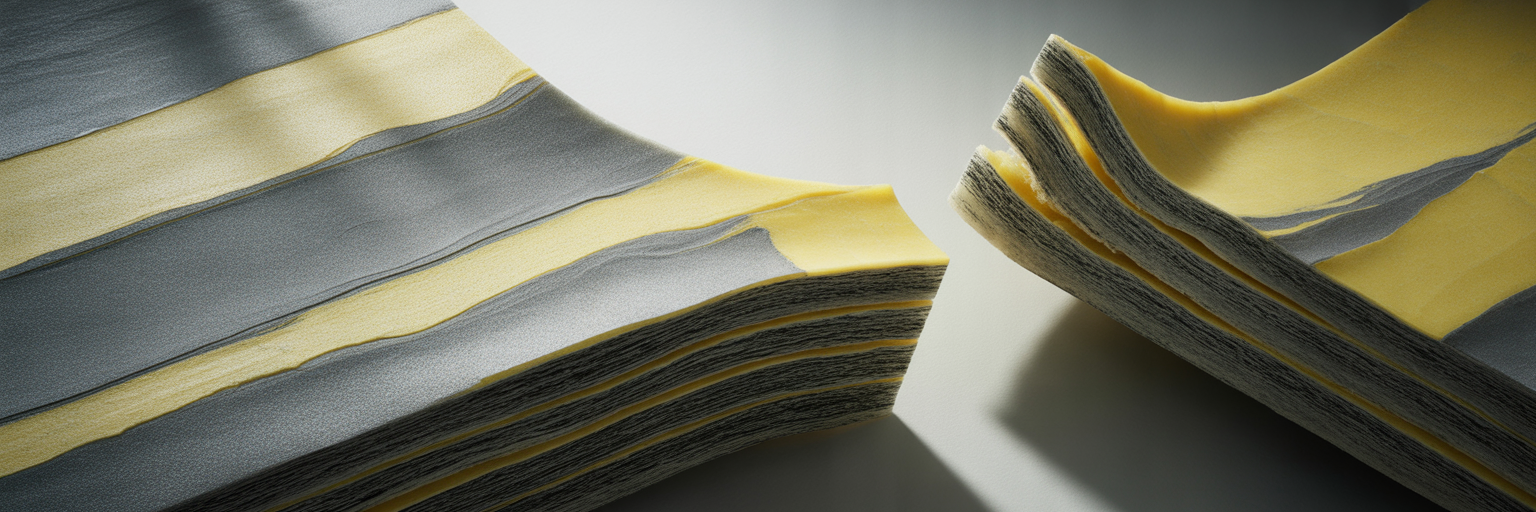
The genius of the beetle’s suture lies not just in its shape but in how it behaves under extreme stress. The structure is designed to fail, but to do so gracefully. The primary mechanism for this controlled failure is a process called delamination, a concept central to delamination material science. Delamination is the process where layered materials separate or fracture layer by layer, rather than breaking all at once catastrophically.
When the beetle is subjected to a crushing force that exceeds the joint’s initial resistance, the interlocking blades of the suture do not simply snap. Instead, the internal layers of the chitin structure within the blades begin to peel apart in a controlled, sequential manner. Each minor fracture absorbs a small amount of energy, and the cumulative effect of these thousands of tiny separations dissipates a massive amount of force. This prevents the energy from causing a single, fatal rupture of the exoskeleton, thereby protecting the beetle’s vital internal organs.
This “graceful failure” is a stark contrast to the “catastrophic failure” seen in many rigid, man-made materials like ceramic or glass, which shatter suddenly when their breaking point is reached. The beetle’s structure deforms and absorbs the impact. A useful analogy is the difference between tearing a single thick sheet of cardboard versus a stack of laminated paper. The laminated stack is much harder to tear through because energy must be expended to separate each individual layer. The beetle’s suture works on a microscopic version of this principle. While its armor is a primary survival tool, nature has developed many ways to endure extreme conditions, from physical defenses to metabolic tricks like the animal that survives by shrinking its own organs.
Evolutionary Drivers for an Armored Body
The beetle’s remarkable physical traits are a direct result of its ecological niche and survival strategy. Understanding the ‘why’ behind its armor requires looking at the evolutionary pressures that shaped it. The fact that the beetle is flightless is not a deficiency but a critical evolutionary trade-off. By sacrificing the energy-intensive ability of aerial escape, it was able to reallocate biological resources toward developing a superior form of ground-based defense.
The specific environmental pressures it faces are intense. Living under the heavy bark of trees or within rock crevices means it is constantly at risk of being crushed by shifting wood, falling rocks, or even the foot of a large animal roaming its forest floor habitat. In this context, an exoskeleton that can withstand immense compressive force is a direct advantage for survival. These durable insect adaptations are a testament to the power of natural selection in solving specific environmental challenges.
Predator-prey dynamics also played a crucial role. The crush resistant exoskeleton makes the diabolical ironclad beetle an unrewarding and difficult meal for many common predators. Birds, lizards, and small rodents that might otherwise prey on insects often lack the bite force required to crack its shell open. A predator’s energy is better spent on easier-to-consume prey. The beetle’s passive defense contrasts sharply with the active strategies of other creatures. For example, its armor is always present, unlike the archerfish that shoots bugs out of the air with water, which must actively hunt to survive. The combination of a flightless lifestyle, a high-pressure environment, and constant predatory threats created the perfect evolutionary crucible for developing one of nature’s most effective forms of biological armor.
Biomimicry: Lessons for Modern Engineering
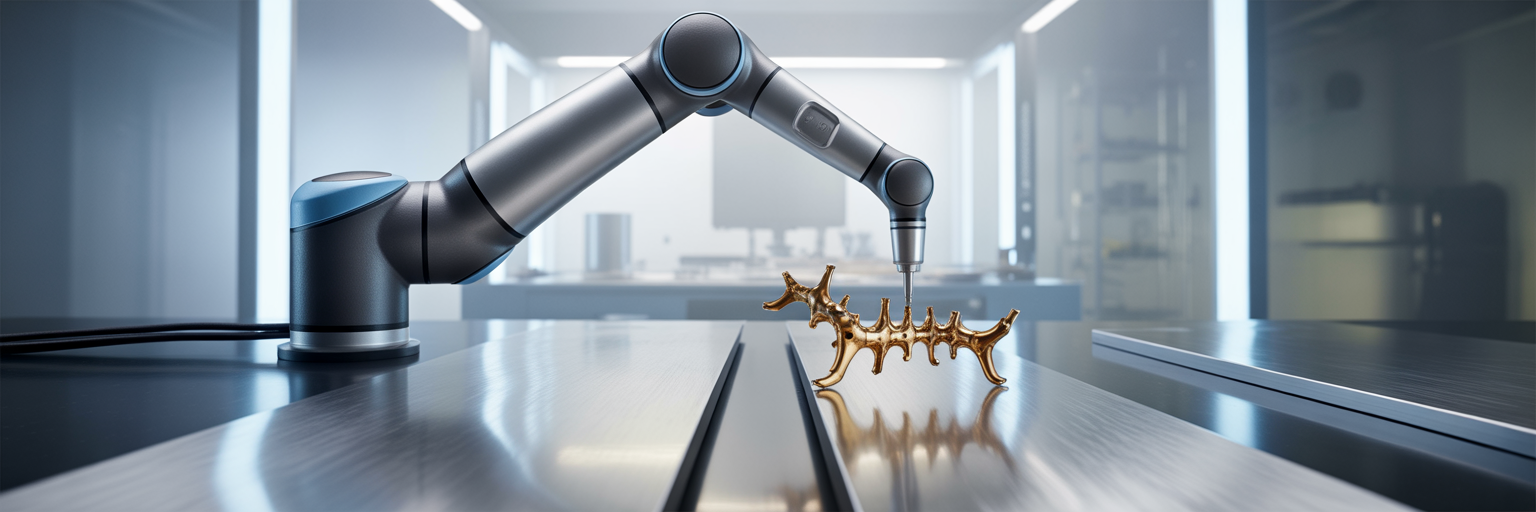
The study of the diabolical ironclad beetle is a prime example of biomimicry in engineering, the practice of taking inspiration from nature’s time-tested designs to solve human challenges. The beetle’s structure offers profound insights for mechanical engineering, particularly for one of its most persistent problems: joining dissimilar materials together.
In industries like aerospace and automotive manufacturing, engineers frequently need to connect lightweight composite materials to strong metals. Traditional methods such as rivets, bolts, adhesives, and welding all create localized stress points. These points are often the first to fail under fatigue or impact, representing the weakest link in an assembly. The beetle’s jigsaw suture, however, provides a model for a joint that distributes stress evenly, avoiding these dangerous concentrations.
Researchers are now actively working to replicate this natural design. The process involves several key steps:
- First, they analyze the precise geometry of the beetle’s suture using high-resolution micro-CT scans to create a detailed digital model.
- Next, they use this model to create 3D-printed or carbon-fiber composite prototypes of the interlocking joint, scaling it up for engineering applications.
- Finally, these biomimetic joints are subjected to rigorous mechanical testing and compared against traditional fasteners. Early results show that these beetle-inspired joints offer significantly improved strength and resistance to fatigue.
The potential applications are vast, especially in the aerospace industry. Imagine using these joints to connect fuselage panels on an airplane or to attach turbine blades in a jet engine. Such connections would be more durable and less prone to failure, leading to safer and more reliable aircraft. Because the joints are stronger, it may also be possible to use less material, resulting in lighter structures that are more fuel-efficient. The beetle’s armor shows us a new way to think about creating robust connections.
The Future of Ironclad-Inspired Materials
The lessons from the diabolical ironclad beetle extend far beyond the immediate application of better fasteners. The underlying principles of its exoskeleton could inspire a new generation of materials and structures that are designed not just to be strong, but to manage failure in a safe and predictable way. This represents a significant paradigm shift in material science and engineering.
In civil engineering, for example, one could imagine structural joints in buildings and bridges that incorporate a jigsaw-like, layered design. During an earthquake, these joints could delaminate gracefully, absorbing the seismic energy and preventing the catastrophic collapse of the entire structure. The building would be damaged but would remain standing, protecting human lives. This approach moves beyond simply trying to make structures rigid enough to resist forces and toward designing them to intelligently dissipate energy.
There are also exciting possibilities in the field of personal protective equipment. A helmet designed with these principles could offer far greater protection against impact. Instead of a purely rigid shell that might crack or transfer the full force of a blow to the wearer’s head, a helmet that delaminates on impact would absorb more of the energy. This could significantly reduce the risk of brain injury in sports, on construction sites, or in military applications. The same concept could be applied to body armor, creating lighter and more effective protection for soldiers and law enforcement officers. The profound implication of studying the beetle is the shift from designing materials that prevent all failure to creating materials that fail well.
A Comparison with Other Durable Insects
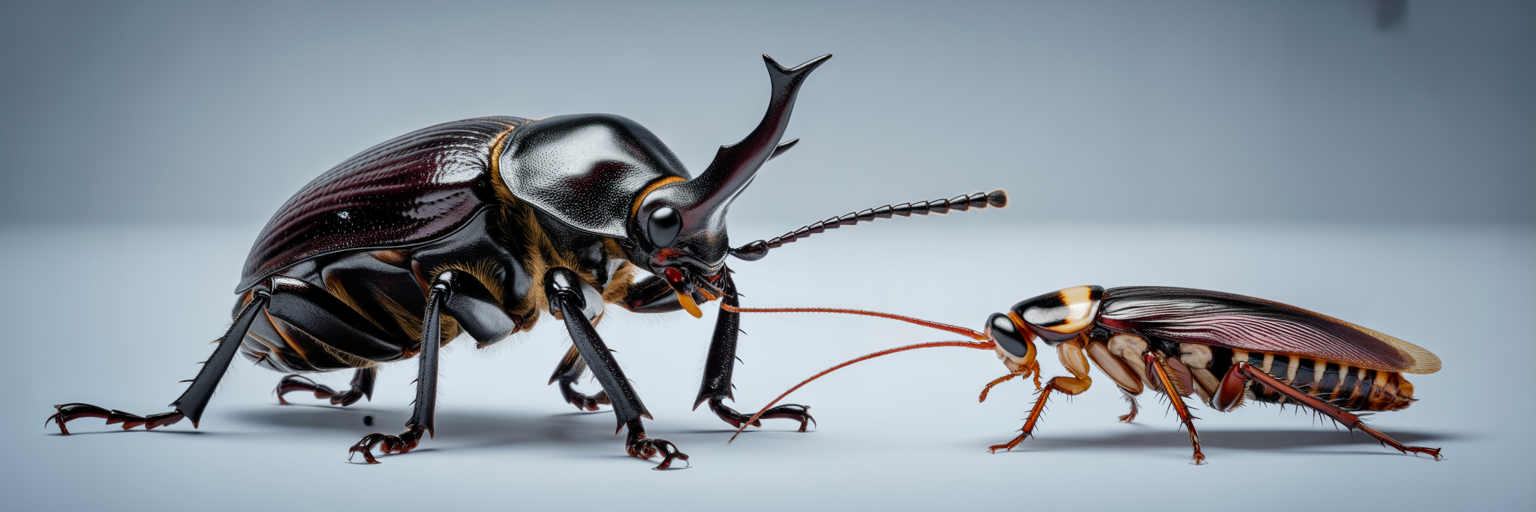
To fully appreciate the uniqueness of the diabolical ironclad beetle’s defense, it is helpful to compare it with other famously resilient insects. While many insects are considered “tough,” their survival strategies vary widely. This comparison highlights how the ironclad beetle is specialized for pure mechanical crush resistance in a way that others are not.
First, consider the cockroach. It is renowned for its ability to survive in harsh conditions and withstand being stepped on. However, its resilience comes primarily from flexibility, speed, and a flattened body profile that allows it to squeeze into tiny crevices and escape danger. It does not possess a truly crush-proof structure; it survives by evading and deforming, not by resisting.
Next is the bombardier beetle, which employs an active chemical defense. When threatened, it sprays a hot, noxious chemical concoction from its abdomen to deter predators. This is a powerful and effective deterrent, but it is an active, reactionary defense, unlike the ironclad’s passive, always-on armor. The beetle’s passive armor is just one of many incredible survival strategies in the insect kingdom; others rely on complex deception, such as the caterpillar that tricks ant colonies into raising it as one of their own.
The following table clarifies these distinct approaches:
| Insect | Primary Defense Mechanism | Defense Type | Key Advantage |
|---|---|---|---|
| Diabolical Ironclad Beetle | Structural Crush Resistance (Jigsaw Suture & Delamination) | Passive | Withstands extreme compressive force |
| Cockroach | Flexibility, Speed, and Low Profile | Passive / Evasive | Escapes threats and fits into small crevices |
| Bombardier Beetle | Chemical Spray (Hot, Noxious Quinine) | Active | Deters predators at a distance |
This comparison shows that while many insects are tough, the diabolical ironclad beetle is exceptional. Its entire evolutionary path has been dedicated to perfecting a passive, structural defense against crushing forces, making it a standout subject for material science and engineering.
Frequently Asked Questions
Q1: Can you really run over a diabolical ironclad beetle with a car?
Answer: Yes, this is possible, but the context is important. On a soft surface like dirt or soil, the ground and the tire can deform, distributing the car’s weight and allowing the beetle’s exoskeleton to withstand the pressure. On a hard, unyielding surface like asphalt or concrete, the force is much more concentrated and may exceed the beetle’s structural limits. The scientifically verified fact remains that it can withstand forces up to 39,000 times its body weight, an incredible feat of natural engineering.
Q2: Does it hurt the beetle to be crushed?
Answer: While we cannot know the subjective experience of an insect, the beetle’s armor is specifically evolved to protect its vital internal organs from fatal rupture. The “graceful failure” mechanism of delamination is designed to absorb and dissipate energy by allowing the exoskeleton to deform in a controlled way. The primary purpose of this adaptation is survival, ensuring the beetle can endure immense pressure without being killed.
Q3: Where can I find a diabolical ironclad beetle?
Answer: These beetles are native to the arid and woodland regions of the western coast of North America, found primarily in states like California and extending into Arizona and northern Mexico. Their preferred habitat is under the bark of oak and other hardwood trees, or within the tight confines of rock crevices, where their crush-resistant bodies are a distinct advantage.
Q4: Are scientists harming these beetles for their research?
Answer: Modern research ethics guide the study of these insects. Much of the analysis is non-invasive, using advanced technologies like high-resolution micro-CT scanning and computer modeling to study the beetle’s structure without harming it. When physical stress tests are necessary, they are often performed on 3D-printed models based on these scans or on the exoskeletons of specimens that have already died of natural causes.