
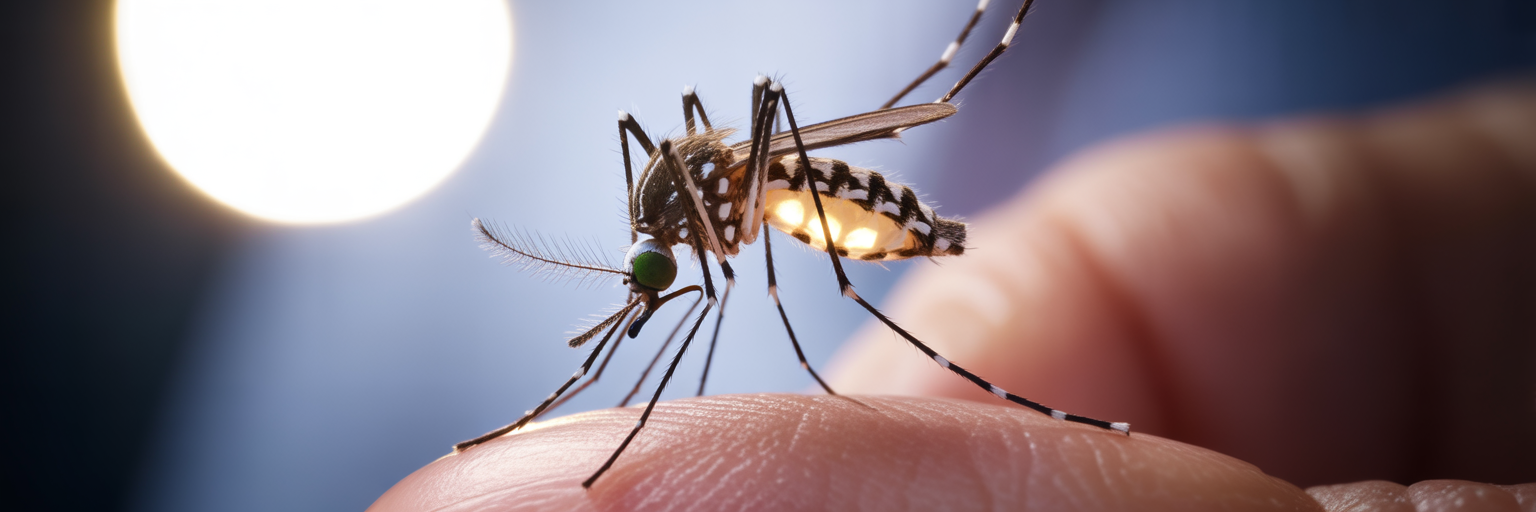
Inside the cells of countless insects, a microscopic puppeteer is pulling the strings of life, death, and reproduction. This master manipulator is a bacterium with a single-minded agenda. Because it can only be passed from a mother to her offspring through her eggs, male hosts are an evolutionary dead end. To solve this problem, the bacterium Wolbachia has evolved a stunning array of strategies to favor females, rewriting the rules of sex and survival across the insect kingdom.
The Pervasive Puppeteer: Understanding Wolbachia
Wolbachia is an endosymbiont, a bacterium that lives inside the cells of its host. It is one of the most successful microbial infections on the planet, a hidden pandemic that has swept through the world of arthropods. But just how widespread is it? Estimates have varied significantly over the years. While some studies suggest around 40% of all insect species carry it, others, using more sensitive detection methods, place the figure closer to 66%. This uncertainty arises from several factors. Early research often focused on specific insect groups, creating a sampling bias. Furthermore, infection rates can vary geographically, and the development of advanced genetic tools like PCR has allowed scientists to find the bacterium in species where it was previously undetected.
The bacterium’s reach extends far beyond just insects. Its hosts include a vast assortment of arthropods, from spiders and mites to terrestrial crustaceans like the common pillbug. This incredible diversity points to an ancient and highly effective organism. Wolbachia’s influence is not just a biological curiosity. It is also found in certain filarial nematodes, the parasitic worms responsible for devastating human diseases. This symbiotic relationship, entirely different from the one it has with insects, has unexpectedly provided a new weapon in the fight against global health crises. Understanding this bacterium’s core strategy is the first step in appreciating how scientists have turned its manipulative tendencies into a tool for good.
The Maternal Inheritance Imperative

To understand Wolbachia’s behavior, one must first grasp its unique mode of transmission. The bacterium resides in the cytoplasm of its host’s cells, the jelly-like substance that fills the cell outside the nucleus. When an infected female produces eggs, her cytoplasm, teeming with Wolbachia, becomes the cytoplasm of her embryos. The bacteria are therefore passed directly from mother to offspring. Sperm, in contrast, are stripped down to their genetic essentials and contain almost no cytoplasm. Consequently, males cannot pass the infection to their young. This strict maternal inheritance is the key to everything the bacterium does.
From Wolbachia’s perspective, any mutation that helps infected females survive and reproduce more successfully will be passed on to the next generation. Males contribute nothing to the bacterium’s lineage. This evolutionary pressure has driven the development of the extreme methods of insect reproductive manipulation seen today. While this vertical transmission from mother to child is the primary route, it doesn’t fully explain how Wolbachia conquered so many different species. Scientists believe that rare instances of horizontal transfer, where the bacterium jumps between species, must also occur. This could happen when a parasitoid wasp lays its eggs in multiple host species or when different insects share the same food source. These rare jumps allowed the bacterium to find new hosts to conquer, leading to the widespread infection we see today. These extreme measures are reminiscent of other instances where parasites hijack animal behavior for a joyride, bending their hosts to their will.
How Wolbachia Manipulates Insect Reproduction
Over millions of years of evolution, Wolbachia has developed four primary playbooks to ensure its propagation by manipulating its host’s reproductive cycle. Each strategy addresses the “male problem” in a different, yet equally effective, way.
Cytoplasmic Incompatibility (CI): The Most Common Trick
The most widespread strategy is also the most complex: cytoplasmic incompatibility. This mechanism acts like a selective lock and key for reproduction. When a Wolbachia-infected male mates with an uninfected female, her eggs fail to hatch. The bacterium essentially sabotages the fertilization process. However, all other mating combinations work perfectly. An infected female can successfully reproduce with either an infected or an uninfected male, and all her offspring will be infected. This creates a powerful reproductive advantage for infected females. Their eggs are viable no matter who they mate with, while uninfected females face reproductive failure if they choose an infected partner. This dynamic allows the infection to spread rapidly through a population.
Male Killing: A Brutal Form of Resource Management
Some strains of Wolbachia take a more direct approach. Male killing is exactly what it sounds like: the bacterium kills male embryos before they hatch. This brutal tactic provides a clear benefit to the surviving sisters. With their brothers eliminated, the female offspring face less competition for food and other resources. This increases their chances of survival and, in turn, the survival of the Wolbachia they carry. This phenomenon has been documented in various insects, including certain species of ladybugs and butterflies, where broods suddenly become all-female.
Feminization: Bending Gender for Bacterial Benefit
Perhaps the most unusual strategy is feminization. In this scenario, Wolbachia overrides the host’s own genetic instructions for sex determination. A genetic male, which should develop into a male, is instead transformed into a functional female that can produce eggs and pass on the infection. The most well-studied example of this occurs in the common pillbug, Armadillidium vulgare. In some populations, Wolbachia is so effective at this gender-bending that it has replaced the female sex chromosome entirely. An individual’s sex is determined not by its genes, but by whether it is infected.
Parthenogenesis: Reproduction Without Males
The final strategy makes males completely obsolete. Certain Wolbachia strains can induce parthenogenesis, or virgin birth. Infected females are able to produce viable female offspring from unfertilized eggs. This allows a population of infected females to reproduce and expand without any need for males. This strategy is particularly common in some species of tiny parasitoid wasps, where males can be exceedingly rare. These varied approaches showcase some of the most disturbing parasite life cycles you wont forget, each a testament to the power of natural selection.
Driving an Epidemic Through a Population

A central question for scientists was how Wolbachia could become so common if it sometimes harms its host, for example by killing off half the offspring. This is the fitness paradox. The answer lies in the powerful reproductive advantage conferred by cytoplasmic incompatibility. Even if the infection carries a slight cost to the female’s health or fertility, the benefit of being able to reproduce successfully with any male is often strong enough to outweigh it. Once the number of infected females in a population crosses a certain threshold, the infection spreads exponentially.
Scientists have observed this in the wild. In some populations of the butterfly Hypolimnas bolina on Pacific islands, a male-killing strain of Wolbachia caused the sex ratio to become dramatically skewed, with females outnumbering males by more than 100 to 1. The situation seemed dire for the butterflies, but evolution fought back. Researchers later discovered that a new gene had rapidly spread through the butterfly population, a “suppressor” gene that counteracted Wolbachia’s male-killing effect, restoring the normal sex ratio. It was a stunning example of a rapid evolutionary arms race caught in action. As a study in the Annual Review of Genetics highlights, understanding these population dynamics is critical for designing effective disease control strategies.
An Unlikely Alliance Against Human Disease
While Wolbachia’s relationship with insects is often parasitic, its connection with filarial nematodes is entirely different. In these parasitic worms, the relationship is one of obligate mutualism. The worms cannot grow, develop, or reproduce without their Wolbachia symbionts. This dependency has become a critical vulnerability that medical science can exploit. These nematodes are the cause of two horrific diseases: lymphatic filariasis, also known as elephantiasis, which causes severe and permanent swelling, and onchocerciasis, or river blindness.
For years, treatments could only kill the juvenile worms, leaving the long-lived adult worms to continue producing offspring and causing chronic damage. The discovery of the worms’ reliance on Wolbachia changed everything. Researchers found that a long course of a simple antibiotic, doxycycline, kills the Wolbachia living inside the worms. Without their bacterial partners, the adult female worms become sterile and eventually die. This approach provides a cure, permanently stopping the transmission cycle and preventing further disease progression. This intricate dependency is a powerful example of how parasites need multiple hosts to party, with the bacterium living inside a worm that lives inside a human.
The World Mosquito Program’s Public Health Mission

The most exciting modern application of Wolbachia is in public health, spearheaded by the non-profit World Mosquito Program. The mission is to use the bacterium to fight mosquito-borne viral diseases. The primary target is the Aedes aegypti mosquito, an invasive species that thrives in urban environments and is notoriously difficult to control with traditional methods like insecticides. This day-biting mosquito is the main vector for dengue, Zika, chikungunya, and yellow fever.
The strategy involves intentionally introducing a specific strain of Wolbachia into wild Aedes aegypti populations. This strain does something remarkable: it acts as a viral blockade. When a mosquito carries Wolbachia, viruses like dengue struggle to replicate inside its body. The bacterium appears to compete with the virus for key resources and may also prime the mosquito’s immune system, making it more effective at fighting off infection. As a result, the mosquito is far less likely to transmit the virus to a human. This method of dengue fever control is self-sustaining and environmentally friendly. It is a form of biological control, not genetic modification, and the Wolbachia bacterium cannot be transmitted to humans or other mammals.
Population Replacement vs. Suppression Strategies
Two main strategies are used to deploy Wolbachia for mosquito control, each with a different goal and method. The choice of strategy depends on local conditions, resources, and public health objectives.
Population Replacement: The Long-Term Game
This is the approach used by the World Mosquito Program. It involves releasing a mix of Wolbachia-infected male and female mosquitoes into a target area. Thanks to cytoplasmic incompatibility, the infection spreads naturally through the wild population. Over several months, the original mosquito population is “replaced” by a new one that carries Wolbachia and is unable to effectively transmit viruses. Once established, the solution is self-sustaining and provides long-term protection for the community without the need for continuous intervention.
Population Suppression: The Incompatible Insect Technique (IIT)
The alternative strategy aims to crash the mosquito population rather than replace it. This method, often called the Incompatible Insect Technique (IIT), involves releasing huge numbers of only Wolbachia-infected males. These males mate with the wild, uninfected females in the area. Due to cytoplasmic incompatibility, their eggs do not hatch. With reproduction thwarted on a massive scale, the local mosquito population plummets. This approach, used in places like Singapore, requires continuous, large-scale releases of males to keep mosquito numbers down.
| Feature | Population Replacement | Population Suppression (IIT) |
|---|---|---|
| Goal | Establish a permanent, virus-blocking mosquito population. | Drastically reduce or eliminate the local mosquito population. |
| Method | Cytoplasmic incompatibility drives the infection to fixation. | Cytoplasmic incompatibility causes widespread egg inviability. |
| Mosquitoes Released | Infected males and females. | Infected males only (in large numbers). |
| Outcome | Wild population is replaced by a Wolbachia-carrying one. | Wild population numbers crash. |
| Sustainability | Self-sustaining after initial establishment. | Requires continuous, ongoing releases to maintain low numbers. |
| Example | World Mosquito Program trials in Indonesia and Brazil. | ‘Project Wolbachia’ in Singapore. |
Frequently Asked Questions About Wolbachia

The use of a bacterium to control disease raises many questions. Here are answers to some of the most common ones.
- Is using Wolbachia a form of genetic modification?
No. This is a biological control method that uses a naturally occurring bacterium. No genetic material is altered in the mosquitoes or the bacterium. It is simply introducing a natural microbe into a mosquito population. - Can Wolbachia harm humans, pets, or the environment?
No. Wolbachia is an insect-specific bacterium and cannot survive or replicate in vertebrates like humans, dogs, or birds. It is considered a safe and environmentally friendly alternative to chemical insecticides, which can harm beneficial insects and other wildlife. - Why isn’t this method used for all mosquito-borne diseases, like malaria?
The biology is more complex. Establishing stable Wolbachia infections in Anopheles mosquitoes, the vectors for malaria, has proven much more difficult. Furthermore, the virus-blocking effect is not as strong or consistent against the malaria parasite as it is against viruses like dengue. Research in this area is ongoing. - What have the field trials actually shown?
The results have been extremely promising. A landmark randomized controlled trial conducted by the World Mosquito Program in Yogyakarta, Indonesia, demonstrated a 77% reduction in dengue incidence in areas where Wolbachia mosquitoes were released. In Singapore, the population suppression project has reported up to a 98% reduction in the local Aedes aegypti population and a corresponding 88% drop in dengue cases in some release sites. These trials provide strong evidence for the effectiveness of Wolbachia in dengue fever control. The natural world is full of such surprising adaptations, just like the star-nosed mole that eats faster than you can blink.