The Lizard That Rebreathes Air in a Costa Rican Stream
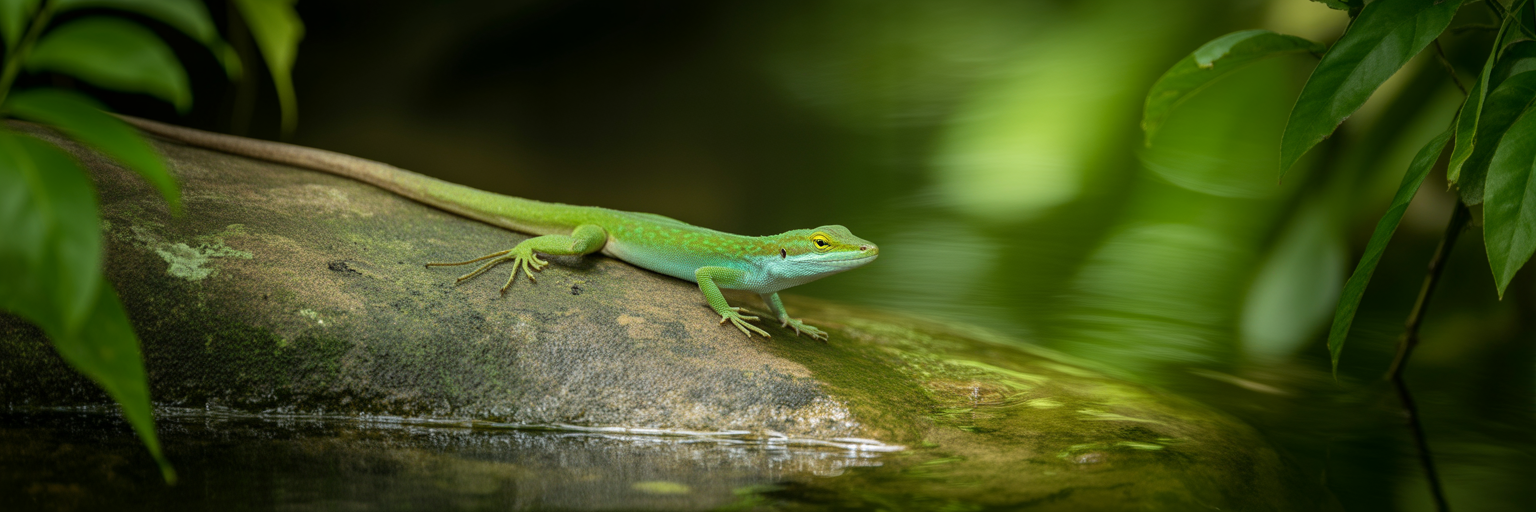
The lush, fast-flowing streams of Costa Rica are scenes of vibrant life and constant peril. Along the water’s edge, predators like snakes and birds are always watching. For the small, unassuming water anole, Anolis aquaticus, a moment of inattention can be fatal. When danger appears, this little reptile performs a vanishing act. It leaps from its perch on a mossy rock and plunges into the turbulent water, disappearing from sight.
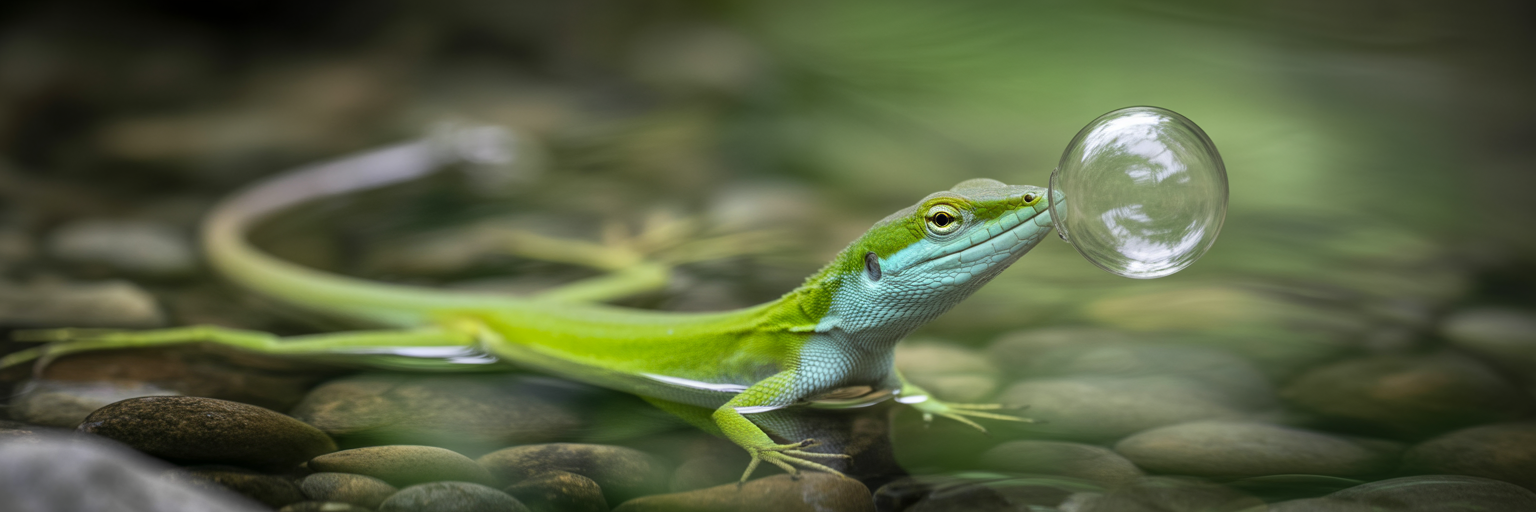
This escape raises a fundamental question that long puzzled scientists: how can a small, air-breathing lizard survive submerged for extended periods? Some individuals have been observed staying underwater for nearly twenty minutes. The answer is far more complex than simply holding its breath. The water anole has developed a remarkable strategy. It carries a personal air supply, not in a tank, but in a glistening bubble attached to its own nose.
This bubble is not just trapped air. The lizard actively exhales into it and then inhales from it again, effectively rebreathing its own air supply. This behavior is a critical component of its survival toolkit. The ability to remain hidden underwater for long stretches is one of the most effective animal adaptations predator avoidance can produce. It allows the anole to outwait threats that cannot follow it beneath the surface. The high-stakes nature of this environment has driven the evolution of unique survival strategies. While some creatures have evolved to detect a predator just from its shadow, the water anole relies on this incredible disappearing act, turning the very water that threatens to drown it into a life-saving sanctuary.
Anatomy of an Underwater Adaptation
The water anole’s ability to breathe underwater is not magic but a masterful display of physics and biology. The process depends on two key features: its specialized skin and a controlled breathing cycle. This combination allows the lizard to create and maintain its personal air reservoir.
The Superhydrophobic Skin: A Shimmering Cloak of Air
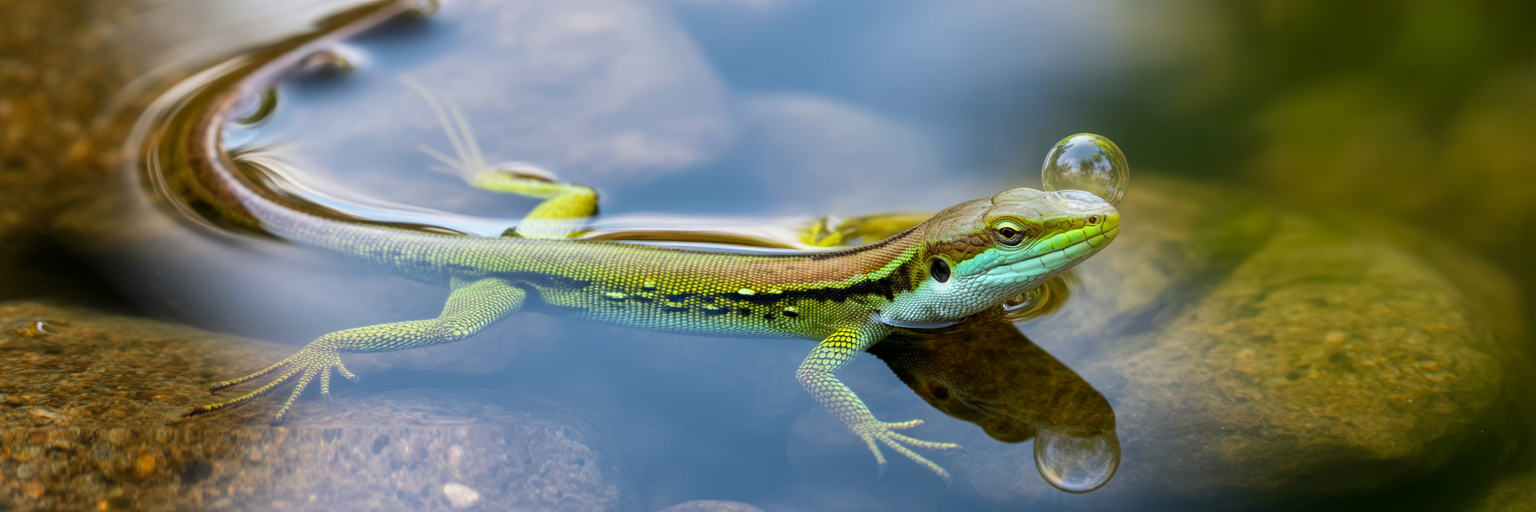
When the water anole dives, its body takes on a silvery sheen. This is not just a trick of the light. The lizard’s scales are superhydrophobic, meaning they are extremely water-repellent. The microscopic texture of the scales traps a thin, continuous layer of air against its entire body. This shimmering cloak, known as a plastron, prevents water from directly touching the skin and serves as the foundation for its breathing apparatus. It ensures that any air the lizard exhales remains close to its body instead of immediately scattering into the stream.
The Rebreathing Cycle: An External Lung in Action
Once submerged and cloaked in its layer of air, the anole begins a deliberate and fascinating process. The lizard that rebreathes air follows a specific cycle:
- First, it exhales. The air exits its nostrils but is immediately captured by the water-repellent scales around its snout.
- This exhaled air coalesces into a single, stable bubble that clings to the lizard’s head.
- The anole then inhales, drawing air back into its lungs directly from this bubble.
- This cycle repeats, causing the bubble to rhythmically expand with each exhalation and contract with each inhalation, functioning like an external lung.
This is not a passive process. The lizard actively manages its air supply, recycling the oxygen it carries. While the anole uses its bubble for breathing, it is interesting to note that other animals use bubbles for different survival needs. For instance, the parrotfish creates a bubble of mucus to sleep in, which protects it from parasites and predators.
A Parallel in the Insect World: The Plastron
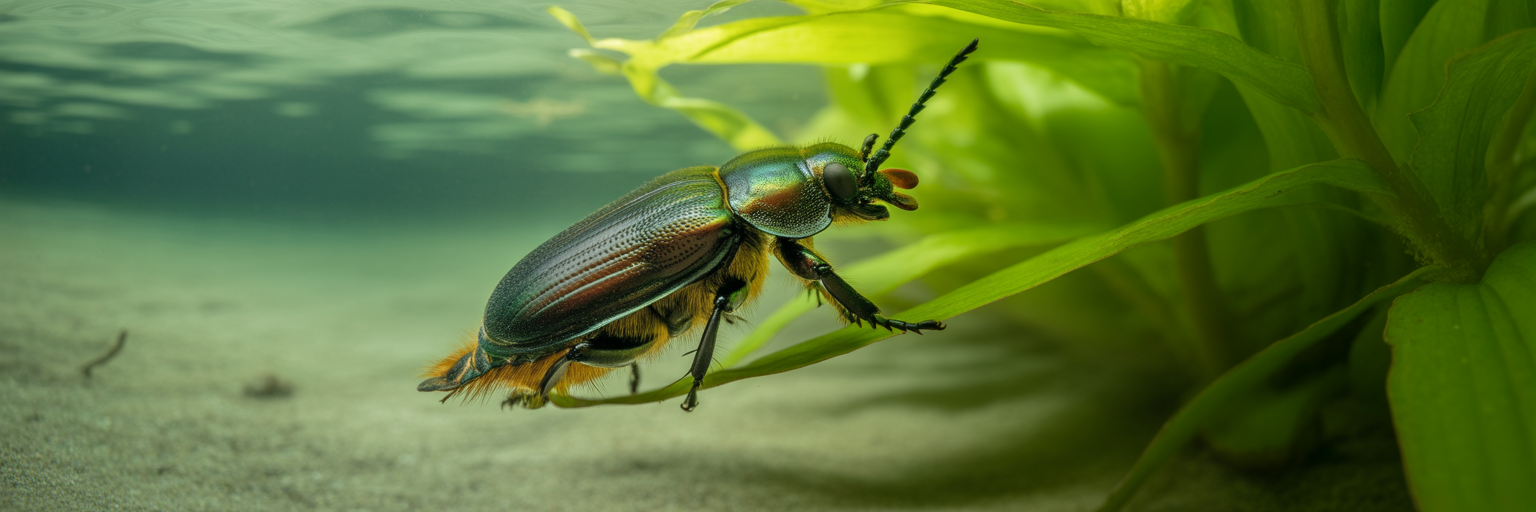
The concept of using trapped air for lizard breathing underwater has a parallel in the insect world. Diving beetles and other aquatic insects also use a plastron, the same thin layer of air held by water-repellent hairs or scales. For these insects, the entire plastron can function as a gill, allowing for gas exchange across its large surface area. However, the anole’s adaptation is distinct. While it benefits from the plastron covering its body, its key innovation is the consolidation of exhaled air into a single, large bubble at the snout, which it actively uses for rebreathing. This focused approach is a unique evolutionary solution for a vertebrate.
From Accident to Advantage: Proving the Bubble’s Function
For a time, scientists debated whether the Anolis aquaticus bubble was a genuine adaptation or just an accidental consequence of having water-repellent skin. Was the lizard intentionally using the bubble, or was it just a meaningless byproduct of its anatomy? To answer this, researchers designed an elegant experiment to test the bubble’s function directly.
As documented in a 2024 study published in the Royal Society journal Biology Letters, scientists captured wild water anoles and divided them into two groups. The control group was left untreated. The experimental group received a specific manipulation: a harmless surfactant was carefully applied to the scales on their snouts. This substance disrupted the surface tension, preventing the lizards from forming a stable, cohesive bubble when they exhaled underwater. The surfactant did not affect their ability to breathe or their overall health, it only interfered with bubble formation.
The results were conclusive. The control group, able to form bubbles normally, could remain submerged for significantly longer periods. In contrast, the experimental group, unable to form a stable bubble, was forced to surface much sooner. Their dive times were reduced by as much as 32%. This clear difference demonstrated that the bubble was not an accident. It is a critical tool that directly extends the lizard’s underwater endurance, providing a measurable survival advantage.
| Group | Condition | Observation | Result |
|---|---|---|---|
| Control Group | Normal skin, no treatment | Formed a stable air bubble on the snout after submerging. | Remained submerged for an average of 18 minutes. |
| Experimental Group | Harmless surfactant applied to snout scales | Unable to form a stable, single bubble; exhaled air dissipated. | Forced to surface much earlier, with dive times reduced by approximately 32%. |
| Conclusion | N/A | The ability to form and rebreathe from the bubble is directly linked to extended dive duration. | The behavior is a functional adaptation, not an accident. |
Is the Bubble a Physical Gill?
The discovery that the anole rebreathes from its bubble was just the beginning. Scientists soon began to investigate a more complex possibility: could the bubble also be acting as a sort of gill, pulling fresh oxygen from the surrounding water? This idea, known as the physical gill hypothesis, suggests the bubble is not just a static air tank but a dynamic interface for gas exchange.
The Physical Gill Hypothesis Explained
The concept of a physical gill lizard centers on the bubble’s surface acting as a membrane between the air inside and the water outside. If conditions are right, gases can pass through this membrane. This would mean the lizard is not just recycling a finite air supply but is actively supplementing it with oxygen from the stream itself. This would transform the bubble from a simple rebreather into a much more sophisticated life support system.
The Physics of Gas Diffusion
This process is governed by the laws of physics, specifically gas diffusion. Gases naturally move from an area of higher partial pressure to an area of lower partial pressure. When the anole inhales oxygen from the bubble, the concentration of oxygen inside the bubble drops. This creates a state where the partial pressure of oxygen in the bubble is lower than in the surrounding oxygen-rich stream water. As a result, oxygen molecules from the water diffuse across the bubble’s surface and into the air supply. At the same time, the lizard exhales carbon dioxide into the bubble, raising its concentration. Since CO2 is highly soluble in water, it readily diffuses out of the bubble and into the stream, preventing a toxic buildup.
Evidence from Oxygenated Water
To test this hypothesis, scientists conducted further experiments. A study published in the Journal of Experimental Biology detailed how researchers placed anoles in water with varying levels of dissolved oxygen. The results were telling. When the lizards were in water that was super-oxygenated, their dive times increased significantly. This provided strong evidence that the bubble was indeed functioning as a physical gill, actively drawing oxygen from the environment to replenish the lizard’s air supply. This remarkable ability is one of many surprising solutions nature has developed for respiration. In another example, some fish have evolved the ability to breathe through their gut in low-oxygen environments.
The Limits of the Lizard’s ‘Gill’
It is important to clarify that this physical gill does not grant the anole an unlimited capacity for lizard breathing underwater. Unlike some aquatic insects with extremely low metabolic rates, the anole is a more active vertebrate. Its demand for oxygen is too high to be met by the physical gill alone. The gill effect extends its dive time, but it cannot sustain the lizard indefinitely. Eventually, the oxygen in the bubble is depleted faster than it can be replenished, and the lizard must surface for a full breath of fresh air.
The Ecological Costs and Benefits of Diving
Like many survival strategies in nature, the water anole’s diving and rebreathing behavior involves a series of ecological trade-offs. The ability to disappear underwater provides a powerful advantage, but it comes at a significant physiological cost. Understanding this balance is key to appreciating the evolution of this remarkable adaptation.
The benefits are clear and immediate:
- Predator Avoidance: The primary advantage is escaping from terrestrial and avian predators. A dive lasting up to 20 minutes is more than enough time to wait out a passing snake or bird that cannot pursue it underwater. This is a prime example of how animal adaptations predator avoidance can shape behavior.
- Reduced Surfacing: By extending its time underwater, the anole minimizes the number of times it must surface for air. Each trip to the surface is a moment of extreme vulnerability, exposing it to danger from above and on the banks. Fewer surfacings mean fewer opportunities for predators to strike.
However, these benefits are weighed against a major physiological cost:
- Thermoregulation: As an ectotherm, the water anole relies on external sources of heat to regulate its body temperature. Plunging into a cool mountain stream causes a rapid drop in its body temperature. This makes the lizard sluggish, slows its metabolism, and impairs its ability to hunt or digest food.
This creates a classic evolutionary trade-off. The lizard sacrifices its body heat and metabolic efficiency for immediate safety. After a long dive, the cold, slow-moving anole must find a safe, sunny spot to bask. This recovery period consumes time and energy and once again exposes the lizard to risk while it warms its body back to an optimal temperature. This exchange of energy for safety is a powerful evolutionary driver, similar to how a snail might sacrifice itself for a parasite that has taken control of its body.
Frequently Asked Questions About the Bubble-Breathing Anole
How long can the water anole actually stay underwater?
The longest recorded dive for a water anole is approximately 20 minutes. This impressive duration is achieved through a combination of a slowed metabolism, rebreathing the air stored in the bubble on its snout, and the supplemental oxygen it gains from the water via the physical gill effect.
Is this behavior unique to the water anole?
While Anolis aquaticus is the most studied species, scientists have observed similar water anole breathing behavior in several other semi-aquatic anole species found from Mexico to Colombia. This suggests that this is a case of convergent evolution, where different species independently developed the same successful strategy to cope with similar environmental pressures, namely predation near streams.
How is the bubble different from a human’s scuba tank?
The two are fundamentally different. A scuba tank contains a finite, highly compressed supply of air and operates as a one-way system. The anole’s bubble is a low-pressure, dynamic system for rebreathing. It not only allows the lizard to reuse its exhaled air but also interacts with the environment to offload carbon dioxide and absorb fresh oxygen, something a scuba tank cannot do.
What happens to the carbon dioxide the lizard exhales?
Carbon dioxide is highly soluble in water. When the lizard exhales CO2 into the bubble, the high concentration causes it to rapidly diffuse out of the bubble and into the surrounding stream. This prevents a toxic buildup of carbon dioxide in the lizard’s air supply, which would otherwise quickly become fatal.
Could this discovery inspire new technologies?
Absolutely. This is a perfect example for the field of biomimicry, where nature’s designs inspire human innovation. Understanding the anole’s superhydrophobic skin could lead to new waterproof materials or coatings that trap air. Furthermore, studying the physics of its physical gill could inspire more efficient methods for underwater gas exchange or even compact rebreathing systems. Nature is full of such inspiration, from the archerfish’s mastery of fluid dynamics to the anole’s personal scuba system. This principle of nature-inspired innovation extends beyond engineering and into aesthetics, as seen in the trend of styling tech as modern jewellery, where functional objects are given an organic, artistic form.