Investigating the Scaly-Foot Snail Iron Armor
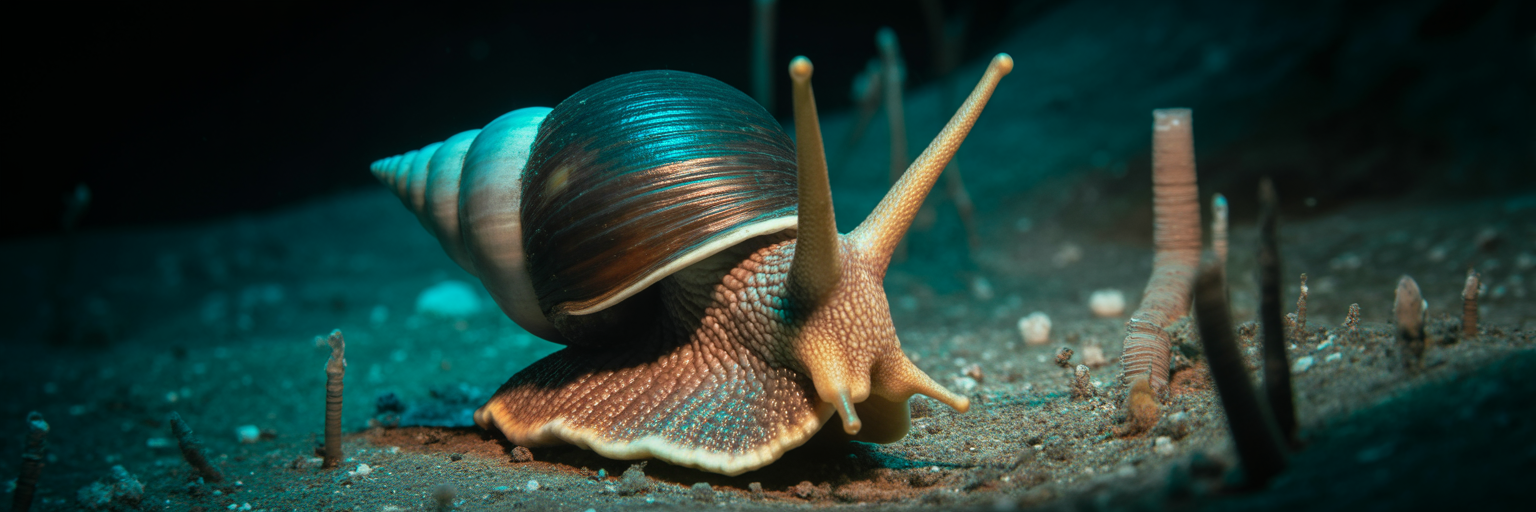
In the crushing darkness of deep-sea hydrothermal vents, where superheated, mineral-rich water erupts from the ocean floor, lives a creature seemingly forged in a fantasy novel. The scaly-foot snail, Chrysomallon squamiferum, is famous for one extraordinary feature: its unique armor. Popular descriptions paint a picture of a snail clad in literal iron, a biological fortress capable of withstanding any attack. But does the scaly-foot snail iron armor truly live up to this near-invincible reputation? The reality is far more intricate than the headlines suggest.
This investigation moves beyond the sensationalism to scrutinize the scientific evidence. We will deconstruct the armor’s sophisticated composition, piece by piece, to understand how it functions. By examining the advanced laboratory tests used to measure its resilience, we can see how it responds to a simulated attack. This analysis also requires us to identify the armor’s potential weaknesses and to clarify the critical difference between what has been proven in a lab and what remains inferred about its life in the wild. The central question is not whether the armor is impressive, but whether its defensive capabilities have been exaggerated.
The Three-Layered Defense System
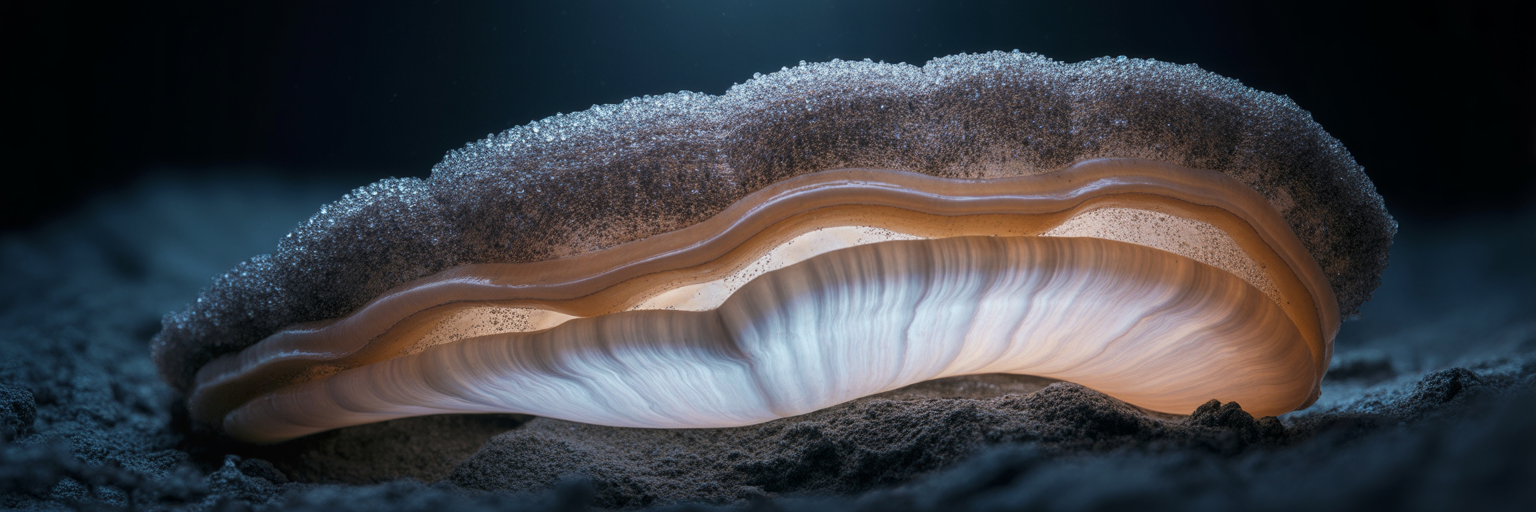
The remarkable resilience of the Chrysomallon squamiferum shell is not due to a single, impenetrable material. Instead, it relies on a highly engineered, three-layered system where each component performs a distinct and vital role. This design is a masterclass in managing impact forces, standing in stark contrast to the simpler shells of most other gastropods.
The Sacrificial Outer Layer
The famous “iron” armor is not solid metal. The outermost layer is a composite material made of iron sulfide granules, specifically pyrite and greigite, embedded in an organic matrix. This process of iron sulfide biomineralization is unique among animals. This layer is exceptionally hard but also brittle. Its primary function is not to be unbreakable but to be sacrificial. Upon impact from a predator’s claw, it is designed to fracture into countless microcracks, effectively blunting the point of attack and dissipating a significant amount of energy at the surface.
The Shock-Absorbing Middle Layer
Beneath the hard, metallic exterior lies a surprisingly thick and soft organic layer. This component is the key to the armor’s defensive strategy. While the outer layer shatters, this compliant middle layer acts as a cushion, absorbing the shockwave from the impact. Its rubbery consistency prevents the microfractures from the outer layer from propagating deeper into the shell, a mechanism known as crack arrest. Without this layer, the force of a blow would transfer directly to the inner shell, causing catastrophic failure.
The Final Structural Barrier
The innermost layer is made of aragonite, a form of calcium carbonate commonly found in other mollusk shells. This layer provides the final line of rigid structural support, protecting the snail’s soft body. While the outer two layers manage the initial attack, this final barrier ensures the shell’s overall integrity is maintained. It is the last defense against any residual energy that makes it through the shock-absorbing cushion.
Protecting the Foot with Iron Sclerites
The snail’s defense extends beyond its shell. The soft, exposed part of its body, the foot, is covered in hundreds of overlapping scales, or sclerites. Like the shell, these sclerites are mineralized with iron sulfides, providing a flexible yet tough covering. This allows the snail to move while still protecting its vulnerable tissue from incidental damage or targeted attacks, functioning much like a suit of scale mail.
| Component | Scaly-Foot Snail (Chrysomallon squamiferum) | Typical Gastropod Shell |
|---|---|---|
| Outer Layer | Iron sulfide composite (pyrite/greigite); hard and brittle, designed to fracture. | Periostracum (thin organic layer); primarily for protection from abrasion and dissolution. |
| Middle Layer | Thick, soft organic layer; acts as a shock absorber and prevents crack propagation. | Prismatic Layer (calcium carbonate); provides bulk strength but is brittle. |
| Inner Layer | Aragonite (calcium carbonate); final rigid structural barrier. | Nacreous Layer (calcium carbonate); provides toughness but is the primary structural layer. |
| Defense Mechanism | Multi-stage energy dissipation; sacrificial fracture and shock absorption. | Single-stage brittle fracture; relies on thickness for resistance. |
Reconstructing the Attack in the Lab
Directly observing a predator attacking a scaly-foot snail in its natural habitat, thousands of meters below the ocean surface, is currently impossible. The extreme pressure, temperature, and darkness of hydrothermal vents present immense technological hurdles. To overcome this, scientists brought the armor into the laboratory to reconstruct a predatory attack under controlled conditions.
The primary method used was nanoindentation. This technique involves using a microscopic probe, often with a diamond tip, to press into the surface of a material with a precisely controlled force. By measuring how much the material resists and deforms, researchers can determine its hardness and elasticity. This snail shell strength test was performed on each of the three distinct layers of the shell, allowing scientists to quantify the unique mechanical properties of each component.
With the material properties measured, the next step was to simulate a realistic threat. Researchers chose to model the crushing force of a crab claw, as crabs are common predators in many marine environments and specialize in breaking shells to access the soft tissue inside. This provided a specific, plausible attack scenario to test the armor against. The detailed methodology, including the use of nanoindentation and finite element modeling to understand the shell’s resilience, was outlined in a foundational study published in PNAS. According to the research titled “Protection mechanisms of the iron-plated armor of a deep-sea hydrothermal vent gastropod,” this layered structure is exceptionally effective at dissipating energy from a focused attack.
The data from the physical tests were then fed into powerful computer models. These simulations allowed scientists to visualize how stress and energy would propagate through the entire three-layer structure during a simulated claw attack. They could watch how cracks formed, where the energy was absorbed, and how the layers interacted to protect the interior. It is crucial to remember this distinction: these sophisticated tests measure material properties and predict performance. They are a powerful simulation, not a recording of a real snail defending itself from a real crab.
How the Armor Manages Impact and Failure
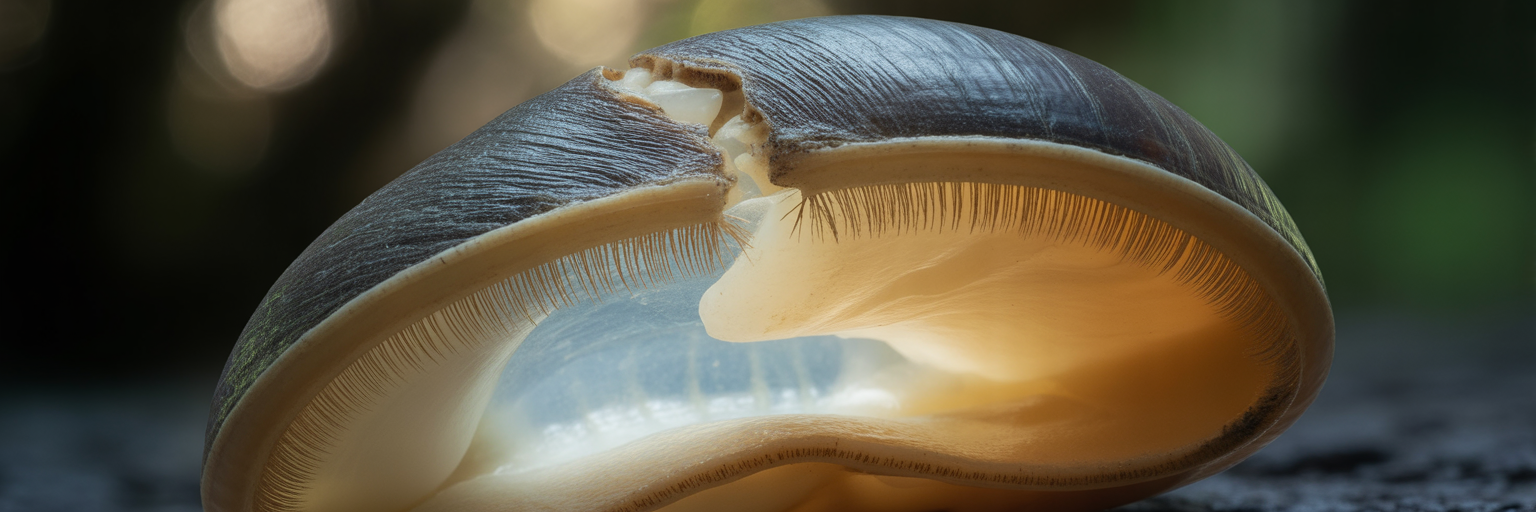
The laboratory tests revealed that the genius of the scaly-foot snail’s armor lies not in being unbreakable, but in its intelligent management of damage. The system is designed to fail in a controlled, sequential way to ensure the snail’s survival. When the simulated predator claw strikes, the extremely hard outer iron sulfide layer immediately develops a network of fine microfractures. This process consumes a tremendous amount of the attack’s energy right at the point of impact, effectively blunting the weapon.
This is where the thick, organic middle layer performs its most critical function. The simulations showed this layer deforming under the force, absorbing the remaining shockwave like a layer of padding. More importantly, it performs “crack arrest.” The soft material physically stops the microfractures in the outer layer from spreading to the final, structural aragonite layer. Without this interruption, a single crack would likely propagate straight through the entire shell, leading to complete failure.
A useful analogy is a modern bulletproof vest. The outer layer of the snail’s shell acts like a hard ceramic plate, designed to shatter on impact to break apart the projectile. The middle layer functions like the soft, fibrous Kevlar backing, which catches the fragments and absorbs the blunt-force trauma. The snail’s shell operates as a cohesive unit, where each layer has a role, not unlike how a colony organism like the coral that can fight back like a living army presents a unified front against threats. This multi-stage defense mechanism is far more effective at resisting a puncture attack than a single, uniform material of the same thickness.
The Gap Between Lab Simulation and Wild Predation
Despite the compelling results from laboratory simulations, a significant gap in our knowledge remains. There are no scientifically documented observations of a predator successfully or unsuccessfully attacking a scaly-foot snail in its natural deep-sea habitat. This absence of evidence is not for lack of trying. The technical challenges of conducting long-term, close-up observations at hydrothermal vents are immense. The crushing pressures would destroy most equipment, while the corrosive, superheated water and complete darkness make filming nearly impossible.
This forces us to distinguish carefully between inference and proof. The armor’s complex structure and its measured performance in tests create a strong, logical hypothesis for hydrothermal vent snail defense against crushing predators like crabs. The evidence strongly suggests it is an anti-predator adaptation. However, until an attack is witnessed and recorded in the wild, this remains a well-supported theory, not an observed fact.
Furthermore, the laboratory simulations are built on certain assumptions. Modeling a crab claw attack is a logical starting point, but the deep sea could harbor predators with entirely different methods. The armor is optimized to resist a focused puncture or crushing force. It is unknown how it would fare against a predator that drills, or one that uses chemical secretions to dissolve the shell. The models do not account for these possibilities, meaning the armor’s effectiveness may be context-dependent. The story of the snail’s defense is compelling, but it is one told by material science, not yet by direct biological observation.
Finding the Chinks in the Iron Armor
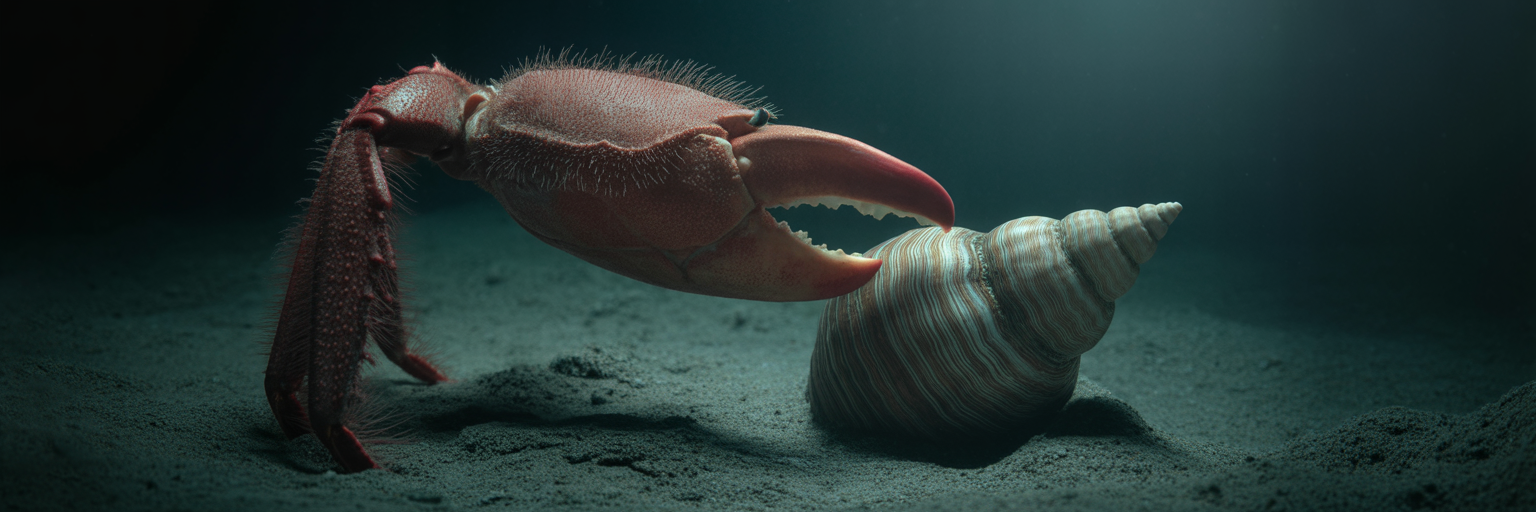
No defense is perfect, and the scaly-foot snail’s armor has several potential vulnerabilities. A balanced assessment requires acknowledging these limitations, which provide a more realistic picture of the snail’s survival challenges.
Vulnerability to Repeated Attacks
The armor’s primary strategy involves a sacrificial outer layer. While it excels at stopping a single, powerful blow, it is likely vulnerable to sustained attacks on the same spot. A persistent predator could potentially wear through the fractured outer layer and the cushioning middle layer, eventually compromising the final structural barrier. The defense is designed for a quick, decisive encounter, not a prolonged battle of attrition.
Exploiting Structural Weak Points
The most obvious structural weakness of any snail shell is its aperture, the opening from which the soft body emerges. A clever predator could bypass the heavily fortified shell entirely by targeting this opening. While the iron-plated sclerites on the foot offer some protection, a specialized predator might be able to pry, hook, or otherwise exploit this entry point to get to the vulnerable snail inside.
The Threat of Different Predators
The armor is optimized against crushing forces. Its performance against other attack methods is purely speculative. Nature is full of surprising attack vectors. For instance, while the armor is optimized for crushing attacks, it may be less effective against other strategies, such as those used by the predator that hunts using invisible pressure waves, which bypasses physical armor entirely. A drilling gastropod or a predator using chemical attacks might find the iron sulfide layer to be an ineffective defense.
The High Cost of Defense
Producing and maintaining such a complex, mineral-rich armor requires a tremendous metabolic investment. The process of biomineralizing iron sulfides is energy-intensive, and this energy must be derived from the snail’s food sources. If resources become scarce, the high cost of this defense could become a liability. Additionally, research has shown that the armor’s exact mineral composition varies between different vent fields, suggesting that not all populations are equally protected, possibly due to local water chemistry.
Defense Against More Than Just Predators
The focus on predators may overlook another critical function of the snail’s armor: protection from its own extreme environment. Hydrothermal vents are among the most hostile habitats on Earth, characterized by immense pressure, rapid temperature fluctuations, and water that is highly acidic and saturated with toxic sulfides. For most mollusks, this chemical brew would be disastrous, as acidic water readily dissolves the calcium carbonate that makes up their shells.
Here, the scaly-foot snail’s armor provides an elegant, dual-purpose solution. The outer iron sulfide layer is chemically stable in this sulfide-rich environment, effectively acting as a corrosion-resistant shield. It protects the vulnerable aragonite inner layer from dissolving in the acidic water. This raises an intriguing evolutionary question: what was the armor’s primary function? It is possible that the armor first evolved as a defense against the harsh vent chemistry, and its anti-predator benefits were a secondary advantage, a concept known as exaptation.
Ultimately, the armor is most likely a multi-functional adaptation that solves the dual challenges of its habitat. It provides robust protection from both biological threats and environmental hostility. This dual-purpose adaptation is a testament to evolution’s efficiency, similar to how the animal that survives by shrinking its own organs has found a radical solution to environmental hardship. The snail is not just armored for a fight; it is armored for survival in a place where few other creatures can live.
The Final Verdict on the Volcano Snail
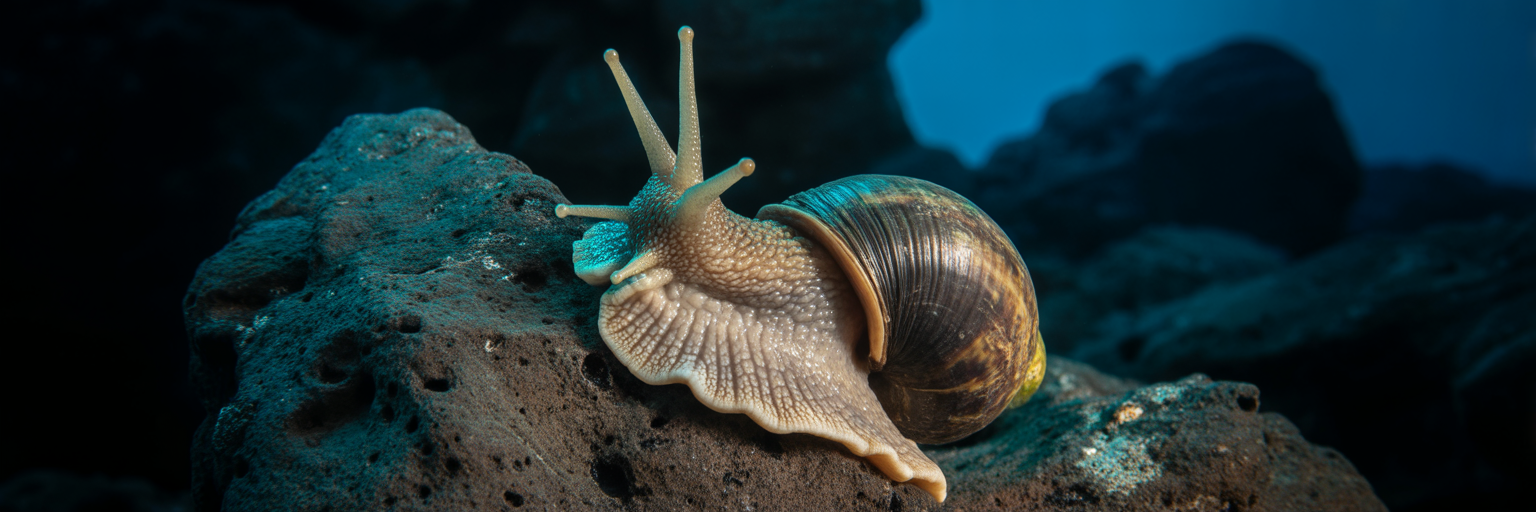
After examining the evidence from materials science, computer modeling, and ecological theory, we can draw clear conclusions about the volcano snail armor facts and separate them from the popular myths.
- Is the armor literally made of iron? No. It is a composite material. The outer layer contains iron sulfide minerals (pyrite and greigite), but it is not a solid metal shell.
- Has it been proven to stop a real predator? No. Its defensive capability is strongly inferred from sophisticated lab tests and simulations, but it has never been directly observed in the wild.
- What type of attack is it best designed to resist? A single, focused puncture or crushing force, like that from a crab claw. Its multi-layer system is engineered to dissipate the energy from this specific type of impact.
- Is it stronger than a normal snail shell? Yes, significantly. Its three-layer design, which manages damage through fracture and absorption, is far more resilient to puncture than a typical, brittle gastropod shell of similar thickness.
- Which popular claims go beyond the evidence? Claims of the armor being “invincible,” “impenetrable,” or “bulletproof” are exaggerations. The armor is a highly sophisticated defense, but it has clear limitations and has never been tested against a real predator.
Frequently Asked Questions About the Armor
Q1: Is the scaly-foot snail magnetic?
A: The shell contains pyrite (‘fool’s gold’) and greigite. Greigite is ferrimagnetic, so the shell and sclerites can exhibit weak magnetic properties, though this is not their primary feature.
Q2: Why is the snail’s shell black?
A: The black, metallic sheen comes from the iron sulfide minerals, primarily pyrite, that make up the outermost layer of the shell.
Q3: Are these snails endangered?
A: Yes. Due to their extremely limited habitat at a few known hydrothermal vents, which are targeted for deep-sea mining, the scaly-foot snail was the first deep-sea animal to be officially listed as Endangered on the IUCN Red List.
Q4: Can this armor be replicated for human use?
A: The snail’s layered defense system is a source of inspiration for materials scientists developing next-generation body armor, helmets, and protective coatings for vehicles and infrastructure. Its principles of energy dissipation are highly valuable. The scaly-foot snail’s unique biology is a product of its extreme environment, a theme seen across nature, including in the complex relationships between organisms, such as understanding why parasites need multiple hosts to party.